

Wildlife viewing in Olympic National Park can mean a bull elk grazing beside the Hoh River, a marmot sunning on a summer rock, or a whale spout off Kalaloch. The park counts 62 land mammals, 29 marine mammals and about 300 bird species. Here is where to look and how to watch safely.
Quick answer
Where and how can you see wildlife in Olympic National Park?
Wildlife in Olympic National Park is most active at dawn and dusk. Look for Roosevelt elk in the rain forest valleys, deer and marmots near Hurricane Ridge in summer, and whales off the coast in spring and fall. Park rules require you to stay at least 50 yards from wildlife, and feeding any animal is prohibited.
- Stay at least 50 yards from all wildlife
- Never feed animals, even chipmunks and birds
- Use binoculars or a telephoto lens instead of moving closer
- Spotlights and wildlife calling apps are not allowed
- Report bear, cougar and mountain goat encounters
Where to see wildlife in Olympic National Park
Each zone, from beach to alpine ridge, has its own residents. The park suggests learning an animal’s habitat and habits first, then asking a ranger at the nearest visitor center for tips.
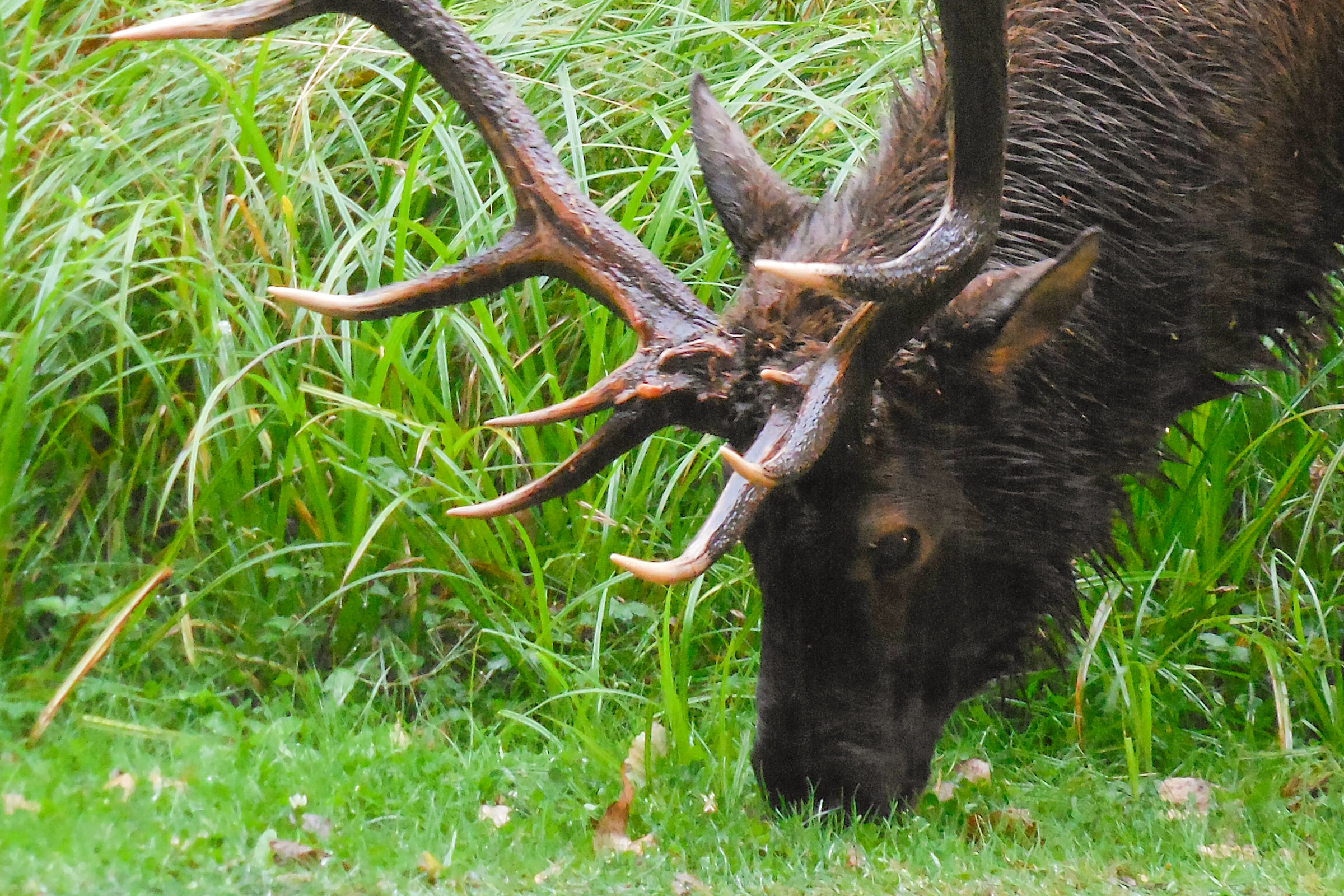
Species, where to look and best season
| Animal | Where to look | Best time |
|---|---|---|
| Roosevelt elk | Lower valleys and rain forests | Dawn and dusk, all year |
| Black-tailed deer | Nearly all park areas | Mornings and evenings |
| Olympic marmot | Hurricane Ridge and alpine trails | Summer |
| Black bear | Mostly backcountry trails | Early fall on huckleberry slopes |
| Salmon | Salmon Cascades, Sol Duc valley | Late September to early October |
| Gray whales | Kalaloch, Rialto and Shi Shi beaches | April to May, October to November |
| Birds | Coast, forests and high country | All year |
| Cougars, mountain goats | Rarely seen | Report any sighting |
Our species guides go deeper. Read about Roosevelt elk in Olympic National Park, the Olympic marmot at Hurricane Ridge, black bears and bear safety, cougars and what to do if you see one, and the story of mountain goats in Olympic National Park.
Near water, our guides to Olympic Coast marine mammals, where to see salmon, birding in Olympic National Park and frogs and salamanders cover the rest.
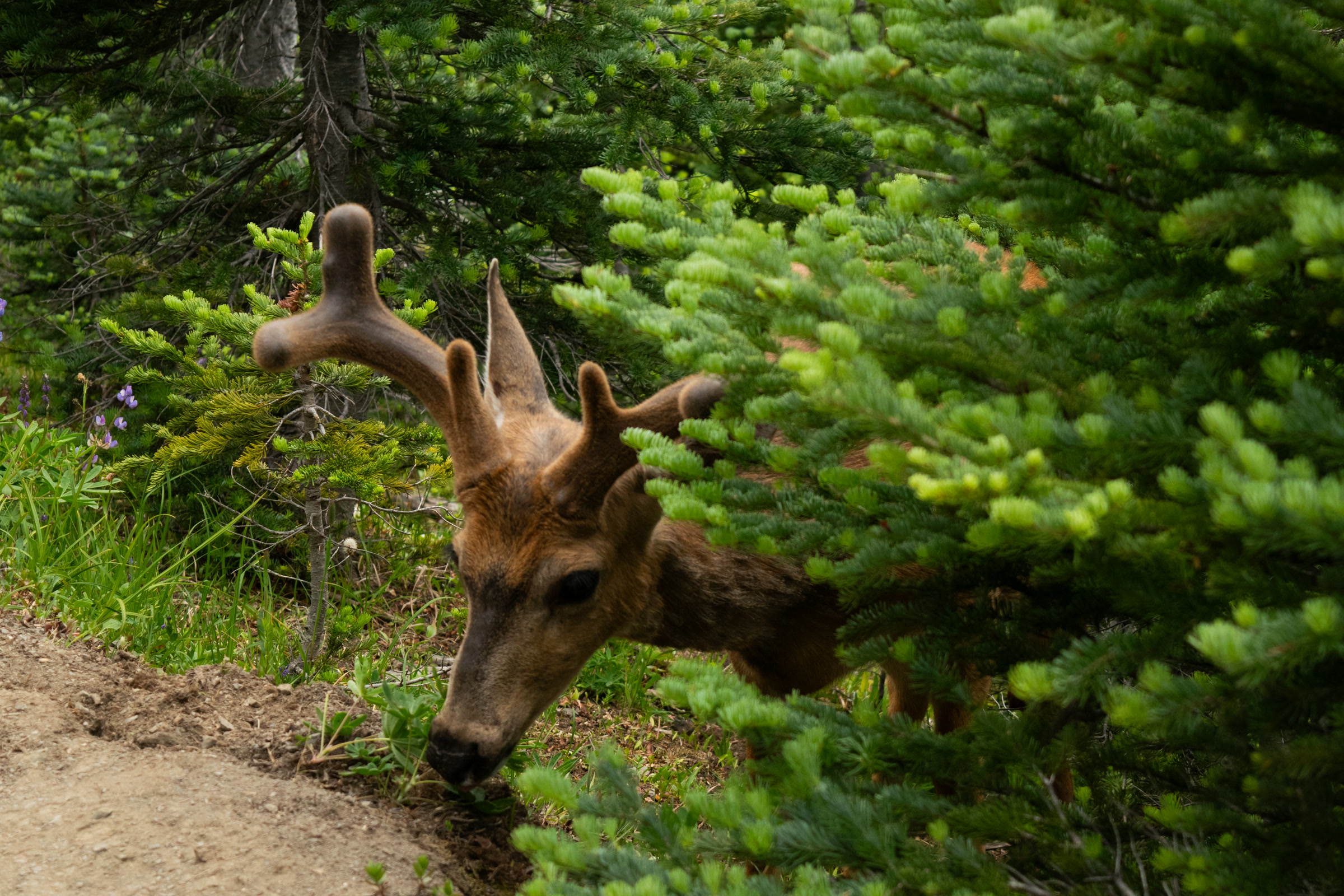
Best times for wildlife viewing in Olympic National Park
Most animals are active around dawn and dusk, and seasons matter too. Marmots are usually seen only in summer, salmon run in fall, and the park’s viewing page lists April to May and October to November for migrating whales.
Elk need extra room twice a year: during spring calving, and during the fall rut. If an elk is on the trail, the park says to make noise, avoid eye contact and back away slowly. Our guide to the best time to visit Olympic National Park helps you match a trip to the season.
How far to stay back: the safe distance
As of October 2026, the Olympic National Park Superintendent’s Compendium (updated January 2026) prohibits approaching, staying near, photographing or filming within 50 yards of bears, elk, mountain goats, cougars or any other wildlife or nesting birds. That is about 150 feet, or half a football field.
The rule also covers any distance that disturbs or displaces an animal, and if an animal comes toward you by chance, you must move away. The park’s simple test: if an animal moves because of you, you are too close. Rules can change, so check the NPS wildlife viewing page before you go.
Never feed wildlife
Feeding, approaching or harassing wildlife is illegal in the park, and the park spells out that this includes birds and small mammals like chipmunks. Feeding even by accident is subject to fines, so food and trash must be stored properly at all times.

The same rule covers calling animals in. Under the park’s wildlife regulations, calling, teasing or frightening animals is prohibited, and the park asks visitors not to use apps or calls to attract them. Using a spotlight or any artificial light to view wildlife is banned everywhere in the park. Backcountry campers must store all food and scented items in a bear canister.
Binoculars, scopes and cameras
The park suggests binoculars, a zoom or telephoto lens and a field guide. The Washington Department of Fish and Wildlife (WDFW) adds a spotting scope to that list in its wildlife viewing guide, and asks everyone to give wildlife plenty of space. The 50 yard rule covers photos and filming too, so let the lens do the work. Drones need the superintendent’s written approval, because they can disrupt nesting, mating and hunting.

Watching wildlife from the road
The park asks drivers to watch from roadside pullouts rather than while moving, which avoids crashes and traffic jams. Use extra care at dawn and dusk, because deer often cross park roads.
The 50 yard rule still applies when an animal is beside the pavement. If you see a bear near the road, the park says to stay in your vehicle. The distance keeps wildlife from getting used to people.
Birds and the coast
The park names bald eagles, northern pygmy owls, black oystercatchers and sooty grouse among its roughly 300 bird species. On the coast, scan offshore rocks from the beach rather than climbing toward them, and give nesting birds at least 50 yards. Seals and sea lions get the 100 yards NOAA asks for. Check a tide chart before any beach walk.

Our tide pools guide and Leave No Trace guide to the Olympic coast explain how to explore the shore gently.

Reporting what you see
The park wants to hear about black bear encounters, cougar sightings, aggressive elk, mountain goat sightings and stranded marine animals. Tell a ranger or use the online wildlife report form linked from the park’s wildlife pages. Include your contact details, the date, the location (GPS is best) and the species.
- Attack or near attack: call 911.
- Dead, injured or distressed animal: report it, and don’t try a rescue yourself.
- Stranded seal, sea lion or whale: WDFW lists the NOAA West Coast stranding hotline, 866-767-6114.
- Everyday sightings: WDFW encourages sharing them on eBird or iNaturalist.
How Friends of Olympic National Park helps
We are Friends of Olympic National Park (FONP), a volunteer led friends group based in Port Angeles. Our guided nature walks help people notice the park’s smaller life, and our beach cleanups in Olympic National Park clear trash from the shore that wildlife depends on. If you’d like to help, volunteer at Olympic National Park with us or become a member.
Frequently asked questions
How close can you get to wildlife in Olympic National Park?
No closer than 50 yards, about 150 feet. The park compendium sets 50 yards for bears, elk, mountain goats, cougars and all other wildlife, or more if an animal is disturbed.
Where is the best place to see elk in Olympic National Park?
The park says Roosevelt elk are mostly found in the lower valleys and rain forests, such as the Hoh, and are most often seen at dawn and dusk.
What is the best time of day to see wildlife?
Most wildlife in the park is active around dawn and dusk. Black-tailed deer are most active in the morning and evening, and marmots are seen at Hurricane Ridge in summer.
Can you feed animals in Olympic National Park?
No. Feeding, approaching or harassing wildlife is illegal in the park, including birds and small mammals like chipmunks, and feeding even by accident is subject to fines.
How do I report a wildlife sighting in Olympic National Park?
Tell a ranger or use the park’s online wildlife report form. The park especially wants to hear about bears, cougars, aggressive elk, mountain goats and stranded marine animals. Call 911 for an attack.
Leave a Reply