

Huckleberries in Olympic National Park ripen along forest trails and high slopes from late summer, and a handful eaten on the trail is one of the small joys of a Peninsula hike. Picking is allowed for your own use, within limits. Here are the park’s rules, the common native berries, and how to share the patch with bears.
Quick answer
Can you pick huckleberries in Olympic National Park?
Yes, for your own eating. As of October 2026, the park lets visitors pick edible berries by hand for personal consumption, up to 1 quart per person per day for all fruits, berries, nuts and mushrooms combined. Picking is not allowed within 200 feet of nature trails, special trails or natural study areas.
- 1 quart per person per day, all berries combined
- No picking within 200 feet of nature trails
- Huckleberries peak in August and September
- Bears raid huckleberry slopes in early fall
- Never eat a berry you can’t positively identify
Berry picking rules in Olympic National Park
Collecting natural materials in the park is generally prohibited. The Olympic National Park Superintendent’s Compendium, last amended in January 2026, makes an exception for edible fruits, berries, nuts and mushrooms gathered by hand for your own eating. Any other use, such as selling them, is prohibited.
The limits below are as of October 2026. Rules can change, so check the NPS compendium before you go.
Picking limits: national park vs national forest
| Rule | Olympic National Park | Olympic National Forest |
|---|---|---|
| Who may pick | Anyone, for personal eating | Anyone, personal use, free |
| Daily limit | 1 quart per person, all fruits, berries, nuts and mushrooms | 1 gallon per person |
| Yearly limit | None stated | 3 gallons |
| Exceptions | Cranberries and native blackberries: 3 1/2 gallons once every two weeks | None stated |
| Where not allowed | Within 200 feet of nature trails, special trails, natural study areas | Designated Wilderness, botanical and research areas |
| Selling | Prohibited | Commercial picking not permitted |
Non-native fruit such as apples, pears and non-native blackberries are exempt from the park’s daily limit. The national forest figures come from the Forest Service’s Olympic National Forest wild berries page. Not sure whose land you’re on? Our guide to Olympic National Park vs Olympic National Forest explains the difference.
Common native berries and when they ripen
The Forest Service says the Peninsula’s berry season runs from July through September, and that huckleberries ripen first at lower elevations. Park plant lists name huckleberries, salal and salmonberry among the common shrubs of its coastal, lowland and rain forests.
Native berries at a glance
| Berry | Where to look | When ripe |
|---|---|---|
| Red huckleberry | Conifer forest, often on old stumps and logs | August and September |
| Evergreen huckleberry | Coastal forest and clearings | Around October and November |
| Salmonberry | Wet ground and streamsides | Late spring into summer |
| Thimbleberry | Coastal forest; replanted in the Elwha | When soft pink turns bright red |
| Salal | Coastal, lowland and montane forest | Mid-July to mid-September |
| High country huckleberries | Mountain slopes and subalpine forest | Later than lowland berries |
Red and evergreen huckleberry
Red huckleberries are bright red, tart and up to about 1 cm across. A University of Washington plant sheet notes the shrub often sprouts from rotting logs and stumps, and its fruit is ripe in August and September. The Forest Service calls red and blue huckleberries among the most popular wild fruit on the Peninsula.
Evergreen huckleberry keeps its glossy leaves all year and grows in the park’s coastal forest. According to a USDA plant guide, its purplish black berries ripen late, around October or November, and were the last fruit of the year for tribes including the Quinault, who said they tasted even better after a frost.
Salmonberry
Salmonberry is one of the first berries of the year. The Forest Service describes a soft, yellow or reddish berry about the size of a raspberry, and the USDA notes its colour ranges from yellow to orange to deep red. Look in moist places and along streams; the park lists it in the rain forest and coastal forest.

Thimbleberry
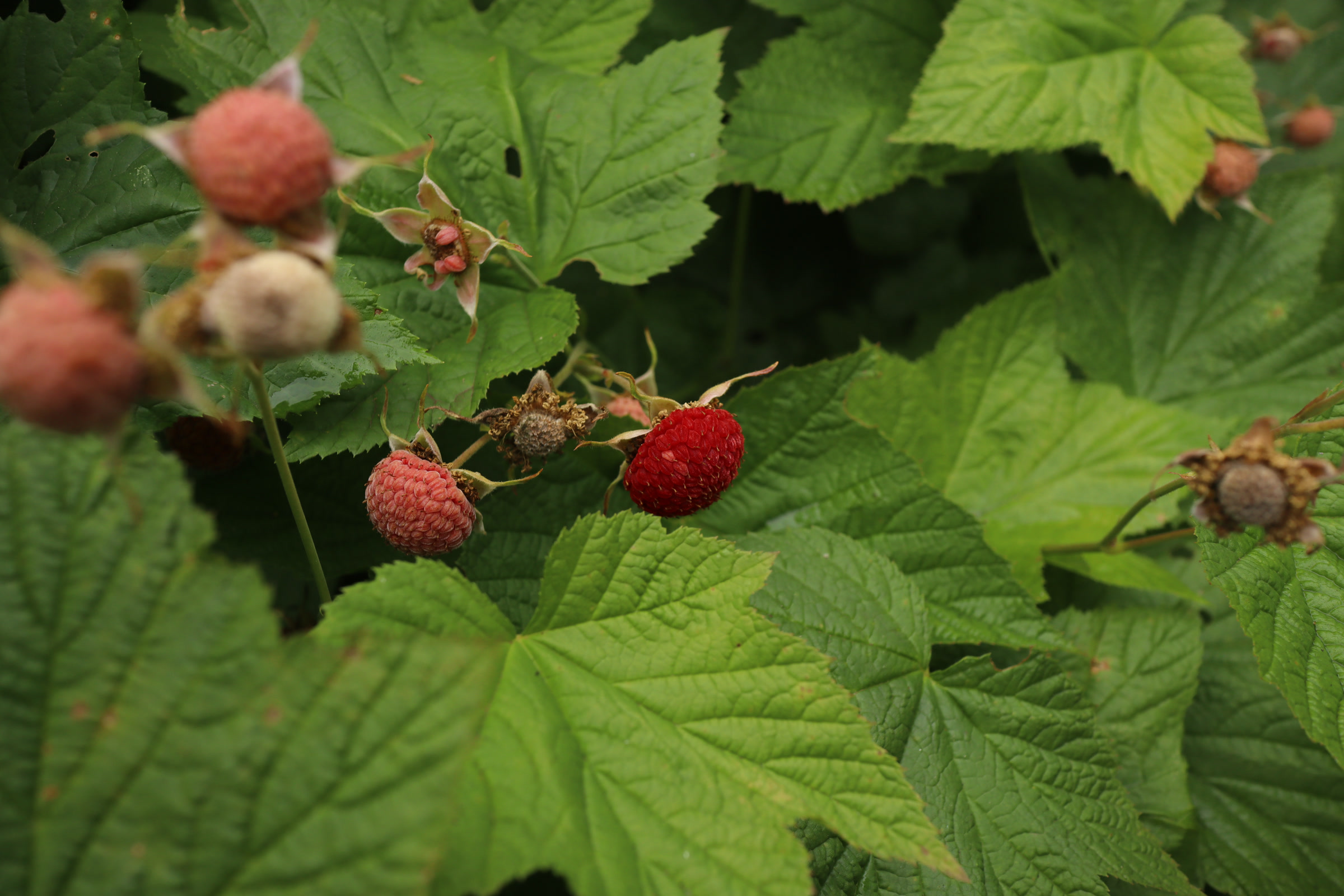
Thimbleberry has large, fuzzy leaves and a red berry that looks like a short, rounded raspberry. The Washington Trails Association suggests picking when the fruit has turned from soft pink to bright red. Thimbleberry and salmonberry were among more than 80 native species the park grew to replant the drained Elwha reservoirs, a story told in our Elwha River restoration guide.
Salal
Salal grows in the park’s coastal, lowland and montane forests, and the Forest Service calls its berries abundant and easy to pick but often ignored. They ripen from mid-July through mid-September and make good jelly.

Bears and berries
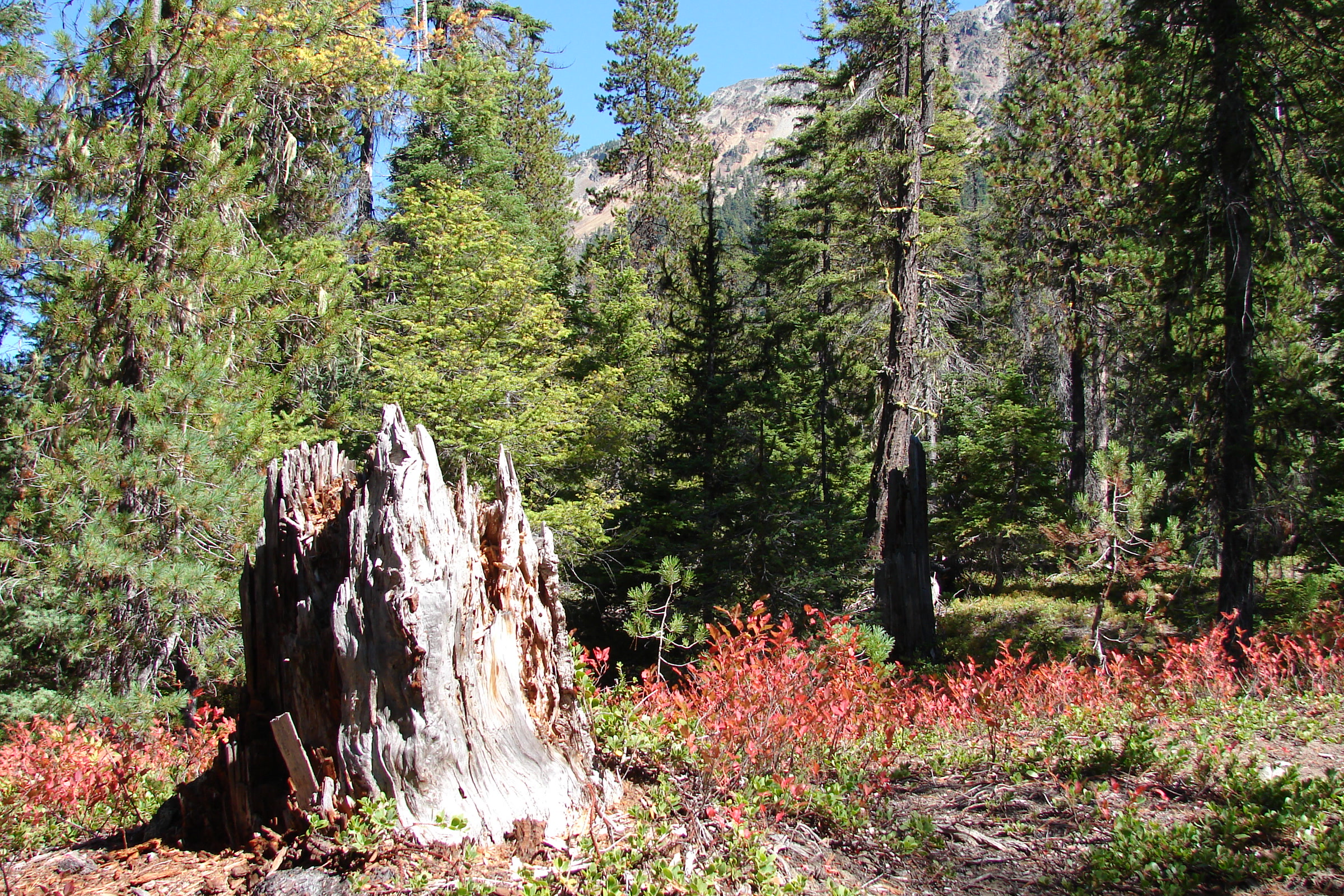
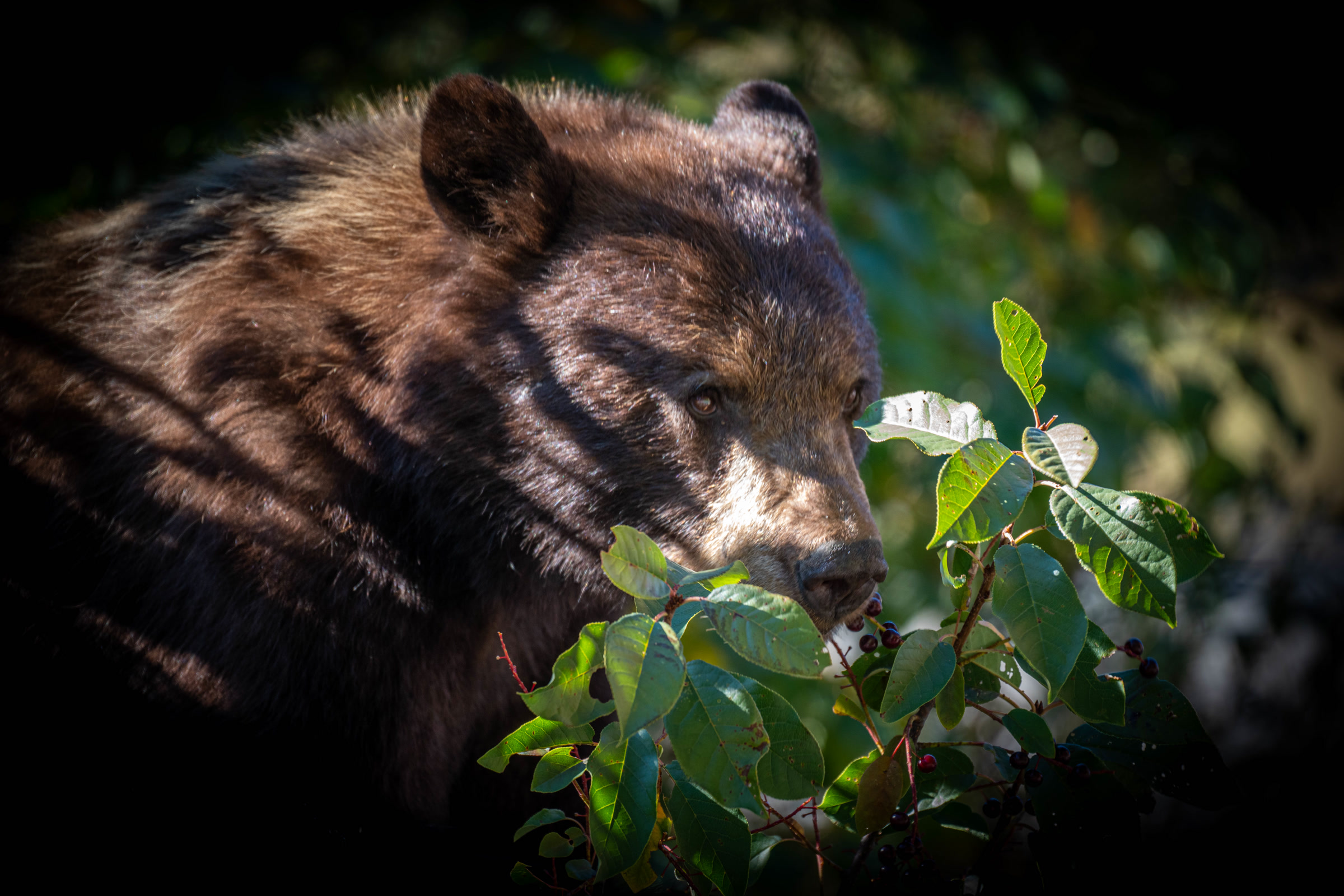
You are not the only one looking. The park says black bears are often seen in early fall raiding huckleberry bushes on mountain slopes, and the USDA lists bears among the animals that relish salmonberries. The Forest Service reminds pickers that wild berries are an important food for animals, so keep an eye out for wildlife.
- Make noise as you pick so you don’t surprise a bear in a thick patch.
- If you see a bear, leave the patch to it. Park rules require you to stay at least 50 yards away.
- Keep children close, and never leave food or berry buckets unattended.
Our guide to black bears in Olympic National Park covers what to do if a bear approaches, and our wildlife viewing guide explains the distance rules.
Avoiding toxic look-alikes
The Forest Service’s rule is plain: never eat a wild berry you have not positively identified as safe. Two common Peninsula shrubs need extra care.
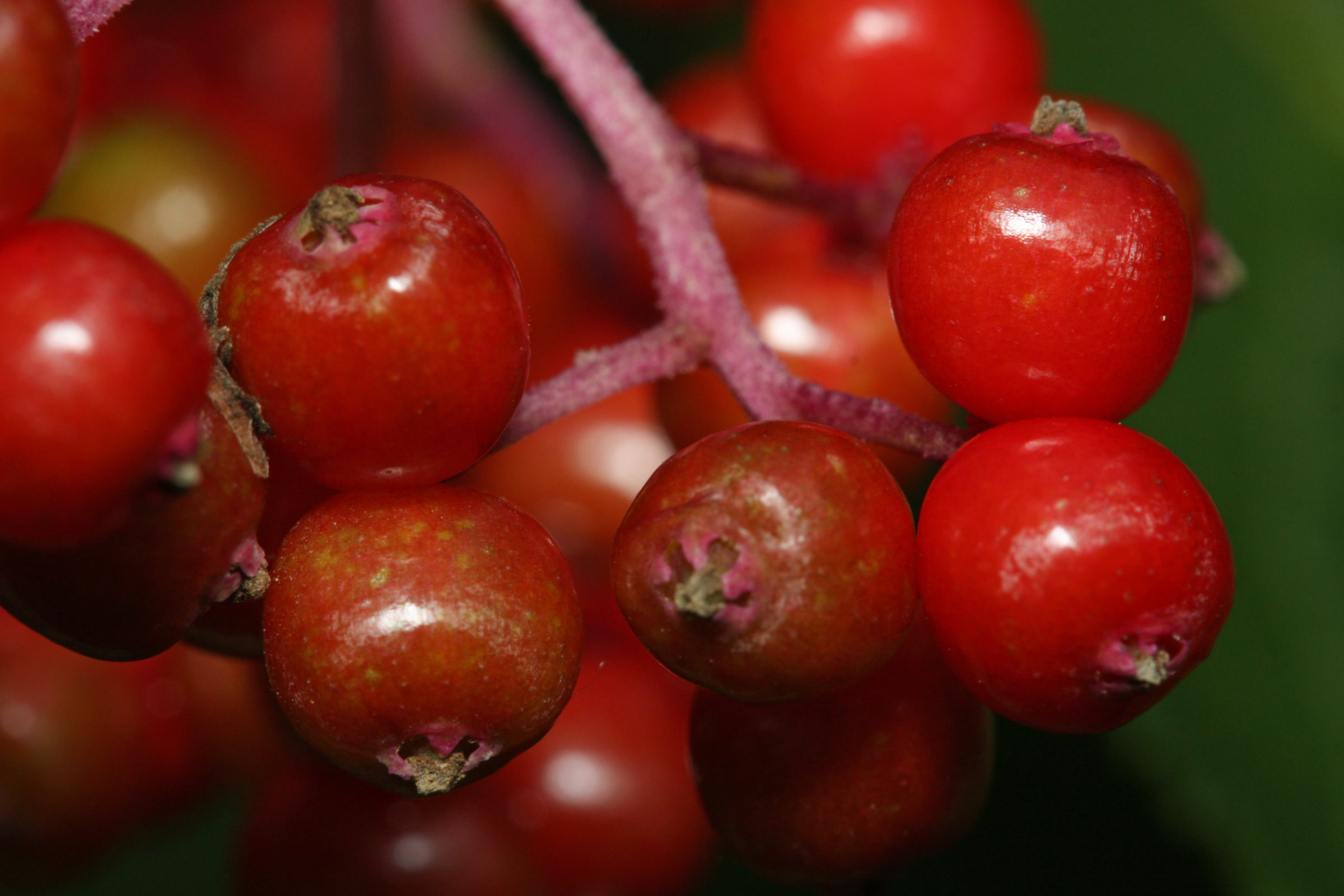
- Red elderberry. Red and blue elderberries are both common on the Peninsula, but the Forest Service says only the blue should be eaten. The park lists coast red elderberry in its lowland forests.
- Oregon grape. The Forest Service says not to eat it fresh because of a laxative effect.
Bring a field guide, pick only what you know, and teach children to ask before they eat anything. If someone feels sick after eating a wild berry, call Poison Control at 1-800-222-1222, or 911 in an emergency. The same caution applies to fungi, as our mushroom season guide explains.
How Friends of Olympic National Park helps
We are Friends of Olympic National Park (FONP), a volunteer led friends group based in Port Angeles. Our projects include guided mushroom and wildflower walks, and our volunteers have joined an invasive plant cleanup on the Olympic Peninsula. To hear about walks and events, become a member.
Frequently asked questions
Can you pick berries in Olympic National Park?
Yes, by hand and for your own eating. As of October 2026 the limit is 1 quart per person per day for all fruits, berries, nuts and mushrooms combined, and picking is not allowed within 200 feet of nature trails, special trails or natural study areas.
When are huckleberries ripe on the Olympic Peninsula?
The Forest Service says huckleberries peak in August and September and ripen first at lower elevations. Evergreen huckleberries ripen later, around October or November.
Are salmonberries edible?
Yes. Salmonberries are soft, raspberry sized berries that range from yellow to orange to deep red, and they are among the first wild berries to ripen each year.
Is red elderberry safe to eat?
No. The Forest Service says red and blue elderberries are both common on the Olympic Peninsula, but only the blue should be eaten.
How much can you pick in Olympic National Forest?
The Forest Service allows up to 1 gallon of berries per person per day and 3 gallons per year for personal use. Commercial picking is not permitted, and harvesting is prohibited in designated Wilderness.
Leave a Reply