
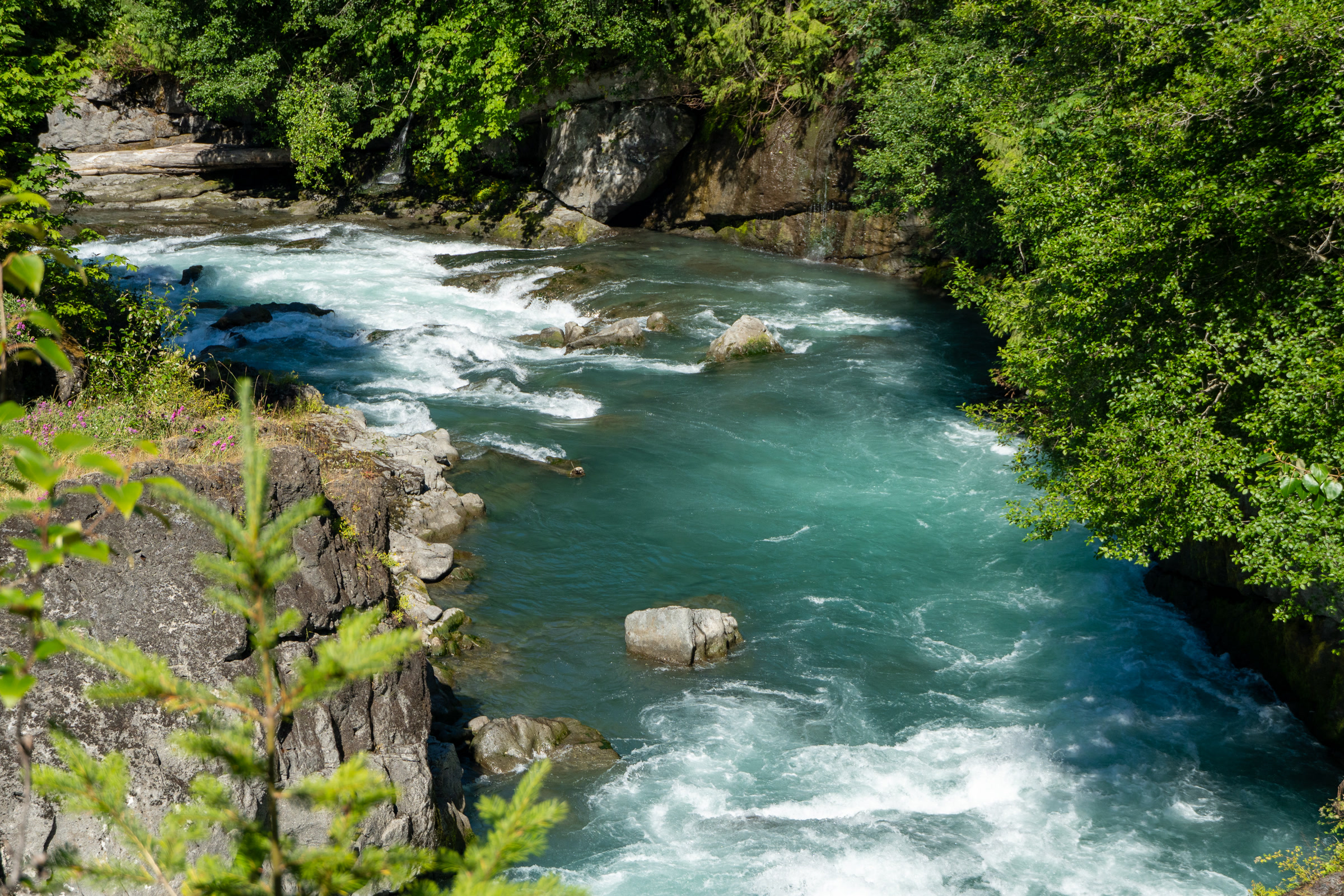
Elwha River restoration began in September 2011, when crews started taking down the two dams that had blocked the river for a century. By 2014 both the Elwha Dam and the Glines Canyon Dam were gone, and the river was running free from the Olympic Mountains to the Strait of Juan de Fuca. Here’s what happened, what has come back, and how to see it for yourself.
Quick answer
What is the Elwha River restoration?
Elwha River restoration is the National Park Service-led project that removed the Elwha and Glines Canyon dams between 2011 and 2014, the largest dam removal in U.S. history. Freed sediment rebuilt the river mouth, Chinook salmon returned above both former dam sites, and crews replanted the drained reservoirs with native plants.
- Dam removal began on September 17, 2011
- The Glines Canyon Dam came out in 2014
- About 20 million tons of sediment was released
- The plan called for more than 400,000 native plants
Why the Elwha dams came out
Both dams were built in the early 1900s to make hydropower for the growing town of Port Angeles. The Elwha Dam went up from 1910 to 1913 on the lower river and never received a federal license. The 210 foot Glines Canyon Dam followed upstream from 1925 to 1927, and a 1940 boundary expansion brought its site inside the park.
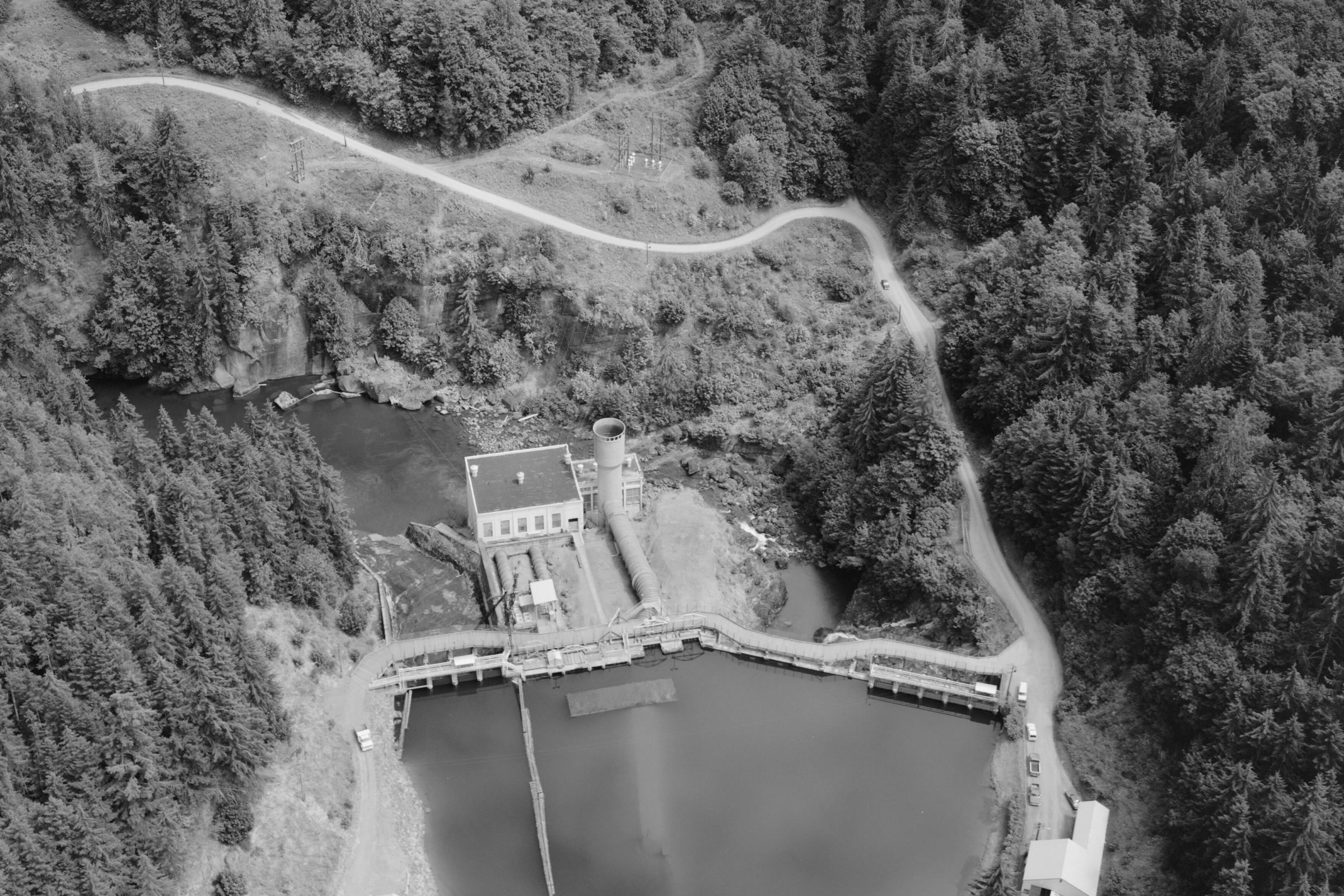
The dams stopped salmon from swimming upstream. The National Park Service notes that the Elwha once held eleven kinds of salmon and trout, and that the river was an important food source for the Lower Elwha Klallam Tribe. The reservoirs also flooded tribal homelands and cultural sites.
The tribe pushed for change for decades. In 1986 it was granted intervenor status in the federal relicensing case for the dams, and in 1991 it joined conservation groups in petitions to the Ninth Circuit. In October 1992 Congress passed the Elwha River Ecosystem and Fisheries Restoration Act, which called for full restoration of the river and its native fish runs.
How the Elwha dam removal worked
After about two decades of planning, the National Park Service calls what followed the largest dam removal in U.S. history. Crews took the dams down in stages so the river could carry its stored sediment away a little at a time.
Elwha River restoration timeline
| When | What happened |
|---|---|
| 1910-1913 | Elwha Dam built, forming Lake Aldwell |
| 1925-1927 | Glines Canyon Dam built, forming Lake Mills |
| 1986 | Lower Elwha Klallam Tribe joins the relicensing case |
| October 1992 | Restoration Act signed into law |
| September 17, 2011 | Dam removal begins |
| March 2012 | Elwha Dam fully removed |
| 2014 | Glines Canyon Dam removal completed |
Where all that sediment went
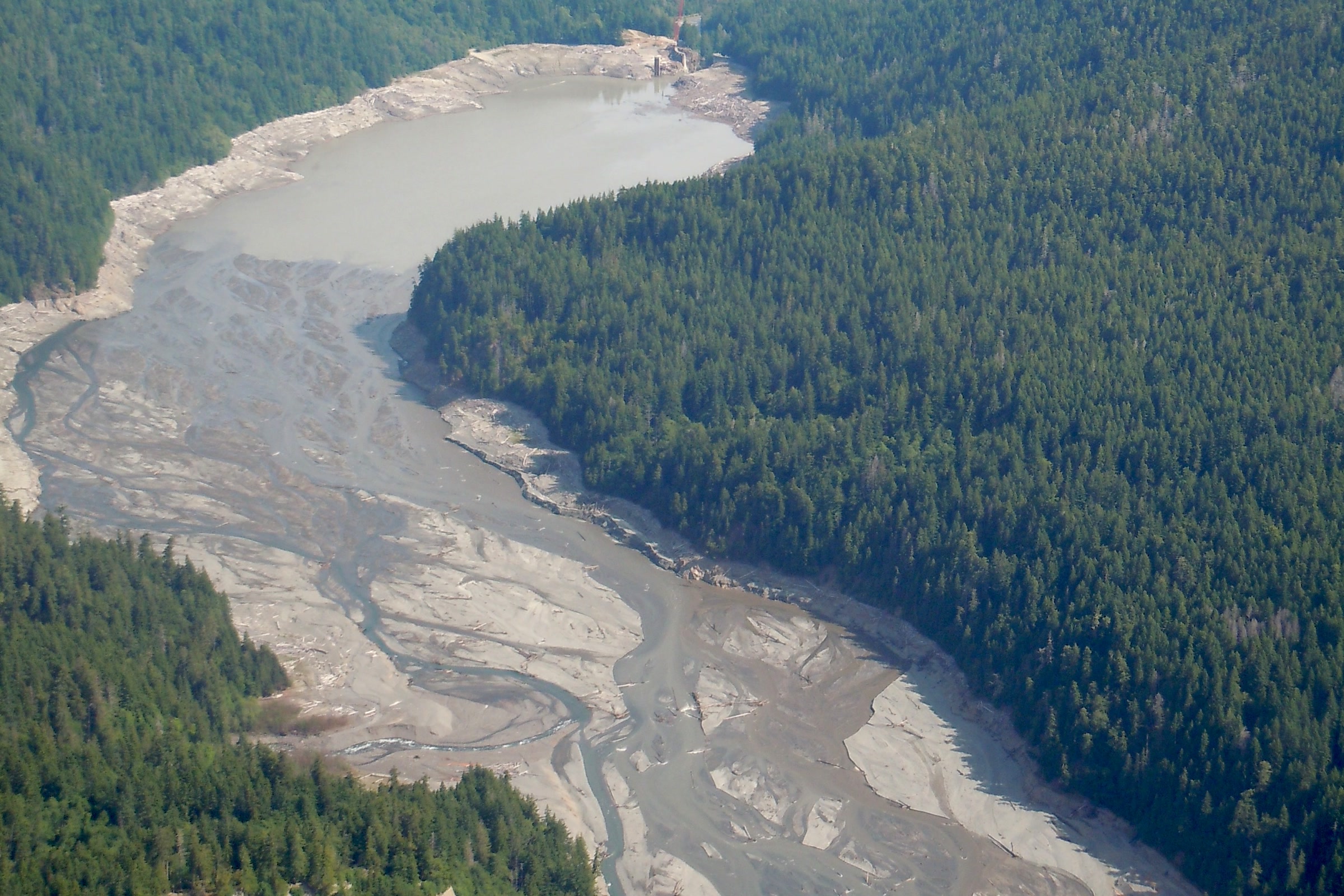
Nearly 100 years of sand, gravel and silt had piled up behind the dams, about 30 million tons in all. According to the U.S. Geological Survey’s Elwha River Restoration Project, about two thirds of it, roughly 20 million tons, was released.
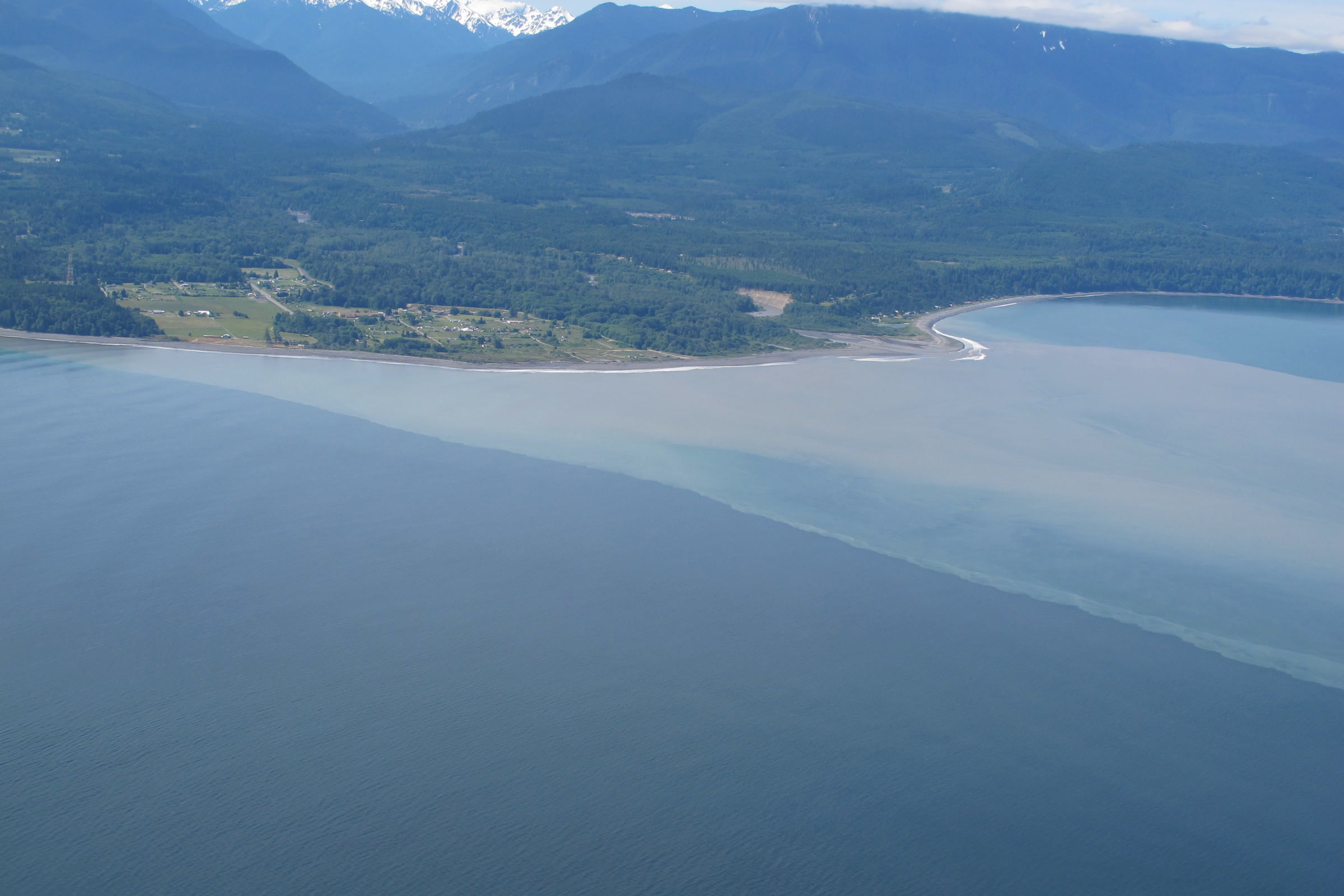
USGS researchers found that most of the sediment released in the first two years moved right through the river to the coast. Part of it built out the delta at the river mouth, bringing new beach and nearshore habitat to a shoreline that had been starved of sediment for a century.
The Elwha River salmon return
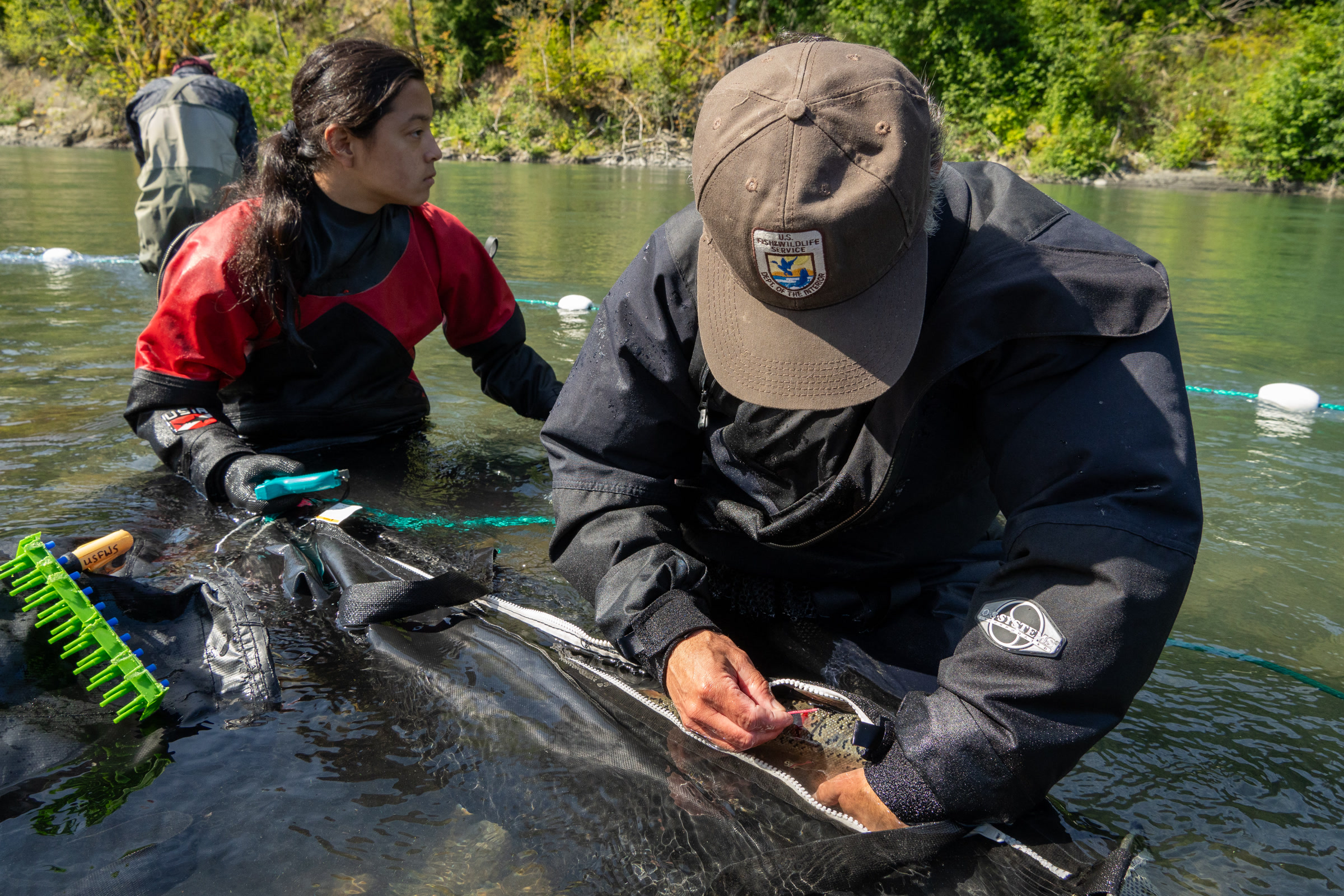
Fish didn’t wait for the work to finish. In September 2013 a survey team from the park, the Lower Elwha Klallam Tribe, USGS, Washington Department of Fish and Wildlife and NOAA Fisheries counted 1,741 adult Chinook salmon and 763 nests. About three quarters were upstream of the old Elwha Dam site.
In September 2014 park staff found adult Chinook in the former Lake Mills, above the Glines Canyon site, for the first time in more than a century. With both dams gone, salmon and steelhead can reach more than 70 miles of river and streams.
Replanting the old lakebeds
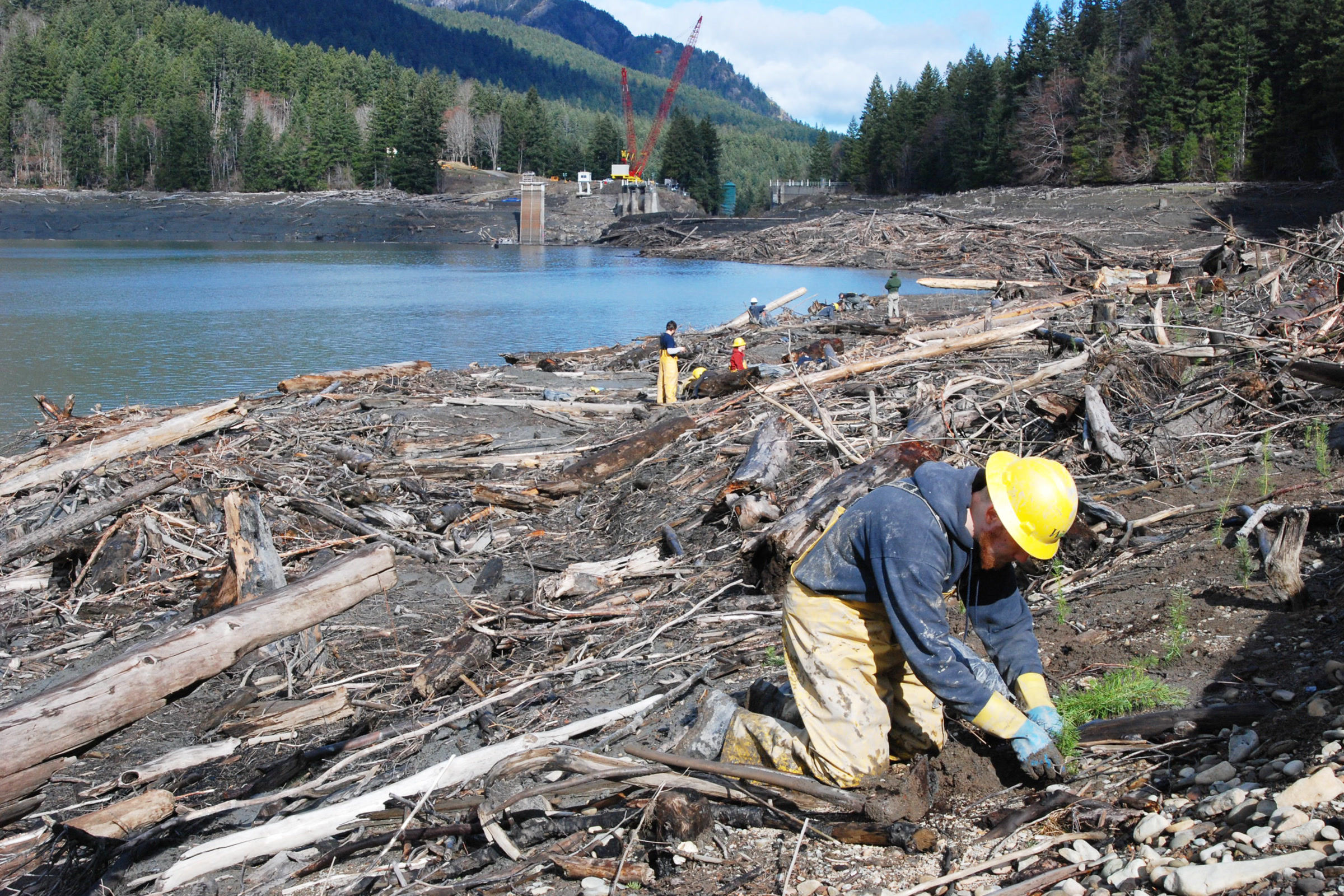
Draining Lake Mills and Lake Aldwell left wide slopes of bare sediment. The park’s revegetation plan aimed to cover that ground with more than 400,000 native plants, grown mostly at its Matt Albright Native Plant Center greenhouse from seeds and cuttings gathered for the job.
One goal was to keep invasive, non-native plants from taking over the newly exposed soil. Park botanists and volunteers began planting in the reservoirs during the first year of dam removal, with monitoring and replanting planned for years afterward.
The draining also uncovered something deeply important to the Lower Elwha Klallam people. In July 2012 park cultural resources staff located the tribe’s creation site, long described in Klallam oral history, and tribal members confirmed it. The park does not share its location, and disturbing cultural sites is against the law.
The Elwha River today
The Olympic Hot Springs Road up the Elwha Valley is closed to vehicles because of a washout. It stays open to people on foot, bicycles and dogs on leashes, and the Madison Falls parking area is open, though parking is tight. Check the park’s current road conditions for Olympic National Park before you go.
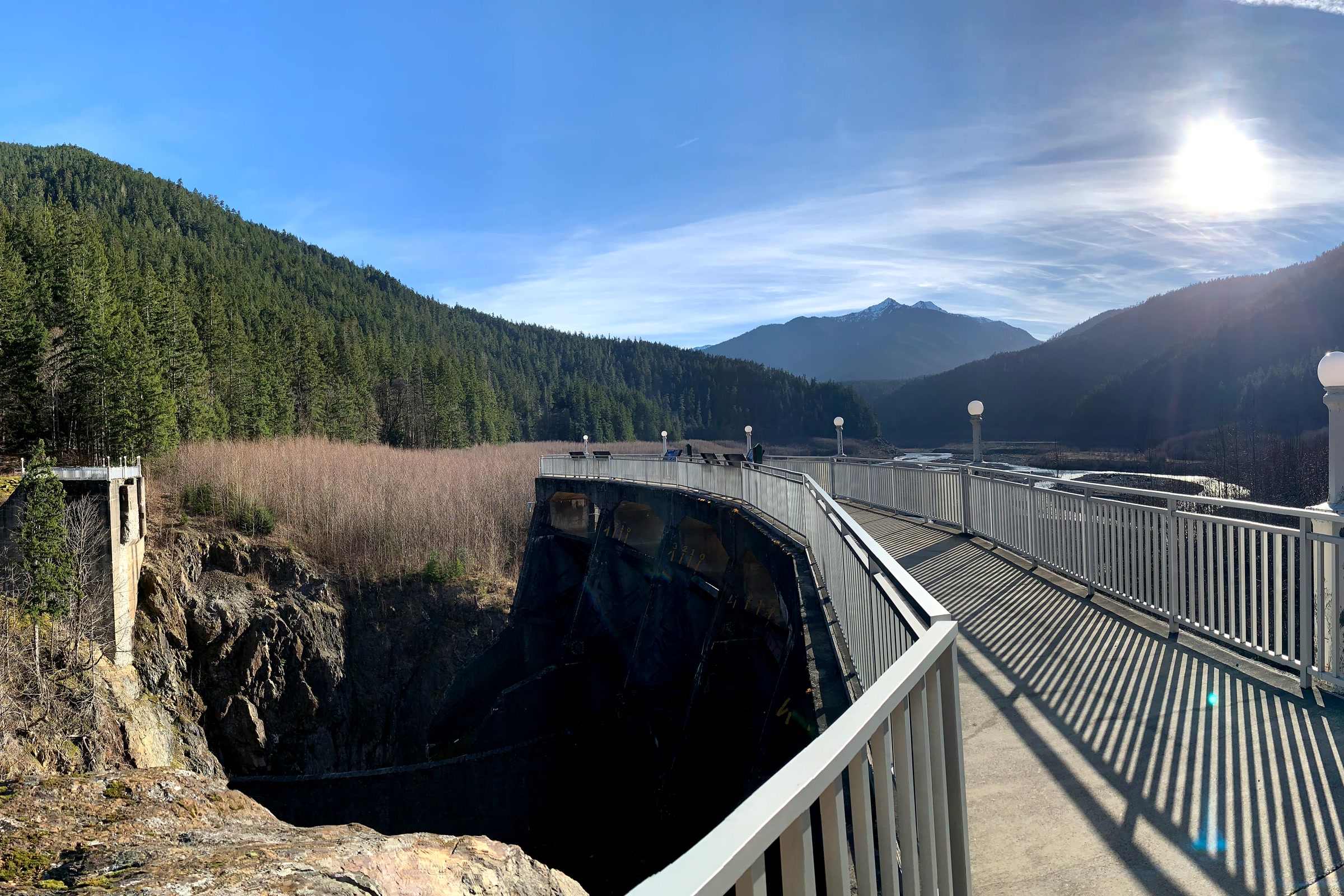
The Glines Canyon site is far up the road, so reaching it today takes a long walk or a bike ride. Bring water, stay on the pavement and trails, and leave any artifacts or cultural objects exactly where you find them.
How Friends of Olympic National Park helps
Friends of Olympic National Park (FONP) is a local, volunteer-led friends group, and we weren’t part of the dam removal. The same work goes on closer to home, though. Our volunteers pull weeds and tend native plants at the Visitor Center in Port Angeles.
- Learn which native plants for pollinators grow well on the Olympic Peninsula.
- See how volunteers tackle invasive plants on the Olympic Peninsula.
- Put the Elwha in context with our Olympic National Park history timeline.
If the Elwha’s comeback inspires you, make a gift to support Olympic National Park through our volunteer projects, or find volunteer opportunities in Olympic National Park.
Frequently asked questions
Why were the Elwha River dams removed?
The dams blocked salmon from reaching the upper river and flooded Lower Elwha Klallam Tribe homelands. Congress passed the Elwha River Ecosystem and Fisheries Restoration Act in 1992 to restore the river and its native fish.
How long did the Elwha dam removal take?
Removal began on September 17, 2011. The Elwha Dam was gone by March 2012, and removal of the Glines Canyon Dam was completed in 2014.
Have salmon returned to the Elwha River?
Yes. A 2013 survey counted 1,741 adult Chinook, mostly above the old Elwha Dam site, and in 2014 Chinook were found above the Glines Canyon site for the first time in over a century.
Can you drive to the Glines Canyon Dam site?
Not at present. The Olympic Hot Springs Road is closed to vehicles because of a washout, but it is open to walkers, bicycles and leashed dogs. Check nps.gov for current conditions.
How much sediment was released from the Elwha dams?
About 30 million tons had built up behind the two dams, and the USGS reports that about two thirds, roughly 20 million tons, was released.
Leave a Reply