
Gardening · Pollinators · Olympic Peninsula
The best native plants for pollinators on the Olympic Peninsula are tough, local shrubs and wildflowers such as red flowering currant, Oregon grape, camas, fireweed, goldenrod and Douglas aster. Planted together, they give bees, butterflies and hummingbirds something to eat from late winter into autumn. You can grow every one of them in a Port Angeles or Sequim yard.
This guide is for home gardeners. It covers why natives matter, which Pacific Northwest pollinator plants to start with, when each one blooms, and simple planting habits that help wildlife.
Why native plants matter for local pollinators
Native plants grew up with our wet winters and dry summers. The Washington Native Plant Society’s guide to gardening with native plants notes that once they are established, natives need less water than most non-native plants and hold up better against local pests and diseases. They also need less fertilizer and no pesticides, which is good news for the insects you want to attract.
Our local bees and butterflies are matched to these plants in bloom time and flower shape. A yard full of natives gives wildlife food, cover and places to rest between the park and town.
Who you are feeding
- Native bees, including bumble bees, mason bees, leafcutter bees and tiny sweat bees
- Butterflies and moths, which need nectar as adults and host leaves as caterpillars
- Hummingbirds, which look for nectar early in spring
- Flower flies and beetles, quiet pollinators that are easy to overlook
Pacific Northwest pollinator plants by bloom season
Plan for flowers in every season. The U.S. Fish and Wildlife Service list of top native pollinator plants for Washington, Oregon and Idaho sorts its picks into spring, summer and fall for exactly that reason. The table below pulls together reliable choices for a western Washington yard.
Native pollinator plants compared by season
| Native plant | Main bloom | Good for |
|---|---|---|
| Red flowering currant | Late winter to early spring | Hummingbirds and early bees |
| Oregon grape | Spring | Bumble bees and other wild bees |
| Common camas | Spring | Bees in sunny, moist spots |
| Nootka rose | Late spring to early summer | Bumble bees and honey bees |
| Fireweed | Summer | Bees, over a long season |
| Yarrow (wild form) | Summer | Wild bees and other insects |
| Goldenrod | Late summer to fall | Bumble bees and late insects |
| Douglas aster | Fall | Late season bees and butterflies |
Spring: currant, Oregon grape and camas
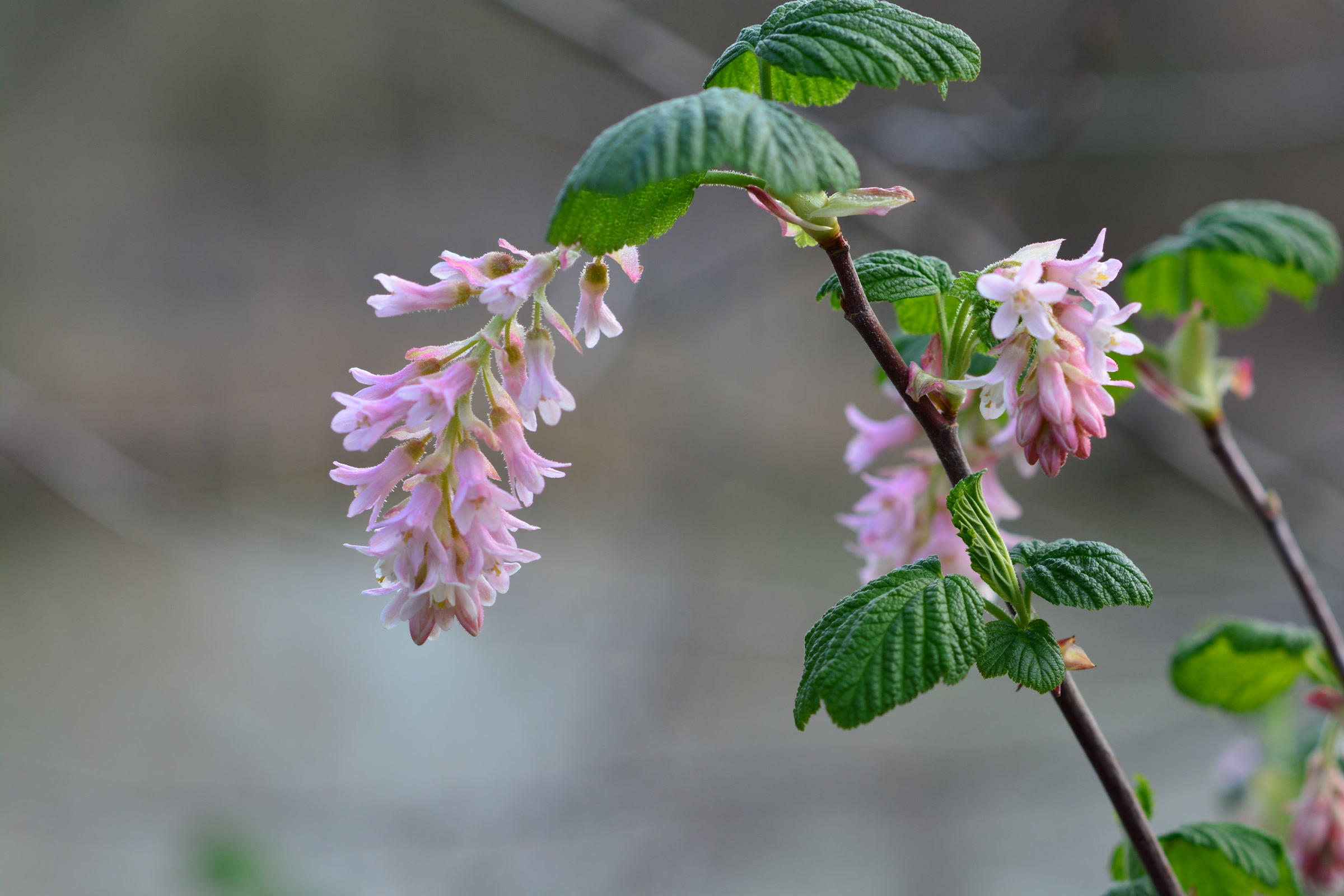
Red flowering currant is often the first shrub to bloom, with hanging pink clusters that open in late winter or early spring. Those early flowers are an important nectar source for hummingbirds and for native bees waking up after winter. Give young plants some protection from deer until they are established.
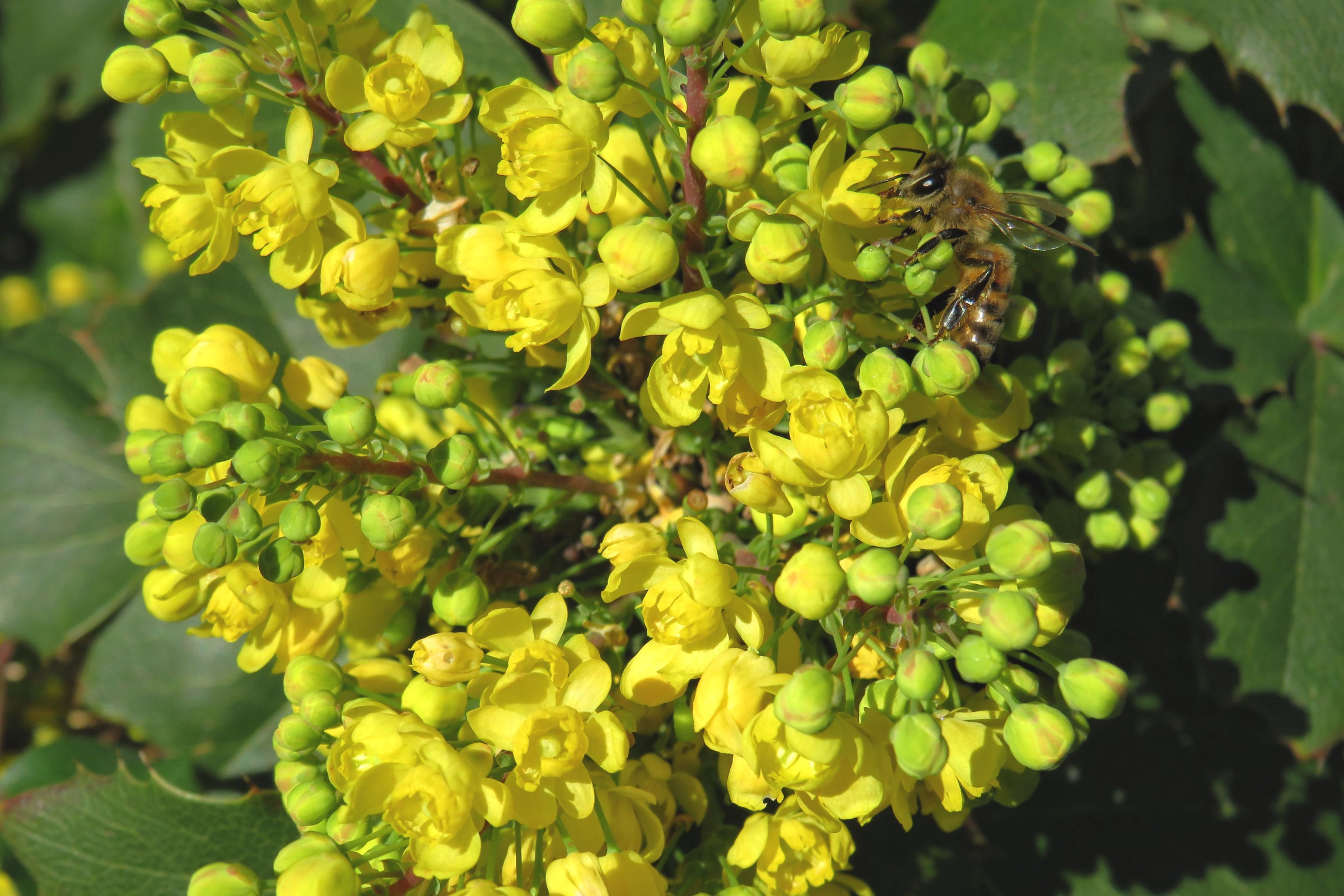
Oregon grape is the evergreen workhorse of a native garden. Its bright yellow spring flowers draw bumble bees, its spiny leaves stay green all year, and its dusty blue berries follow in summer. Tall Oregon grape suits sunny spots, while low Oregon grape is happy in shade under trees.
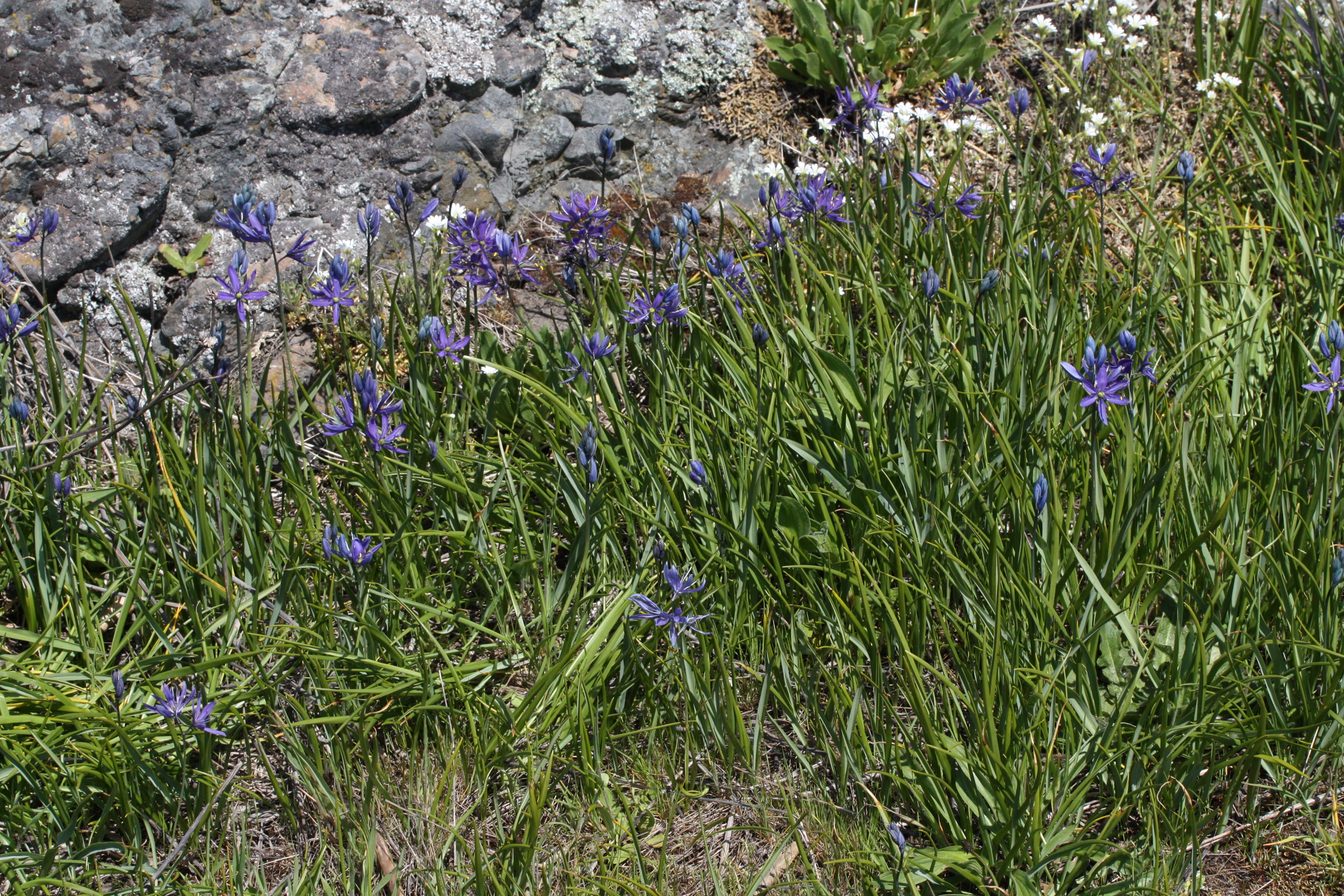
Common camas sends up spikes of starry blue flowers in spring from a bulb. It likes ground that is moist in spring and dries out in summer, so it fits well in a sunny lawn edge or a small meadow patch.
Summer: Nootka rose, fireweed and yarrow
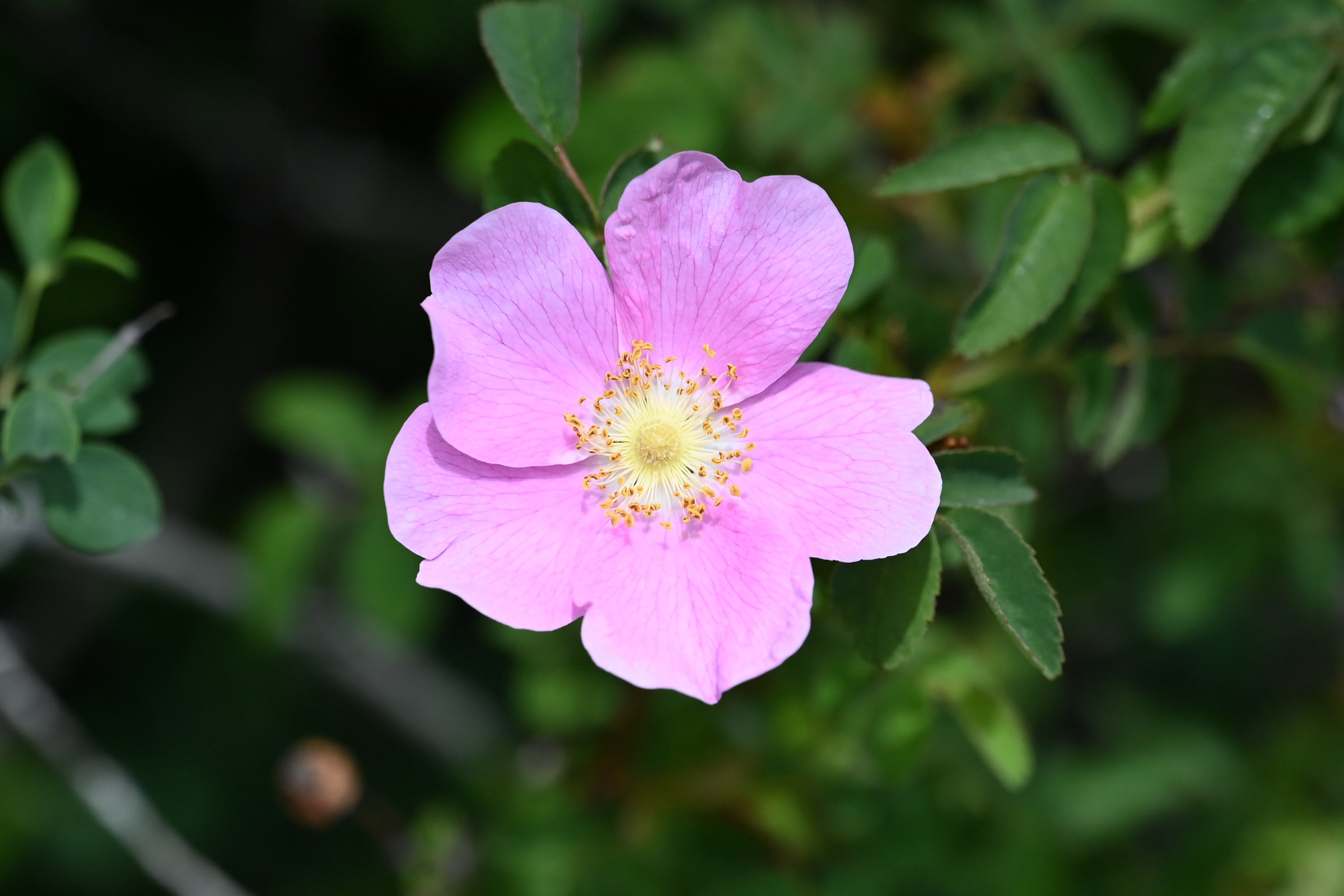
Nootka rose has simple, open pink flowers that bees can reach easily, unlike many double garden roses. It spreads into a loose thicket that also gives birds cover.
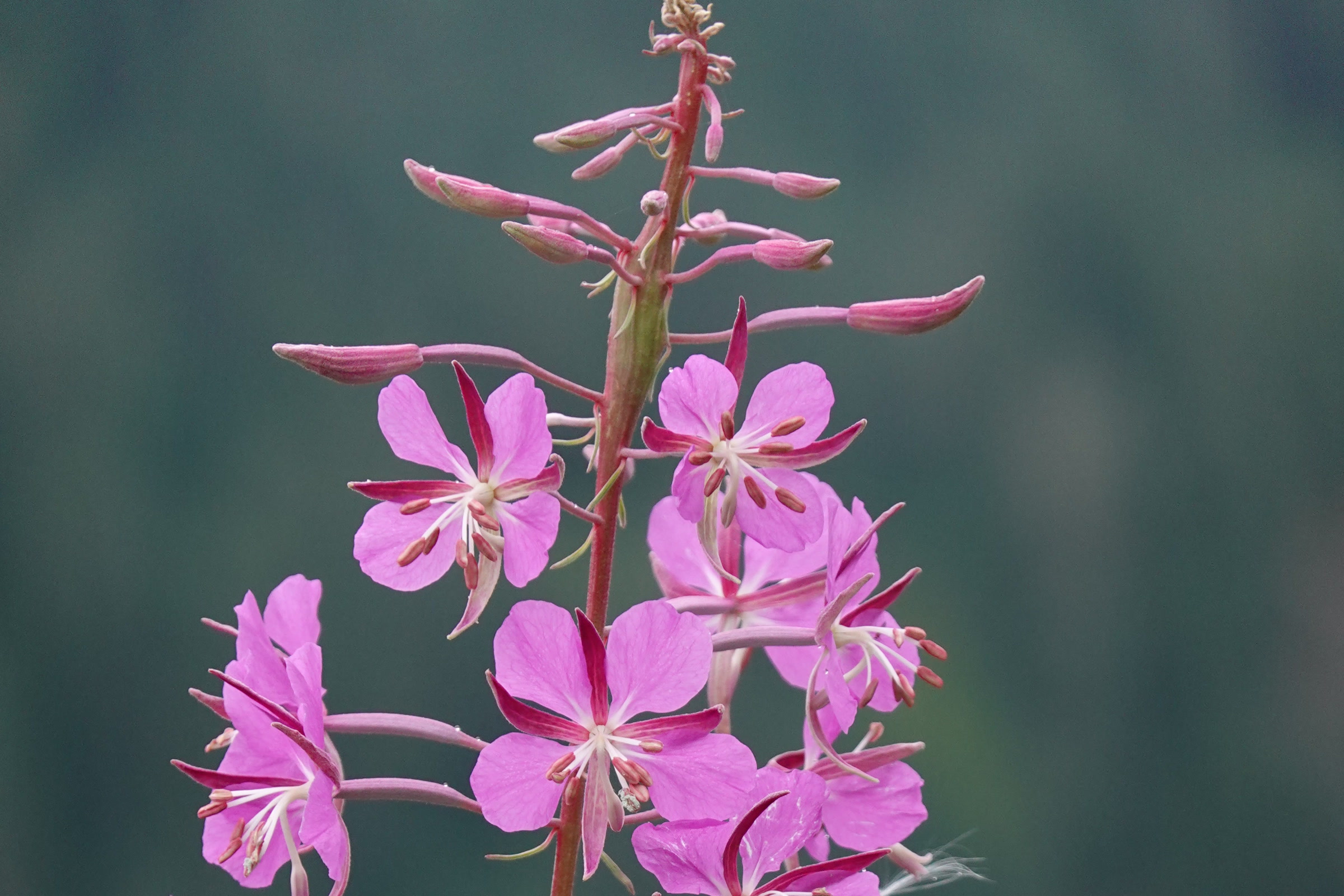
Fireweed blooms from the bottom of its tall stalk upward, so a single plant can offer flowers for weeks. Give it a corner where it can roam. Yarrow, with its flat white flower heads, is easy in dry, sunny soil and draws wild bees and many other small insects.
Late summer and fall: goldenrod and Douglas aster
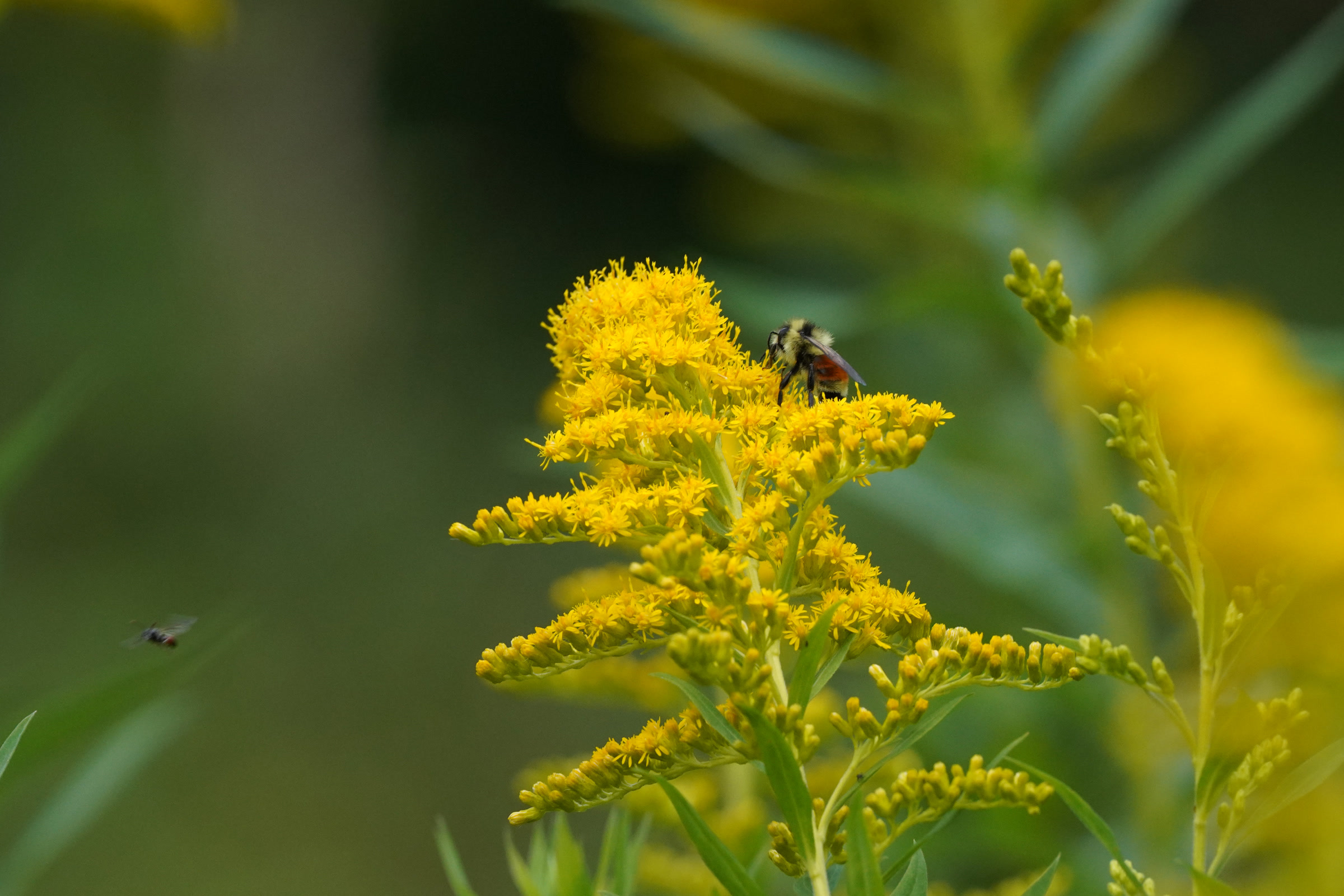
By August many gardens go quiet, yet bumble bees and other insects are still out looking for food. Goldenrod fills that gap with plumes of yellow flowers that stay busy with insects well into fall.
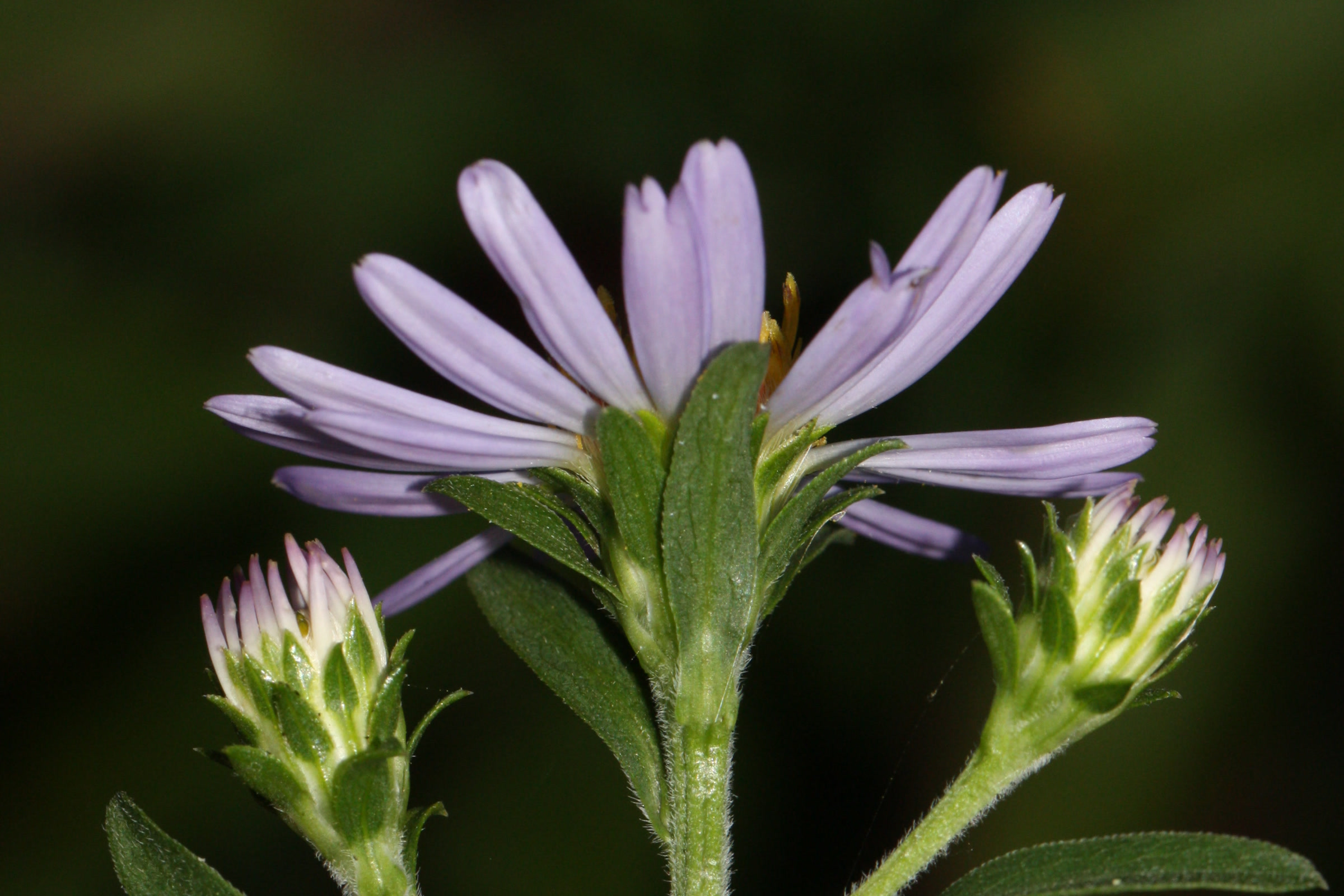
Douglas aster carries the season into autumn with lavender daisies on leafy stems. Pearly everlasting, with papery white flowers, is another good late choice for dry, sunny ground.
Native wildflowers for bees in Washington: planting tips
You do not need a big yard. A few well placed natives and these simple habits go a long way.
- Plant in fall. In western Washington, autumn rains help new roots settle before summer.
- Right plant, right place. Match each plant to your sun, shade, soil and drainage, and to its size when grown.
- Plant in groups. Clumps of the same flower are easier for bees to find and work than single plants.
- Water for the first couple of years, then let established natives fend for themselves.
- Skip the sprays. Garden chemicals keep wildlife away and can harm the insects you planted for.
- Leave a little mess. Bare soil and old stems give ground nesting and stem nesting bees a place to live.
- Choose wild forms. Straight species usually feed pollinators better than double or brightly coloured cultivars.
Plants to leave out of a pollinator garden
Some plants sold as bee friendly do harm once they escape. Common fennel is a Class B noxious weed in Washington, and garden escapes such as English ivy and Scotch broom crowd out the native plants pollinators depend on. Before you buy, check that a plant is not on the state or county weed list.
Want to know what to pull instead of plant? Our guide to invasive plant removal on the Olympic Peninsula shows how to spot the worst offenders and how volunteers help clear them.
See native plants at work near Port Angeles
If you would like to see a pollinator planting before you start your own, visit the pollinator garden at the Olympic National Park Visitor Center at 3002 Mt Angeles Rd. Friends of Olympic National Park (FONP) volunteers help care for it, and on May 2, 2026 our spring Visitor Center Cleanup included pollinator garden maintenance.
Read about the last work day on our Visitor Center cleanup event page. You can also meet local plants up close on one of our guided insect, mushroom and wildflower walks.
Frequently asked questions
What are the best native plants for pollinators on the Olympic Peninsula?
Good starting choices are red flowering currant, Oregon grape and camas for spring, Nootka rose, fireweed and yarrow for summer, and goldenrod and Douglas aster for fall. Together they give pollinators food from late winter into autumn.
When should I plant native plants in western Washington?
Fall is the best time. Autumn and winter rains help roots settle in before the dry summer. Water new plants for the first couple of years.
What native plants attract hummingbirds in Washington?
Red flowering currant is a favourite because it blooms in late winter and early spring, when hummingbirds need early nectar. Western columbine is another native with tubular flowers.
Is yarrow native to Washington?
Yes, common yarrow is native. Choose the wild white form rather than brightly coloured garden cultivars, which are often less useful to pollinators.
Where can I see a pollinator garden near Port Angeles?
Visit the pollinator garden at the Olympic National Park Visitor Center, 3002 Mt Angeles Rd. Friends of Olympic National Park volunteers help care for it on work days listed on our events page.
Plant at home, help in the park
Every native shrub and wildflower you plant adds a stepping stone for pollinators moving between town and the park. When you are ready to lend a hand on a bigger patch, see our volunteer opportunities at Olympic National Park or become a member to hear about the next garden day first.
Leave a Reply