
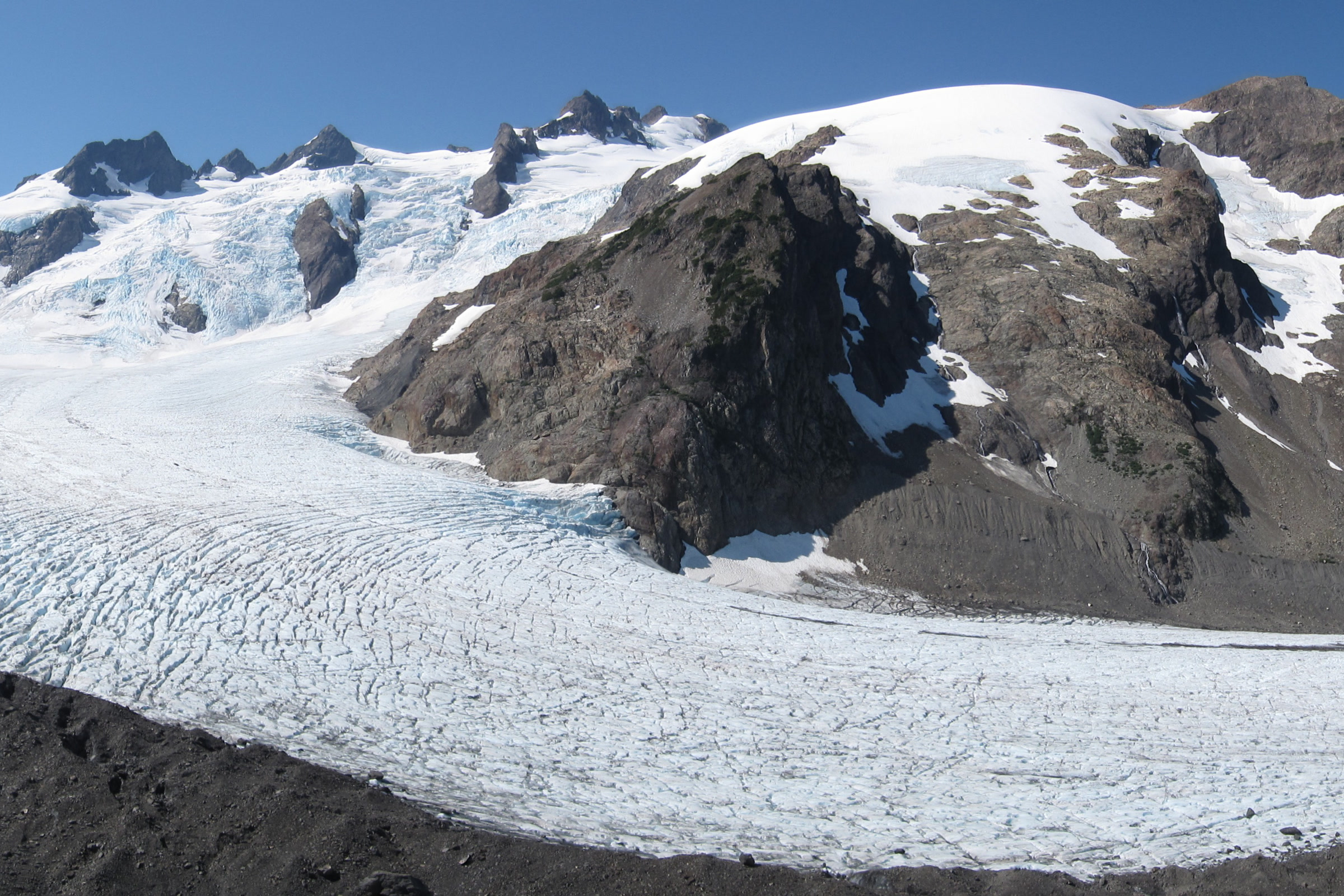
The Olympic National Park glaciers are some of the most closely watched ice in the country, and the news from them is hard. From the Blue Glacier on Mount Olympus to small ice fields tucked under the high ridges, the park’s glaciers are shrinking as the climate warms. Here is what scientists have measured, why it matters for rivers and salmon, and what the rest of us can do.
Quick answer
How many glaciers are in Olympic National Park, and are they shrinking?
Olympic National Park had 184 glaciers in 2009, down from 266 in the early 1980s, and their combined area fell by 34% in about 30 years. The largest, the Blue Glacier on Mount Olympus, is 2.6 miles long and thinning. Researchers expect the Olympic Mountains glaciers to largely disappear by 2070.
- 184 glaciers in 2009, down from 266 in the early 1980s
- Glacier area fell 34% in about 30 years
- Blue Glacier: 2.6 miles long, up to 900 feet thick
- Glacier melt is 18 to 30% of the Hoh River’s late summer flow
- Glaciers expected to largely disappear by 2070
How many glaciers are in Olympic National Park?
According to the park’s National Park Service glacier page, Olympic had 266 glaciers in 1982 and 184 in 2009. Comparing aerial photos from the late 1970s with 2009, park scientists found that glacier area had fallen by 34%. Ice volume dropped by at least 15% between 1987 and 2009.
A later study counted again using 2015 images and a wider definition that includes perennial snowfields. Because the methods differ, the counts below aren’t a straight line, but every survey points the same way.
Olympic glacier surveys compared
| Survey | What was counted | Combined area |
|---|---|---|
| 1980 inventory | 266 glaciers | 45.9 km² (about 17.7 sq mi) |
| Riedel and others, 2015 | 184 glaciers over 0.01 km² | 30.2 km² (about 11.7 sq mi) |
| Fountain and others, 2022 (2015 images) | 255 glaciers and perennial snowfields | 25.34 km² (about 9.8 sq mi) |
The 2022 study by Andrew Fountain and colleagues found that the 2015 ice cover was about half of what it was in 1900. Since 1980, 35 glaciers and 16 perennial snowfields have disappeared altogether. Its models suggest the Olympic Mountains glaciers will largely disappear by 2070.
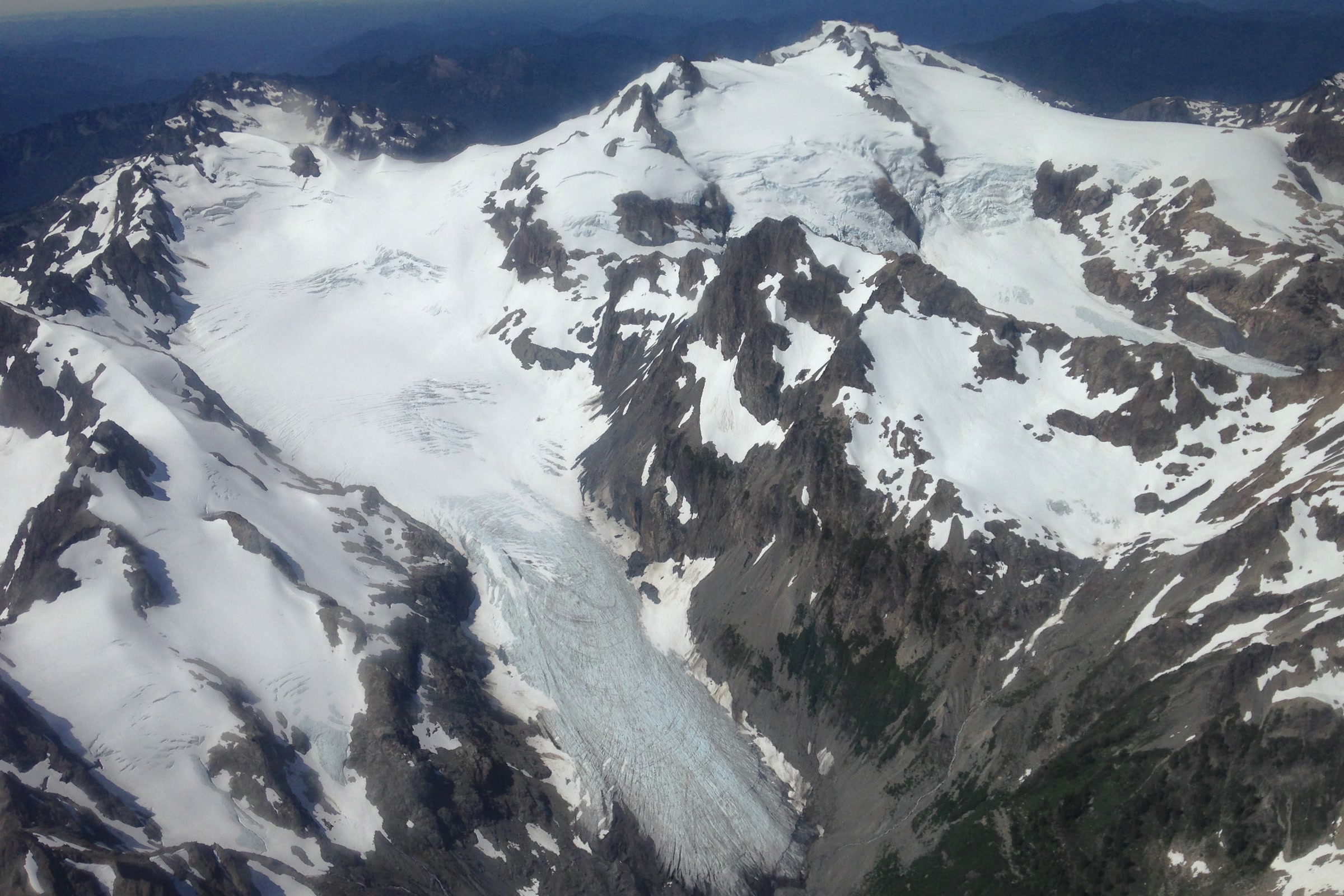
The Blue Glacier on Mount Olympus
Mount Olympus rises to 7,980 feet, the highest peak in the Olympic Mountains, and catches 50 to 70 feet of snow a year. That snow feeds the Blue Glacier, the park’s best known river of ice. It runs 2.6 miles, is up to 900 feet thick, and moves about 3 feet a day in its fastest parts.
Decades of measurement make the Blue Glacier one of the most studied glaciers in the world. That record shows steady loss. Its end retreated about 325 feet between 1995 and 2006, and the lower glacier thinned by 178 feet from 1987 to 2009.
A century of change in photos
Some of the clearest evidence comes from repeat photography: the same view, shot decades apart. The park pairs an 1899 photo of the Blue Glacier with one from 2008, and the difference is striking. Old Forest Service photos like the one below help fill in the story.
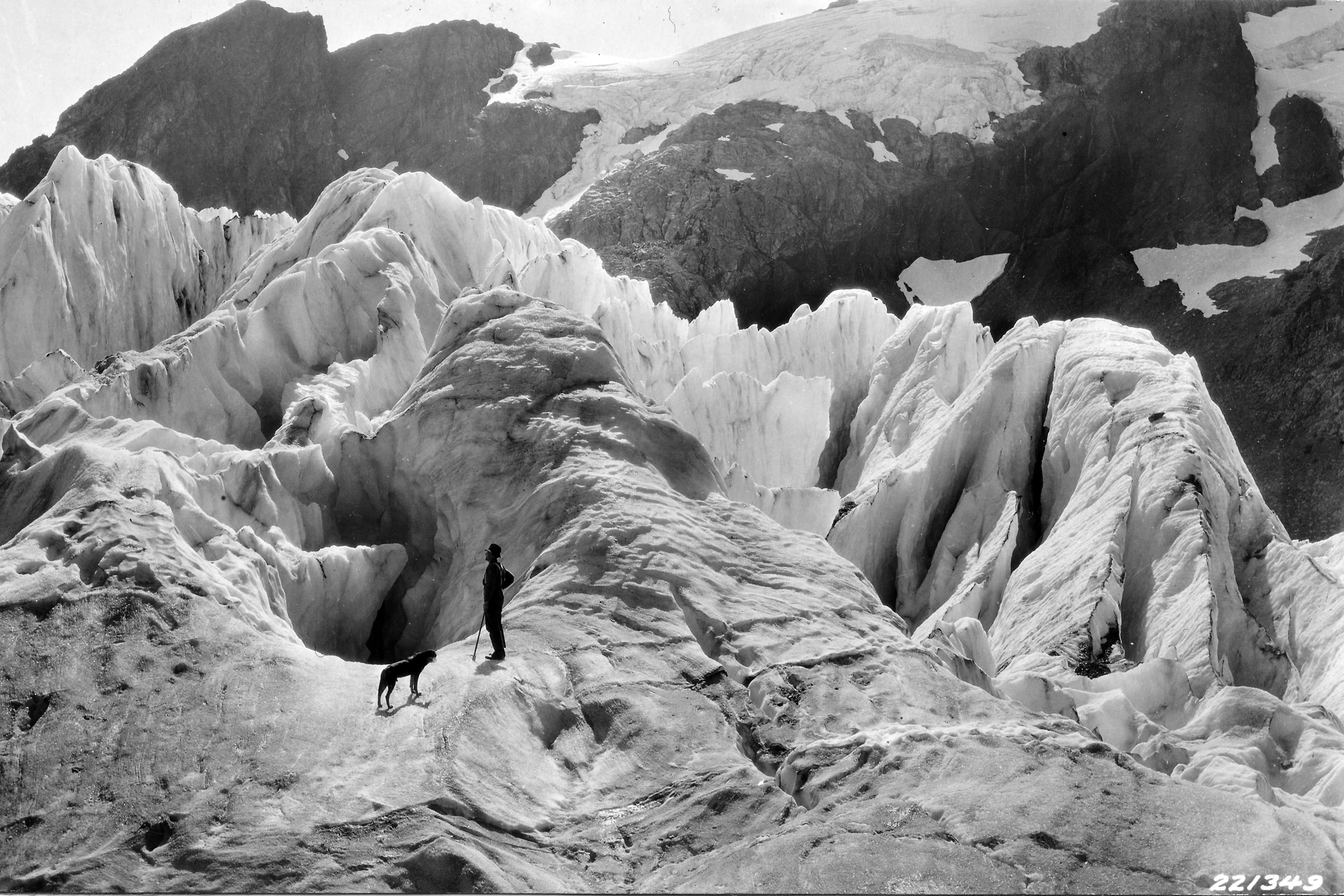
Glaciers melting in the Olympic Mountains
Some glaciers are already gone. The Anderson Glacier on Mount Anderson shrank to less than 10% of its former size between 1927 and 2009, and was essentially gone by 2015. The Lillian Glacier vanished completely between 1905 and 2010.
Why so fast? Olympic glaciers sit close to the Pacific, and the 2022 study found they respond mainly to air temperature rather than to how much falls from the sky. Warmer winters turn more snow to rain, and warmer summers melt more ice.
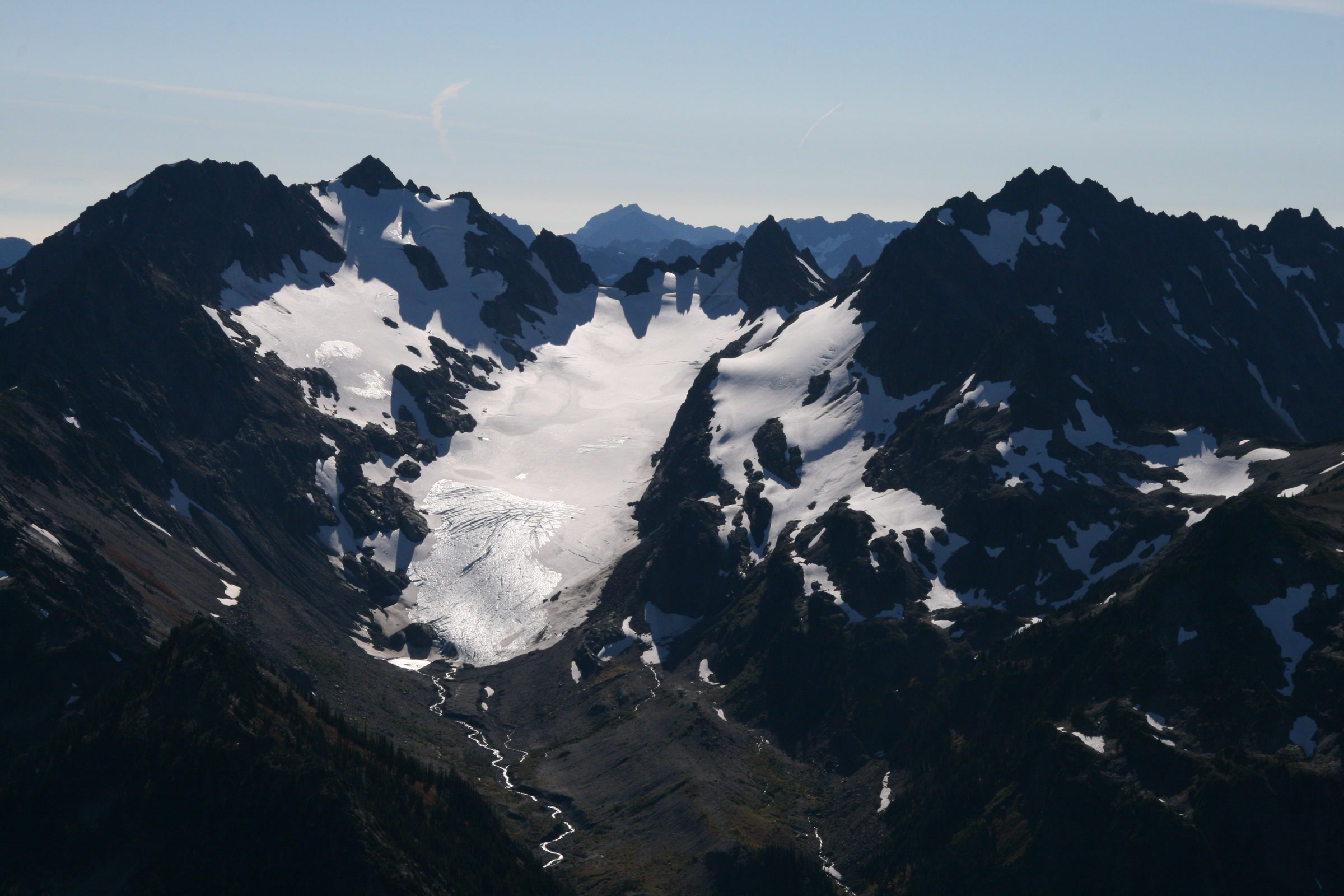
Why the glaciers matter: rivers, salmon and summer
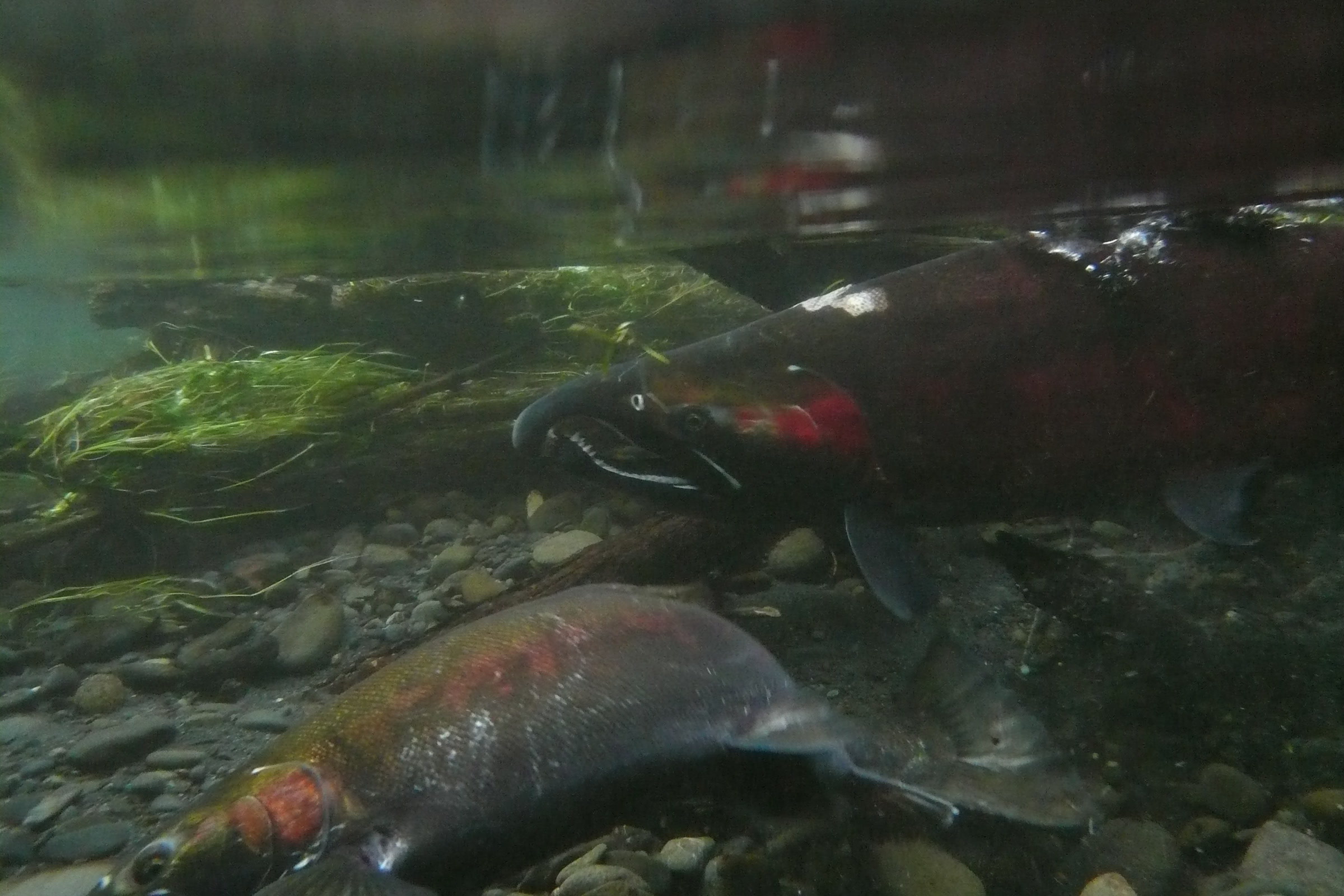
Olympic summers are surprisingly dry. Glacier melt helps keep rivers running and cold when the rain stops, which matters for salmon, steelhead and bull trout.
The Hoh River depends on ice the most. A 2015 study in the Journal of Glaciology by Jon Riedel and colleagues estimated that glacier melt makes up 9 to 15% of the Hoh’s flow from May through September. In August and September that share rises to 18 to 30%.
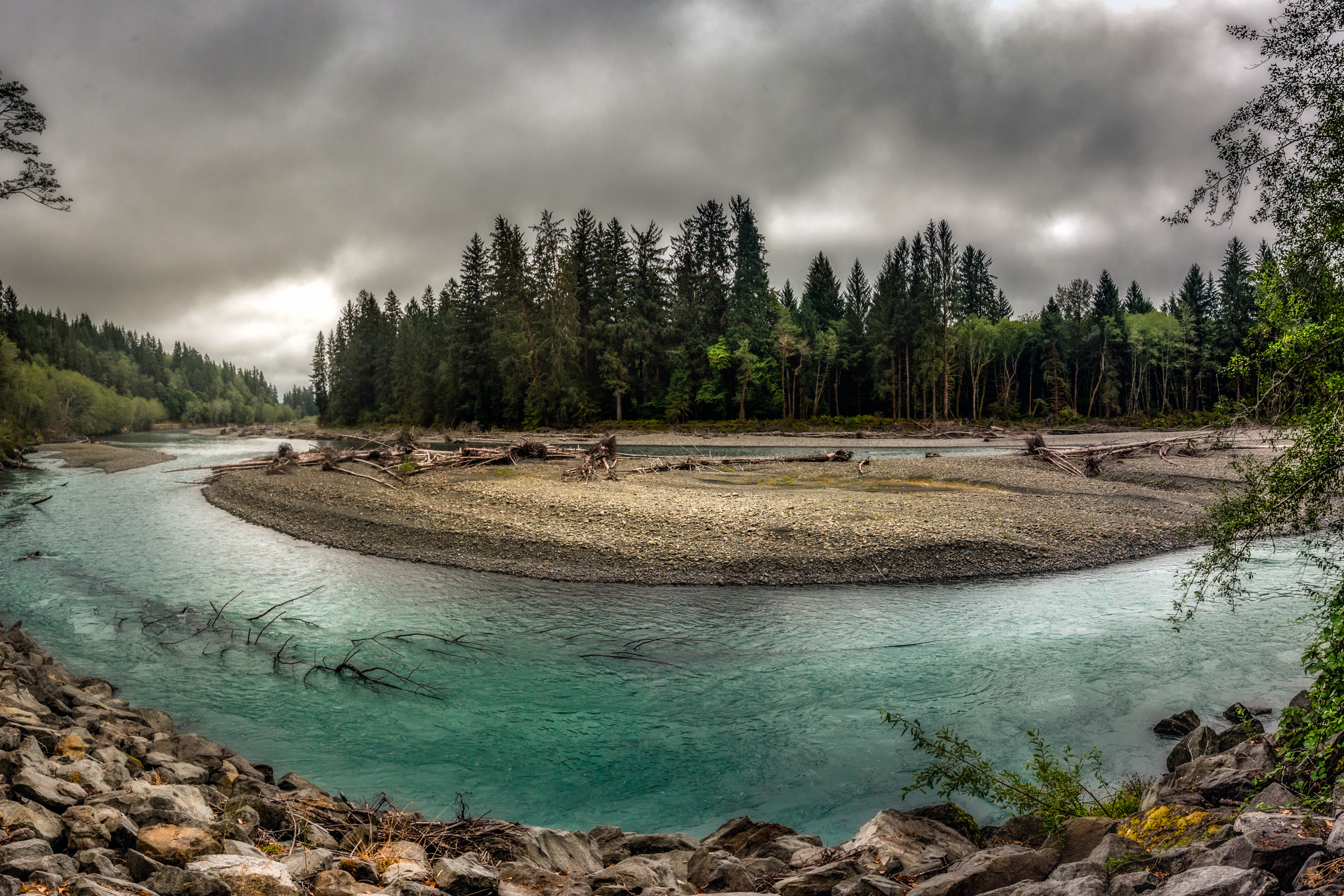
Other rivers lean on ice less. The same study put glacier melt at 2.5 to 4% of the Elwha’s summer flow. You can read how that river is healing in our story on Elwha River dam removal and restoration.
Seeing glaciers from Hurricane Ridge
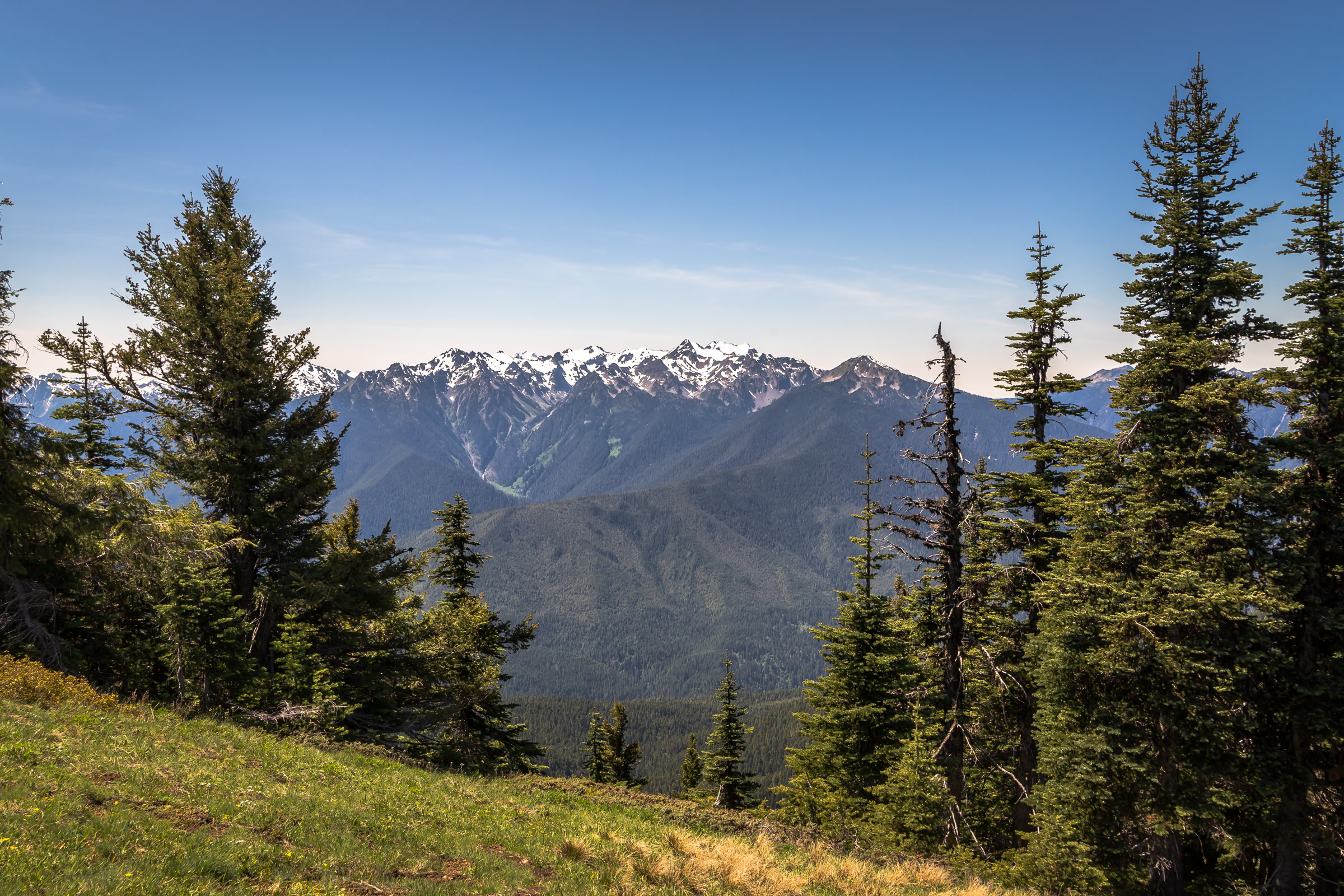
You don’t need to climb to see the ice. Hurricane Ridge sits 17 miles south of Port Angeles, and on a clear day the view south and southwest takes in the snowy interior of the park, with Mount Olympus and the Bailey Range on the skyline. Binoculars help.
Summer visitors come for the meadows too, so pair a glacier view with our guide to Hurricane Ridge wildflower season. Reaching the Blue Glacier itself is a long wilderness trip up the Hoh valley, so check park rules and permits first.
Climate change in Olympic National Park: how you can help
No one person can save a glacier, but we can all help the park cope with change. A few ways to start:
- Learn from the scientists. Glaciers have been a topic in the park’s Winter Perspectives lecture series, which we support.
- Tread lightly. Fragile meadows near snow and ice heal slowly, so follow the same Leave No Trace habits we use on the coast.
- Take a repeat photo. Photograph a favourite viewpoint each year from the same spot and note the date. Over time, your own pictures tell the story.
- Support the park and its research. Membership in a friends group keeps local people involved in the park’s future.
The glaciers are one reason Olympic is recognised around the world. Read why in our post on Olympic National Park as a World Heritage Site, and if you’d like to stand with the park, become a member of Friends of Olympic National Park.
Frequently asked questions
How many glaciers are in Olympic National Park?
The National Park Service counted 184 glaciers in 2009, down from 266 in 1982. A 2022 study that also counted perennial snowfields found 255 ice bodies in 2015.
How big is the Blue Glacier on Mount Olympus?
The Blue Glacier is about 2.6 miles long and up to 900 feet thick, and it moves about 3 feet a day in its fastest parts.
Are the glaciers in the Olympic Mountains melting?
Yes. Glacier area fell by 34% in about 30 years up to 2009, the Anderson and Lillian glaciers are essentially gone, and researchers expect the glaciers to largely disappear by 2070.
Can you see glaciers from Hurricane Ridge?
On a clear day you can see the snowy interior of the park, with Mount Olympus and the Bailey Range on the skyline. Binoculars help.
Why do glaciers matter for salmon?
Glacier melt keeps rivers flowing and cold in dry summers. In August and September it makes up an estimated 18 to 30% of the Hoh River’s flow.
Leave a Reply