
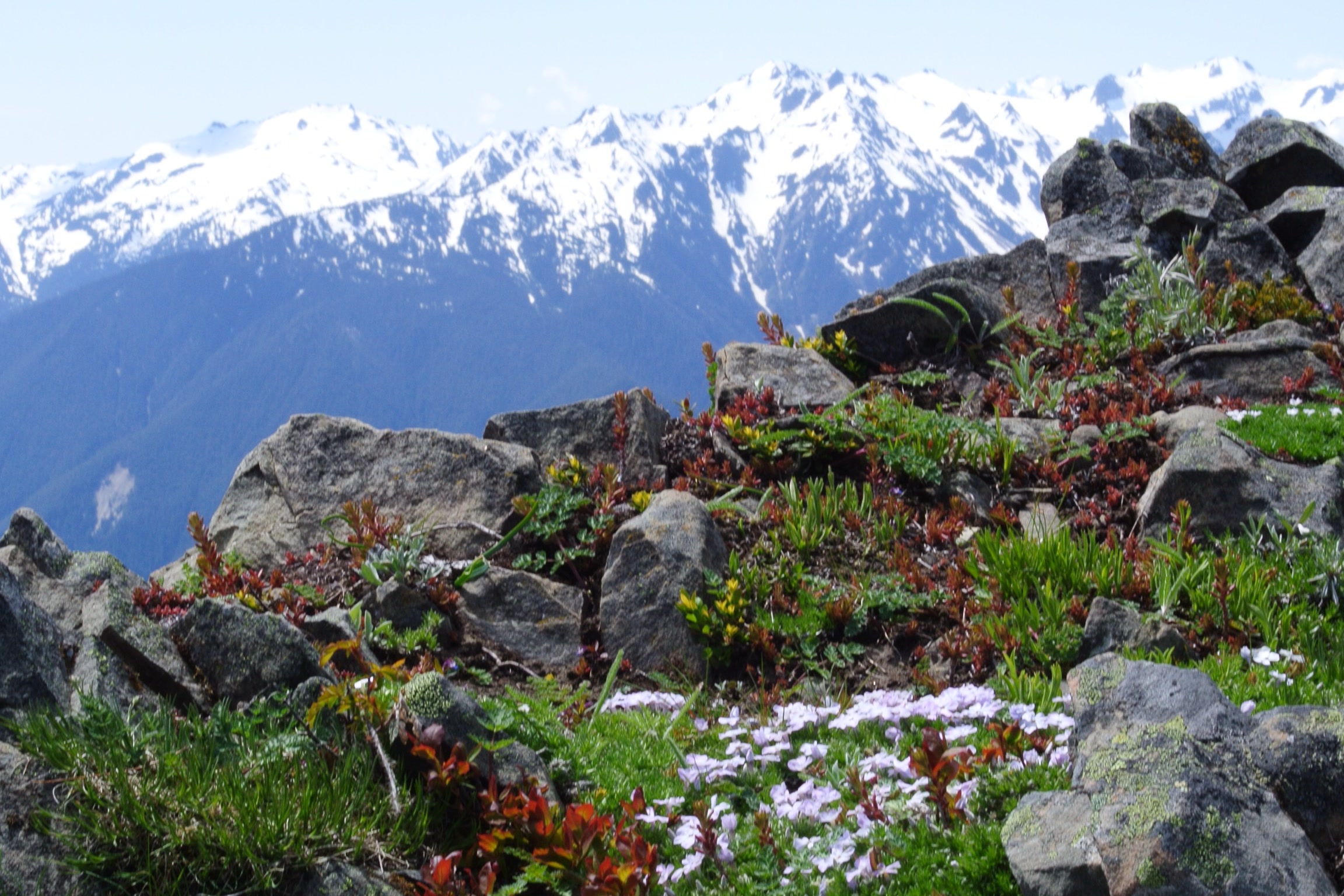
If you want to know when to see Hurricane Ridge wildflowers, the short answer is summer, as soon as the snow lets go. In an average year the meadows peak somewhere between late June and early August, and many hikers aim for July. The exact weeks move every year, so it pays to understand what drives the bloom.
We are Friends of Olympic National Park (FONP), a volunteer-led friends group based in Port Angeles. Guided wildflower walks are one of our projects, and this guide shares what we have learned about timing, trails and meadow manners.
Why the bloom date changes every year
Hurricane Ridge sits 17 miles south of Port Angeles, high above the Strait of Juan de Fuca. According to the park, the ridge traditionally records 30 to 35 feet of snow a year, and snow or heavy rain can linger into June at higher elevations. The flowers cannot start until that snowpack melts.
A big snow year pushes everything later. In June 2012 a park ranger told the Peninsula Daily News that the ridge normally reaches its summer height in late June, but he expected that year’s bloom to start in late July. The year before, the peak slipped into August.
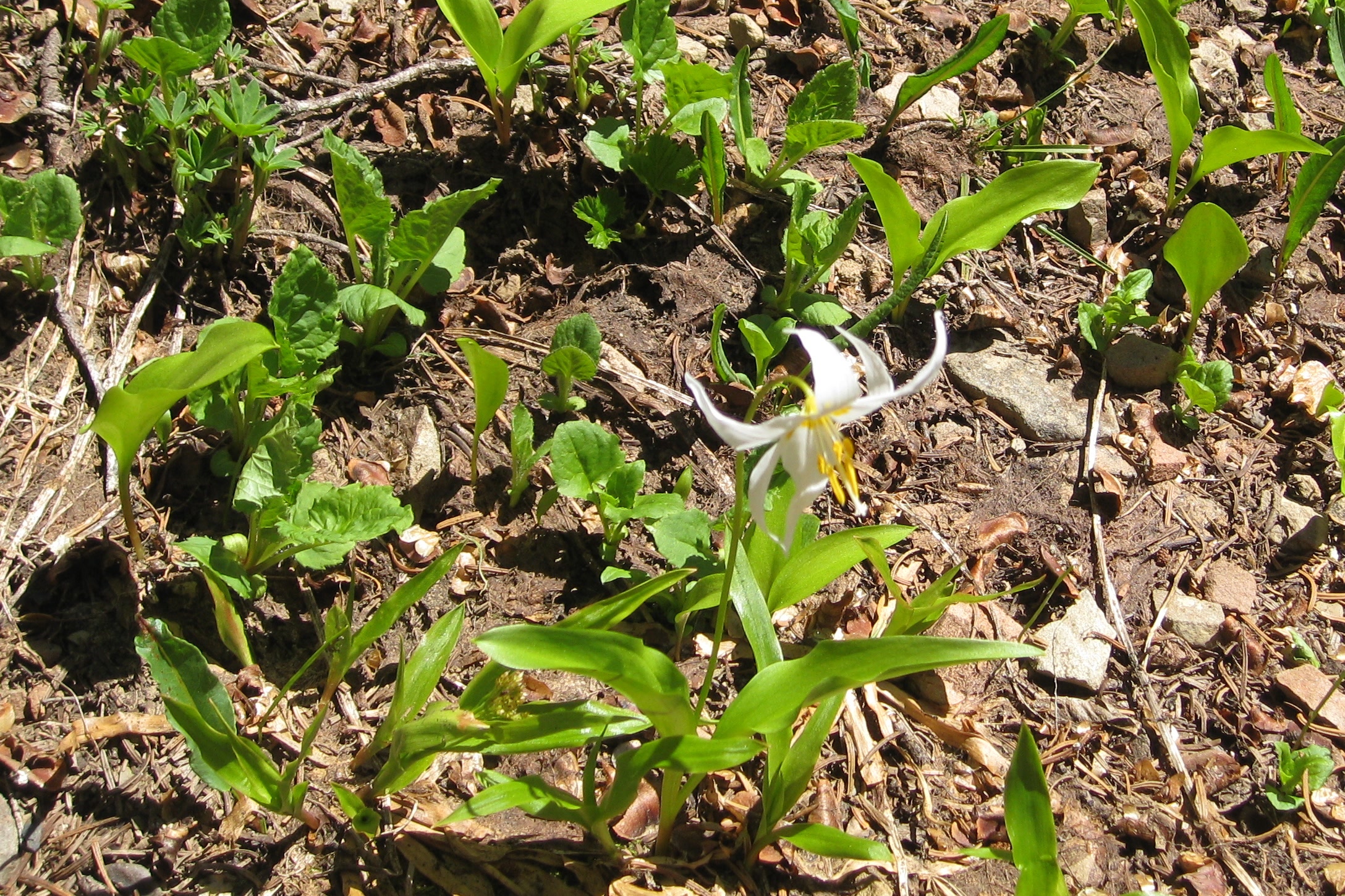
Slope and elevation matter too. South-facing slopes clear first, while shady hollows and north sides hold snow for weeks. So on a single walk you can see fresh early flowers in one dip and fading ones on the next sunny bank.
How the season unfolds
Think of the bloom as a wave that follows the melting snow uphill. The stages below are a rough guide, not a calendar.
Hurricane Ridge bloom stages compared
| Stage | What you may see | Where to look |
|---|---|---|
| Just after snowmelt | Avalanche lilies | Edges of shrinking snow patches |
| Early summer | Speedwell, fleabane | Sunny, early-melting slopes |
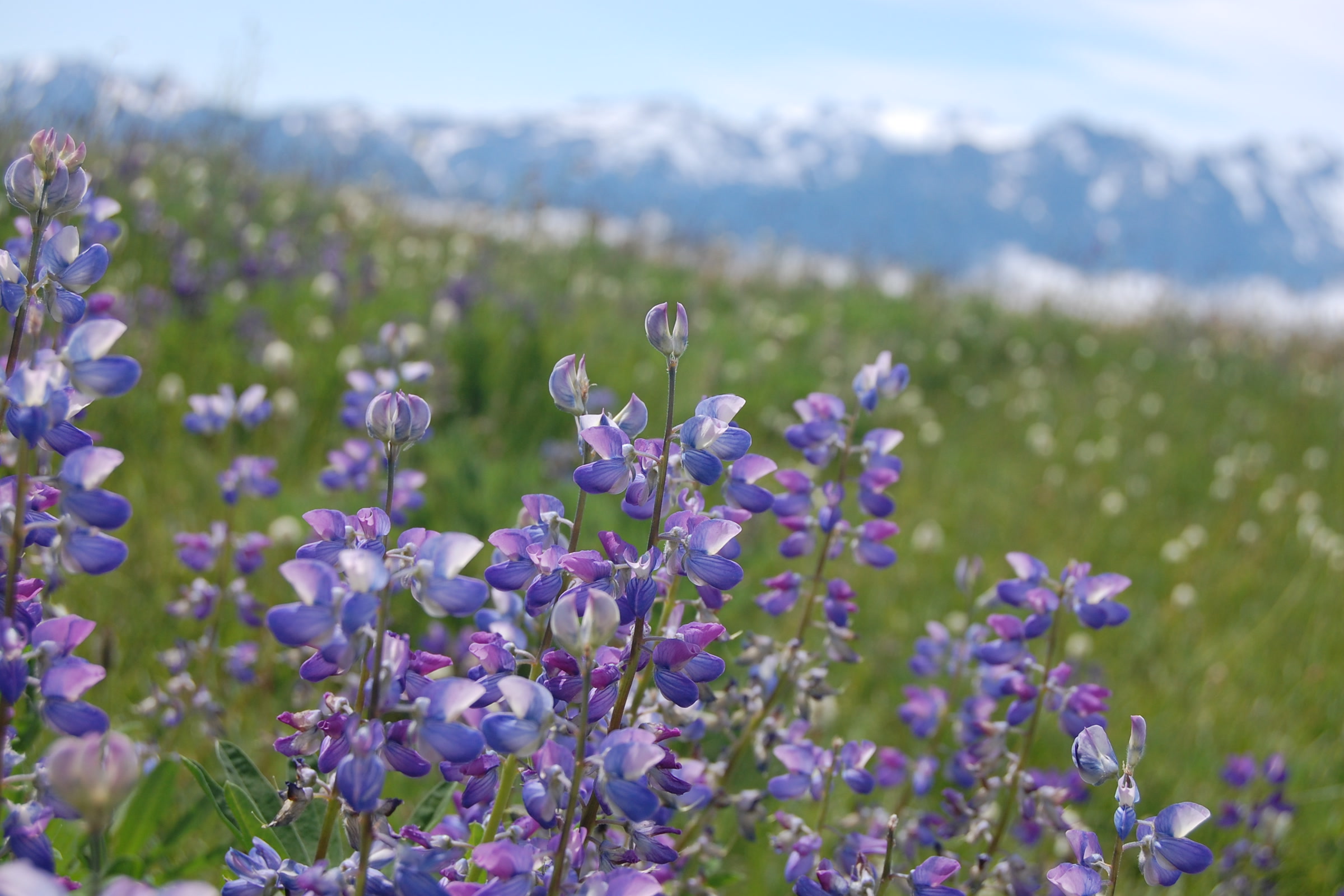
| Peak bloom | Broadleaf lupine, paintbrush, pink mountain heather | Open meadows and trail edges |
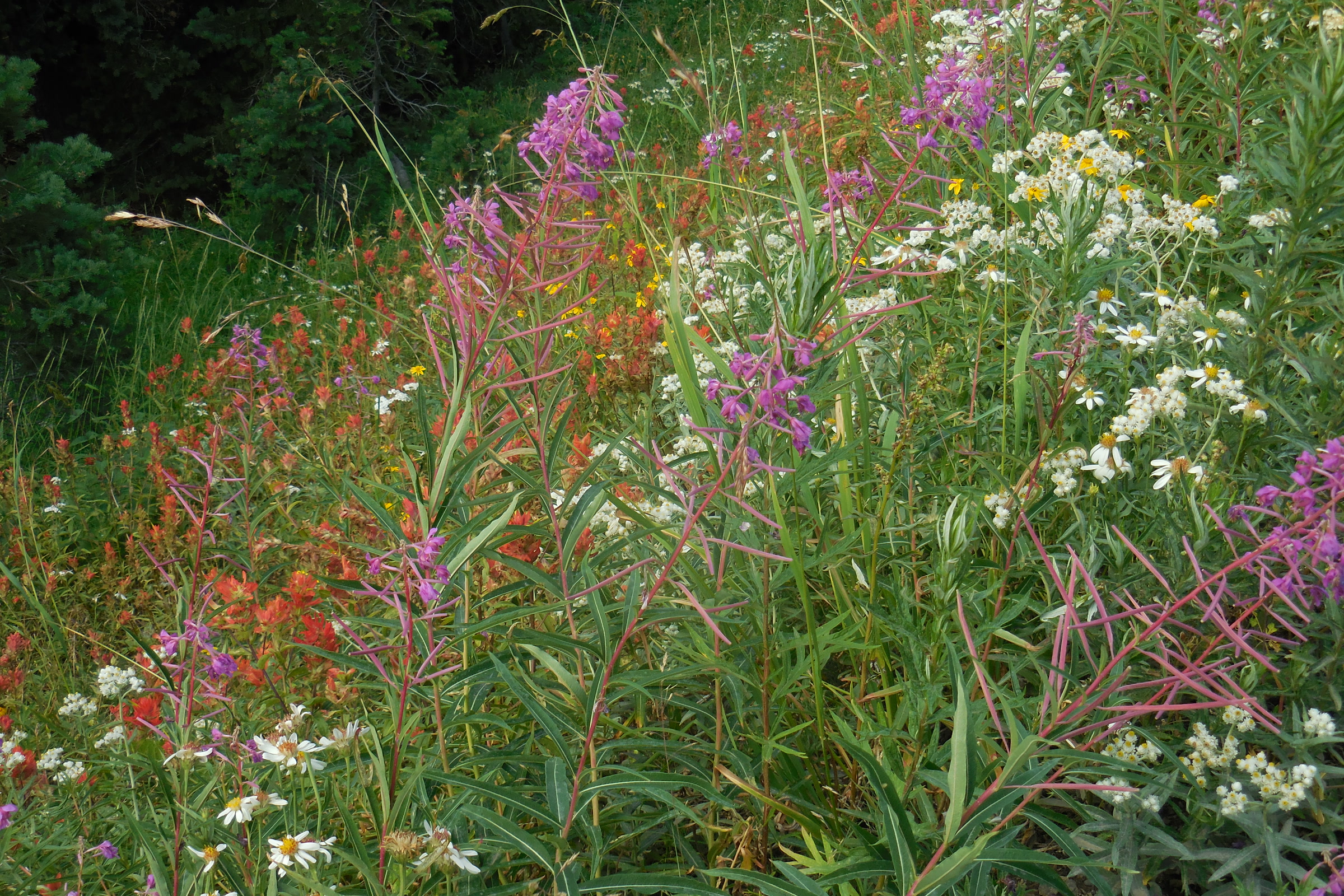
| Late summer | Harebells, fireweed, lingering lupine | Higher, later-melting slopes |
Late summer on the ridge is usually dry, because very little rain falls in the high country in summer. One hiker reporting from Hurricane Hill at the end of July 2025 found most flowers past their prime, with harebells the most common. In a late snow year, lupine can still look fresh in August.
Where to see Hurricane Ridge wildflowers
You don’t need a long hike. Several short trails start right at the Hurricane Ridge parking area, and the meadows begin at the edge of the pavement. These distances come from the park’s Hurricane Ridge area brochure.
Hurricane Ridge flower trails compared
| Trail | One way | Surface and climb | Good for |
|---|---|---|---|
| Big Meadow | 0.25 mile | Paved, nearly flat | Open meadow views |
| Cirque Rim | 0.5 mile | Paved, nearly flat | Views to the Strait |
| High Ridge | 0.5 mile loop | Partly paved, 220 feet | 360 degree views |
| Hurricane Hill | 1.6 miles | Paved, about 700 feet | The classic flower walk |
Hurricane Hill
Hurricane Hill is the favourite. The paved trail climbs to a summit of 5,757 feet, according to the Washington Trails Association’s Hurricane Hill guide. The upper part is steep, so take it slowly and enjoy the flowers on the way.
Wildflowers to look for
The park lists these among the wildflowers of its subalpine zone, the band just below treeline. In the Olympics, treeline lies between 5,000 and 6,000 feet.
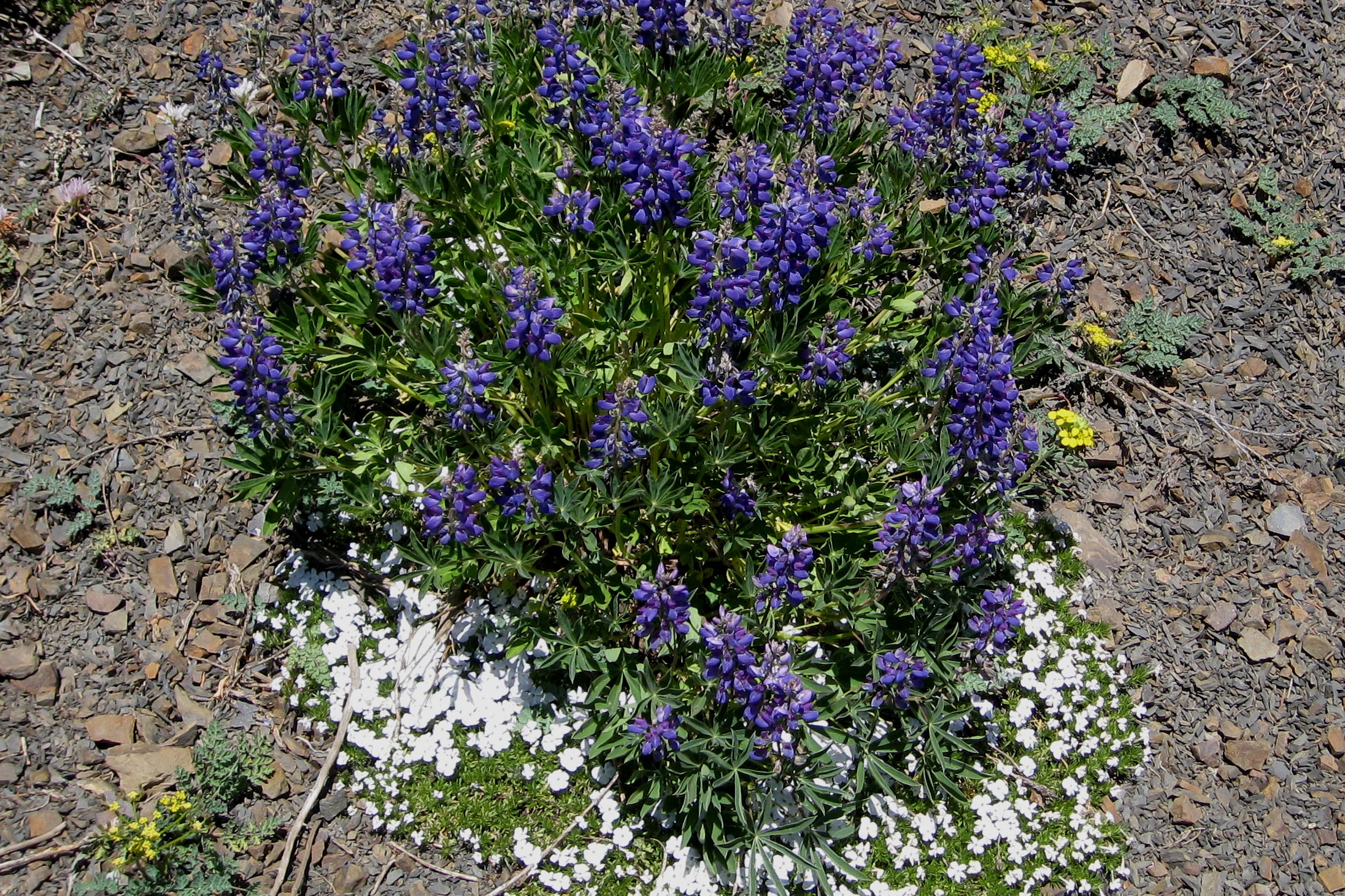
- Broadleaf lupine: purple spikes that can colour whole slopes.
- Paintbrush: bright red and orange tufts.
- Avalanche lily: nodding white flowers that appear as the snow retreats.
- Red mountain heather, penstemon, shooting star, beargrass and violets.
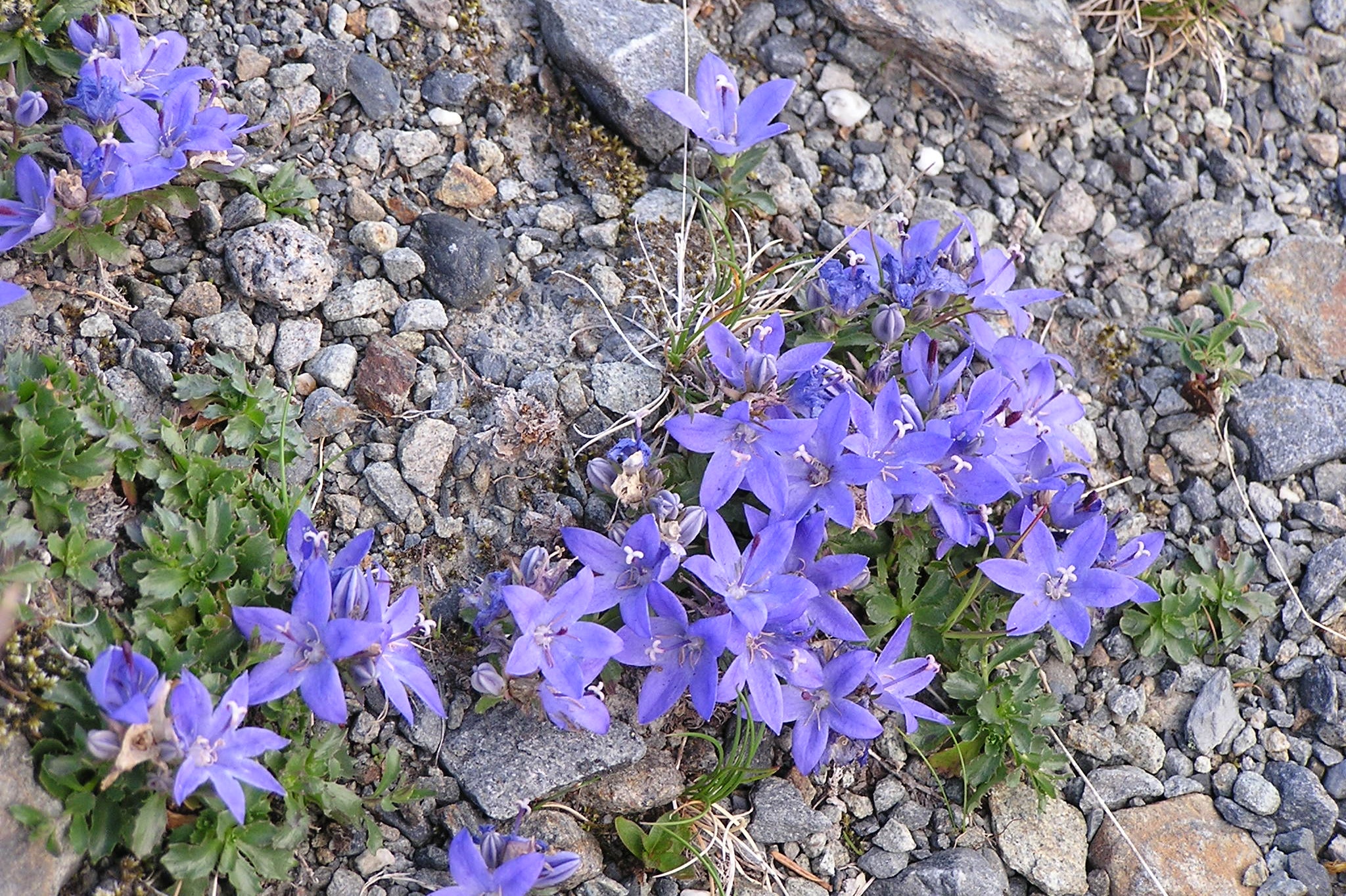
Higher up, in the rocky alpine zone, the park names spreading phlox and smooth douglasia. It also names two flowers found only in the Olympic Mountains: Piper’s bellflower, which often grows in rock cracks, and Flett’s violet.
Before you go: Hurricane Ridge today
The Hurricane Ridge Day Lodge burned down on May 7, 2023. The park now runs temporary facilities with restrooms and trash bins, but there is no food service, gift shop or drinking water. Fill your water bottles before you drive up.
- Hurricane Ridge Road is open throughout summer, but weather can close it at any time.
- Clallam Transit runs a special summer bus route from downtown Port Angeles.
- Mountain weather changes fast, and thunderstorms are possible in the high country.
Check current conditions on nps.gov/olym before you leave home. If you have time on the way, our guide to the Olympic National Park Visitor Center in Port Angeles explains what to see there first.
Tips for a good flower day
- July and August are the park’s busiest months, so arrive early in the day for easier parking and softer light.
- Bring layers and rain gear, even on a sunny morning.
- Pack a simple wildflower guide or a phone app, and a hand lens for tiny blooms.
Meadow manners: stay on the trail
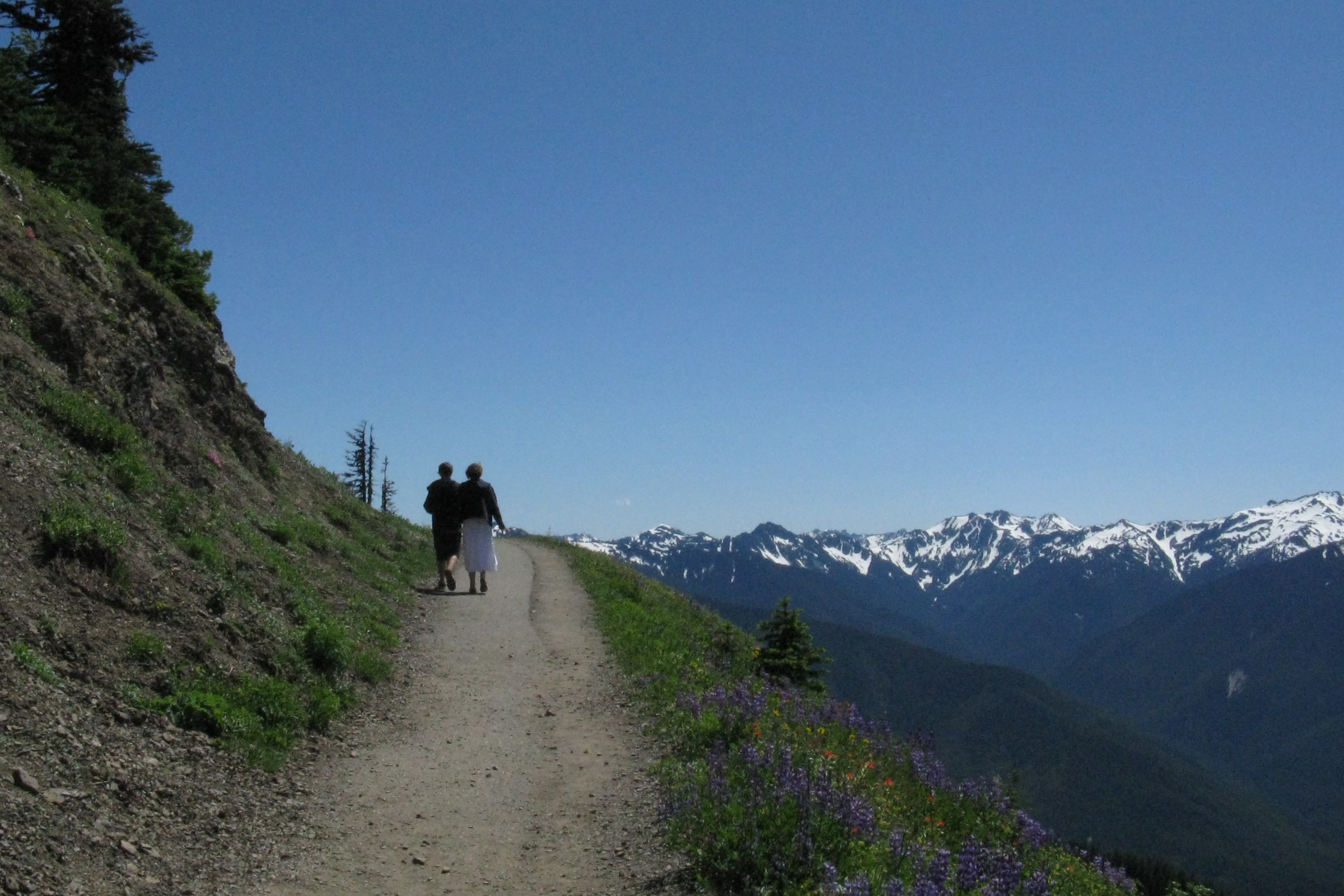
Subalpine meadows have only a few snow-free weeks to grow, flower and set seed. Alpine plants even form next year’s buds the year before, so one trampled patch can lose more than a single summer. The park asks visitors to stay on snow or designated trails to protect them.
- Stay on the path, even for the perfect photo.
- Leave every flower where it grows. Collecting plants is generally prohibited in the park.
- Leave pets at home: pets and bicycles are not allowed on the trails.
- Don’t feed the blacktail deer that graze in the meadows.
Join a guided wildflower walk at Hurricane Ridge
A naturalist’s eye turns a pretty view into a story. Our guided wildflower walks in Olympic National Park move slowly, stop often and help you name what you see. Back in 2006, FONP members took an evening wildflower walk to Hurricane Hill with a park naturalist, and that unhurried style is still our model.
Because the bloom moves with the snow, we set walk dates close to the season and post them on our upcoming events calendar. Members hear first, so become a member of Friends of Olympic National Park if you’d like an early invitation.
Love flowers closer to town? Help tend the Visitor Center pollinator garden, or come back in autumn for our guide to mushroom season in Olympic National Park.
Frequently asked questions
When is the best time to see wildflowers at Hurricane Ridge?
Usually from late June to early August, with July the most popular month. A heavy snow year can push the peak later, so check recent trail reports before you go.
What wildflowers grow at Hurricane Ridge?
Look for broadleaf lupine, paintbrush, avalanche lilies, red mountain heather, penstemon and spreading phlox. Piper’s bellflower and Flett’s violet grow only in the Olympic Mountains.
Is the Hurricane Hill trail paved?
Yes. The park lists it as a paved trail of 1.6 miles one way with a climb of about 700 feet. The upper section is steep.
Can I pick wildflowers at Hurricane Ridge?
No. Collecting plants is generally prohibited in Olympic National Park. Please stay on the trail and leave every flower for the next visitor and the pollinators.
Are there guided wildflower walks at Hurricane Ridge?
Friends of Olympic National Park offers guided wildflower walks as one of its projects. Dates are set close to the bloom and posted on our events page.
Leave a Reply