
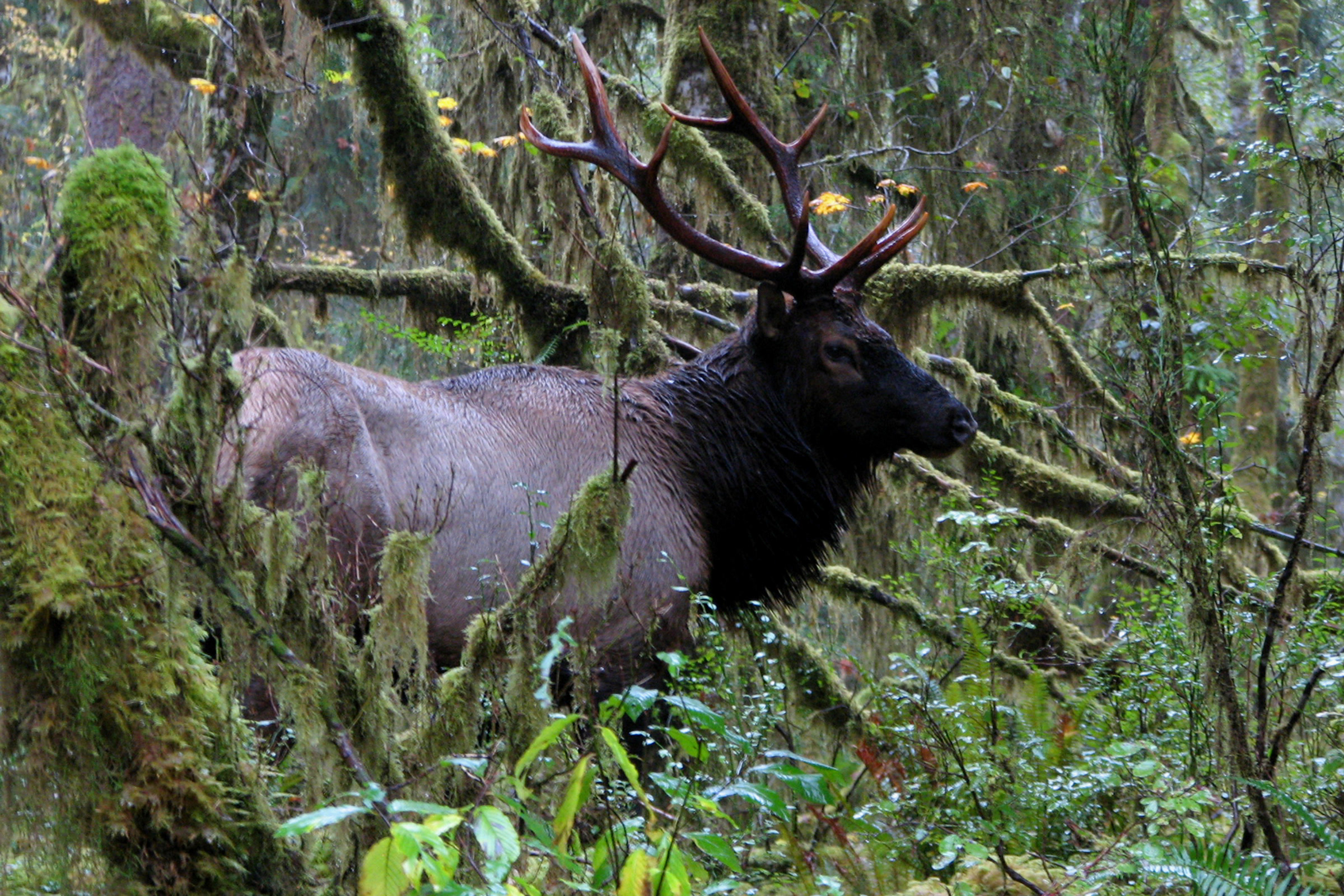
Roosevelt elk in Olympic National Park are the largest land mammals in the park, and seeing a herd step out of the mossy Hoh Rain Forest is a moment few visitors forget. These elk helped bring the park into being, and they still shape the forests they live in. Here is how to find them, and how to watch them safely.
Quick answer
Where can you see Roosevelt elk in Olympic National Park?
Roosevelt elk in Olympic National Park are most often seen in the lower valleys and rain forests, especially the Hoh Rain Forest, around dawn and dusk. About 3,000 to 4,000 elk are protected in the park. Stay at least 150 feet away, and take extra care during spring calving and the September rut.
- The largest land mammal in Olympic National Park
- Bulls weigh up to 1,100 pounds
- Mount Olympus National Monument was created in 1909 to protect them
- The rut, or mating season, comes in September
Meet the Roosevelt elk
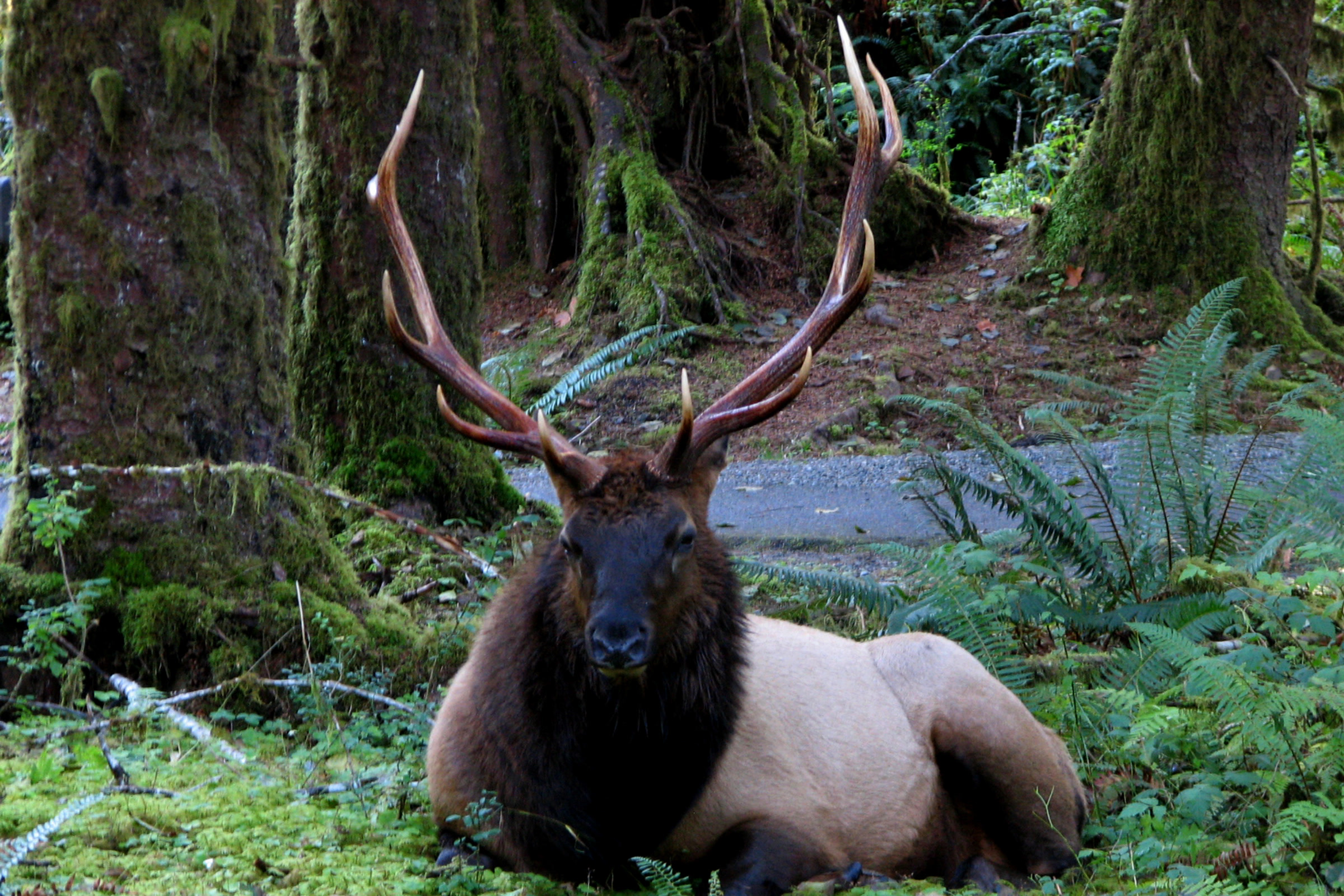
The park says it protects the largest fully wild herd of Roosevelt elk in the Pacific Northwest, about 3,000 to 4,000 animals. They are darker and larger than Rocky Mountain elk. The park’s Roosevelt elk page puts cows at about 600 to 700 pounds and bulls at up to 1,100 pounds.
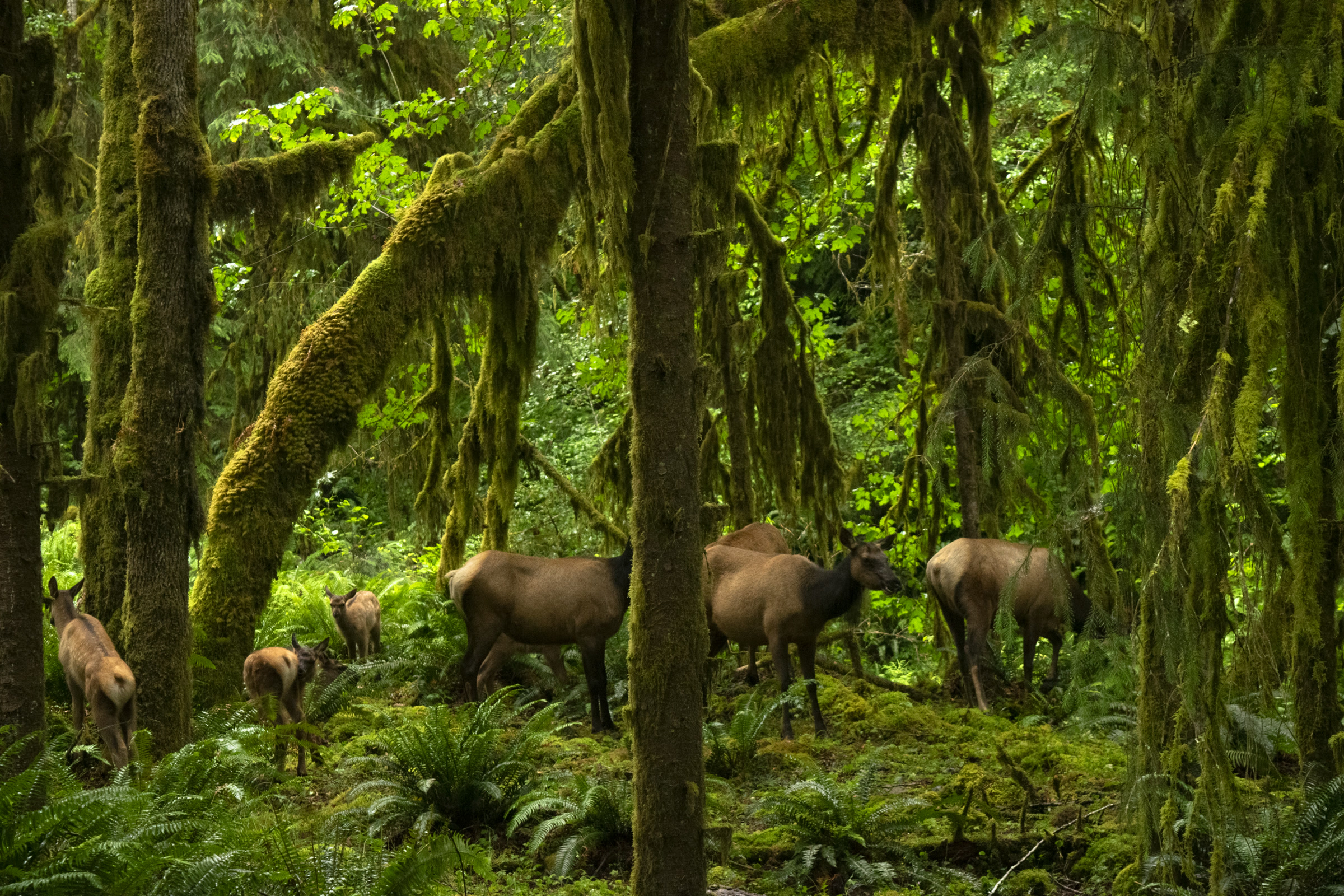
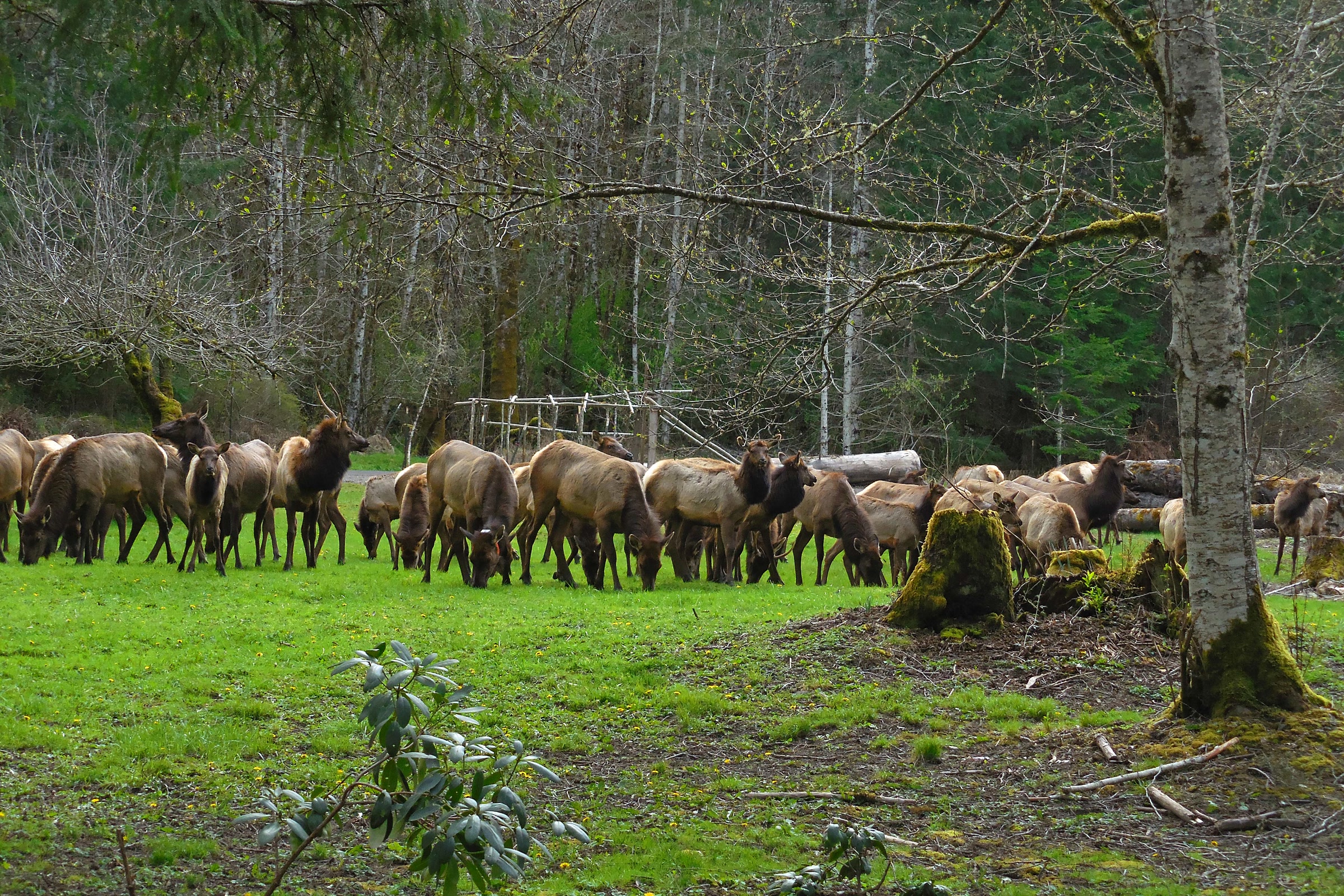
Only males grow antlers. Bulls shed them each spring and grow a new set over the summer, so the big racks show best in late summer and fall. In the Hoh, cows and calves travel in herds of about 20, while bulls wander alone or in small groups.
Roosevelt elk bulls and cows compared
| Feature | Bulls | Cows |
|---|---|---|
| Weight | Up to 1,100 pounds | About 600 to 700 pounds |
| Antlers | Yes, shed each spring | None |
| Social life | Alone or small groups | Herds with their calves |
| In the rut | Bugle and spar for cows | Gather in harems |
How elk shape the rain forest
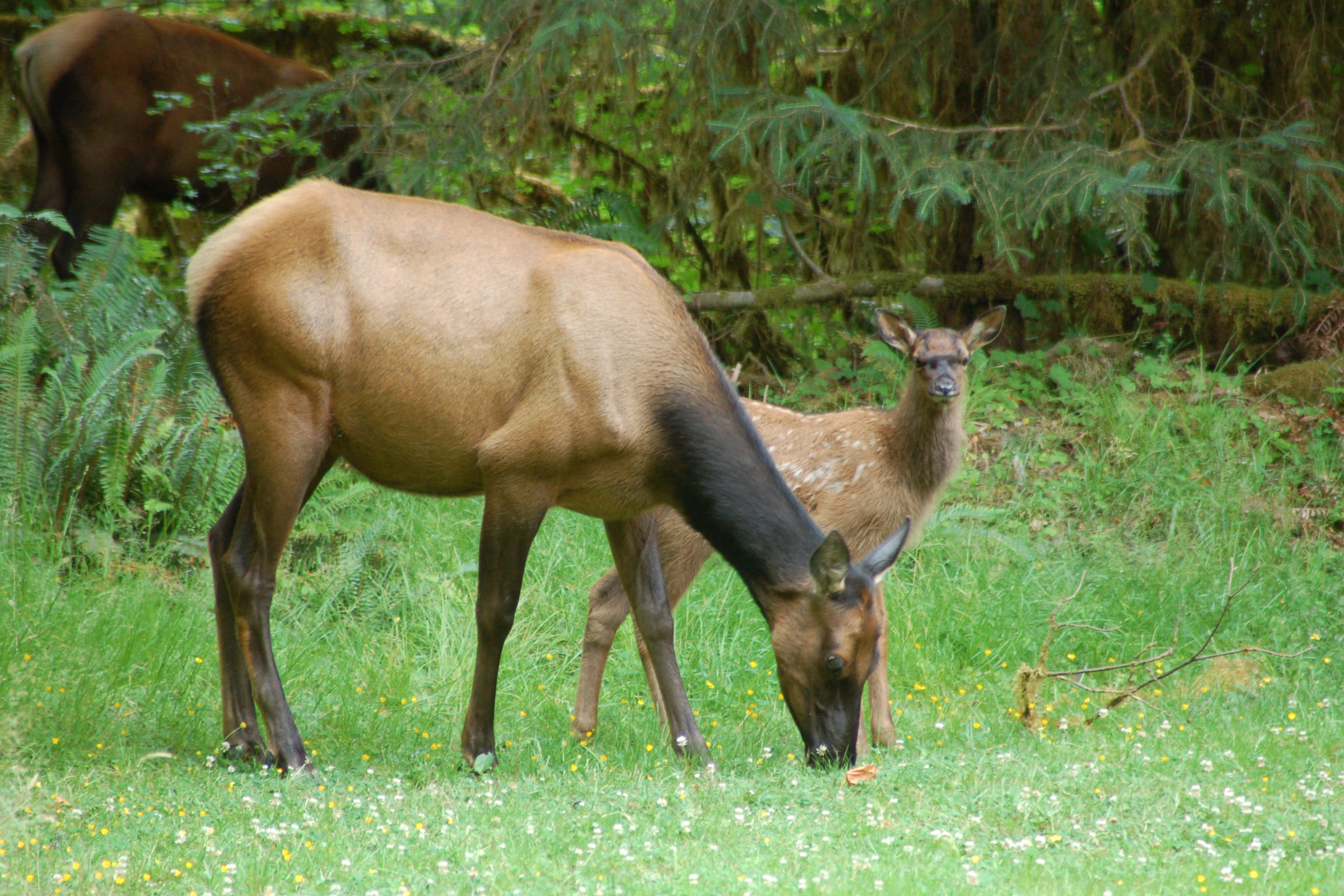
Walk the Hoh and you will notice how open the forest floor feels beneath the giant trees. That is partly the elk’s work. The park explains that elk browse understory plants, creating the open, park-like character of the forest, and that their grazing often helps keep the understory open.
Elk are also the largest plant eaters on the peninsula, so their numbers say a lot about the health of the whole ecosystem. Too many in one place can overgraze and strip an area of plants. Read more about these forests in our guide to the temperate rainforests of Olympic National Park.
The elk that helped create a national park
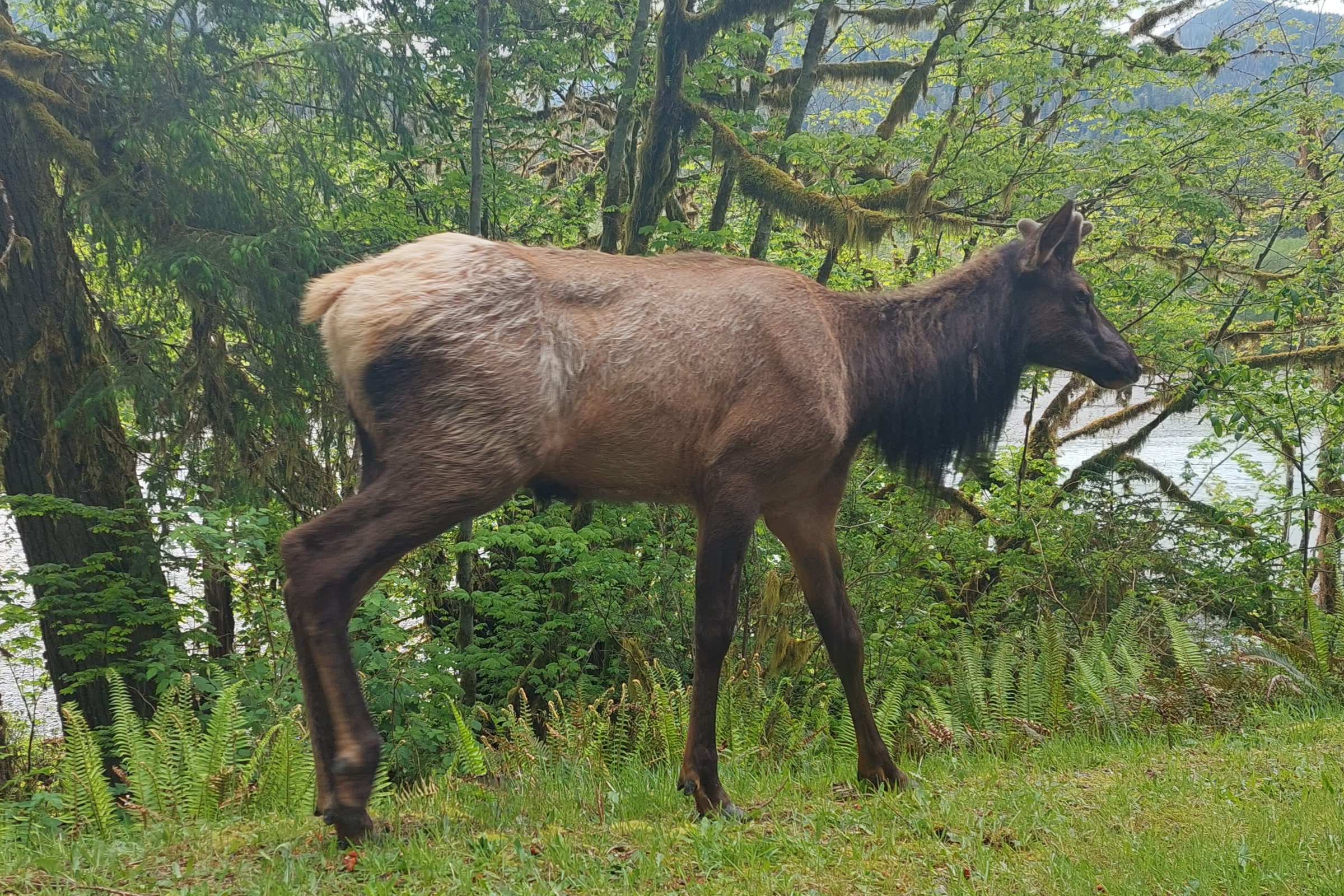
By the end of the 1800s, elk had nearly disappeared from the Olympic Peninsula. In 1909 President Theodore Roosevelt established Mount Olympus National Monument to protect them from overhunting. The elk, once called Olympic elk, were renamed in his honour.
By the time Olympic National Park was established in 1938, elk numbers had rebounded. Our Olympic National Park history timeline follows the full story, from forest reserve to monument to park.
Where to see elk in Olympic National Park
Most sightings happen in the park’s lower valleys and rain forests, and the park’s Quinault area brochure suggests looking in old homestead fields. Elk can turn up at any hour, but dawn and dusk are best. The broad west side valleys are ideal habitat, and their herds are larger and less migratory than those on the east side.
Elk viewing areas compared
| Area | What to look for |
|---|---|
| Hoh Rain Forest | Resident herds that stay year-round |
| Quinault Valley | Cows, calves and young bulls in old homestead fields |
| Elwha Valley | Herds grazing open clearings in spring |
| High meadows | Migratory elk in summer |
Park biologists keep track of these herds. By 2014 the park had run yearly helicopter counts since 2011 over the high meadows of the Elwha, Hoh, Queets and Quinault valleys, working with the U.S. Geological Survey, the state wildlife department and tribes. A 2014 count was funded by a grant from Washington’s National Park Fund.
The Quinault Valley is also the starting point for the long hike to the historic chalet in our story of the Enchanted Valley Chalet move.
Rut season: the September bugle
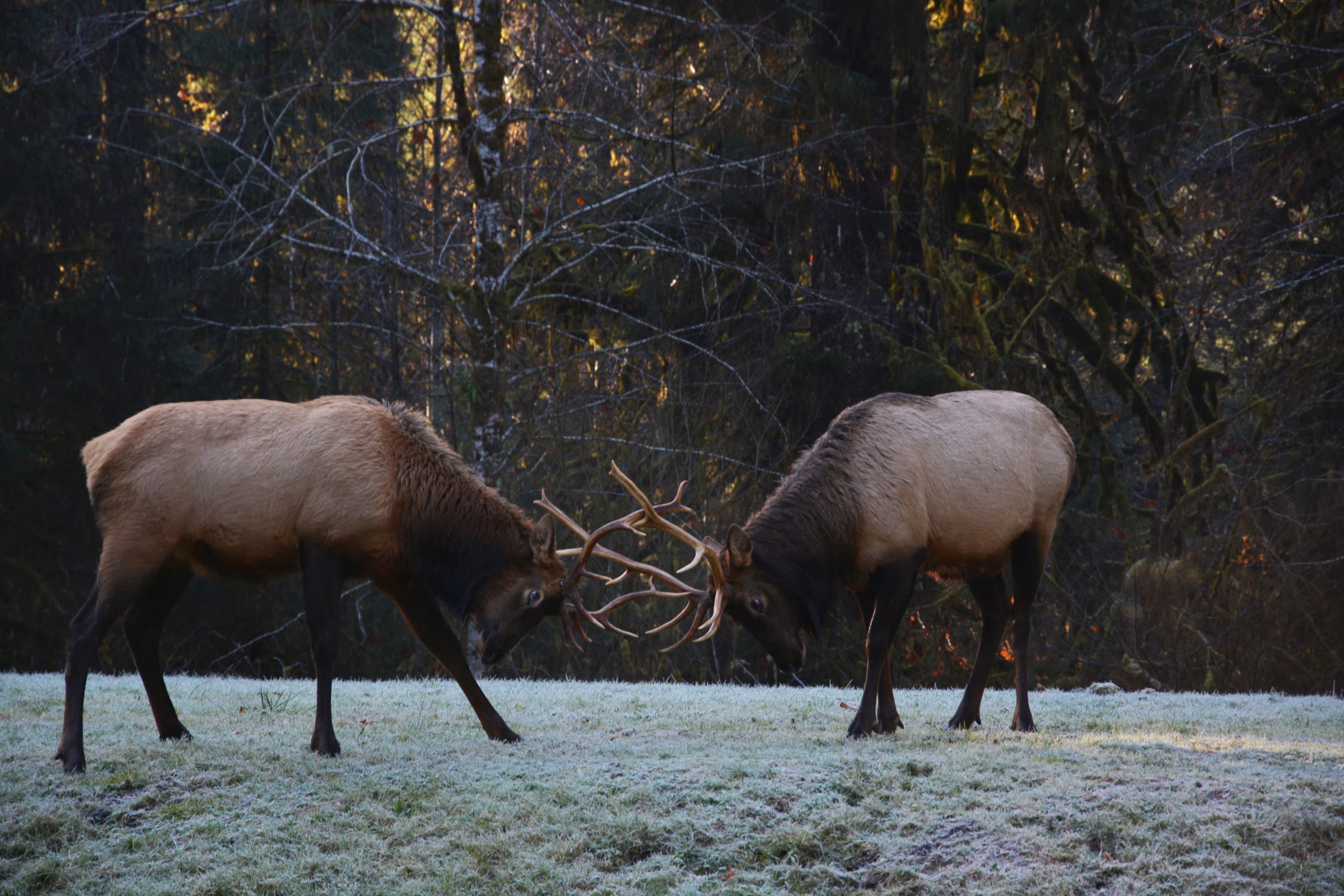
In September, bulls bugle with high, squealing calls and compete for groups of cows, sometimes gathering harems of up to 30. Rival bulls charge, chase and spar with their antlers. It is thrilling to hear, and it is also when bulls are most dangerous.
In October 2015 the park closed the Hoh Campground to overnight use for most of the month. Elk there had grown used to people and lost much of their natural fear, which put campers at risk during the rut.
Elk safety in a national park
The park’s wildlife viewing guidance asks visitors to stay at least 150 feet from elk. Its elk page sets 100 feet, about three bus lengths, as the minimum, so when in doubt give them the larger space. Approaching or feeding wildlife is illegal in the park.
- Use extra caution in the spring calving season and the fall rut.
- If elk are in or near a parking area, stay in your vehicle.
- If you meet an elk on a trail, make noise, avoid eye contact and back away slowly.
- Leave calves alone. A mother elk is usually nearby and rarely abandons her calf.
An elk that feels threatened may kick or chase. A simple rule from the park: if you cause an animal to move, you are too close.
How Friends of Olympic National Park helps
We are Friends of Olympic National Park (FONP), a volunteer-led friends group in Port Angeles. Through our guided nature walks, we help visitors enjoy wildlife from a respectful distance.
Members receive our friends-only newsletter and invitations to annual events. To support this work, become a member of Friends of Olympic National Park. Love high country animals too? Meet the Olympic marmot of Hurricane Ridge.
Frequently asked questions
Where is the best place to see elk in Olympic National Park?
The Hoh Rain Forest is one of the best places, and the park notes that most sightings happen in the lower valleys and rain forests. Look around dawn and dusk.
Why are they called Roosevelt elk?
They are named for President Theodore Roosevelt, who established Mount Olympus National Monument in 1909 to protect the elk from overhunting. They were once called Olympic elk.
How close can you get to elk in Olympic National Park?
Stay at least 150 feet away, as the park’s wildlife viewing guidance asks. If an elk moves because of you, you are too close.
When is the elk rut in Olympic National Park?
The rut is in September, when bulls bugle and compete for cows. Bulls are most dangerous at this time, so give them extra space.
How many elk live in Olympic National Park?
The park says about 3,000 to 4,000 Roosevelt elk are protected within its boundaries, the largest fully wild herd in the Pacific Northwest.
Leave a Reply