
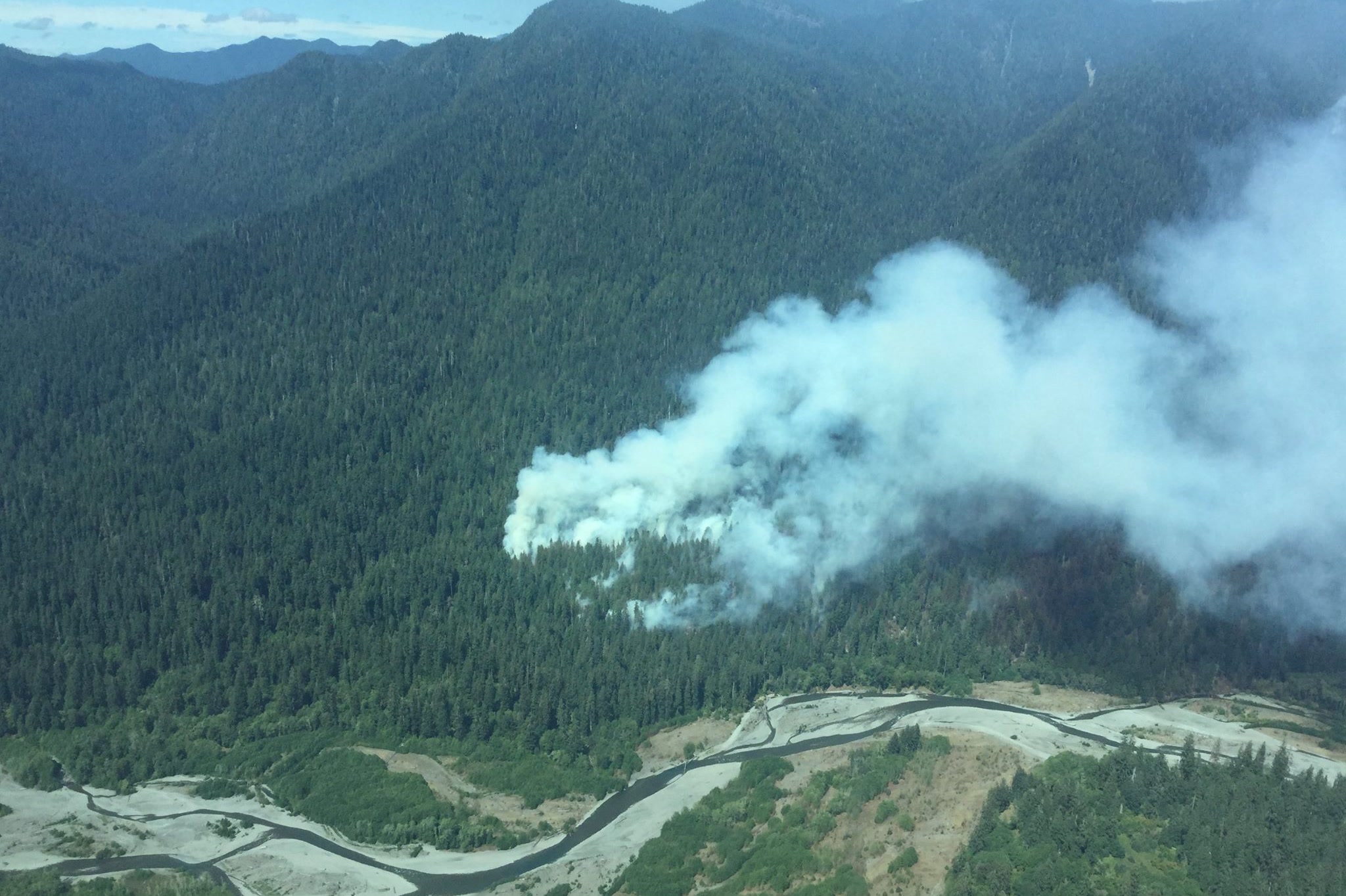
Wildfire in Olympic National Park can sound unlikely in a place famous for rain and moss. Yet fire has shaped these forests for thousands of years, and in 2015 it burned for months in the Queets rainforest. Here is the record, how the park manages fire, and what the campfire rules mean for you.
Quick answer
Does wildfire happen in Olympic National Park?
Yes. Fire has burned here for thousands of years, though the wet west side has fewer and generally smaller fires than the drier east side. Lightning causes about half of the park’s fires. In 2015 the lightning caused Paradise Fire burned in the Queets Valley rainforest from late May until it was declared out in November.
- Lightning: about half of fires, two thirds of acres burned
- Paradise Fire smoldered undetected until June 14, 2015
- Wilderness campfires allowed only below 3,500 feet
- Seasonal fire restrictions can ban all campfires
The history of wildfire in Olympic National Park
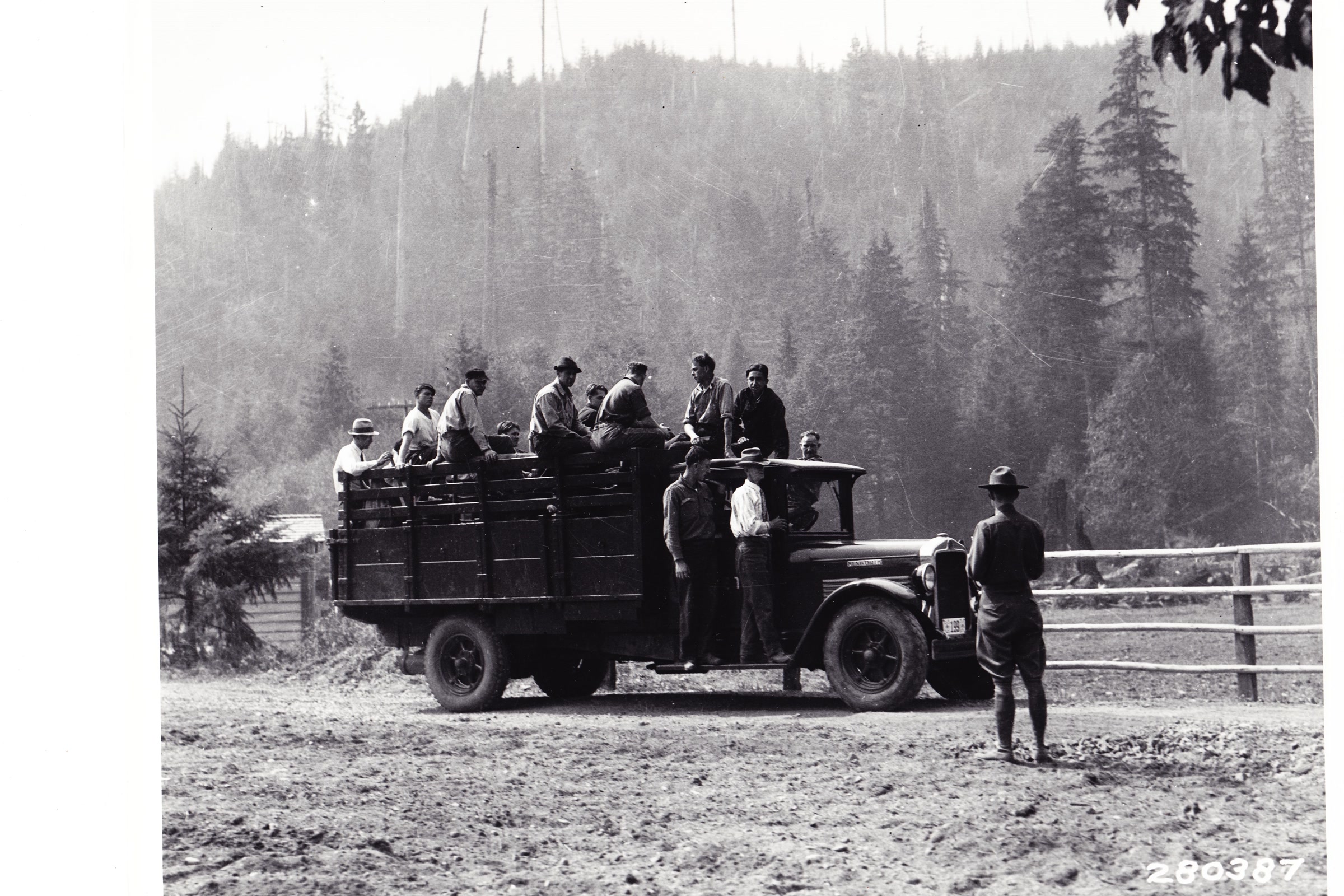
The park’s fire history page says written records are fairly complete from about 1916. Older fires are read from charcoal in the soil, scars on trees and the ages of forest stands, counted from tree rings. Old burns still show as patches of younger Douglas-fir.
Much of the north, east and south sides burned during droughts about 300 to 500 years ago, and many east side valleys burned again about 250 years ago.

Notable fires on the Olympic Peninsula
| Fire | Year | What the NPS records |
|---|---|---|
| Dungeness Fire | 1890 to 1891 | About 30,000 acres, outside today’s park |
| Sol Duc Burn | 1907 | 12,800 acres on Kloshe Nanitch Ridge in one afternoon |
| Hoh Fire | 1978 | 1,050 acres; lightning, driven by hot east winds |
| Beaver Fire | 1985 | 1,170 acres; started by an illegal campfire |
| Deer Park Fire | 1988 | 245 acres; started by an illegal campfire |
| Paradise Fire | 2015 | Lightning; Queets Valley rainforest, May to November |
| Bear Gulch Fire | 2025 | Human caused; largest wildland fire on the peninsula since 1951 |
Fire ecology: a wet west and a drier east
The NPS says the east side has had more frequent and larger fires, while the west side has fewer and generally smaller ones. Our rain shadow guide explains why.
Lightning storms usually travel from southwest to northeast. Most ground strikes land in the upper Quinault, Elwha and Skokomish drainages, and most fires develop in the Elwha drainage and around Hurricane Ridge. Since the park was established in 1938, lightning has started about half of its fires and burned about two thirds of the acreage.
Researchers at the University of Washington describe the wet forests west of the Cascade crest as adapted to large, severe fires that come rarely, at intervals of one to several centuries. Such fires are often driven by dry easterly winds, like those behind the 1978 Hoh Fire.
The park says the extent of Native American burning on the peninsula is largely unknown. Late 1800s maps show burned areas along the coast, but no conclusive evidence of its purpose has been found.
The 2015 Paradise Fire in the Queets rainforest
The Paradise Fire began with a lightning strike in late May 2015, deep in the Queets Valley wilderness. It smoldered undetected until June 14. It was burning along the Queets River near Paradise Creek, about 12 miles up the valley from the trailhead, among very tall, centuries old trees.
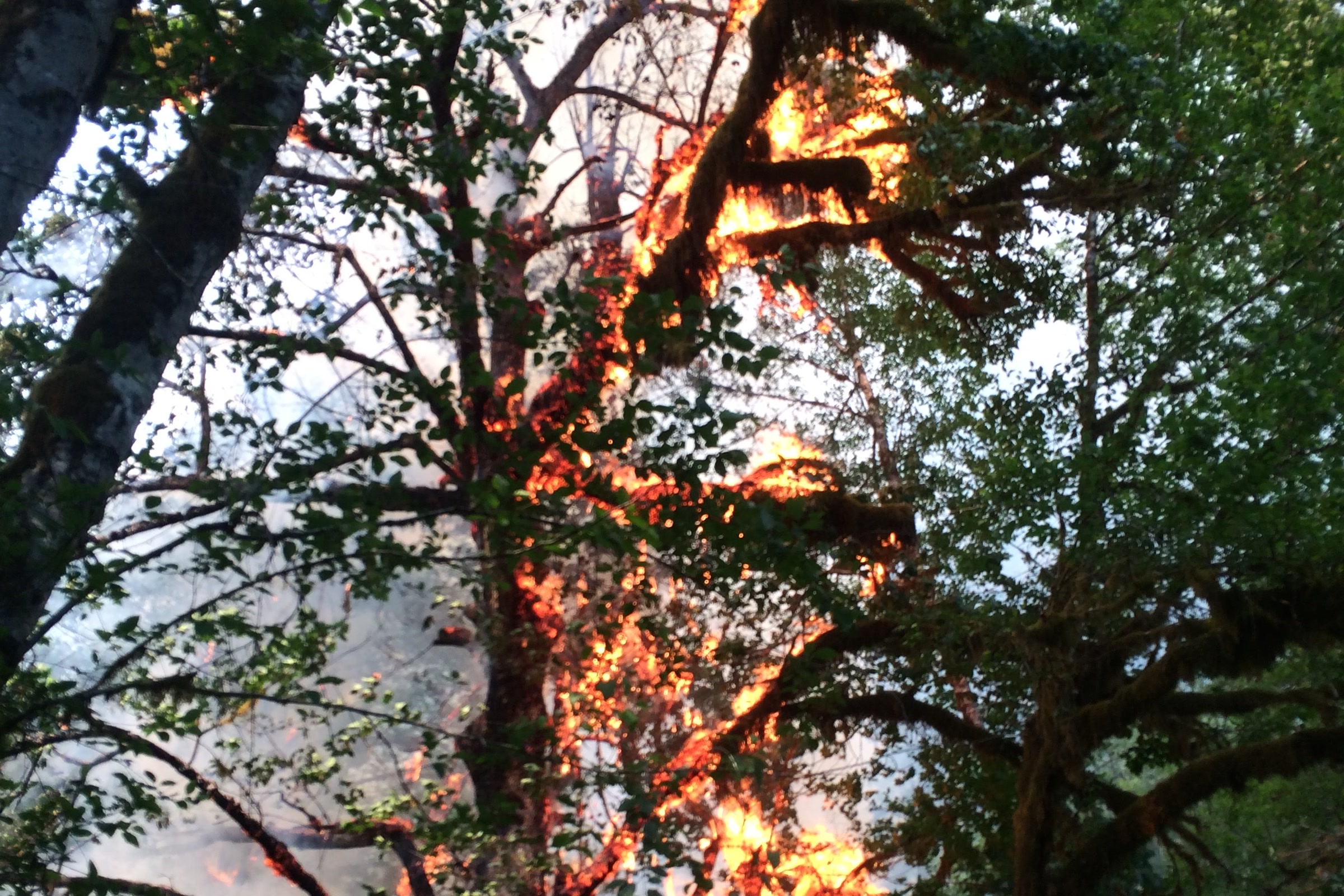
On June 17 the park put the fire at about 367 acres after better mapping, and closed the Queets River Trail at Bob Creek. Superintendent Sarah Creachbaum said, “Human safety is always our top priority in fire management,” and noted that drought and the long range forecast would shape the strategy.
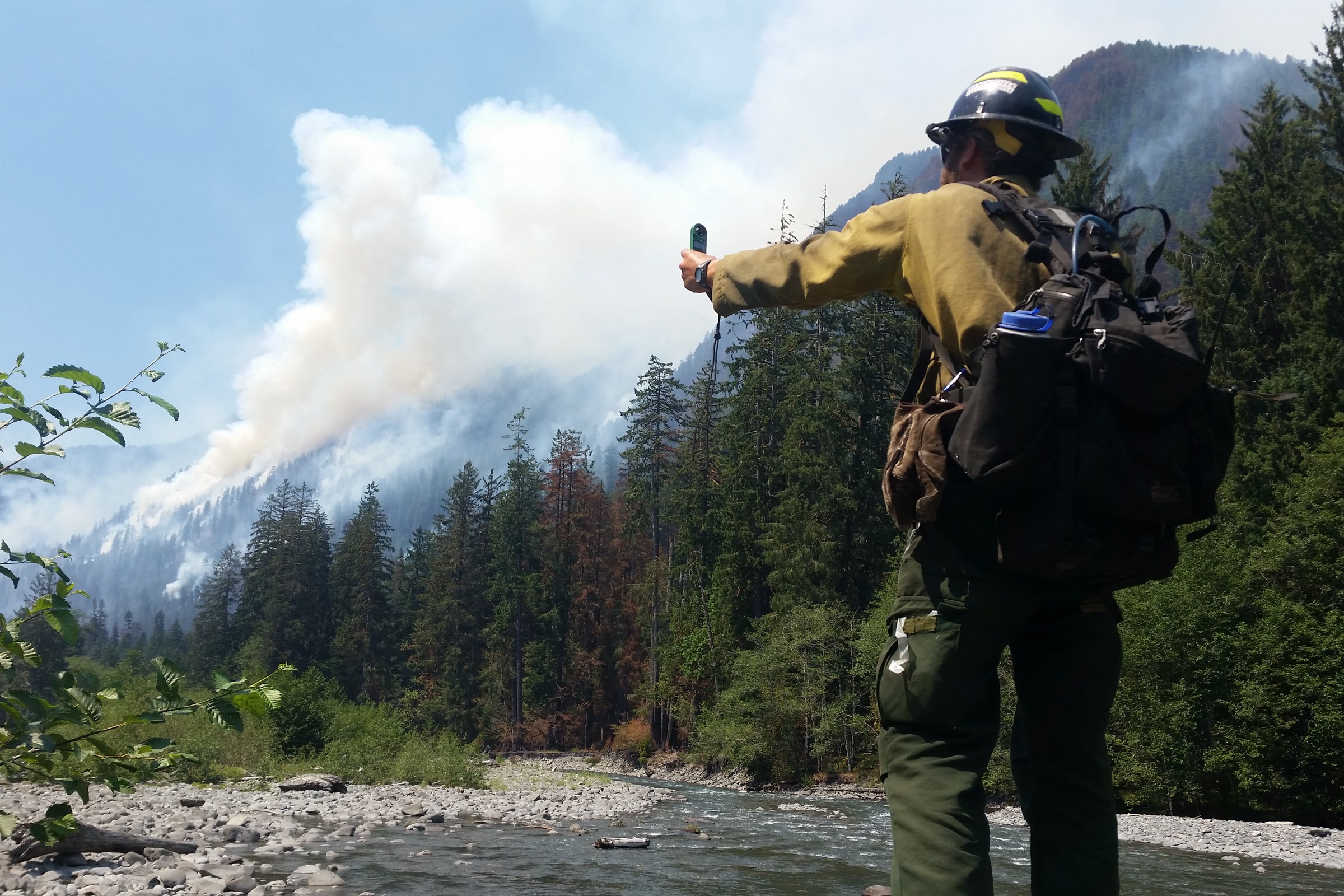
It burned on through the summer. The NPS declared it out on November 18, 2015.

How the park manages fire today
Since June 2024 the park has worked under an updated fire management plan that splits it into two units. In the Non-Wilderness Unit, the roads, visitor areas and park buildings, every unplanned fire gets a suppression response to protect infrastructure and keep fire from spreading to or from neighbouring land.
The Wilderness Unit is managed to maintain the natural fire regime and preserve wilderness character. There, every wildfire goes through a deliberate risk analysis, whatever its cause, before the park decides how to respond.

The 2026 season showed how that works. The lightning caused Mount Tom Creek Fire started on June 23 on a steep slope about 5 miles west northwest of Mount Olympus. By June 25 it covered 86 acres and the park chose full suppression, while the Hoh Rain Forest Visitor Center, about 6 miles away, remained open.
Campfire rules and fire restrictions
Even in a normal year, wilderness campfires and wood burning stoves are allowed only below 3,500 feet, to protect subalpine forests and soils. Fires are never allowed on the coast between the headland at Wedding Rocks and the headland north of Yellow Banks. Our Leave No Trace guide to Olympic coast beaches covers driftwood fires.
In dry spells the park adds seasonal fire restrictions. In 2026 it banned dispersed and backcountry fires from June 25, and by August 11 Stage 2 restrictions banned all campfires in the park and Olympic National Forest. Gas or propane stoves stayed allowed at least 3 feet from flammable vegetation.
As of October 2026, the latest park release we found, from August 26, still listed Stage 2 restrictions. Rules change with the weather, so check the NPS fire conditions page before you go. Our Olympic National Park campgrounds guide lists where you can stay.
- Never leave a campfire unattended; drown it, stir the ashes and feel for heat.
- Use only designated fire rings, and follow posted restrictions.
- Fireworks are prohibited on federal lands.
Fire and a changing climate
“As the climate warms, fire activity is increasing across the globe,” says Jenna Morris, whose work with the University of Washington looks at burned westside forests. Studying burned forests in Washington and Oregon, her team found they kept at least two thirds of their carbon after fire. They also had enough fuel to carry another fire within 2 to 5 years. See the University of Washington westside wildfire research.
Close to home, the human caused Bear Gulch Fire started on July 6, 2025 and burned into the park, closing the Staircase area for a year; our Staircase guide covers the reopening. For the wider picture, see our posts on glaciers and climate change and Olympic’s temperate rainforests.
How Friends of Olympic National Park helps
We are Friends of Olympic National Park (FONP), a volunteer led friends group based in Port Angeles. We don’t fight fires, but our members care for trails and visitor areas and help visitors learn about the park. A gift keeps that work going, so please consider a way to support Olympic National Park.
Frequently asked questions
Can a rainforest burn in Olympic National Park?
Yes. The wet west side has fewer, generally smaller fires, but the Paradise Fire burned in the Queets Valley rainforest from May to November 2015.
What caused the Paradise Fire?
A lightning strike in late May 2015. The fire smoldered undetected until June 14 and was declared out on November 18, 2015.
Are campfires allowed in Olympic National Park?
In the wilderness, only below 3,500 feet, and never on the coast from Wedding Rocks to north of Yellow Banks. Seasonal restrictions can ban all campfires, so check before you go.
How does Olympic National Park manage wildfire?
Fires in developed areas are suppressed. In the wilderness, each fire gets a risk analysis aimed at keeping the natural fire regime.
Leave a Reply