

River otters in Olympic National Park turn up almost anywhere there is water: along rain forest rivers, on lakeshores and out on the wild coast. On the beaches people often mistake them for sea otters. Here is how to recognise them, where to look and how to watch without disturbing them.
Quick answer
Are there river otters in Olympic National Park?
Yes. River otters are common in Olympic National Park, on riverbanks, lakeshores and the outer coast, where they often forage in the intertidal zone. The park says they weigh about 30 pounds and eat mainly crayfish, fish and small rodents. Sea otters are much larger and live at sea in kelp beds.
- Often mistaken for sea otters on the coast
- Brown with a silvery belly and small ears
- Can hold their breath for up to 8 minutes
- Stay at least 50 yards away
Meet the North American river otter
The North American river otter is a mustelid, a member of the weasel family. The park’s river otter page lists its relatives here as sea otters, mink, the endemic Olympic ermine, long-tailed weasels, martens and fishers. You can read how fishers came back in our story on the fisher reintroduction in Olympic National Park.
The park describes river otters as about 30 pounds, brown with silvery bellies, with small ears, plenty of whiskers and webbed feet. Its mammal list rates them as common. The Washington Department of Fish and Wildlife (WDFW) says adult males average about 4 feet long, tail included.

Where river otters live in the park
The park says river otters favour lakeshores, riverbanks and the outer coast of the peninsula. On the coast they are often seen in intertidal areas close to shore, where they forage. They den on land even though they spend much of their lives in water.
WDFW says river otters use fresh, brackish or salt water and can travel overland for long distances. Dens may be in hollow logs, log jams, piles of driftwood or boulders, or old beaver dens. See our guides to the rivers of Olympic National Park and lakes of Olympic National Park.
River otters are also part of a research story. A USGS image record says the Lower Elwha Klallam Tribe is leading a project to study how otters are responding to the restoration of the Elwha River after its two dams came out. Our article on Elwha River dam removal and restoration tells the wider story.

River otter vs sea otter: how to tell them apart
The park says river otters are often mistaken for sea otters on the coast. A sea otter floats on its back with a pale face showing, while a river otter is just as likely to be scrambling over rocks or bounding along the beach.
River otters and sea otters compared
| Feature | River otter | Sea otter |
|---|---|---|
| Weight | About 30 pounds | About 50 to 100 pounds |
| Look | Brown with a silvery belly, small ears | Dark brown body, pale or white face |
| Life on land | Dens on land, travels overland | Fully aquatic, rarely ashore |
| Where to look | Rivers, lakes, beaches and tide pools | Kelp beds within about a mile of shore |
| Main food | Crayfish, fish, small rodents | Crabs, clams, mussels, urchins, snails |
| Breath hold | Up to 8 minutes | Up to 5 minutes |
Figures come from the park’s river otter and sea otter pages, with the sea otter range from WDFW. WDFW says sea otters in Washington live from south of Destruction Island north to Cape Flattery and east to Pillar Point. On a river or lake, any otter you see is a river otter.

For whales, seals, sea lions and more on sea otters, see our guide to Olympic Coast marine mammals.
What river otters eat
The park says river otters feed mainly on crayfish, fish and small rodents. WDFW calls them opportunists that eat mostly fish, often slow fish 4 to 6 inches long. They also take mussels, crabs, amphibians, birds and their eggs, and small mammals.
WDFW adds that otters seek out spawning salmon and will travel far to reach a salmon run. Our guide to salmon runs in Olympic National Park covers where and when.
Because otters sit near the top of the food chain, the park calls them an indicator of a healthy environment. They can only thrive where there is enough prey lower down. WDFW notes that river otters avoid polluted waterways.
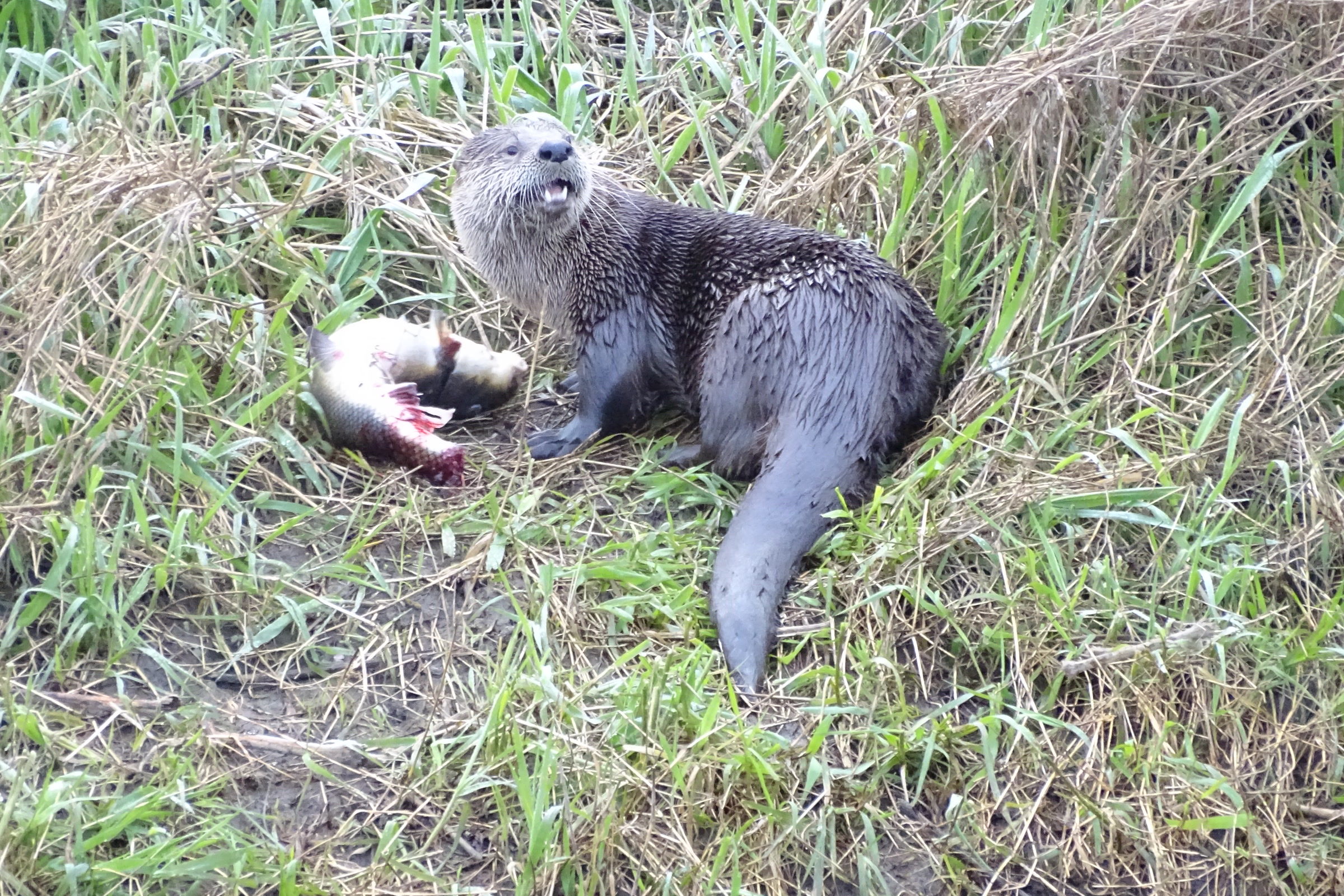
Signs of river otters to look for
River otters are seldom seen, so signs are often the first clue. WDFW describes these:
- Tracks: webbed prints in soft mud, damp sand or fresh snow.
- Trails: paths 6 to 7 inches wide along the water, often cutting across a small point from one cove to the next.
- Slides: smooth chutes about a foot wide at the water’s edge, in grass, mud, sand or snow.
- Droppings: left on prominent spots by the water, full of fine fish scales, bones and shell bits, with an oily, fishy smell.
- Sounds: chirps, growls and whines, and an explosive “hah” when alarmed.

Watching river otters at 50 yards
Park rules require you to stay at least 50 yards from all wildlife, and that includes otters on a beach or riverbank. Our guide to wildlife viewing in Olympic National Park explains the rule and why it matters.
WDFW’s river otter guide has good watching tips. Otters are active day and night but more nocturnal near people. Sit quietly on a high spot above the water, such as a bank or bridge, and use binoculars and polarised sunglasses to cut the glare. Otters hear and smell well but are fairly nearsighted, so staying still helps.
Never try to get close. WDFW warns that river otters have been known to attack people and that mothers with young are unpredictable. Never feed wildlife.
Good places to look
Since the park says river otters are common on the Pacific coast, scan rocky shorelines and tide pools at low tide. Our guide to Olympic National Park tide pools lists the best beaches. River otters are also among the animals visitors often spot in the Hoh valley, as our Hoh River Trail guide notes.
How Friends of Olympic National Park helps
We are Friends of Olympic National Park (FONP), a volunteer led friends group in Port Angeles. Otters on the coast forage right where washed up debris collects, and our beach cleanups in Olympic National Park help clear it. If otters are one of the reasons you love this park, you can support Olympic National Park through us.
Frequently asked questions
Are there otters in Olympic National Park?
Yes. River otters are common in the park on riverbanks, lakeshores and the outer coast. Sea otters live in the ocean off the coast, mostly in kelp beds within about a mile of shore.
How can you tell a river otter from a sea otter?
A river otter weighs about 30 pounds, is brown with a silvery belly and spends a lot of time on land. A sea otter weighs about 50 to 100 pounds, has a pale face and floats on its back at sea.
Do river otters live in salt water?
Yes. WDFW says river otters use fresh, brackish and salt water, and the park says they often forage in intertidal areas along the coast. They still den on land.
What do river otters eat in Olympic National Park?
The park says they feed mainly on crayfish, fish and small rodents. WDFW adds mussels, crabs, amphibians, birds and spawning salmon.
Are river otters dangerous?
They avoid people, but WDFW warns they have been known to attack humans and that mothers with young are unpredictable. Stay at least 50 yards away, as park rules require.
Leave a Reply