
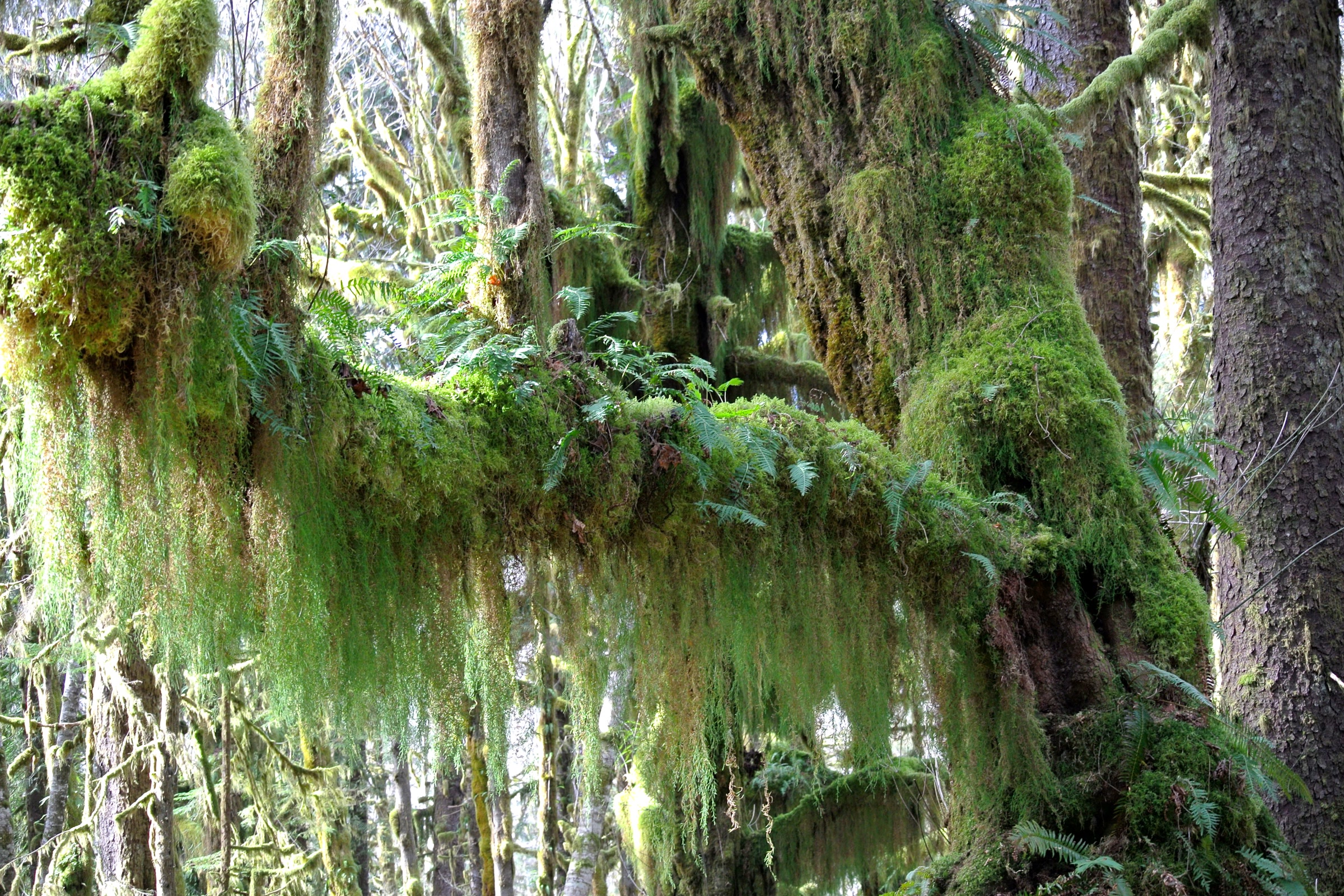
Mosses and lichens are what make the Olympic rain forest look the way it does: green curtains on the maples, pale beards swinging from the branches, and soft carpets over every fallen log. Our guide to the temperate rainforests of Olympic National Park covers the valleys and the big trees. This one looks closely at the small things that cover them.
Quick answer
What mosses and lichens grow in the Olympic rain forest?
The Olympic rain forest holds hundreds of species of mosses and lichens, the park says. Common ones include stair-step moss, cat-tail moss, Oregon beaked moss, spike mosses and club mosses, plus lichens such as lungwort, old man’s beard and witch’s hair. Many grow as epiphytes on trees. Look, photograph, and leave them in place.
- Rain forest precipitation: 140 to 167 inches a year
- Mosses have no true roots, stems or leaves
- Hanging “moss” on branches is usually a lichen
- Removing plants or their parts from a national park is prohibited
Why the rain forest is so mossy
Water is the answer. The park says precipitation in its rain forest ranges from 140 to 167 inches a year, and fog adds more moisture that mosses absorb directly.
That matters because mosses are non-vascular. As the NPS page on Olympic’s mosses explains, they have no true leaves, stems or roots and no waxy outer coating, so they depend on constant moisture. In a place this wet, they can grow almost anywhere.
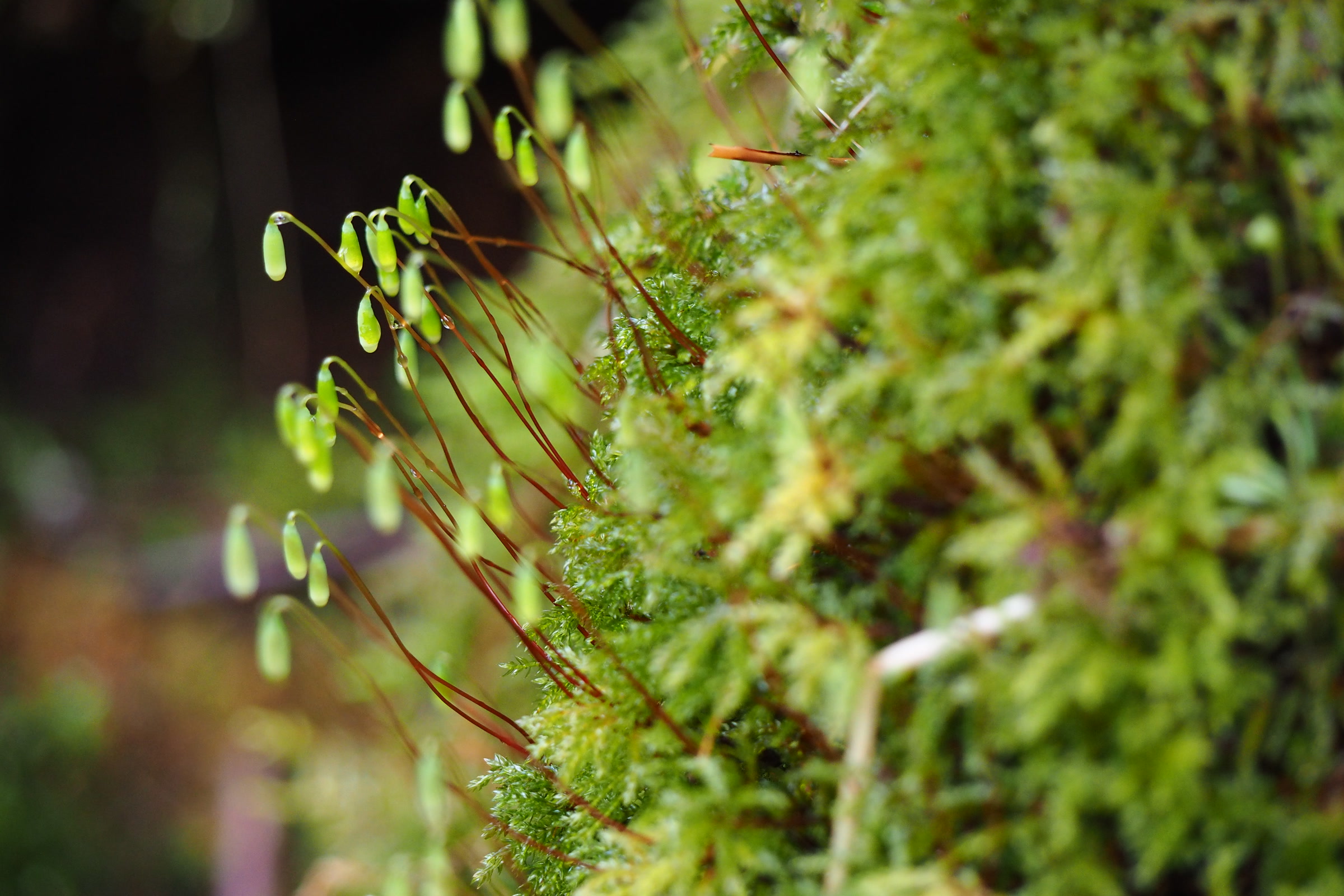
Mosses, lichens and epiphytes: what’s the difference?
People use “moss” for almost anything green and fuzzy, but the park separates a few groups. Epiphytes are simply plants that grow on other plants, and in the rain forest that includes mosses, ferns and spike mosses on the trunks and branches of bigleaf maples.
Mosses and lichens compared
| Group | What it is | Examples at Olympic |
|---|---|---|
| Mosses | Non-vascular; no true roots, stems or leaves | Stair-step moss, cat-tail moss, Oregon beaked moss |
| Spike mosses and club mosses | Named by the park among its moss varieties | Oregon selaginella on bigleaf maples |
| Lichens | A partnership of a fungus with green algae or cyanobacteria | Lungwort, old man’s beard, witch’s hair |
| Liverworts | Named by the park alongside mosses and lichens | Among the hundreds of species in the rain forest |
Rain forest mosses to look for
Stair-step moss
The park names stair-step moss among the mosses that together form a small but varied forest of their own. Look closely at a mossy log or stump and you may see its feathery fronds stacked in tiers.
Cat-tail moss
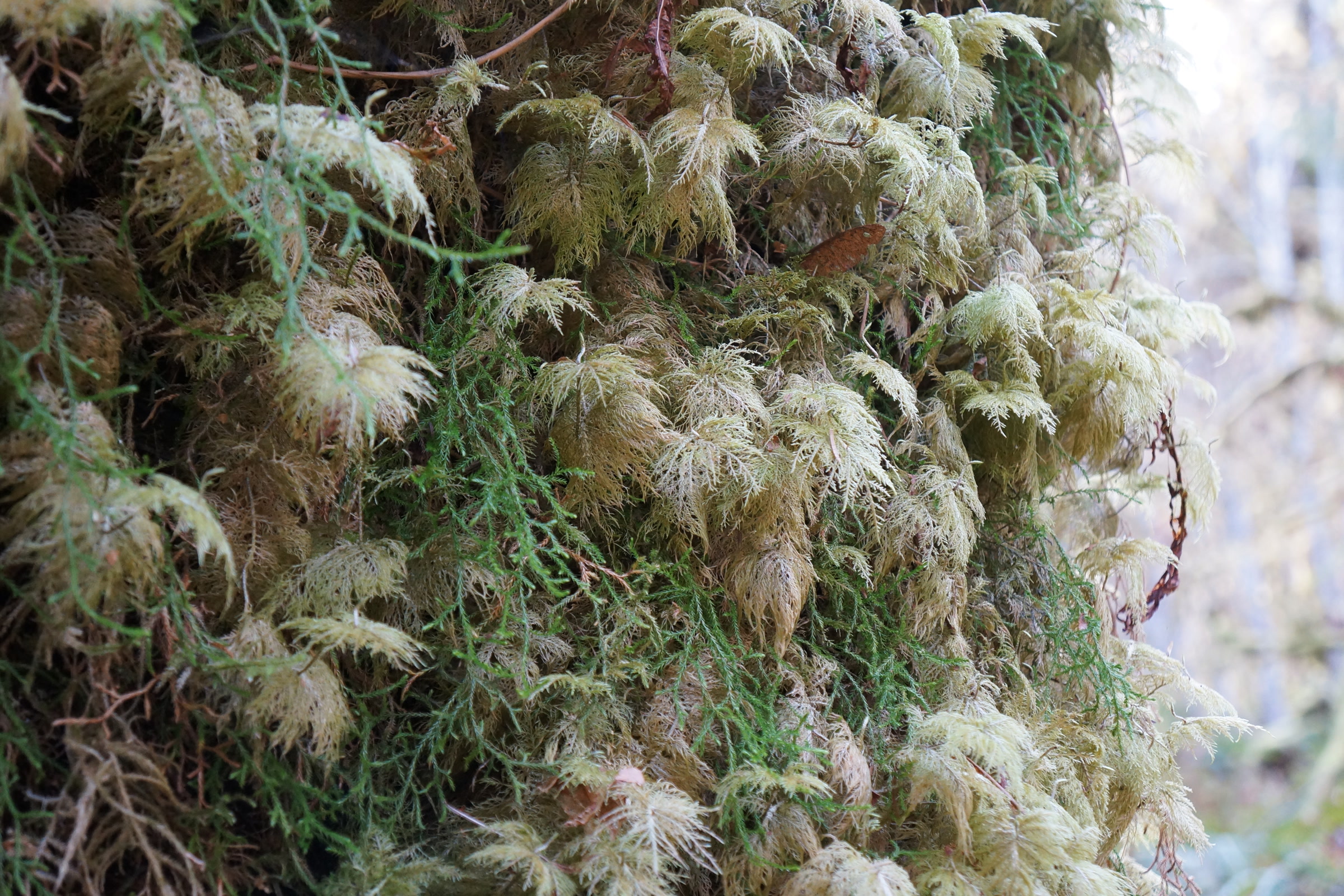
Cat-tail moss, Isothecium stoloniferum, is on the park’s list of common rain forest epiphytes. Like the other epiphytes on that list, it grows on trees rather than on the forest floor.
Oregon beaked moss
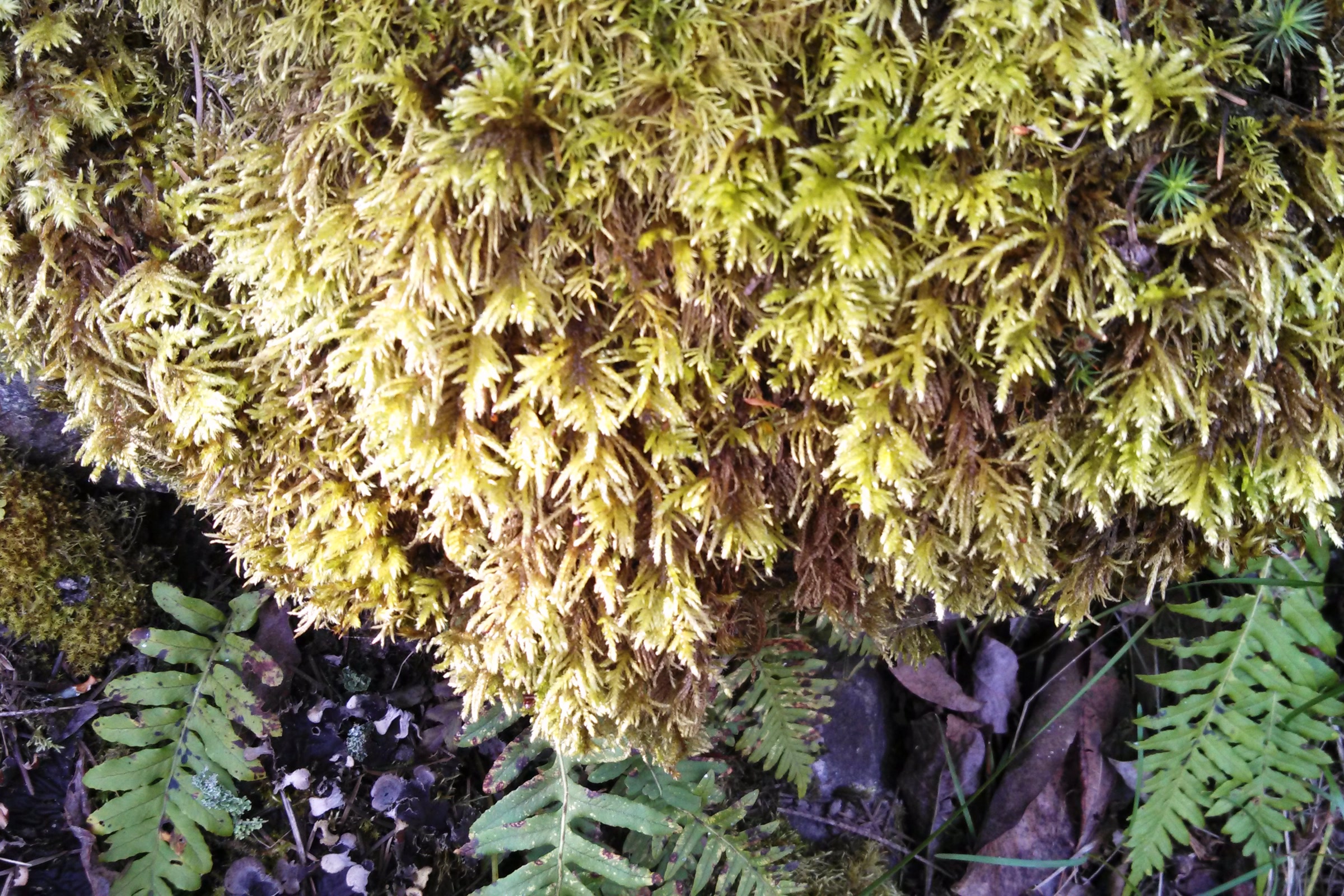
The University of British Columbia’s coastal plants guide calls Oregon beaked moss (Kindbergia oregana) a common moss of lowland coastal rainforests. It often forms loose mats on logs, tree bases, rocks and humus. Its shoots branch regularly, like a flat feather, and its stem leaves are heart shaped and sharply pointed.
Spike mosses and club mosses
The park lists spike mosses and club mosses among its moss varieties. Oregon selaginella, Selaginella oregana, is one of the common epiphytes, growing on bigleaf maple trunks and limbs along with ferns such as licorice fern.
Lichens of the Olympic Peninsula rain forest
A lichen is not a plant at all. The park describes it as a partnership between a fungus and green algae or cyanobacteria, and says the lichens hanging from high limbs are important to the forest.
Old man’s beard and witch’s hair
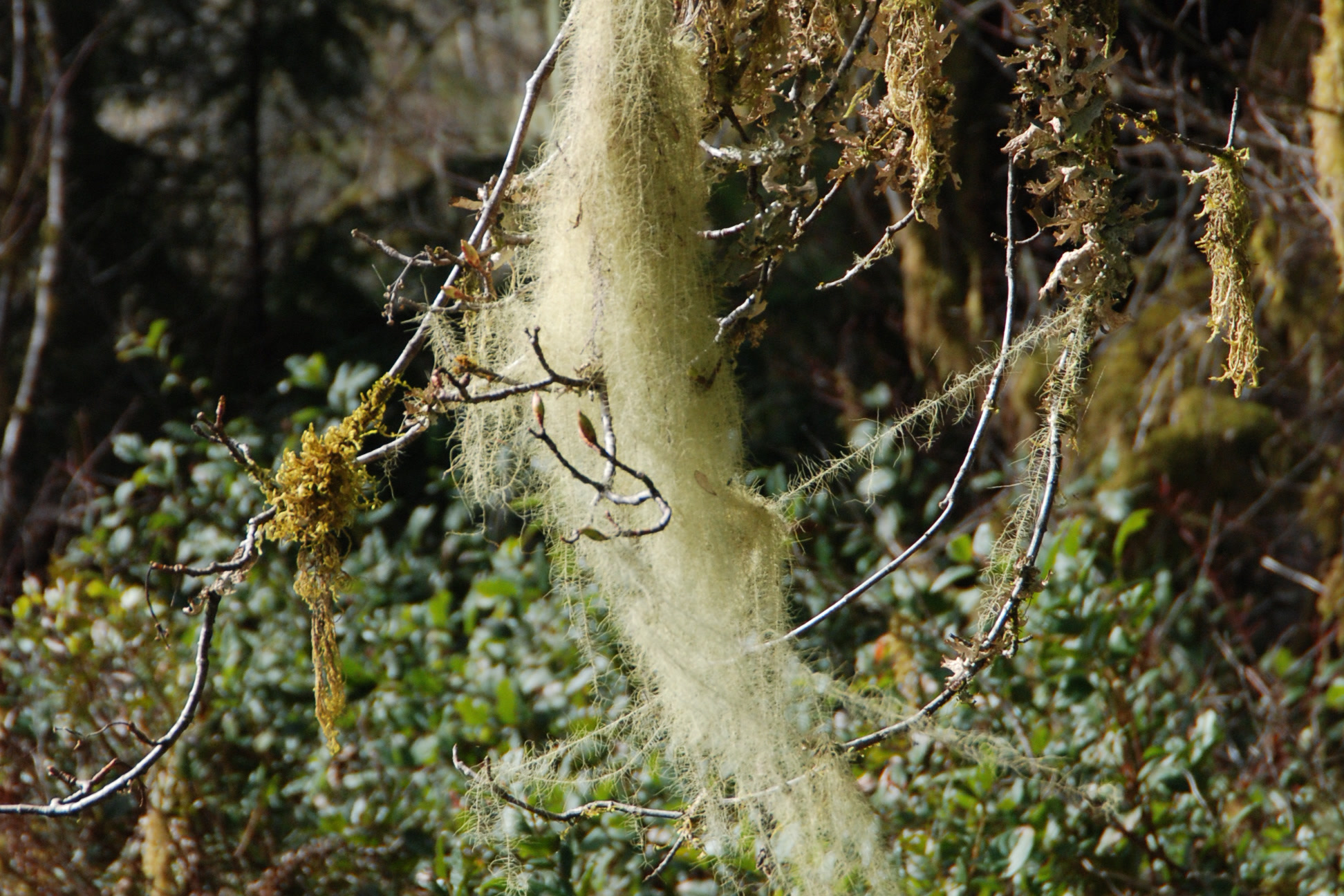
Much of the pale, stringy “moss” swaying from branches is really lichen. The park names old man’s beard and witch’s hair as two that hang from the limbs here.
Lungwort, or Lobaria
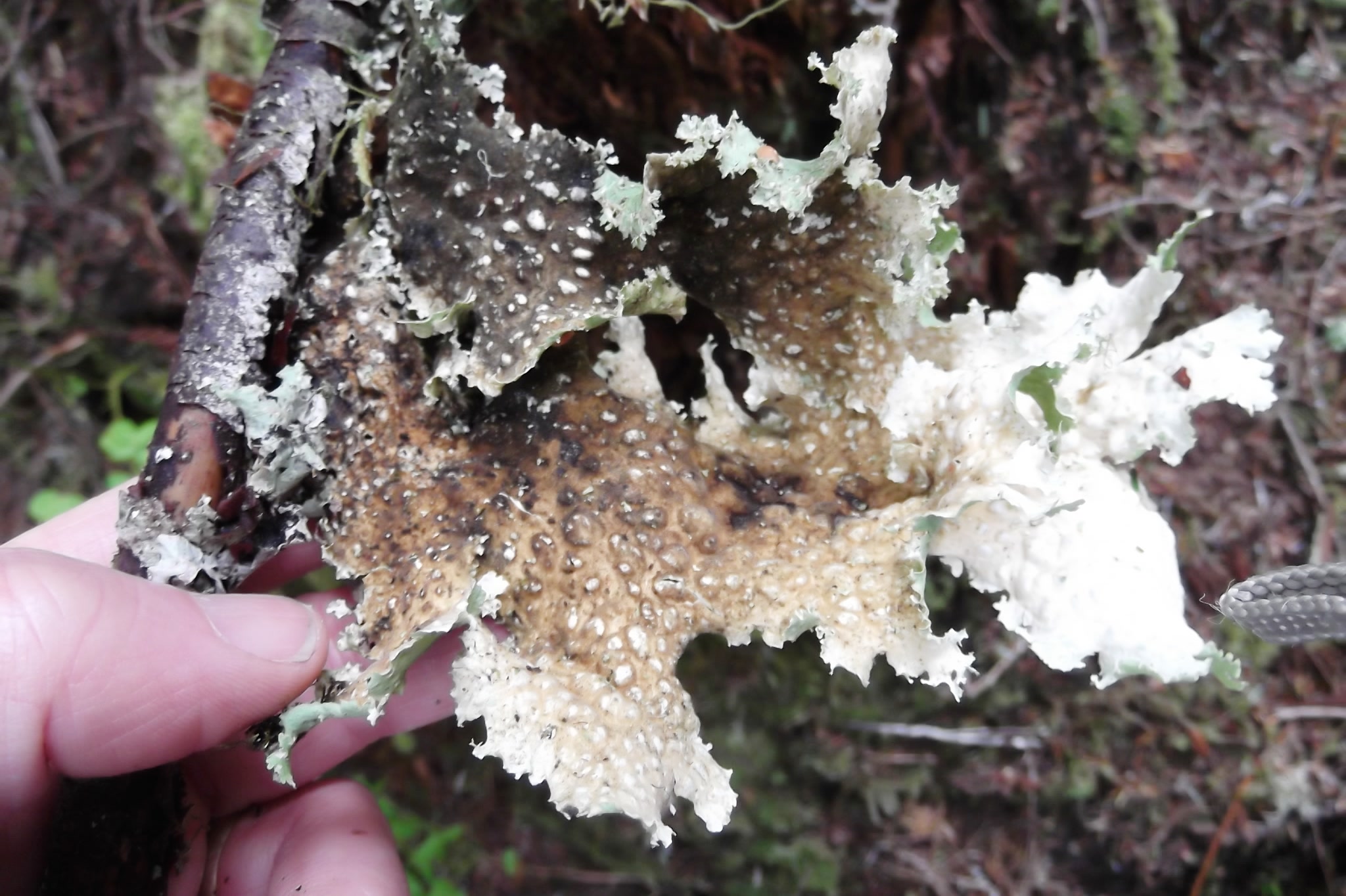
Lungwort, a leafy lichen in the genus Lobaria, is on the park’s list of common epiphytes. A 1976 Forest Service study of western Washington forests found that Lobaria oregana was the main nitrogen fixer in old-growth conifer forests. In other words, it pulls nitrogen from the air that the whole forest can use.
The same study called it a late successional species, missing from forests cut on short cycles. It also found the lichen fixed less nitrogen after exposure to acid, and the National Park Service notes that lichens are sensitive to air quality.
Moss, nurse logs and new trees
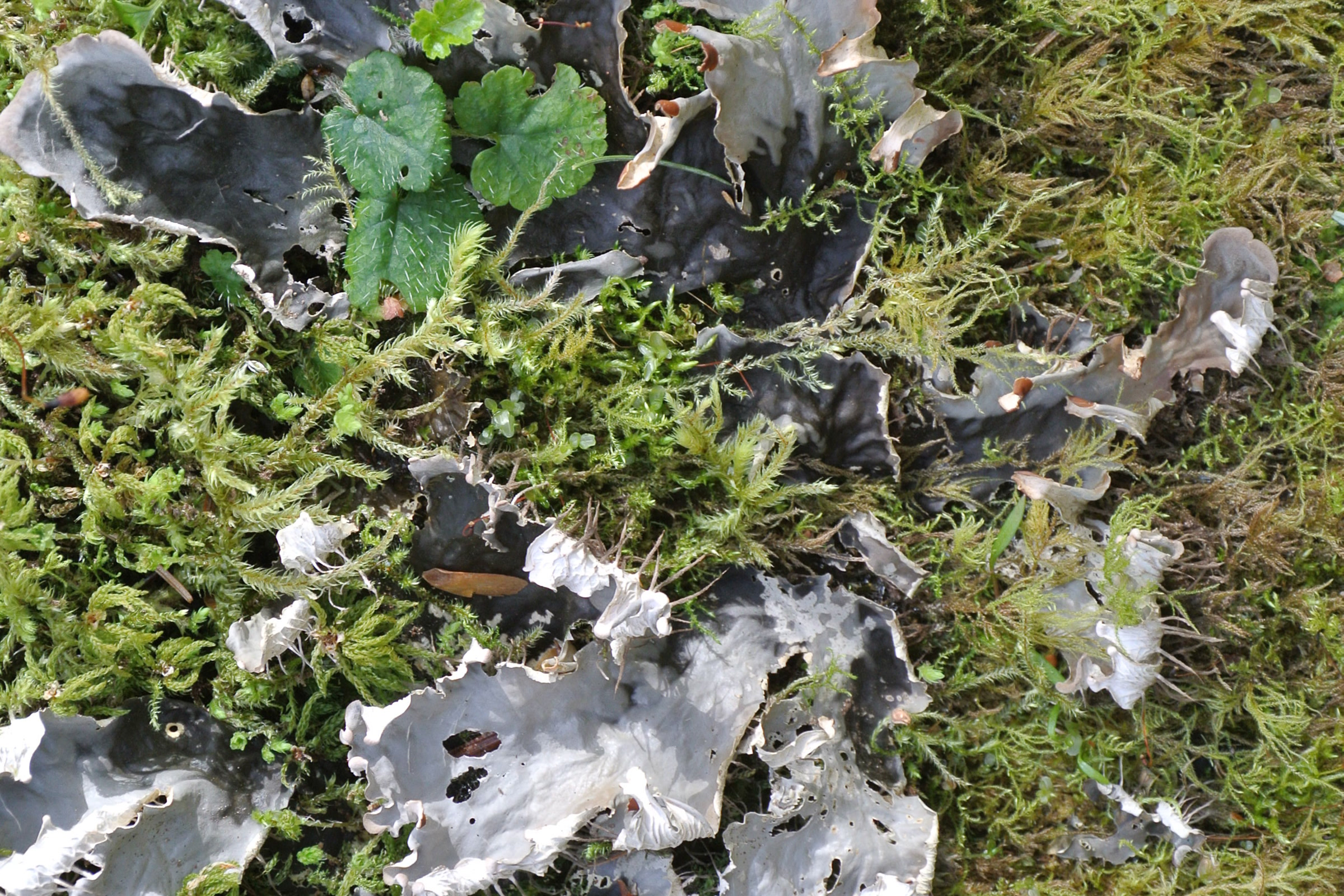
Moss is often the first thing to colonize a fallen log. The park explains that these logs then become nurseries for seeds, saplings and ferns, and that ferns and tree seedlings can even sprout on mossy branches high above the ground.
The trees themselves are their own story, told in our guide to the trees of Olympic National Park. The fungi that share these logs are in our mushroom season guide.
Leave the moss where it grows
Federal park rules prohibit possessing, damaging or removing plants or their parts from a national park, and moss is no exception. A 2005 U.S. Geological Survey inventory of the park’s mosses, liverworts and lichens was meant partly to help protect rare species and assess damage from illegal harvest.
- Stay on the trail so you don’t crush moss and lichens underfoot.
- Don’t peel moss off logs or pull lichens from branches, even for a photo.
- Leave fallen pieces on the ground; they are part of the forest floor.
- Take a hand lens and a camera instead of a bag.
The Hall of Mosses, an easy loop with about 100 feet of climb, is the classic place to see all of this. Our Hoh River Trail guide covers the longer walk up the same valley.
How Friends of Olympic National Park helps
We are Friends of Olympic National Park (FONP), a volunteer led friends group in Port Angeles. Our guided nature walks, including insect, mushroom and wildflower walks, help people slow down and notice small living things like these. Our adopt-a-trail crew cares for the Heart O’ the Forest Trail. If you love the rain forest, become a member and help us keep going.
Frequently asked questions
Is the hanging moss in the Hoh Rain Forest really moss?
Often not. The park explains that much of the stringy growth hanging from branches is lichen, a partnership between a fungus and algae or cyanobacteria. Old man’s beard and witch’s hair are two examples.
Why is there so much moss in the Olympic rain forest?
The rain forest gets 140 to 167 inches of precipitation a year, plus fog. Mosses have no true roots and no waxy coating, so they absorb water directly and thrive where it stays wet.
What are epiphytes?
Epiphytes are plants that grow on other plants. In the Olympic rain forest, mosses, licorice fern, spike mosses and lichens such as lungwort grow on the trunks and limbs of trees like bigleaf maple.
Can you take moss from Olympic National Park?
No. Federal park rules prohibit possessing, damaging or removing plants or their parts from a national park. Leave moss and lichens where they are, including pieces that have fallen.
Where is the best place to see moss in Olympic National Park?
The Hall of Mosses loop in the Hoh Rain Forest is a well known spot. The Quinault valley also has bigleaf maples hung with thick curtains of moss.
Leave a Reply