
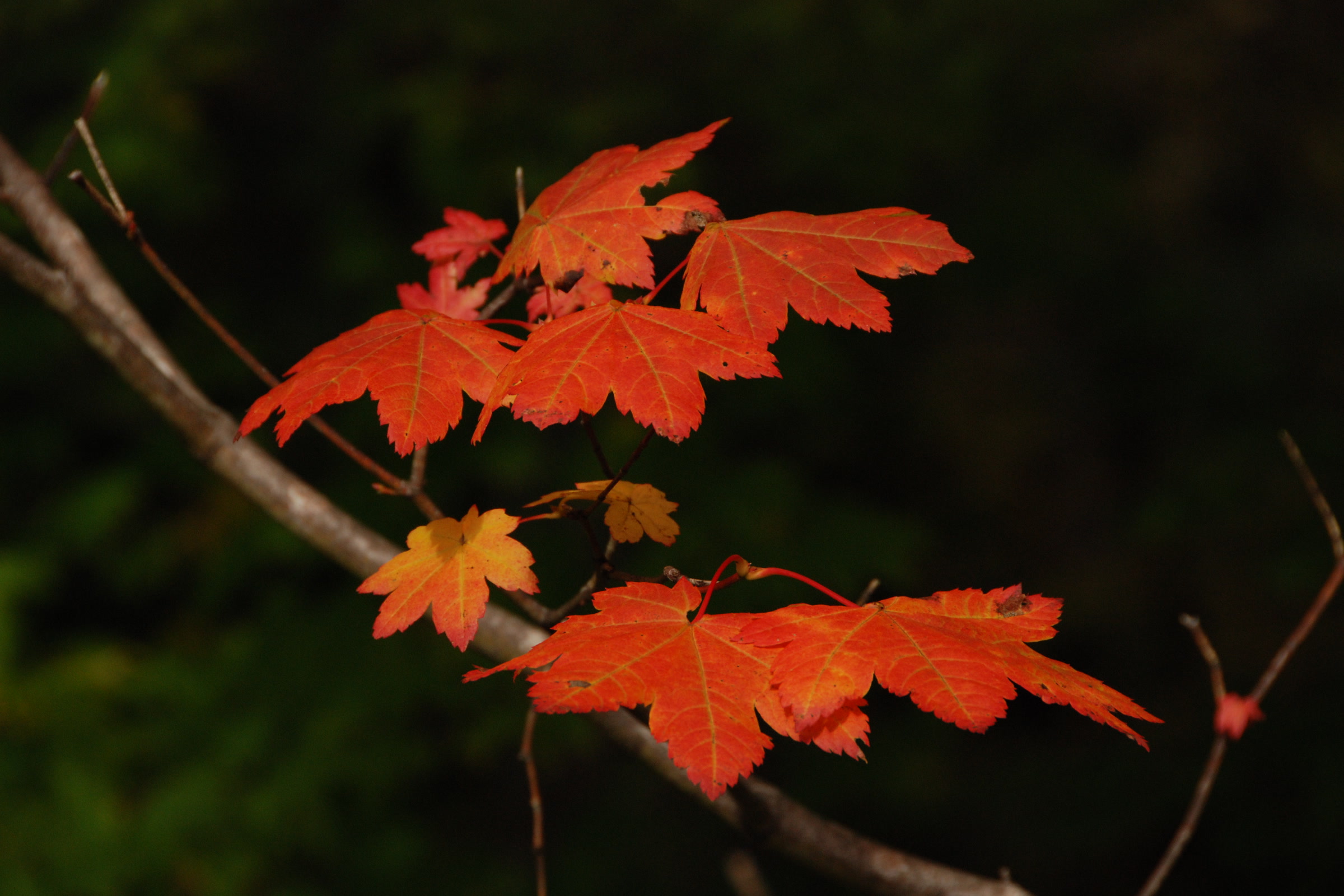
Fall colors in Olympic National Park are quieter than in a hardwood forest back east, and that is part of their charm. A few broadleaf trees and shrubs light up against miles of dark conifers, so a single golden maple can stop you on the trail. Here is what turns, where we look for it, and what the park says about autumn weather and roads.
Quick answer
When and where are the fall colors in Olympic National Park?
Fall colors in Olympic National Park come from bigleaf maple and black cottonwood turning yellow, vine maple turning orange to red, and blueberries and huckleberries reddening up high. The park publishes no peak date. Look in the Hoh, Quinault and Sol Duc valleys, and remember that snow can reach the high country from late September.
- Bigleaf maple leaves reach 8 to 12 inches
- Vine maple shows red, orange and yellow in sun
- High country snow is possible from late September
- Lowland rain and wind arrive by late October
Why autumn color here is a quieter show
Most of the park’s forest is evergreen: Sitka spruce, western hemlock, western red cedar and Douglas fir. Our guide to the trees of Olympic National Park explains how to tell them apart. Mixed in among them are a handful of deciduous species, and those are what change.
The park’s rain forest tree list names four of them: bigleaf maple, vine maple, red alder and black cottonwood. Up near treeline, its subalpine plant list adds blueberries and Sitka mountain-ash. Against all that dark green, a little color goes a long way.
What turns color
Bigleaf maple
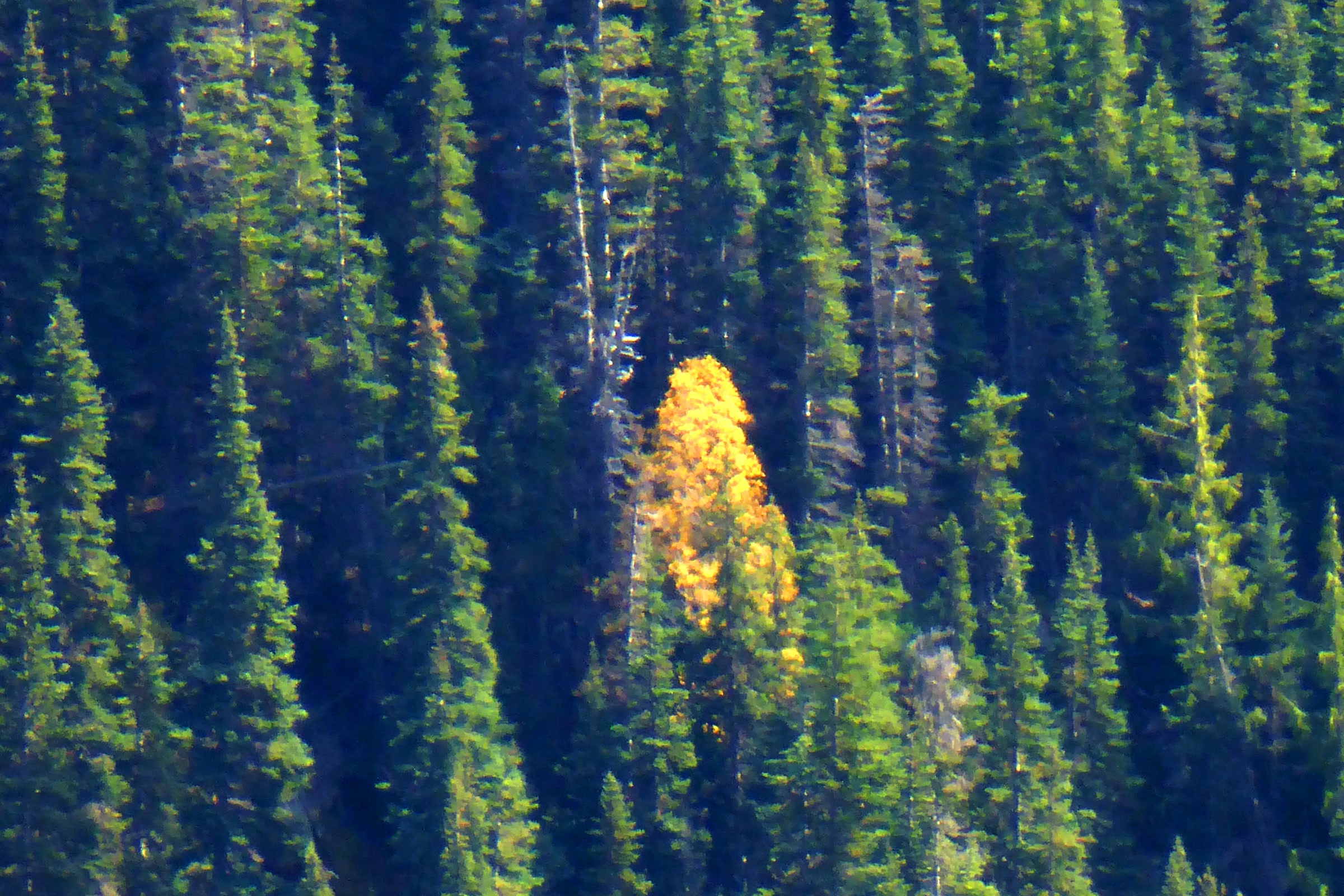
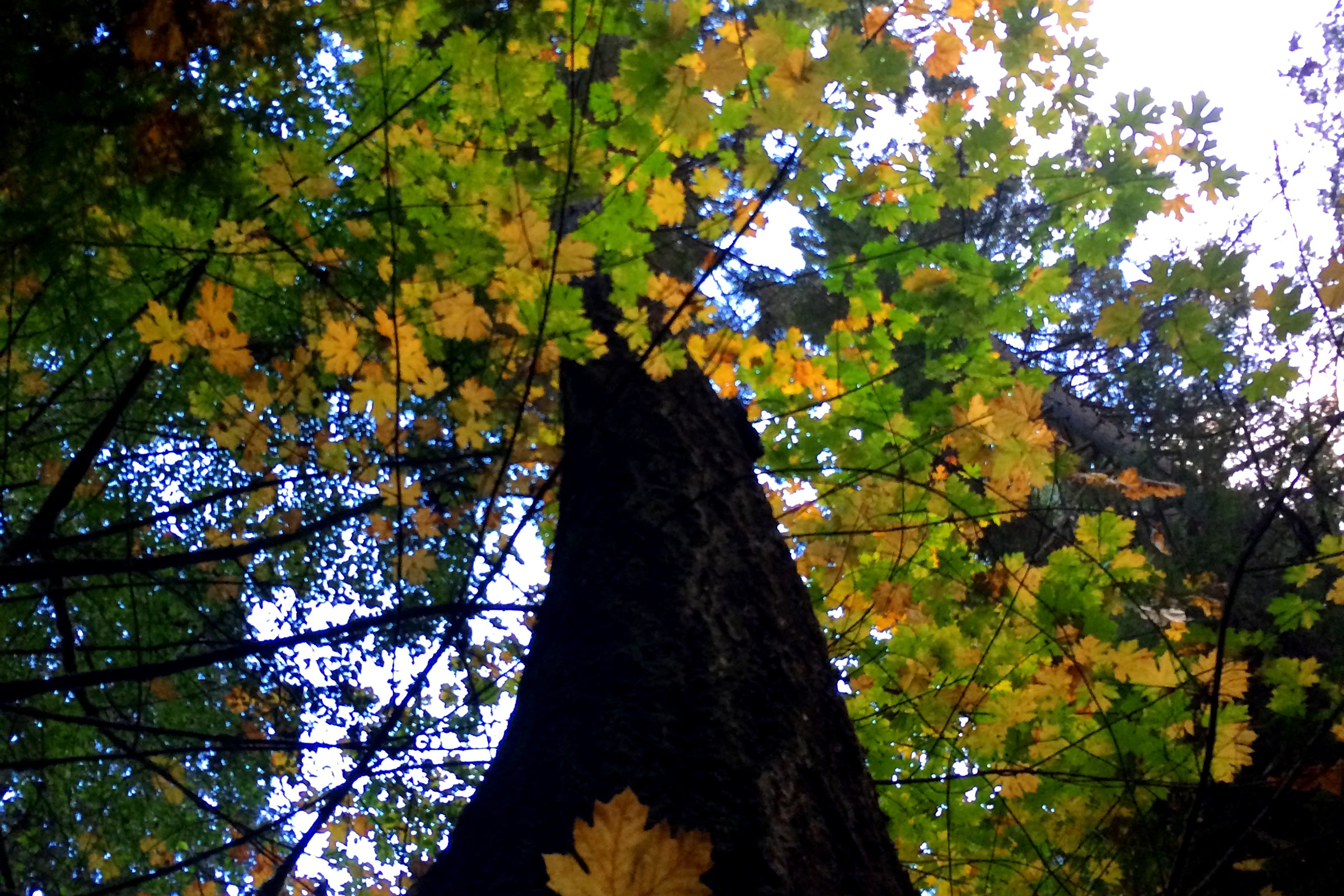
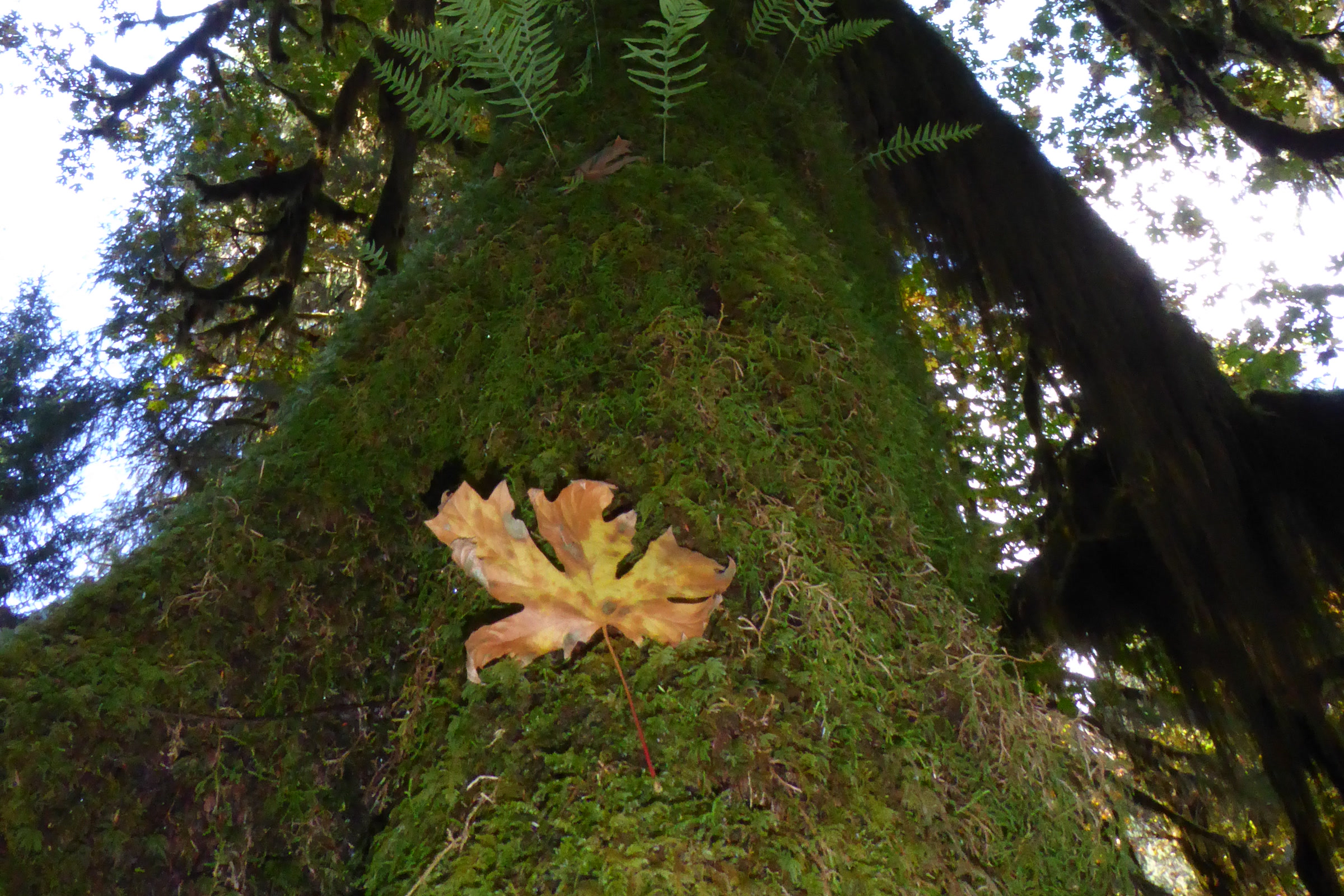
Bigleaf maple is easy to spot in autumn. The park’s Sol Duc exhibit describes leaves eight to twelve inches across that turn yellow-brown in fall. Oregon State University calls them the largest leaves of any maple and lists the fall color as yellow to gold or brown.
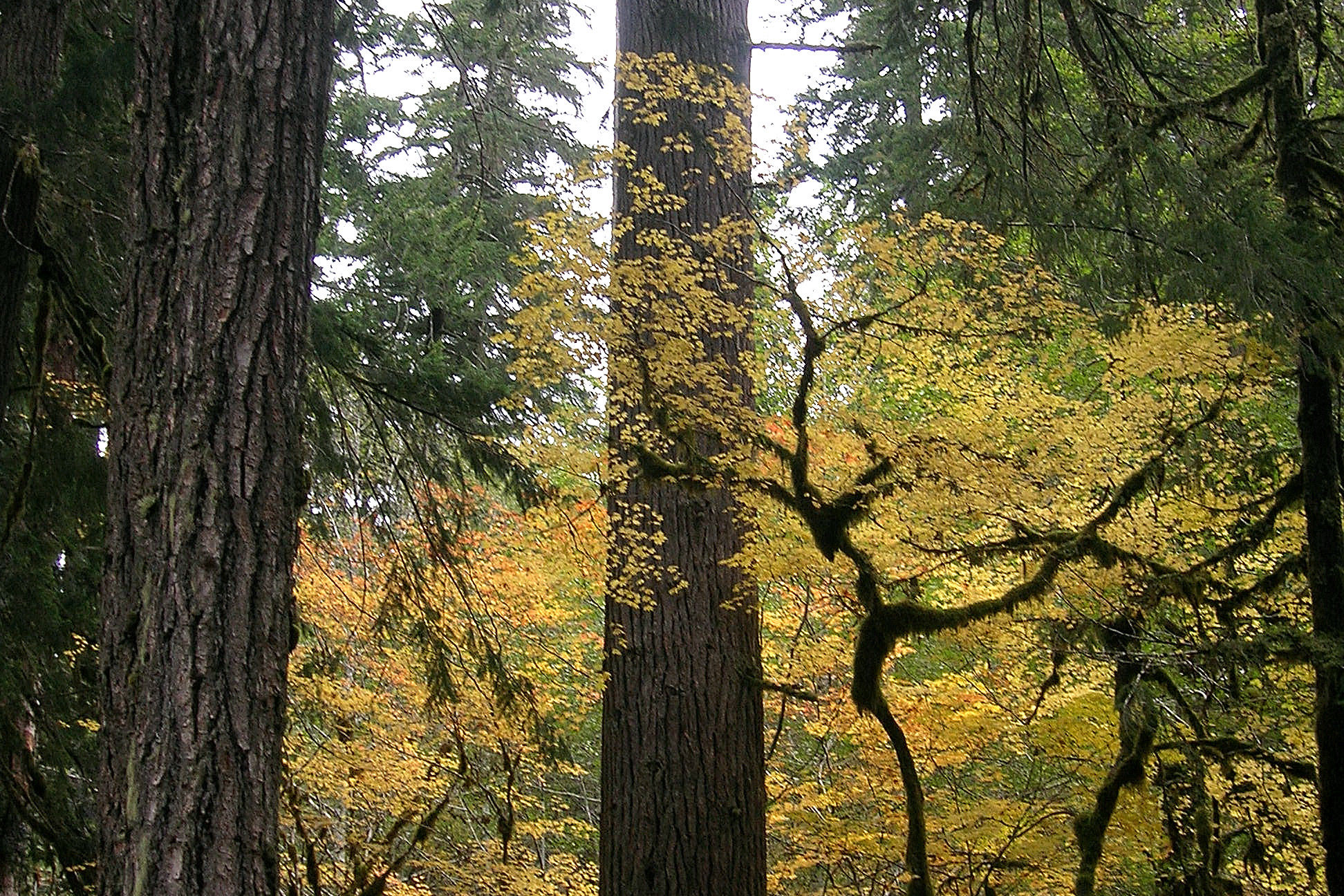
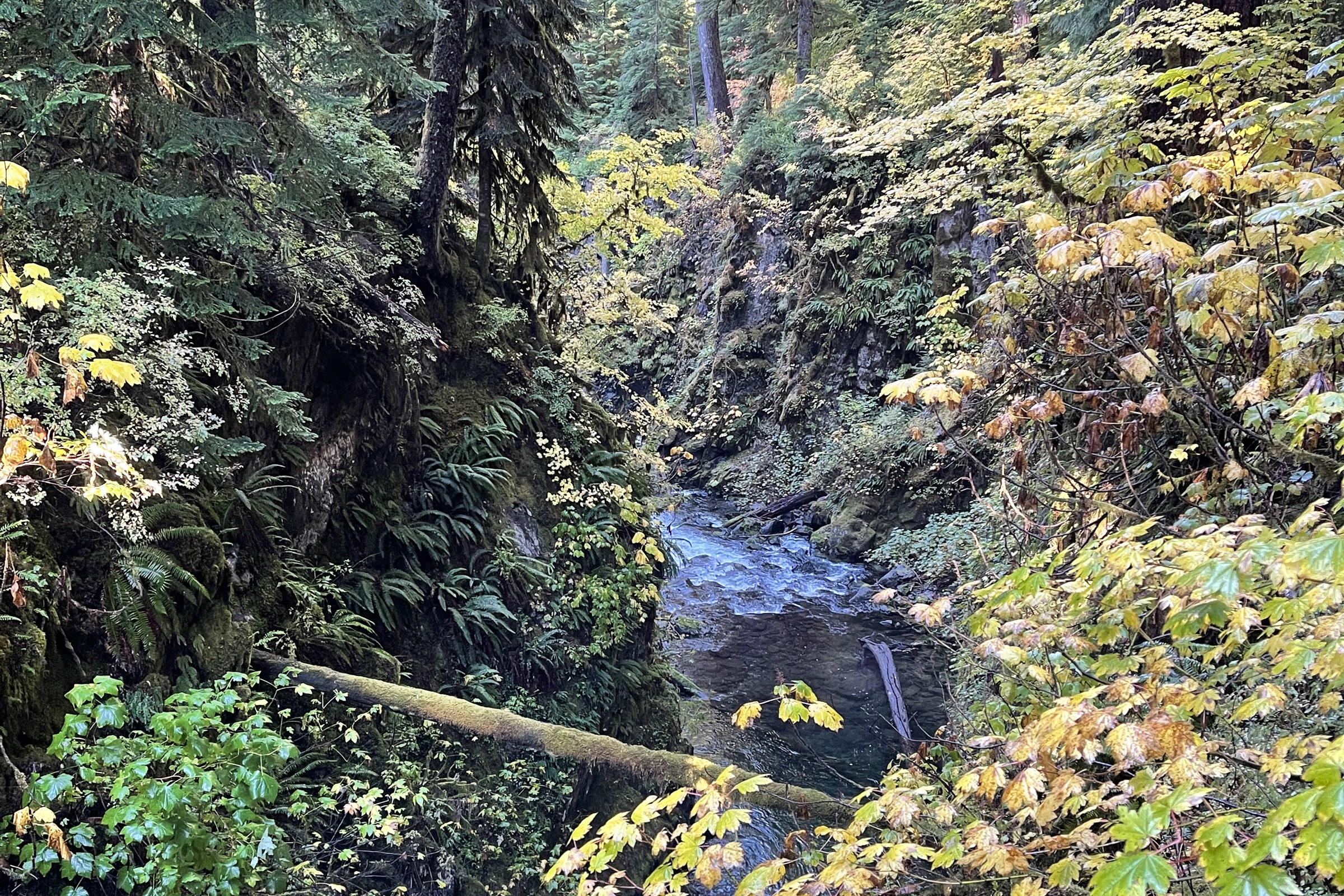
In the rain forest, the trunks and limbs of bigleaf maple carry thick coats of moss and ferns, so in autumn you get gold leaves above green moss.
Vine maple
Vine maple is a sprawling, many stemmed small tree whose leaves have seven to nine pointed lobes. According to the Oregon State University plant guide, it grows in moist woods and along stream banks and develops red, orange and yellow fall color in sun.
Staff at Mount Rainier National Park, also in western Washington, describe vine maple leaves turning a brilliant orange-red. Look for it in the forest understory and in clearings where light reaches it.
Cottonwood and alder along the rivers
Black cottonwood and red alder are on the park’s rain forest tree list, and the Hoh visitor page compares their leaves with the two maples. The University of Washington Bothell notes that in Washington, cottonwood grows along streambanks, lake shores and wetlands. Mount Rainier’s staff note that cottonwood leaves turn yellow in fall. The sources we checked describe no notable color for red alder, so look to the cottonwoods for gold on the gravel bars.
Huckleberries and mountain-ash up high
Near treeline, the park lists blueberries and Sitka mountain-ash among the common shrubs. At Mount Rainier, park staff note that huckleberry shrubs turn bright red in fall. Mountain-ash adds orange-red berries that, Oregon State says, stay on the plant until late winter.

Our huckleberries in Olympic National Park guide covers the berries themselves, and why bears visit those slopes in early fall.
Where to look for fall color
| Where | What to look for | Good to know |
|---|---|---|
| Hoh Rain Forest | A grove of moss draped maples on the Hall of Mosses | 0.8 mile loop; visitor center open Friday to Sunday in fall |
| Quinault Rain Forest | A short loop through groves of bigleaf maple | Start at the Quinault Rain Forest Ranger Station |
| Sol Duc Valley | Moss covered bigleaf maples and vine maple | 14 mile paved road; usually closes for winter |
| River valleys | Cottonwood gold on the gravel bars | Rain and wind arrive by late October |
| Hurricane Ridge and Obstruction Point | Red blueberry and huckleberry shrubs, mountain-ash | Snow possible from late September |
For the walks themselves, see our guides to the Hall of Mosses Trail, the Sol Duc Falls and valley, and Deer Park and Obstruction Point.
When to go for autumn color
We can’t give you a peak week, because the park doesn’t publish one and it varies with the weather. What the park’s weather page does say is useful: autumn brings cooler temperatures and more rain, snow can reach the high country as early as late September, and rain and wind reach the rain forest valleys and beaches by late October.
In practice, that means the ridge has a short window before snow, while the lowland maples carry on into October. The park’s own photographers caught maples turning in the Hoh and along Peabody Creek in Port Angeles in mid October. Fall also brings the elk rut and, once the rains return, mushroom season in Olympic National Park.
Fall weather and roads, as of October 2026
- Obstruction Point Road is open from mid-June through October 15, weather and snow permitting.
- Hurricane Ridge Road moves to a winter schedule, generally from late November, open Friday through Sunday and some holidays. Chains are required above Heart O’ the Hills from November 1.
- Sol Duc Road typically closes for winter because of snow and ice, the park says, and Deer Park and Hurricane Hill roads close to vehicles.
- Hurricane Ridge has no drinking water, so bring your own.
Some campgrounds and roads begin closing in autumn, so check the NPS conditions page before you go, or call the Road and Weather line at 360-565-3131.
Enjoying the color with care
Leave the leaves where they fall: the park’s rules generally prohibit collecting natural materials. Give elk and bears at least 50 yards, as the park requires; our wildlife viewing guide explains why. Pack rain gear, because autumn here is wet.
How Friends of Olympic National Park helps
We are Friends of Olympic National Park (FONP), a volunteer led friends group based in Port Angeles. Our projects include guided insect, mushroom and wildflower walks that help people notice the forest’s seasons up close. To hear about walks and events, become a member.
Frequently asked questions
Does Olympic National Park have fall foliage?
Yes, though it is subtle. Bigleaf maple and black cottonwood turn yellow, vine maple turns orange to red, and huckleberries and blueberries redden near treeline, all set against evergreen conifers.
When is peak fall color in Olympic National Park?
The park publishes no peak date. Snow can reach the high country from late September, and the park’s own photos show valley maples turning in mid October.
What color does bigleaf maple turn in fall?
The park describes its leaves turning yellow-brown, and Oregon State University lists yellow to gold or brown. The leaves are 8 to 12 inches across.
Where can I see fall colors on the Olympic Peninsula?
Inside the park, try the Hall of Mosses in the Hoh, the bigleaf maple groves near the Quinault ranger station, and the Sol Duc Valley. Up high, look for red shrubs at Hurricane Ridge before snow.
Is October a good time to visit Olympic National Park?
It can be, with smaller crowds than the busy summer months and turning maples, but expect more rain, possible snow up high and some seasonal road and campground closures. Check NPS conditions before you go.
Leave a Reply