
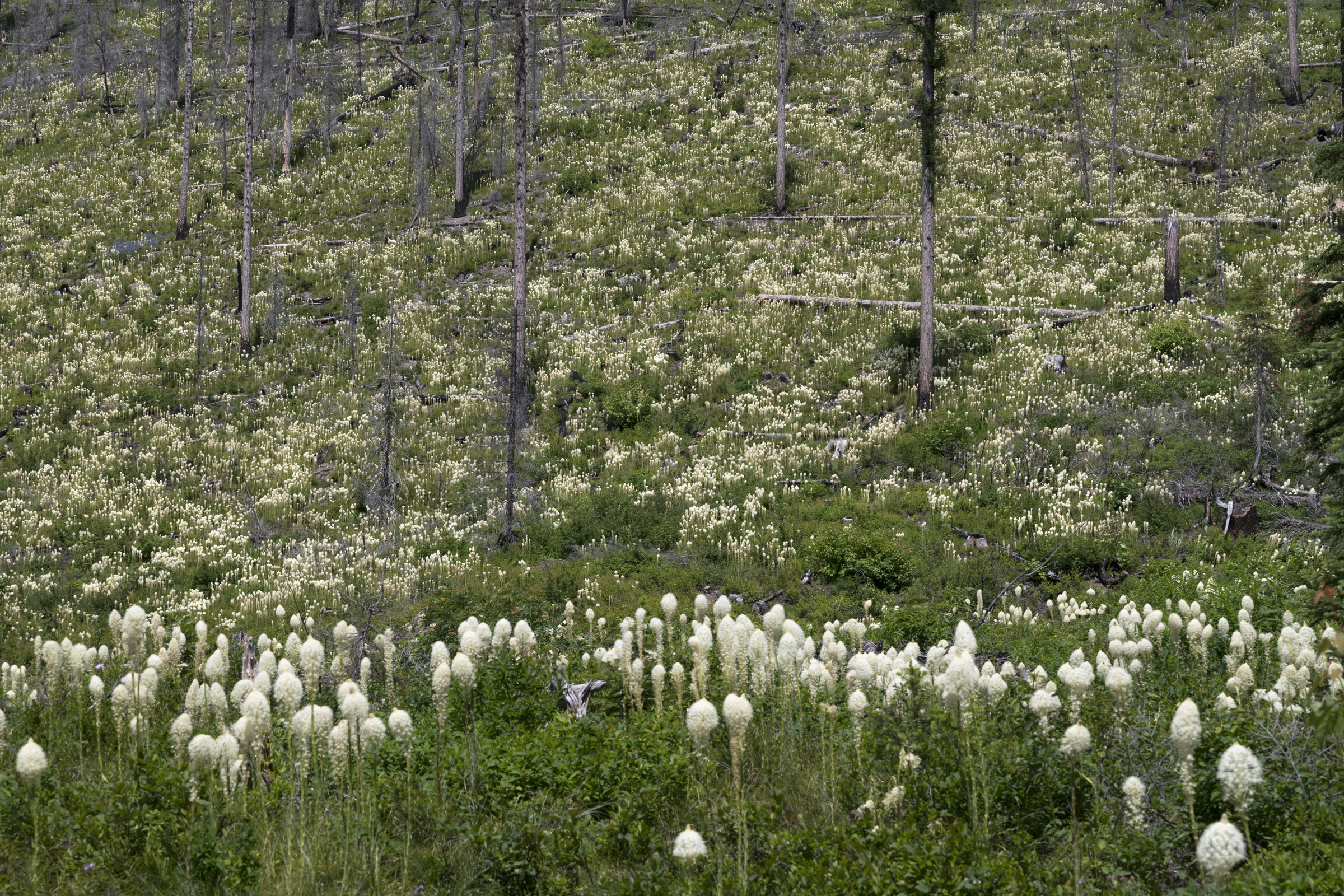
Beargrass in Olympic National Park is hard to miss in a good year. Tall stalks topped with plumes of small white flowers rise above the subalpine meadows in summer. In other years the same slopes show only clumps of wiry leaves. Here is what the plant is, where it grows, why its bloom varies, and why it matters to the Tribes of the Olympic Peninsula.
Quick answer
Where does beargrass grow in Olympic National Park?
Beargrass, Xerophyllum tenax, is rated common on the park’s species list and is one of the wildflowers of its subalpine zone, below treeline at 5,000 to 6,000 feet. It is a wildflower, not a grass. It blooms from late May low down into August up high, and each rosette flowers only once.
- Rated common and native on the park’s species list
- A subalpine wildflower, not a true grass
- Flower stalks grow up to about five feet
- The seven year bloom cycle is a myth
Beargrass is not a grass
Despite the name, beargrass is a flowering plant in the same family as the trillium, Melanthiaceae, according to the Burke Herbarium at the University of Washington. Its scientific name is Xerophyllum tenax. The plant grows as dense clumps of long, tough, grass-like leaves.
An NPS article on beargrass says the Lewis and Clark expedition gave it the name at a time when “bear grass” was a common name for yucca. Other names include basket grass, bear lily and elk grass, and the Burke Herbarium adds western turkeybeard.

For the berries in that photo, our guide to huckleberries in Olympic National Park covers the park’s picking rules.
Where beargrass grows on the Olympic Peninsula
The park’s NPSpecies record lists beargrass as present, native and common. The park’s page on subalpine forests names it among the common wildflowers of that zone, along with avalanche lily, lupine, paintbrush and red mountain heather. In the Olympics, treeline sits between 5,000 and 6,000 feet.
It does not stay only in the high country. The Burke Herbarium places it in open woods and clearings from near sea level on the Olympic Peninsula. A 2005 Northwest Indian Fisheries Commission report says it usually grows above 4,000 feet, but that a lowland form grows in forests and bogs on the southwest Olympic Peninsula.
For an easy look at the high meadows, our guide to Hurricane Ridge wildflowers lists beargrass among the summer flowers there.
The beargrass bloom: why some years are better
Hikers often say beargrass blooms only every seven years. The NPS article calls that a myth. The plant flowers whenever conditions are right, especially after good spring rain and soil moisture, so some summers bring big displays and others very few.
Beargrass myths and what the NPS says
| You may hear | What the NPS article says |
|---|---|
| It blooms every seven years | A myth; it blooms when conditions are right |
| The same plant blooms every year | Each rosette blooms only once |
| Bears eat it | Bears do not eat it, but use the leaves for dens |
| It is a grass | It is a wildflower, not a grass |
From bud to seed
The flowering stalk grows from the centre of the leaf clump. The NPS article says blooming can begin in late May at lower elevations and continue into August in the high country, and the Burke Herbarium gives May to August for Washington.

Up close, the plume is a crowd of small cream flowers, each with six tepals and six stamens, on a stalk up to about five feet tall.
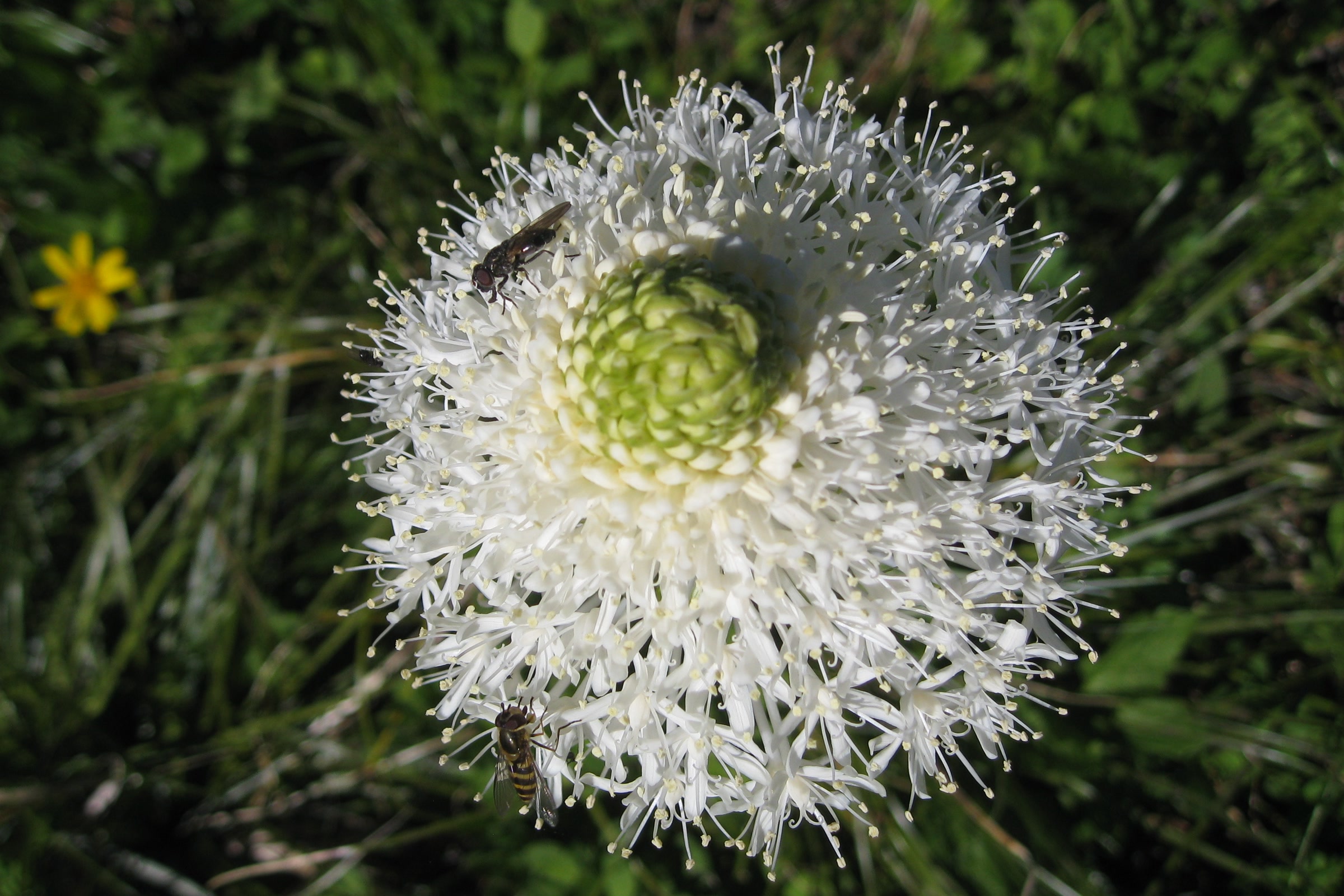
After flowering, the Burke Herbarium notes, the stalk carries three lobed seed capsules. Because each rosette blooms only once, a stalk you see this year marks a rosette that will not flower again.
Bears, elk and goats
The name does not mean bears eat it. The NPS article says bears use the leaves as denning material, while sheep, deer, elk and goats are known to eat the plant. See our guides to the park’s black bears and mountain goats.

Beargrass in Tribal basketry
Beargrass is a weaving plant with deep roots in the Peninsula’s Tribal cultures. The NPS article notes that Native peoples have used its leaves for basket weaving. The Makah Cultural and Research Center’s online basketry exhibit says beargrass is represented in the Ozette baskets, and that Makah women today trade to get beargrass for their baskets.
The same exhibit describes beargrass growing at Queets, south of Makah territory, where it grows wider and longer than in the mountains. The Northwest Indian Fisheries Commission reported in 2005 that bear grass had been used in tribal basket weaving on the Olympic coast for centuries, and that Quinault elders were finding it harder to gather.

These are living traditions that belong to the Tribes, and they are best learned from the Tribes themselves. See our guide to the Ozette Triangle and Cape Alava, where the Ozette village site lies.
Fire and a shrinking plant
The 2005 report describes a project by Quinault cultural specialist Justine James and University of Washington researcher Daniela Shebitz, with Quinault firefighters. They burned test plots in bogs on Quinault lands, because researchers believe Tribes kept bear grass areas thriving by burning them. Elders reported that regrowth after burning is more pliable.
A 2008 Northwest Science study in Olympic National Forest found that beargrass cover in older plots on the southeastern Peninsula had declined over 17 years. The authors pointed to harvest for the floral trade and denser canopy without fire. A 2009 study found that high severity burns increased seedlings and new shoots, though they reduced cover at first.
Fire in the park’s subalpine zone is usually small, the park says, burning a few clusters of trees on dry, sunny slopes. Our guide to wildfire in Olympic National Park explains how the park manages fire today.
Seeing beargrass without harming it
Under the park’s Superintendent’s Compendium, collecting natural materials is generally prohibited, so leave every leaf and stalk where it grows. In the high meadows, stay on the trail even for the perfect photo. Down in the lowland forests, look for its springtime relative in our guide to trilliums in Olympic National Park.
How Friends of Olympic National Park helps
We are Friends of Olympic National Park (FONP), a volunteer led friends group based in Port Angeles. Our projects include guided nature walks for insects, mushrooms and wildflowers. Members keep that work going, so please become a member.
Frequently asked questions
Is beargrass a grass?
No. Beargrass, Xerophyllum tenax, is a flowering plant in the family Melanthiaceae, the same family as the trillium. Its long, tough leaves look like grass, which is how it got the name.
Does beargrass bloom every seven years?
No. The National Park Service calls the seven year cycle a myth. Beargrass flowers when conditions are right, especially after good spring rain and soil moisture, and each rosette blooms only once.
When does beargrass bloom in Olympic National Park?
The NPS says beargrass can start blooming in late May at lower elevations and continue into August in the high country. The Burke Herbarium gives May to August for Washington.
Do bears eat beargrass?
No. According to the National Park Service, bears do not eat beargrass but use its leaves as denning material. Sheep, deer, elk and goats are known to eat it.
Can I pick beargrass in Olympic National Park?
No. The park’s Superintendent’s Compendium generally prohibits collecting natural materials, so beargrass leaves and flower stalks must be left where they grow.
Leave a Reply