

Trilliums in Olympic National Park are one of the first signs that winter is loosening its grip on the lowland forests. A single white flower opens above three broad leaves, often on mossy ground beside the trail. Here is what the park’s records say about them, how to recognise them, and when and where to look.
Quick answer
What trilliums grow in Olympic National Park?
One species: the western trillium, Trillium ovatum. The park lists it among the understory plants of its lowland forests, such as the Sol Duc and Elwha valleys, Lake Crescent and Staircase. In Washington it flowers from March to June, and its three white petals often turn pink or purple with age. Picking is not allowed.
- One trillium species on the park’s plant list
- Flowers March to June in Washington
- Three leaves, three white petals, one flower
- Petals can turn pink or purple as they age
One trillium on the park list
The National Park Service keeps a species list for Olympic in its NPSpecies database. It records just one trillium as present and native: Trillium ovatum, which the park calls large white trillium. Field guides more often call it the western trillium or Pacific trillium.
The two park sources describe it a little differently. The park’s page on lowland forests names trillium among the common understory plants, while the NPSpecies record rates its abundance as uncommon. Either way, it is a plant you are most likely to meet on a spring walk in the low valleys.
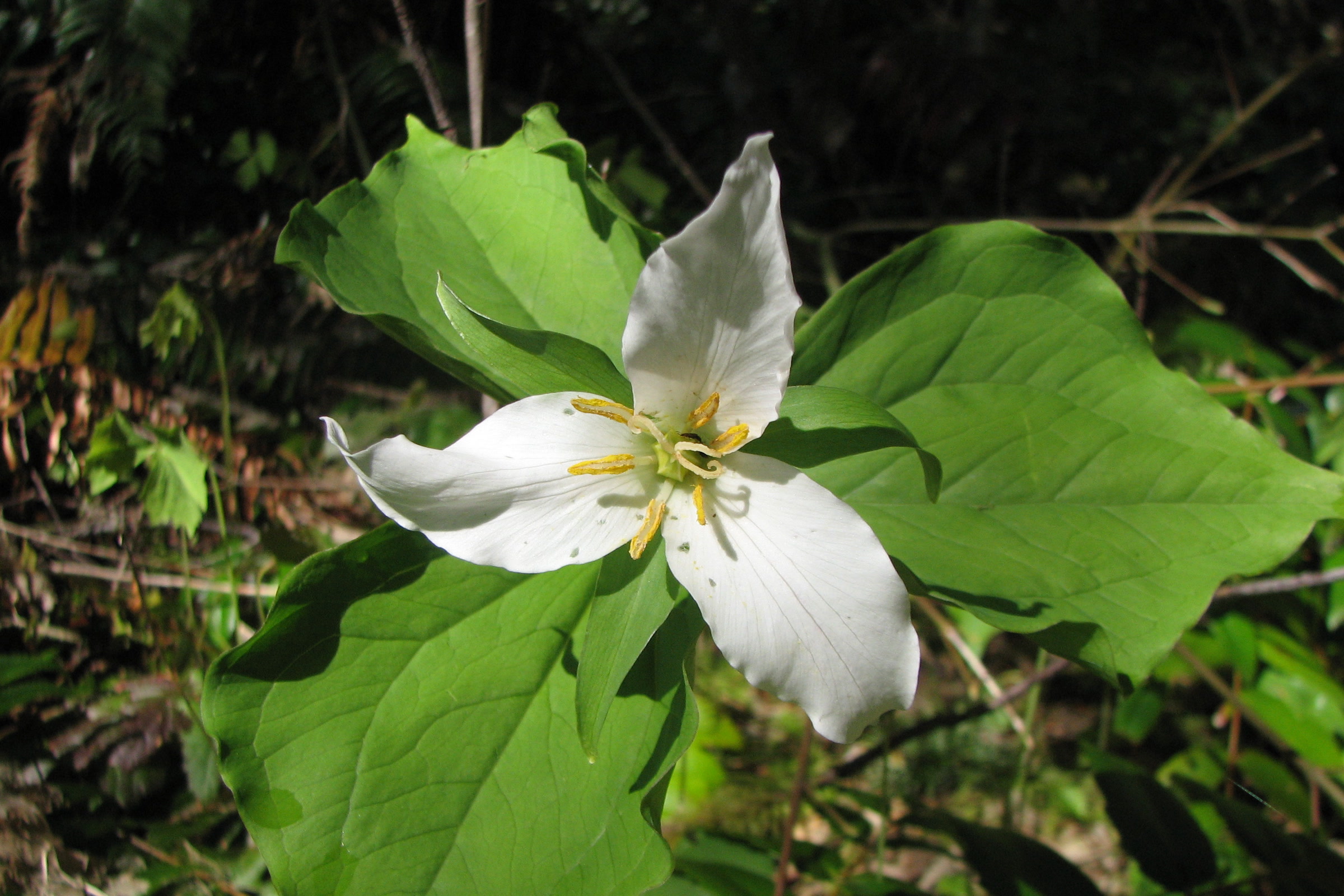
How to recognise a western trillium
Everything about this plant comes in threes. The Burke Herbarium at the University of Washington describes a smooth stem about 10 to 30 centimetres tall. Near the top sits a single whorl of three broad, plain green leaves, each 5 to 15 centimetres long, with almost no leaf stalk.
Above the leaves rises one flower on a short stalk. It has three narrow green sepals, three larger white petals and six stamens with cream anthers. The Burke Herbarium notes that the stalked flower and the unmottled, stalkless leaves set it apart from other trilliums in the region.

A western trillium through the season
The same plant can look quite different from one visit to the next. Months below come from the Burke Herbarium for Washington, except where noted.
| Stage | What to look for | When |
|---|---|---|
| Fresh flower | Three bright white petals above three green leaves | March to June |
| Older flower | Petals blushing pink, then deeper pink or purple | Later in the same bloom |
| Fruit | A fleshy, yellowish capsule where the flower was | Summer; an Oregon grower collects seed in July |
Why trillium flowers turn pink
If you find a pink trillium, you have probably not found a second species. The Burke Herbarium notes that the petals of the western trillium can turn pink or purple as the flower ages. A patch in full bloom often shows the whole range at once, from crisp white to dusky rose.

The photo at the top of this guide shows the same change. It was taken in May 1973 in the Queets River valley of Olympic National Park for DOCUMERICA, a photo project of the Environmental Protection Agency. The trillium’s rosy bloom sits in a carpet of Oregon oxalis.
Where trilliums grow in the park
The Burke Herbarium places western trillium in open to dense moist forests at low to middle elevations, often in boggy spots in spring. The park’s lowland forest page suggests where to see that forest: the Sol Duc and Elwha valleys, the trails around Lake Crescent, and the old forest around Staircase in the southeast corner.
Trail reports help too. Our guide to the Mink Lake Trail notes that the Washington Trails Association has reported trillium on its cool, damp lower slopes into early summer. Our Lake Angeles Trail guide notes trillium early in the season as well.
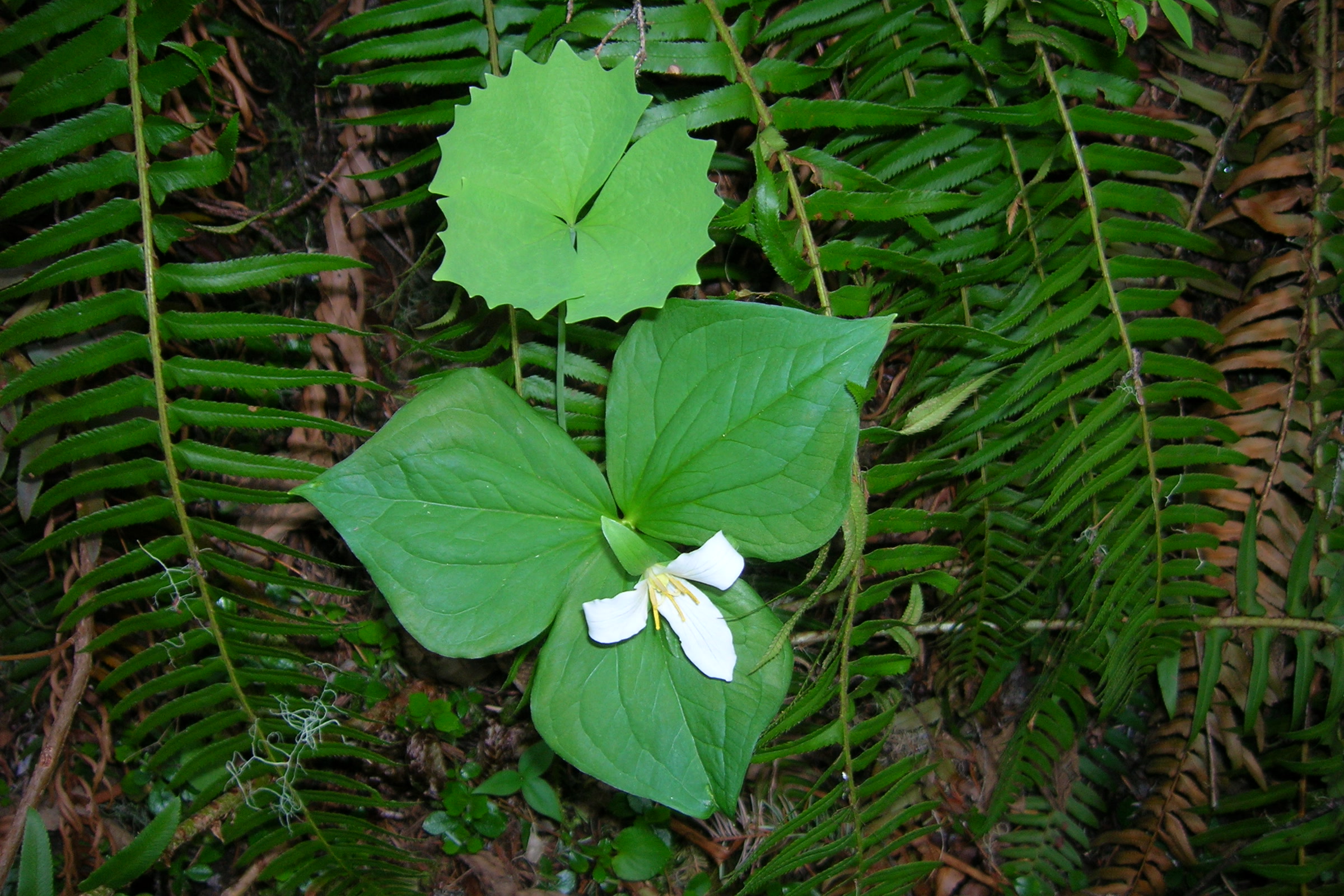
Spring wildflowers that keep it company
Trilliums rarely grow alone. The park lists these spring wildflowers and ferns beside trillium in the understory of its lowland forests:
- Bleeding heart, with nodding pink flowers
- Violets, star flower and twinflower
- Vanillaleaf and youth-on-age
- Sword fern, covered in our guide to ferns of Olympic National Park
In the wettest corners, the yellow hoods of skunk cabbage often open even earlier. For the moss-draped valleys of the west side, see our guide to temperate rainforests in Olympic National Park.
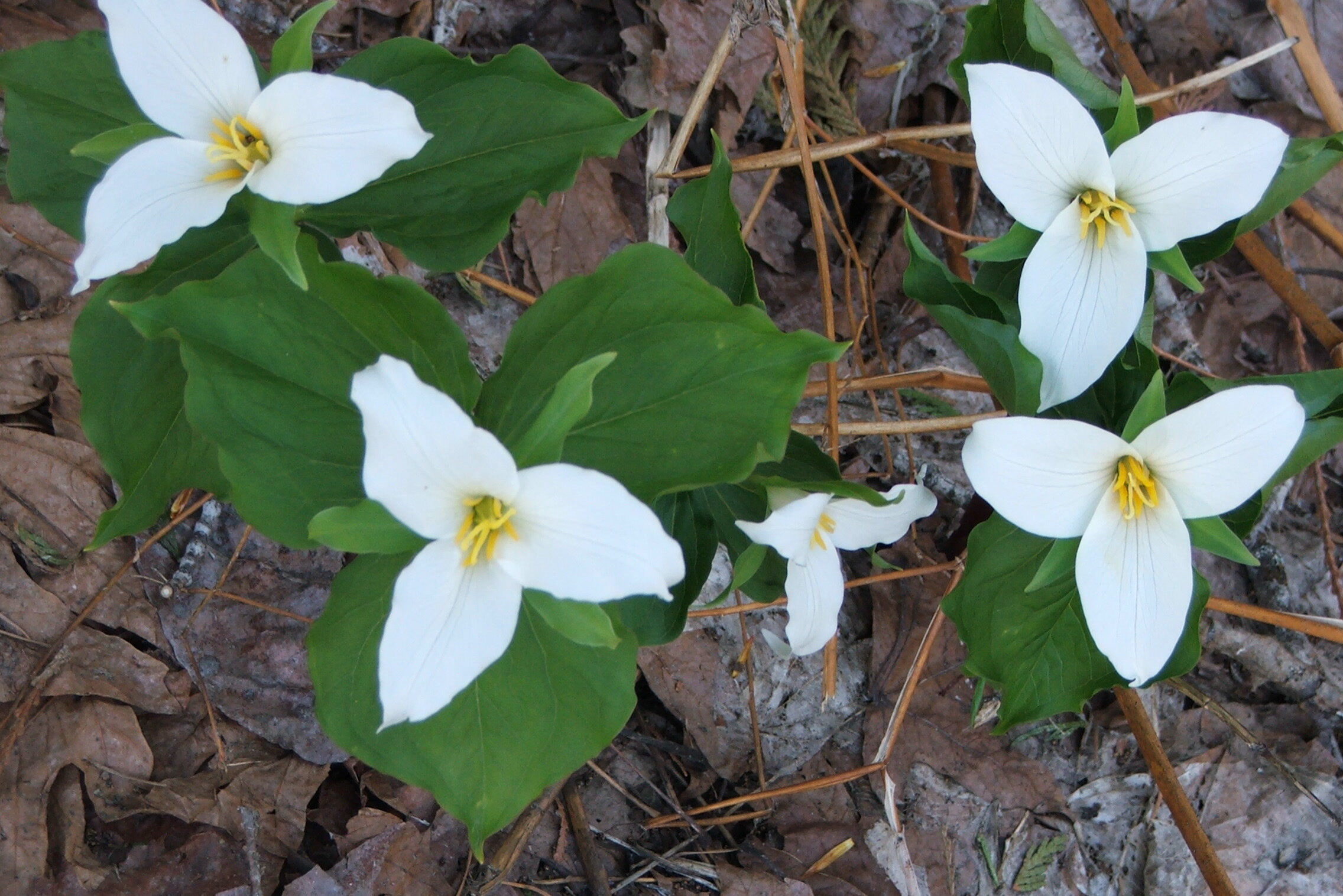
When western trillium blooms
The Burke Herbarium gives March to June as the flowering season in Washington. Elevation sets the pace. Writing in the Native Plants Journal in 2002, an Oregon trillium grower reported blooms from late March through April at about 750 feet, and in May at higher elevations.
So begin low and early. The valley floors usually flower first, and the blooms work their way up the slopes as spring goes on.
A slow plant that is easy to set back
A trillium in flower has taken a long time to get there. In that same Native Plants Journal article, the grower reported that fewer than 15 percent of western trillium seeds sprouted the first spring. Nursery plants then took seven or more years from planting to bloom.
The three leaves and the flower grow on the same stem, so a picked flower takes the plant’s leaves with it. Under the park’s Superintendent’s Compendium, collecting natural materials is generally prohibited. Only edible fruits, berries, nuts and mushrooms may be picked by hand to eat, so trilliums stay where they grow.
- Stay on the trail and step around plants, never on them.
- Photograph the flower instead of touching it.
- Come back a week later to watch the petals change colour.
Trillium has relatives higher up. The Burke Herbarium places it in the same plant family as beargrass, the tall white plume of the subalpine meadows, which flowers months later. Read about it in our guide to beargrass in Olympic National Park. For another shy forest bloomer, see our guide to orchids of Olympic National Park.
How Friends of Olympic National Park helps
We are Friends of Olympic National Park (FONP), a volunteer led friends group based in Port Angeles. Our projects include guided nature walks for insects, mushrooms and wildflowers. Members help that work continue, so please become a member.
Frequently asked questions
What kind of trillium grows in Olympic National Park?
The western trillium, Trillium ovatum, is the only trillium on the park’s NPSpecies list, where the park calls it large white trillium. The park’s lowland forest page lists it among the common understory plants.
When do trilliums bloom in Olympic National Park?
The Burke Herbarium at the University of Washington gives March to June as the western trillium’s flowering season in Washington. Lower valleys usually bloom first, and higher slopes later in spring.
Why are some trilliums pink?
The petals of the western trillium start white and can turn pink or purple as the flower ages, according to the Burke Herbarium. A pink trillium in the park is usually an older flower, not a different species.
Can I pick trilliums in Olympic National Park?
No. The park’s Superintendent’s Compendium generally prohibits collecting natural materials. Only edible fruits, berries, nuts and mushrooms may be hand picked to eat, so trilliums must be left where they grow.
How long does a trillium take to flower?
A long time. An Oregon grower writing in the Native Plants Journal reported that nursery grown western trilliums took seven or more years from planting to bloom.
Leave a Reply