
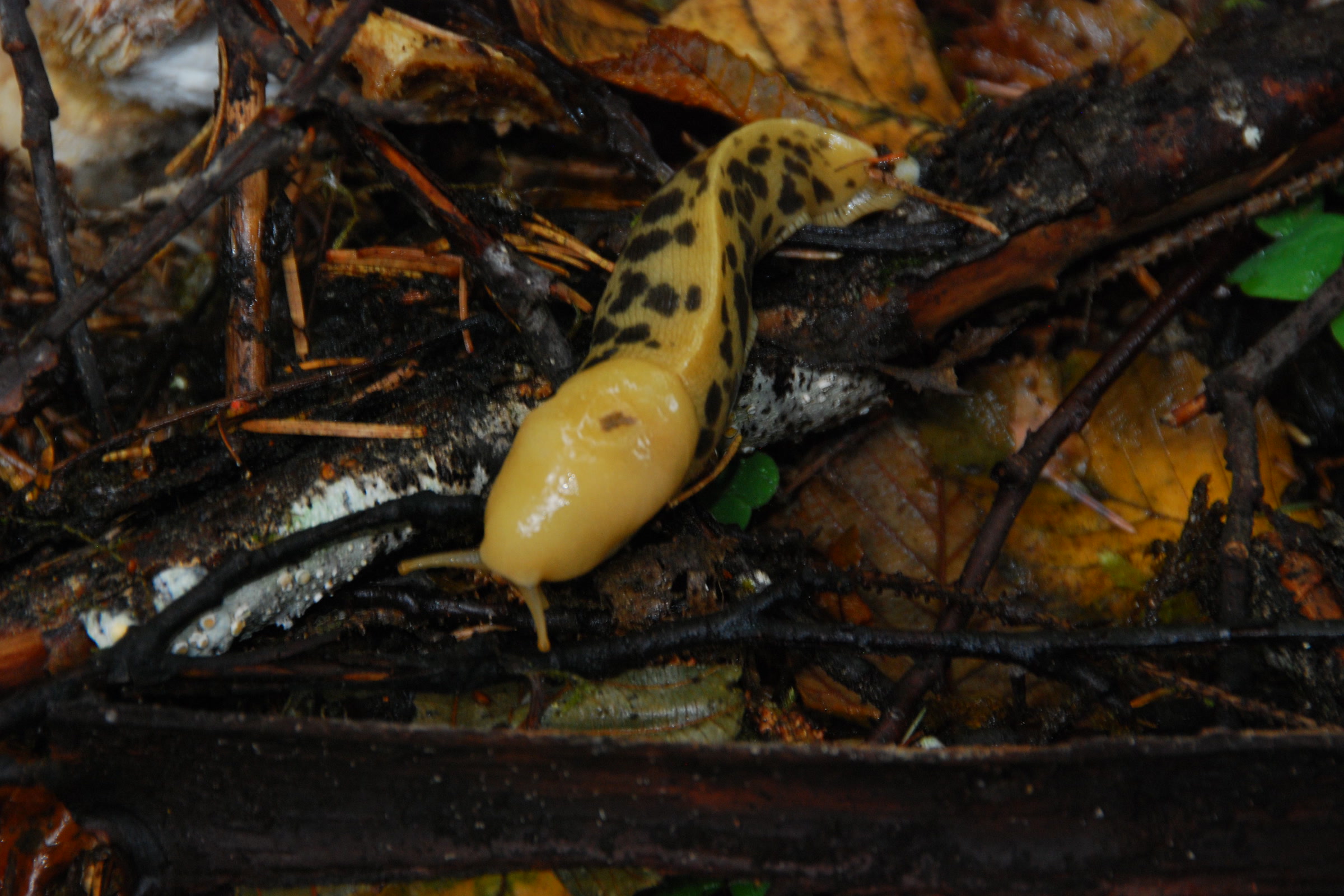
Banana slugs are the slow, shining stars of Olympic National Park’s wet forests. Walk any damp trail on the west side of the park and you may find one gliding over a mossy log or a fern, especially in the Hoh and Quinault rain forests. Here is how to recognise a Pacific banana slug, what it does for the forest, and how to enjoy one without doing it harm.
Quick answer
Where can you see banana slugs in Olympic National Park?
Banana slugs live year round on forest floors, trails, tree trunks, ferns and stumps in Olympic National Park, and they are especially common in the Hoh and Quinault rain forests. Look on damp mornings, in light rain or after a storm. Stay on the trail, watch your step and leave each slug where you find it.
- The largest reach about 10 inches long
- Colours range from yellow and green to brown, black and white
- They eat leaves and mushrooms and help break down plants
- An introduced European slug now also lives in the park
What is a Pacific banana slug?
The Pacific banana slug, Ariolimax columbianus, is a mollusc, a relative of snails that carries no shell. It lives in coastal rain forests from southeast Alaska to central California, and the Olympic Peninsula sits right in the heart of that range. The University of Puget Sound’s Slater Museum of Natural History calls it the largest slug in North America and perhaps the second largest in the world.
Muir Woods National Monument puts the biggest at about 10 inches long. Without a shell, a banana slug dries out easily, which is why it does best on the floor of cool, wet forests and is mainly active at night or on cool, damp days.
Banana slug facts: colour, body and senses
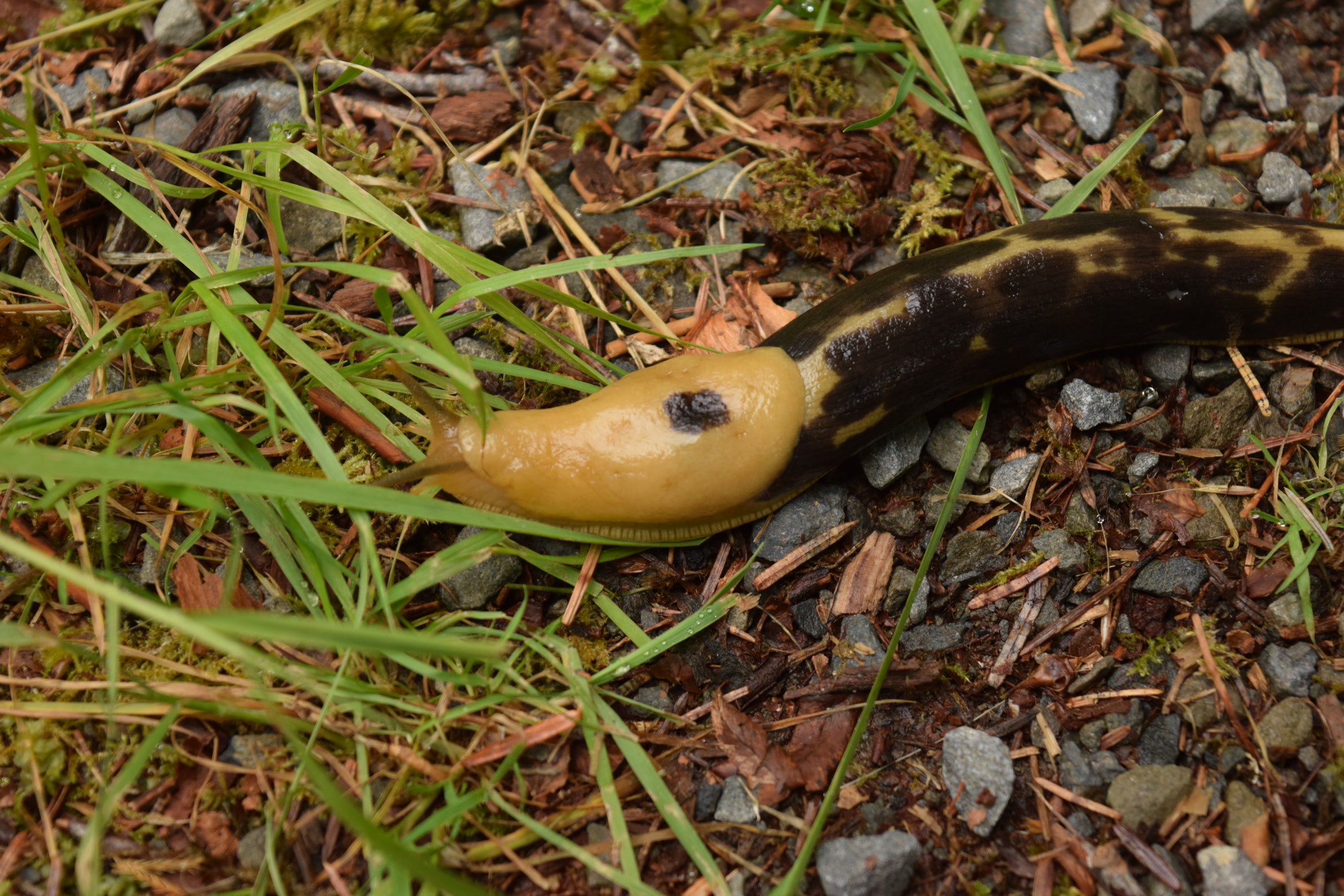
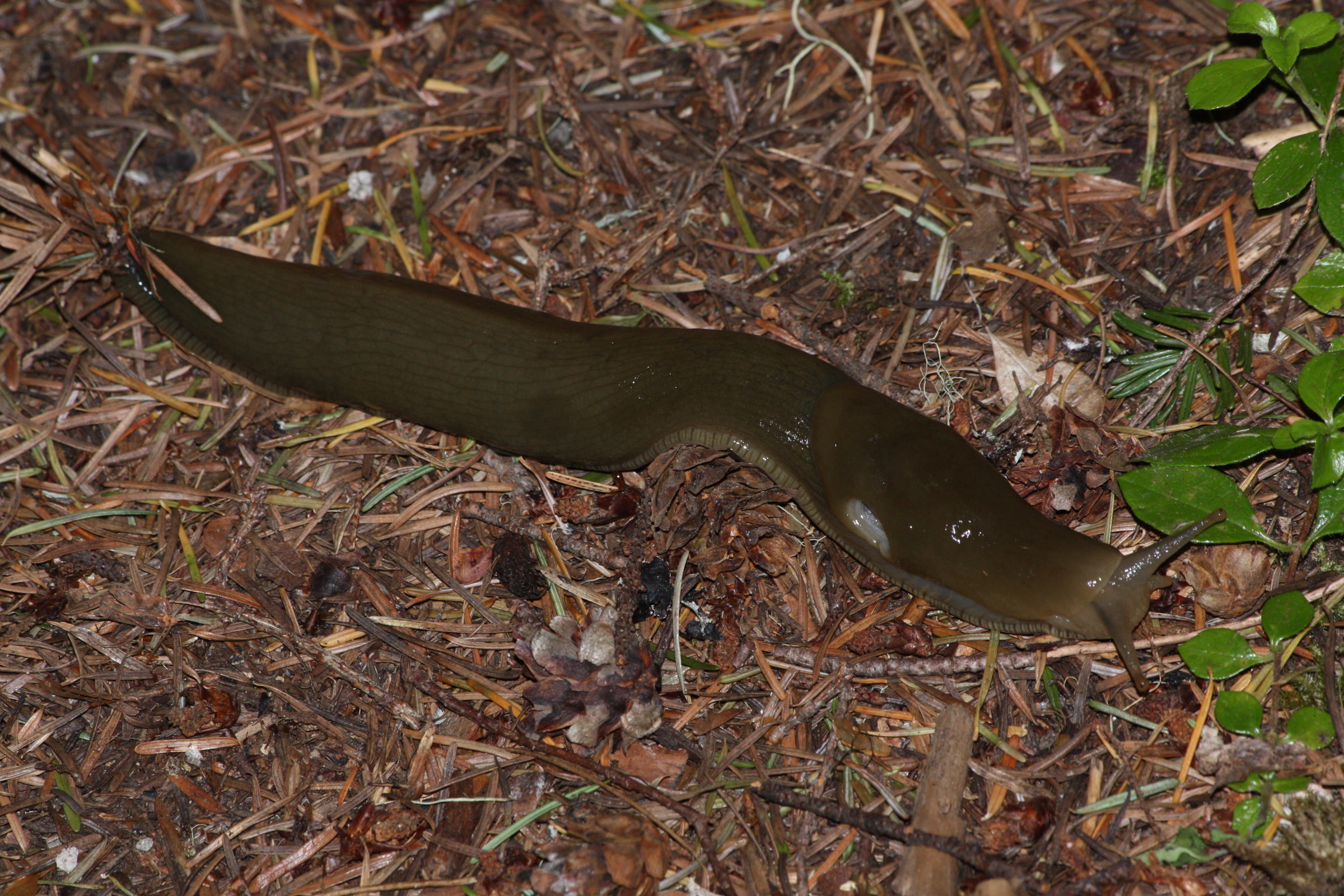
Not every banana slug looks like a banana. Olympic National Park describes them as bright to dark yellow, brown, black, white or green, often with dark spots. Their head and body are smooth, and many have a distinct ridge running along the back.
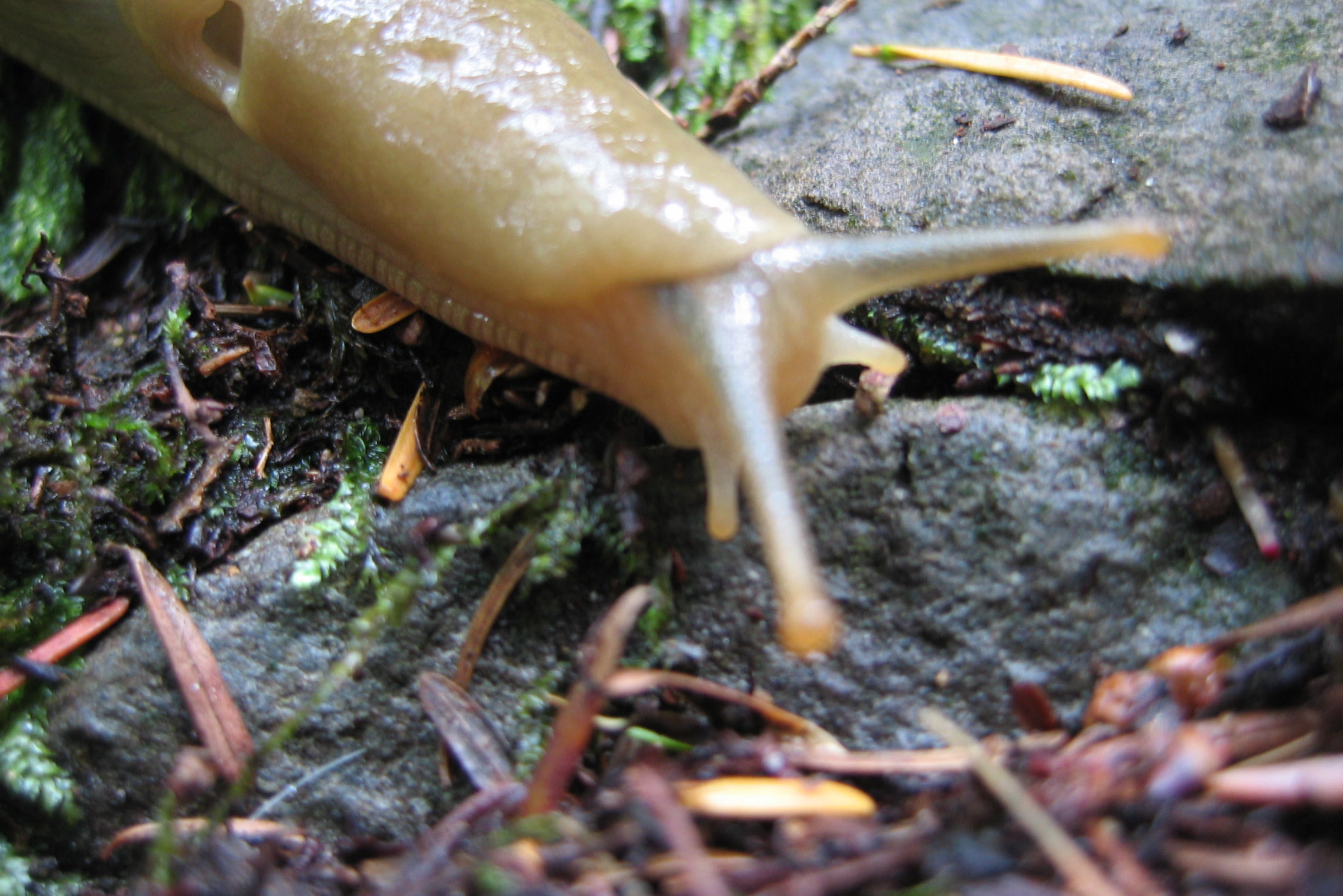
Look closely at the head and you’ll see four tentacles. The two long upper ones sense light and movement, and the two short lower ones are for touch and smell. On one side of the head there is a small hole, the breathing pore, which leads to a single lung. After rain you may see it open wide.
What the slime is for
Slime is the banana slug’s survival kit. The park says it keeps the slug from drying out, helps it breathe and helps it move: the slug’s single muscular foot glides over a film of mucus, a little like ice skating. Muir Woods clocks that pace at about 6.5 inches per minute.
The slime is also a defence. It can numb the mouth and tongue of an animal that tries to eat the slug, and the Slater Museum notes that its mucus can make a predator’s mouth stick shut. Even so, Pacific giant salamanders and northwestern garter snakes still eat them.
What banana slugs eat and why the forest needs them
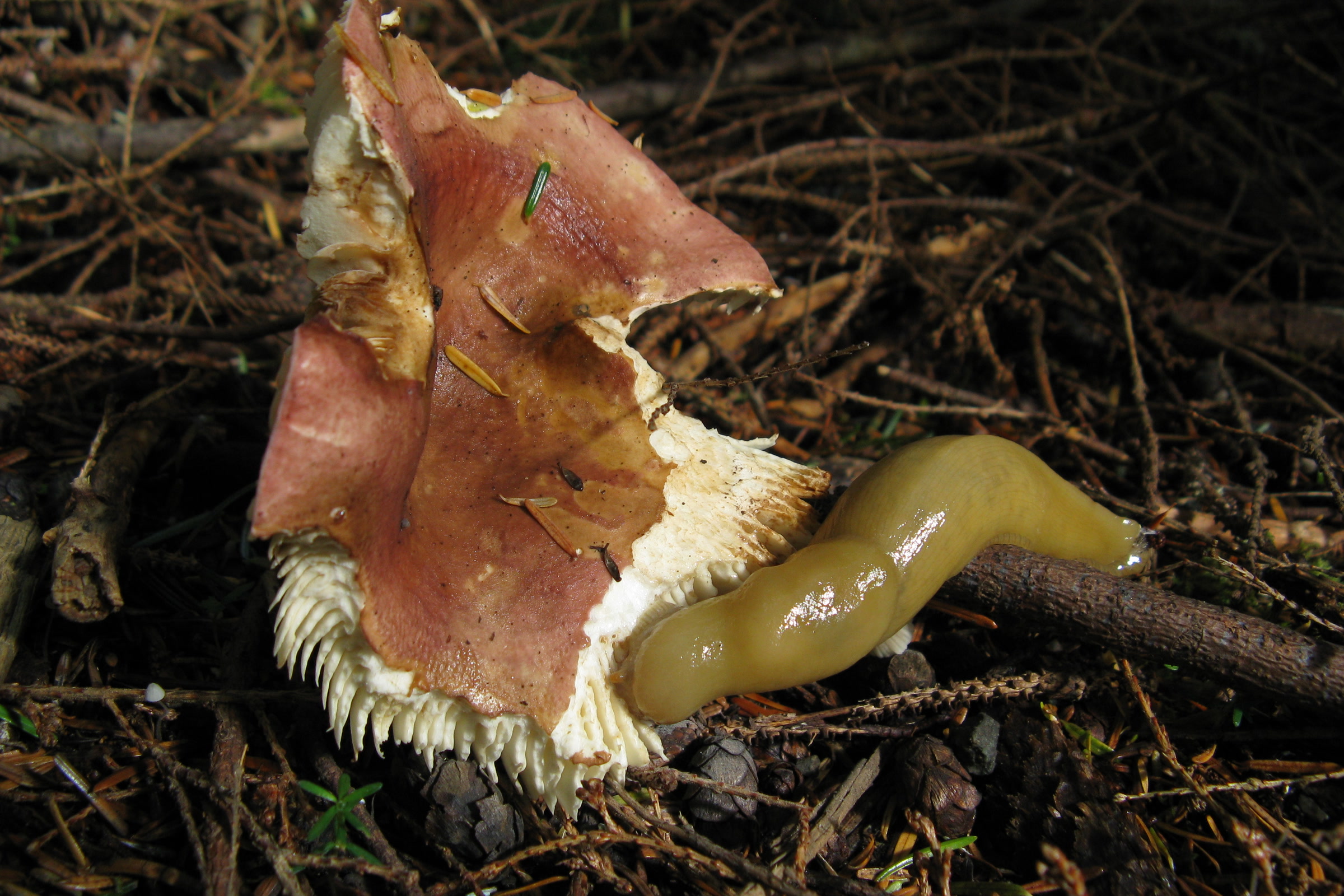
Banana slugs are decomposers. They eat leaves and mushrooms, and they help break down dead plant material so its nutrients return to the soil. Redwood National and State Parks adds that they also eat fruit such as raspberries and blackberries, and may spread seeds in their droppings.
To scrape up all that food, the park says, a banana slug has up to 27,000 microscopic teeth on its radula, a tongue like ribbon. If you spot a nibbled mushroom on the trail, a slug may be the culprit; our guide to mushroom season in Olympic National Park covers the fungi they love.
How banana slugs reproduce
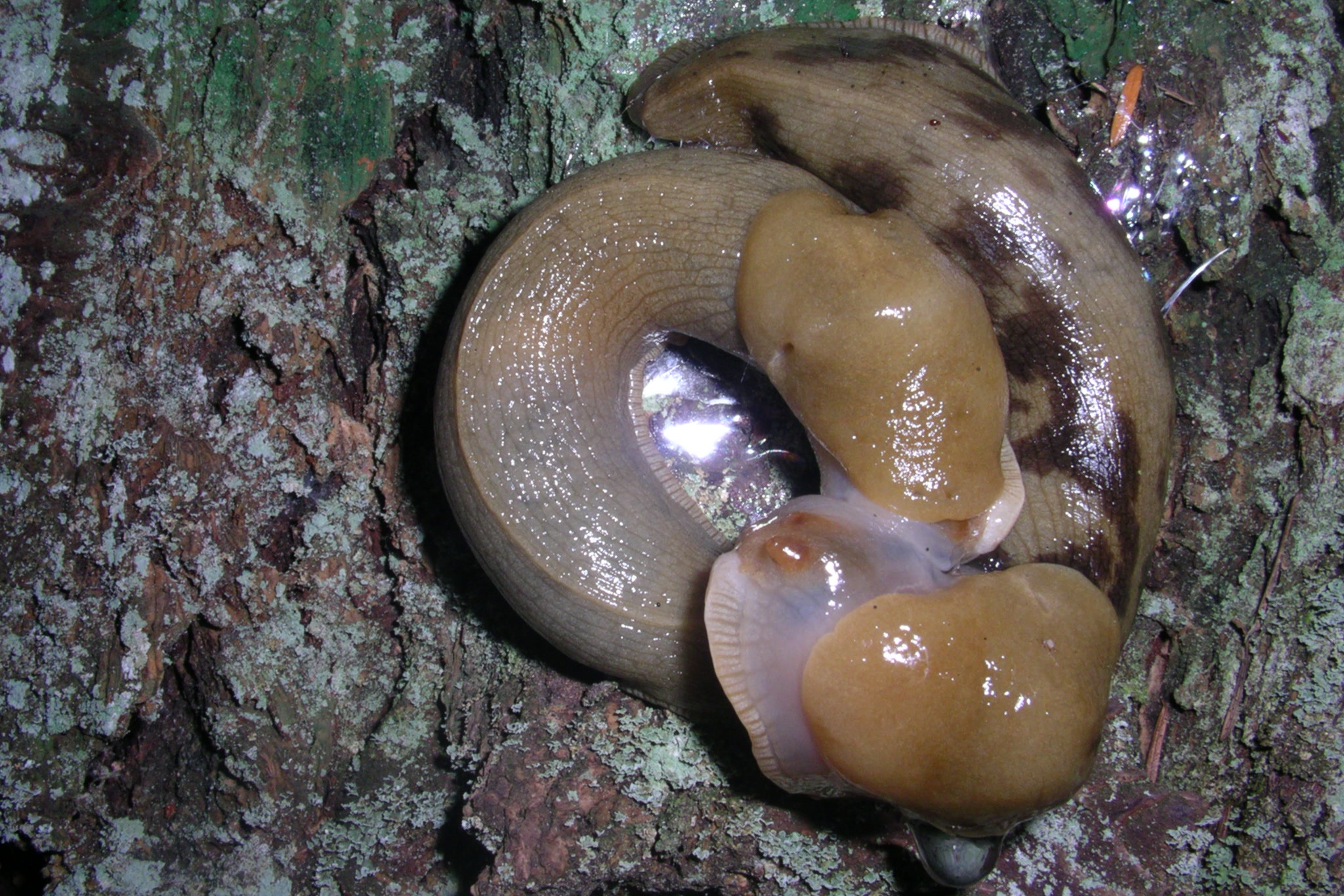
Every banana slug is both male and female, so both partners in a pair can produce eggs. They rarely fertilise themselves and usually court another slug, a slow ritual of circling, nipping and tail swiping. Afterwards a slug lays 3 to 50 eggs in a hidden spot such as under a log or in leaves. The young hatch in one to two months and mature within a few months.
Banana slug or European slug?
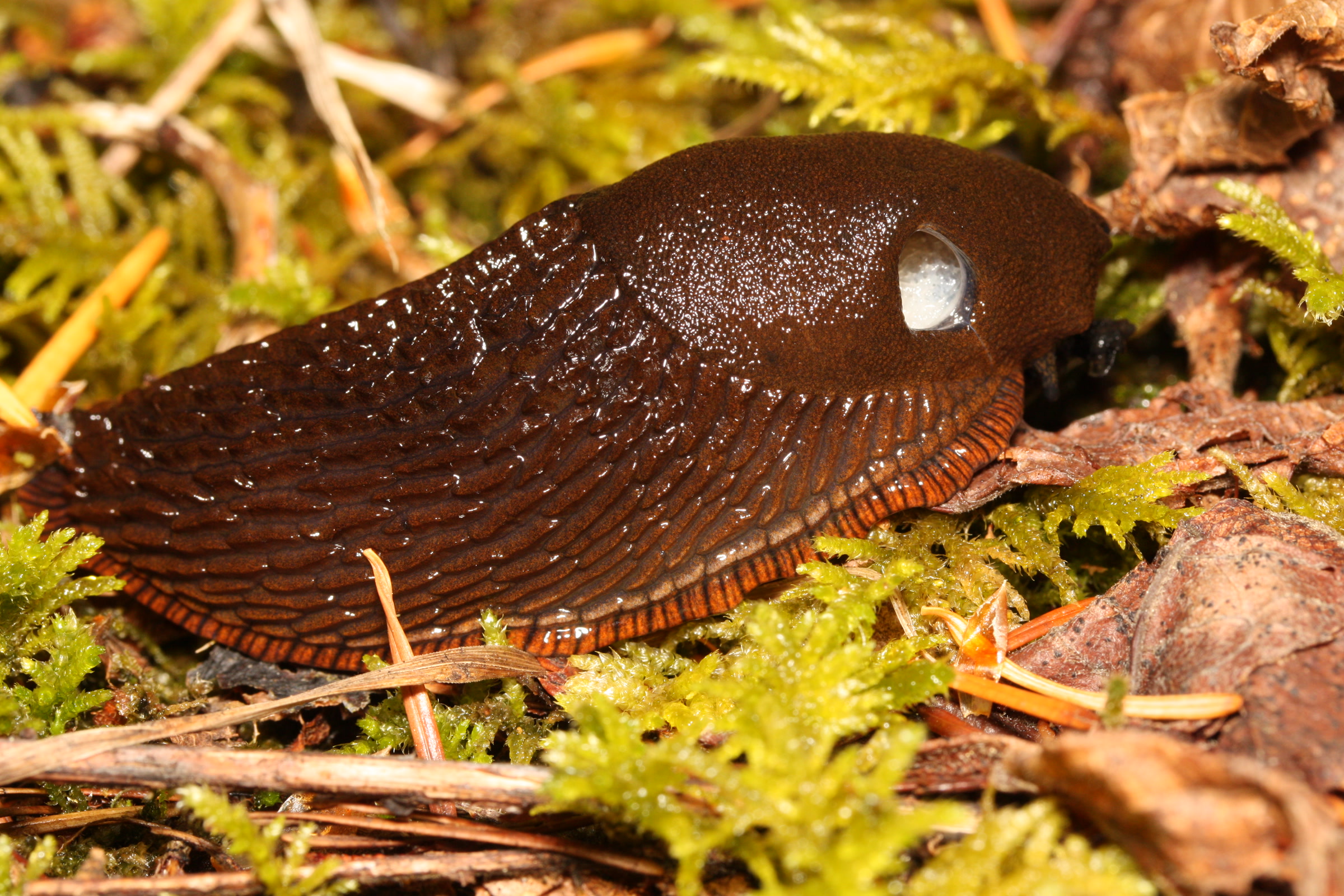
Not every big slug in the park is a native. A European slug, Arion rufus, arrived in the Pacific Northwest within the last century and is now common in Olympic’s forests. Park Service research on San Juan Island found the newcomer becoming much more common than the banana slug in some places, possibly helped by drought.
Native banana slug and introduced European slug compared
| Feature | Pacific banana slug | European slug (Arion rufus) |
|---|---|---|
| Origin | Native to the Pacific coast | Introduced from Europe |
| Colour | Yellow, green, brown, black or white, often spotted | Black, brown or red |
| Skin | Smooth; many have one ridge along the back | Ridged along the back |
| In the park | Forest floors, trails, trunks, ferns and stumps | Now common in park forests |
How to watch banana slugs without harming them
Banana slugs turn up all year, but the park says you’ll see the most on damp mornings, in light rain or after storms. A short loop in the Olympic National Park rainforest is a fine place to start. Then follow the park’s simple advice from its Slugs of Olympic page:
- Watch your step. Slugs often sit right on the tread.
- Stay on the trail so you don’t crush the ones you can’t see.
- If you turn over a rock or log, put it back exactly as it was, because it shelters animals.
We’d add one more: look, photograph, but don’t pick them up. Their moist skin and slime are how they breathe and stay alive, so the kindest thing is to crouch down, enjoy the tentacles at work and let the slug carry on.
Want to help science? The Burke Museum’s SLIME Pacific Northwest project maps native and introduced slugs and snails through iNaturalist, and your trail photos can count.
How Friends of Olympic National Park helps
We are Friends of Olympic National Park (FONP), a volunteer led friends group in Port Angeles. Our guided insect, mushroom and wildflower walks help neighbours and visitors notice small forest life like this. Members keep that work going, so please become a member or browse our volunteer opportunities.
Frequently asked questions
How big do banana slugs get?
The largest Pacific banana slugs reach about 10 inches long, according to the National Park Service. The Slater Museum at the University of Puget Sound calls it the largest slug in North America.
Why are banana slugs slimy?
Slime keeps a banana slug from drying out, helps it breathe and lets its single foot glide along. It also defends the slug by numbing the mouth of a predator.
Are banana slugs only yellow?
No. In Olympic National Park they can be bright or dark yellow, brown, black, white or green, and many have dark spots.
What do banana slugs eat?
Leaves, mushrooms and decaying plant material, which they help break down. They also eat fruit such as raspberries and blackberries.
Is it okay to pick up a banana slug?
We suggest you watch without handling. Their moist skin and slime are how they breathe and stay alive. The park asks visitors to stay on trails, watch their step and put back any rocks or logs they move.
Leave a Reply