

Ruby Beach is the northernmost beach access in the Kalaloch area of Olympic National Park, right off US 101 about 7.5 miles north of Kalaloch. A short, steep trail drops from the parking area to a shore of sea stacks, drift logs and the mouth of Cedar Creek, with Abbey Island standing just offshore. Here is what to expect, how the rocks got there and when to go.
Quick answer
What should you know before visiting Ruby Beach?
Ruby Beach is on US 101, 7.5 miles north of Kalaloch in Olympic National Park. A 735 foot trail drops steeply from the parking area to sea stacks, Cedar Creek and Abbey Island. Visit around low tide, keep off drift logs in the surf, and keep dogs leashed. The lot has restrooms and an accessible overlook.
- Beach trail is 735 feet of compacted gravel
- The only park beach trail wide enough for a wheelchair
- Named for red garnet crystals in the sand
- Leashed dogs are allowed on the beach
Getting to Ruby Beach and down the trail
The parking area sits right beside US 101, where the highway meets the coast heading south from the Hoh River. It is a sloped gravel lot with two vault toilets in the middle and an accessible overlook at the north end. The Washington Trails Association’s hike guide puts room for about two dozen cars in the lot, with overflow along the entrance road.
According to the park’s Ruby Beach accessibility details, the trail runs 735 feet on compacted gravel, mostly 4 to 5 feet wide. It starts steep, with grades of 10 to 20 percent and several drain dips, then eases near the bottom; there is a bench at the first switchback. It is the only beach access in the park wide enough for a wheelchair, though winter swells keep rearranging the logs where the trail meets the sand.

Ruby Beach sea stacks and how they formed
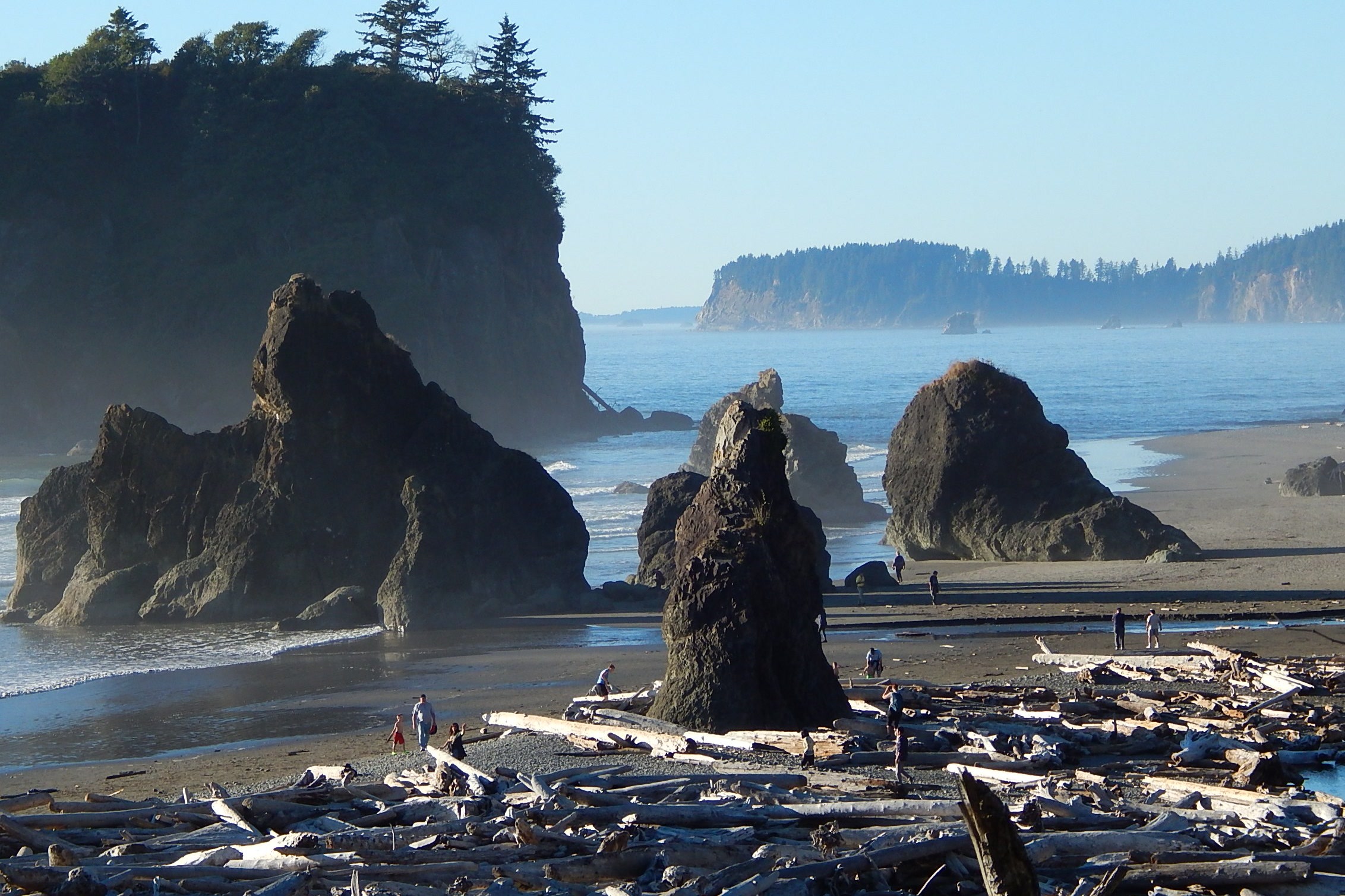
The Ruby Beach sea stacks are pieces of old coastline that the ocean has not yet worn away. The Washington Geological Survey describes them as part of the Hoh assemblage, volcanic rock and debris flow deposits laid down under the sea in the Miocene, then buried, hardened, squeezed and lifted by tectonic forces. As the ocean slowly wore that old shoreline back, the stacks were left standing.
A state geology bulletin, Washington Department of Natural Resources Bulletin 66 by Weldon Rau, splits the beach in two. South of Cedar Creek, the cliffs and stacks are badly fractured sandstone whose cracks later filled with calcite, leaving thin white veins. North of the creek, Abbey Island and the nearby stacks are mostly volcanic breccia, formed when volcanic material erupted onto the sea floor and cooled fast.
Why it’s called Ruby Beach
The same bulletin explains the name: reddish patches of sand coloured by concentrations of small, heavy garnet crystals. Look along the cliffs as well. A level line on top of the bedrock marks an Ice Age wave cut surface, and old piddock clam borings sit about 50 feet above today’s sea level.
Abbey Island, Cedar Creek and Destruction Island
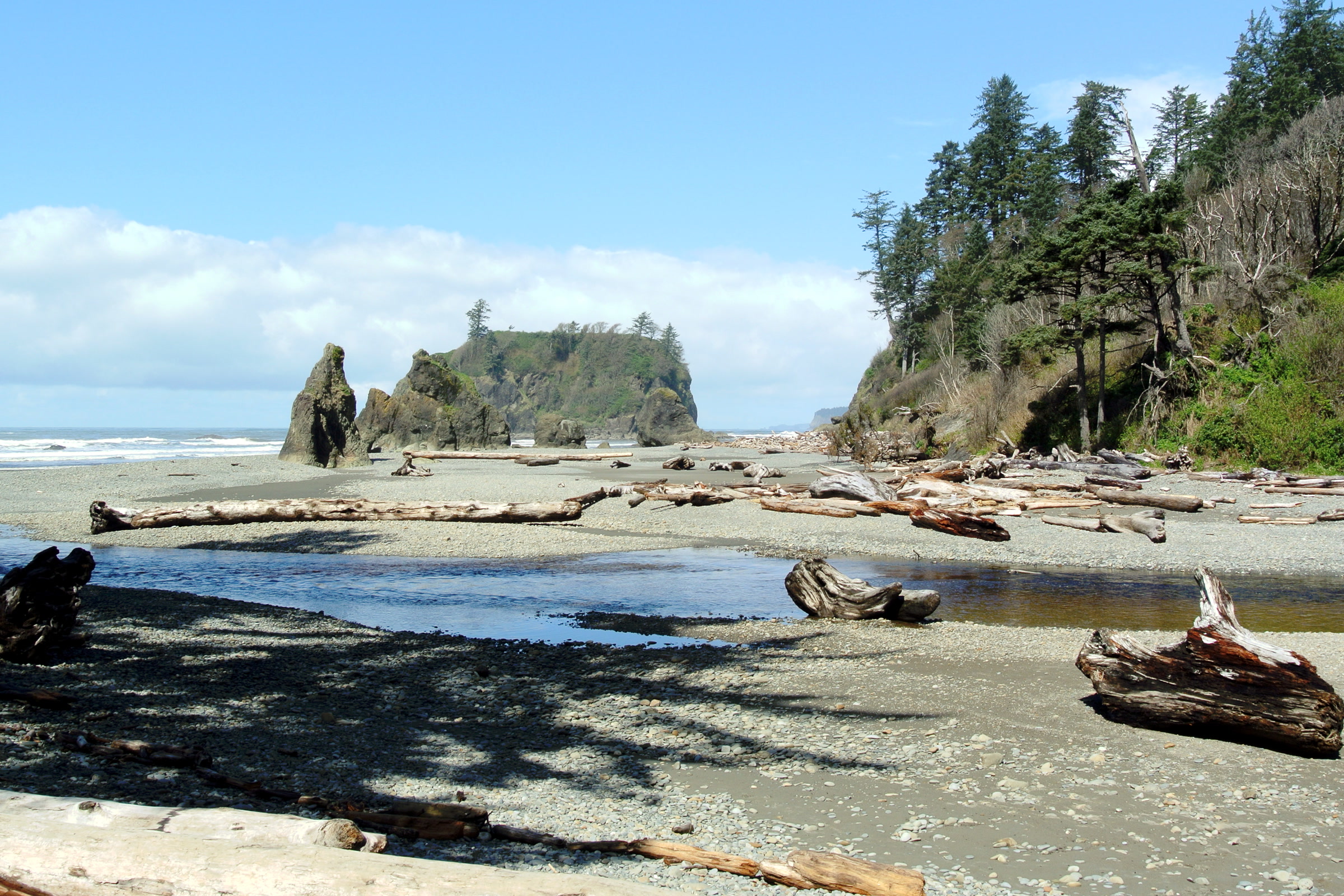
Cedar Creek meets the Pacific at Ruby Beach, cutting a shallow channel across the sand below the trail. Abbey Island, the big tree topped rock just north of the creek mouth, is the beach’s signature view. The park notes that driftwood sometimes covers parts of the beach, so expect to clamber.
Out on the horizon to the southwest is Destruction Island, a low island with an old lighthouse. It belongs to the Quillayute Needles National Wildlife Refuge, which President Theodore Roosevelt set aside in 1907 to protect seabirds. The park says common murres and tufted puffins nest on these offshore islands, so bring binoculars rather than trying to get closer.

The best time to visit Ruby Beach
The best time to visit Ruby Beach is around low tide. More sand opens up around the stacks, Cedar Creek is easier to cross, and the tide pools at the rocks appear; our guide to Olympic National Park tide pools covers the pools and how to explore them gently. Tide charts are available at the Kalaloch Information Station.
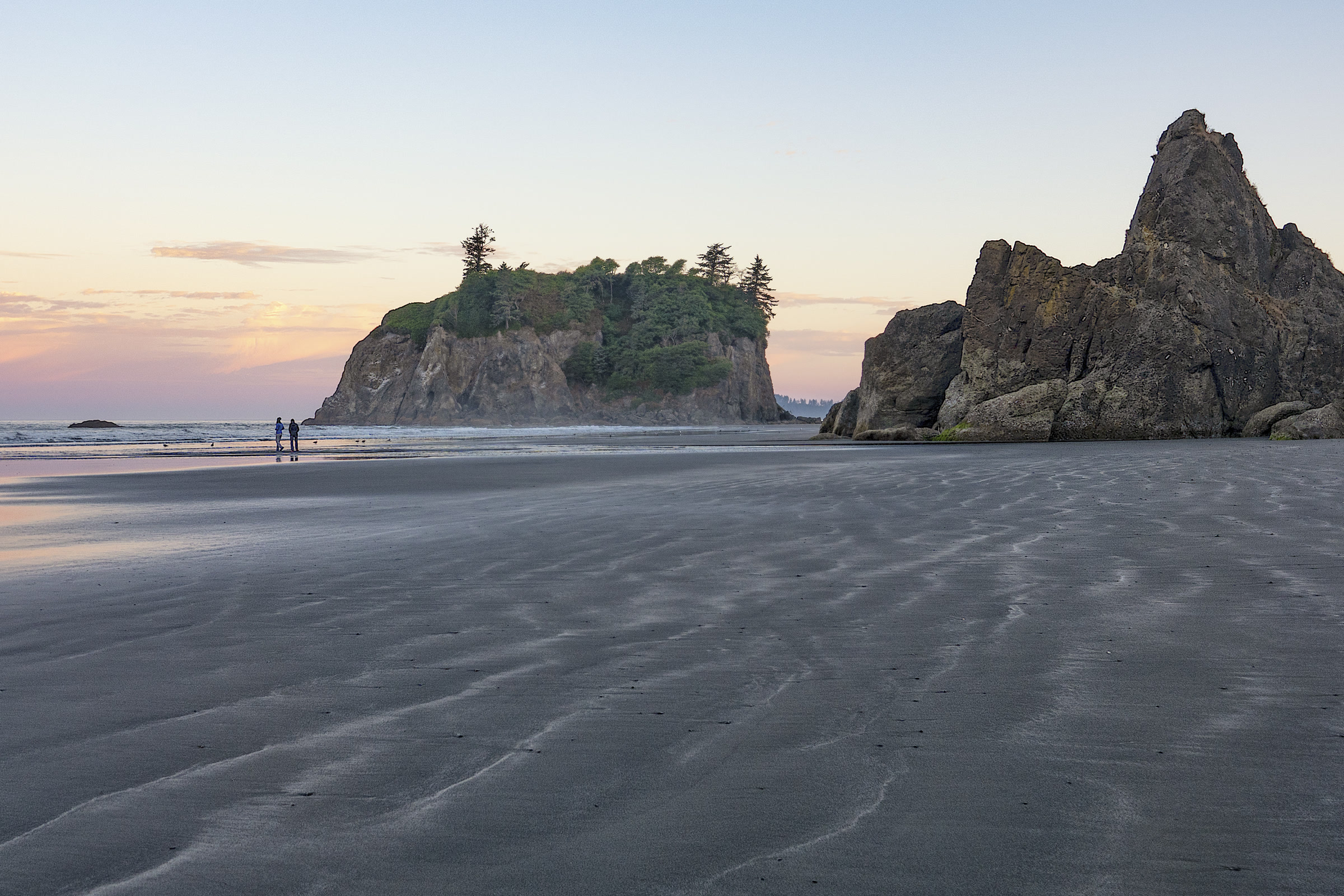
Because the beach faces west, late afternoon brings the stacks into silhouette. The Kalaloch area is open year round, but winter brings big swells that move logs and storms that push tides higher than predicted. Summer has the lowest tides and the most visitors, so arrive early: hikers report the small lot filling by around noon.
Staying safe on the logs and rocks
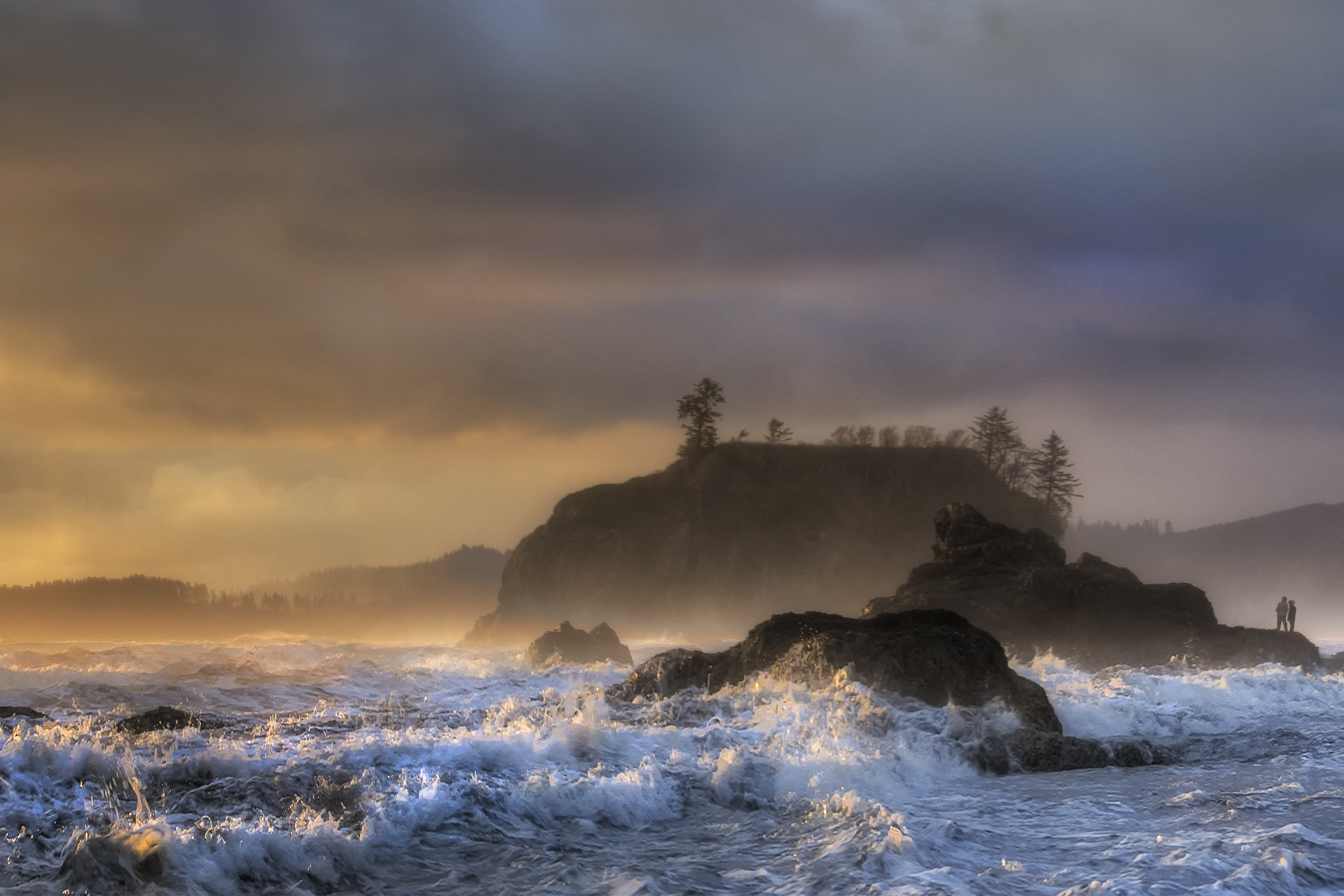
The drift logs that make Ruby Beach so photogenic are also its main hazard. The park asks visitors not to play on beach logs, especially at high tide, because waves can roll and tumble them. Algae make the rocks very slippery, so test each step and keep children close.
- Check the tide before you walk out around the stacks.
- Stay off logs in or near the surf.
- Keep dogs on a leash and off the tidal rocks.
Our Leave No Trace guide to Olympic coast beaches covers the wider coast rules, from fires to pets. Dogs are welcome at Ruby Beach on a leash, and our guide to dogs in Olympic National Park lists the rest of the park’s pet rules.
Ruby Beach and nearby beaches compared
| Beach | Getting to the sand | Known for |
|---|---|---|
| Ruby Beach | 735 foot trail from US 101 | Sea stacks, Abbey Island, Cedar Creek |
| Beach 4, Kalaloch | Short trail from US 101 | Easy tide pools |
| Rialto Beach | 200 foot path from the Mora Road lot | Drift logs and the walk to Hole-in-the-Wall |
Kalaloch, 7.5 miles south, and nearby South Beach have the only campgrounds on the park’s southern coast, and Kalaloch also has a lodge and the clifftop tree described in our story of the Kalaloch Tree of Life. For a wilder day farther north, see our Rialto Beach and Hole-in-the-Wall guide.
How Friends of Olympic National Park helps
We are Friends of Olympic National Park (FONP), a volunteer led friends group based in Port Angeles. Our volunteers join beach cleanups in Olympic National Park, including our spring coastal cleanup in the Kalaloch area. To help keep beaches like Ruby clean, browse our volunteer opportunities.
Frequently asked questions
How long is the walk down to Ruby Beach?
The park measures the trail at 735 feet from the parking area to the beach. It is compacted gravel but steep near the top, with drain dips and a bench at the first switchback.
Why is it called Ruby Beach?
A Washington Department of Natural Resources geology bulletin says the name comes from reddish patches of sand, coloured by concentrations of small red garnet crystals.
Are dogs allowed at Ruby Beach?
Yes. Pets are allowed at Ruby Beach and the other Kalaloch area beaches, but they must be on a leash at all times. Keep them off the tidal rocks.
Is Ruby Beach wheelchair accessible?
Partly. The parking area has an accessible overlook, and the park says the Ruby Beach trail is the only beach access wide enough for a wheelchair, though it is steep with drain dips and logs at the bottom.
Leave a Reply