
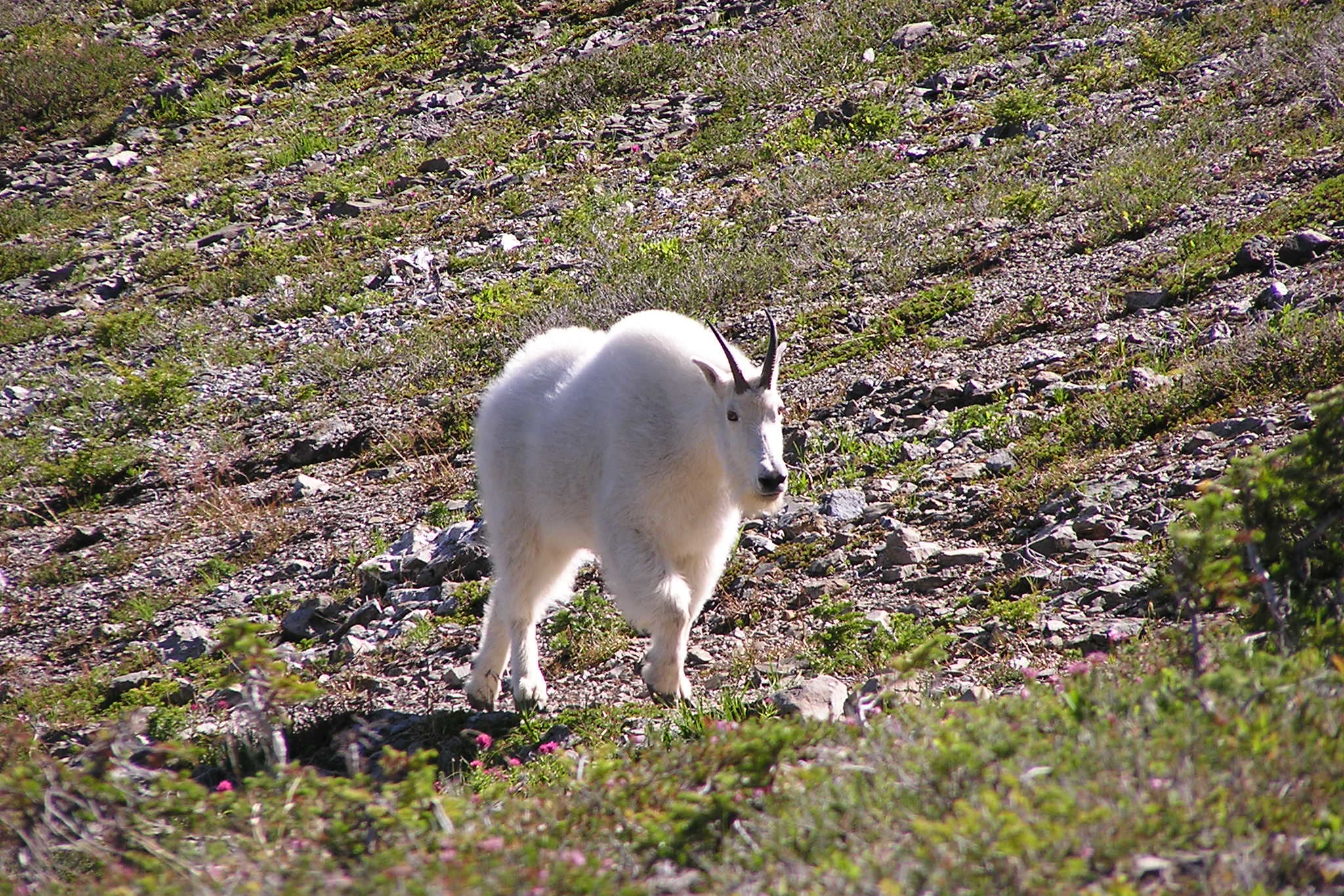
For nearly a century, mountain goats in Olympic National Park were a familiar sight on high ridges above Port Angeles. They were never meant to be here. Between 2018 and 2022 the park and its partners moved hundreds of goats to the Cascades, where the species belongs, and removed the rest. Here is the story in the park.s own figures, and what it means for hikers.
Quick answer
Are there still mountain goats in Olympic National Park?
Very few, if any. Mountain goats are not native to the Olympics; about 12 were released near Lake Crescent in the 1920s. A 2018 plan removed 548 goats by 2022, and over 59 percent were moved to the Cascades. The park is now in a maintenance phase and asks hikers to report any sighting.
- About 12 goats released near Lake Crescent, 1925 to 1929
- About 725 goats on the peninsula by 2018
- 325 goats translocated to the Cascades, 2018 to 2020
- 548 removed in all; active work ended in 2022
Are mountain goats native to the Olympics?
No. The Olympic Mountains have long been cut off from the Cascades, and several mountain species found there never reached the peninsula on their own, including pika, bighorn sheep, ptarmigan and mountain goats. Historical records describe the release of about 12 goats near Lake Crescent between 1925 and 1929, before the park was established in 1938.
An independent review by the Conservation Biology Institute concluded that the evidence supports the view that the mountain goat has never been native to the Olympic Peninsula. The small herd grew to more than 1,000 animals by a 1983 estimate and spread across the whole range.
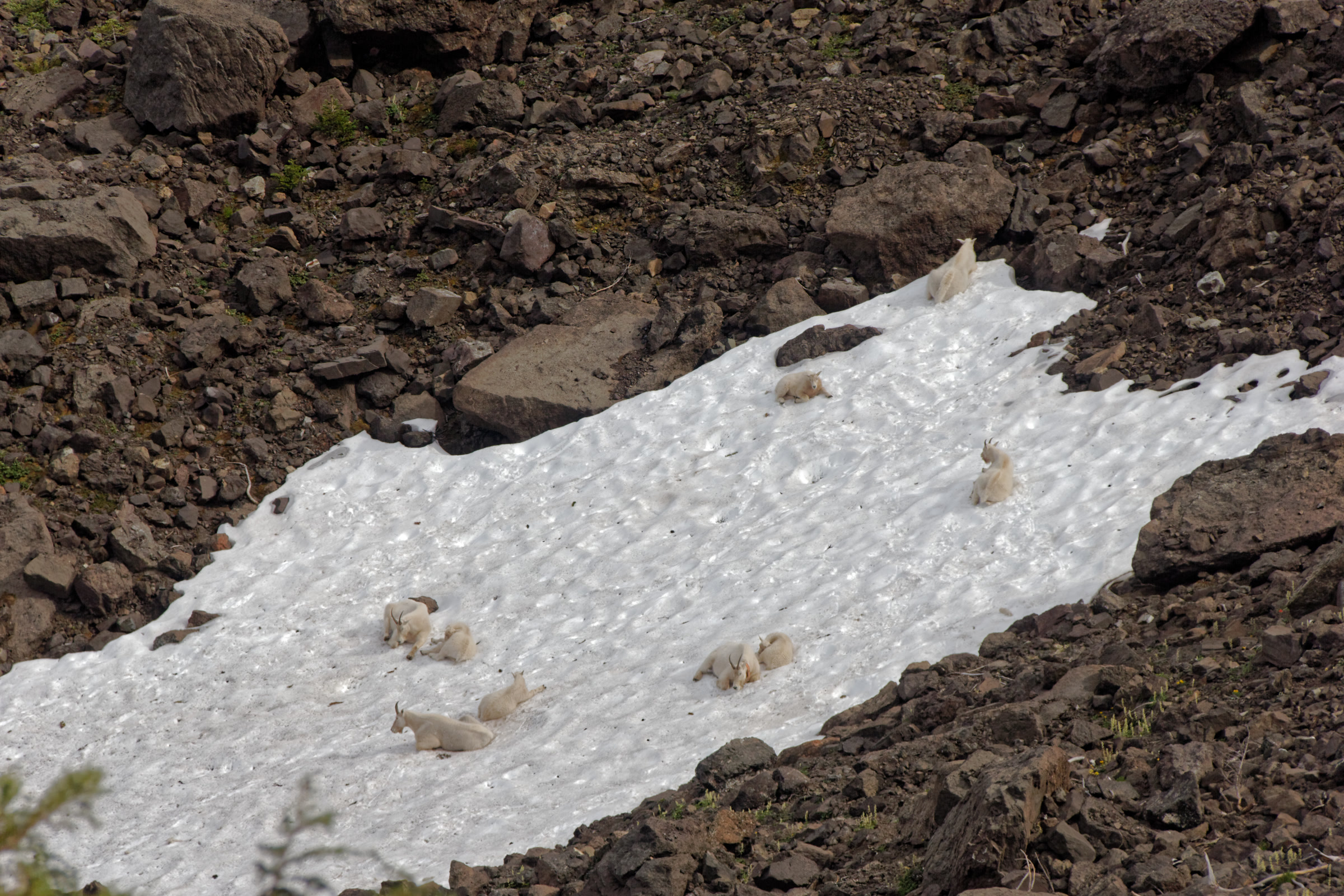
Why the park decided to act
The goats damaged soils, threatened rare plants and changed alpine plant communities. That matters in a range whose meadows also shelter animals found nowhere else, like the Olympic marmot of Hurricane Ridge.
Alpine plants are low in minerals, so the goats seek salt wherever they can find it. On the Olympics that meant human urine, sweaty packs and clothing, and they would paw and dig where hikers had relieved themselves. Some became a nuisance along trails and around wilderness campsites, approaching visitors.
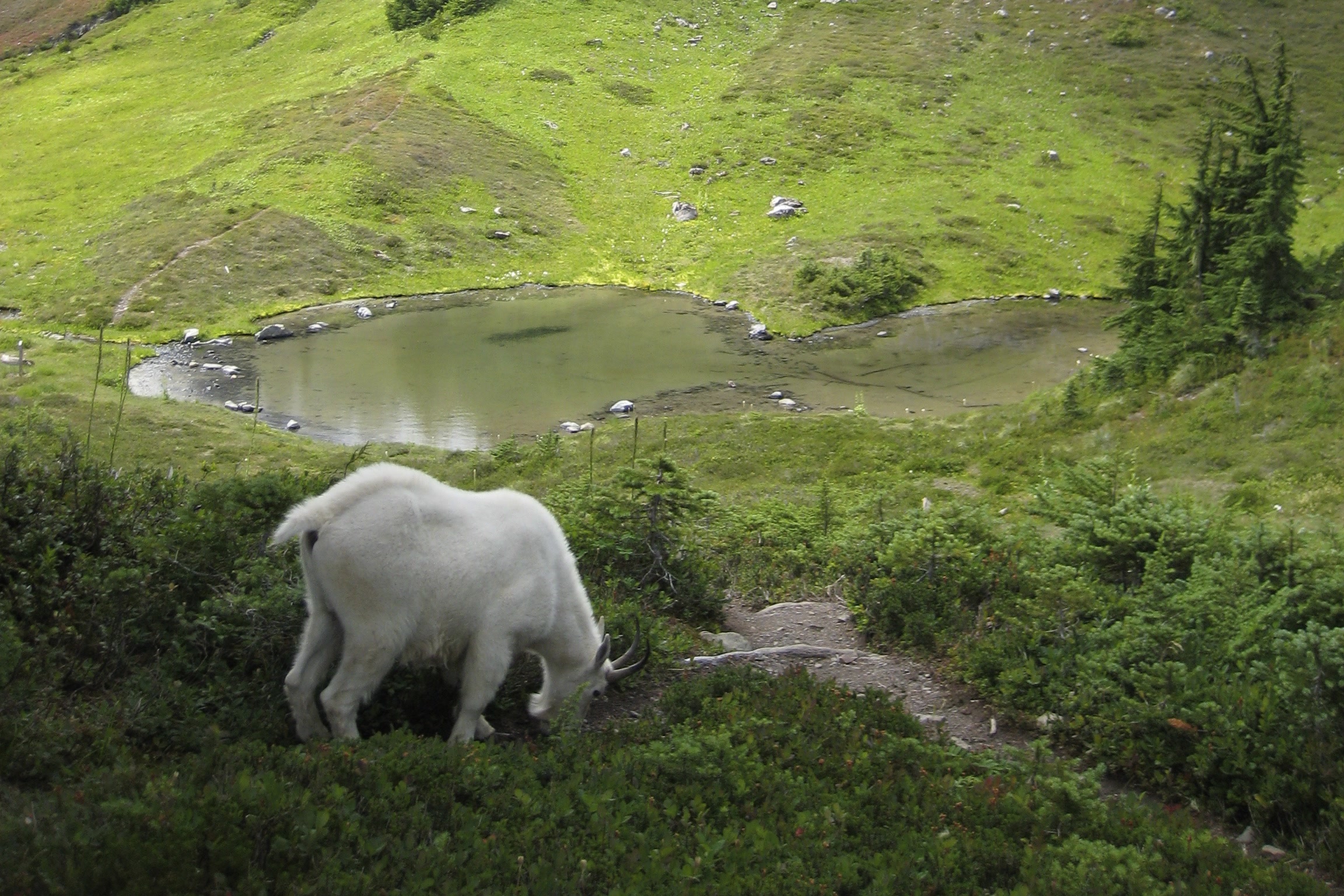
In October 2010, a Port Angeles hiker was fatally injured by a mountain goat near Klahhane Ridge, close to Hurricane Ridge. Park staff reached him quickly, and rangers later found and killed the goat. The park.s later plan names public safety, alongside the damage to plants and soils, as a reason to act.
A 2011 action plan dealt with goat behaviour in busy visitor areas. It did not address the damage to plants and soils, and the herd kept growing.
The Olympic mountain goat relocation
The park had tried before: from 1981 to 1989 it removed over 400 goats, 88 percent of them by translocation. The population rebounded to about 725 by 2018. That year the park, the U.S. Forest Service and the Washington Department of Fish and Wildlife finalized a management plan with consulting Tribes, after about 2,300 public comments on the draft.
The goal was to remove every goat from the Olympic Peninsula: a five-year active phase, then a 15-year maintenance phase. Capture and relocation came first, because goats are native to the Cascades, where many populations had stayed low. Fertility control was ruled out because no contraceptive is approved for mountain goats, and public hunting is illegal in the park.
How the goats were moved
Crews darted or net-gunned each goat from a helicopter, placed it in a custom sling and flew it to a staging area at Hurricane Ridge, and later also the Hamma Hamma area. Veterinarians checked each animal before state wildlife staff drove it in a temperature-controlled truck to the Cascades for release the next day. Sixteen kids went to permanent homes in zoos.
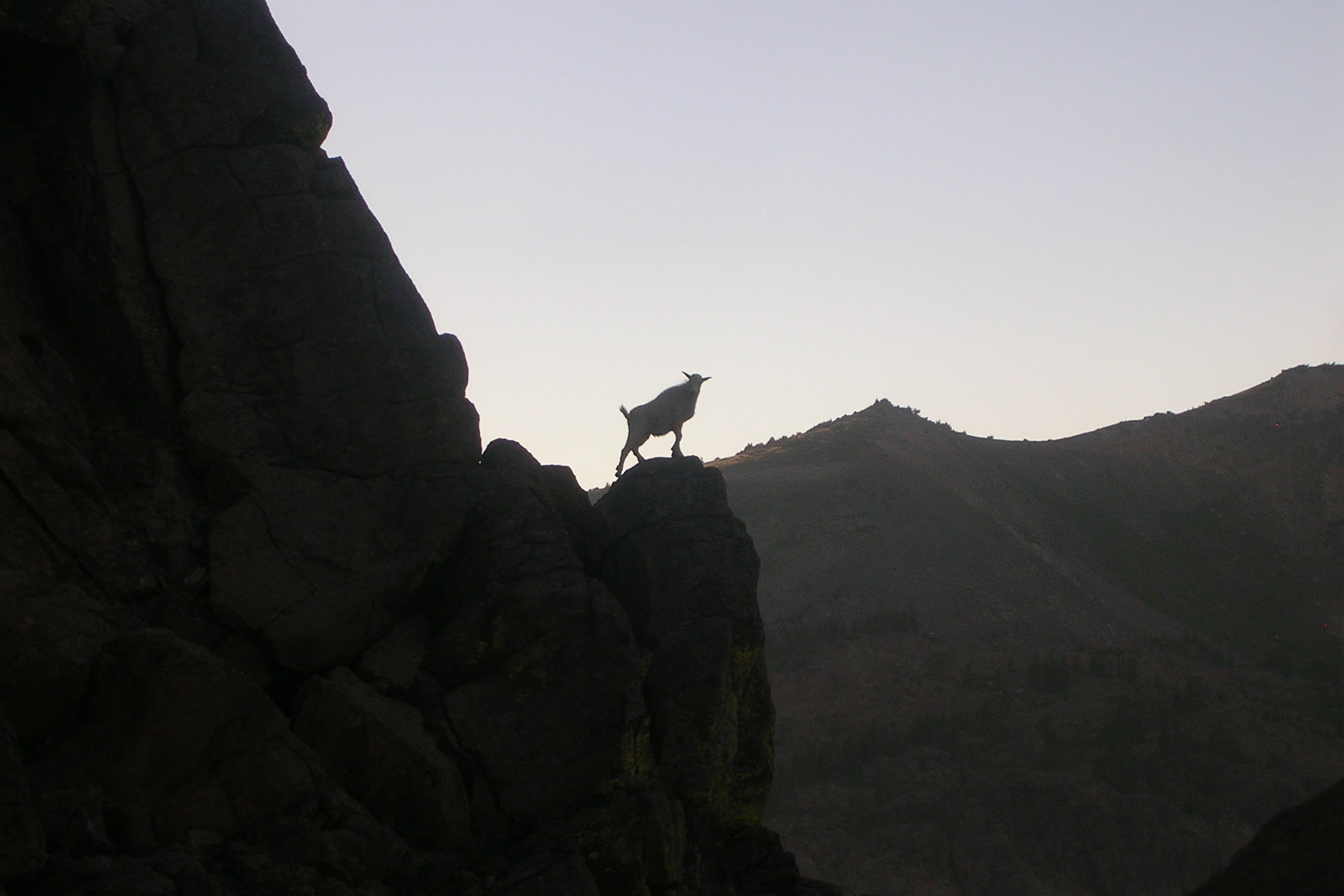
From capture to lethal removal
Each round got harder: by the last capture round, crews needed more than twice the helicopter time per live capture as at the start. In the fall of 2020, 98 volunteers on 20 teams removed 31 goats under park supervision, using authority Congress granted in 2019. Four aerial operations in 2021 and 2022 removed 192 more, and the last, in August 2022, removed just three goats over two weeks.
Mountain goat removal by the numbers
| Phase | Years | Result |
|---|---|---|
| Introduction | 1925 to 1929 | About 12 goats released near Lake Crescent |
| Early control | 1981 to 1989 | Over 400 removed, 88% translocated |
| Capture and translocation | 2018 to 2020 | 325 goats moved to the Cascades |
| Ground removal by volunteers | 2020 | 31 goats |
| Aerial removal | 2021 to 2022 | 192 goats |
| Maintenance | 2023 onward | 5 sightings reported, 1 confirmed (2023 to 2025) |
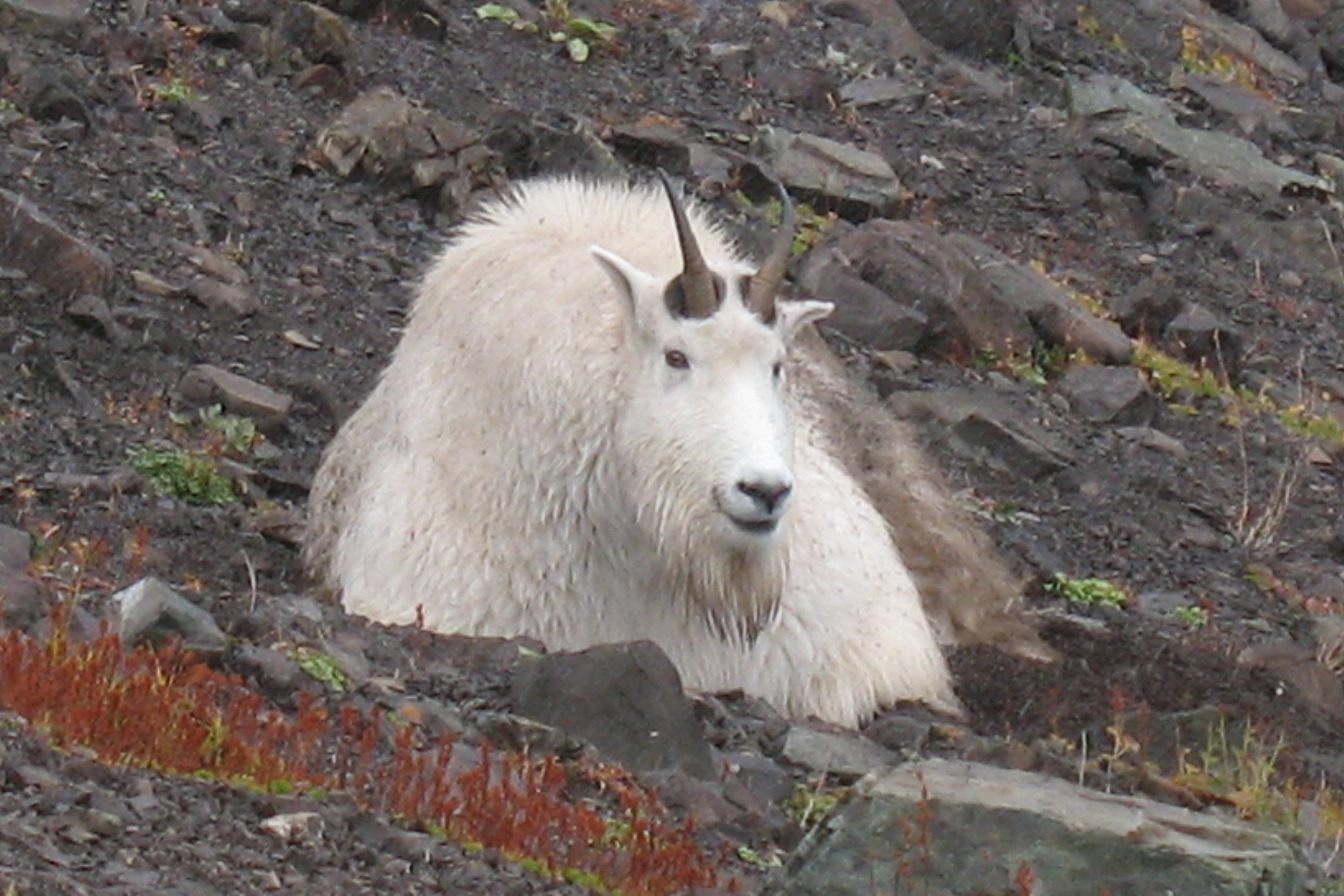
Mountain goats in Olympic National Park today
Active management ended in 2022 with 548 goats removed, over 59 percent of them translocated. The park says some goats may remain at very low numbers and be hard to detect. From 2023 to 2025, five sightings were reported and one was confirmed.
If you see a goat, note the place and date and tell park staff by email or through the online form on the NPS mountain goat page. Heading into the high country? Our wilderness permits guide covers overnight trips.
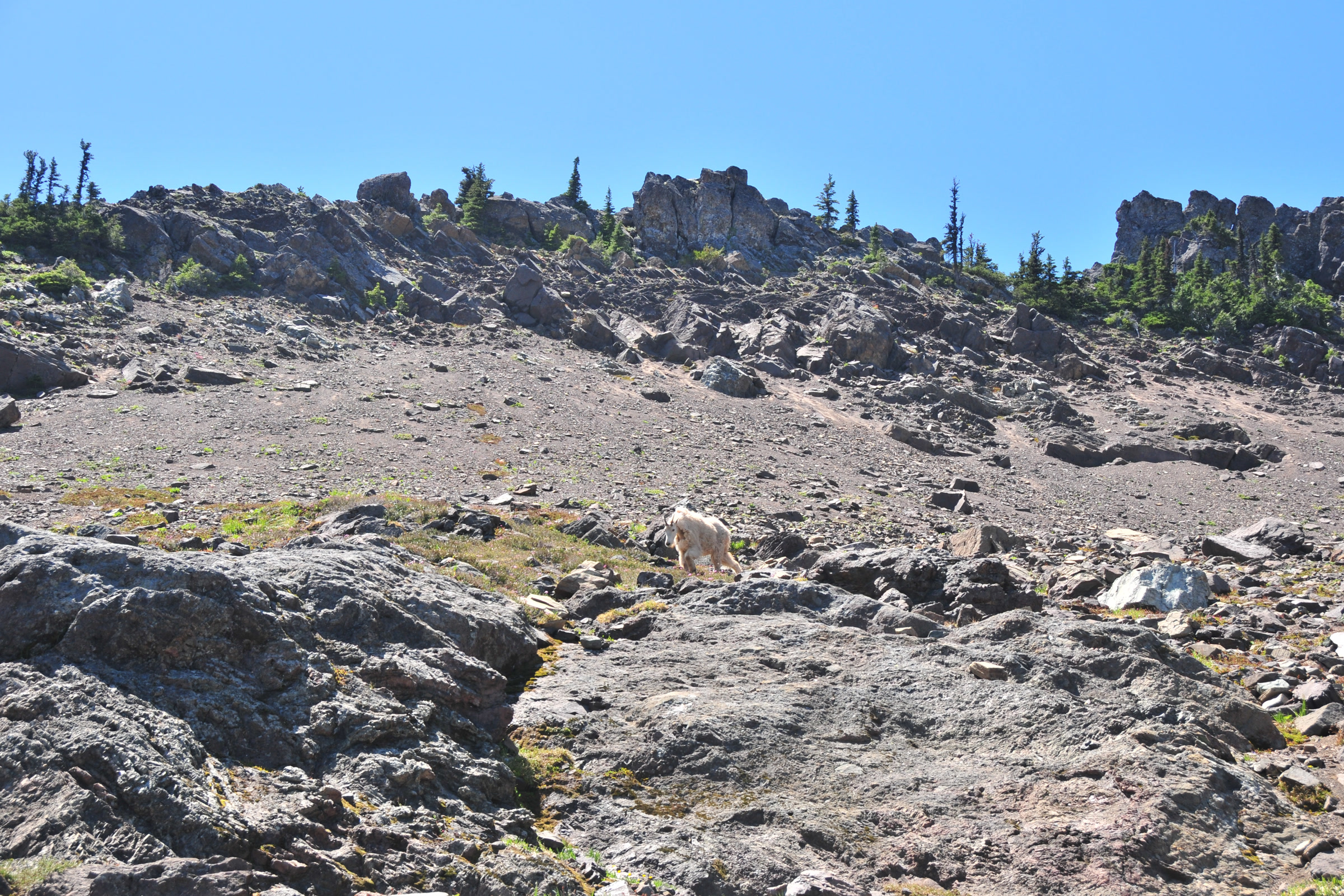
The goats did not vanish from Washington. The Washington Department of Fish and Wildlife estimates fewer than 3,000 live in the state, mostly in the Cascades.
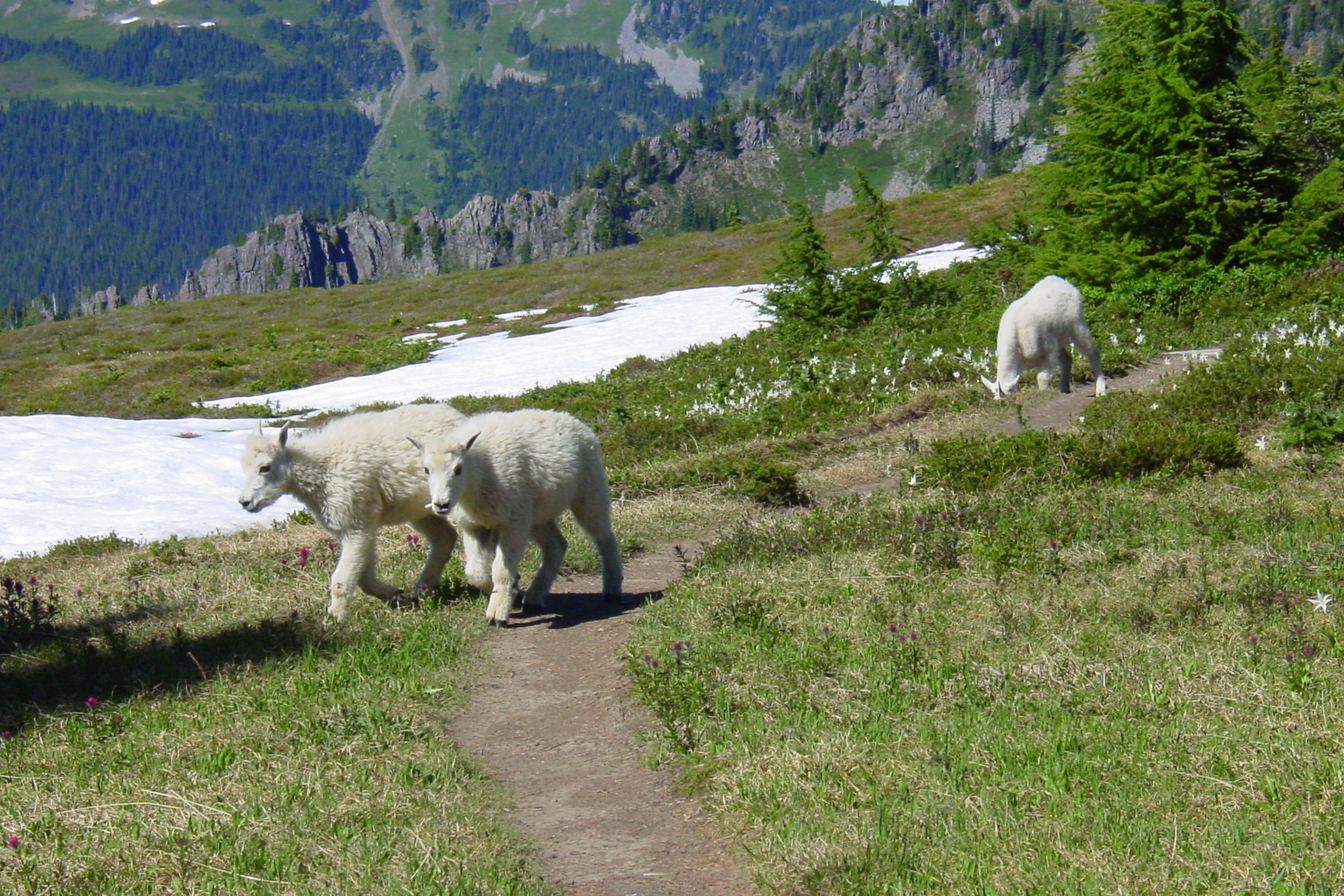
Mountain goat safety on the trail
You are now far more likely to meet goats in the Cascades than here. Washington Trails Association offers this advice for goat country:
- Stay at least 50 yards (about 150 feet) away at all times.
- Urinate at least 50 feet off the trail, on rock if you can.
- Never feed a goat or let it lick your skin or gear.
- If a goat is on the trail, back off and go the other way.
- If one keeps coming, make noise, wave a jacket and, if needed, throw a rock. Report the encounter to the land manager.
In Olympic National Park, the general rule for all wildlife still applies: stay at least 150 feet away, and never feed or approach animals. The same care keeps our Roosevelt elk wild, too.
How Friends of Olympic National Park helps
We are Friends of Olympic National Park (FONP), a volunteer-led friends group. We don’t manage wildlife; the park and its partners do. What we can do is help people understand stories like this one, and you can read about another restoration effort in our post on fisher reintroduction in Olympic National Park. To lend a hand on the ground, see our volunteer opportunities.
Frequently asked questions
Are mountain goats native to Olympic National Park?
No. About 12 goats were released near Lake Crescent between 1925 and 1929, before the park was established. The Olympics were isolated from the Cascades, so goats never reached the peninsula on their own.
How many mountain goats were relocated from the Olympics?
Four capture operations from 2018 to 2020 moved 325 goats to the Cascades. In all, 548 goats were removed by 2022, and over 59 percent of them were translocated.
Why were the goats removed?
They damaged soils and rare plants, and their hunger for salt drew them to hikers. In October 2010 a hiker was fatally injured by a goat near Klahhane Ridge.
What should I do if a mountain goat approaches me?
Back away and give it the trail. If it keeps coming, make noise, wave a jacket and, if needed, throw a rock. Never feed a goat or let it lick you.
If this story matters to you, please support Olympic National Park with a gift to our volunteer work.
Leave a Reply