
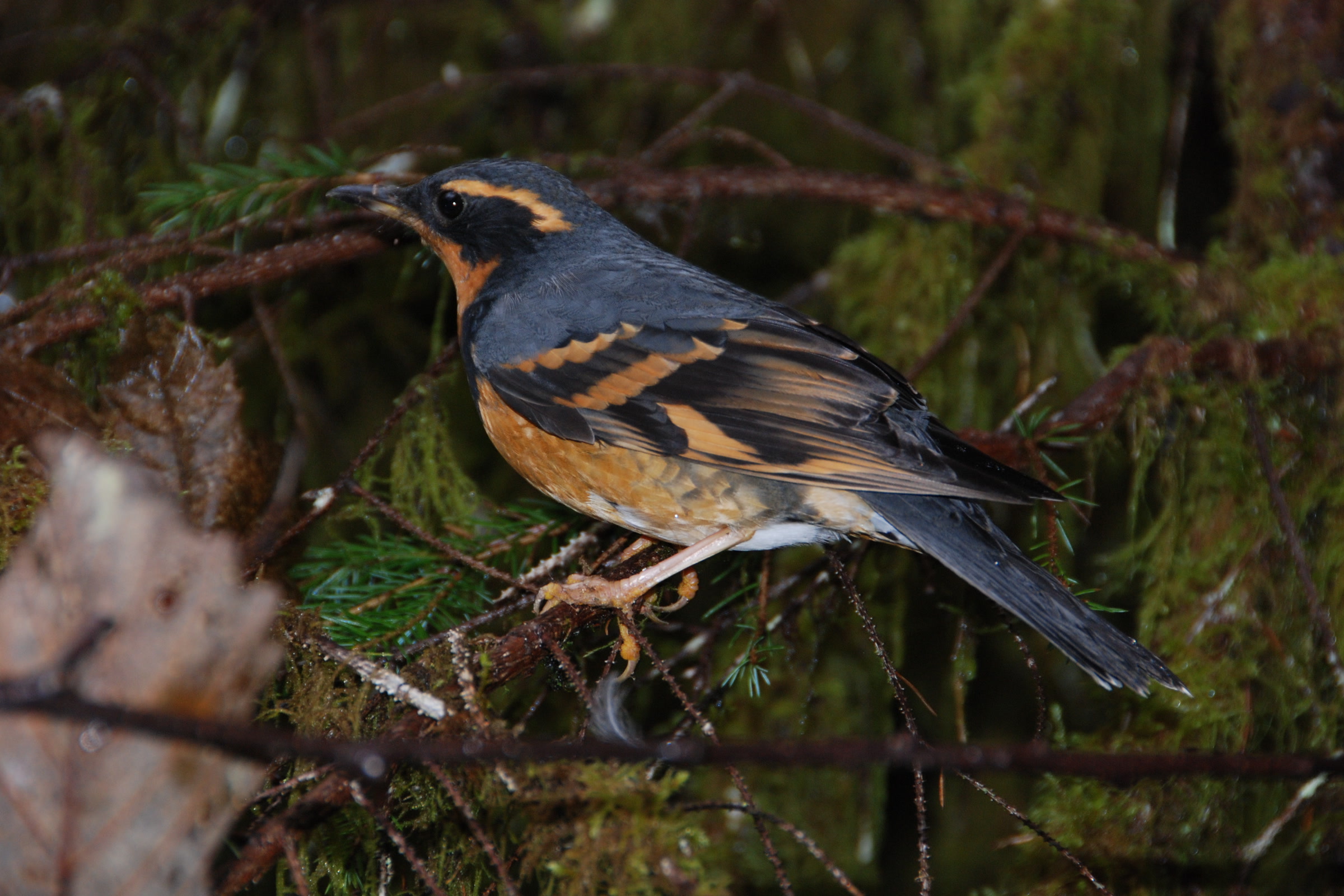
The varied thrush in Olympic National Park is a forest voice before it is a bird you see. On a damp morning its long, buzzy whistle drifts through the moss and mist, one note at a time. Here is how to recognise the song and the bird, where it spends each season, and why it depends on old forest.
Quick answer
Is the varied thrush common in Olympic National Park?
Yes, the park’s species records rate the varied thrush as abundant and breeding. This robin sized bird of dark, wet, mature forest is heard more often than seen. Listen for a long whistle held on one pitch, often at dawn, dusk or after rain. Many move to lower elevations in winter.
- Rated abundant and a breeder in the park’s records
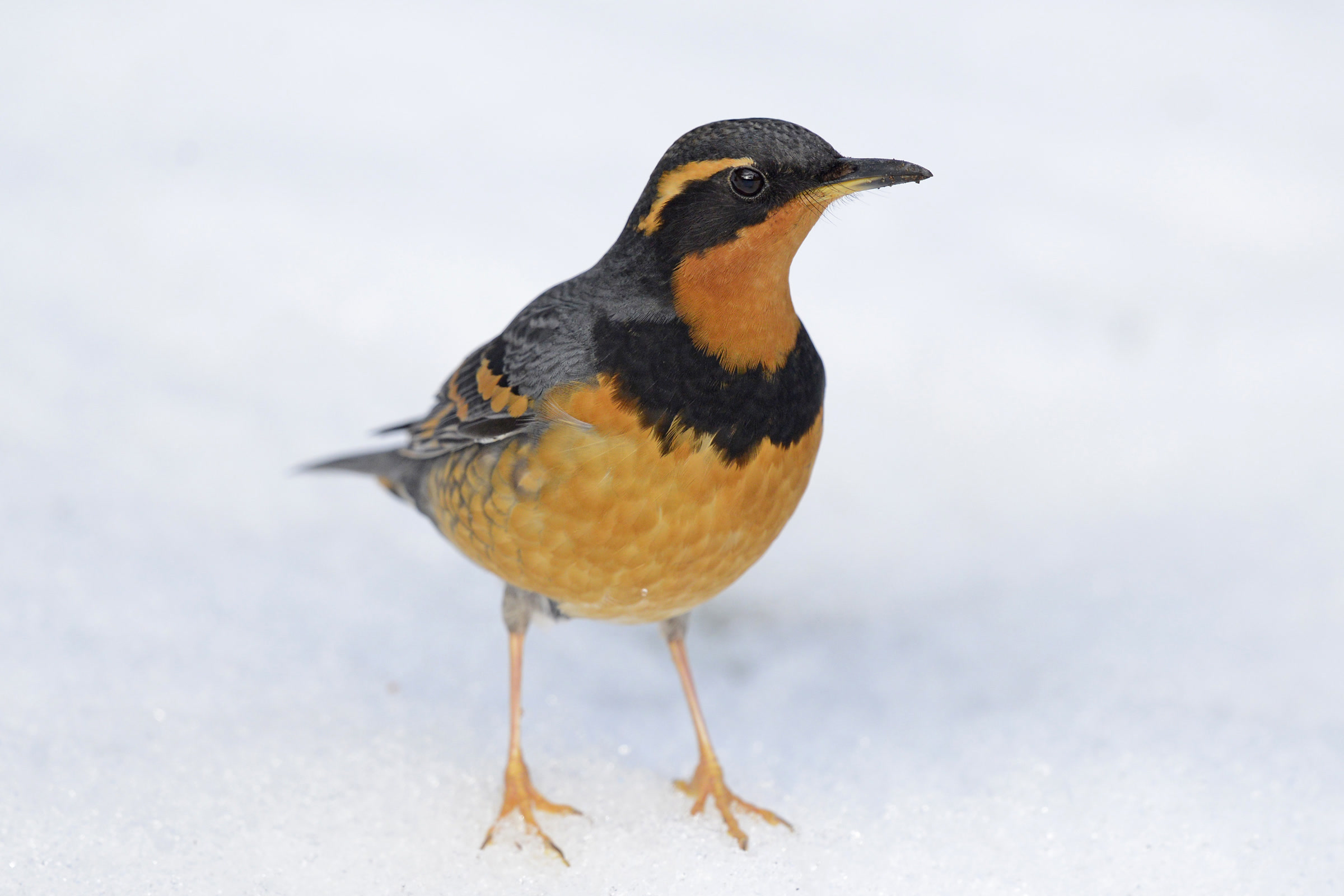
- Male: orange eyebrow, orange belly, black breast band
- Song: a single long whistle, then another on a new pitch
- Breeds higher up and moves down to lowlands in winter
Varied thrush in Olympic National Park records
Olympic’s record in NPSpecies, the National Park Service species database, lists the varied thrush as native, present and abundant, with breeding confirmed. The park’s data source for the record is its own GIS specialist and ornithologist. The park’s birdwatching page names the varied thrush among its most prevalent birds, alongside the Pacific wren.
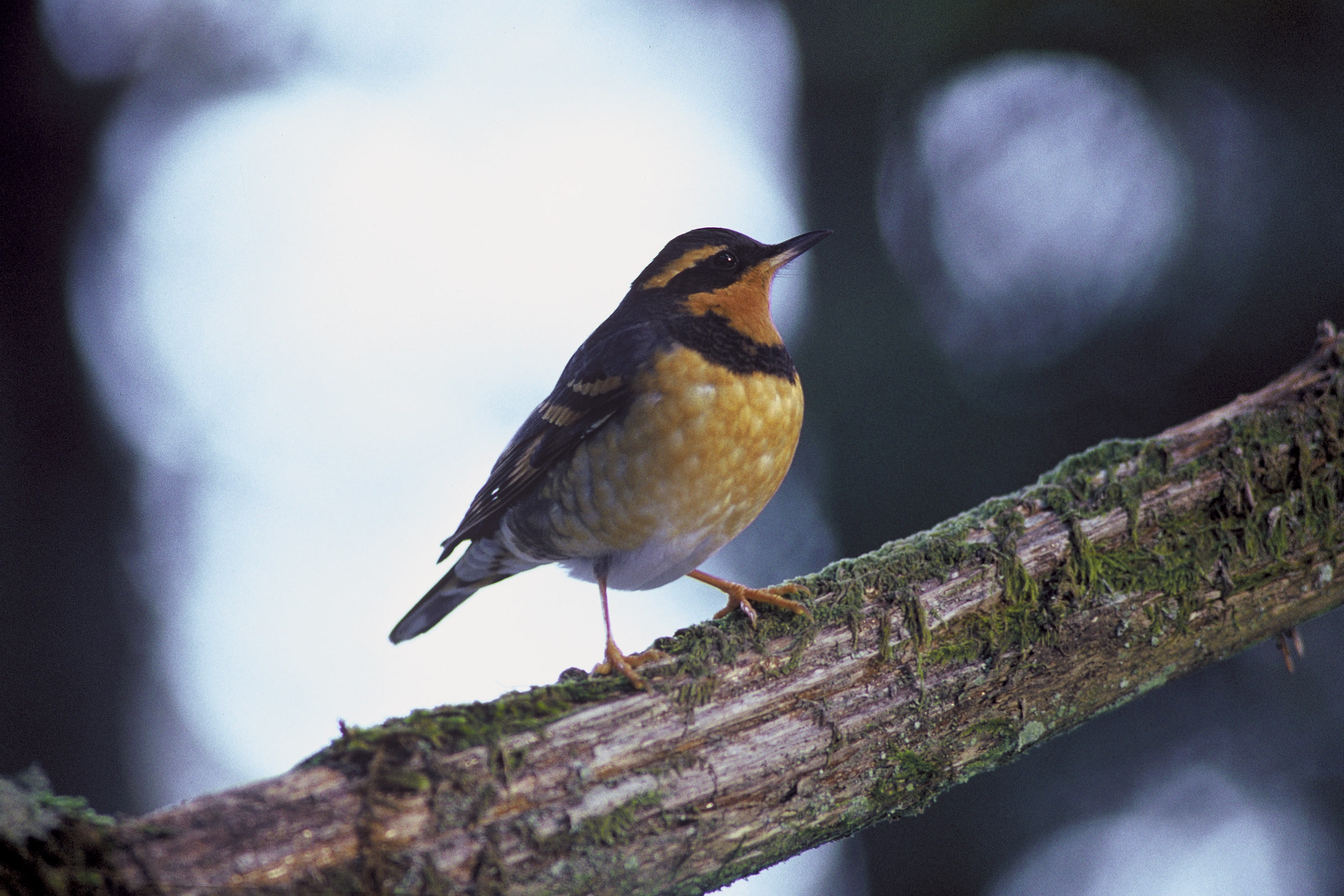
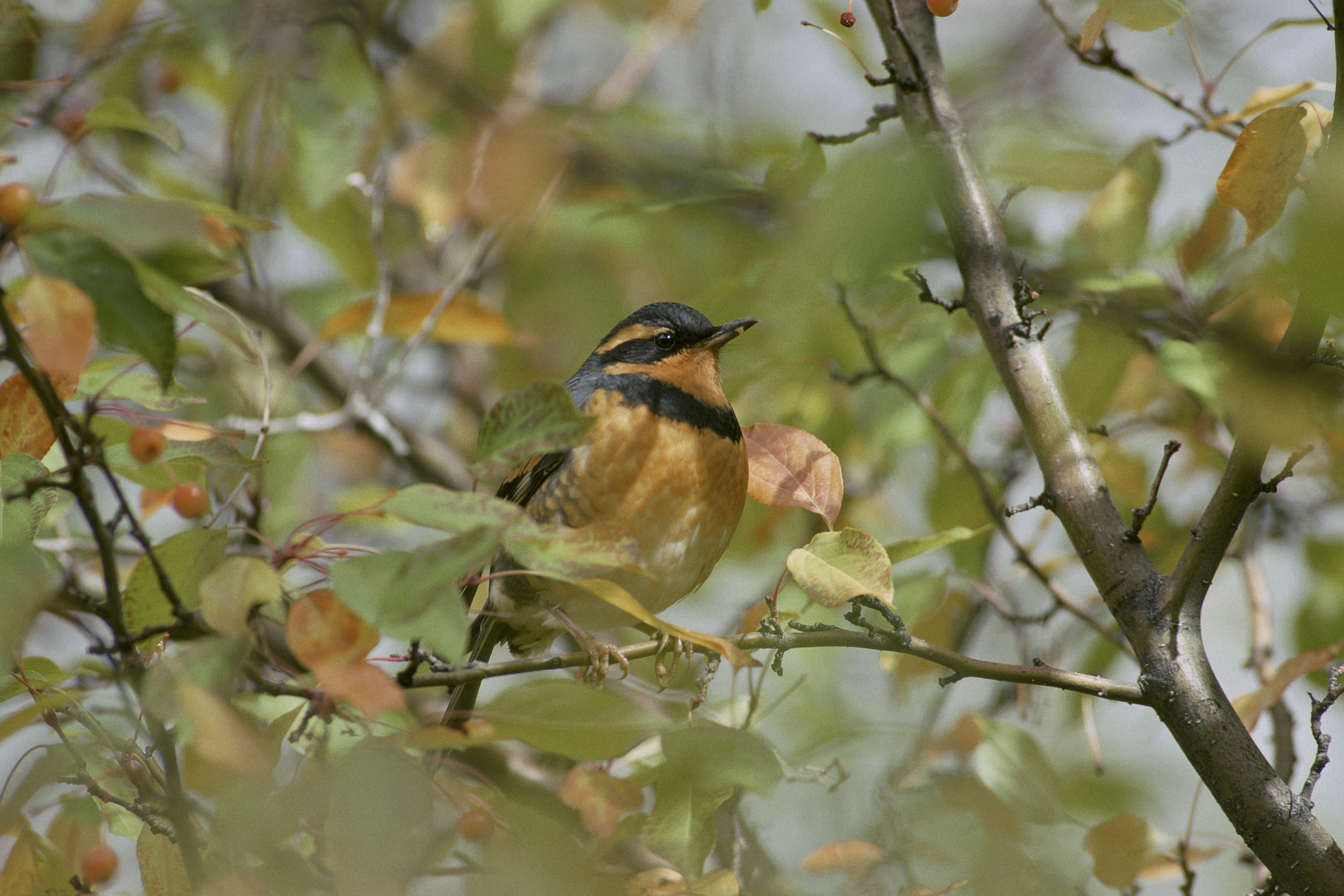
The Cornell Lab of Ornithology describes a stocky thrush, 7.5 to 10.2 inches long and 2.3 to 3.5 ounces. The male is dark blue gray above and burnt orange below, with a sooty black breast band, an orange line over the eye and orange bars on blackish wings. The female has the same pattern in paler gray brown.
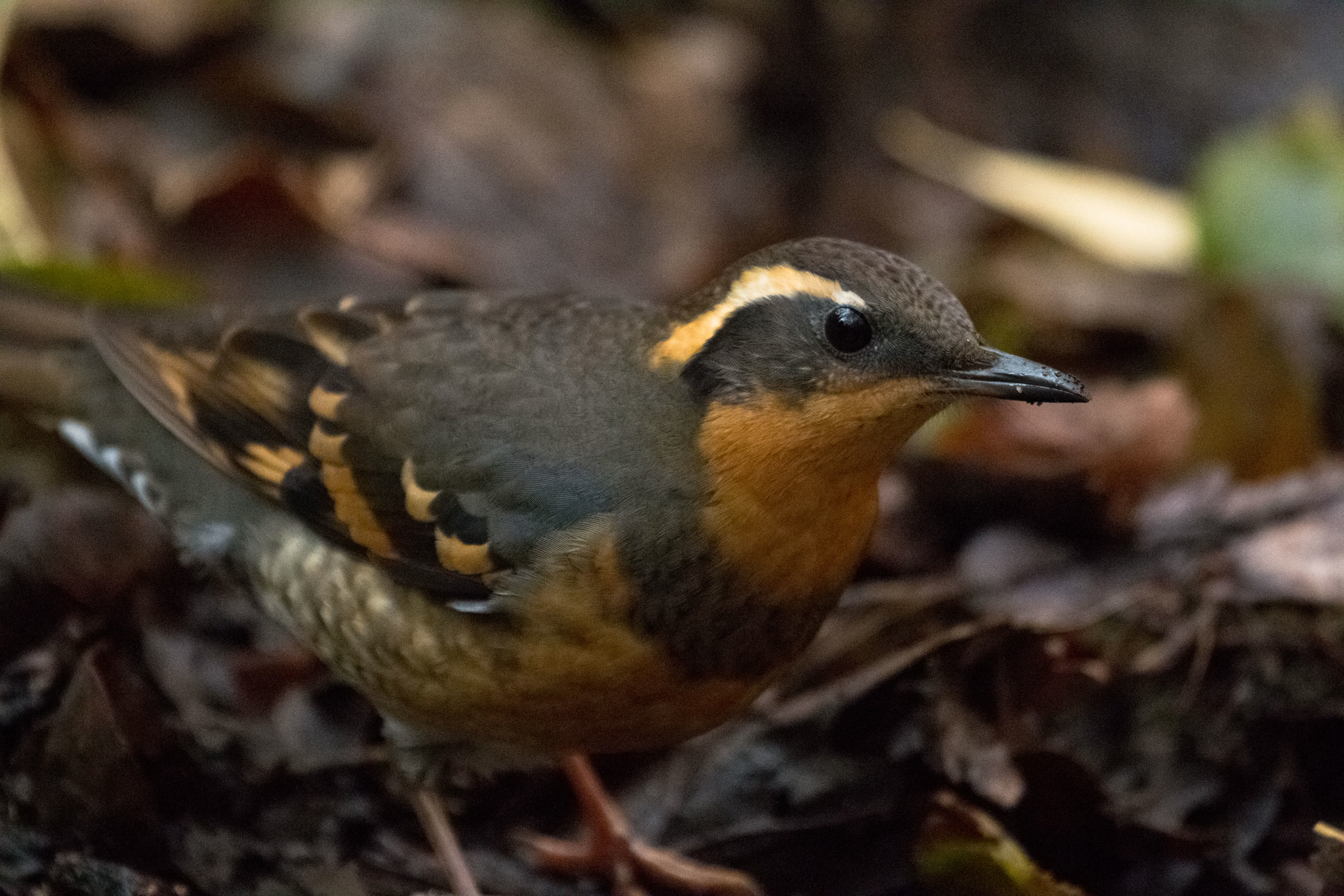
BirdWeb, the Washington bird guide from Birds Connect Seattle, notes that it is similar in size and shape to the American robin, but slighter in build and much more elusive.
The varied thrush song
The National Park Service describes the varied thrush song as a long, single whistle on one pitch, adding that it can be mistaken for a human distress whistle. BirdWeb calls it a fuzzy, metallic whistle on different pitches. Read together: each whistle holds a single pitch, and the next whistle comes on a different one.
According to BirdWeb, males sing to defend their territory, most often at dawn, at dusk and after a rain shower. Cornell quotes the bird artist Louis Agassiz Fuertes, who heard in it “the voice of the cool, dark peaceful solitude” the bird chooses for its home.
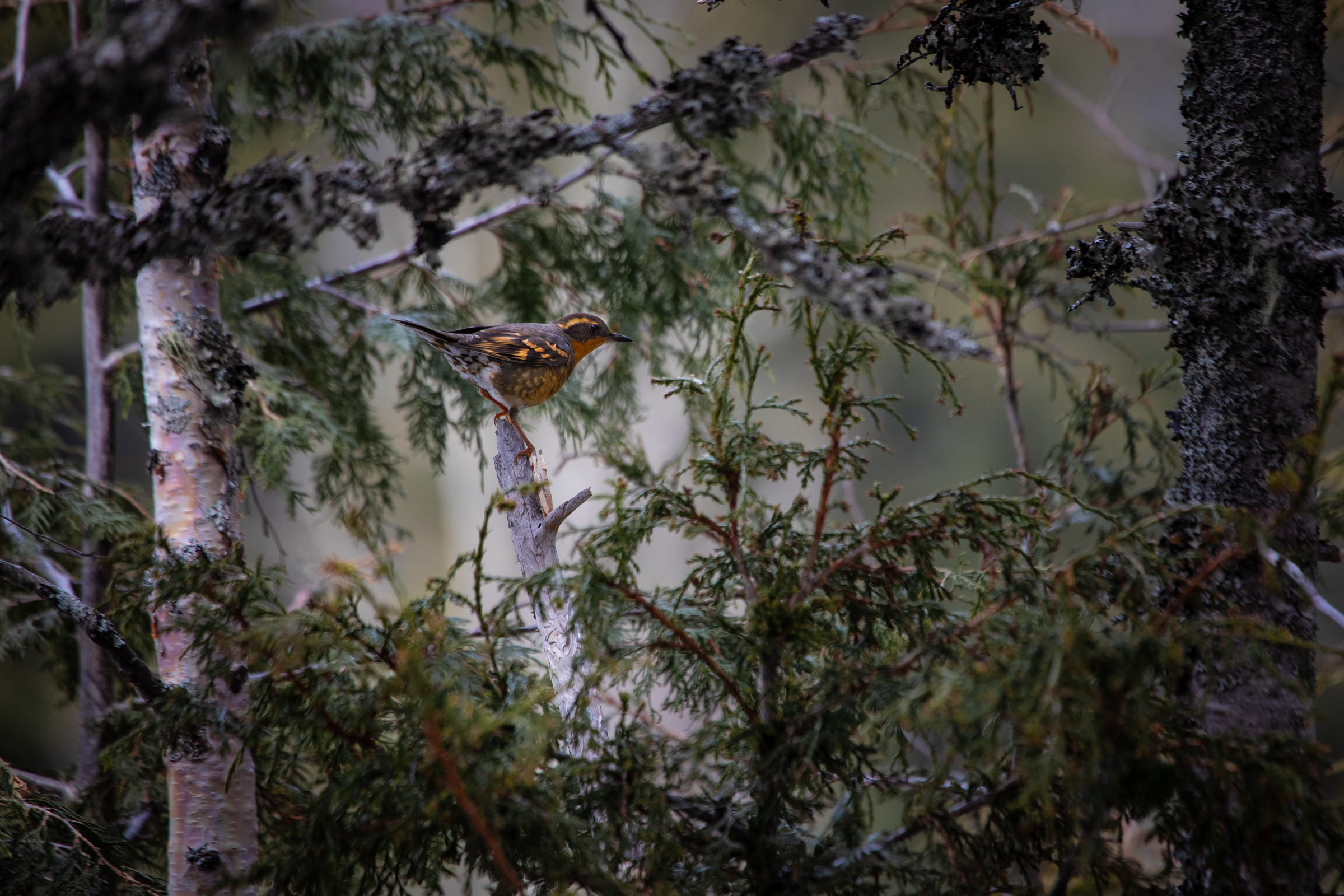
One of the rain forest birds that needs big trees
Cornell places the varied thrush in dark, wet, mature forests of the Pacific Northwest, including forests of Sitka spruce, western hemlock, western red cedar and Douglas fir. Olympic’s rain forest valleys fit that description closely. The park says the Quinault, Queets, Hoh and Bogachiel valleys get 140 to 167 inches of rain a year, under Sitka spruce and western hemlock that can be hundreds of years old.
Among rain forest birds, this one is a ground feeder. Cornell describes how it grabs dead leaves in its bill and hops backward to clear a patch of ground, then checks it for insects. BirdWeb adds that in western Washington it lives in every forest zone, so you may meet it well above the valley floors too. Our guide to the temperate rainforests of Olympic National Park covers where to walk.
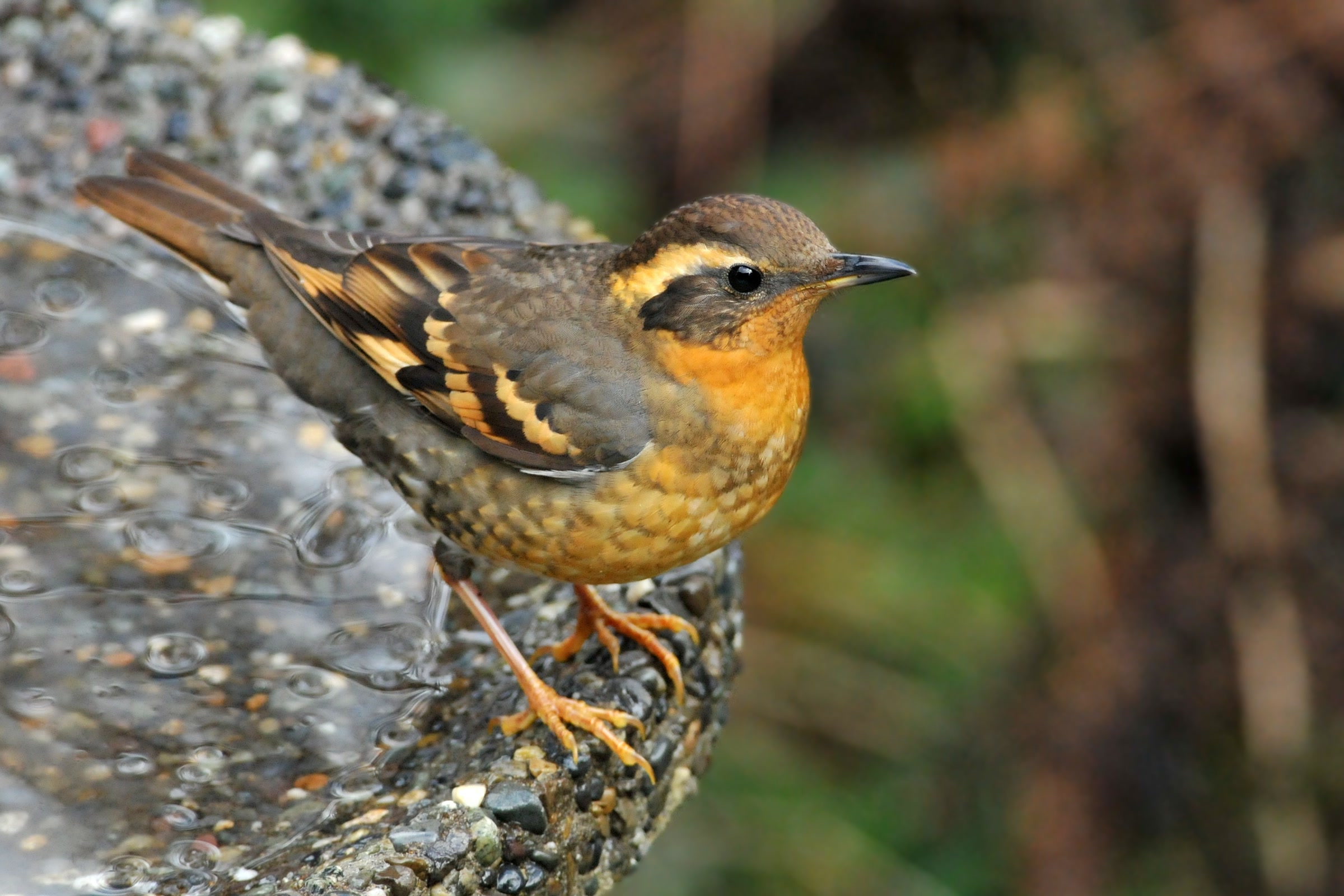
Up and down the mountains with the seasons
BirdWeb calls varied thrushes altitudinal migrants. They generally breed at middle to high elevations and move down into the lowlands for winter, returning to their breeding range in March and April. How far they go can depend on how hard the winter is.
Summer and winter habits compared
| Season | Where to look | What it eats |
|---|---|---|
| Spring and summer | Mature conifer forest at middle to high elevations | Insects and other small invertebrates from the leaf litter |
| Fall and winter | Lowlands, ravines and thickets near streams, sometimes lawns and road edges | Berries, seeds, nuts and acorns |
Cornell lists salal, huckleberry, salmonberry and thimbleberry among the fruits it eats in fall and winter. Our post on huckleberries in Olympic National Park explains when those berries ripen.
Nesting in mossy conifers
Cornell says the female builds the nest, usually about 10 feet up and close to the trunk of a small conifer in the understory. She weaves twigs, packs in rotten wood, moss and mud, lines the cup with fine grass and drapes green moss over the rim. BirdWeb reports three to four eggs, with two broods in a season when possible.
Why old forest matters
The varied thrush is still fairly common, but Cornell’s All About Birds reports a decline of about 32 percent from 1966 to 2019, based on the North American Breeding Bird Survey. It is on a list of common birds in steep decline. The birds tend to live in forest patches larger than about 40 acres, so logging and fragmentation can reduce their numbers.
Cornell notes that varied thrushes may benefit from reserves set aside for the northern spotted owl, whose story is in our post on the northern spotted owl in Olympic. Near homes, it says, they are vulnerable to window strikes, cats and cars.
How the park keeps count
The NPS North Coast and Cascades Network counts every bird seen or heard during seven minute surveys at more than 1,000 stations across its parks, including Olympic, to track trends. You can add your own sightings to public projects too; see our guide to citizen science in Olympic National Park.
- Do not play recorded calls. The park treats using apps to call animals as harassment.
- As of October 2026 the park’s Superintendent’s Compendium asks you to stay at least 50 yards from all wildlife; check the NPS page before you go.
The same forests ring with the tumbling song of the Pacific wrens in Olympic National Park. For the park’s other habitats, see our guide to birding in Olympic National Park and the NPS birdwatching page.
How Friends of Olympic National Park helps
We are Friends of Olympic National Park (FONP), a volunteer led friends group based in Port Angeles. Our projects include guided nature walks for insects, mushrooms and wildflowers, and care for the Heart O’ the Forest Trail. Members help keep that work going, so please become a member.
Frequently asked questions
What does a varied thrush sound like?
A varied thrush sings a long, single whistle held on one pitch, and the next whistle comes on a different pitch. BirdWeb calls it fuzzy and metallic, and the NPS notes it can be mistaken for a human distress whistle.
Is a varied thrush a type of robin?
No, but both belong to the thrush family and are similar in size and shape. The male varied thrush stands out with an orange eyebrow, orange wing bars and a black breast band.
Do varied thrushes migrate?
Many make short moves up and down mountains. BirdWeb calls them altitudinal migrants that breed at middle to high elevations, move to the lowlands in winter and return to their breeding range in March and April.
What do varied thrushes eat?
In spring and summer they eat insects and other small invertebrates from the leaf litter. In fall and winter they switch to berries, seeds, nuts and acorns, including salal, huckleberry, salmonberry and thimbleberry.
Are varied thrushes declining?
Yes, across their range. The Cornell Lab of Ornithology reports a decline of about 32 percent from 1966 to 2019 in Breeding Bird Survey data, linked partly to logging and fragmentation of mature forest.
Leave a Reply