The squirrels of Olympic National Park are easier to hear than to see. A sharp chatter from a fir, a rustle in the moss, a striped shape darting under a log: these are the park’s most common small mammals. Here is which squirrels and chipmunks live here, where to find them, and how to tell them apart.
Quick answer
What squirrels live in Olympic National Park?
The park’s mammal list names five members of the squirrel family: the Douglas squirrel, the northern flying squirrel, Townsend’s chipmunk, the Olympic chipmunk and the Olympic marmot. The last two are found only on the Olympic Peninsula. The Douglas squirrel, common throughout the park’s forests, is known for its loud chatter.
- Five squirrel family species on the park’s list
- Two of them, a chipmunk and the marmot, are endemic
- Flying squirrels glide at night and do not hibernate
- The park’s list includes no gray squirrels
The squirrels of Olympic National Park at a glance
The National Park Service (NPS) mammal list for the park places five species in the squirrel family, Sciuridae, and rates how often each is found. Sizes below come from the Burke Museum’s Mammals of Washington at the University of Washington.
Squirrel family species compared
| Species | Park list rating | Where and when | Weight |
|---|---|---|---|
| Douglas squirrel | Common | Conifer forest, all year | 150 to 300 g |
| Northern flying squirrel | Common | Forest, at night, all year | 45 to 70 g |
| Townsend’s chipmunk | Common | Forest and brush | 50 to 110 g |
| Olympic chipmunk | Locally common, endemic | Subalpine forest edges | Under a pound (NPS) |
| Olympic marmot | Locally common, endemic | High meadows, summer | 4 to 9 kg |
The Douglas squirrel
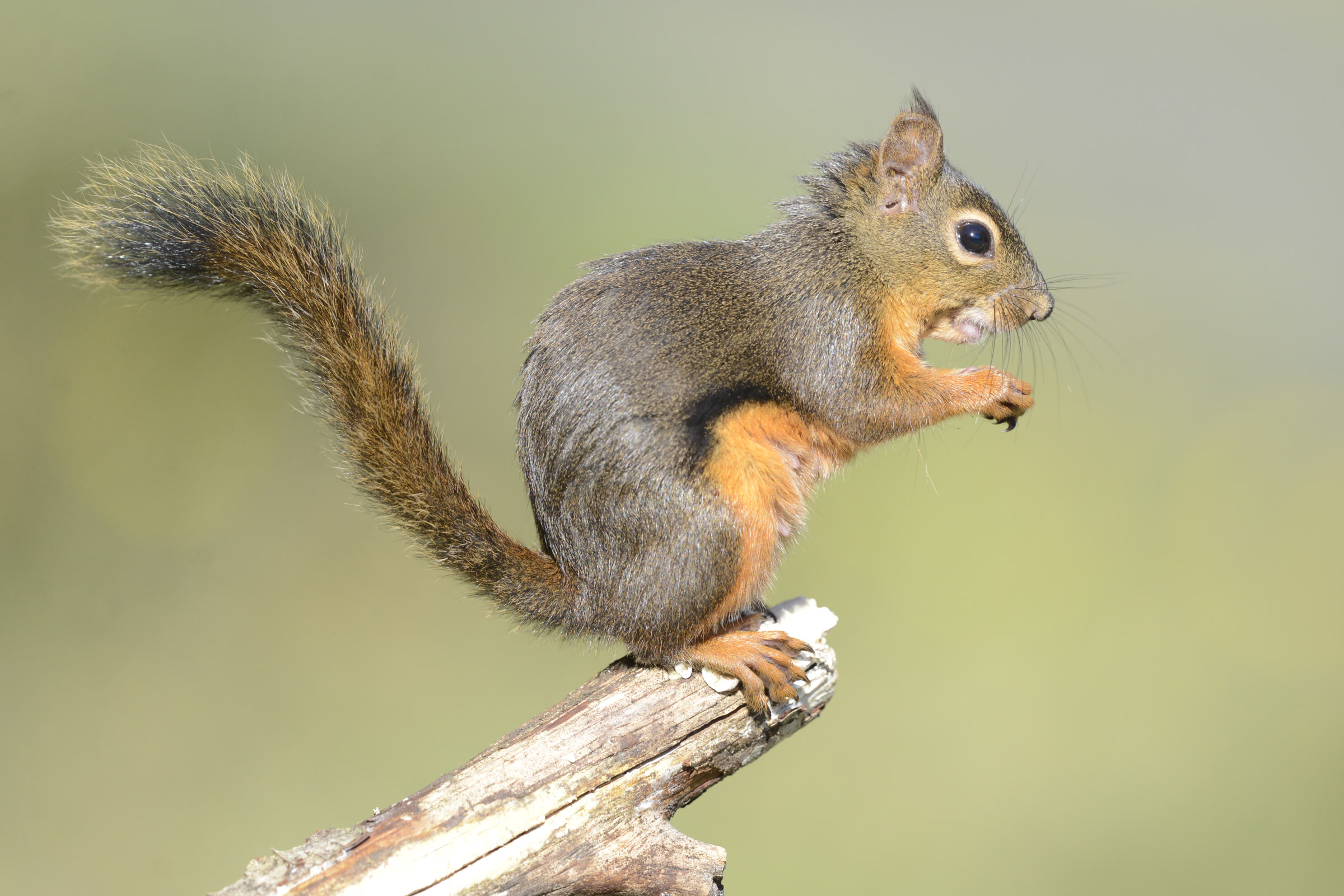
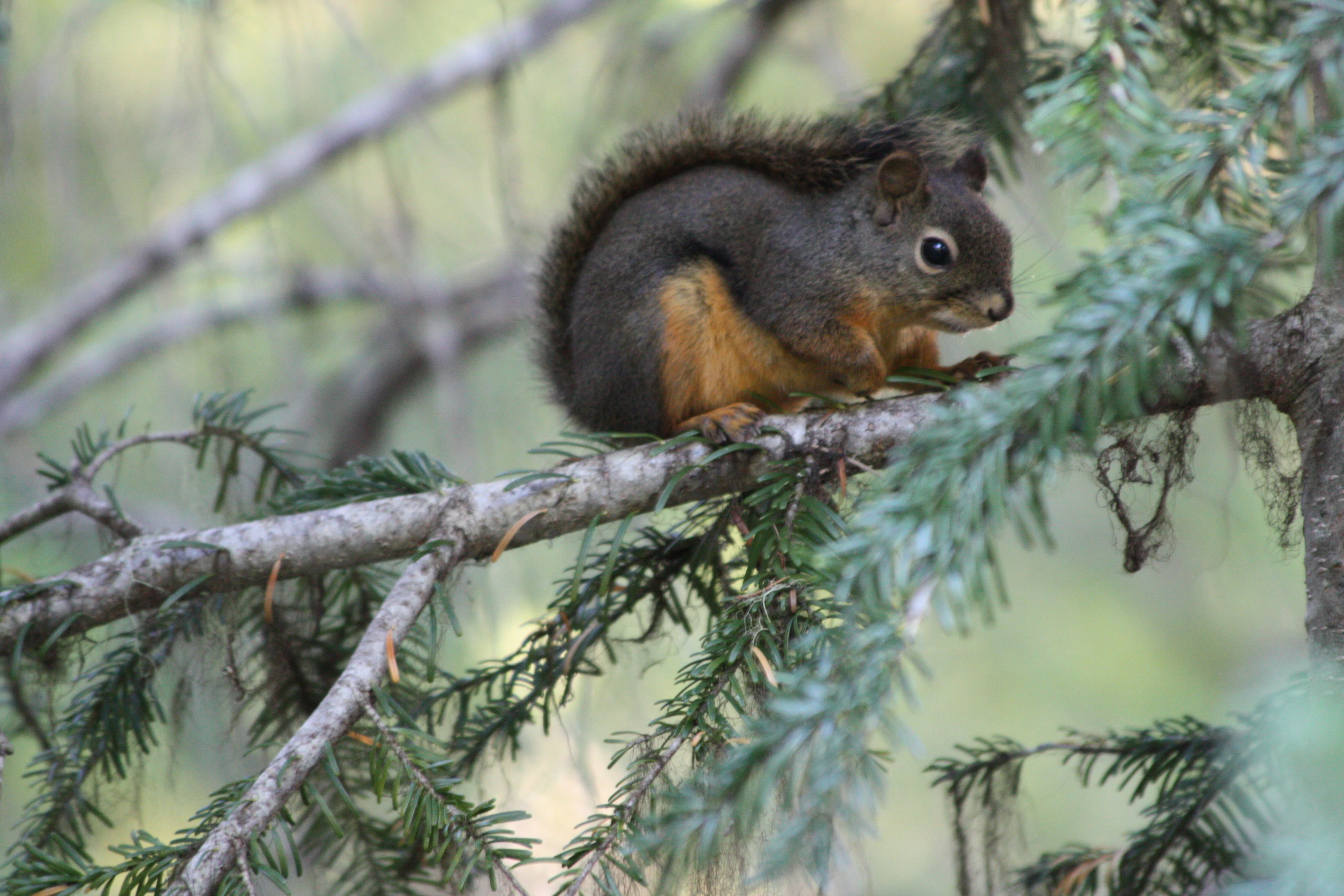
The Douglas squirrel, also called the chickaree, is common throughout the park’s forests, NPS says. In spring and summer it is usually gray with an orangish chest, and in winter it turns browner with a grayer chest. Its chatter carries through the forest and is often mistaken for a bird.
A squirrel that plants cones
It eats the seeds of Douglas fir and Sitka spruce, plus acorns and berries. NPS says it buries fir cones to eat later, so a rustle in the brush often means a squirrel digging up its store. The Burke Museum adds that it is territorial, hoards piles of cones and does not hibernate.
Cougars, owls and martens all hunt it, the park notes. Our guide to the weasels of Olympic National Park tells the story of the marten, now one of the park’s rarest predators.
The northern flying squirrel
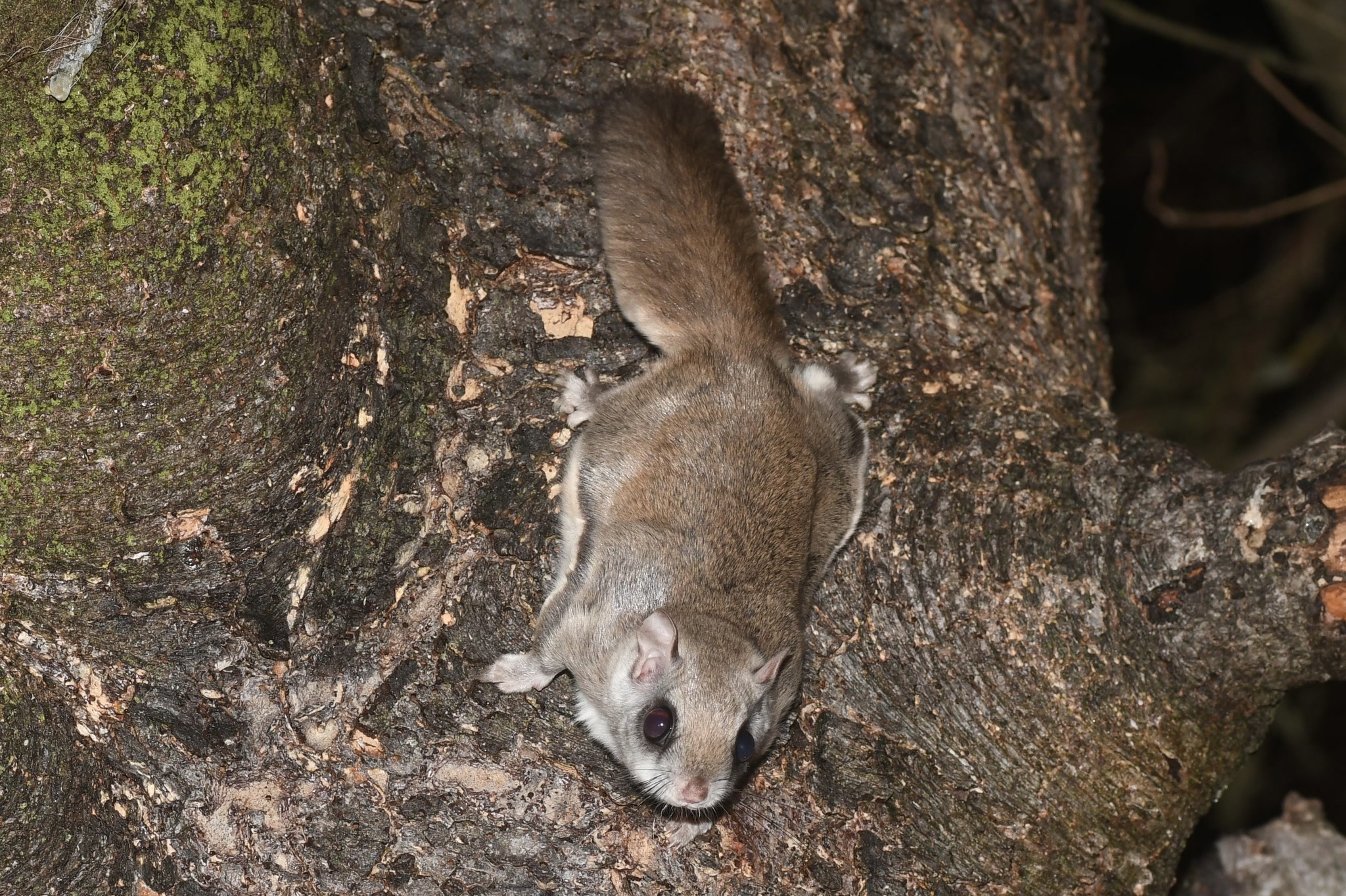
The park’s mammal list rates the northern flying squirrel as common, yet few visitors ever see one. The Burke Museum describes it as nocturnal and highly arboreal, with large eyes and a gliding skin between its front and rear legs. It does not hibernate, and it feeds on fungi and lichens.
It does not truly fly. An NPS article explains that a flying squirrel spreads that loose skin from wrist to ankle and glides between trees, steering with its legs and flat tail.
Truffles, trees and owls
Flying squirrels eat truffles, the underground fruit of fungi that partner with tree roots. NPS notes that the spores pass through a squirrel unharmed and land elsewhere in the forest. A Forest Service review by Andrew Carey calls the northern flying squirrel a keystone species in Pacific Northwest forests, spreading those fungi and feeding many predators.
Carey found it most abundant in naturally regenerated forests more than 100 years old. One of its predators is the owl in our story on the northern spotted owl in Olympic.
Two chipmunks
The Olympic chipmunk is a local form of the yellow-pine chipmunk found only on the Peninsula. NPS describes it as brownish with a white belly and dark and light stripes from its nose to its ears and down its back. It is most common in the subalpine zone, where forest meets meadow, and is more often heard than seen.
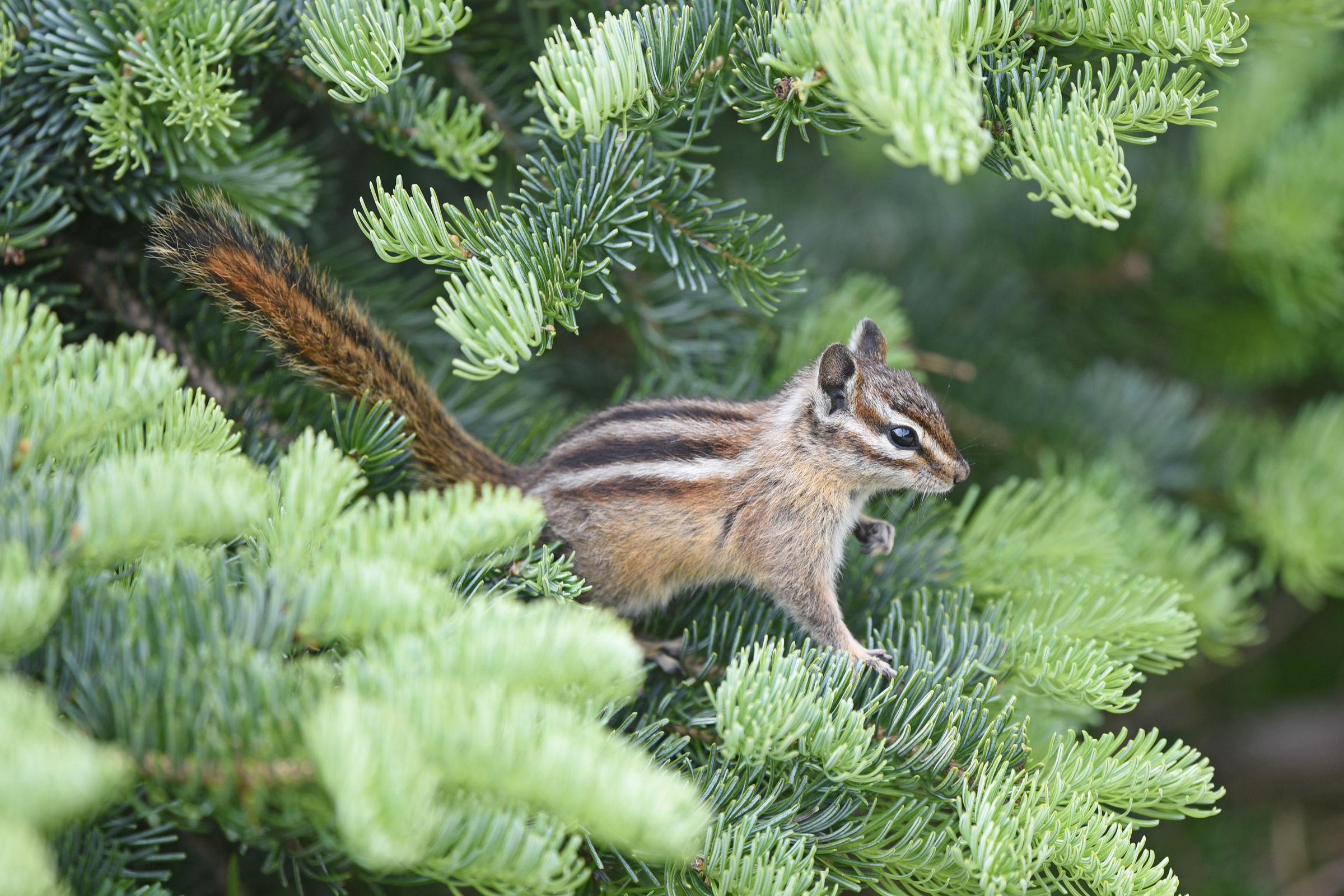
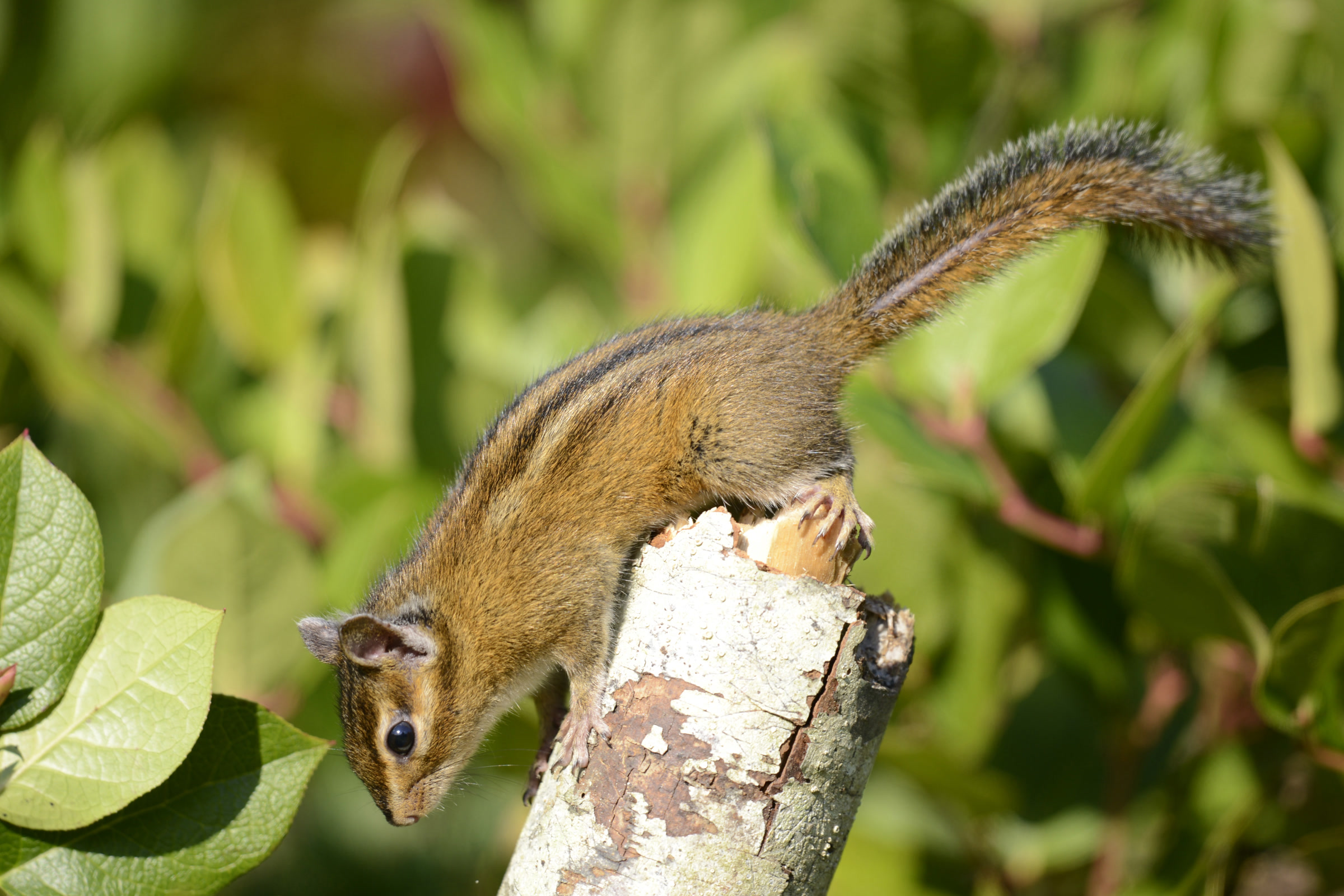
Townsend’s chipmunk is the forest chipmunk. The Burke Museum calls it the largest and darkest chipmunk in Washington, living in conifer forest and brush from the Cascades west. Animal Diversity Web, a University of Michigan resource, says those in mild coastal areas stay active through winter while those at higher, snowy elevations hibernate.
Olympic and Townsend’s chipmunks compared
| Feature | Olympic chipmunk | Townsend’s chipmunk |
|---|---|---|
| Look | Bright stripes, white belly | Dark brown, faint stripes |
| Length (Burke) | 18 to 24.5 cm (yellow-pine species) | 22 to 31.5 cm |
| Habitat | Subalpine forest edges and meadows | Conifer forest and brush |
| Range | Olympic Peninsula only | Western Washington and beyond |
The Olympic marmot, the biggest squirrel
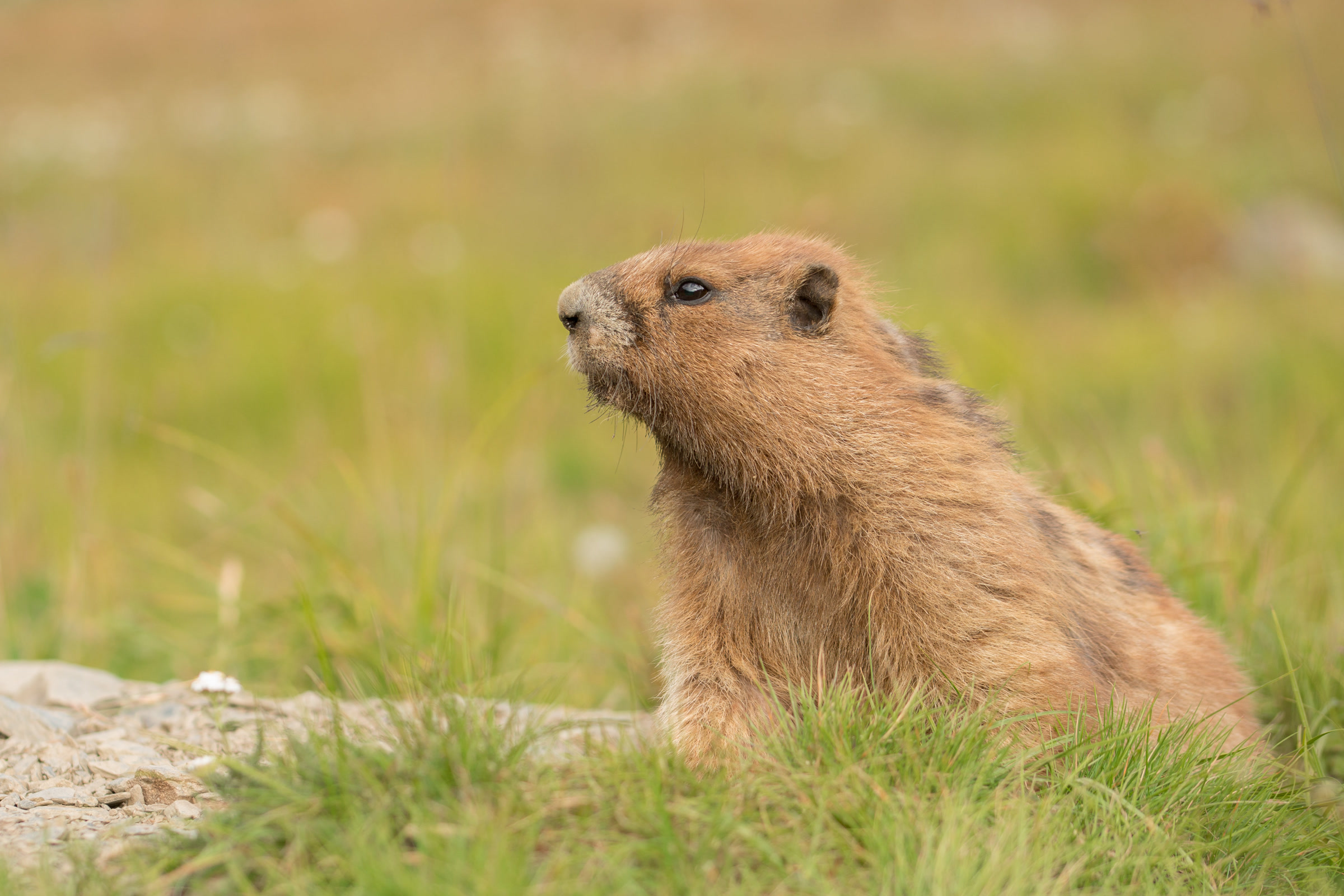
The Olympic marmot is a ground squirrel and by far the largest member of the family here, at 4 to 9 kilograms. The Burke Museum notes that it was named Washington’s official endemic mammal in 2009 and hibernates from October to May. Our guide to the Olympic marmot at Hurricane Ridge covers where to watch one.
What about gray squirrels?
The park’s list includes no gray squirrels. The Burke Museum places Washington’s native western gray squirrel in the south Puget Sound prairies and parts of the Cascades, and the introduced eastern gray squirrel mainly in cities. The mountain beaver sits in a family of its own, Aplodontiidae, on the park’s list.
Watching squirrels well
- Listen first: follow a Douglas squirrel’s chatter to its perch.
- Look for Olympic chipmunks where subalpine trees meet meadows.
- Never feed them. The park says feeding, approaching or harassing wildlife is illegal, including small mammals such as chipmunks.
- Keep at least 50 yards from all wildlife, as the park’s compendium requires; as of October 2026, check the NPS page before you go.
For more on timing and good habits, see our guide to wildlife viewing in Olympic National Park.
How Friends of Olympic National Park helps
We are Friends of Olympic National Park (FONP), a volunteer led friends group based in Port Angeles. Our projects include guided nature walks and the Children’s Discovery Room. Members keep that work going, so please become a member.
Frequently asked questions
What squirrels live in Olympic National Park?
The park’s mammal list names five members of the squirrel family: the Douglas squirrel, northern flying squirrel, Townsend’s chipmunk, Olympic chipmunk and Olympic marmot. The Olympic chipmunk and Olympic marmot are found only on the Olympic Peninsula.
What is a Douglas squirrel?
A Douglas squirrel, or chickaree, is a small tree squirrel common throughout the park’s forests. It is gray with an orangish chest in summer, eats conifer seeds, buries cones for later and does not hibernate.
Are there flying squirrels in Olympic National Park?
Yes. The park’s mammal list rates the northern flying squirrel as common. It is active at night, glides between trees on a fold of skin and feeds largely on fungi and lichens, so few visitors see one.
Is a marmot a squirrel?
Yes. The Olympic marmot is a ground squirrel and the largest member of the squirrel family in the park, weighing 4 to 9 kilograms according to the Burke Museum.
Can I feed the chipmunks in Olympic National Park?
No. The park says it is illegal to feed, approach or harass wildlife, and it names small mammals such as chipmunks. Keep your food stored and let them find their own.
Leave a Reply