
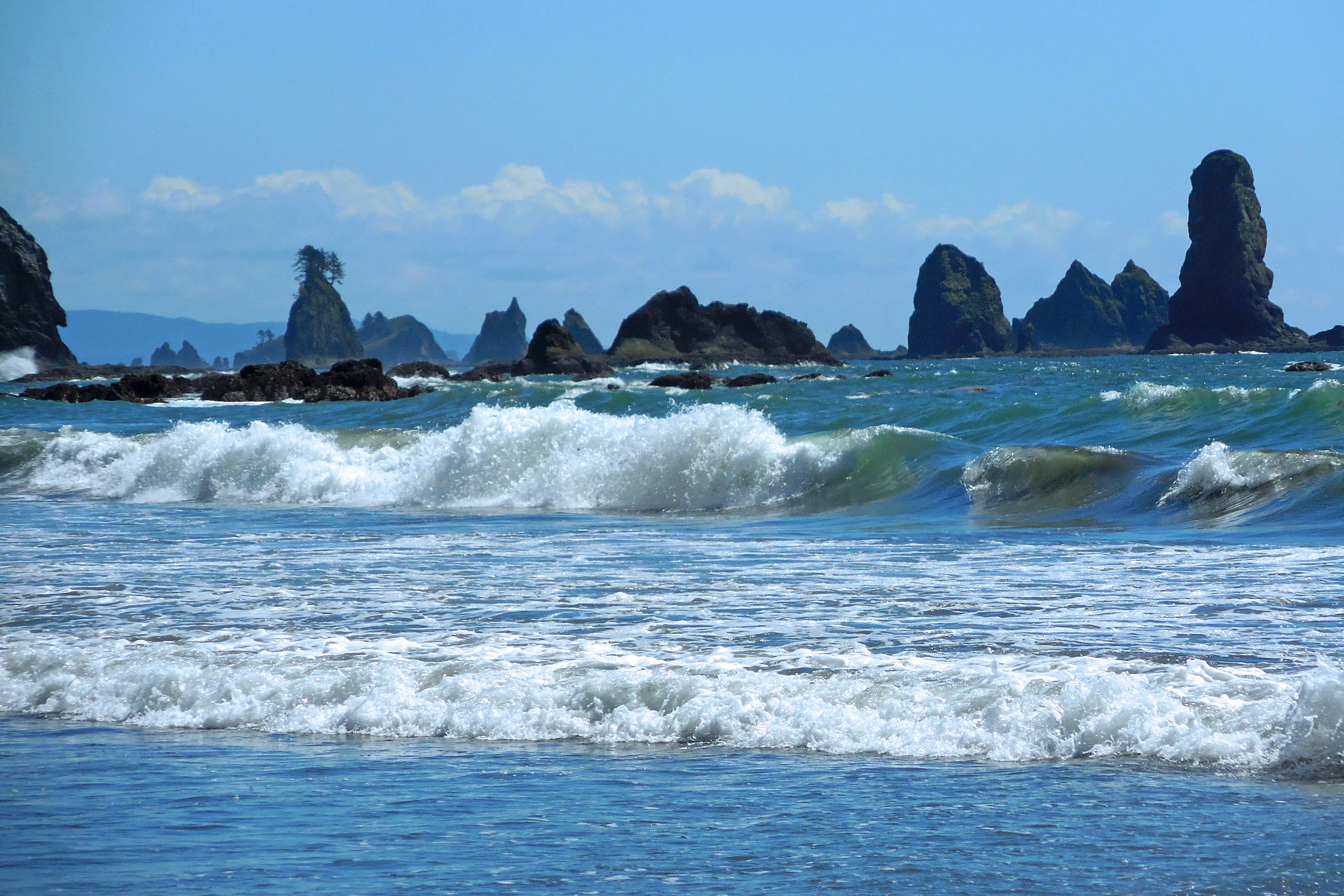
Second Beach and Third Beach are two wild ocean beaches just south of La Push, each reached by a short forest trail off La Push Road. Second Beach is the quicker walk to sea stacks and tide pools. Third Beach is a little longer and is also where backpackers start the South Coast wilderness route.
Quick answer
How do you get to Second Beach and Third Beach at La Push?
Both beaches start from trailheads on La Push Road west of US 101. The Third Beach Trail begins about 12 miles out and runs 1.4 miles to the sand. The Second Beach Trail begins about 14 miles out, on Quileute land, and runs 0.7 mile. Camping on either needs a wilderness permit and a bear canister.
- Second Beach Trail: 0.7 mile through coastal forest
- Third Beach Trail: 1.4 miles to a sandy beach
- Parking on Quileute land costs $10 as of October 2026
- Pets are not allowed at Second Beach or Third Beach
Where the beaches are, and whose land you cross
From US 101 just north of Forks, head west on La Push Road (State Route 110). The park places the Third Beach trailhead about 12 miles west of the highway, and the Second Beach trailhead about 14 miles west, on the Quileute Indian Reservation. Rialto Beach lies across the Quillayute River, reached by a different road.
La Push is the home of the Quileute Nation, a sovereign tribe with its own government. The tribe says the Quileute have lived and hunted here for thousands of years, in a territory that once reached from these shores to the glaciers of Mount Olympus.
Quileute etiquette and parking
The tribe’s Indian Country etiquette guidelines ask visitors to follow posted signs and tribal rules, respect the privacy of residential areas and ask before photographing or recording people or events. Do not take sand, rocks, shells, driftwood, eagle feathers or other objects from the beach. Burial grounds and religious ceremonies are sacred and are not to be entered.
As of October 2026, Quileute Tribal Enterprises charges $10 per parking session at public access points in La Push, a program that began on May 1, 2026. The park says the fee applies anywhere on Quileute tribal lands, including Second Beach. Pay by the ParkMobile app or at Lonesome Creek Store, which sells multi-day passes for backpackers. Check the NPS and tribal pages before you go.
Second Beach and Third Beach compared
| Detail | Second Beach | Third Beach |
|---|---|---|
| Trailhead | About 14 miles west of US 101 | About 12 miles west of US 101 |
| Trail length | 0.7 mile one way | 1.4 miles one way |
| Elevation | 80 ft gain, 100 ft loss going in | About 240 ft loss going in |
| Parking | Quileute land, $10 fee | Very limited; carpool if you can |
| Toilet | Pit toilet where the trail meets the beach | Pit toilet where the trail meets the beach |
| Best season (NPS) | April through October | Year round |
Second Beach: sea stacks and tide pools
The Second Beach Trail winds through coastal forest before dropping to a sandy beach lined with sea stacks. The park lists bald eagles, seals and seabirds among its highlights, with whales migrating past in March, April and October.

Second Beach is an out and back walk. The park names Teahwhit Head and Quateata Head as impassable, even at the lowest tide, and asks hikers not to try rounding them. A natural rock arch near the north end is a fine sunset spot.
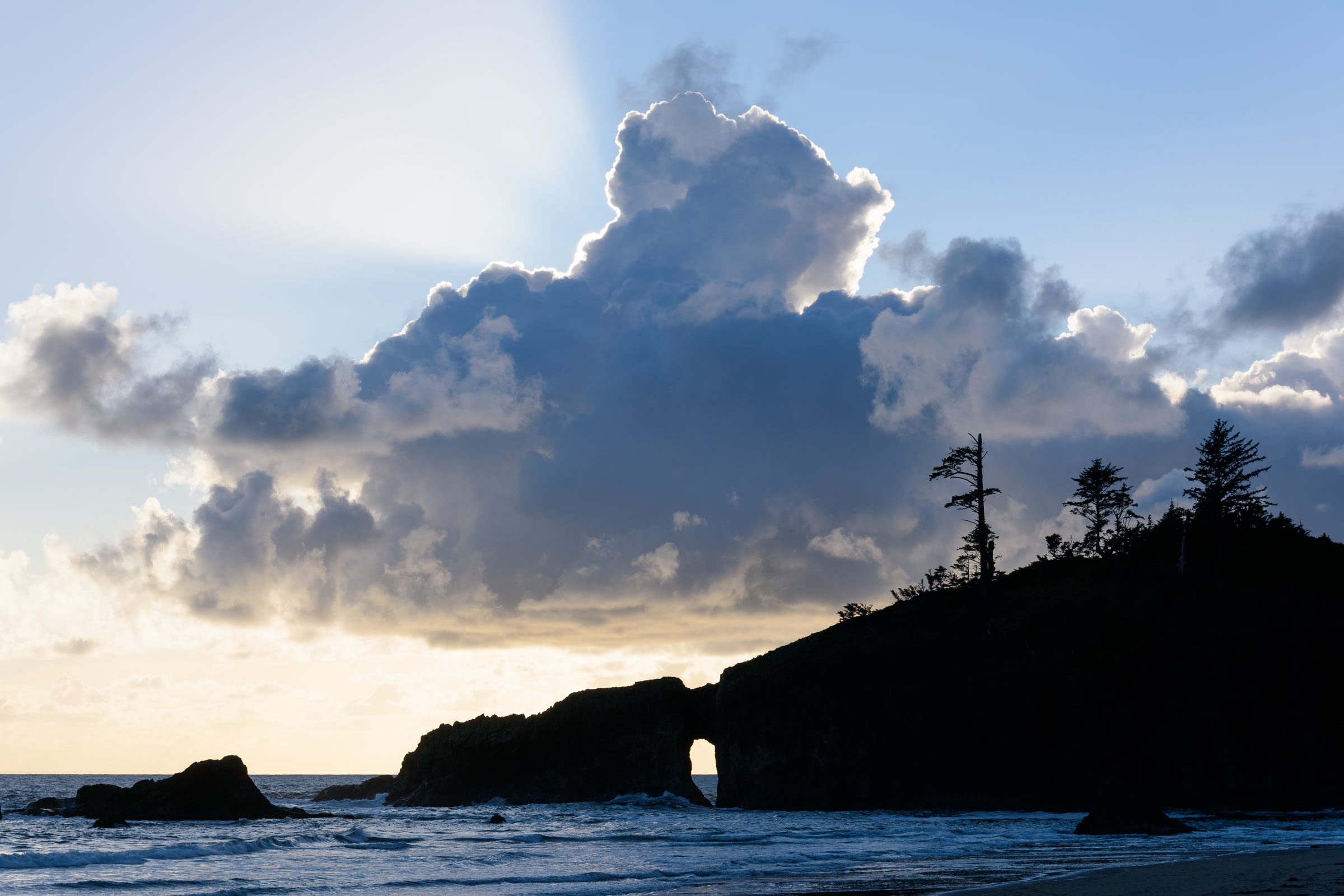
The park counts Second Beach and Third Beach among its excellent tidepooling spots. Our guide to Olympic National Park tide pools covers timing and etiquette.

Third Beach and the start of the South Coast route
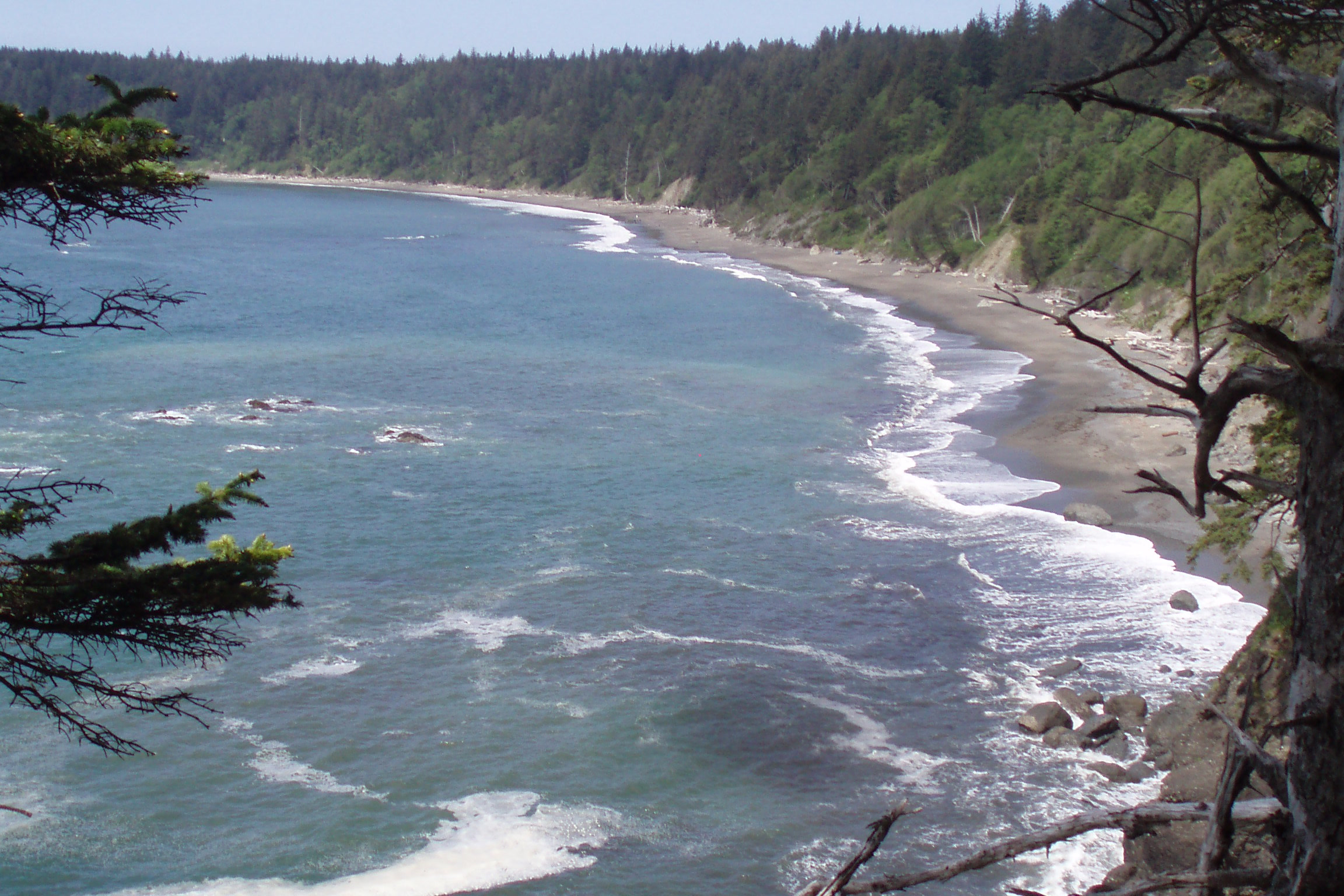
The Third Beach Trail runs 1.4 miles through coastal forest, then drops to a broad sandy beach. Parking at the trailhead is very limited, so the park asks visitors to carpool where they can. At the south end of the beach, a seasonal waterfall pours off the headland near Taylor Point; our guide to waterfalls of Olympic National Park explains when it flows best.
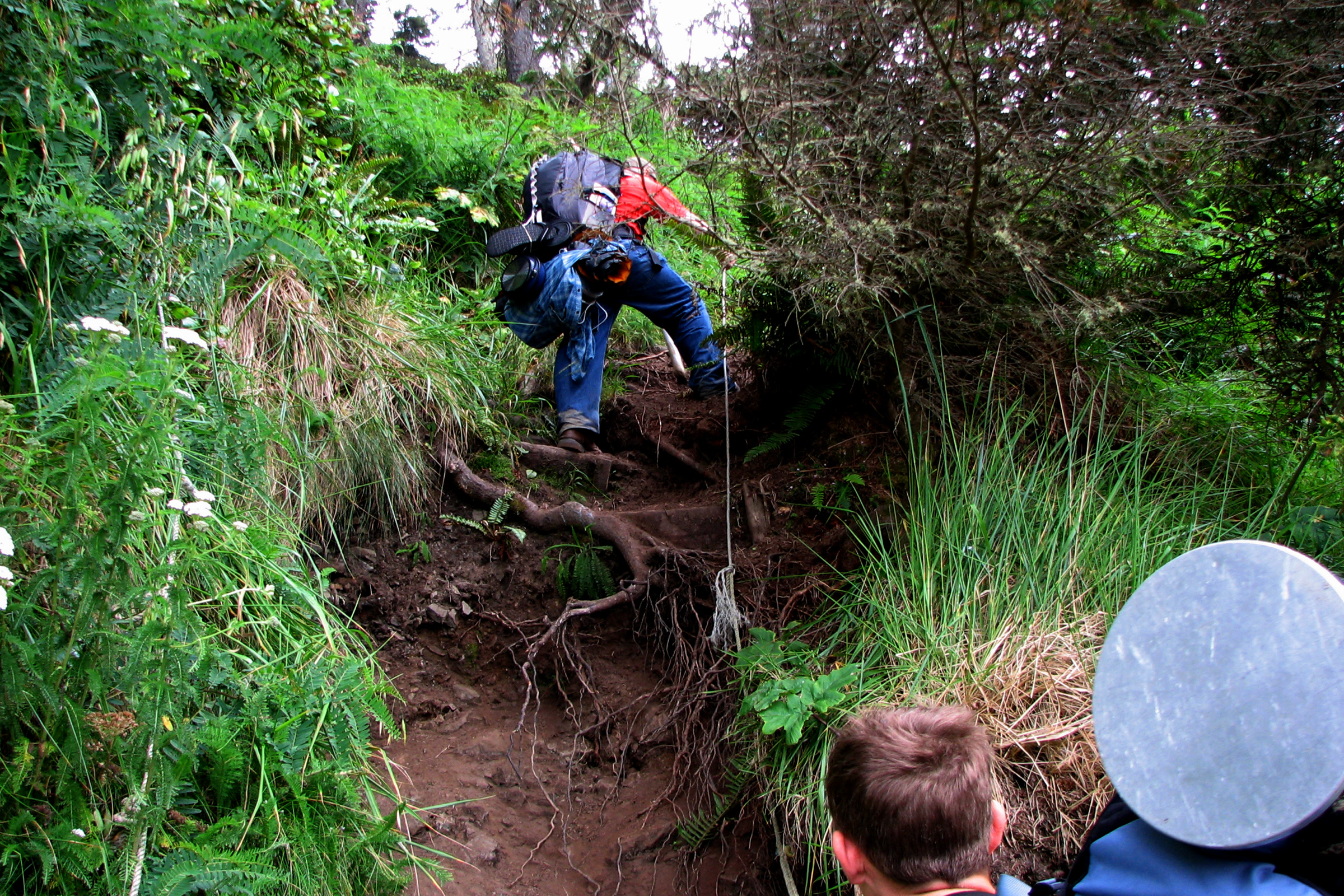
Third Beach is the first stop on the South Coast route, a 17 mile wilderness trek to the Oil City trailhead that the park rates moderate to difficult, best from May through October. Taylor Point cannot be passed at sea level, so the route climbs an overland trail from the south end of Third Beach, with low angle ladders to help.
Beyond the headland, the park gives about 2.6 miles from Third Beach to Scott Creek and another 2.4 miles to Toleak Point. Two stretches have tide limits: about 3 miles from the trailhead (below 4.5 feet) and between Scott Creek and Strawberry Point (below 4 feet).
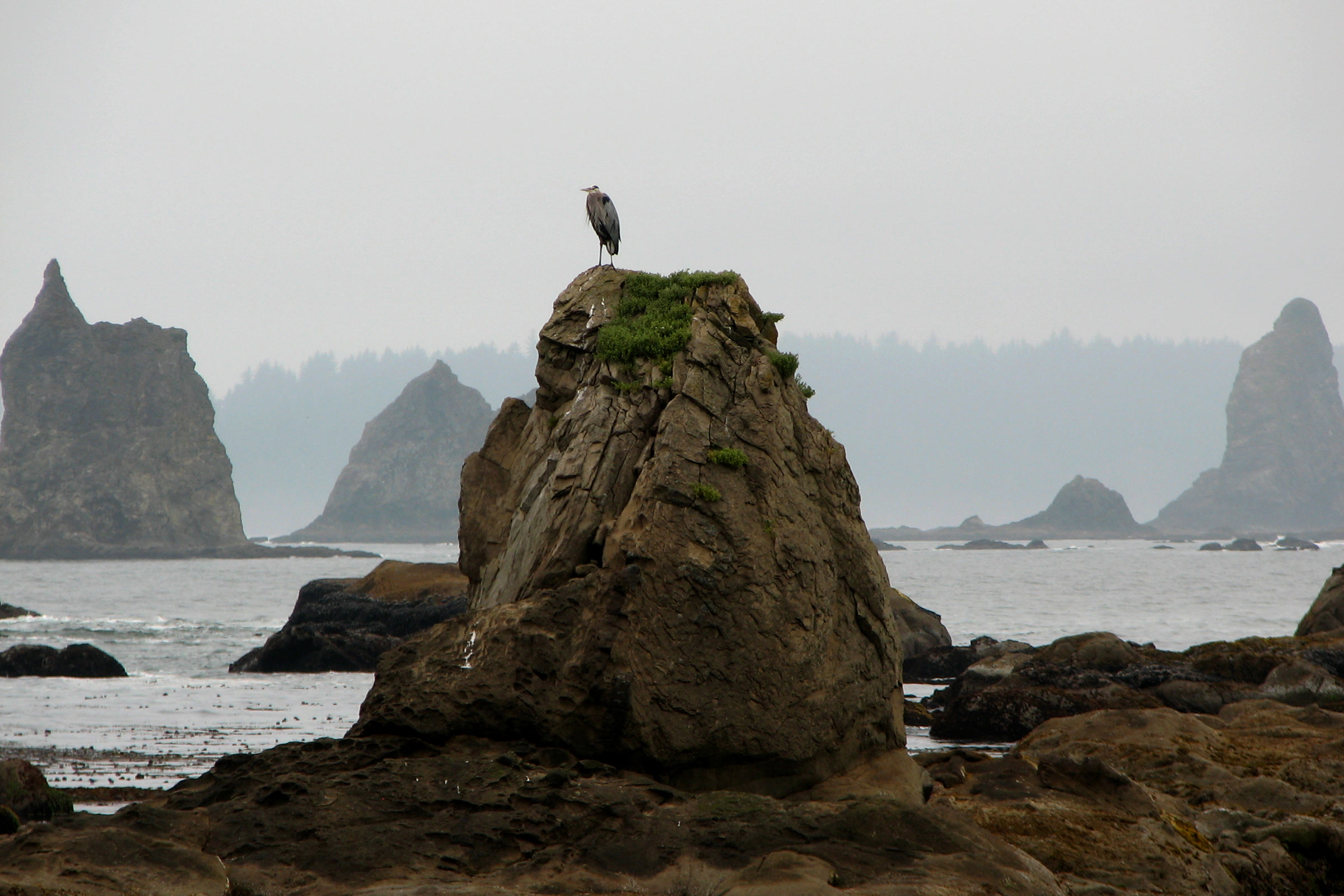
Camping at Second Beach and Third Beach
Every night on either beach needs a wilderness camping permit, and groups are limited to 12 people. Our guide to Olympic National Park wilderness permits walks through booking and fees.
- Where to pitch: a few forest sites, but mostly on the sand above the high tide line. On some summer weekends the park says spots are hard to find.
- Food storage: food, garbage and scented items go in a park approved bear canister. Raccoons and bears raid camps; see our black bear safety guide.
- Water: coastal streams are often tea stained, and giardia and cryptosporidium are present. Filter or boil it, since iodine does not kill cryptosporidium.
- Fires: on the beach only, using driftwood only. Check for fire bans first.
Pets, weapons and wheeled devices are prohibited on these beaches and trails (see dogs in Olympic National Park). For gear, see what to pack for Olympic National Park.
Tides, drift logs and headland safety
Carry a tide chart and a topographic map, and never try to round a headland on a rising or high tide. For predictions, use NOAA’s La Push, Quillayute River station. Check the marine forecast for hazardous swells, too.

The park warns that beach logs may be unstable and that rolling logs can be fatal. Stay off logs in the surf and watch your footing on boulders slick with algae. Our Leave No Trace guide to Olympic coast beaches covers headland trails, camping and fires in more depth.
How Friends of Olympic National Park helps
We are Friends of Olympic National Park (FONP), a volunteer led friends group based in Port Angeles. Each spring our volunteers join beach cleanups in Olympic National Park, carrying marine debris off the coast. Browse our volunteer opportunities and come lend a hand.
Frequently asked questions
How long is the hike to Second Beach?
The Second Beach Trail is 0.7 mile each way through coastal forest. It starts on Quileute land on La Push Road, about 14 miles west of US 101.
How long is the Third Beach trail?
The Third Beach Trail is 1.4 miles each way through forest, starting on La Push Road about 12 miles west of US 101. Parking is very limited.
Do you need a permit to camp at Second Beach or Third Beach?
Yes. Every night needs a wilderness camping permit, groups are limited to 12, and food and scented items go in a park approved bear canister.
Can you walk from Second Beach to Third Beach?
Not along the shore. The park lists the Second Beach headlands, Teahwhit Head and Quateata Head, as impassable even at the lowest tide, so each beach is reached by its own trail from La Push Road.
Is there a fee to park at Second Beach?
As of October 2026, yes. Quileute Tribal Enterprises charges 10 dollars per parking session on Quileute tribal lands, including Second Beach, paid by app or at Lonesome Creek Store.
Leave a Reply