
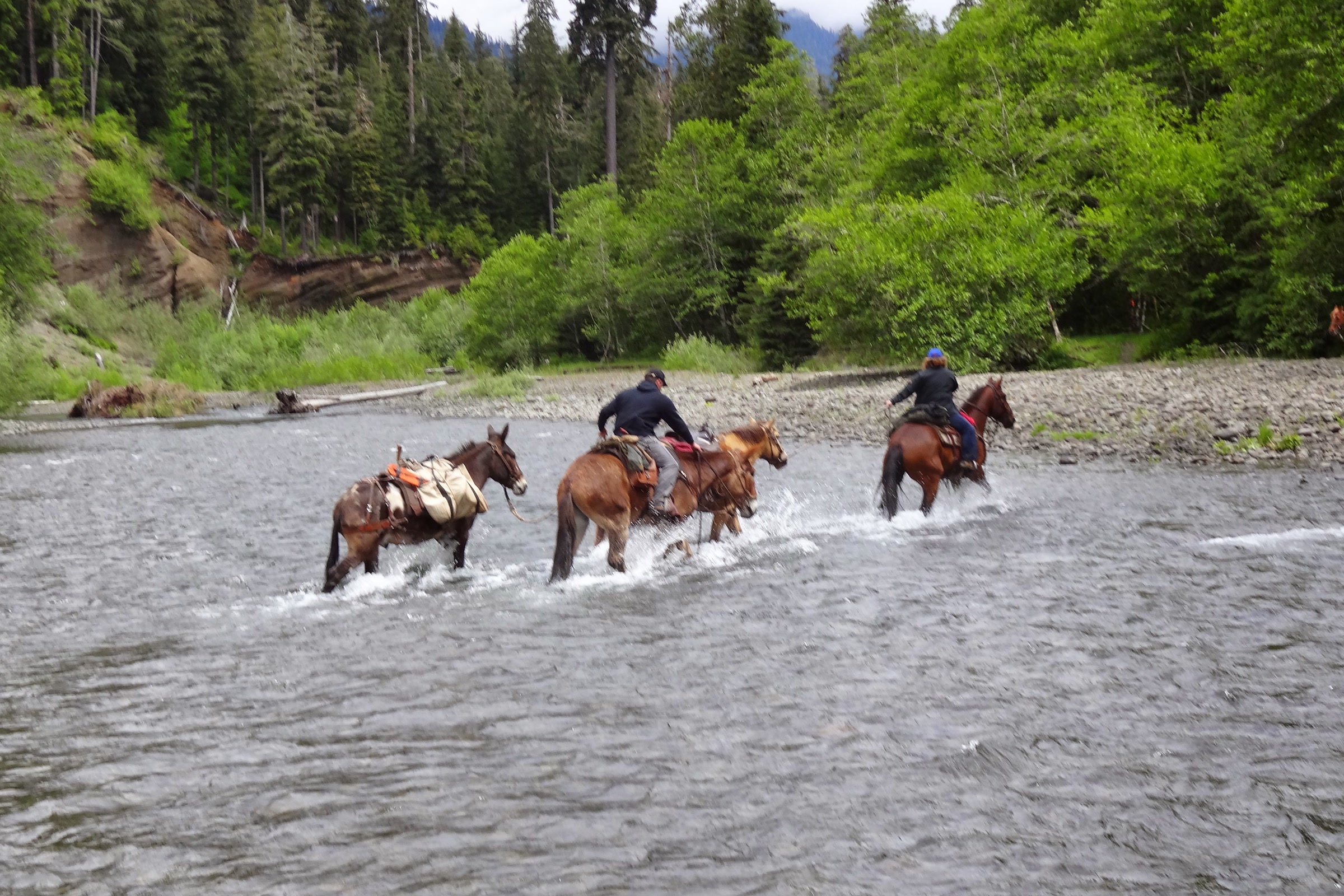
Horseback riding in Olympic National Park can take you deep into wild river valleys and up to high passes. The park maintains 365 miles of trail for stock and sets clear rules on which animals may go, what they eat and where they camp.
Quick answer
Can you go horseback riding in Olympic National Park?
Yes. Horseback riding in Olympic National Park is allowed on many wilderness trails, and the park maintains 365 miles for stock. Only horses, mules, burros and llamas may be used. Groups are limited to 12 people and 8 stock, loose hay is banned, and above 3,500 feet stock may camp only in designated stock camps.
- 365 miles of trail maintained for stock
- Horses, mules, burros and llamas only
- 12 people and 8 stock per group
- No loose hay or grain with viable seed
- Designated stock camps above 3,500 feet
Which pack animals the park allows
The park’s rules define pack animals as horses, burros, mules or llamas, and its wilderness regulations say only those four are allowed. Goats are not on the list, so pack goats can’t be used in the park. Pets aren’t allowed on park trails either; see our guide to dogs in Olympic National Park.
Llamas even have a camp of their own: Deer Lake, in the Sol Duc drainage.
Trails open to stock use
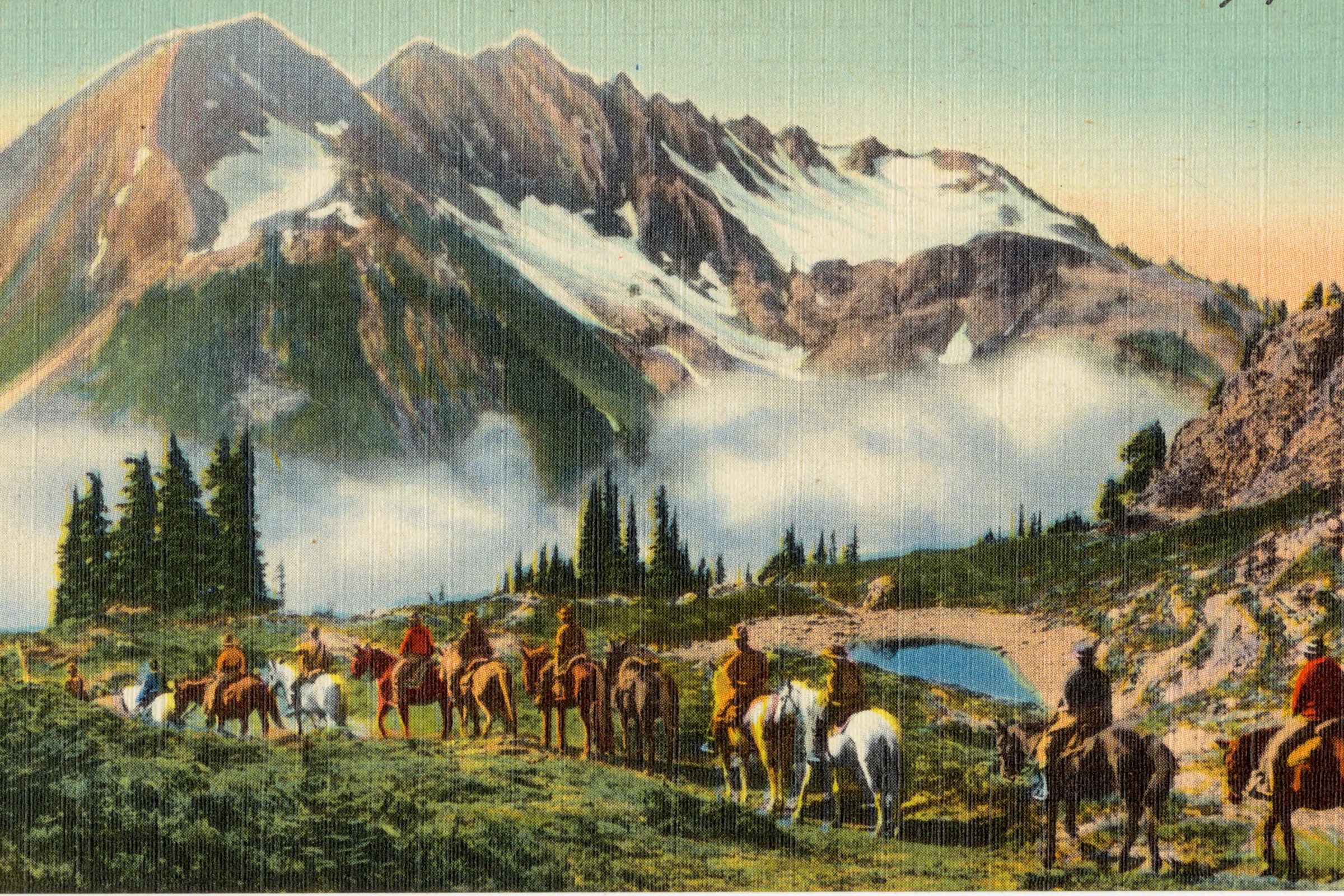
The park rates its stock trails by the experience they demand. Conditions change every season, so call the Wilderness Information Center at (360) 565-3100 before you load the trailer.
Stock trails and the park’s rating
| Trail | Park rating |
|---|---|
| North Fork Skokomish River to First Divide | Experienced stock users |
| Dosewallips River to Hayden Pass; West Fork to Anderson Pass | Experienced stock users |
| Heart O’ the Hills to Lake Angeles or Heather Park | Experienced stock users |
| Elwha River Trail to Low Divide | Experienced stock users |
| Sol Duc and Seven Lakes Basin Loop | Experienced stock users |
| Hoh River Trail to Martin Creek; Hoh Lake; Wolf Creek | Experienced stock users |
| North Fork Quinault to Low Divide; East Fork to Enchanted Valley | Experienced stock users |
| Duckabush River to First Divide | Very experienced stock users |
| Gray Wolf River to Gray Wolf Pass; Bogachiel River | Very experienced stock users |
| Queets River, Lillian River, Happy Lake, Boulder Creek via Appleton Pass | Very experienced stock users |
The park warns of windfall, brush, narrow tread and puncheon bridges that may not hold a horse. Our guides to the Elwha River Trail, the Hoh Lake Trail and the Lake Angeles Trail describe three of these routes.
Where stock is not allowed
Stock are banned on all nature trails and on every beach and beach access trail from the northern park boundary south to the Quinault Indian Reservation. Many short or steep trails are closed too, including Hurricane Hill, Royal Basin, Mount Storm King and Lake Constance. On the Hoh River Trail, horses, mules and burros stop at Martin Creek Stock Camp.
The full list is on the park’s stock use page.
Permits and group size
Every overnight trip with stock needs a wilderness camping permit. The usual fees apply, with no extra fee for the animals. Our Olympic National Park wilderness permits guide explains how to get one.
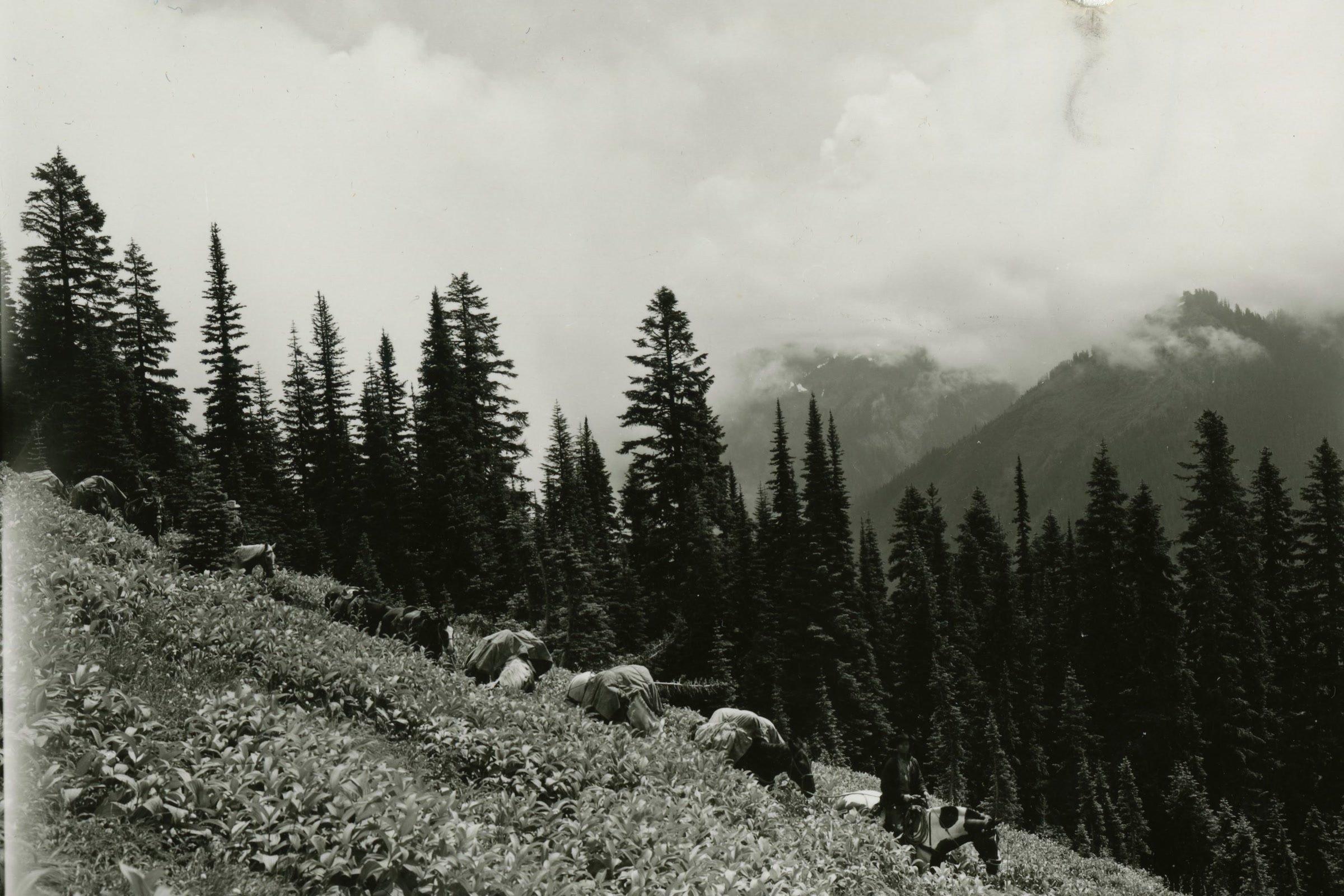
Groups are limited to 12 people and 8 head of stock. Food and scented items must be kept from wildlife, and the Wilderness Information Center lends bear resistant panniers. These rules sit within the wider protections of the Daniel J. Evans Wilderness, which covers most of the park.
Weed free feed: no loose hay
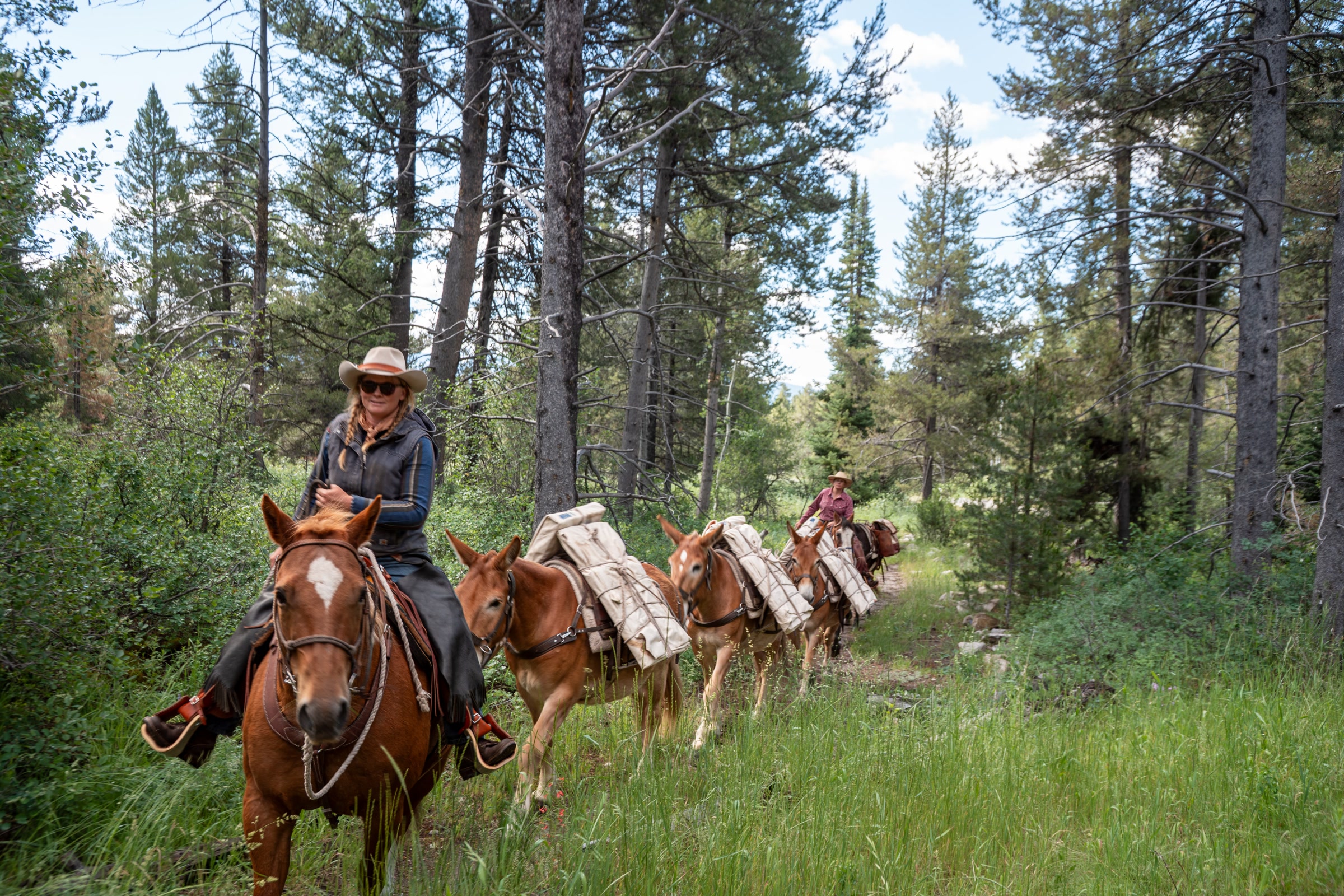
Packing in loose hay or grain with viable seed is prohibited, because the park says non-native plants may grow as a result. Carry supplemental feed such as pellets or rolled grain on every trip; the park’s rules call for certified weed free feed on all overnight trips.
The park also asks riders to start feeding weed free feed 3 days before entering the wilderness, to avoid bringing in weed seeds. Our article on invasive plants and Olympic Peninsula volunteers explains why that matters.
Stock camps, grazing and tying
Above 3,500 feet, camping with pack animals is allowed only in designated stock camps, and stock may not leave maintained trails at that height. The one exception the rules name is between the stock fences at Low Divide. The park lists these stock camps:
- North Fork Skokomish: Nine Stream and Camp Pleasant
- Duckabush: Tenmile and Upper Duckabush
- Dosewallips: Deception Creek, Bear Camp, Big Timber and Diamond Meadows
- Elwha: Elkhorn, within the drift fences
- Hoh: 5 Mile Island, Lewis Meadow and Martin Creek
- Sol Duc: Horse Head, Cat Basin and Deer Lake (llamas only)
Grazing is allowed within a quarter mile of a designated stock camp, and grazing animals must be moved every 12 hours or sooner. Don’t tie stock to a single tree for more than an hour, or to any tree under 8 inches across. Keep animals at least 200 feet from water, and never leave pack animals unattended for more than 24 hours.
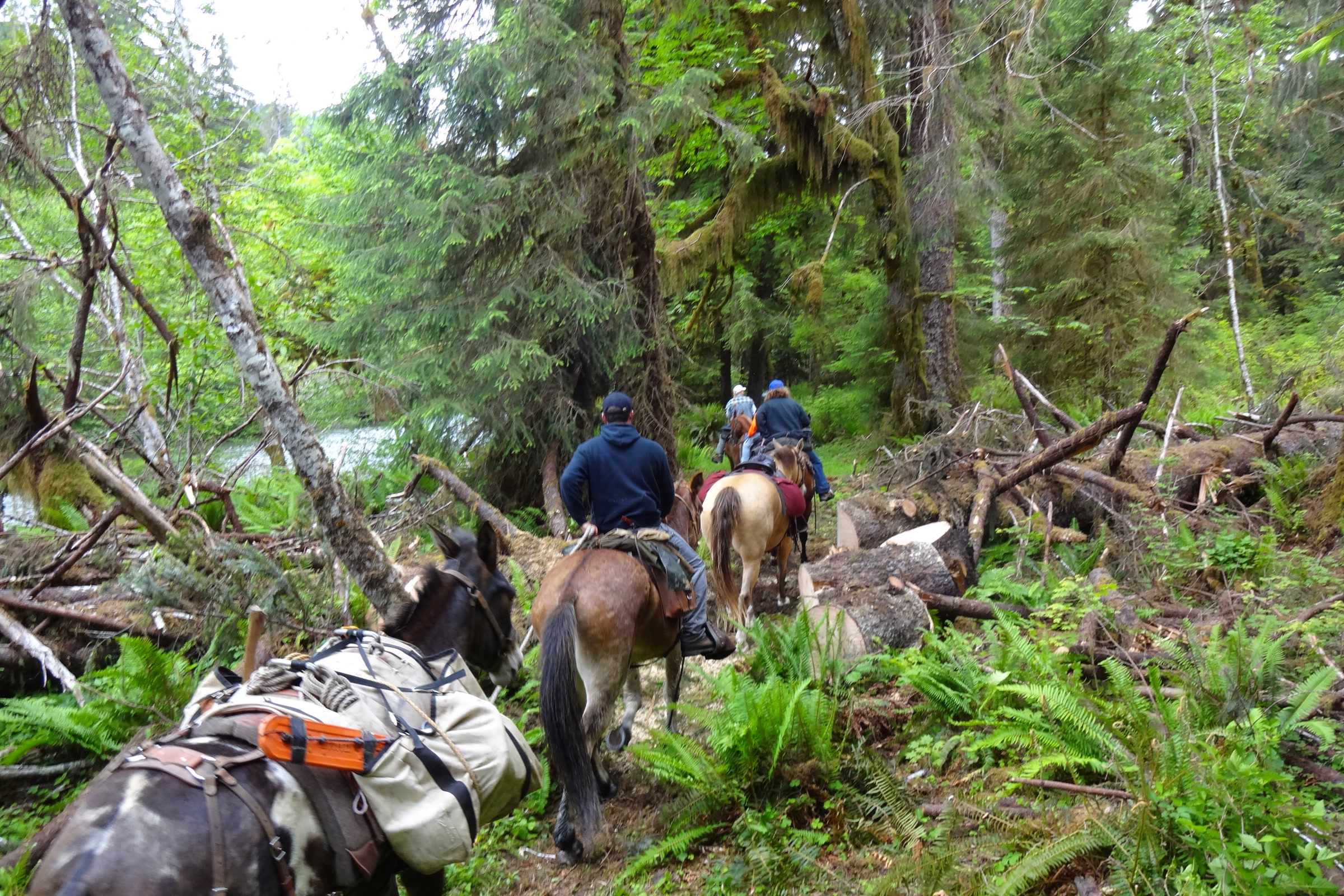
Trailheads, corrals and the Elwha road
The park lists unloading ramps at Whiskey Bend and Sol Duc, hitchracks at the Dosewallips, Whiskey Bend, Sol Duc, Hoh and North Fork Quinault trailheads, and overnight holding corrals at the Hoh and Staircase ranger stations. Boulder Creek has no trailer turnaround.
As of October 2026, Olympic Hot Springs Road is closed to vehicles at the Madison Falls parking area because of a washout, though horses may use it beyond the gate. That puts the Whiskey Bend ramp out of trailer reach, so check the NPS conditions page before you go.
Sharing the trail with pack animals
Hikers often meet the park’s own mule strings. The park’s Bugler newspaper asks hikers to step safely off the trail when mules pass, listen for the handler’s instructions, and never pet or feed them.
For riders, the park asks that waste and wash water go at least 200 feet from camps, water and trails.
Volunteer packers on the peninsula
Volunteer riders haul a lot of trail gear on the peninsula. Back Country Horsemen of Washington describes itself as an equestrian education and volunteer trail maintenance group. The Forest Service photos on this page show its Grays Harbor chapter at work on Olympic National Forest. We share this as information, not an endorsement.
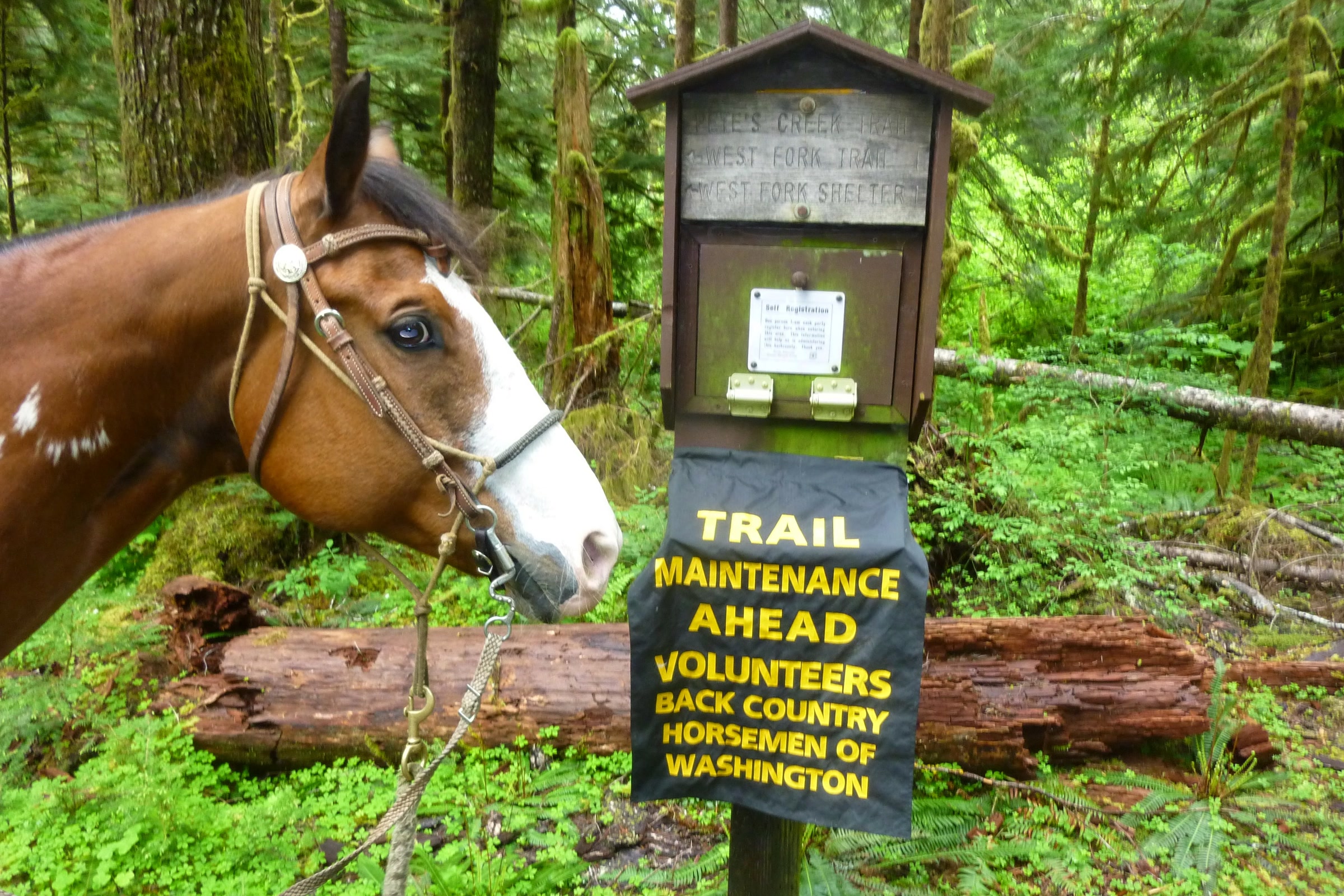
How Friends of Olympic National Park helps
We are Friends of Olympic National Park (FONP), a volunteer led friends group in Port Angeles. We don’t run stock trips, but our adopt-a-trail crew cares for the Heart O’ the Forest Trail, and our members help with park cleanups. If you’d like to give back to the trails you ride, see our volunteer opportunities.
Frequently asked questions
Are pack goats allowed in Olympic National Park?
No. The park’s rules allow only horses, mules, burros and llamas as pack animals, so goats cannot be used.
Can you ride horses at Hurricane Ridge?
Not on its short trails. The park closes the Hurricane Hill, Big Meadows and Royal Basin trails to stock. Nearby, the trails from Heart O’ the Hills to Lake Angeles and Heather Park are open to stock.
Do you need weed free hay in Olympic National Park?
Loose hay is not allowed at all. The park bans loose hay or grain with viable seed, asks you to carry feed such as pellets or rolled grain, and wants you to start weed free feed 3 days before your trip.
Can you camp with horses in Olympic National Park?
Yes, with a wilderness camping permit. Groups are limited to 12 people and 8 stock, and above 3,500 feet you must camp in a designated stock camp. Grazing is allowed within a quarter mile of a stock camp.
Leave a Reply