
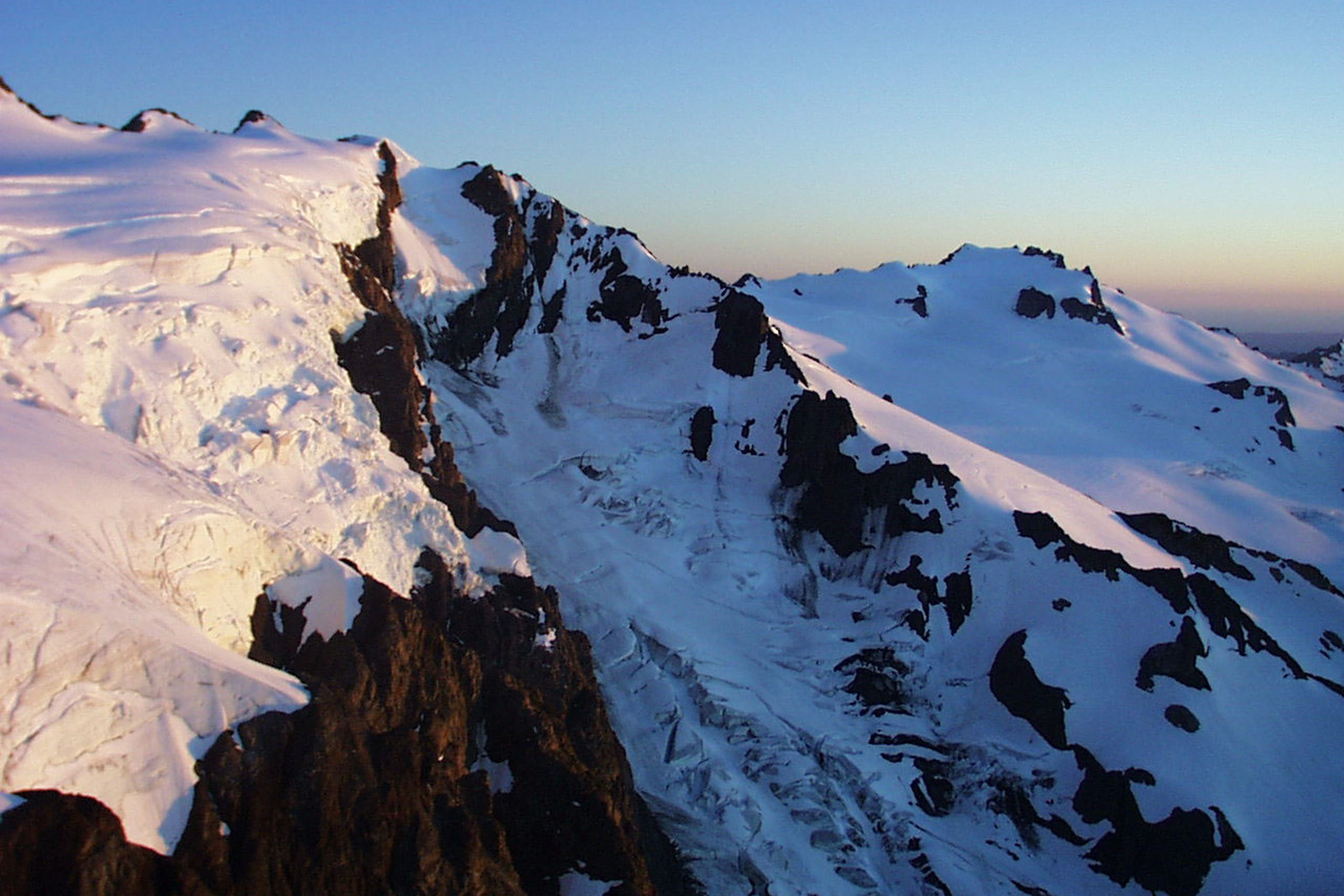
Climbing Mount Olympus is the big mountaineering prize of Olympic National Park. At 7,980 feet it is the highest peak in the Olympic Mountains, and reaching it takes a long rain forest approach, a crossing of the Blue Glacier and a short, steep rock summit. This is an overview of what the park says the climb involves, not a route guide.
Quick answer
How hard is climbing Mount Olympus?
Climbing Mount Olympus is a glacier climb the park rates moderate to difficult, open only to experienced mountaineers with glacier travel and crevasse rescue skills and gear. After about 17 miles on the Hoh River Trail, climbers cover 4 to 6 miles from Glacier Meadows to the 7,980 foot summit. The best season is late June through mid August.
- Wilderness permit and bear canister required
- High camps at Caltech Rocks and Snow Dome
- Blue bags required on the mountain
- The true summit block needs 4th or 5th class climbing
What climbing Mount Olympus involves
Mount Olympus sits about 20 miles southeast of Forks, deep in the park’s wilderness, with no road anywhere near it. The park’s Mount Olympus climbing page describes a glacier and alpine trip on glacial ice, over terrain that runs from flat to steep. It rates the climb moderate to difficult.
The park is blunt about who it is for: only experienced mountaineers with glacier travel and crevasse rescue skills and gear. Rangers do not test anyone’s ability, and no one is turned away from a permit for lack of skill, so the judgement is yours.
The climb at a glance
| Item | What the park lists |
|---|---|
| Approach | Hoh River Trail, 17.3 to 17.5 miles to Glacier Meadows |
| Climb | 4 to 6 miles from Glacier Meadows to the summit |
| Elevation | 4,400 feet to 7,980 feet |
| Difficulty | Moderate to difficult, on glacial ice |
| Best season | Late June through mid August |
| High camps | Caltech Rocks and Snow Dome |
| Rules | Wilderness permit, bear canister, blue bags |
The Hoh River Trail approach
Every Olympus trip starts with a long walk. The Hoh River Trail leaves the Hoh Rain Forest Visitor Center at about 600 feet and runs mostly level for its first 13 miles, then climbs steeply to Glacier Meadows at 4,300 feet. Our Hoh River Trail guide covers the camps, fords and mileages on the way.
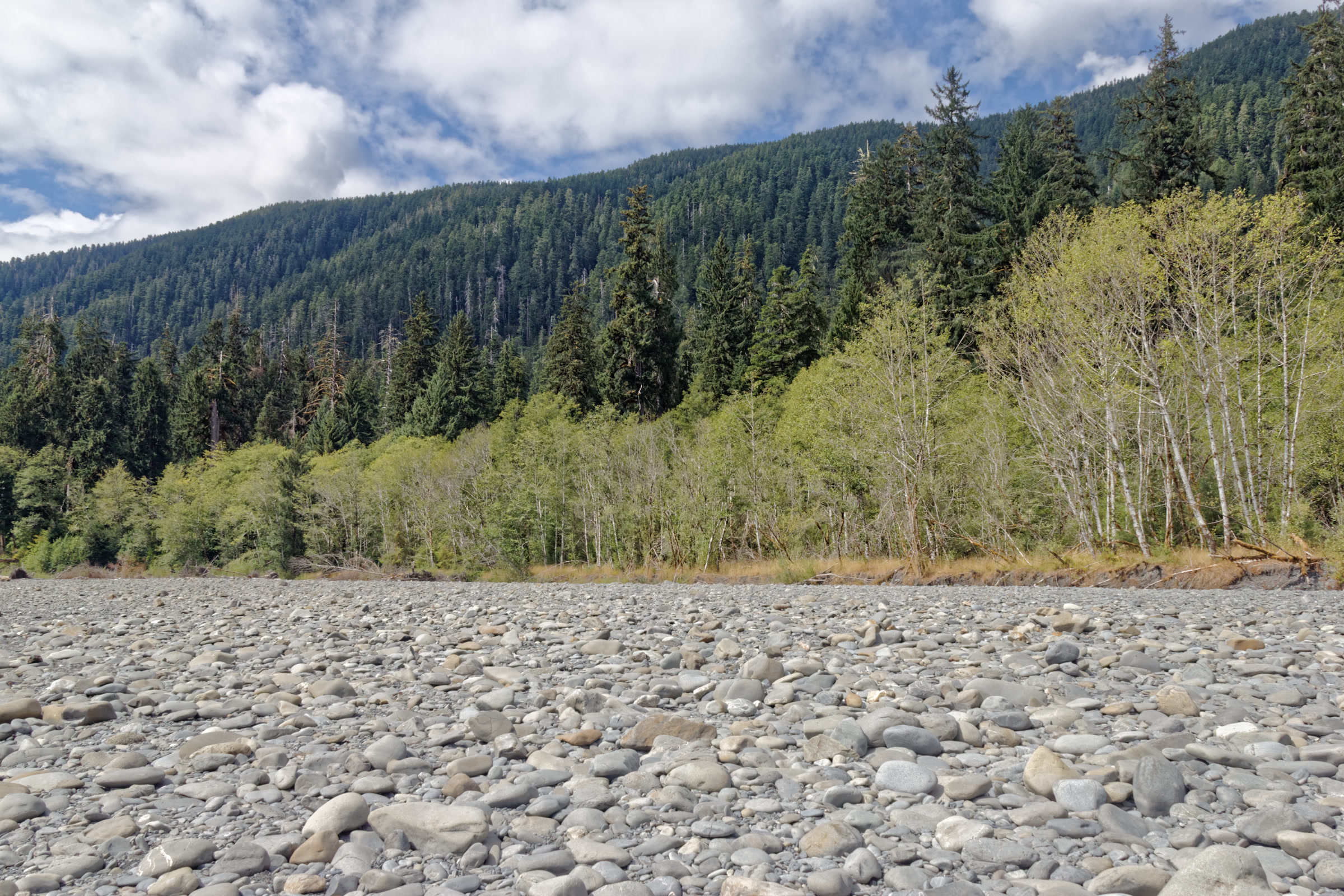
Two things on the approach matter most to climbers. Two streams just before the Olympus Guard Station camps must be forded, and the park says they can become impassable in moderate to heavy rain. Early in the season, steep snow slopes between Elk Lake and Glacier Meadows can hide the trail and may call for an ice axe and crampons.
The Blue Glacier route and the summit
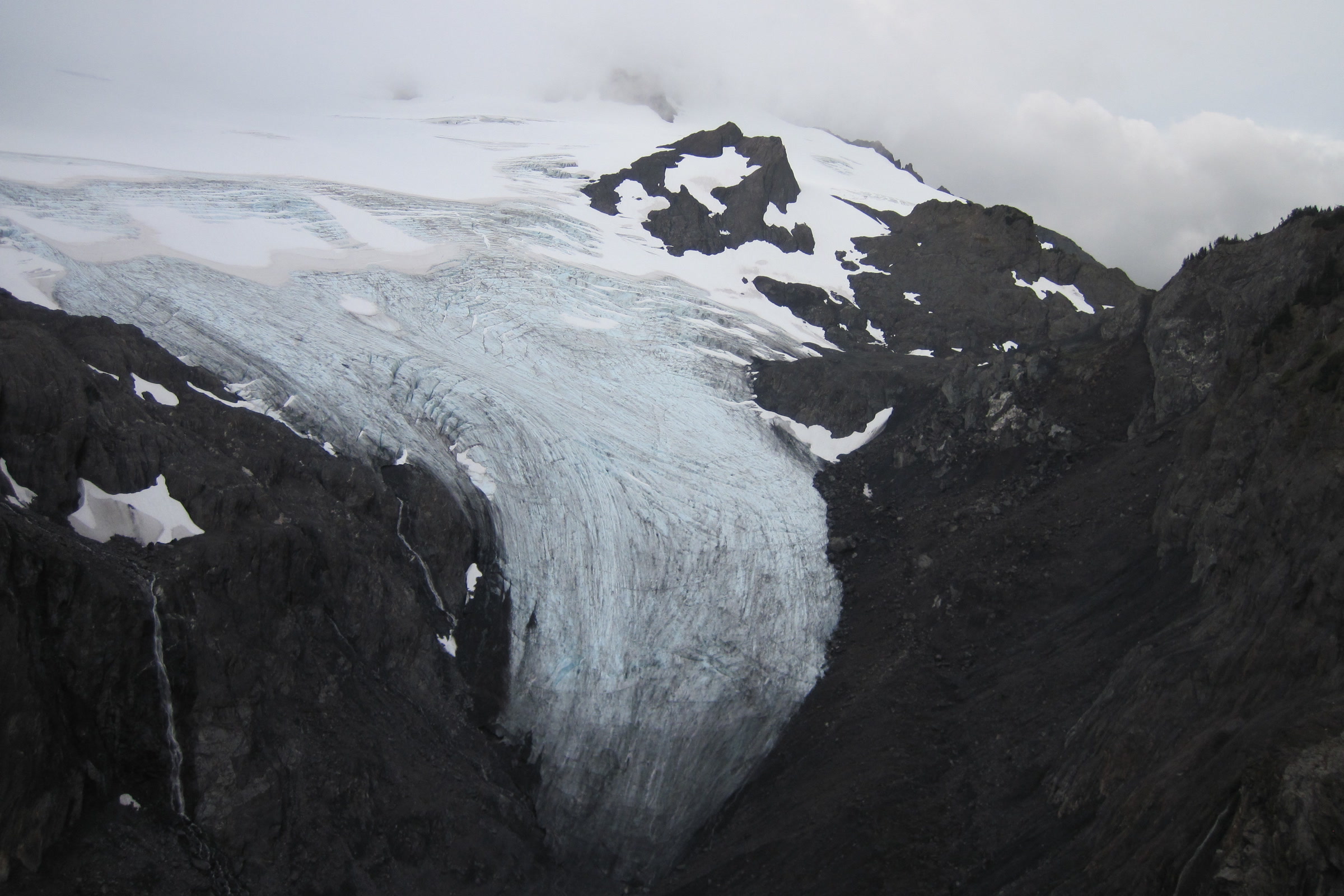
Above Glacier Meadows the trail gives way to ice. The park calls the Blue Glacier one of its largest glaciers and its most visited, and climbers cross its surface on the way up. It is 2.6 miles long, up to 900 feet thick, and its fastest parts move about 3 feet a day.
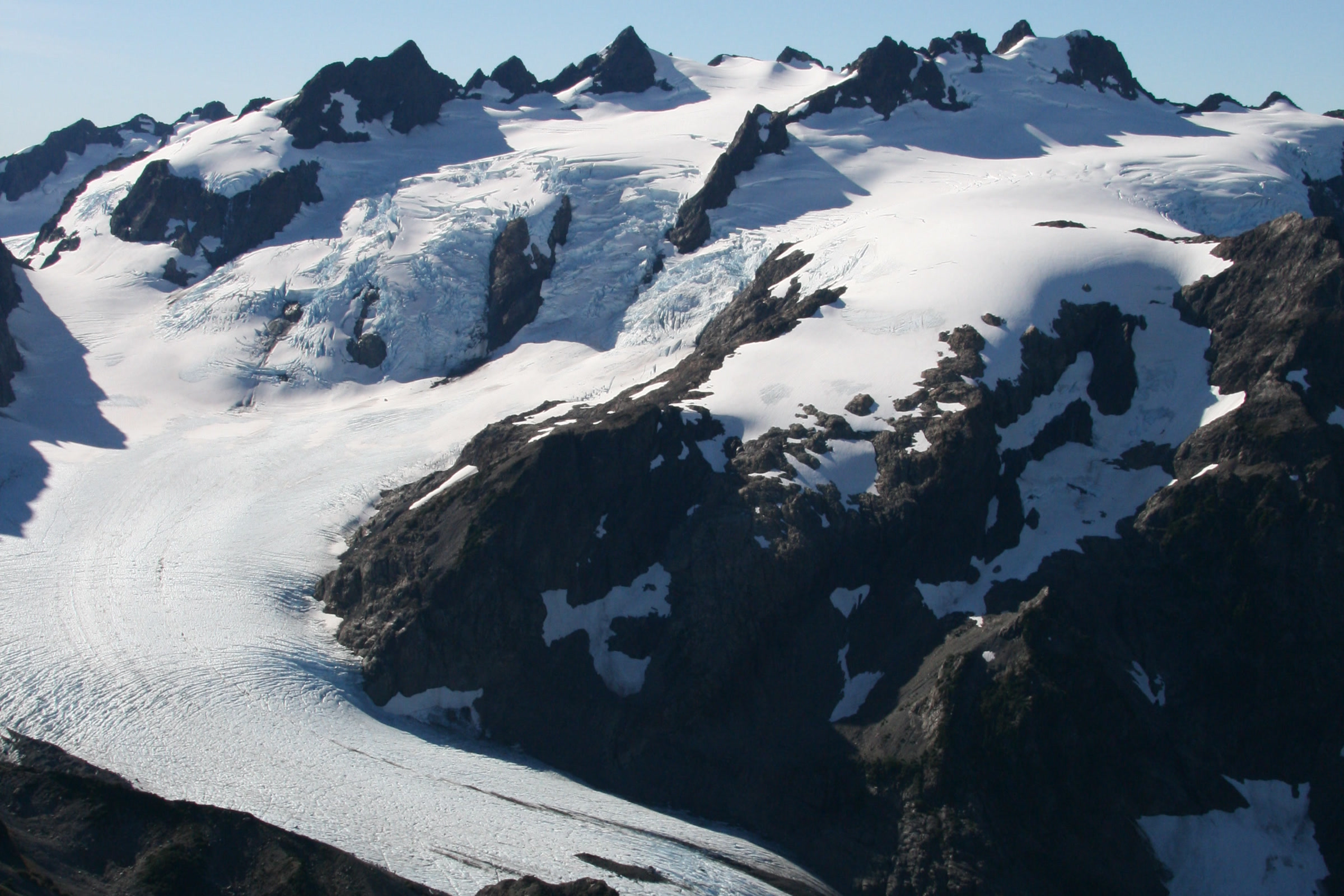
The University of Washington, which has studied the glacier since the International Geophysical Year of 1956 to 1957, notes on its Blue Glacier research page that icefalls separate the lower valley glacier from two snow fields above it, the snowdome and the cirque. The park adds that a research hut was built on the Snow Dome in 1957. Our post on Olympic National Park glaciers and climate change explains how fast this ice is thinning.
Near the top, the park’s climbing page mentions a false summit and the summit block of the West Peak, where climbers rappel. Its general climbing page says the true Mount Olympus summit is a 60 foot block that needs 4th or 5th class rock climbing.
Glacier travel and crevasse skills
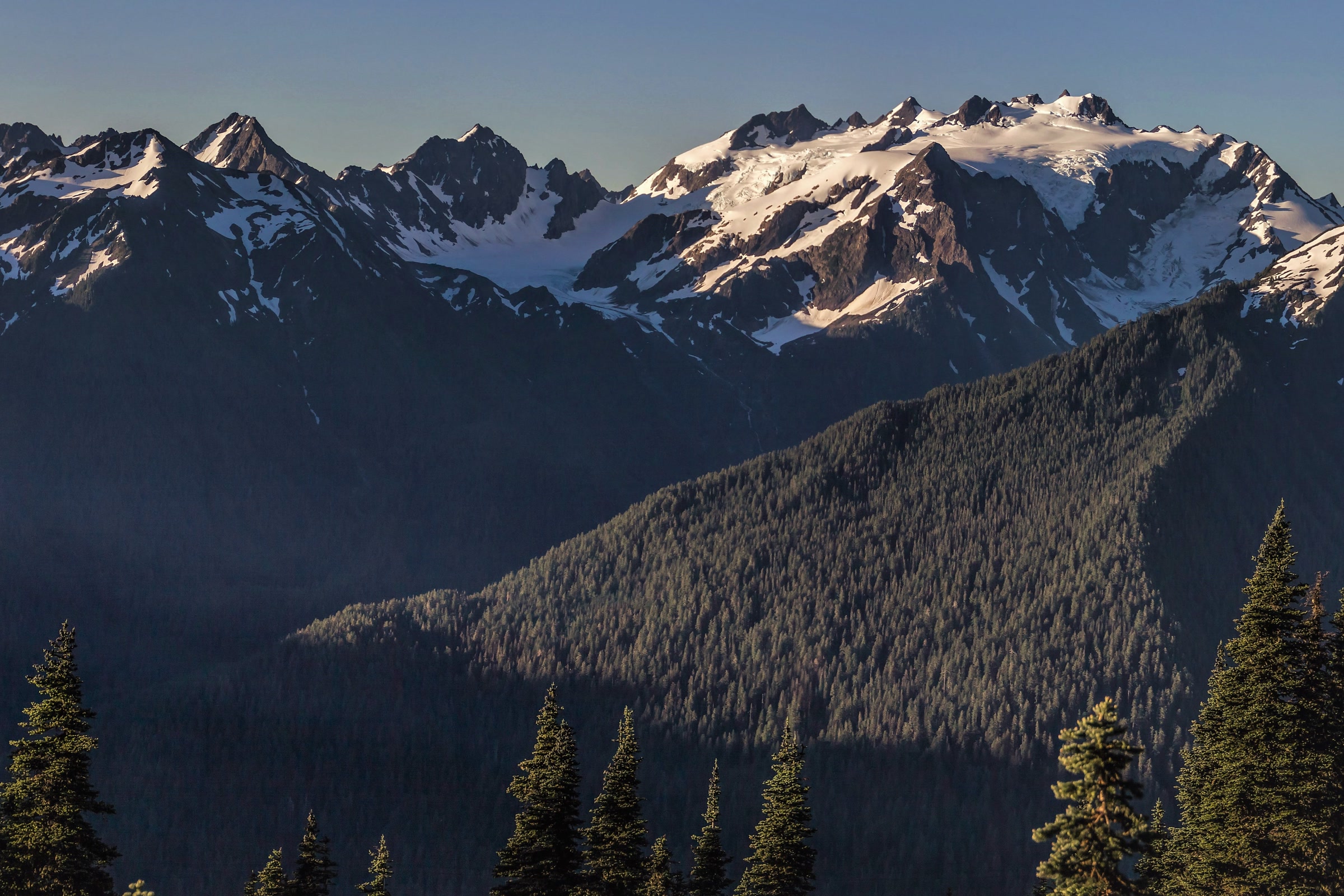
A glacier hides its cracks under snow, which is why the park asks for crevasse rescue skills and gear, not just fitness. Its climbing page lists glacier travel, rockfall and avalanches as the main dangers on Mount Olympus, and says parties need crevasse self rescue skills.
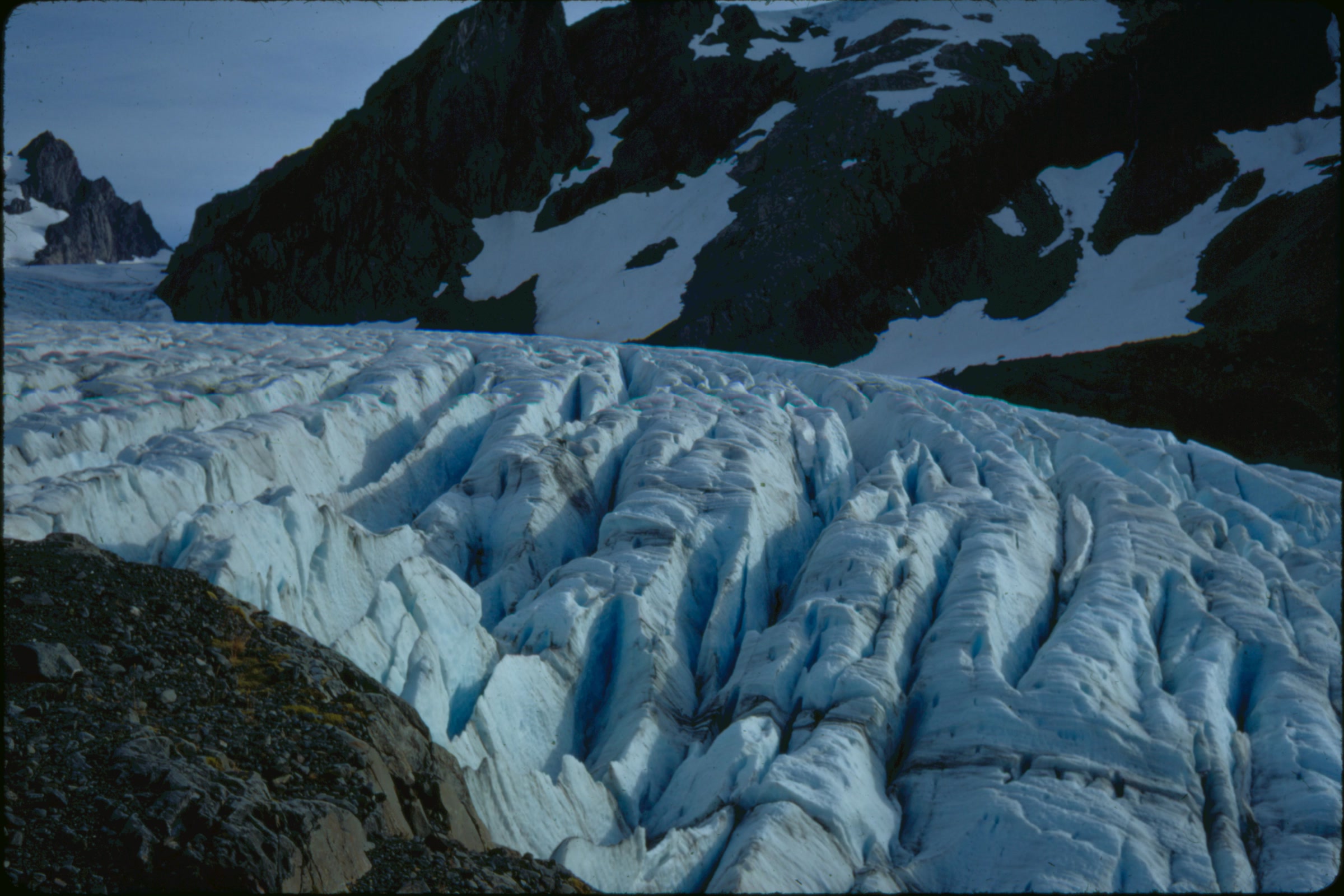
The rock is its own problem. The park describes Olympic rock as mostly shale, sandstone and pillow basalt, often broken and loose, with few cracks for protection, and calls a helmet essential. Our guide to how the Olympic Mountains formed explains why this old sea floor crumbles.
Permits and camping on Mount Olympus
Every overnight trip needs a wilderness permit, and camps at Elk Lake and Glacier Meadows are limited by quota, as is Martin Creek, so reserve early. Our Olympic National Park wilderness permits guide explains how to book and what it costs.
- Camps: high camps are at Caltech Rocks and Snow Dome. Camping is not allowed between Glacier Meadows and the Blue Glacier.
- Groups: parties of more than six must use the group sites.
- Food: bear canisters are required, and water comes from glacier or snow melt.
- Fire: no campfires above Martin Creek.
Blue bags and human waste
Blue bags are required on Mount Olympus, and the park hands them out at the Hoh Visitor Center and the Wilderness Information Center in Port Angeles. As of October 2026, its trail conditions page says there is no blue bag deposit on the lateral moraine, so climbers must pack all human waste out. Check the NPS page before you go.
When to climb
The Mount Olympus page gives late June through mid August as the best season, and the general climbing page stretches it to roughly early September. Outside summer the risks climb fast. The park does not recommend winter travel above Elk Lake, where steep avalanche chutes may need ropes and anchors to cross.
Hazards and rescue
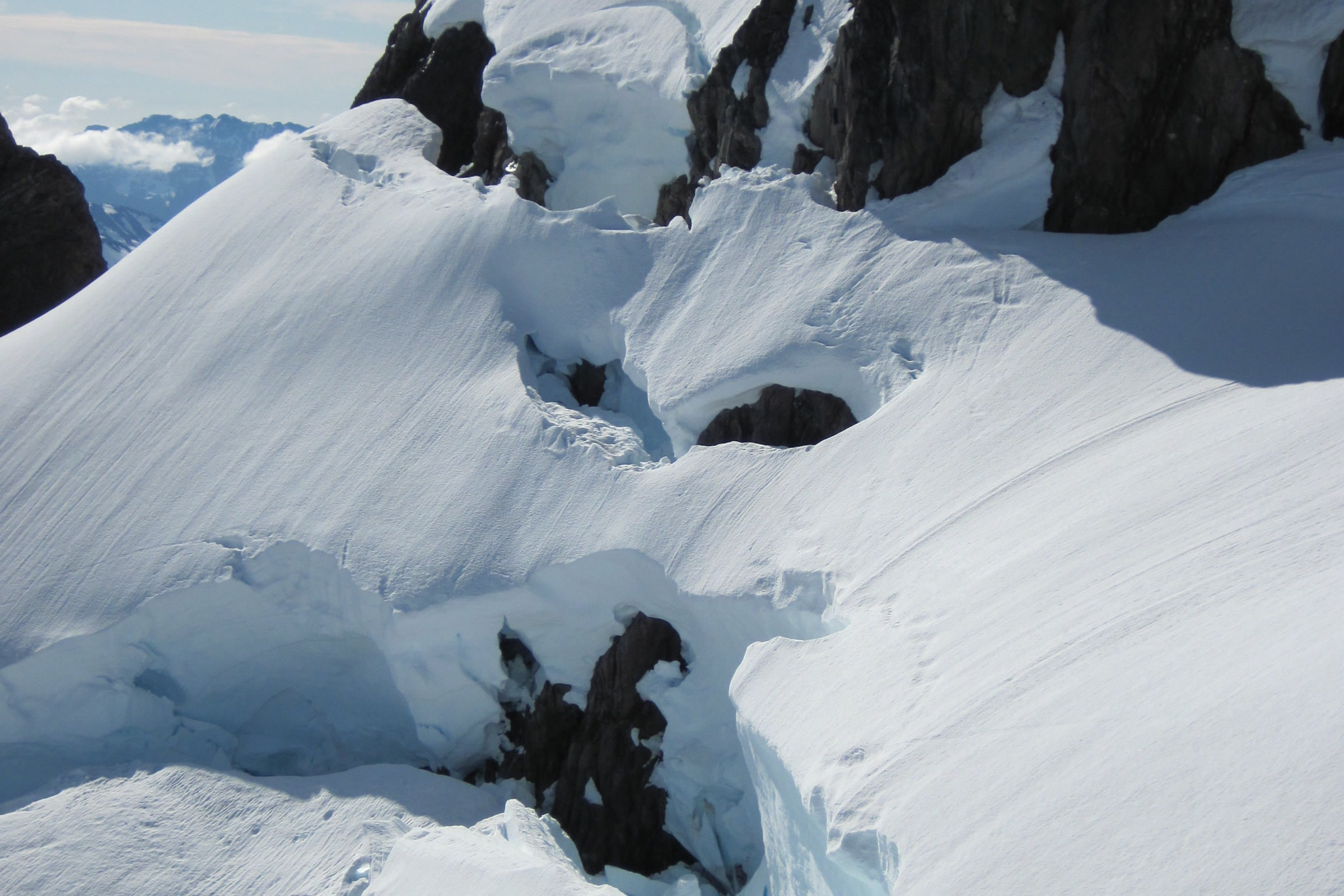
The park warns of unstable snow, fractured rock, talus and scree, hurricane force winds and weather that changes fast. Emergency help is far away and sometimes impossible to reach. Cell coverage is rare and rescuers may take days to arrive, so the park says climbers must rely on no one but themselves.
- Never climb alone, and turn back from anything beyond your skills.
- Track your position with map, compass and altimeter, and watch the weather.
- If lost or hurt, stay put, signal SOS and stay visible.
For current conditions, call the Wilderness Information Center at (360) 565-3100. It can also share a list of permitted mountain guides. Our hiking safety in Olympic National Park guide covers the basics for the trail below.
How Friends of Olympic National Park helps
We are Friends of Olympic National Park (FONP), a volunteer led friends group in Port Angeles. We don’t lead climbs, but our projects include the Winter Perspectives lecture series, and our volunteers help care for the park that holds this mountain. If the high country matters to you, please support Olympic National Park with a gift.
Frequently asked questions
Do you need a permit to climb Mount Olympus?
Yes. Every overnight trip needs a wilderness permit, and Elk Lake and Glacier Meadows are quota areas, so reserve early. Bear canisters and blue bags are also required.
How long is the climb to the Mount Olympus summit?
The park lists about 17.3 to 17.5 miles on the Hoh River Trail to Glacier Meadows, then 4 to 6 miles from Glacier Meadows to the 7,980 foot summit. It gives no total time.
When is the best time to climb Mount Olympus?
The park gives late June through mid August as the best season. Its general climbing page says roughly late June to early September.
Can beginners climb Mount Olympus?
No. The park says the climb is only for experienced mountaineers with glacier travel and crevasse rescue skills and gear. The Wilderness Information Center keeps a list of permitted mountain guides.
Where do climbers camp on Mount Olympus?
The park names camps at Caltech Rocks and Snow Dome, with lower camps along the Hoh River Trail. Camping is not allowed between Glacier Meadows and the Blue Glacier.
Leave a Reply