

Biking in Olympic National Park means roads and paved paths. You can climb to Hurricane Ridge, roll along Lake Crescent on the Spruce Railroad Trail, or ride a car free road up the Elwha Valley, but almost every other trail is closed to bikes. Here is where you can ride, and the e-bike rules.
Quick answer
Where can you ride a bike in Olympic National Park?
As of October 2026, bikes are allowed on park roads, in parking areas and on a few designated routes: the Spruce Railroad Trail at Lake Crescent, the Dosewallips Road and the Elwha bypass trail, where you walk your bike. Wilderness, including its trails, is closed to bikes. Pedal assist e-bikes follow similar rules.
- Spruce Railroad Trail: paved, shared, no Class 3 e-bikes
- Hurricane Ridge Road climbs 17 miles to 5,242 feet
- Olympic Hot Springs Road is closed to cars, open to bikes
- No bikes on wilderness trails or coastal beaches
The rule for biking in Olympic National Park
Federal park rules prohibit bicycles except on park roads, in parking areas and on routes a park designates for bikes. Olympic lists its designated routes in the NPS superintendent’s compendium, which also closes park wilderness, trails included, to bicycles. Everything here is as of October 2026, so check the compendium and the park’s alerts page before you go.
Where bikes are allowed, compared
| Route | Bikes | E-bikes | Notes |
|---|---|---|---|
| Park roads and parking areas | Yes | Yes | Share the road with cars |
| Spruce Railroad Trail | Yes | Yes, except Class 3 | Paved, shared with walkers and riders |
| Olympic Hot Springs Road past Madison Falls | Yes | Yes | Closed to cars after a washout |
| Dosewallips Road to the ranger station | Yes | Yes | Closed to cars after a washout |
| Elwha bypass trail | Walk only | Walk only | Dismount and push |
| Deer Park, Obstruction Point and Hurricane Hill roads | Yes | Yes | Also open to bikes when closed to cars, unless plowing |
| Wilderness trails and coastal beaches | No | No | Closed to all bicycles |
Spruce Railroad Trail biking at Lake Crescent
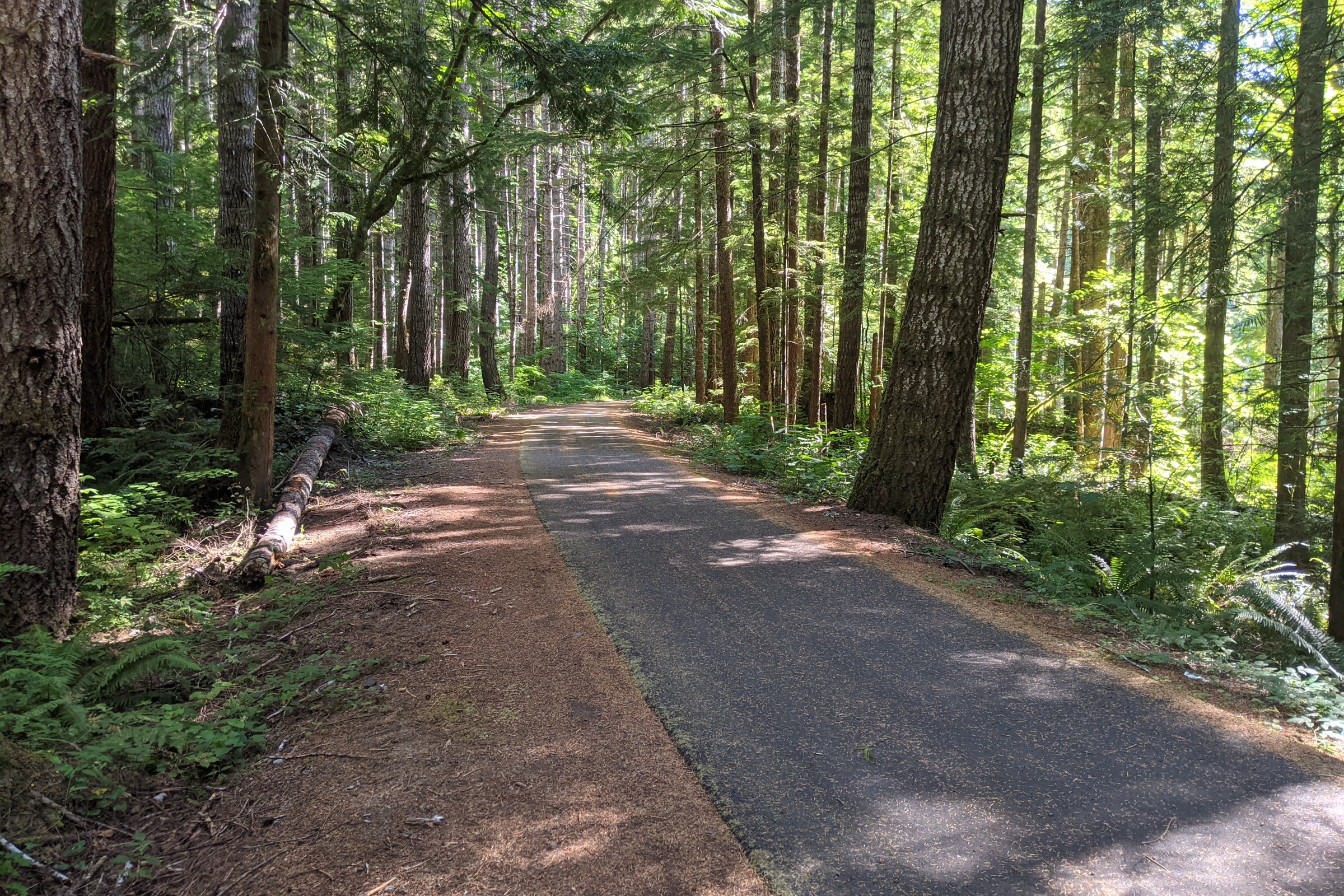
The Spruce Railroad Trail is the park’s best known bike ride. It hugs the north shore of Lake Crescent for about 4 miles along an old railroad grade, and it is part of a 10 mile Olympic Discovery Trail section that the park and Clallam County finished in 2020. That section is paved, 8 feet wide with a gravel shoulder, and lets cyclists ride around the lake without using Highway 101.

The trail passes through two restored railroad tunnels, the 450 foot McFee Tunnel and the Daley Rankin Tunnel. As of October 2026 it is open from both trailheads: Lyre River off East Beach Road in the east, and the North Shore Picnic Area off Camp David Jr. Road in the west. Hikers, riders on horseback, wheelchair users and leashed dogs share it, so slow down and announce yourself when passing.
Our Lake Crescent guide tells the railroad’s history, and our accessible trails guide explains why this path works for wheelchairs too.
Riding on along the Olympic Discovery Trail
Outside the park, the Spruce Railroad Trail continues as the Olympic Discovery Trail, a route planned to run 135 miles from Port Townsend to La Push. The Peninsula Trails Coalition leads the effort, and its Olympic Discovery Trail site has segment maps and surface notes. It also asks cyclists to dismount and walk through the long tunnel about a mile west of the Spruce Railroad Trail’s east trailhead, and suggests a headlight.
Hurricane Ridge Road cycling
Hurricane Ridge Road climbs 17 miles from Port Angeles to 5,242 feet, and it is a serious ride. The park’s own speed limit notes describe a narrow, curving road with limited sight distance and significant bike use. As of October 2026 the road is open to Hurricane Ridge, with possible rolling closures for asphalt patching and striping. You pay the per person entrance fee on a bike; our entrance fees guide lists the rates.
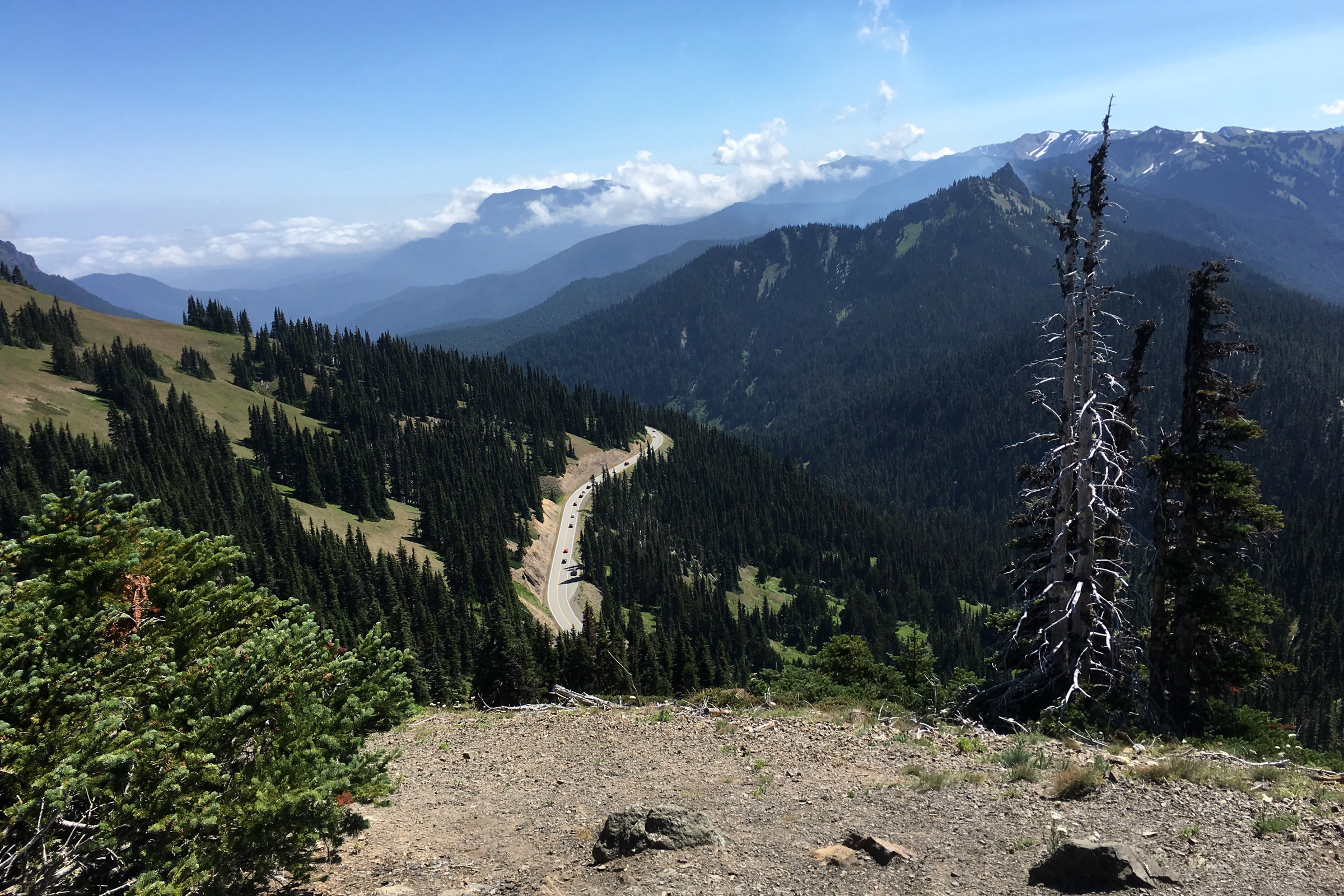
The park has closed the road to cars for a morning for Ride the Hurricane, an annual cycling event. Beyond the parking area, the 1.5 mile Hurricane Hill Road continues to the trailhead; bikes stay off the paved and dirt trails at the ridge, including the Hurricane Hill Trail.
Winter on the ridge road
In winter the road is closed to motor vehicles Tuesday through Thursday and on non-holiday Mondays, unless the park says otherwise. While plowing is underway, travel above the tunnels is closed to cyclists, skiers and hikers. Our guide to Hurricane Ridge in winter covers the season.

Car free roads: the Elwha and the Dosewallips
Washouts have turned two park roads into quiet rides. As of October 2026, Olympic Hot Springs Road in the Elwha Valley is closed to vehicles at the Madison Falls parking area but open to walkers, horses, bicycles and leashed pets. There are no facilities past the gate, so carry water and a repair kit. Our Elwha River restoration guide explains what you will see along the river.

On the east side, the park lists the Dosewallips Road as closed to vehicles because of a washout outside the boundary, and open to walkers and bikes up to the Dosewallips Ranger Station. Call the Road and Weather line at 360-565-3131 to confirm either road before you go.

E-bike rules in Olympic National Park
The compendium allows pedal assist e-bikes on park roads, on paved or hardened frontcountry trails where regular bikes are allowed, and on the designated routes in the table. Everywhere else they are prohibited. Class 3 e-bikes are not allowed on the Spruce Railroad Trail, which the park says is consistent with Washington law on multi-use paths.
Where you can’t ride
Bikes are not allowed in park wilderness, which covers most of the park’s trails. That includes the trails at Sol Duc, Deer Park and Hurricane Ridge, and the wilderness coast with its beaches and coastal trails. For mountain biking, look outside the park boundary.
Riding safely
- Wear a helmet; the park requires one on guided bike tours.
- Ride single file, and pull over safely to let a line of cars pass.
- On shared trails, yield to horses and people on foot.
- Carry rain gear and wear reflective clothing.
Our packing list for Olympic National Park covers the layers worth bringing on any ride.
How Friends of Olympic National Park helps
We are Friends of Olympic National Park (FONP), a volunteer led friends group based in Port Angeles. Our volunteers care for places riders pass through, from the Heart O’ the Forest Trail to the pollinator garden at the visitor center. Membership starts at $15, and every member helps keep that work going, so please become a member.
Frequently asked questions
Can you bike in Olympic National Park?
Yes, on park roads, in parking areas and on designated routes such as the Spruce Railroad Trail. Wilderness, including most park trails, is closed to bicycles.
Are e-bikes allowed in Olympic National Park?
As of October 2026, pedal assist e-bikes are allowed on park roads, paved frontcountry trails where bikes are allowed and the designated routes. Class 3 e-bikes are not allowed on the Spruce Railroad Trail.
Can you bike the Spruce Railroad Trail?
Yes. The paved trail runs along the north shore of Lake Crescent as part of the Olympic Discovery Trail, shared with walkers, horses and wheelchair users.
Can you ride a bike up to Hurricane Ridge?
Yes. Hurricane Ridge Road climbs 17 miles from Port Angeles to 5,242 feet. Check the NPS alerts page for closures first.
Can you bike Olympic Hot Springs Road?
Yes. As of October 2026 the road is closed to vehicles at Madison Falls after a washout but open to bicycles, walkers and leashed pets, with no facilities beyond the gate.
Leave a Reply