Author: Nobenaa Ahsan

  • America the Beautiful Volunteer Pass: Hours and How to Earn It

    America the Beautiful Volunteer Pass: Hours and How to Earn It

    Volunteer · Passes · Thank You

    The America the Beautiful Volunteer Pass is a free annual pass for people who give 250 hours of volunteer service at federal recreation sites. It covers entrance fees at national parks, including Olympic National Park, plus standard amenity fees on other federal lands. You do not buy it: a federal volunteer coordinator issues it once your hours are on record.

    We are Friends of Olympic National Park, a volunteer-led friends group, and our members often ask about this pass. Here is how it works, what it covers, and how it compares with the other federal passes.

    Who qualifies for the Volunteer Pass

    The National Park Service lists the pass as free for federal recreation site volunteers with 250 service hours. The USGS Store, which sells the federal passes by mail, adds the details most people want to know.

    • Hours can build up over time. There is no set timeframe, so the 250 hours can come in one year or over several.
    • Agencies can combine. Hours at sites run by different participating agencies count together, for example 125 hours at each of two agencies.
    • The work must be approved. Pre-approved volunteer activities count, and campground hosts are eligible.
    • One pass a year. Giving more than 250 hours in a year still earns a single pass, and the count goes back to zero once a pass is issued.
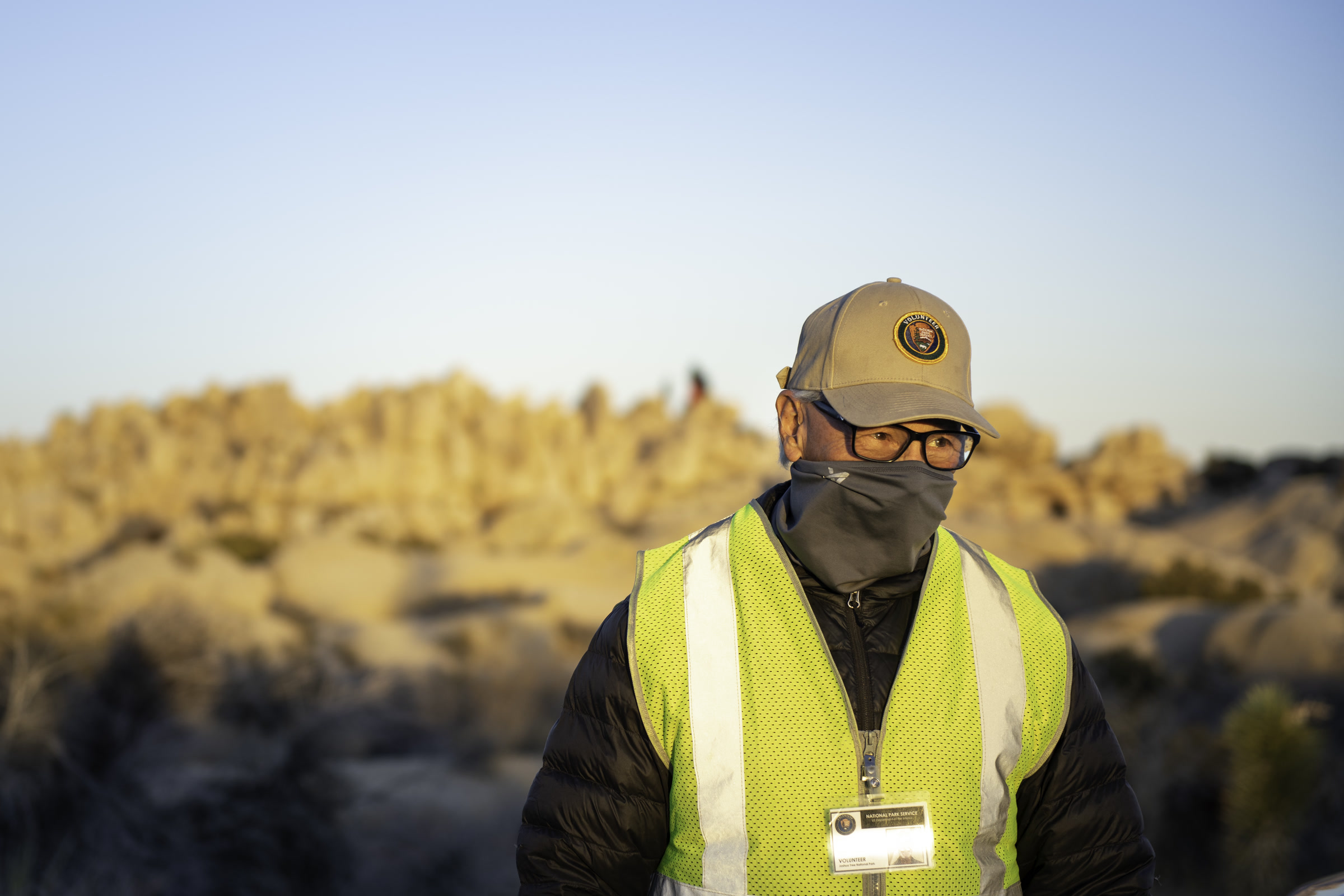
    A national park volunteer in a tan volunteer cap, face mask and yellow safety vest with an ID badge, desert rocks glowing behind
    A park volunteer in uniform at Joshua Tree National Park. NPS Photo / Emily Hassell

    National park volunteer pass hours: how they are tracked

    Your hours count only when they are recorded as federal volunteer service. In practice that means you joined through an official listing, usually on Volunteer.gov, the federal volunteer portal, and you report your time to the site that hosted you.

    1. Apply for a park or forest listing and sign the volunteer agreement your supervisor gives you.
    2. Log the hours you give after each shift, the way your host site asks.
    3. Keep your own copies. The USGS Store advises tracking hours with your local site supervisor or volunteer coordinator and holding on to the records.
    4. When you pass 250 hours, ask your coordinator. The federal volunteer coordinator or manager issues the pass.

    Our guide on how to volunteer at Olympic National Park walks through Volunteer.gov sign-up step by step, so we won’t repeat it here. It also compares the main volunteer roles at the park.
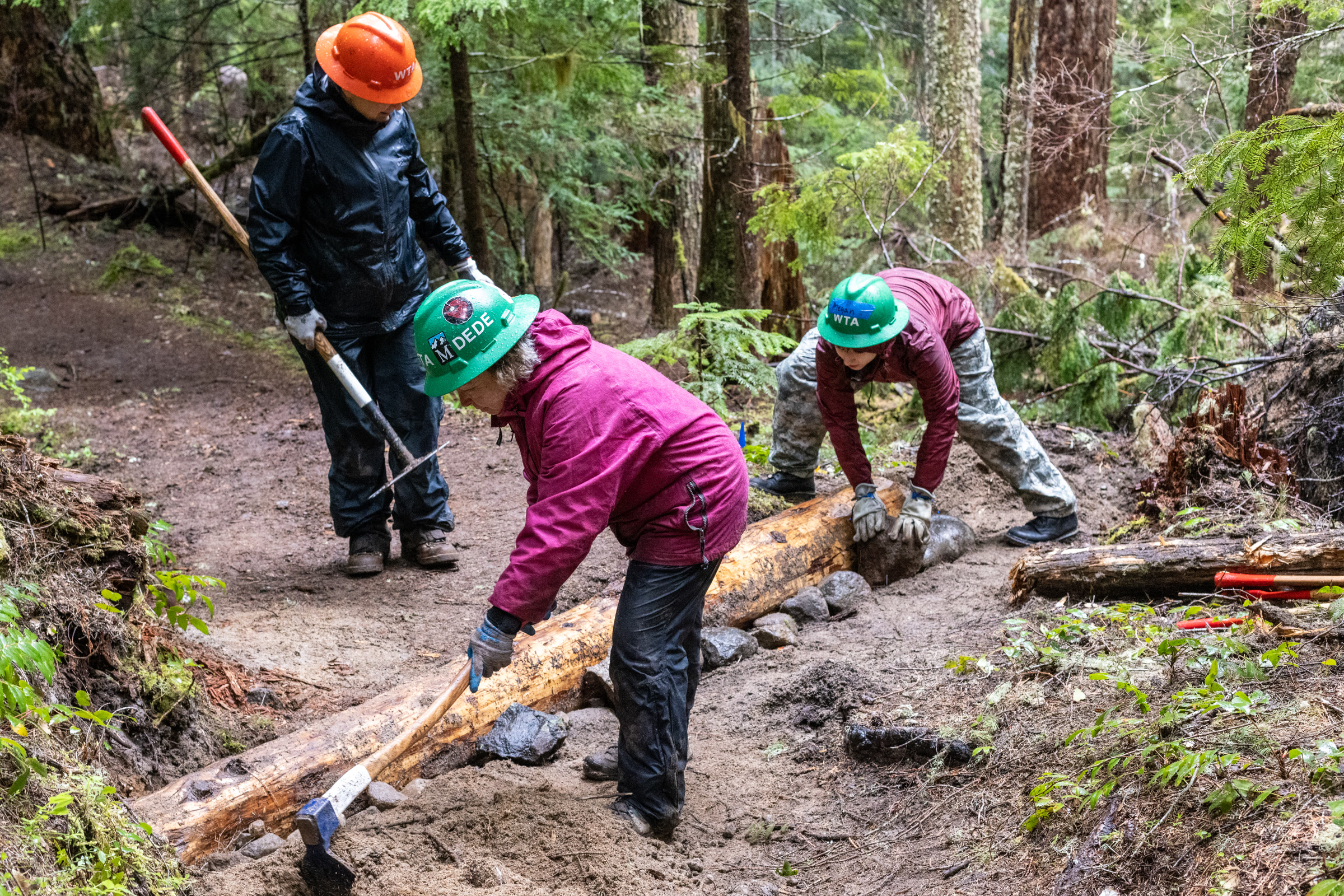
    Three volunteers in hard hats use bars and gloved hands to set a log into a forest trail on the Eagle Peak Trail at Mount Rainier
    Volunteer trail work on the Eagle Peak Trail, Mount Rainier National Park. NPS Photo

    Do hours with Friends of Olympic National Park count?

    Possibly, but don’t assume it. Hours count toward the pass only when they are recorded as volunteer service with the park itself. Many of our volunteer days are registered through Volunteer.gov, yet whether a given day’s hours go on your federal record is the park’s decision, not ours.

    Before you count on them, ask Olympic National Park’s volunteer coordinator how that day’s service is being logged. Keep your own note of the date, task and hours either way.

    What the Volunteer Pass covers

    According to the USGS Store, the Volunteer Pass is valid for 12 months from the month it is issued and expires on the last day of that month. At a site that charges per vehicle, it admits the pass owner and passengers in one non-commercial vehicle. At a site that charges per person, it admits the owner plus three adults, and children under 16 are free.

    The same rules apply at Olympic National Park. Without a pass, the park’s standard entrance fee is $30 per private vehicle for seven days, and an Olympic Annual Pass costs $55.
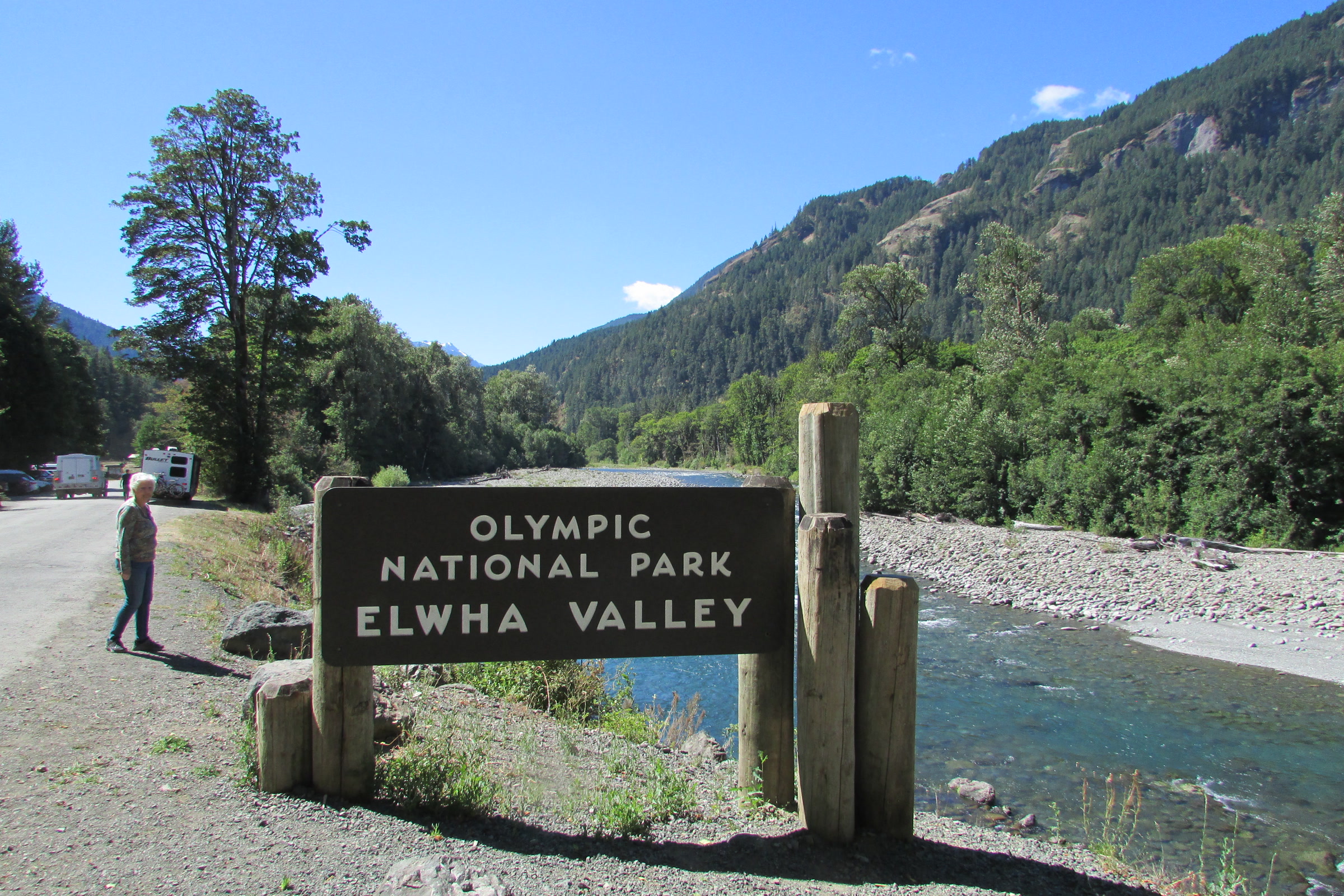
    Wooden Olympic National Park Elwha Valley sign beside the gravel bar of the Elwha River, with forested mountains under a blue sky
    The Elwha Valley sign, Olympic National Park. Photo: Chris Light / Wikimedia Commons (CC BY-SA 4.0)

    What it does not cover

    • Expanded amenity fees such as camping, boat launching, parking, special tours, special permits and ferries
    • Services run by concessioners, and discounts at bookstores or gift shops
    • Replacement if the pass is lost or stolen, so keep it somewhere safe

    For Olympic backpackers, that means a wilderness camping permit is still a separate fee. If you are heading to the beaches, read our Leave No Trace guide to the Olympic coast before you go.
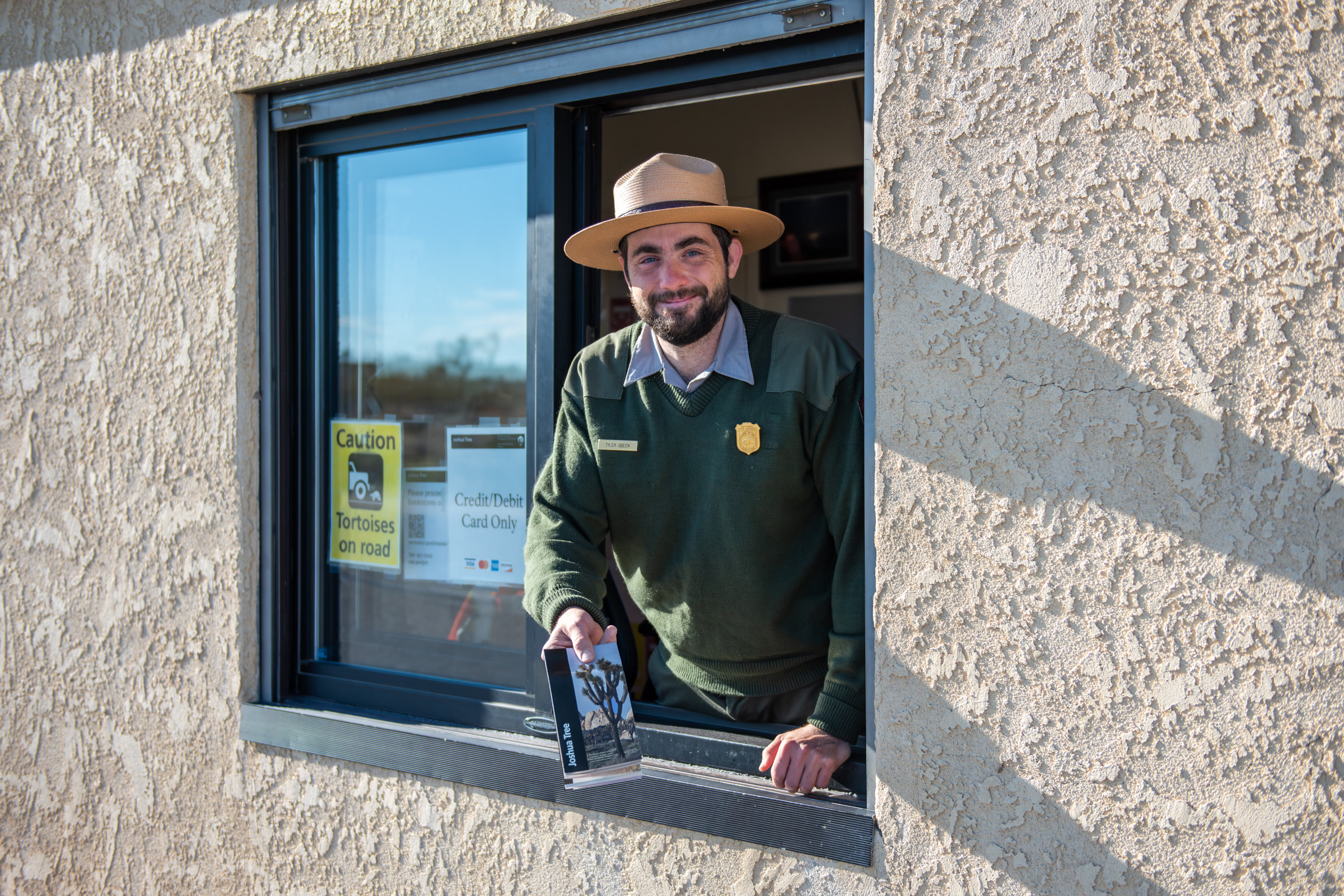
    A smiling park ranger in a flat hat leans out of an entrance station window holding a park brochure
    A fee ranger at a Joshua Tree National Park entrance booth. NPS Photo / Bill Bjornstad

    America the Beautiful passes compared

    The Volunteer Pass is one of several federal passes. Prices below are the National Park Service’s current figures.

    PassCostWho it is for
    VolunteerFreeVolunteers with 250 service hours at federal sites
    Resident Annual$80US citizens and residents
    Non-Resident Annual$250Visitors who live outside the US
    Senior Annual or Lifetime$20 or $80US citizens and residents aged 62 and over
    Military Annual or LifetimeFreeCurrent military and dependents; Gold Star families and veterans
    AccessFreeUS citizens and residents with a permanent disability
    4th GradeFreeUS fourth graders, through the Every Kid Outdoors program

    Only the Senior and Access passes include camping discounts at many sites. The fourth grade pass runs from September through August of the school year and needs a printed voucher.

    Free park pass for volunteers at Olympic: getting to 250 hours

    Two hundred and fifty hours is a real commitment. At the park’s minimum of 32 hours a week, a summer campground host passes 250 hours in about eight weeks. Most people add up hours from several programs over a year or two instead.
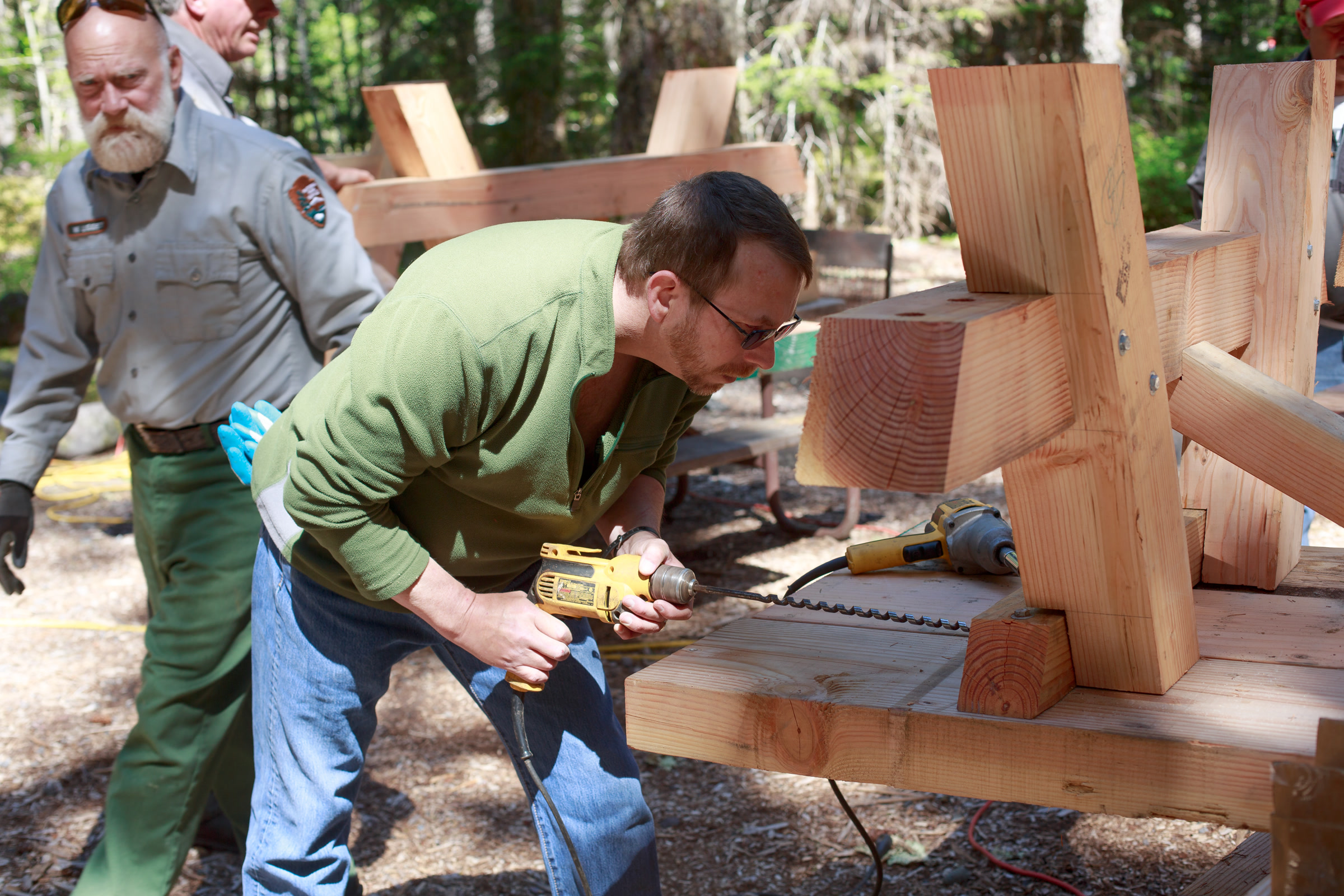
    A volunteer drills into a heavy timber frame while a uniformed park employee walks past at a forest work site
    Volunteers and NPS staff at work in Longmire, Mount Rainier National Park. NPS Photo / Kevin Bacher (CC BY 2.0)

    Around Olympic, browse our volunteer opportunities at Olympic National Park and our upcoming volunteer events. Short days like our beach cleanups in Olympic National Park or the Heart O’ the Forest adopt-a-trail crew are a friendly way to start, even if they make up only part of a 250-hour total.
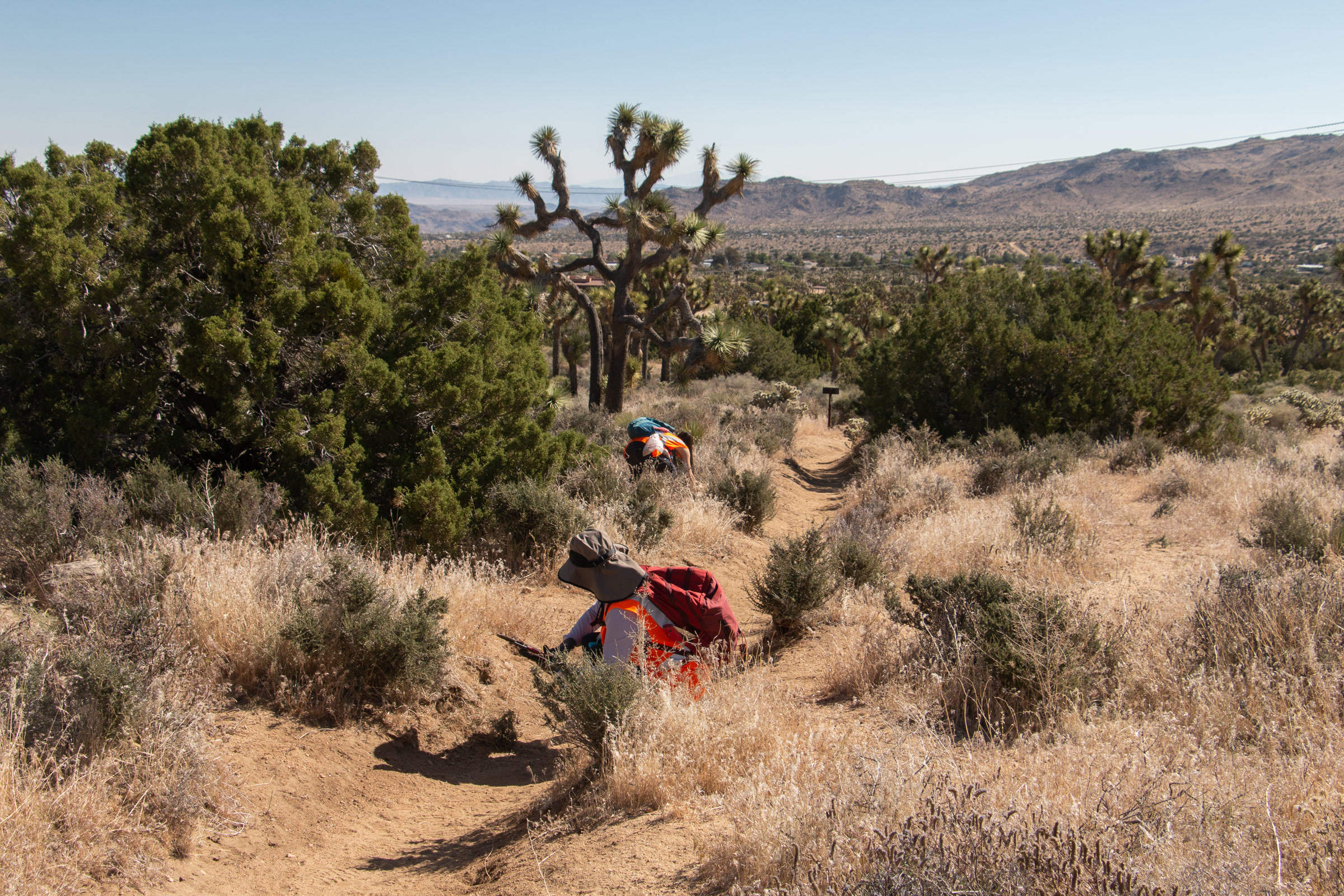
    Two volunteers with packs bend over dry brush on a desert slope dotted with Joshua trees, removing invasive plants
    Volunteers removing invasive plants at Joshua Tree National Park. NPS Photo / Paul Martinez

    How Friends of Olympic National Park helps

    We organize hands-on volunteer days, welcome first-timers and thank the people who give the most to the park. Our role is to make it easy to show up. Questions about federal hours or the pass itself belong with the park’s volunteer office.

    Membership includes volunteer opportunities and our friends-only newsletter, so you can become a member to hear about each day first. Have a question about one of our events? Write to our volunteer board. For the full pass rules, see the USGS Store pass questions page.

    Frequently asked questions

    How many volunteer hours do you need for a free national park pass?

    250 hours of volunteer service at federal recreation sites. The hours can build up over one or several years and can combine service with different participating agencies.

    How do I get the America the Beautiful Volunteer Pass?

    Track your hours with your site supervisor or volunteer coordinator and keep your own copies. Once you reach 250 hours, the federal volunteer coordinator or manager issues the pass. It is not sold.

    How long is the Volunteer Pass valid?

    Twelve months from the month it is issued, ending on the last day of that month. Your hour count resets to zero when a pass is issued, and you can earn one pass per year.

    Does the Volunteer Pass cover camping?

    No. It covers entrance and standard amenity fees, not expanded amenity fees such as camping, boat launching, parking, special tours or permits.

    Do hours with Friends of Olympic National Park count toward the pass?

    Only if the park records them as federal volunteer service. Ask Olympic National Park’s volunteer coordinator how a given day is logged, and keep your own record of the hours.
  • Leave No Trace on the Olympic Coast: Beach Rules Made Simple

    Leave No Trace on the Olympic Coast: Beach Rules Made Simple

    Visit · Coast · Stewardship

    Leave No Trace on the Olympic coast means planning around the tides, camping and building fires only where the park allows, locking food in a bear canister, and carrying out everything you bring. Long stretches of the wilderness coast from Shi Shi to the Hoh are reached only on foot, so each visitor’s habits add up. Here is how the seven Leave No Trace principles line up with Olympic National Park’s beach rules.

    We are Friends of Olympic National Park, a volunteer-led friends group. Everything below comes from the park’s own guidance, so check it again before each trip.

    Plan ahead: tides, headlands and tide charts

    On this coast, planning ahead is a safety rule before it is an ethic. The park warns plainly that the tide can trap you. Never try to round a headland without knowing the tide height and time, and carry both a tide chart and a topographic map that shows where tides are a problem.

    • Pick up a tide chart at the Wilderness Information Center in Port Angeles or at some ranger stations.
    • The park says the safest time to round a headland is within one to two hours before low tide.
    • Some days have only one low tide, and storms or strong winds can push water higher than the chart predicts.
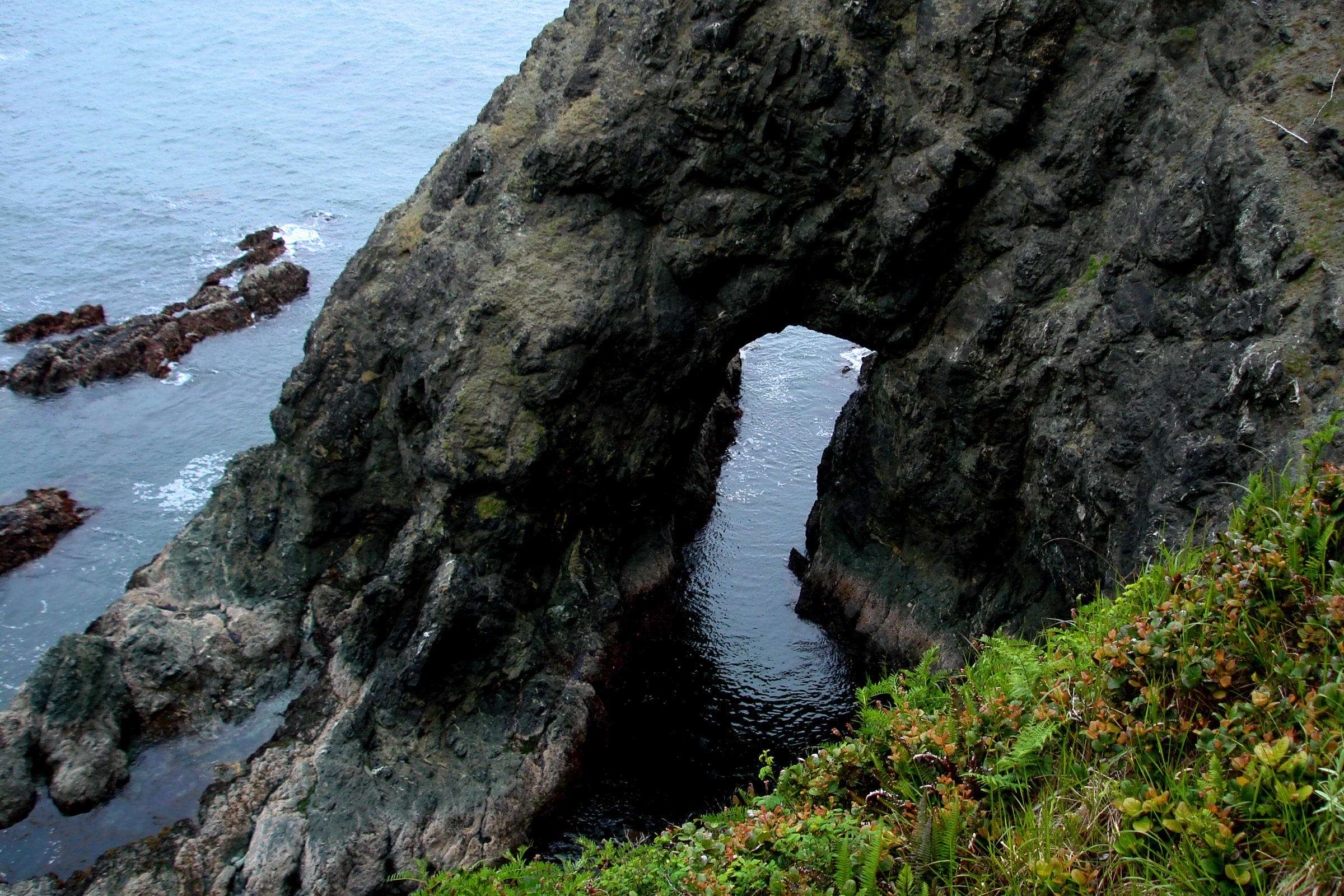
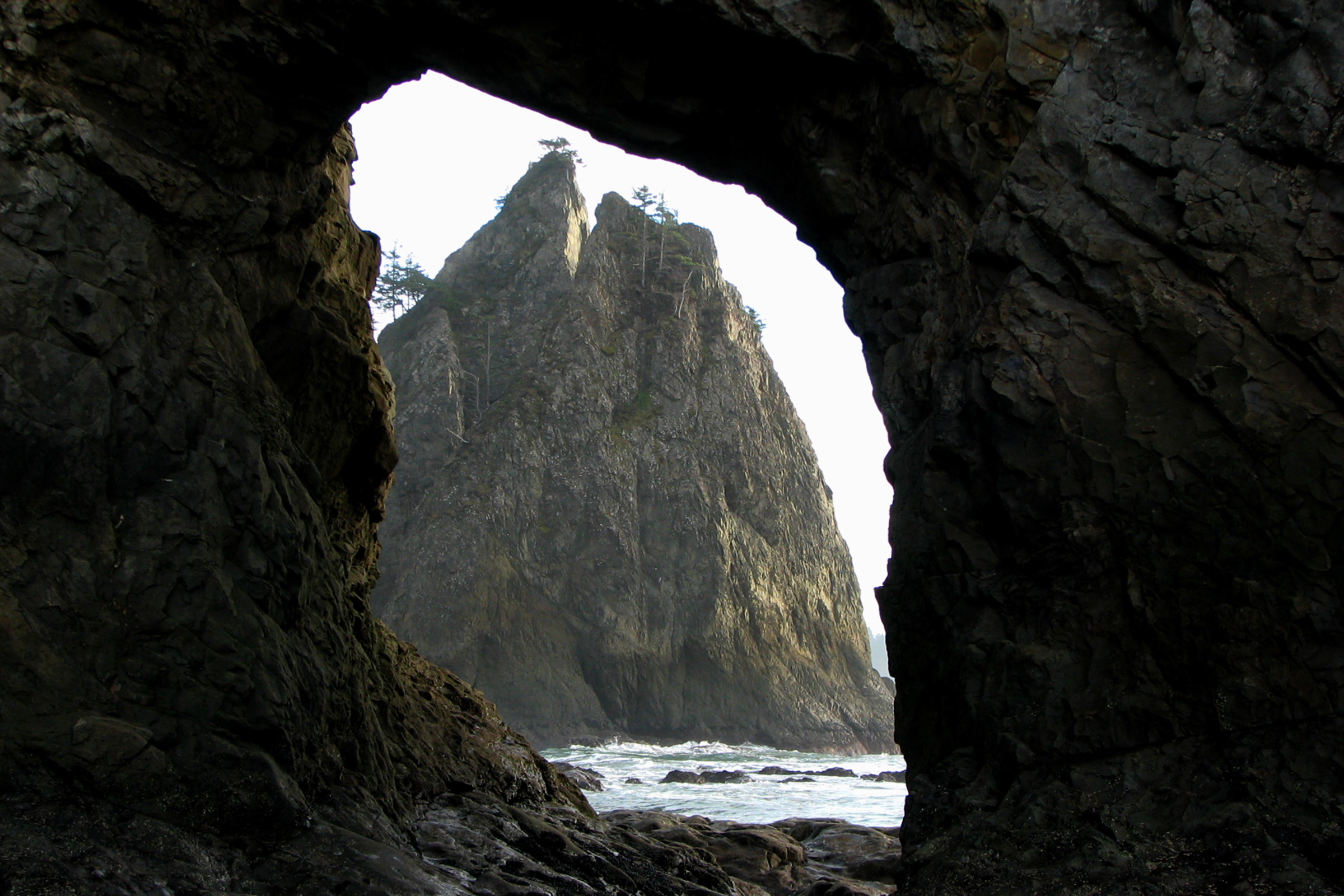
    View through the dark rock arch of Hole-in-the-Wall north of Rialto Beach toward a tall sea stack and surf
    Hole-in-the-Wall, north of Rialto Beach. NPS Photo

    Overland trails around the headlands

    Some headlands can never be rounded on the beach, even at the lowest tides. Taylor Point and Teawhit Head, near Third Beach, are two of them. Overland trails climb around these points and are marked with red and black targets.

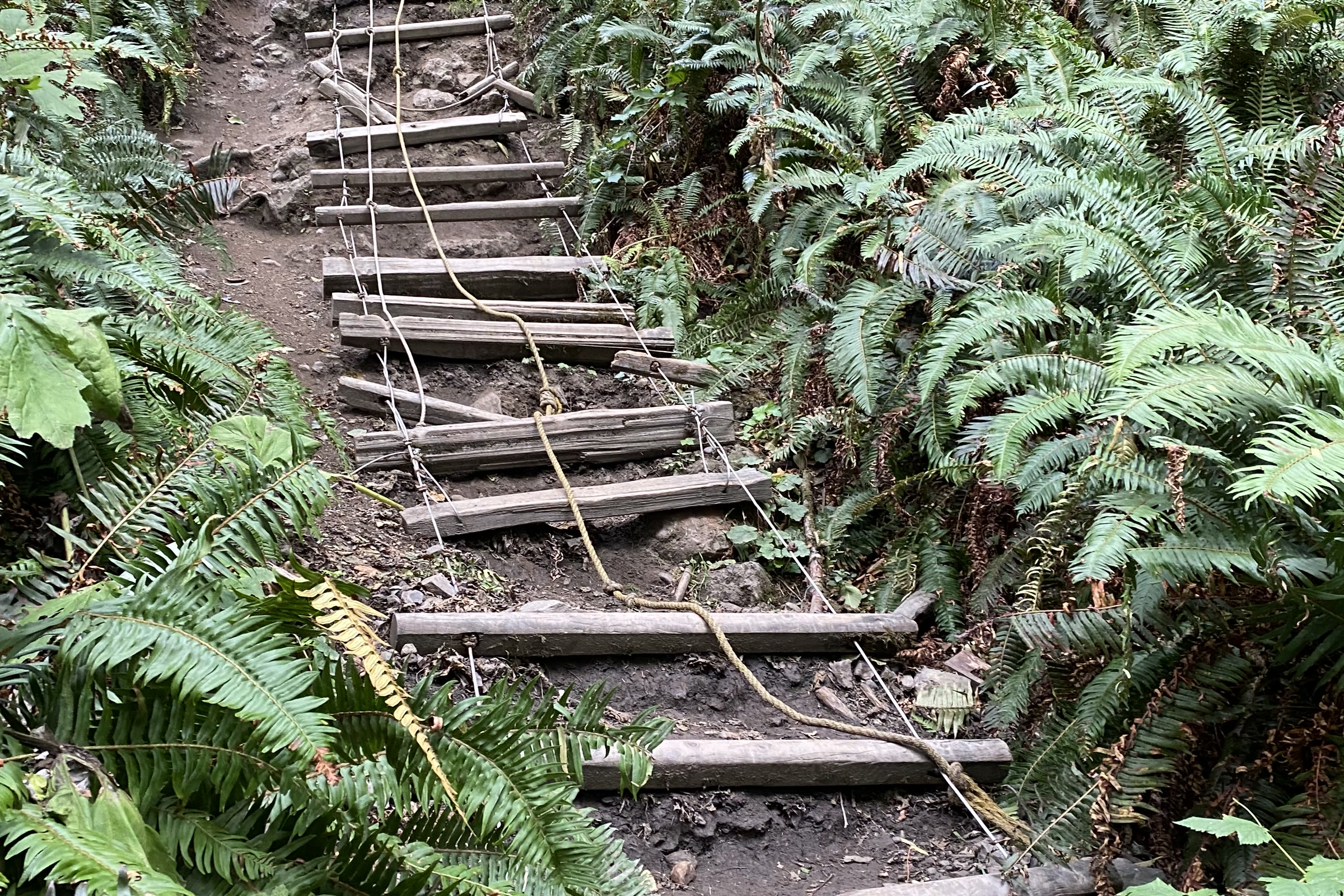
    Expect steep, muddy paths with cable ladders or fixed ropes. Climb one hiker at a time so no one knocks rocks onto people below, and bring leather gloves for the ropes.

    A rope and wooden-rung ladder climbs a steep, muddy slope between sword ferns on an Olympic coast headland route
    A ladder on an overland headland trail. Photo: AdJHu / Wikimedia Commons (CC BY-SA 4.0)

    Camp on durable surfaces, with a permit

    Wilderness camping permits are required for every overnight trip on the Olympic wilderness coast, all year. Permits are limited, and reservations are required between Point of the Arches and Yellow Banks. Reserve through Recreation.gov.

    Camping is allowed along most of the coast, but not between the Quillayute River and Ellen Creek. South of the Hoh River, on the Kalaloch strip, you camp only in developed campgrounds. Where beach camping is allowed, pitch your tent on sand above the high tide line and reuse existing sites instead of clearing new ones.

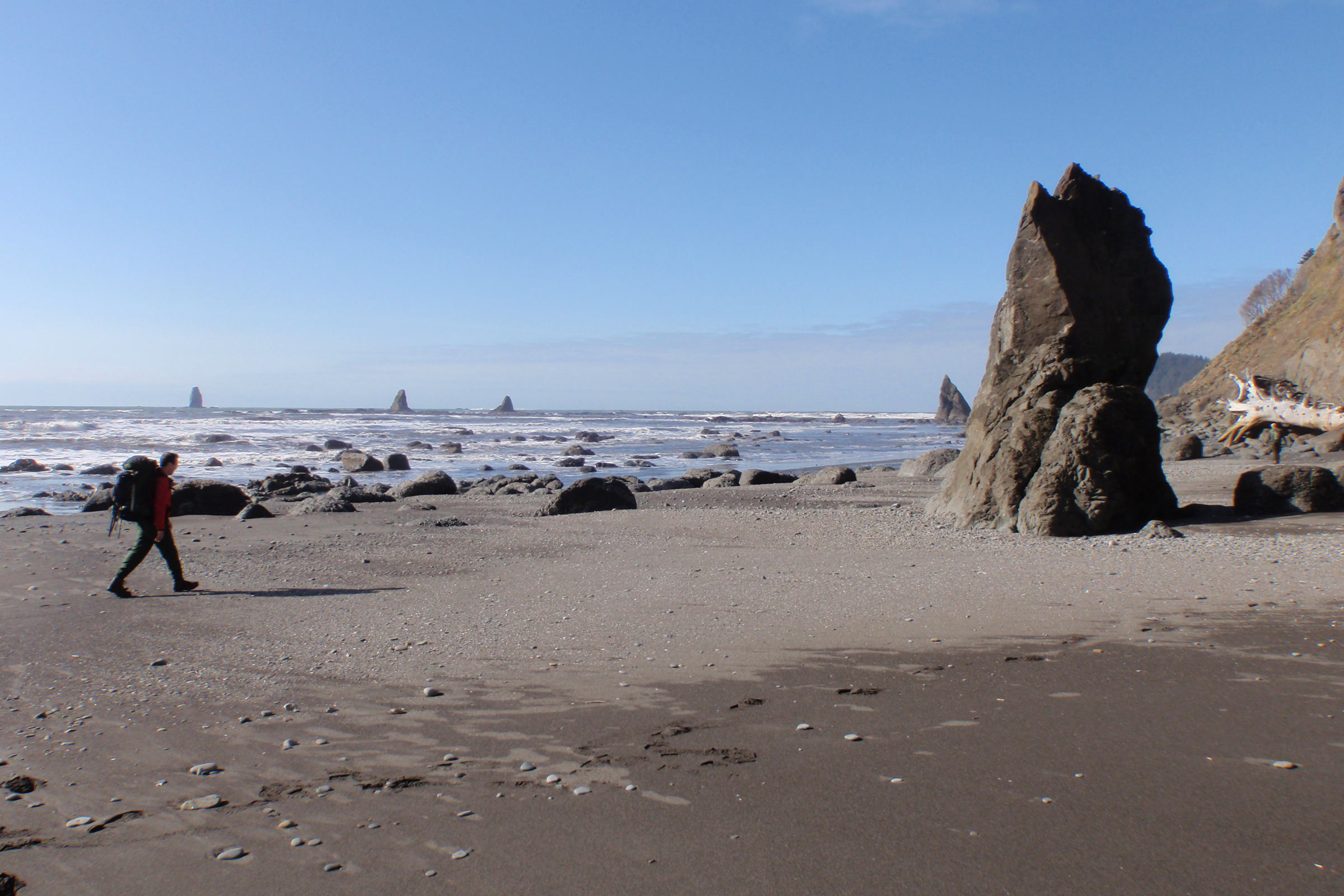
    A lone backpacker walks across wet sand beside a jagged sea stack on the Olympic wilderness coast
    Backpacking the Olympic wilderness coast. NPS Photo

    Minimize campfire impacts: driftwood fire rules

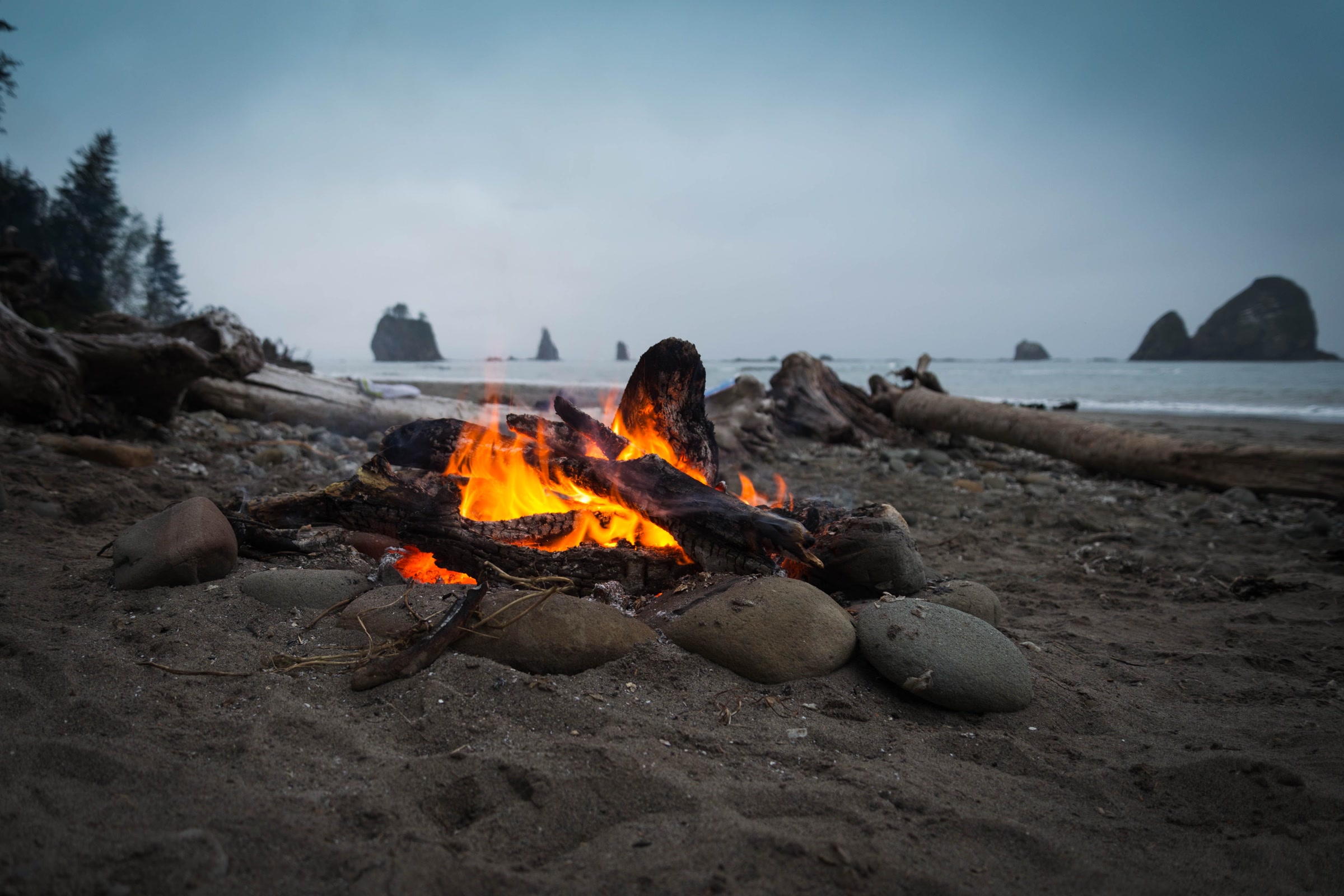
    Olympic’s driftwood fire rules protect the coastal forest and the big beach logs that hold the shore together. Build fires only on the open beach, at least ten feet from beach logs and below the high tide line. Gather wood only from the beach, keep the fire small because coastal winds can spread it, and remove every trace of it before you leave. Skip building driftwood shelters or furniture, which the park discourages.

    Olympic beach fire rules at a glance

    SituationThe park’s rule
    Where to buildOn the beach, below the high tide line, or in an existing fire ring
    Distance from logsAt least ten feet from beach logs
    What to burnDriftwood gathered from the beach only
    Yellow Banks to Wedding RocksNo fires at all, including the Sand Point area
    When you leaveRemove all evidence of the fire
    A small driftwood campfire ringed with beach stones on dark sand, with sea stacks offshore under grey skies
    A small beach fire on the Pacific Northwest coast. Photo: Roman Pohorecki / Pexels

    Respect wildlife: bear canisters and raccoons

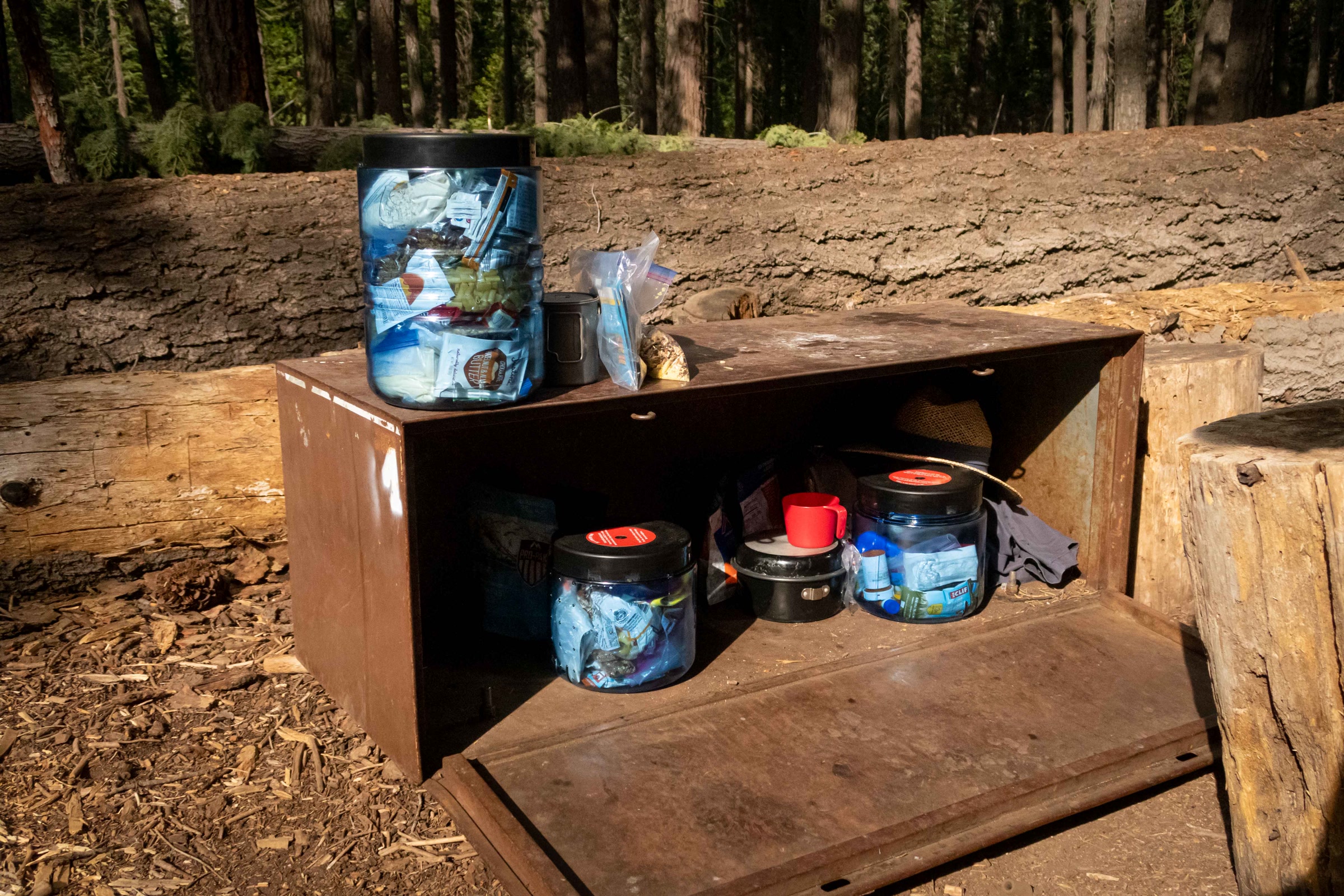
    All food, garbage and scented items must be stored in park-approved bear canisters along the entire wilderness coast, overnight and whenever you leave them. The usual culprits here are raccoons, not just bears. The park notes that raccoons can easily get into food hung in bags, so never hang food on the coast. Illegal food storage can bring a $50 fine.

    Clear blue bear-resistant food canisters sitting on and inside an open metal food storage locker at a forest campsite
    Hard-sided bear canisters, photographed in Yosemite. Photo: Grantbackpacker / Wikimedia Commons (CC BY-SA 4.0)

    Leave what you find: tidepool etiquette

    Good tidepool etiquette on the Olympic coast starts with timing. The park suggests tides lower than one foot for the best viewing, and Hole-in-the-Wall, Second Beach and Third Beach are all good spots. Once you are on the rocks, a few habits protect the animals and you.

    • Step on bare rock or sand, never on anemones, mussels or sea stars.
    • If you lift a rock, put it back exactly as you found it.
    • Do not disturb or collect any living thing. You may take only a handful of empty, unoccupied shells.
    • Keep one foot on the ground, test slippery rock, and watch for the returning tide and sneaker waves.
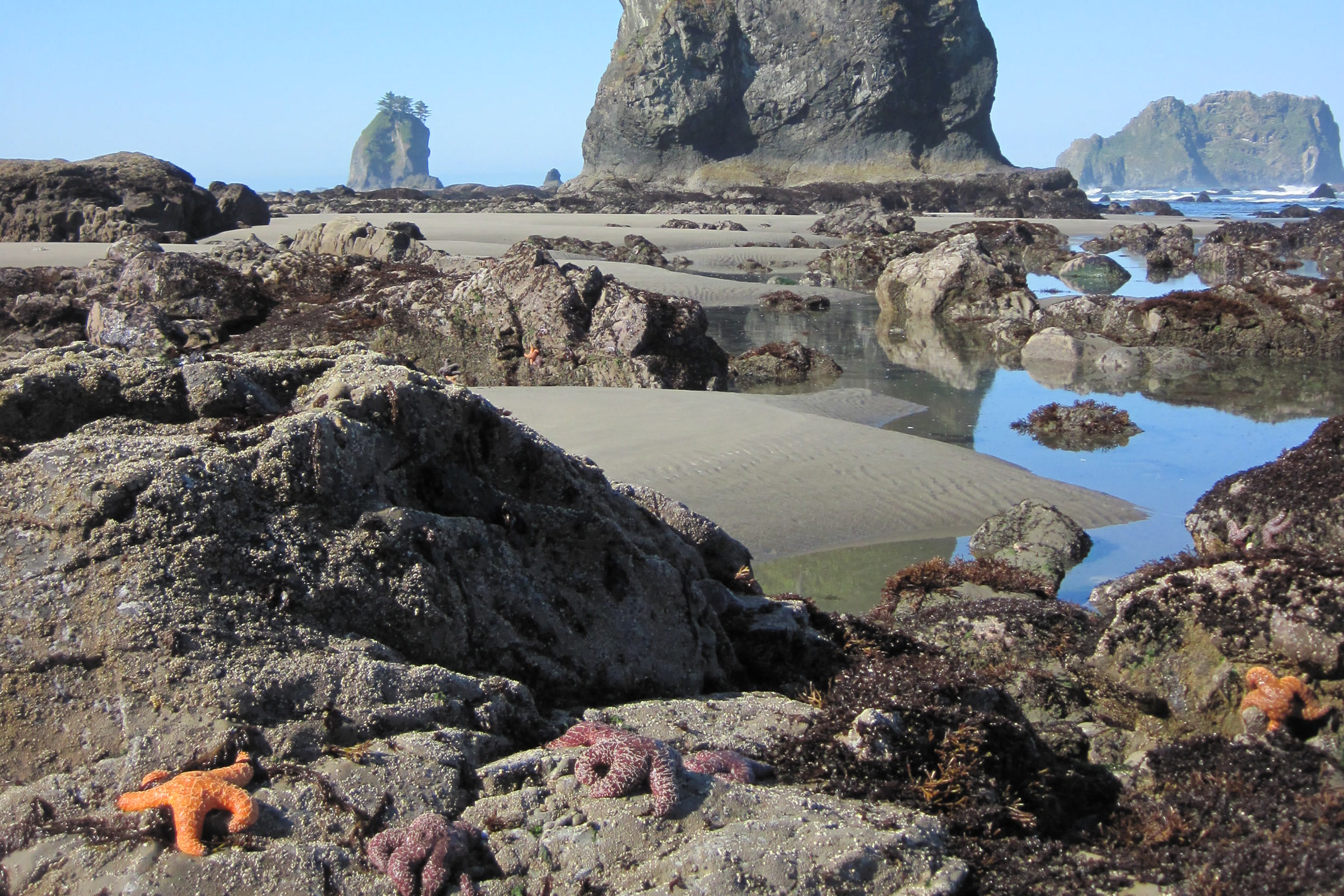
    Orange and purple sea stars on low-tide rocks at Second Beach, with a tall sea stack and calm tidepools behind
    Sea stars at low tide on Second Beach. NPS Photo / B. Baccus

    Dispose of waste properly and pack out marine debris

    Use the pit toilets where they exist, such as at Cape Alava, Sand Point, Shi Shi and Third Beach. Where there is none, dig a cat hole 6 to 8 inches deep in the forest, at least 200 feet from any campsite or water source.

    Pack out every wrapper, and add a few pieces of ocean trash if you have room. Do not touch metal cylinders or containers that wash ashore; report them to a ranger. For bigger loads, join our beach cleanups in Olympic National Park.

    Be considerate: Olympic National Park beach rules for pets

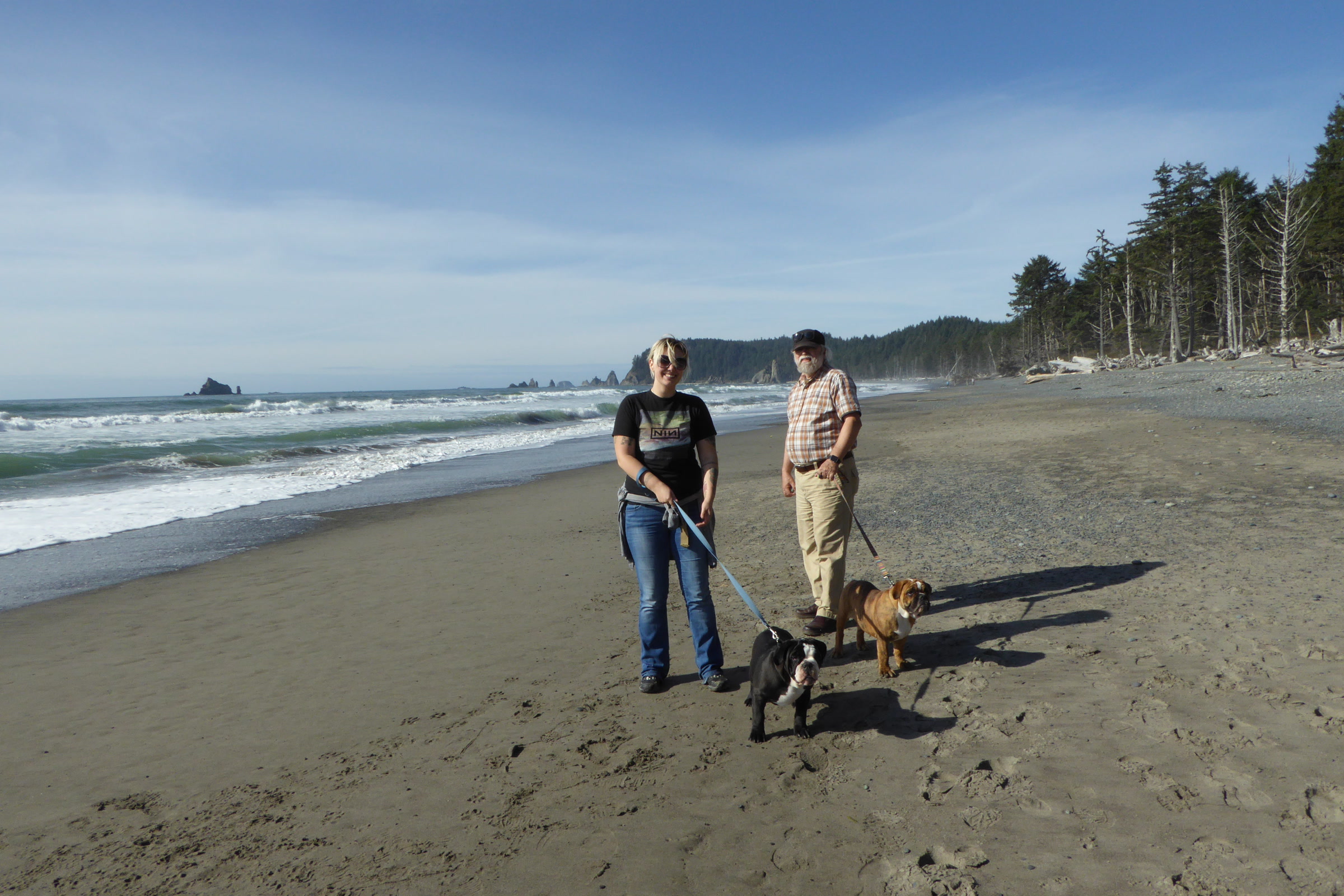
    Pets, bicycles, wheeled devices and stock animals are not allowed on the wilderness coast beaches or coastal trails. Dogs are welcome in only two coastal areas: the Kalaloch-area beaches and Rialto Beach from the parking lot to Ellen Creek, about half a mile. They must stay on a leash no longer than six feet, and off the tidal rocks, where barnacles and mussels can cut their paws.

    Two visitors walk two leashed dogs on the sand at Rialto Beach, with surf, sea stacks and coastal forest behind
    Leashed dogs on the open stretch of Rialto Beach. NPS Photo / C. Bubar

    The seven principles on Olympic’s coast

    PrincipleWhat it means on the coast
    Plan ahead and prepareTide chart, map, permit and a realistic daily distance
    Durable surfacesCamp on sand above the high tide line, use existing sites
    Dispose of wastePit toilets or cat holes, pack out all trash
    Leave what you findNo collecting living things, only a few empty shells
    Campfire impactsSmall driftwood fires on the beach, none in the no-fire zone
    Respect wildlifeFood in a bear canister, never hung
    Be considerateLeashed dogs only where allowed, quiet camps

    For the full rules, read the park’s Olympic wilderness coast guide and the seven Leave No Trace principles from the Leave No Trace Center for Outdoor Ethics. Rules can change with the seasons, so check before every trip.

    How Friends of Olympic National Park helps

    Beach and Visitor Center Cleanups are one of our seven projects. Each spring we join the park’s coastal cleanup, like our Kalaloch beach cleanup, and we bring new volunteers along.

    If you would like to help, see our volunteer opportunities at Olympic National Park or read how to volunteer at Olympic National Park. Or become a member to hear about the next coastal day.

    Frequently asked questions

    Can you have a fire on the beach in Olympic National Park?

    Yes, in most places. Build it on the beach below the high tide line, at least ten feet from beach logs, and burn only driftwood. Fires are not allowed from Yellow Banks north to Wedding Rocks, including Sand Point.

    Do I need a bear canister on the Olympic coast?

    Yes. All food, garbage and scented items must be stored in a park-approved bear canister along the entire wilderness coast. Raccoons can easily reach food hung in bags, so never hang food there.

    Are dogs allowed on Olympic National Park beaches?

    Only in two coastal areas: the Kalaloch-area beaches and Rialto Beach from the parking lot to Ellen Creek. Dogs must be on a leash no longer than six feet and kept off tidal rocks.

    Can I take shells or rocks from Olympic beaches?

    Leave living things and natural features where they are. The park allows only a handful of empty, unoccupied sea shells.

    Do I need a permit to camp on the Olympic coast?

    Yes. A wilderness camping permit is required for every overnight trip on the wilderness coast, and reservations are required between Point of the Arches and Yellow Banks.

  • Invasive Plant Removal on the Olympic Peninsula

    Invasive Plant Removal on the Olympic Peninsula

    Volunteer · Invasive Plants · Port Angeles

    Invasive plant removal on the Olympic Peninsula starts with knowing a handful of troublemakers: Scotch broom, English ivy, herb Robert, Japanese knotweed, Himalayan blackberry, English holly and Canada thistle. These are the plants Olympic National Park names as its worst invaders. Pulling them early, and stopping their seeds from travelling, protects the native plants that wildlife depend on.

    This guide explains why these plants matter, how to tell them apart, the basics of safe hand removal, and how volunteers with Friends of Olympic National Park (FONP) help clear them near Port Angeles.

    Why invasive plants are a problem in Olympic National Park

    Invasive plants are species people brought here that now spread on their own and push out native ones. The park’s page on invasive exotic plants in Olympic National Park calls them a serious threat to wild lands and notes that controlling them costs the National Park Service millions of dollars every year. English ivy, for example, smothers other plants by blocking their sunlight.

    The same page makes a hopeful point: prevention and early detection are the best and cheapest ways to control invasive plants. The longer a weed is left, the harder and costlier it is to stop. That is why many small efforts by visitors, neighbours and volunteers add up.

    Olympic’s worst invasive plants

    • Scotch broom (the park spells it Scot’s broom)
    • English ivy
    • Herb Robert
    • Japanese knotweed
    • Himalayan blackberry
    • English holly
    • Canada thistle

    How to identify invasive plants in Olympic National Park

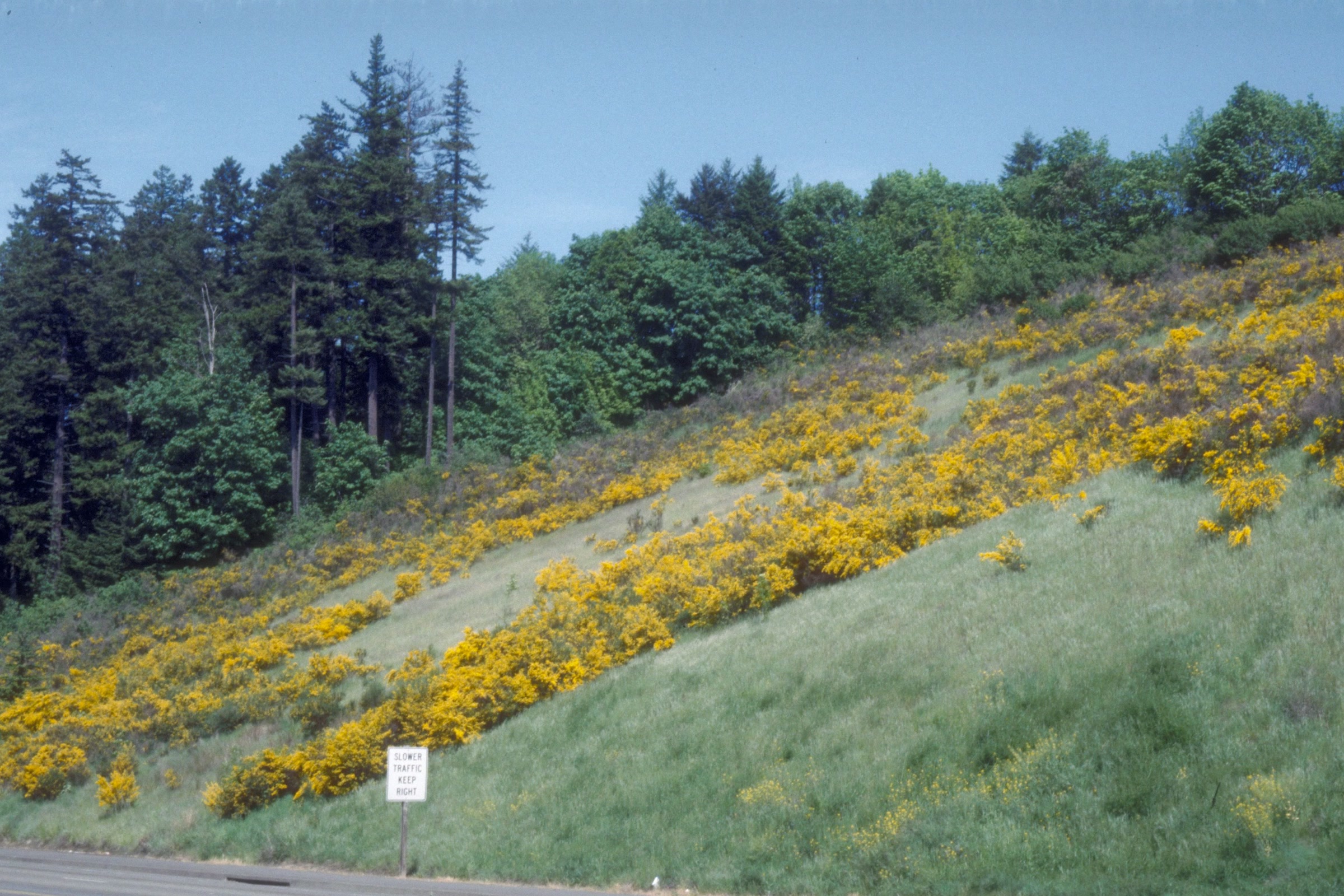
    Scotch broom is the one most people notice first. It is a pea family shrub 3 to 10 feet tall with stiff green stems and bright yellow flowers in spring. In the park it forms large stands on the coast and along Highway 101 and other road corridors, and its seeds can stay alive in the soil for up to 70 years.

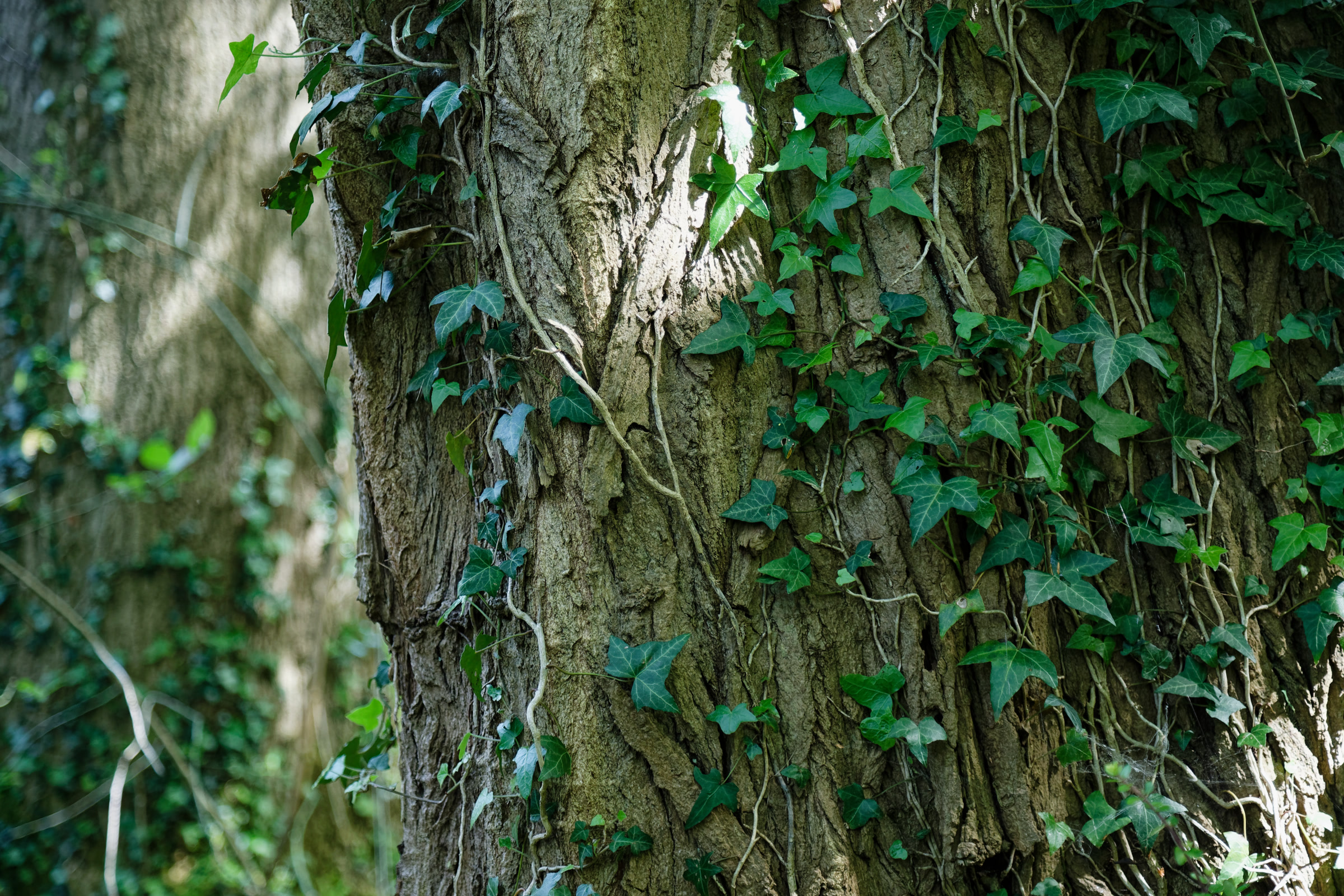
    English ivy vines with lobed dark green leaves climbing the furrowed bark of a large tree trunk
    English ivy climbing a tree trunk. Photo: Acabashi / Wikimedia Commons (CC BY-SA 4.0)

    English ivy carpets the forest floor and then climbs. Young leaves have three to five lobes, while leaves on older flowering stems are unlobed. Once it reaches the canopy it shades out trees and adds weight that can bring them down in storms.

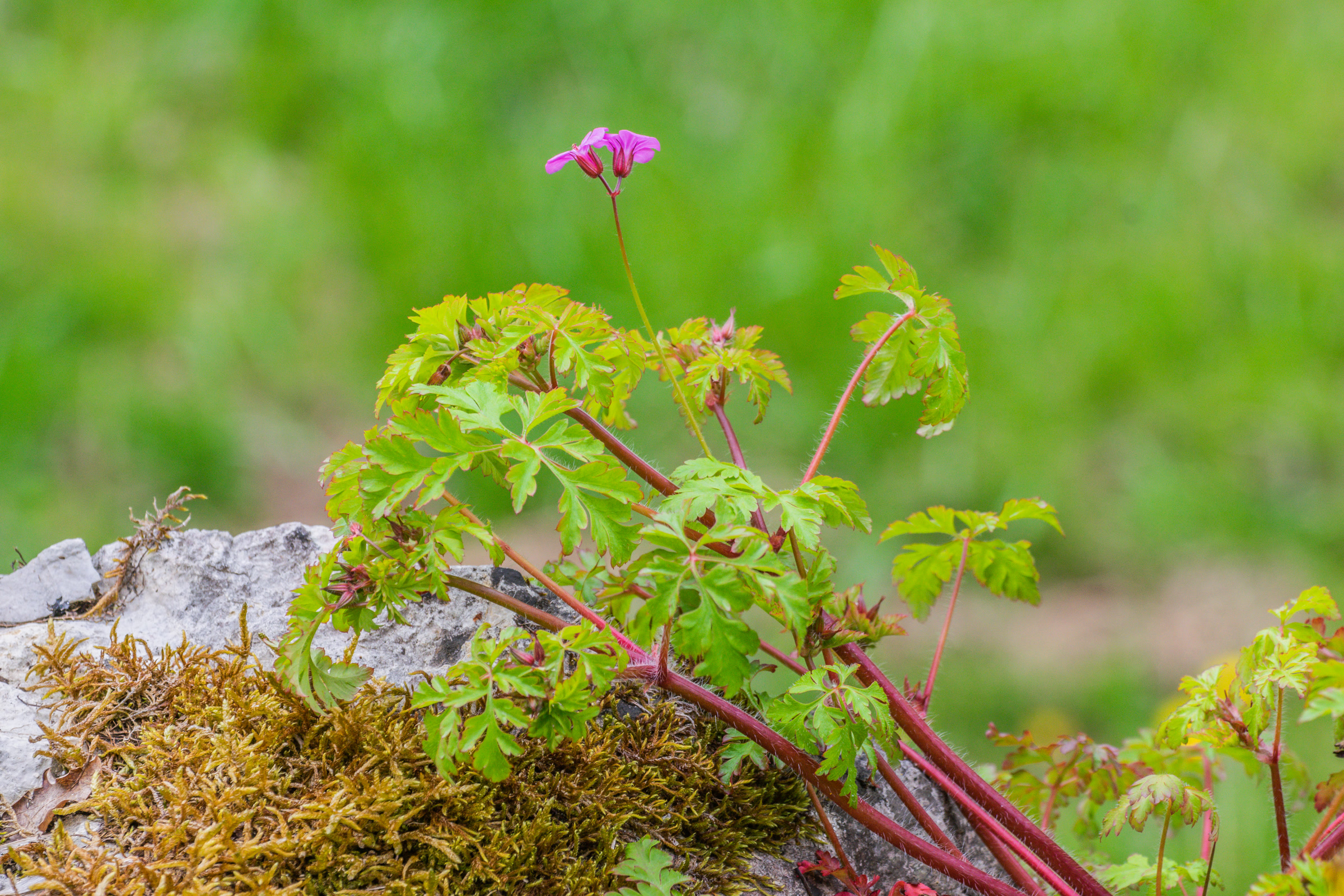
    Herb Robert with red stems, finely divided bright green leaves and a small pink flower growing over a mossy rock
    Herb Robert, with its red stems and small pink flowers. Photo: Krzysztof Golik / Wikimedia Commons (CC BY-SA 4.0)

    Herb Robert is a low, hairy geranium with lacy leaves, reddish stems and small five petalled pink flowers. Crush a leaf and it gives off a strong smell. It grows happily under a closed forest canopy, which is why it threatens the understory from sea level to mid elevations in the Olympics.

    Invasive plants compared: how to spot them

    PlantHow to spot itWhere it growsRemoval notes
    Scotch broomGreen stems, yellow pea flowersRoadsides, coast, open groundPull small plants; weed wrench for big ones
    English ivyGlossy lobed leaves, climbing vinesForest floor and tree trunksWear gloves; dry vines so they cannot root
    Herb RobertLacy leaves, red stems, pink flowers, strong smellShady forest understoryShallow roots; pull before it seeds
    Japanese knotweedReddish stems, broad leaves, 4 to 8 feetStreambanks, roadsidesDo not pull; tiny fragments regrow
    Himalayan blackberryThorny arching canes, white flowersEdges, clearingsThick gloves; pack out berries
    English hollySpiny glossy leaves, red berriesForest understoryAsk the county weed board
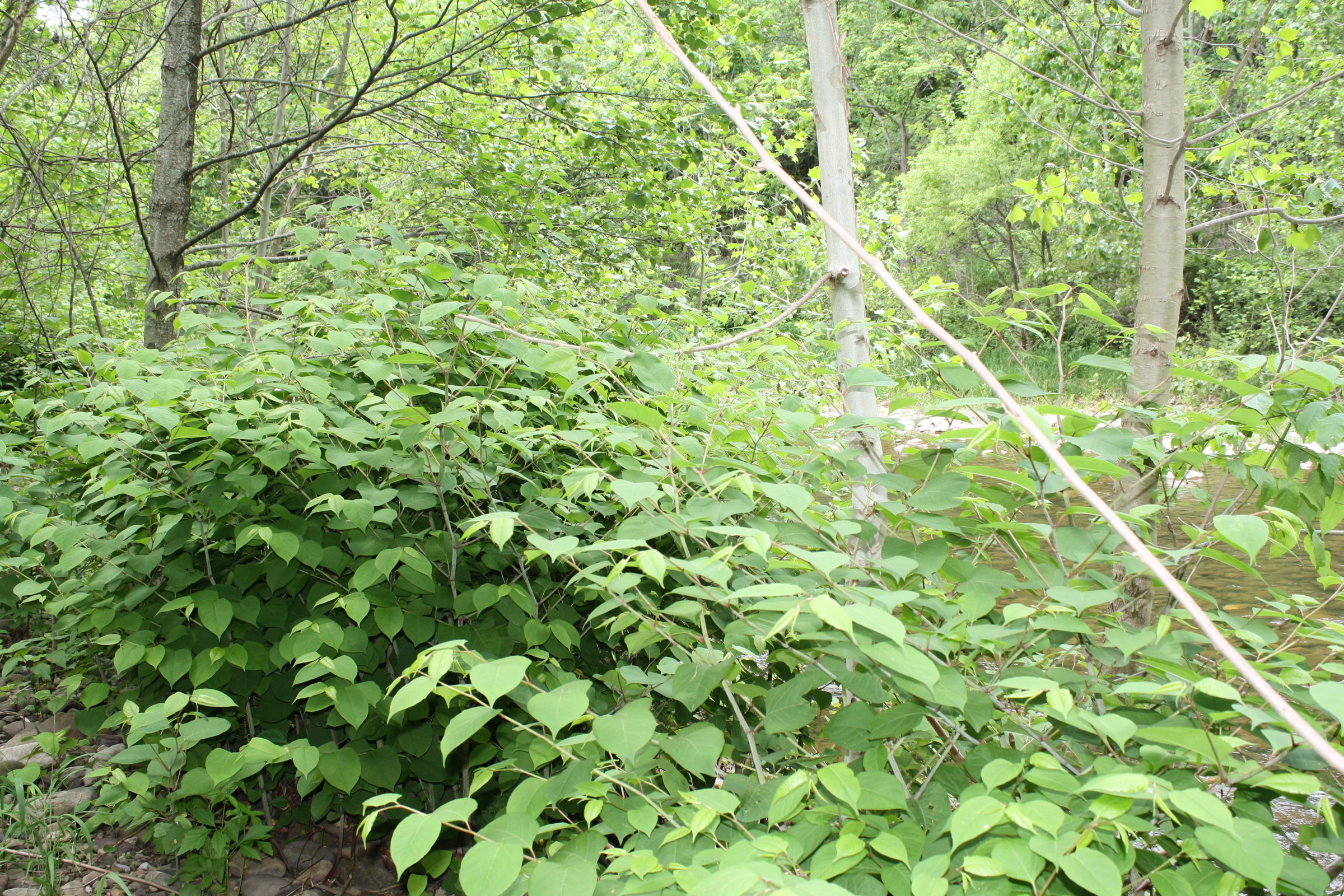
    A dense stand of Japanese knotweed with broad green leaves filling the ground layer of an open woodland
    A spreading stand of Japanese knotweed. Photo: U.S. Fish and Wildlife Service Northeast Region (public domain)

    Japanese knotweed forms dense thickets along streams and roads. It deserves special care, because new plants can sprout from very small root or stem fragments. Report it rather than digging it yourself.

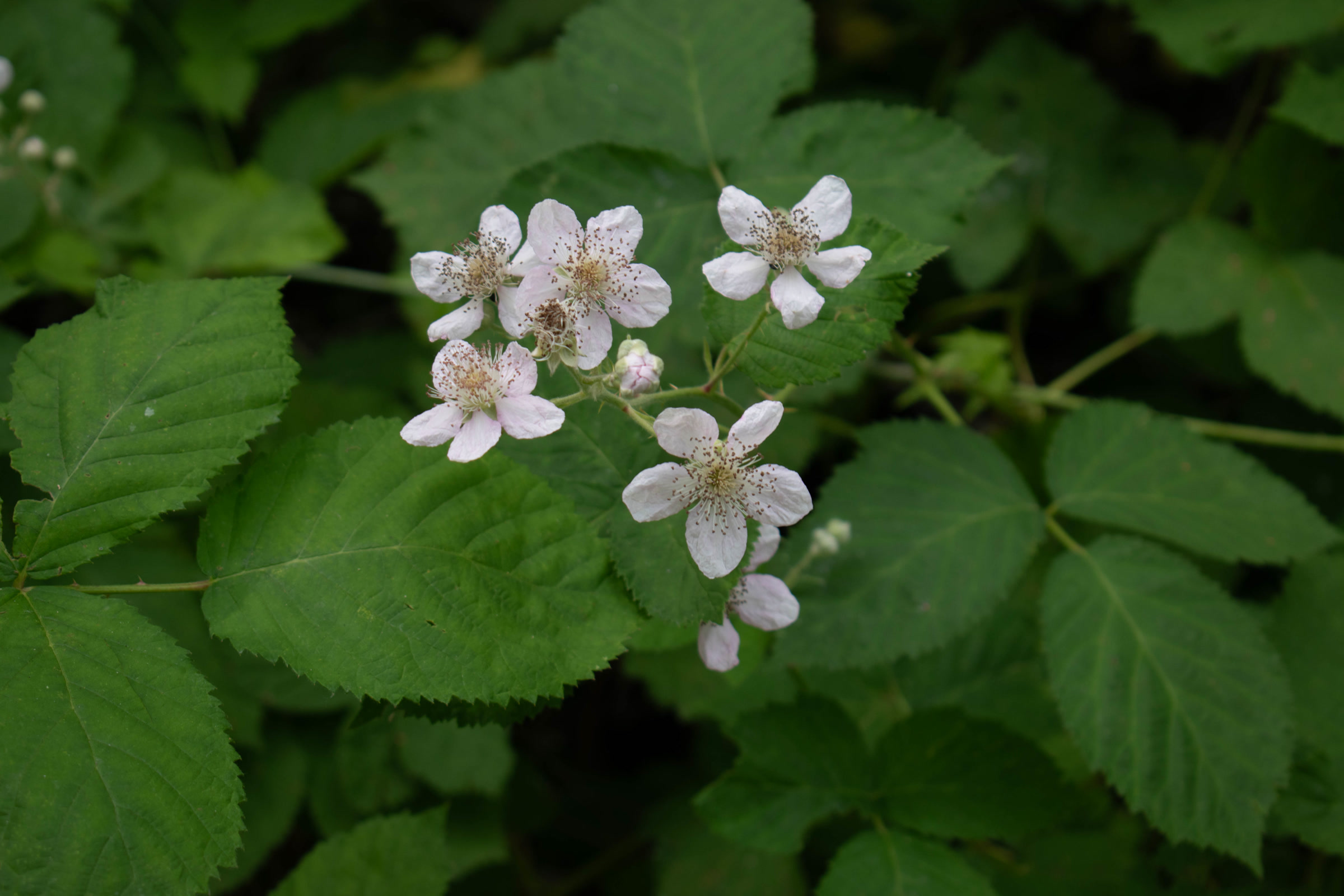
    White Himalayan blackberry flowers among large toothed leaves at Game Farm Park in Auburn, Washington
    Himalayan blackberry in flower in western Washington. Photo: Roc0ast3r / Wikimedia Commons (CC0)

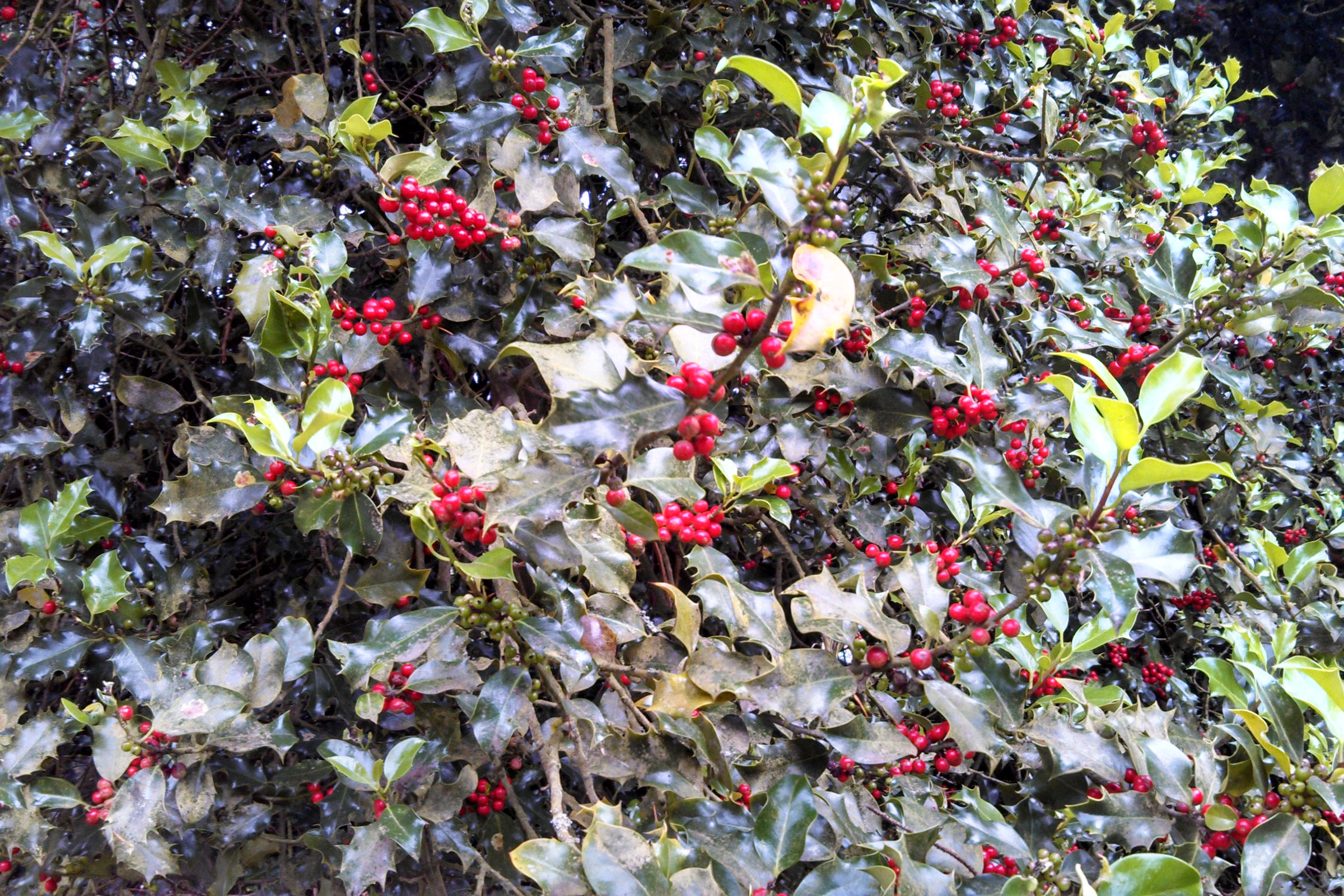
    Himalayan blackberry spreads by seed in its berries, so a dropped handful can sprout and smother native shrubs such as huckleberry and salal. English holly, with its spiny leaves and red berries, escapes from gardens into the forest the same way.

    A large English holly shrub crowded with glossy spiny leaves and clusters of bright red berries near Seattle
    English holly loaded with berries. Photo: brewbooks / Wikimedia Commons (CC BY-SA 2.0)

    Safe removal basics

    Hand pulling is the friendliest tool for small patches. The Washington State Noxious Weed Control Board’s Scotch broom page and its other species pages are the best place to check the right method for each plant. A few habits apply almost everywhere:

    • Wear gloves and long sleeves. Ivy sap can irritate skin and blackberry canes bite.
    • Pull when the soil is moist and before plants set seed.
    • Disturb the soil as little as you can. Bare, churned ground invites a new flush of broom seedlings.
    • Bag or dry what you pull on a tarp or hard surface so it cannot reroot.
    • Come back. Broom and ivy usually need repeat visits over several years.

    We do not give herbicide advice. For anything beyond hand pulling, or for knotweed, contact the Clallam County Noxious Weed Control Program for identification help and current guidance before you start.

    Stop the spread when you visit

    Seeds hitch rides on boots, clothes, pets, tires and gear. Brush everything off before you enter the park and again when you leave a weedy area, and pack out all food scraps, including fruit seeds. If you see an invasive plant in the park, tell the nearest visitor center or ranger station when and where you saw it.

    How volunteers help with invasive plant removal

    On June 17, 2025, FONP volunteers, some from as far away as Kansas City and Seattle, gathered at the park’s Entrance Sign Garden to weed and remove non-native invasive plants. In the words of our volunteer page, it was fun for all.

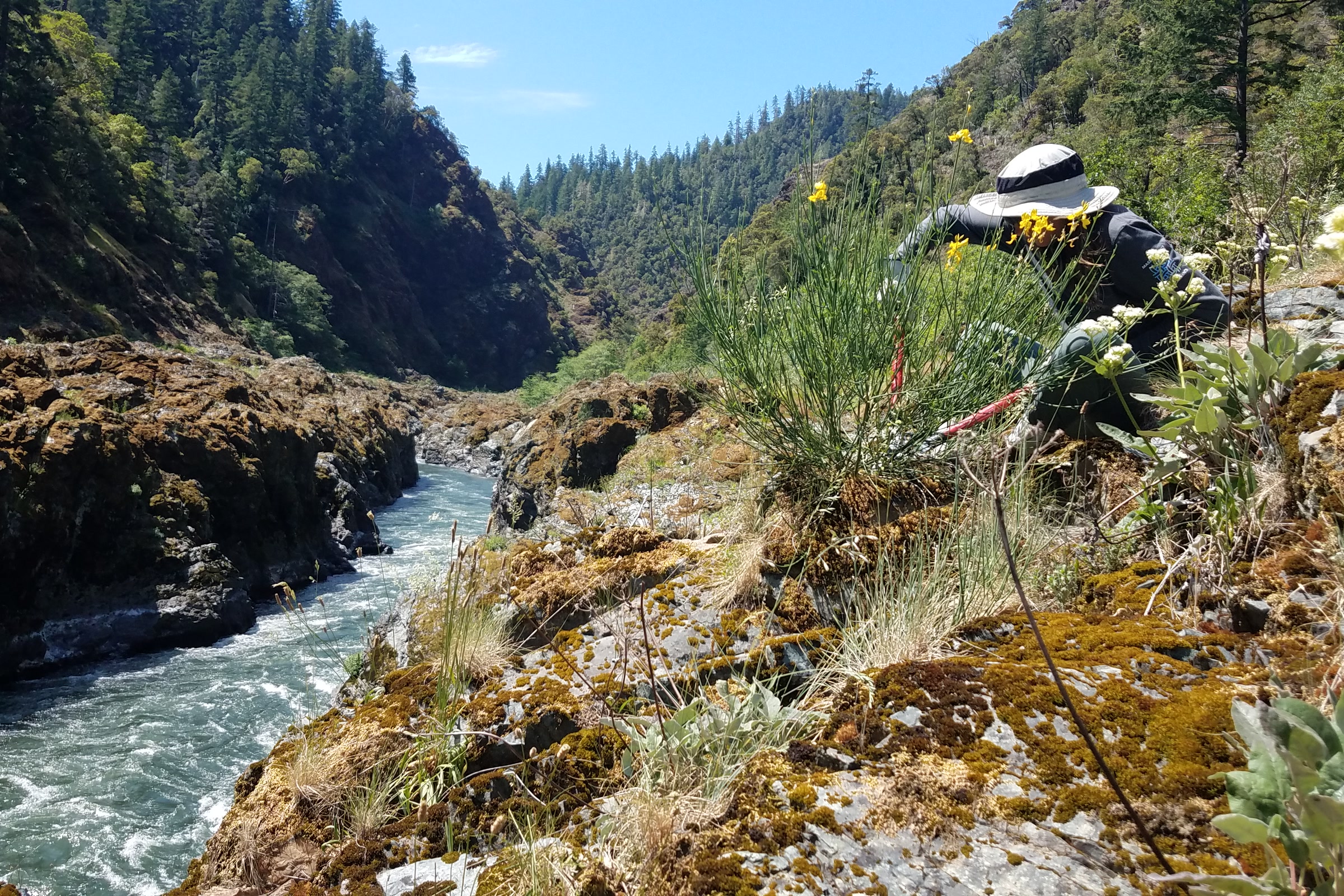
    A botanist in a sun hat bends to remove Spanish broom on a rocky ledge above the Wild and Scenic Rogue River in Oregon
    A federal crew removing Spanish broom on Oregon’s Rogue River. Photo: Stacy Johnson, BLM Oregon and Washington (public domain)

    Weeding is also part of our Visitor Center work days. At our fall cleanup on September 27, 2025, volunteers weeded, deadheaded and mulched at the entrance sign and the Visitor Center from 9:00 AM to noon, with hand tools and water provided. The fall cleanup volunteer event page has the details, and our pollinator garden at the Visitor Center page explains the spring work.

    Find a weed pull volunteer day in Port Angeles

    1. Check our upcoming events for the next Visitor Center or garden date.
    2. Register in advance through Volunteer.gov using the link on the event page. Spots can fill.
    3. Bring gloves, sunscreen and a hat, and wear clothes that can get dirty.

    The park also lists its own weed pulling opportunities on the national volunteer website. Our step by step guide to volunteering at Olympic National Park walks you through signing up.

    Help at home too

    Many park invaders started as garden plants, so your yard matters. Swap ivy, holly and broom for natives, and use weed free soil and gravel. Our guide to native plants for pollinators on the Olympic Peninsula suggests what to plant instead.

    Frequently asked questions

    What are the worst invasive plants in Olympic National Park?

    The park lists Scot’s broom, Canada thistle, Himalayan blackberry, English ivy, English holly, herb Robert and Japanese knotweed as its worst invasive plants.

    How do you remove Scotch broom?

    Pull small plants by hand when the soil is moist, and use a weed wrench for larger ones. Disturb the soil as little as possible and plan to return for several years, because broom seeds last a long time in the soil.

    Is herb Robert invasive in Washington?

    Yes. It is a Class B noxious weed in Washington. It has shallow roots, so it is easy to hand pull, ideally before it sets seed.

    Should I pull Japanese knotweed myself?

    It is best not to. New plants can grow from tiny fragments, so contact your county noxious weed control program for advice first.

    How can I volunteer to pull weeds near Port Angeles?

    Watch the Friends of Olympic National Park events page for Visitor Center and garden work days, then register through Volunteer.gov. The park also posts volunteer opportunities on the national volunteer website.

    Pull a weed, protect the park

    Every bag of broom or ivy that leaves the ground gives native plants room to come back. See our volunteer opportunities at Olympic National Park, or become a member to hear about the next work day first.

  • Native Plants for Pollinators on the Olympic Peninsula

    Native Plants for Pollinators on the Olympic Peninsula

    Gardening · Pollinators · Olympic Peninsula

    The best native plants for pollinators on the Olympic Peninsula are tough, local shrubs and wildflowers such as red flowering currant, Oregon grape, camas, fireweed, goldenrod and Douglas aster. Planted together, they give bees, butterflies and hummingbirds something to eat from late winter into autumn. You can grow every one of them in a Port Angeles or Sequim yard.

    This guide is for home gardeners. It covers why natives matter, which Pacific Northwest pollinator plants to start with, when each one blooms, and simple planting habits that help wildlife.

    Why native plants matter for local pollinators

    Native plants grew up with our wet winters and dry summers. The Washington Native Plant Society’s guide to gardening with native plants notes that once they are established, natives need less water than most non-native plants and hold up better against local pests and diseases. They also need less fertilizer and no pesticides, which is good news for the insects you want to attract.

    Our local bees and butterflies are matched to these plants in bloom time and flower shape. A yard full of natives gives wildlife food, cover and places to rest between the park and town.

    Who you are feeding

    • Native bees, including bumble bees, mason bees, leafcutter bees and tiny sweat bees
    • Butterflies and moths, which need nectar as adults and host leaves as caterpillars
    • Hummingbirds, which look for nectar early in spring
    • Flower flies and beetles, quiet pollinators that are easy to overlook

    Pacific Northwest pollinator plants by bloom season

    Plan for flowers in every season. The U.S. Fish and Wildlife Service list of top native pollinator plants for Washington, Oregon and Idaho sorts its picks into spring, summer and fall for exactly that reason. The table below pulls together reliable choices for a western Washington yard.

    Native pollinator plants compared by season

    Native plantMain bloomGood for
    Red flowering currantLate winter to early springHummingbirds and early bees
    Oregon grapeSpringBumble bees and other wild bees
    Common camasSpringBees in sunny, moist spots
    Nootka roseLate spring to early summerBumble bees and honey bees
    FireweedSummerBees, over a long season
    Yarrow (wild form)SummerWild bees and other insects
    GoldenrodLate summer to fallBumble bees and late insects
    Douglas asterFallLate season bees and butterflies

    Spring: currant, Oregon grape and camas

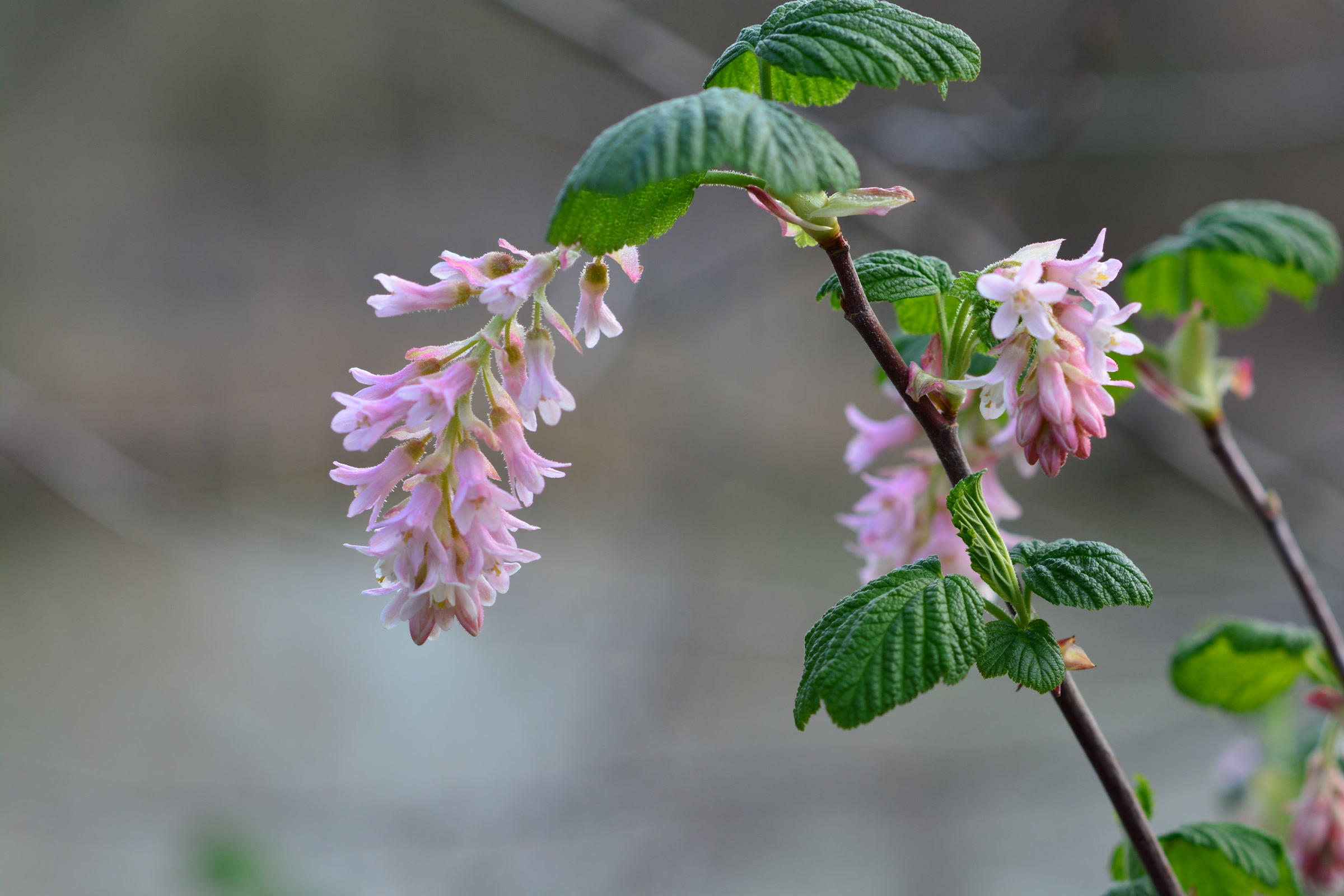
    Red flowering currant is often the first shrub to bloom, with hanging pink clusters that open in late winter or early spring. Those early flowers are an important nectar source for hummingbirds and for native bees waking up after winter. Give young plants some protection from deer until they are established.

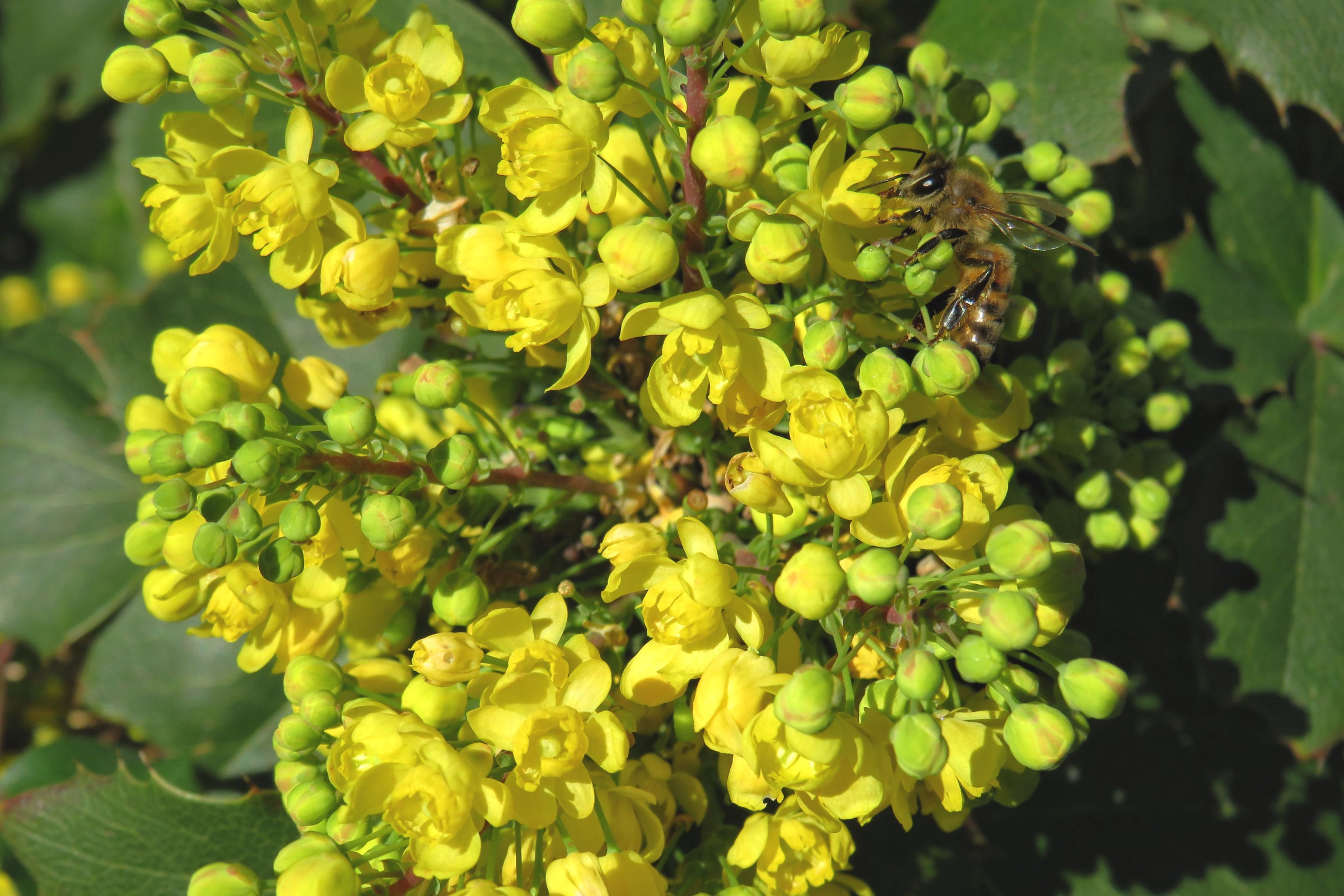
    Dense clusters of bright yellow Oregon grape flowers and round buds, with a bee working the blossoms
    Oregon grape in bloom with a visiting bee. Photo: PROPOLI87 / Wikimedia Commons (CC BY-SA 4.0)

    Oregon grape is the evergreen workhorse of a native garden. Its bright yellow spring flowers draw bumble bees, its spiny leaves stay green all year, and its dusty blue berries follow in summer. Tall Oregon grape suits sunny spots, while low Oregon grape is happy in shade under trees.

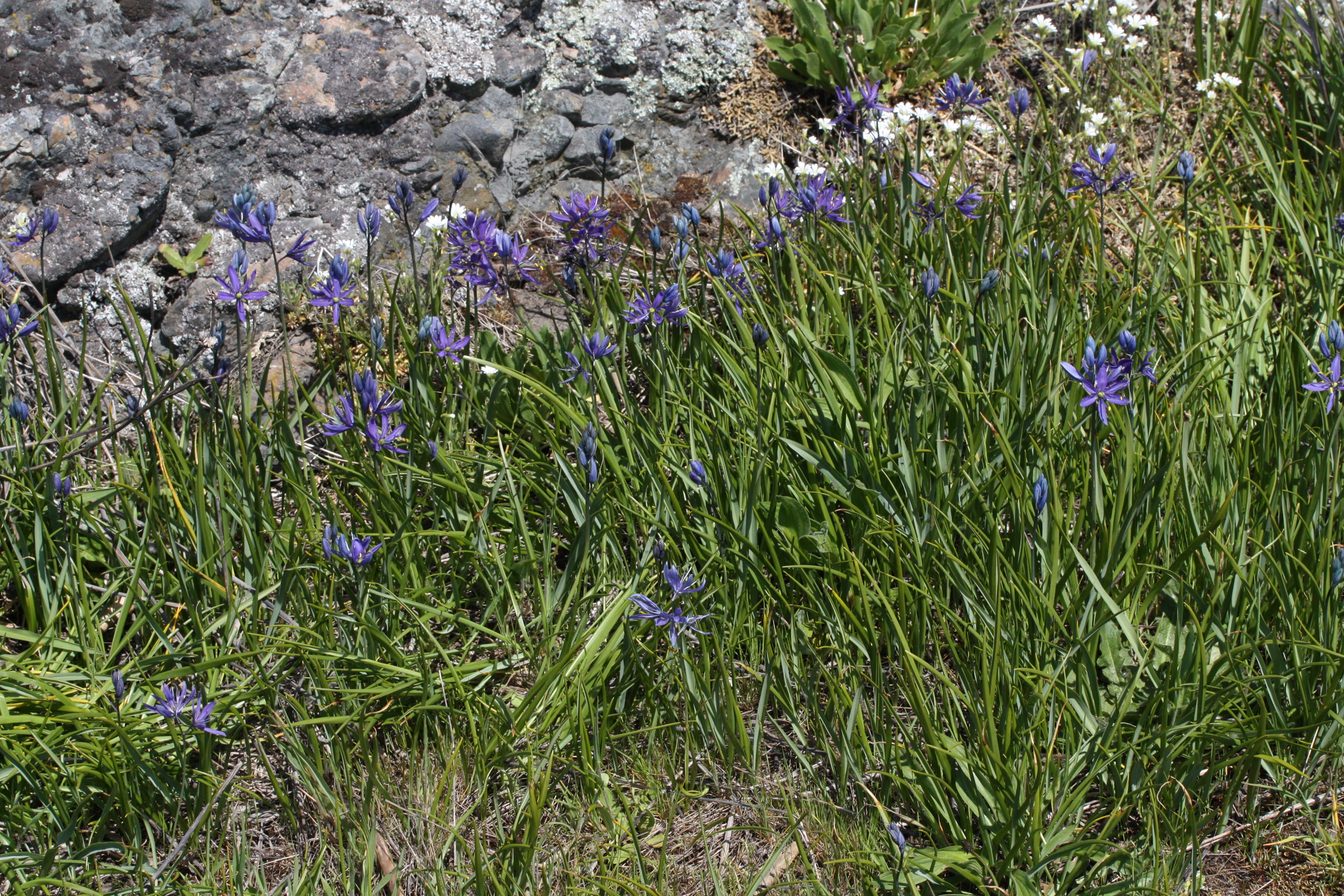
    Common camas sends up spikes of starry blue flowers in spring from a bulb. It likes ground that is moist in spring and dries out in summer, so it fits well in a sunny lawn edge or a small meadow patch.

    Blue common camas flowers rising from grassy leaves at the foot of a lichen covered rock outcrop
    Common camas in spring bloom. Photo: Walter Siegmund / Wikimedia Commons (CC BY-SA 3.0)

    Summer: Nootka rose, fireweed and yarrow

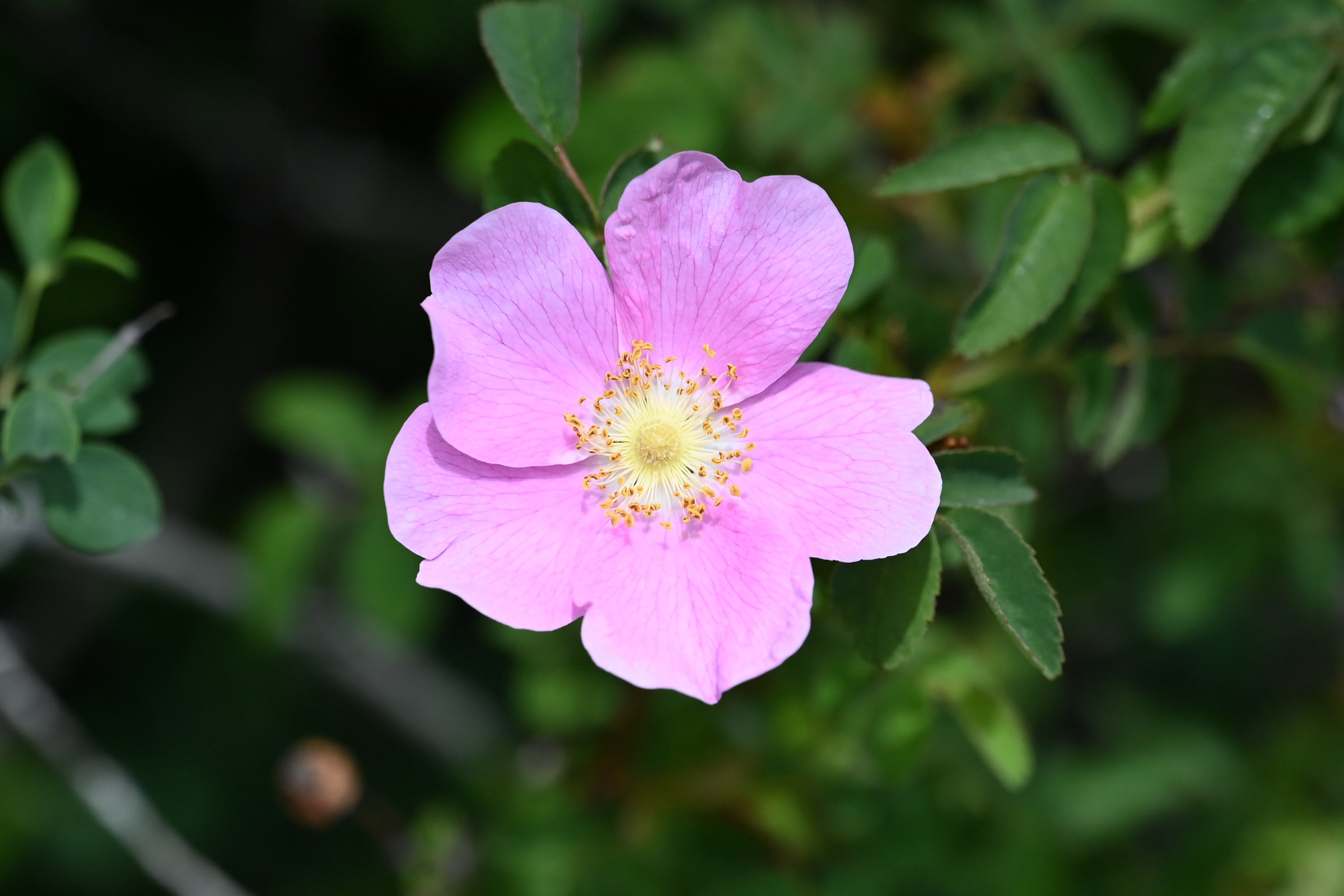
    Nootka rose has simple, open pink flowers that bees can reach easily, unlike many double garden roses. It spreads into a loose thicket that also gives birds cover.

    A single open pink Nootka rose flower with a yellow centre among green leaves in Saanich, British Columbia
    Nootka rose in flower across the strait in British Columbia. Photo: MeadowLore / Wikimedia Commons (CC BY-SA 4.0)

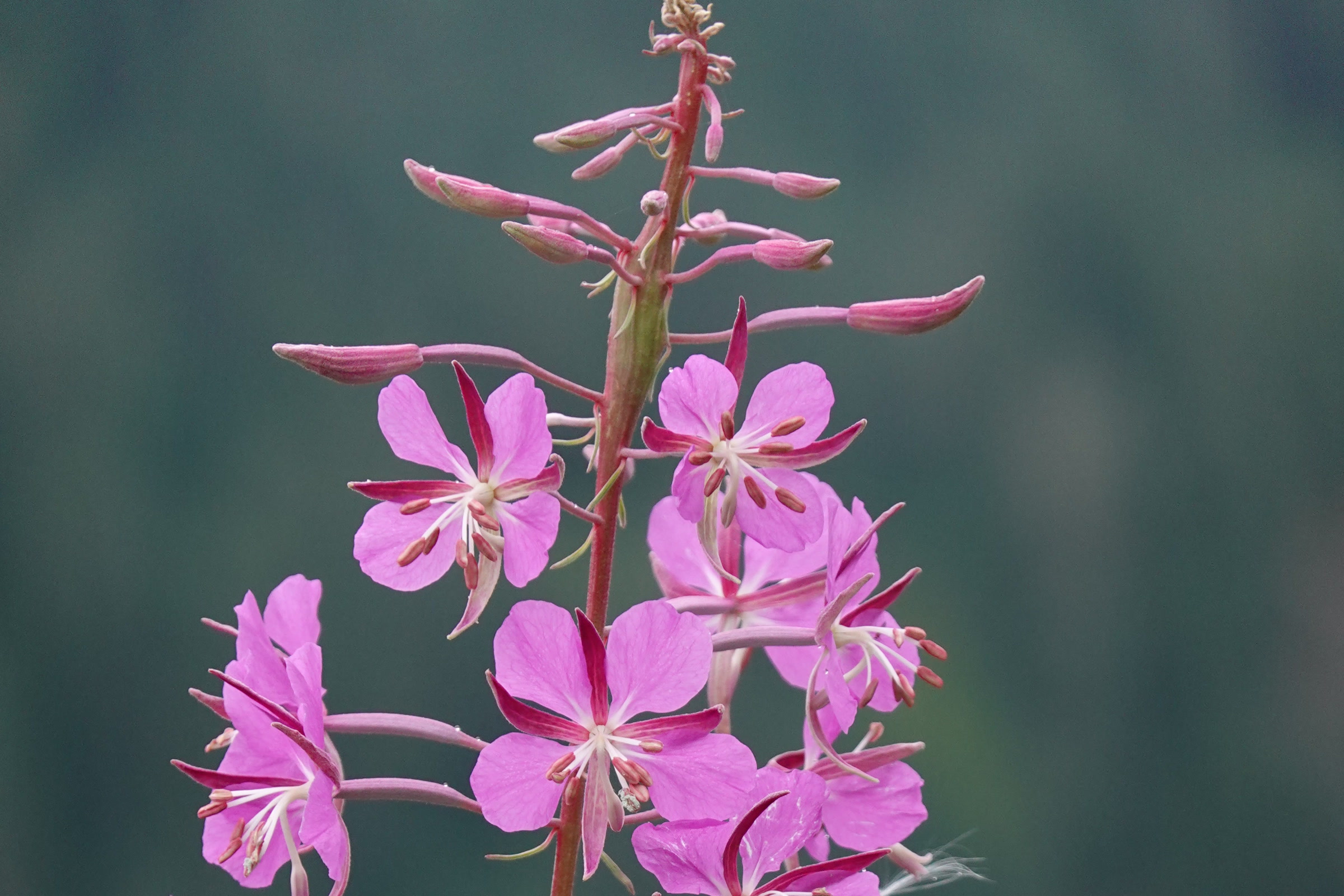
    Fireweed blooms from the bottom of its tall stalk upward, so a single plant can offer flowers for weeks. Give it a corner where it can roam. Yarrow, with its flat white flower heads, is easy in dry, sunny soil and draws wild bees and many other small insects.

    A tall fireweed stalk with bright pink open flowers below and unopened buds at the tip in Mount Rainier National Park
    Fireweed opens from the bottom of the stalk up. NPS Photo, Mount Rainier National Park (public domain)

    Late summer and fall: goldenrod and Douglas aster

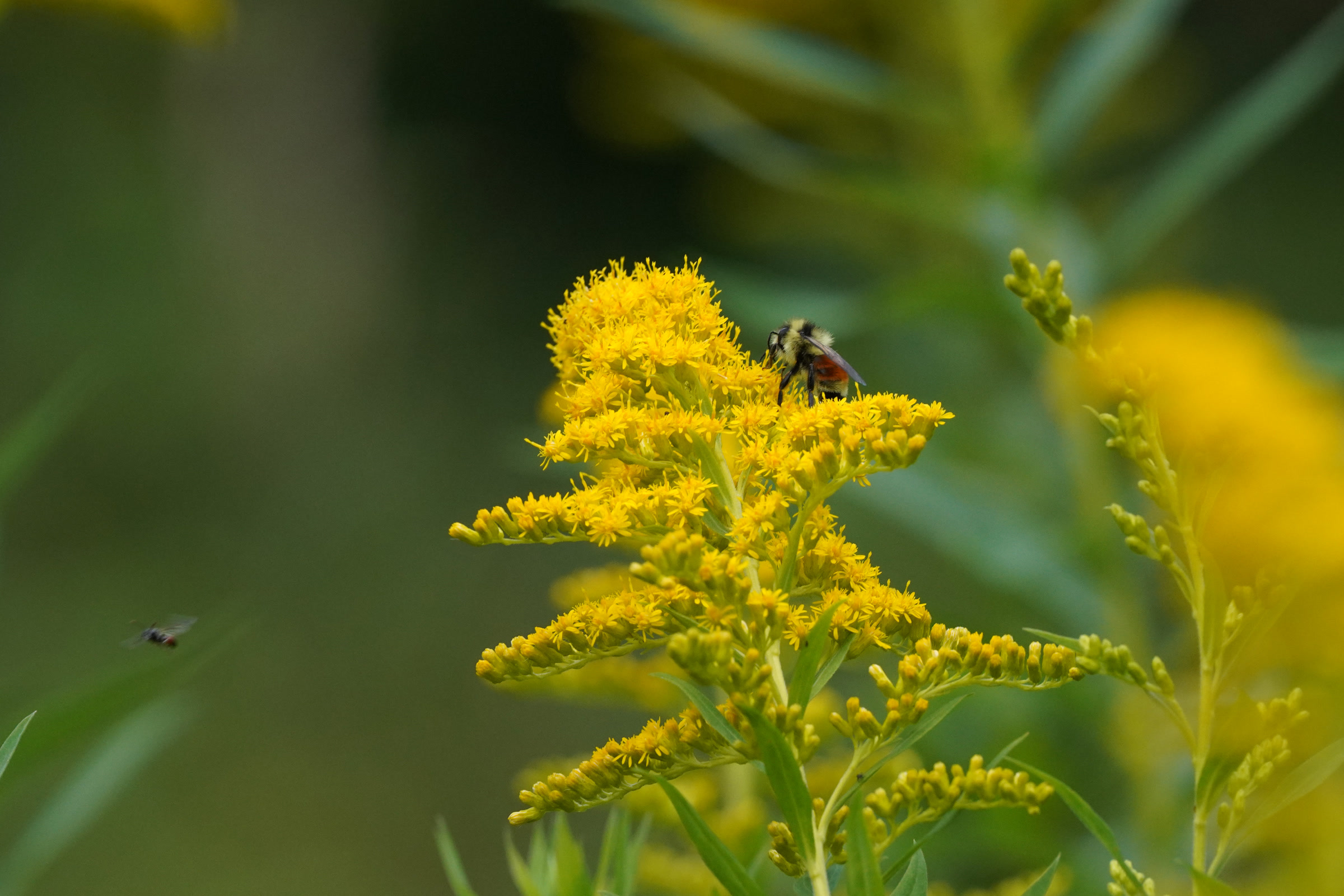
    By August many gardens go quiet, yet bumble bees and other insects are still out looking for food. Goldenrod fills that gap with plumes of yellow flowers that stay busy with insects well into fall.

    An orange belted bumblebee feeding on a plume of golden yellow Canada goldenrod flowers
    A bumblebee on Canada goldenrod. Photo: Courtney Celley / USFWS (public domain)

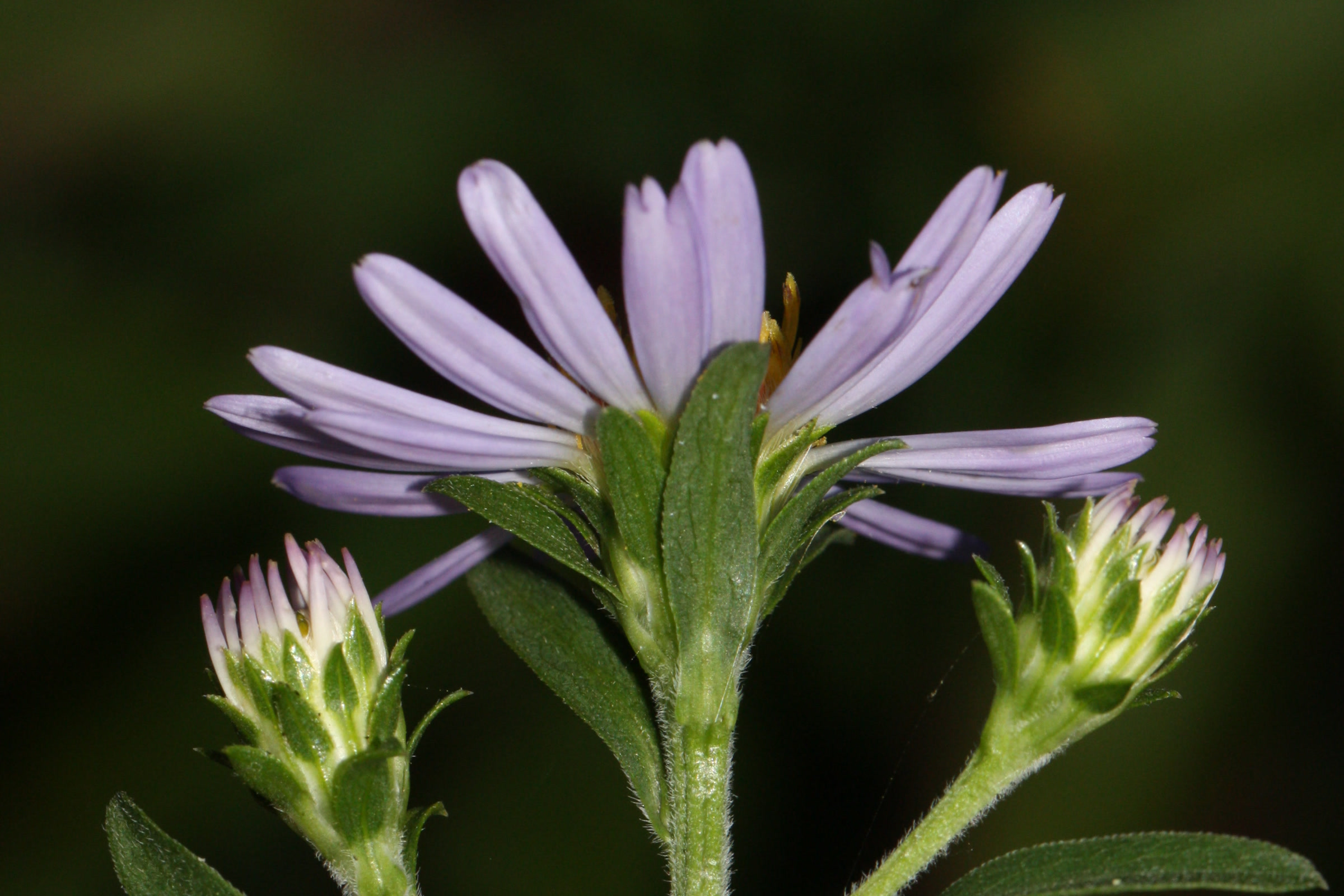
    Douglas aster carries the season into autumn with lavender daisies on leafy stems. Pearly everlasting, with papery white flowers, is another good late choice for dry, sunny ground.

    A lavender Douglas aster flower head with two unopened buds on a hairy green stem against a dark background
    Douglas aster, a fall bloomer. Photo: Walter Siegmund / Wikimedia Commons (CC BY-SA 3.0)

    Native wildflowers for bees in Washington: planting tips

    You do not need a big yard. A few well placed natives and these simple habits go a long way.

    1. Plant in fall. In western Washington, autumn rains help new roots settle before summer.
    2. Right plant, right place. Match each plant to your sun, shade, soil and drainage, and to its size when grown.
    3. Plant in groups. Clumps of the same flower are easier for bees to find and work than single plants.
    4. Water for the first couple of years, then let established natives fend for themselves.
    5. Skip the sprays. Garden chemicals keep wildlife away and can harm the insects you planted for.
    6. Leave a little mess. Bare soil and old stems give ground nesting and stem nesting bees a place to live.
    7. Choose wild forms. Straight species usually feed pollinators better than double or brightly coloured cultivars.

    Plants to leave out of a pollinator garden

    Some plants sold as bee friendly do harm once they escape. Common fennel is a Class B noxious weed in Washington, and garden escapes such as English ivy and Scotch broom crowd out the native plants pollinators depend on. Before you buy, check that a plant is not on the state or county weed list.

    Want to know what to pull instead of plant? Our guide to invasive plant removal on the Olympic Peninsula shows how to spot the worst offenders and how volunteers help clear them.

    See native plants at work near Port Angeles

    If you would like to see a pollinator planting before you start your own, visit the pollinator garden at the Olympic National Park Visitor Center at 3002 Mt Angeles Rd. Friends of Olympic National Park (FONP) volunteers help care for it, and on May 2, 2026 our spring Visitor Center Cleanup included pollinator garden maintenance.

    Read about the last work day on our Visitor Center cleanup event page. You can also meet local plants up close on one of our guided insect, mushroom and wildflower walks.

    Frequently asked questions

    What are the best native plants for pollinators on the Olympic Peninsula?

    Good starting choices are red flowering currant, Oregon grape and camas for spring, Nootka rose, fireweed and yarrow for summer, and goldenrod and Douglas aster for fall. Together they give pollinators food from late winter into autumn.

    When should I plant native plants in western Washington?

    Fall is the best time. Autumn and winter rains help roots settle in before the dry summer. Water new plants for the first couple of years.

    What native plants attract hummingbirds in Washington?

    Red flowering currant is a favourite because it blooms in late winter and early spring, when hummingbirds need early nectar. Western columbine is another native with tubular flowers.

    Is yarrow native to Washington?

    Yes, common yarrow is native. Choose the wild white form rather than brightly coloured garden cultivars, which are often less useful to pollinators.

    Where can I see a pollinator garden near Port Angeles?

    Visit the pollinator garden at the Olympic National Park Visitor Center, 3002 Mt Angeles Rd. Friends of Olympic National Park volunteers help care for it on work days listed on our events page.

    Plant at home, help in the park

    Every native shrub and wildflower you plant adds a stepping stone for pollinators moving between town and the park. When you are ready to lend a hand on a bigger patch, see our volunteer opportunities at Olympic National Park or become a member to hear about the next garden day first.

  • Olympic National Park Visitor Center in Port Angeles: A Guide

    Olympic National Park Visitor Center in Port Angeles: A Guide

    Visit · Port Angeles · Plan your trip

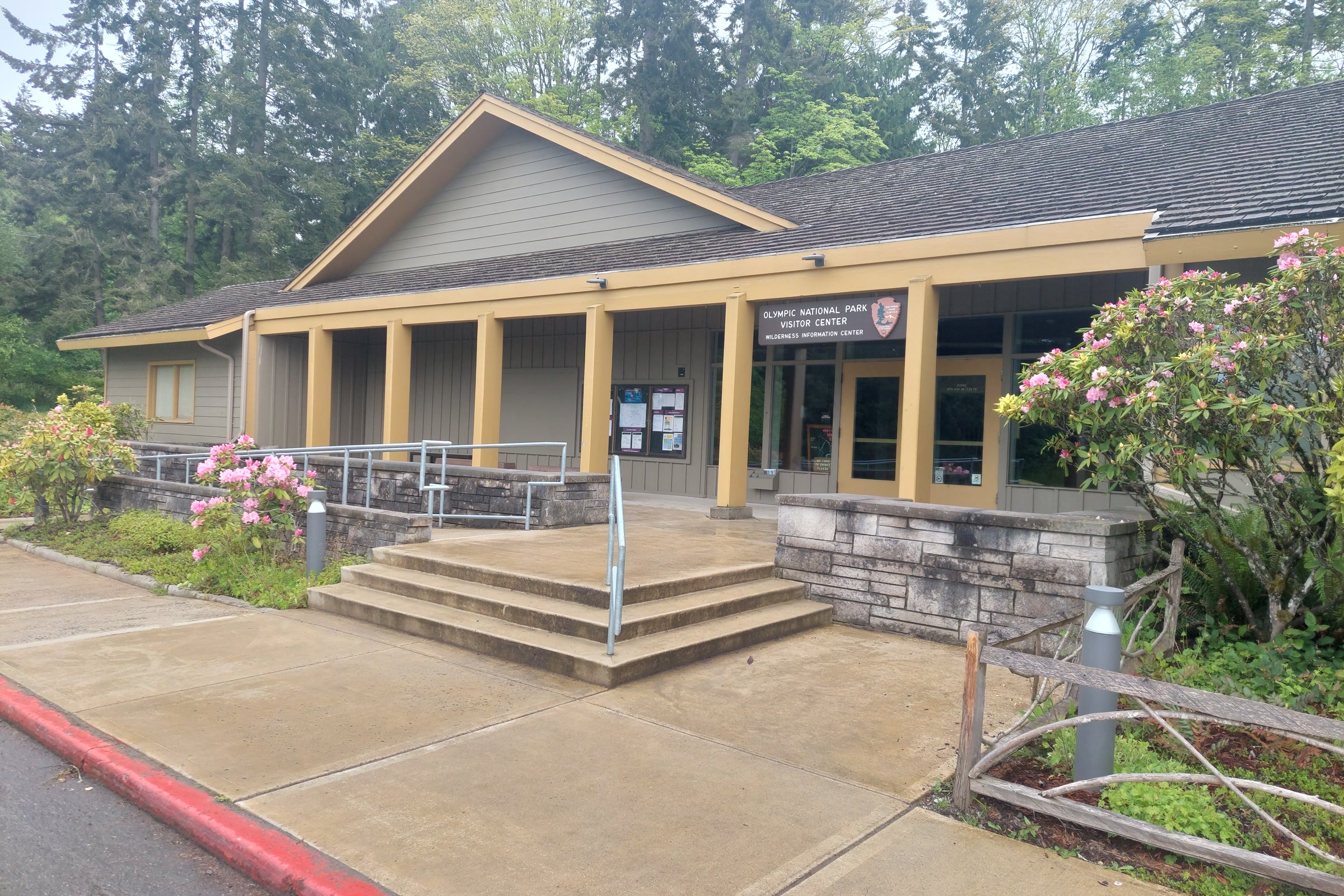
    The Olympic National Park Visitor Center in Port Angeles is the park’s main front door, at 3002 Mt Angeles Rd. Stop here for exhibits, a park orientation film, a hands-on Discovery Room, wilderness permits and two short forest trails. It is also the place to check road and weather news before you drive up to Hurricane Ridge.

    We are Friends of Olympic National Park, a local volunteer group, and this building is close to our hearts. We hold meetings here and care for its grounds with volunteer work days. This guide covers what you will find, how to plan your time and how to check current hours.
    Where the visitor center is

    The visitor center sits on Mount Angeles Road in Port Angeles, WA 98362, surrounded by tall forest. The building also houses the park’s Wilderness Information Center, so day visitors and backpackers share the same entrance.

    Because it is in town, it makes an easy first stop whether you are heading to Hurricane Ridge, Lake Crescent or the coast. Rangers at the desk can help you match a plan to the day’s weather and road news.

    Olympic National Park visitor center hours

    Hours change with the seasons, with longer days in summer and shorter ones the rest of the year. We don’t list times here because they shift, so please check the park’s official visitor centers page for current hours before you go.

    The Park Service lists the Wilderness Information Center as open year-round, closed on Thanksgiving Day and Christmas Day. For road and weather updates, the park says to call 360-565-3131.

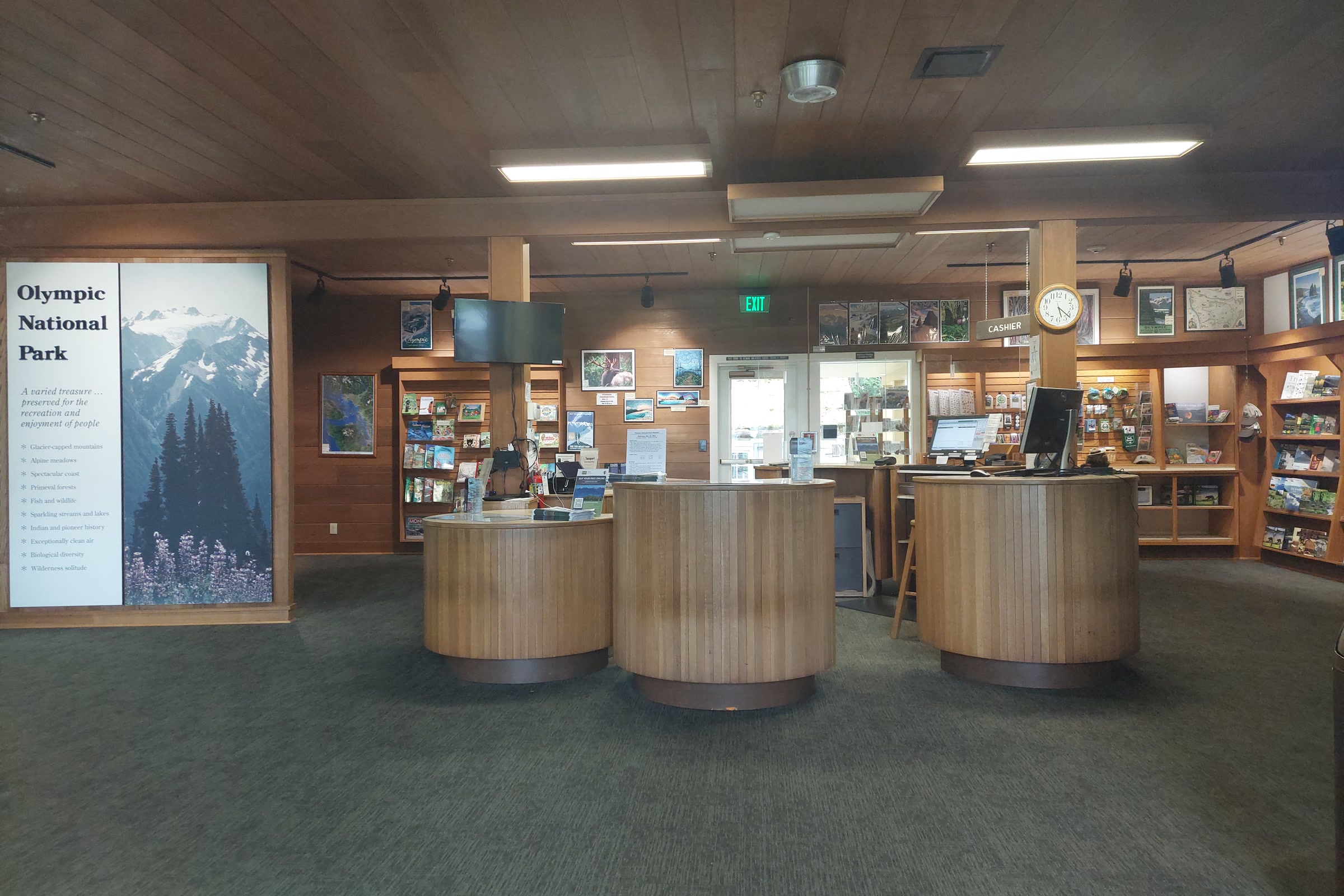
    Round wooden information desks, bookshelves and a tall Olympic National Park mountain panel inside the visitor center lobby in Port Angeles
    The lobby and information desks. Photo: DeVos Max / Wikimedia Commons, CC BY-SA 4.0

    What’s inside

    According to the park’s visitor center brochure, the building offers exhibits on the park, seasonal ranger programs, a park orientation film and the chance to talk with rangers. Teachers can also use a visitor center scavenger hunt with their classes.

    Exhibits and the park film

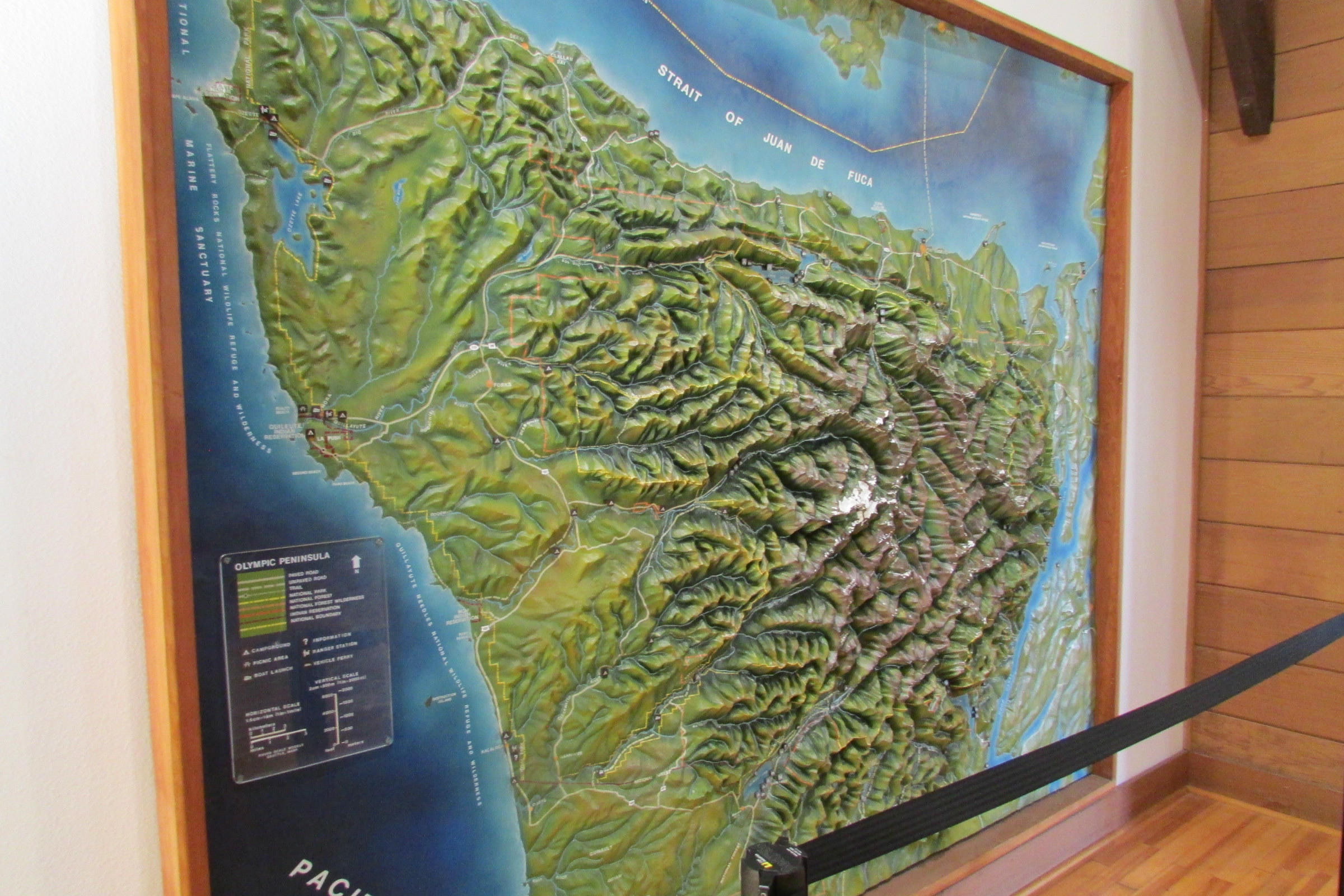
    The exhibits introduce the park’s landscapes and wildlife, from a Roosevelt elk display to a giant cross-section of an old tree. A large relief map shows the whole peninsula at a glance. Ask at the desk about the orientation film if you want a sit-down introduction.

    A large raised relief map of the Olympic Peninsula with green mountains and blue coastline, mounted on a wood-panelled wall in the visitor center
    The relief map of the Olympic Peninsula. Photo: Chris Light / Wikimedia Commons, CC BY-SA 4.0

    The Discovery Room

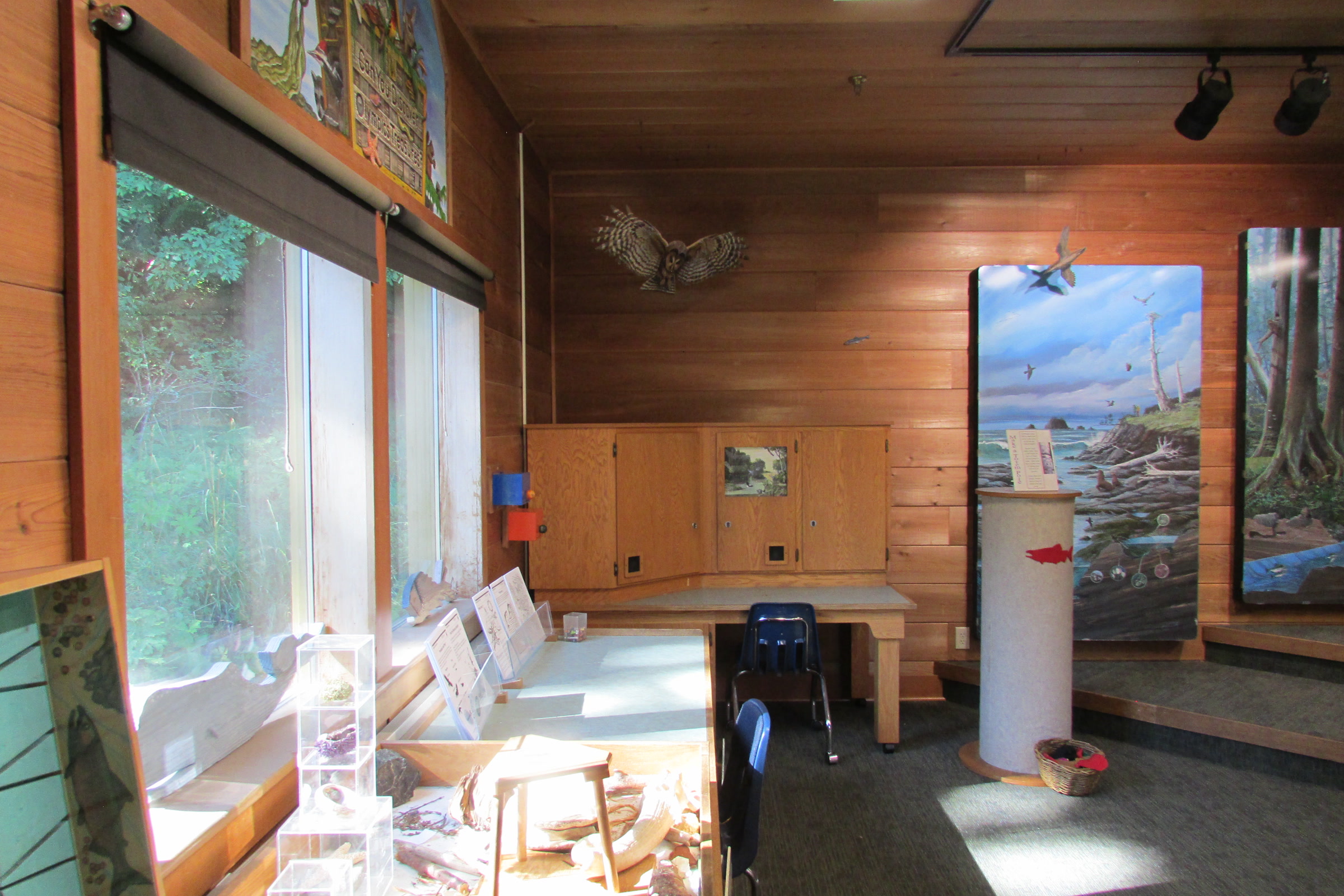
    Families should find the Discovery Room, an interactive space for all ages. Its murals show creatures that live in the park, and you can ask at the front desk for the key to the discovery drawers. Our post on the Children’s Discovery Room at the visitor center has more ideas for kids.

    The wood-panelled Discovery Room with display cases under a sunny window, a mounted owl on the wall and painted forest and coast murals
    Inside the Discovery Room. Photo: Chris Light / Wikimedia Commons, CC BY-SA 4.0

    Wilderness permits and trip planning

    The Wilderness Information Center inside the building helps visitors explore the park’s wilderness, which makes up about ninety-five percent of Olympic. Staff there issue wilderness backpacking permits for the whole park and help with trip planning, trail conditions and safety.

    The center also teaches Leave No Trace and safe food storage, and it lends bear canisters. Overnight backpackers need a wilderness camping permit, from the center or through Recreation.gov wilderness permit reservations. The center’s own phone line is (360) 565-3100.

    A mounted Roosevelt elk bull with wide antlers stands in a rain forest diorama of moss and ferns inside the visitor center
    A Roosevelt elk exhibit. Photo: Chris Light / Wikimedia Commons, CC BY-SA 4.0

    Questions worth asking at the desk

    A few minutes with staff can save you hours on the road. These are the questions we suggest bringing:

    • Is Hurricane Ridge Road open today, and what is the weather like up top?
    • Which trails are in good condition for the time and fitness I have?
    • Do I need a wilderness permit or a bear canister for my plans?
    • Are any ranger programs running during my visit?

    Teachers planning a class trip can call the park’s education coordinator at (360) 565-3146. The park also rents out a traveling trunk of park materials for classrooms.

    Short trails right outside

    You don’t need to drive anywhere to walk in the forest. The park says the Living Forest and Peabody Creek trails offer short forest walks from the visitor center. They are a good way to stretch your legs after a long drive, or to give children a taste of the woods before a bigger hike.

    Expect tall trees, ferns and moss close to the path. Stay on the trail, and ask at the desk if you want to know more about what grows here.

    A narrow gravel path runs past the mossy base of a large tree and through sword ferns on the Living Forest Trail beside the visitor center
    The Living Forest Trail. Photo: Chris Light / Wikimedia Commons, CC BY-SA 4.0

    Port Angeles visitor center things to do, by time

    Time you haveWhat to do
    30 minutesTalk to a ranger, pick up a map and browse the exhibits
    About an hourAdd the park film or the Discovery Room
    Two hoursAdd a walk on the Living Forest or Peabody Creek trail
    Half a dayCheck road news, then drive up to Hurricane Ridge
    Planning an overnightVisit the Wilderness Information Center for a permit

    Next stop: Hurricane Ridge Road

    From Port Angeles, Hurricane Ridge is about a 45-minute drive. The Park Service says the road climbs 17 miles to 5,242 feet at the Hurricane Ridge Visitor Center, with the Heart O’ the Hills entrance station, campground and trailheads five miles up.

    In winter the road may be closed on some days, and every vehicle must carry tire chains. The park’s advice is simple: check at the visitor center for the latest road and weather updates, or call 360-565-3131.

    Hurricane Ridge Road winding along forested slopes below the Olympic Mountains, with a sea of low cloud filling the valleys toward Port Angeles
    Hurricane Ridge Road. Photo: Cody Logan / Wikimedia Commons, CC BY-SA 4.0

    How Friends of Olympic National Park helps here

    The visitor center grounds are one of our regular work sites. Our fall cleanup on September 27, 2025 was planned as a morning of weeding, deadheading and mulching around the entrance sign and the visitor center. On May 2, 2026, our annual Visitor Center Cleanup and pollinator garden day was set for general cleanup and garden care.

    The garden supports native plants and wildlife, and you can read about it in our post on the visitor center pollinator garden. We also gather indoors: our Spring Membership Meeting on March 19, 2026 was scheduled at the visitor center, with a keynote on historical structures in Olympic National Park.

    Volunteer days are listed on Volunteer.gov and on our upcoming events page. If you’d like to lend a hand, see how to volunteer at Olympic National Park with us.

    Frequently asked questions

    Where is the Olympic National Park Visitor Center in Port Angeles?

    It is at 3002 Mt Angeles Rd, Port Angeles, WA 98362. The Wilderness Information Center is in the same building.

    What are the Olympic National Park visitor center hours?

    Hours change with the seasons. Check the visitor centers page on nps.gov for current hours. The Wilderness Information Center is open year-round and closed on Thanksgiving Day and Christmas Day.
    What is there to do at the Port Angeles visitor center?

    You can browse exhibits, watch the park orientation film, explore the Discovery Room, talk with rangers and walk the short Living Forest and Peabody Creek trails.

    Where do I get a wilderness permit for Olympic National Park?

    Overnight backpackers need a wilderness camping permit. Get one at the Wilderness Information Center inside the visitor center or through Recreation.gov.

    How far is Hurricane Ridge from the visitor center?

    Hurricane Ridge is about a 45-minute drive from Port Angeles. The road climbs 17 miles to 5,242 feet. In winter it may be closed some days and vehicles must carry tire chains.

  • Most Inspirational Park Employee Award at Olympic

    Most Inspirational Park Employee Award at Olympic

    Honor · Park Staff · Awards

    The Most Inspirational Park Employee award is how Friends of Olympic National Park thanks the people who work for the park itself. We have given it since 2009 to a member of the park staff deemed “Most Inspirational” for work done in their park roles by coworkers and supervisors. The honor comes from the people who see that work up close, every day.

    Rangers are the faces most visitors meet, but the list of recipients reaches much further. It includes packers, a backcountry carpenter, an archivist, a botanist and a chief wildlife biologist. This post shares every name on the list and explains, with help from National Park Service sources, what those jobs involve.

    How the park employee award works

    FONP gives two awards. The older one, the Most Inspirational Friend, has honored members and volunteers since 2003 and is also known as the Willie McCool Award. You can read that story in our post on why our volunteer award carries Willie McCool’s name.

    The park employee award is its companion. What makes it special is who decides: the recipient is someone their own coworkers and supervisors consider most inspiring. That makes it a park employee recognition award rooted in the view from inside the park, not from a distance.

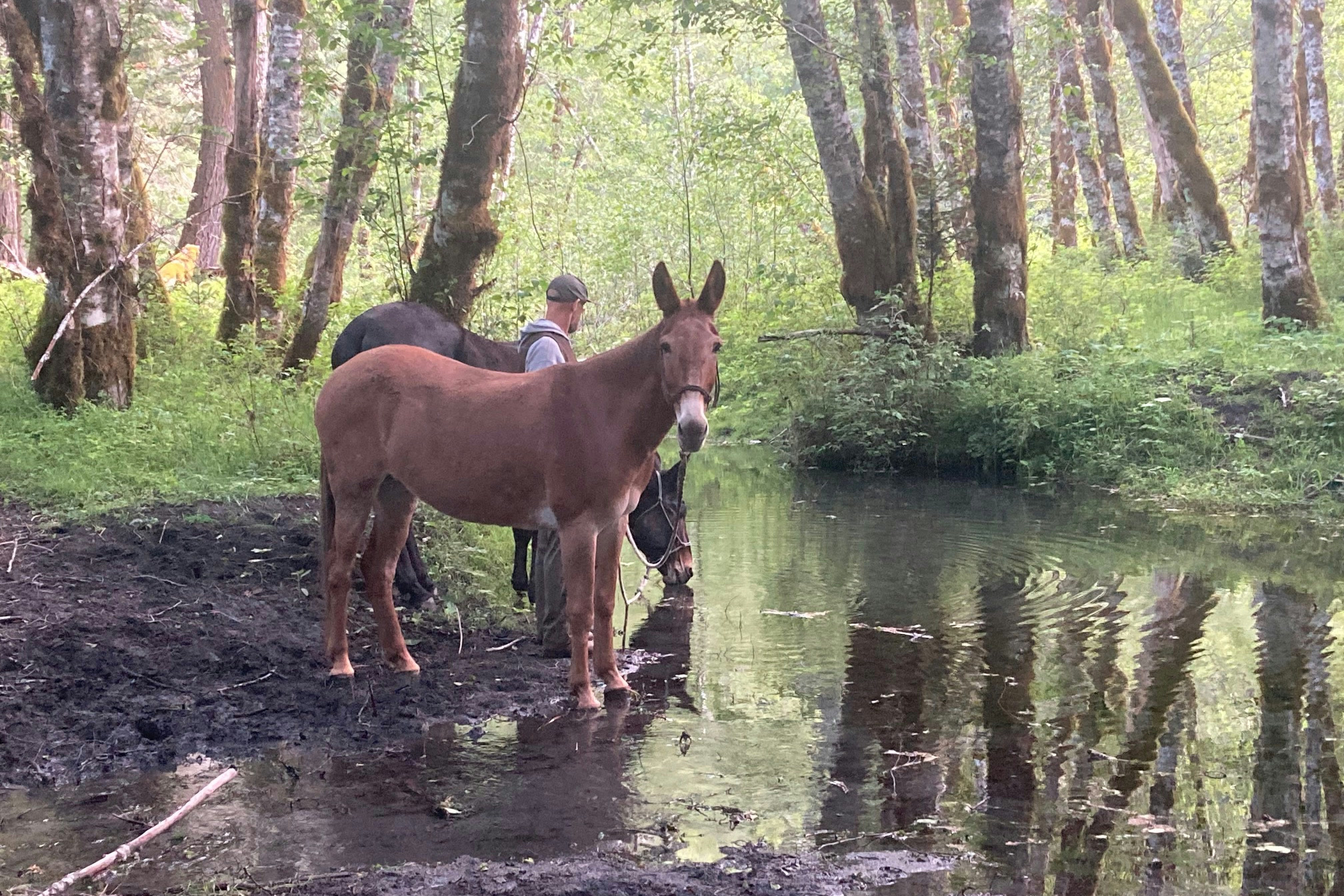
    A light brown pack mule stands at the edge of a forest creek while a darker mule drinks and a trail crew member waits between them
    Pack mules and a trail crew member in Olympic National Park. NPS Photo

    The 2025 Most Inspirational Park Employees

    The 2025 award went to Rachel Overpeck and Bruce Rothweiler, rangers at Heart O’ the Hills. They were honored for creating unforgettable park experiences for visitors. It is one of three years on the list when the award has been shared.

    Heart O’ the Hills sits on the road to Hurricane Ridge. The National Park Service notes that its entrance station, campground and trailheads are five miles up Hurricane Ridge Road. It is an entry point for visitors heading up to the high country.

    Every Most Inspirational Park Employee since 2009

    The table below lists each recipient and role exactly as our past recipients of the Most Inspirational awards page records them. There is no entry for 2020.

    Most Inspirational Park Employee recipients by year

    YearRecipientPark role
    2009Sue McGillDeputy Superintendent
    2010Janis BurgerHurricane Ridge Interpretive Ranger & Naturalist
    2011Don “Duck” HoukBackcountry Carpenter
    2012Dave ColthorpMaintenance Supervisor
    2013Clare DonatoPacker
    2014Larry NickeyFire/Emergency Manager
    2015Gay HunterArchivist
    2016Heather StephensVolunteer Coordinator
    2017Larry LackTrails Supervisor
    2018Boone Jones and Greg Marshhead packer; interpretive ranger
    2019Dean ButterworthOutreach & Education Specialist
    2021Dave AllenBotanist, Manager, Matt Albright Nursery
    2022Patti HappeChief Wildlife Biologist
    2023Amber Nixon, Kelsy Weaver, Jessica ShiepkoAdministrative Assistants to Park Leadership
    2024Jared LowSupervisory Interpretive Park Ranger
    2025Rachel Overpeck & Bruce RothweilerRangers, Heart O’ the Hills

    The jobs behind the names

    We won’t guess at anyone’s personal story. We can, however, explain the kinds of work on this list, because the park and the wider National Park Service describe them publicly. Read this way, the list is a map of how a wilderness park actually runs.

    Packers and trail crews

    Three recipients worked with pack stock or trails: a packer in 2013, a trails supervisor in 2017 and a head packer in 2018. The park’s Summer 2025 Bugler newspaper calls mule strings lifelines, with each mule carrying 120 pounds into the backcountry. It says the mules carry tools, lumber, concrete, fuel and supplies to trail crew camps, travelling about 1,000 miles and packing 51,000 pounds each season.

    The same issue notes that park trail crews work eight days at a time, and that the first job each spring is clearing trails of fallen trees. A backcountry carpenter, honored in 2011, belongs to the same world of remote work far from any road.

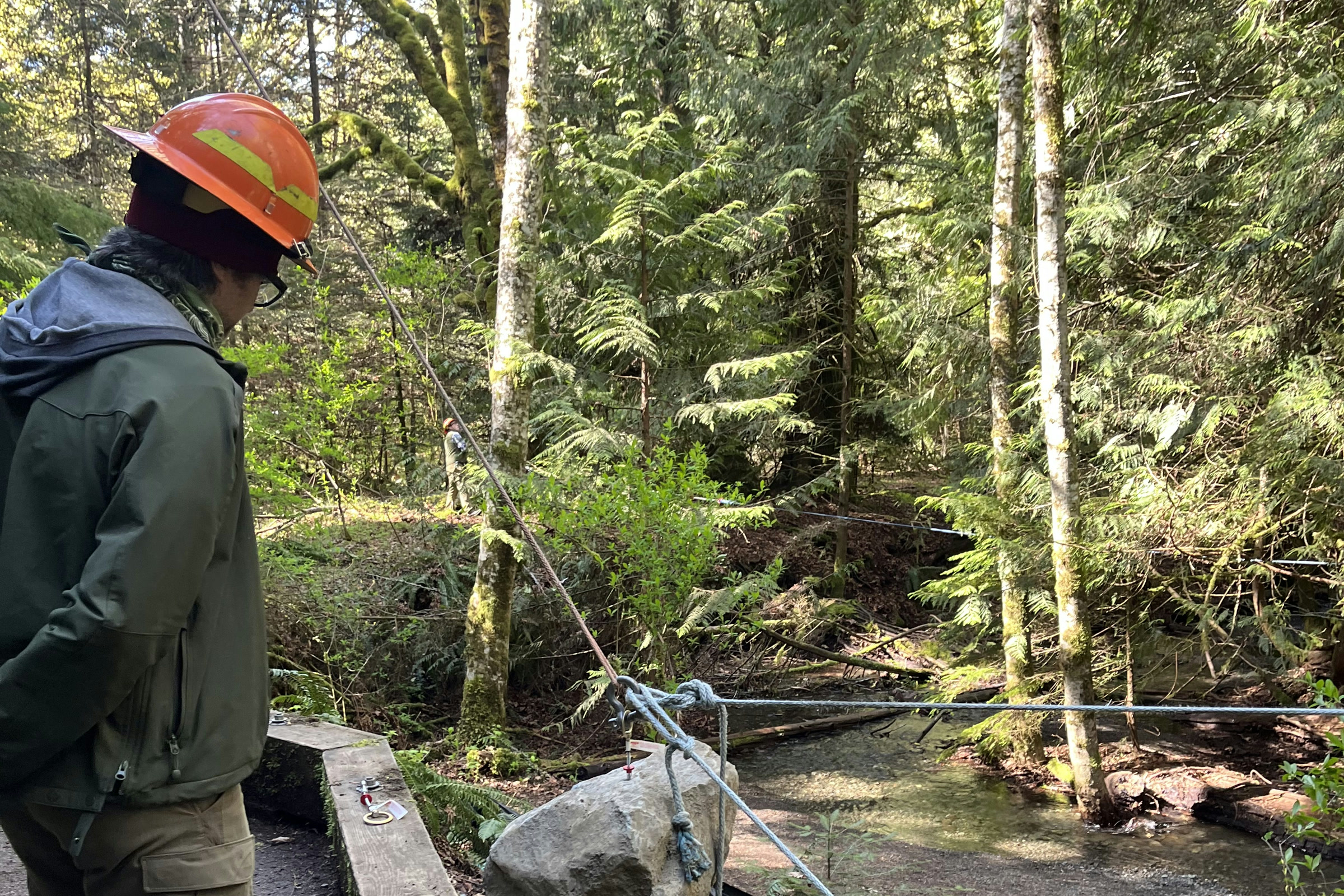
    A trail crew member in an orange hard hat watches a boulder being moved with ropes and pulleys beside a forest creek on the Madison Falls trail
    Trail crew rigging a rock for the Madison Falls accessibility project. NPS Photo

    Interpretive rangers and educators

    Interpretive rangers appear in 2010, 2018 and 2024, with an outreach and education specialist in 2019. In its guide to careers in interpretation, the Park Service describes this as the work of rangers and other staff who interpret the park to visitors. Interpreters aim to help people make their own connections to the park and its stories, and many lead hikes on park trails.

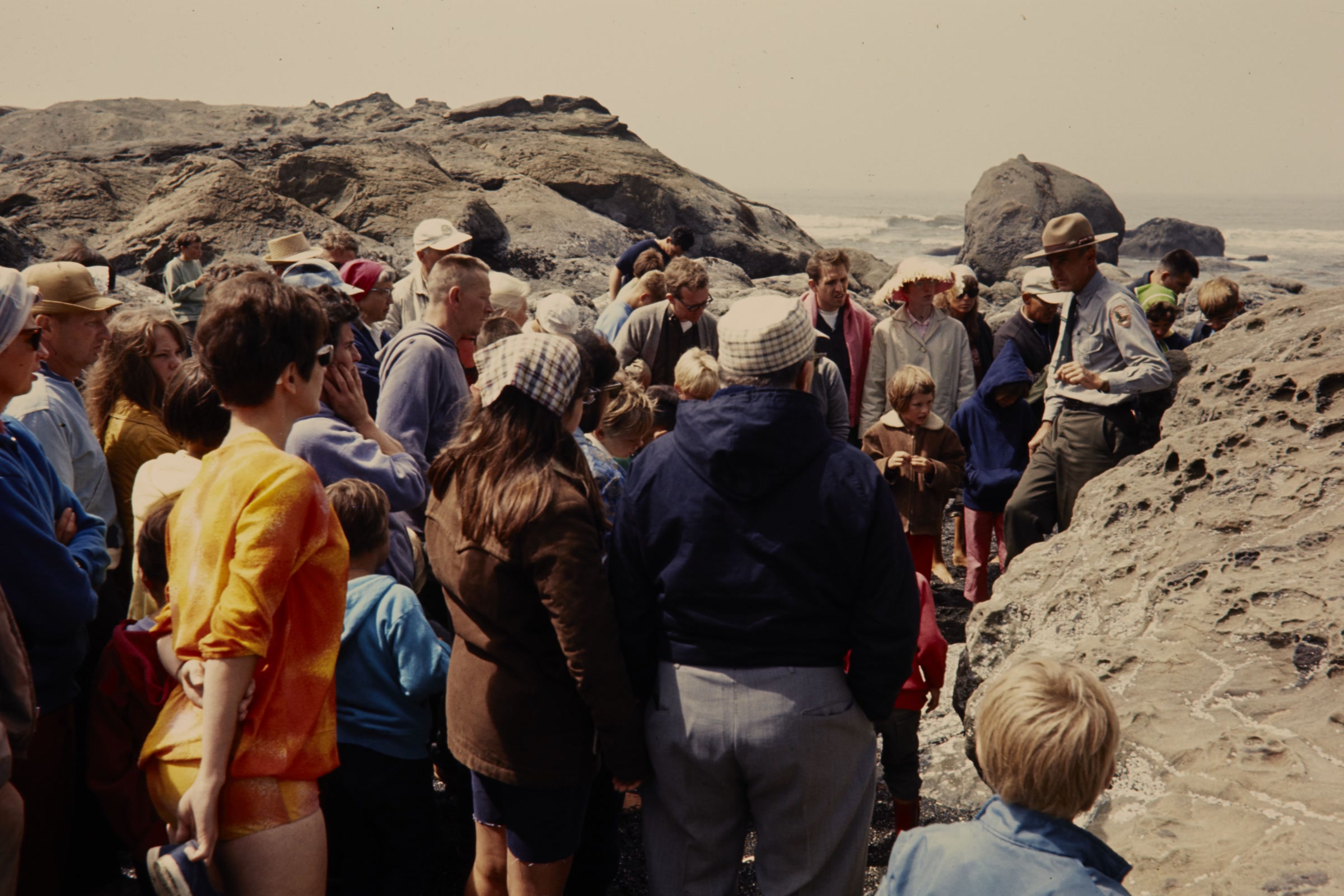
    A uniformed park naturalist in a flat hat talks to a large crowd of visitors gathered among sandstone rocks on a Kalaloch tidepool walk
    A tidepool walk at Kalaloch. NPS History Collection / William S. Keller

    Scientists and stewards

    The 2021 recipient managed the Matt Albright Nursery, the park’s native plant center. The Park Service says it was first built to grow plants for revegetating the Elwha River’s drained reservoirs after the dams came out. The 2022 recipient was the park’s Chief Wildlife Biologist, a reminder that much of Olympic’s care happens in field surveys most visitors never see.

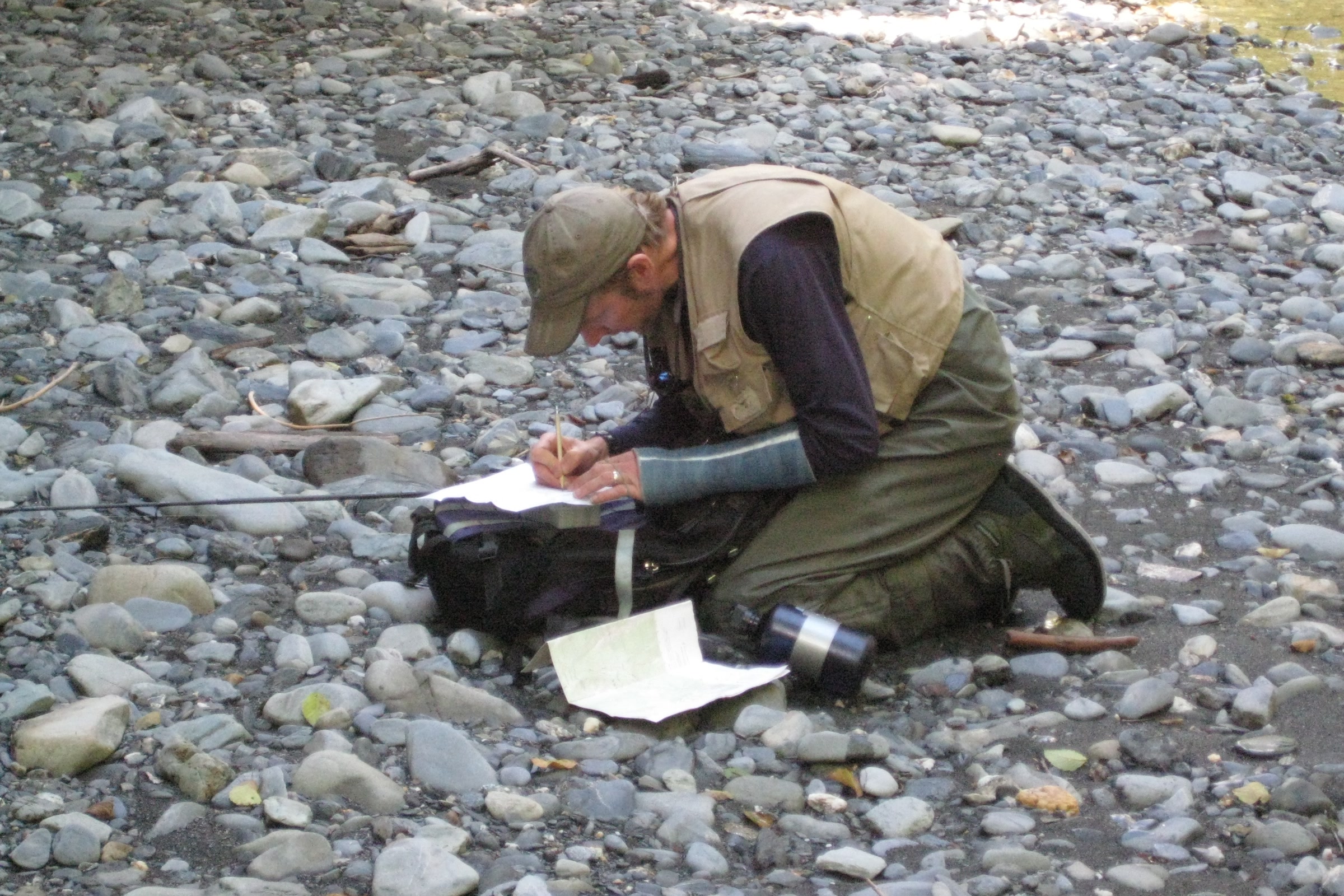
    An Olympic National Park fisheries biologist in waders kneels on a gravel river bar writing survey notes beside his gear
    Park fisheries biologist Sam Brenkman records data during an Elwha River snorkel survey. NPS Photo

    The people behind the scenes

    Some of the most telling names are the least visible. The list honors a deputy superintendent, a maintenance supervisor, a fire and emergency manager, an archivist and a volunteer coordinator. In 2023 it went to three administrative assistants to park leadership at once.

    Their coworkers chose them, which says a lot. Roads get cleared, records get kept and volunteers get placed because people like these keep the park running.

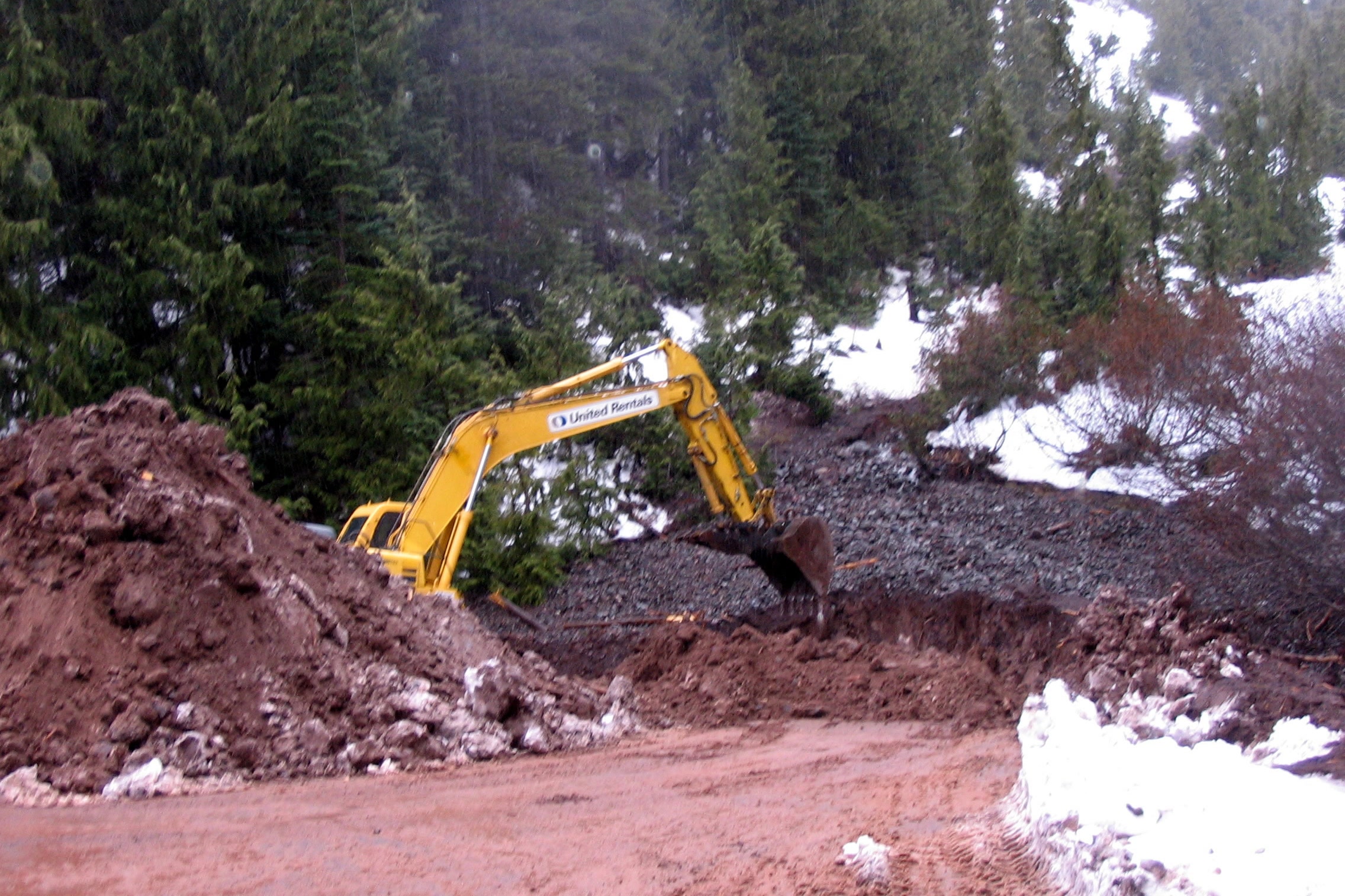
    A yellow backhoe clears red earth and rock debris beside snowbanks at the Switchback Trailhead on Hurricane Ridge Road
    Park maintenance staff clearing a slide on Hurricane Ridge Road. NPS Photo

    Our two Most Inspirational awards compared

    DetailMost Inspirational FriendMost Inspirational Park Employee
    First given20032009
    Who it honorsA member of FriendsA member of the park staff
    Who decidesOur boardCoworkers and supervisors
    Also known asThe Willie McCool AwardNo other name

    Both awards appear on our Most Inspirational awards page. Together they honor both sides of the partnership: the neighbours who volunteer, and the staff who make the park work.

    How you can be part of it

    If a ranger, packer or other park employee has made your visit, we would love to hear about it. Share the story with our board through the Friends of Olympic National Park contact page, and let us know what made their work stand out. The award itself reflects the choice of each person’s coworkers and supervisors.

    You can also meet park staff in person. Our Spring Membership Meeting in 2026 included a park update from Superintendent Sula Jacobs. To help with the work these employees lead, start with our guide to volunteering at Olympic National Park, or become a member of Friends of Olympic National Park.

    Frequently asked questions

    What is the Most Inspirational Park Employee award?

    It is an award from Friends of Olympic National Park, given since 2009 to a member of the park staff deemed Most Inspirational for work done in their park roles by coworkers and supervisors.

    Who won the Most Inspirational Park Employee award in 2025?

    Rachel Overpeck and Bruce Rothweiler, rangers at Heart O’ the Hills, were honored for creating unforgettable park experiences for visitors.

    Is there an award for Olympic National Park rangers?

    Yes. Many recipients of our park employee award have been rangers, including interpretive rangers in 2010, 2018 and 2024 and the Heart O’ the Hills rangers in 2025. Packers, biologists and other staff have received it too.

    How is it different from the Willie McCool Award?

    The Willie McCool Award is our Most Inspirational Friend award, chosen by our board for a member of Friends since 2003. The park employee award honors park staff and reflects the view of their coworkers and supervisors.

    How can I recognize a park employee who inspired me?

    Send your story to our board through the contact page on our website. Stories from visitors are always welcome, and the award itself reflects the choice of each employee’s coworkers and supervisors.

  • Memorial Donation to Olympic National Park: Honor a Loved One

    Memorial Donation to Olympic National Park: Honor a Loved One

    When someone you love has spent a lifetime on Olympic’s trails and beaches, a memorial donation for Olympic National Park can feel like the right way to say goodbye. You can give in their memory to Friends of Olympic National Park by check or by arranging it with us by email, give a membership in their name, or support the park in other ways. This guide walks through each option gently and plainly, along with what the park allows for ashes and memorials.

    There’s no right or wrong choice here. What matters is that the gift feels like them.

    Ways to honor someone who loved the park

    People give in memory for many reasons. Some families ask for gifts “in lieu of flowers.” Others want to mark a birthday, an anniversary or a last hike together. A tribute gift can also honor someone who is very much alive, like a retiring ranger or a friend who taught you every wildflower on the ridge.

    Hands writing a handwritten message inside a card on a wooden table, beside a small wrapped box with a purple bow
    Stock photo. Photo: RDNE Stock project / Pexels

    Memorial and honor gift options compared

    OptionHow it worksGood to know
    Gift in memory to FONPMail a check with a note naming the personAny amount; email us to arrange
    Gift in honor to FONPSame as above, for someone livingSuits retirements and birthdays
    Gift membershipA year of FONP membership in their name$15, $25 or $30
    Volunteer in their nameJoin a work day and dedicate it quietlyCosts nothing but time
    Gift to the park or its official partnerGive directly to the park, or to Washington’s National Park FundSee the park’s donation page

    How to donate in memory to Friends of Olympic National Park

    We’re a small, volunteer-led group, so our process is simple and personal. We don’t have an online payment form at the moment, and gifts come to us by mail or by email arrangement.

    1. Choose an amount. Our suggested gifts are $25, $50, $75, $100 or $250, but any amount is welcome, once or yearly.
    2. Write a check to Friends of Olympic National Park.
    3. Add a short note with the honoree’s name and whether the gift is in memory or in honor.
    4. Mail it to Friends of Olympic National Park, P.O. Box 3238, Port Angeles, WA 98362.

    If you’d rather talk it through first, or you’re collecting gifts from family and friends, email us at fonp2020@gmail.com and we’ll work out the details together. FONP is a registered 501(c)(3), Tax ID 02-0619892, so your gift may be tax deductible as the law allows.

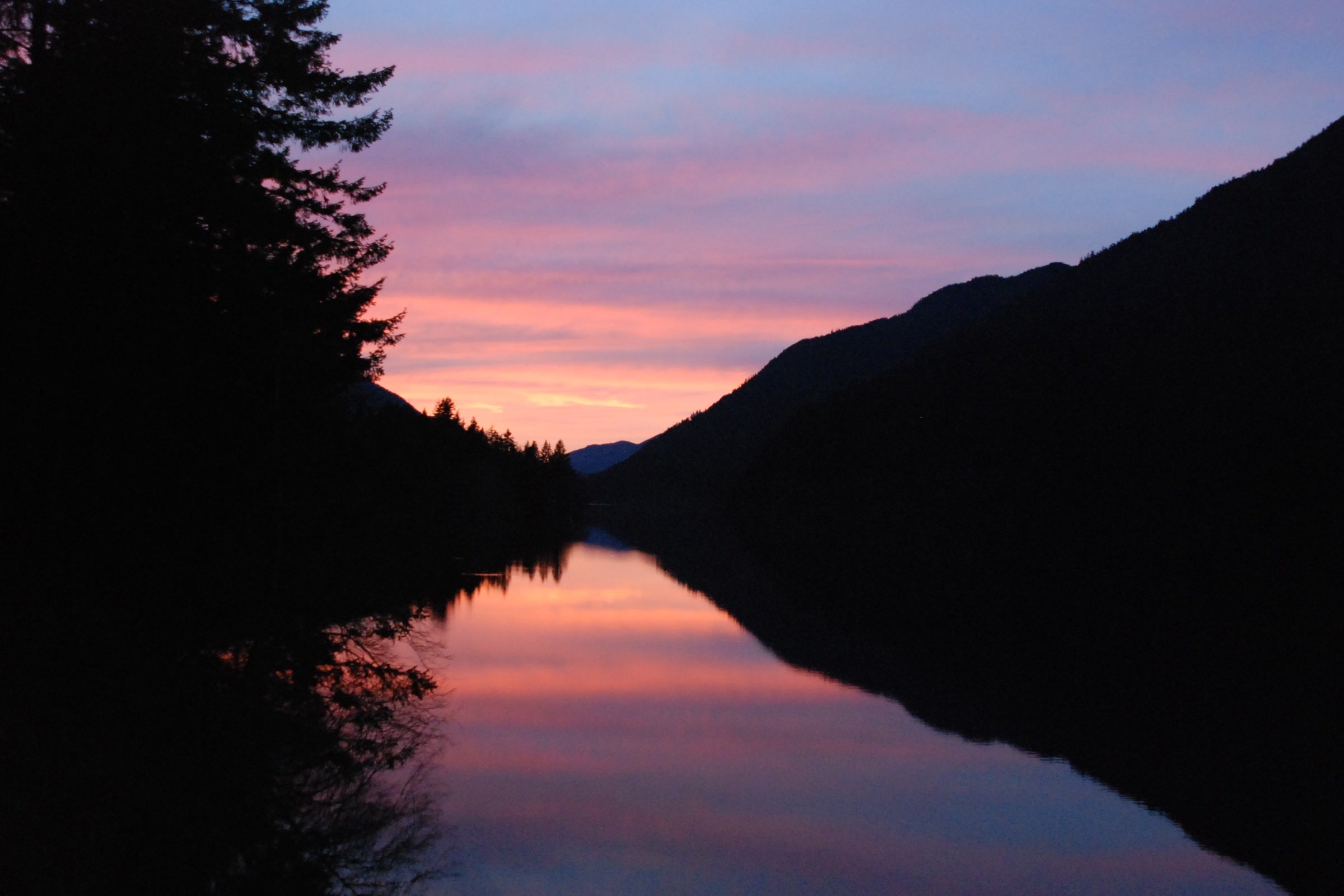
    Pink and purple sunset sky mirrored in the still water of Lake Crescent between dark forested slopes
    Lake Crescent at sunset. Photo: NPS / J. Burger

    What to write in the note

    Keep it short and clear, so nothing gets lost. A few lines on a card or a slip of paper are plenty.

    • The honoree’s full name, and “in memory of” or “in honor of.”
    • Your name and how to reach you.
    • If you’d like the family to know about the gift, their name and address.
    • Anything you’d like to share about their love of the park, if you wish.

    A simple example might read: in memory of Jane Doe, who hiked the Olympic high country every summer for forty years, from her friends at the Tuesday walking group. Plain, heartfelt words like these are all a note needs.

    If you hope for something specific, such as a letter to the family, please ask when you email us. We’d rather tell you honestly what our volunteers can do than promise something we can’t.

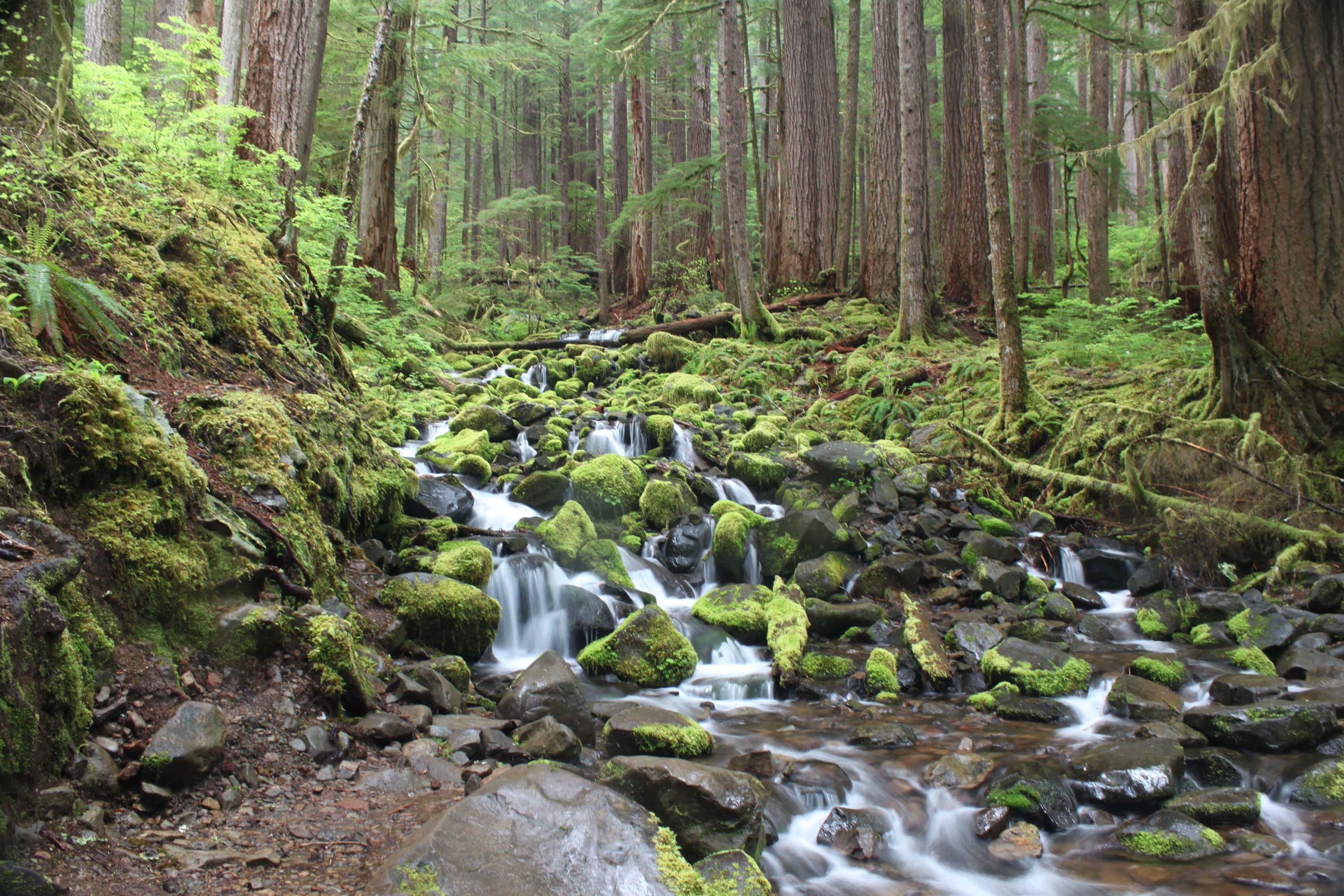
    A small stream tumbling over moss-covered stones beneath tall old-growth trees in the Sol Duc Valley
    Photo: NPS / Campbell

    Giving a membership in someone’s name

    A gift membership is a lovely way to honor someone living, or to pass a loved one’s connection to the park on to a grandchild or friend. Memberships are $15 for students, charter members and current armed services, $25 for an individual and $30 for a family. Members receive our decal, the friends-only newsletter, invitations to annual events and volunteer opportunities.

    You can give an Olympic National Park membership by mail with the form on our join page. Some people also choose to volunteer at Olympic National Park in a loved one’s name, perhaps at one of our beach cleanups in Olympic National Park on a stretch of coast they loved.

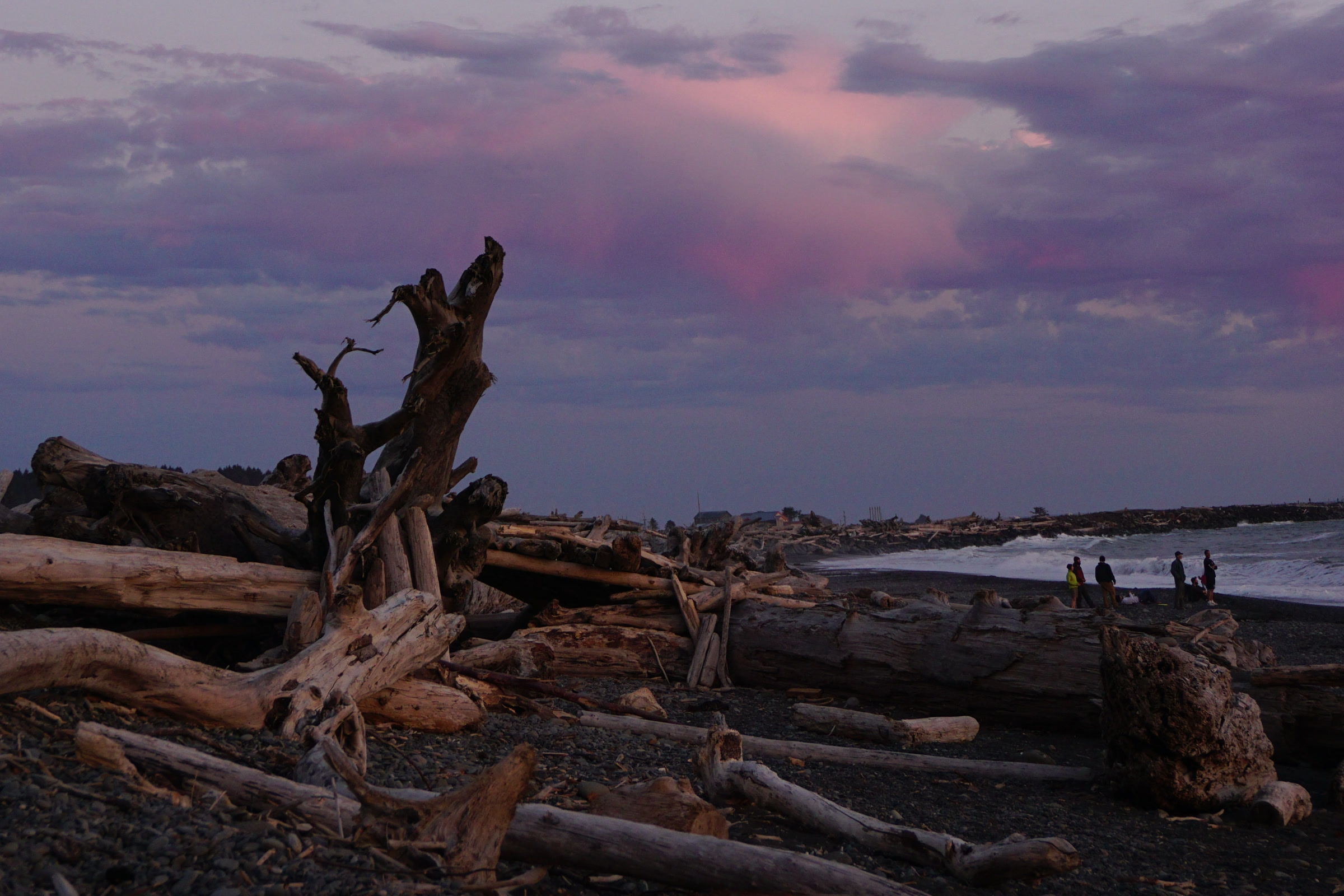
    Weathered driftwood logs on Rialto Beach under pink and violet dusk clouds, with distant walkers at the edge of the surf
    Dusk at Rialto Beach. Photo: NPS / D. Archuleta

    Scattering ashes and memorials in Olympic National Park

    Many families want to return a loved one to a favourite place in the park. Olympic allows this with a permit, and the park’s special use permit page for scattering ashes explains how to apply. Applications go to the park’s permit office by email, at least a month ahead and up to a year in advance.

    The park’s conditions are worth reading before you plan the day:

    • Ashes must be fully dispersed, and not within 200 feet of water, trails, roadsides or developed areas.
    • No containers, urns, flowers or memorial markers may be left in the park.
    • No remains may be spread at Hurricane Ridge or the surrounding area.
    • Ceremonies can’t close areas or reserve parking, and shouldn’t disturb other visitors.
    Snow-streaked peaks and glowing evening clouds reflected in a calm mountain lake in LaCrosse Basin
    LaCrosse Basin. Photo: NPS / Jon Preston

    Plaques, benches and other permanent tributes are a different matter. Federal park rules in 36 CFR 2.62 on memorialization prohibit installing a memorial in a park without authorization from the NPS Director. We can.t promise a plaque or a named bench in return for a gift, so a donation, a membership or a quiet visit is often the most lasting way to remember someone here.

    Where a memorial gift goes

    Gifts to FONP support our seven projects, from the Heart O’ the Forest Trail adopt-a-trail crew and guided nature walks to the Children’s Discovery Room and National Junior Ranger Day. It’s a fitting tribute for someone who loved to share the park with others.

    Looking up at tall straight conifer trunks with soft sunlight breaking through the canopy in an Olympic National Park forest
    Photo: Trevor Vannoy / Unsplash

    We also honor people while they’re with us. Our Most Inspirational awards recognize a friend of the park and a park employee each year, and the friend award carries the name of Willie McCool, whose story and connection to Olympic we’re proud to tell. If you’d simply like to make a gift to support Olympic National Park, our donate page has every option in one place.

    Frequently asked questions

    Can I make a memorial donation for Olympic National Park?

    Yes. You can mail a check to Friends of Olympic National Park with a note naming the person, or email fonp2020@gmail.com to arrange it. The park and its official philanthropic partner also accept gifts.

    Is a memorial gift to Friends of Olympic National Park tax deductible?

    FONP is a registered 501(c)(3), Tax ID 02-0619892, so gifts may be tax deductible as the law allows. Check with your tax adviser.

    Can you scatter ashes in Olympic National Park?

    Yes, with a permit from the park. Ashes must be fully dispersed away from water, trails, roads and developed areas, nothing may be left behind, and no remains may be spread at Hurricane Ridge.

    Can I place a memorial plaque or bench in the park?

    Not without authorization. Federal rules prohibit installing memorials in national parks without approval from the NPS Director, so FONP cannot promise a plaque or named bench in return for a gift.

    Can I give a membership in someone’s name?

    Yes. A gift membership costs $15, $25 or $30 a year and includes a decal, the friends-only newsletter and invitations to annual events. Use the mail-in form on our join page.

  • What Is a National Park Friends Group? How the Model Works

    What Is a National Park Friends Group? How the Model Works

    A national park friends group is an independent nonprofit, usually run by local people, that gives a park money, time and practical help. The National Park Service calls these groups philanthropic partners and notes that most focus on a single park or region. If you have ever met a cleanup crew, a walk leader or a volunteer at a visitor center table, there is a good chance a friends group was behind it.

    We’re Friends of Olympic National Park, a small friends group in Port Angeles. This guide explains how the friends group model works in general, how it differs from other park partners, and how you can join one or start your own.

    How the friends group model works

    National parks run mainly on federal funding, and they can’t go out and fundraise for themselves. One NPS park page puts it plainly: parks are forbidden by federal law to raise money on their own, so friends organizations do it for them. That gap is the reason friends groups exist.

    A friends group is not part of the government. It has its own board, its own members and its own nonprofit status, and it works alongside park staff rather than for them. The park decides what it needs and what is allowed on park land, and the friends group helps where it can.

    A trail crew member in a yellow hard hat lifts a rock among burned tree trunks on the Staircase Rapids Loop in Olympic National Park
    An Olympic National Park trail crew rebuilding the Staircase Rapids Loop. Photo: NPS / E. Goode

    When a partnership grows, the NPS asks for a written agreement. Its partnership manual says one is needed when fundraising is expected to pass $25,000, or when the relationship runs longer than 18 months. The agreement most often used with friends groups is signed by the park’s superintendent with regional approval.

    Friends groups and other national park partners

    The NPS directory of National Park Service philanthropic partners lists more than 290 philanthropic organizations and cooperating associations. They do related but different jobs, and the names can blur together, so here is the short version.

    Types of park partners compared

    Partner typeMain jobHow you take part
    Friends groupRaises money and gives time to one park or regionJoin as a member, volunteer, donate
    Cooperating associationRuns park bookstores; funds educational, scientific, historical and interpretive workBuy books, maps and guides
    Philanthropic fund partnerRaises larger gifts and grants for projects the park selectsDonate, often online or by mail
    Individual volunteerGives time directly, once or on a scheduleSign up through park programs

    Some parks have all of these at once, and the lines aren’t always sharp. A friends group may also run a fund, and some parks name one organization as their official philanthropic partner. The name on the door varies too: conservancy, foundation, association or friends.

    A group of five hikers gathered on a rocky ridge as the sun sets over the Olympic Mountains
    Photo: NPS / Bill Baccus

    What members of a friends group actually do

    Membership is the backbone. In many groups, modest dues help pay for supplies and programs, and every member adds to the voice of local support. Members don’t have to do anything more than that, but many do.

    • Show up for work days. Cleanups, trail work and garden care, always under park guidance.
    • Share what they know. Leading walks, giving talks or helping at kids’ events.
    • Serve on the board. Planning projects, keeping the books and talking with park staff.
    • Spread the word. Bringing a neighbour to an event or passing on the newsletter.
    A narrow log footbridge with a single handrail leading into green rainforest on a Quinault trail
    Photo: NPS / Jon Preston

    How friends groups support national parks

    According to the NPS, friends group support ranges from fundraising and recruiting volunteers to donating goods and providing educational programs. In practice, that support tends to fall into four kinds of help.

    • Money: member dues and gifts that fill small gaps the federal budget doesn’t reach.
    • Hands: organized volunteer days that park staff couldn’t staff alone.
    • Learning: walks, lectures and youth programs that help people understand the park.
    • Thanks: recognizing the staff and neighbours who give the park their best.

    Friends groups come in many sizes, from large organizations with paid staff to small circles of neighbours. Ours is volunteer-led, and groups like ours are often the ones at the trailhead on a Saturday morning with gloves and trash bags.
    Glaciers and snowfields on Mount Carrie in the Olympic Mountains, with cloud drifting across the ridges
    Mount Carrie. Photo: NPS / Bill Baccus

    Olympic National Park’s friends group: an example

    Friends of Olympic National Park (FONP) shows what a small, local friends group looks like. We were founded in 2002, registered as a 501(c)(3) in 2023, and are led by a volunteer board of 12 community members. The park’s own partner page lists us among its funding partners, alongside Washington’s National Park Fund, which is the park’s official philanthropic partner.

    Our work fits the four kinds of help above: we educate, volunteer, fund and honor. We run seven projects, including the adopt-a-trail crew on the Heart O’ the Forest Trail, beach cleanups in Olympic National Park, the Winter Perspectives lecture series and National Junior Ranger Day. Each year we also present two Most Inspirational awards, one for a friend of the park and one for a park employee.

    Golden sunrise light glowing through mist over tall evergreens and the river in the Hoh Rain Forest
    Photo: NPS / Jon Preston

    If you are weighing the different ways to help Olympic specifically, our guide to Olympic National Park support organizations lays them side by side. You can also read more about Friends of Olympic National Park and our history since 2002.

    How to join or start a friends group

    Joining one

    Start with the park you love. Its website usually has a partners or support page that names its friends group, and the NPS partner directory covers groups authorized to fundraise. Then join, come to a meeting and try one volunteer day to see if it fits.
    Starting one

    If your park has no friends group, the path is slower but well worn. These steps reflect common practice, and your state’s rules will differ.
    1. Talk with park staff first, so the group grows around real park needs.
    2. Gather a small founding circle of neighbours willing to serve on a board.
    3. Write a mission and bylaws, incorporate in your state and apply for tax-exempt status.
    4. Agree with the park on how you’ll work together, in writing once fundraising grows.
    5. Begin with one simple, visible project and build from there.
    A dirt trail curving between moss-draped trees in the rainforest of Olympic National Park, framed by a mossy log
    Photo: Alex Moliski / Pexels

    Near Olympic, the easiest first step is to become a member of Friends of Olympic National Park. Memberships are $15 for students, charter members and current armed services, $25 for individuals and $30 for families. Members get a decal, our friends-only newsletter, invitations to annual events and volunteer opportunities in Olympic National Park.

    Curious who keeps it running? Meet our volunteer board, 12 community members who serve without pay.

    Frequently asked questions

    What is a national park friends group?

    It is an independent nonprofit, usually local, that supports a park with money, volunteer time, donated goods and education. The National Park Service calls these groups philanthropic partners.

    Are friends groups part of the National Park Service?

    No. A friends group has its own board, members and nonprofit status. It works with park staff, and the park decides what work happens on park land.

    What is the difference between a friends group and a cooperating association?

    A friends group raises money and gives time to a park or region. A cooperating association mainly runs park bookstores and funds educational, scientific, historical and interpretive work.

    Does Olympic National Park have a friends group?

    Yes. Friends of Olympic National Park is a volunteer-led 501(c)(3) founded in 2002 in Port Angeles. Washington’s National Park Fund is the park’s official philanthropic partner.

    How do I start a friends group for a park?

    Talk with park staff, gather a founding board, write bylaws, incorporate and seek tax-exempt status, then agree with the park on how you will work together. A written agreement is needed once fundraising grows.

  • Mushroom Season on the Olympic Peninsula: When and What to Know

    Mushroom Season on the Olympic Peninsula: When and What to Know

    Mushroom season on the Olympic Peninsula starts when the fall rains return and runs until the first major frosts. Fungi can turn up almost any month here, but autumn is when the forest floor, the old logs and the mossy trunks really come alive. Local foragers start watching the woods around Labor Day, and the show lasts as long as the mild, wet weather does.

    We are Friends of Olympic National Park (FONP), a volunteer-led friends group in Port Angeles. Guided mushroom walks are one of our projects, and this guide covers the season itself: what drives it, what you’ll see, the park’s rules and how to stay safe.

    What sets off mushroom season

    A mushroom is only the fruit of a much bigger organism. Most of the fungus lives out of sight as a web of threads in soil and wood, and it sends up mushrooms when moisture and temperature are right. On the North Olympic Peninsula, a heavy early autumn storm is often what sets off the first big flush.

    The park describes mushrooms as appearing nearly year-round, with the peak running from the start of the fall rains until the first major frosts. Most of the year’s rain falls between November and April. By then the high country may already have snow, which can arrive as early as late September.

    Rows of small tan mushrooms growing along a dark, soaked log beside a rain dimpled pool
    Rain is the trigger. Mushrooms on a wet log in Tacoma, Washington. Photo: fr0ggy5 / Unsplash

    The season at a glance

    Every year is a little different, because the timing follows the weather rather than the calendar. A dry September can hold the first flush back, and an early hard frost can end the peak quickly. Use this table as a rough guide, not a schedule.

    Olympic Peninsula mushroom season by stage

    StageWhat to expectWhat usually ends it
    Early fallFirst flush after heavy rain; early chanterellesA dry spell
    Mid fallPeak variety on the forest floor and logsCold snaps
    Late fallFewer, tougher species; shelf fungi stand outThe first major frosts
    Winter to summerScattered finds; morels are more of a spring mushroomDry summer weather

    Where fungi grow in Olympic National Park

    The park is a fungus paradise. Its own fungi guide counts at least 1,400 species, helped by a wide mix of trees, varied rainfall and elevations from sea level to 7,890 feet. Some of the best places to look are close to home.

    • Rain forest valleys: mossy logs, nurse logs and stumps on the park’s west side.
    • Lowland forests: needle litter under conifers, where many mushrooms partner with tree roots.
    • Trail edges: cut ends of fallen trees and rotting wood are easy to scan from the path.
    A small group of tan mushrooms growing in moss beneath ferns on a Washington forest floor
    Mushrooms under ferns in a Washington forest. Photo: Daniel Hall / Unsplash

    Common fungi groups you’ll notice

    You don’t need species names to enjoy a fall walk. It helps more to know the three jobs fungi do in the forest, which the park describes in its fungi guide. Once you know the jobs, every log and root plate starts to tell a story.

    Forest roles of fungi compared

    RoleWhat it doesPark examples
    DecomposersBreak down dead wood and litterRed-belted conk, chicken of the woods
    PartnersTrade nutrients with tree rootsFly agaric, king bolete
    ParasitesFeed on living treesHoney mushroom
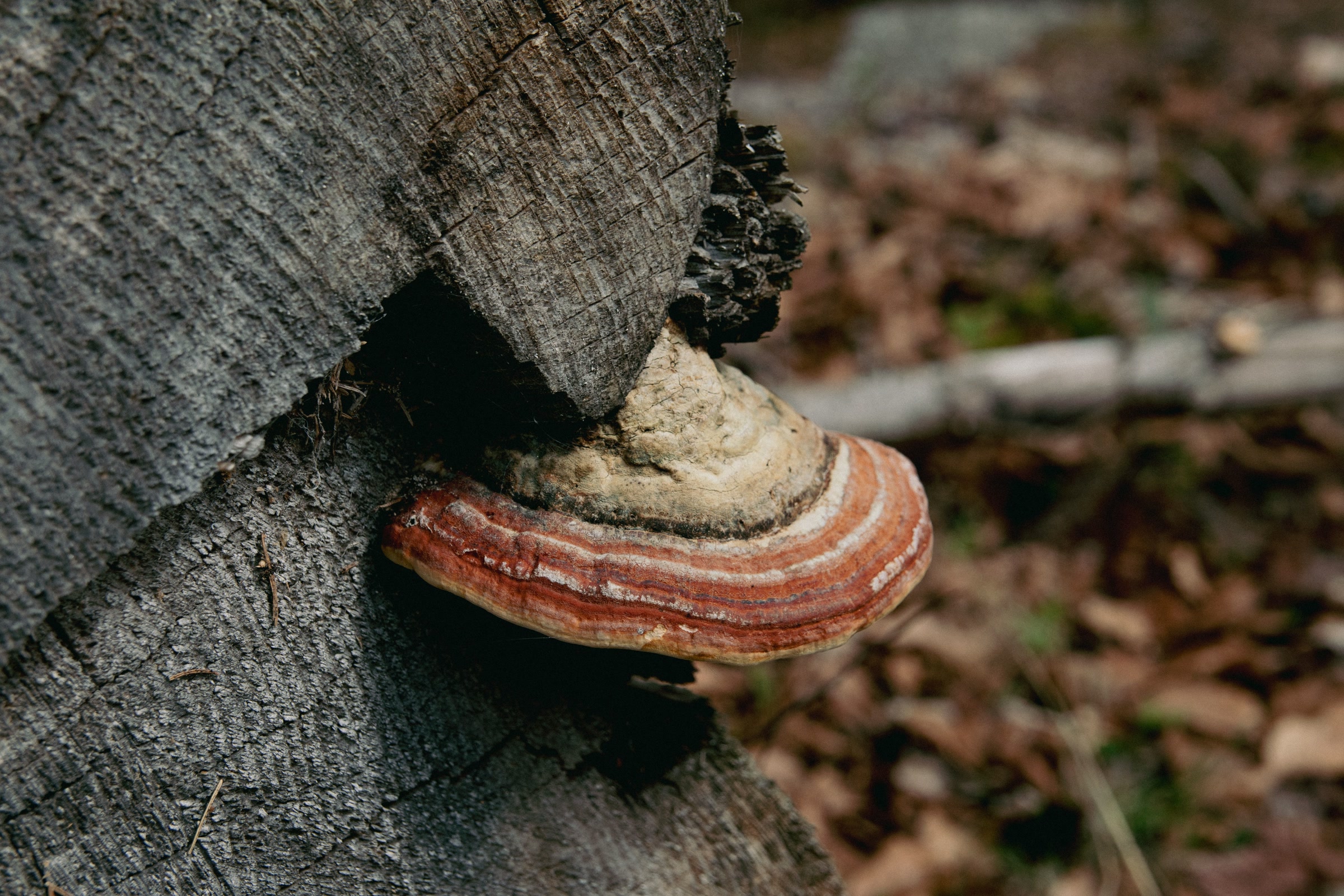
    A hard bracket fungus with red and cream bands growing from the side of an old cut stump
    A banded bracket fungus breaking down an old stump, for illustration. Photo: Jan Dvorak / Pexels

    Local writers also mention chanterelles, lobster mushrooms and boletes as fall favourites in western Washington. Shelf fungi and conks are woody and long lasting, so they are easy to spot even late in the year.

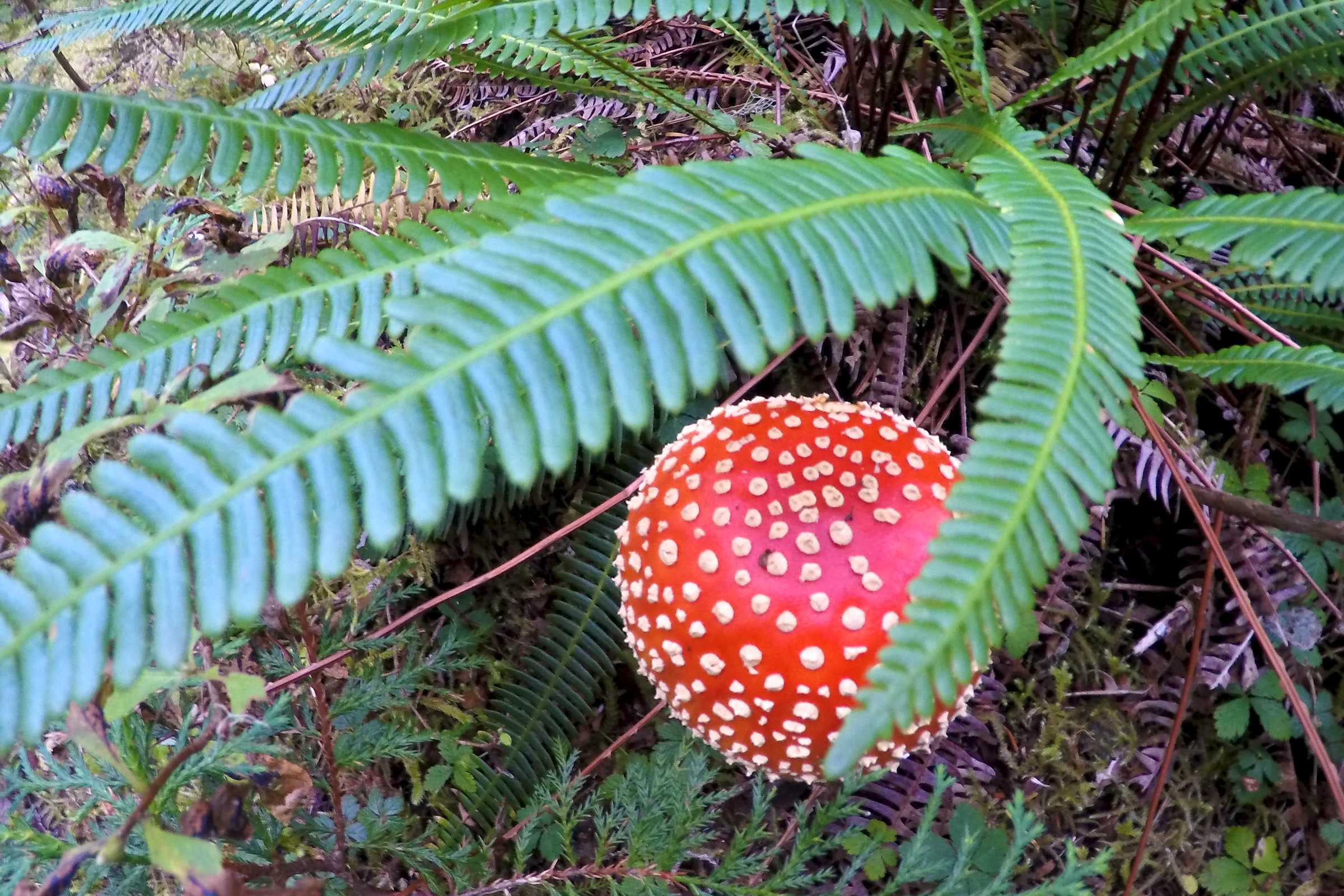
    A red fly amanita cap dotted with white warts, half hidden under a sword fern on the North Fork Quinault Trail
    Fly amanita on the North Fork Quinault Trail. NPS Photo / M. Juran

    Safety first: never eat an unidentified mushroom

    This is the one rule that matters most. The park warns that many fatally poisonous mushrooms grow here, including the funeral bell. The Washington Poison Center’s mushroom safety advice notes that death caps also grow in Washington, and that some mushroom poisons are not destroyed by cooking.

    • Never eat a wild mushroom unless a qualified expert has positively identified it.
    • Don’t rely only on field guides or online forums. Learn from experienced local people.
    • Know the look-alikes. Local foragers warn that the false chanterelle is easily mistaken for the real thing.
    • If someone feels sick after eating a mushroom, call the poison center at 1-800-222-1222, or 911 for breathing trouble or collapse.
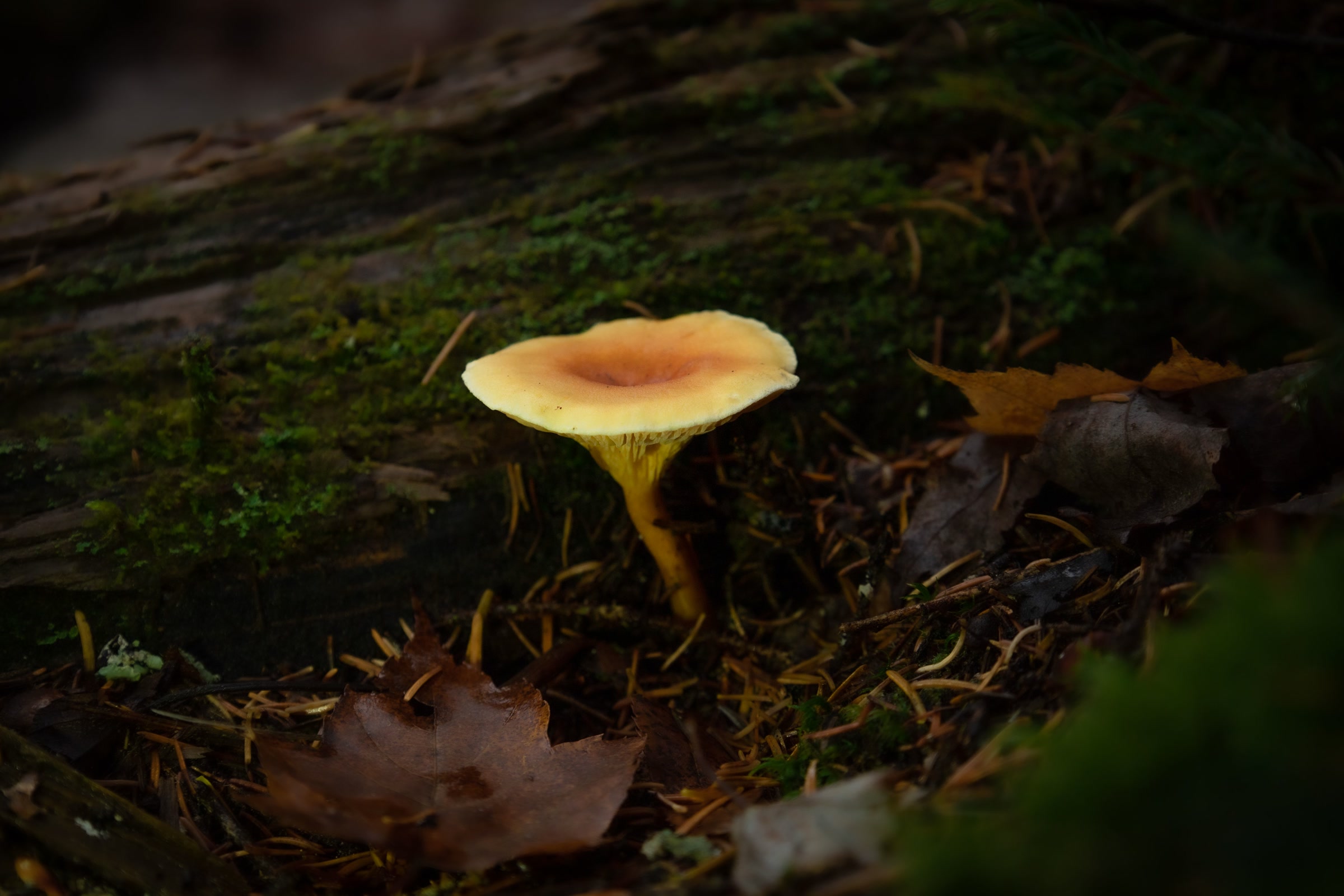
    A single orange yellow funnel shaped mushroom, listed as a false chanterelle, beside a mossy log in fallen leaves
    A mushroom listed as a false chanterelle, for illustration. Photo: Julia Barrantes / Pexels

    Can you pick mushrooms in Olympic National Park?

    Only in a narrow way. Collecting natural materials in the park is generally prohibited, but the Olympic National Park Superintendent’s Compendium (updated January 2026) makes an exception for edible fruits, berries, nuts and the fruiting bodies of mushrooms.

    • Gather by hand, and for your own eating only. Any other use is prohibited.
    • The limit is 1 quart per person per day, for fruits, berries, nuts and mushrooms combined.
    • No gathering within 200 feet of nature trails, special trails or natural study areas.

    Rules change at the park boundary. Olympic National Forest, Washington State Parks and lands managed by the state Department of Natural Resources each set their own, so check with the land manager wherever you are. Inside the park, the park itself suggests that simply enjoying mushrooms is the safer choice.

    How to enjoy fungi without picking them

    Looking is half the fun, and it leaves the mushroom to spread its spores. A few habits make a fall walk better for you and for the forest.

    • Get low and photograph from the side to show the gills or pores.
    • Stay on the trail, and keep off fragile moss and nurse logs.
    • Carry a hand lens and a small notebook to record colour, smell and what the mushroom grows on.
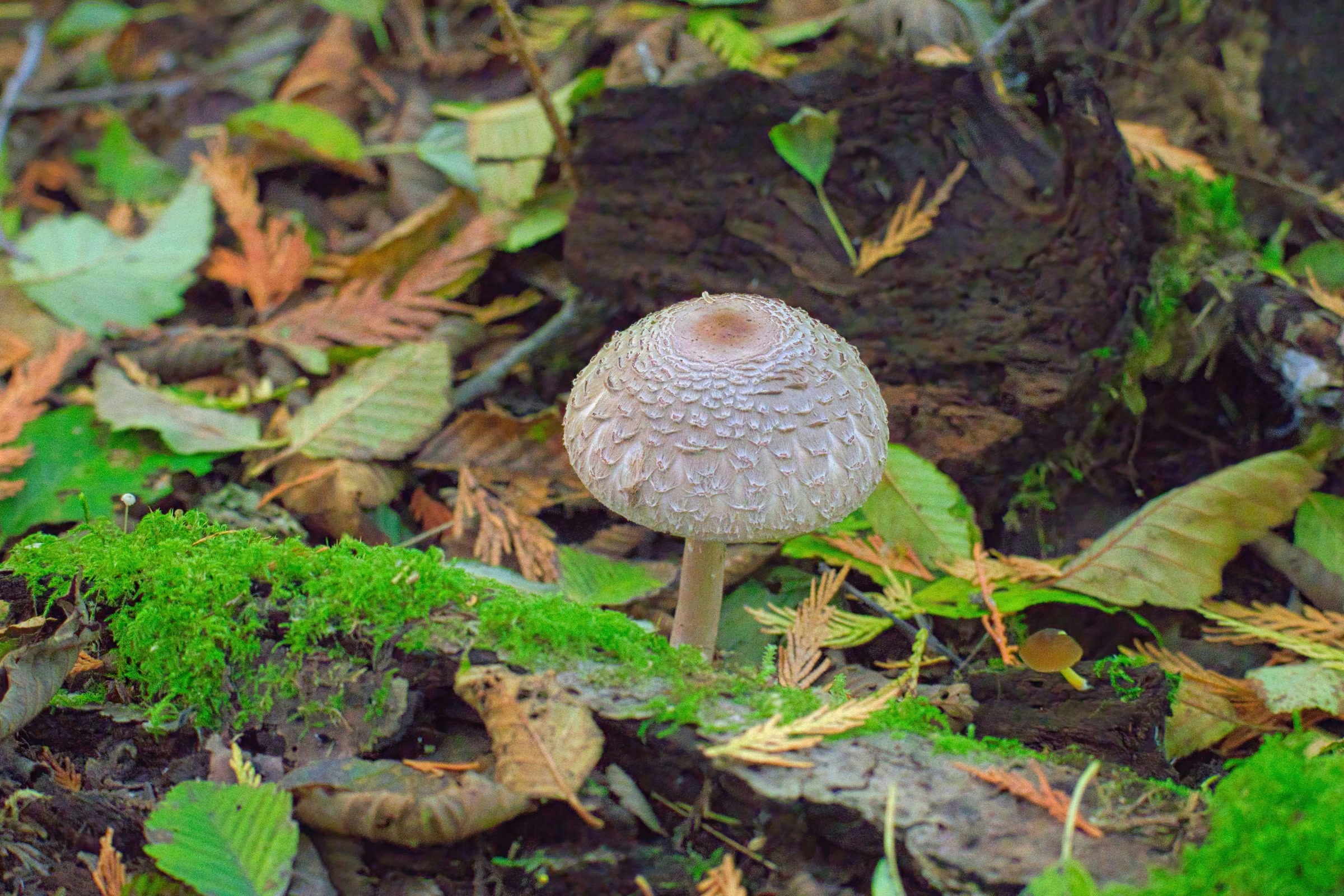
    A pale mushroom with a finely scaled cap standing in moss, cedar sprigs and fallen leaves in a Washington forest
    A scaly cap in cedar and leaf litter in Lacey, Washington. Photo: Townsend Walton / Unsplash

    Take a fungi walk on the Olympic Peninsula with us

    The easiest way to learn is beside someone who knows the forest. Our guided mushroom walks in Olympic National Park are slow, small and focused on looking, not picking. We share walk dates on our upcoming events calendar once the rains make the season clear.

    Members hear about walks first, so become a member of Friends of Olympic National Park to get the invitation. And when spring comes round, our guide to when to see Hurricane Ridge wildflowers picks up where the mushrooms leave off.

    Frequently asked questions

    When is mushroom season on the Olympic Peninsula?

    Mushrooms appear almost year-round, but the peak runs from the start of the fall rains until the first major frosts. Local foragers usually start looking around Labor Day.

    Can you pick mushrooms in Olympic National Park?

    Only edible mushrooms, by hand, for your own eating. The limit is 1 quart per person per day, combined with fruits, berries and nuts, and nothing within 200 feet of nature trails, special trails or natural study areas.

    Are there poisonous mushrooms in Olympic National Park?

    Yes. The park warns that many fatally poisonous mushrooms grow there, including the funeral bell. Never eat a wild mushroom unless a qualified expert has identified it.

    What should I do if someone eats a wild mushroom and feels sick?

    Call the Washington Poison Center at 1-800-222-1222. Call 911 if the person has trouble breathing, swelling of the face or mouth, or loses consciousness.

    Are there guided mushroom walks in Olympic National Park?

    Friends of Olympic National Park runs guided mushroom walks as one of its projects. Dates are posted on our events page, and members hear about them first.

  • Hurricane Ridge Wildflowers: When to See Them and Where

    Hurricane Ridge Wildflowers: When to See Them and Where

    If you want to know when to see Hurricane Ridge wildflowers, the short answer is summer, as soon as the snow lets go. In an average year the meadows peak somewhere between late June and early August, and many hikers aim for July. The exact weeks move every year, so it pays to understand what drives the bloom.

    We are Friends of Olympic National Park (FONP), a volunteer-led friends group based in Port Angeles. Guided wildflower walks are one of our projects, and this guide shares what we have learned about timing, trails and meadow manners.

    Why the bloom date changes every year

    Hurricane Ridge sits 17 miles south of Port Angeles, high above the Strait of Juan de Fuca. According to the park, the ridge traditionally records 30 to 35 feet of snow a year, and snow or heavy rain can linger into June at higher elevations. The flowers cannot start until that snowpack melts.

    A big snow year pushes everything later. In June 2012 a park ranger told the Peninsula Daily News that the ridge normally reaches its summer height in late June, but he expected that year’s bloom to start in late July. The year before, the peak slipped into August.

    A single white avalanche lily nodding above fresh green leaves on bare, recently thawed ground on Hurricane Hill
    An avalanche lily on Hurricane Hill in mid-July 2010. Photo: brewbooks / Wikimedia Commons (CC BY-SA 2.0)

    Slope and elevation matter too. South-facing slopes clear first, while shady hollows and north sides hold snow for weeks. So on a single walk you can see fresh early flowers in one dip and fading ones on the next sunny bank.

    How the season unfolds

    Think of the bloom as a wave that follows the melting snow uphill. The stages below are a rough guide, not a calendar.

    Hurricane Ridge bloom stages compared

    StageWhat you may seeWhere to look
    Just after snowmeltAvalanche liliesEdges of shrinking snow patches
    Early summerSpeedwell, fleabaneSunny, early-melting slopes
    Peak bloomBroadleaf lupine, paintbrush, pink mountain heatherOpen meadows and trail edges
    Late summerHarebells, fireweed, lingering lupineHigher, later-melting slopes

    Late summer on the ridge is usually dry, because very little rain falls in the high country in summer. One hiker reporting from Hurricane Hill at the end of July 2025 found most flowers past their prime, with harebells the most common. In a late snow year, lupine can still look fresh in August.

    A Hurricane Ridge slope crowded with red paintbrush, pink fireweed and white daisies in July
    Paintbrush and fireweed at Hurricane Ridge, July 2014. NPS Photo / C. Bubar

    Where to see Hurricane Ridge wildflowers

    You don’t need a long hike. Several short trails start right at the Hurricane Ridge parking area, and the meadows begin at the edge of the pavement. These distances come from the park’s Hurricane Ridge area brochure.

    Hurricane Ridge flower trails compared

    TrailOne waySurface and climbGood for
    Big Meadow0.25 milePaved, nearly flatOpen meadow views
    Cirque Rim0.5 milePaved, nearly flatViews to the Strait
    High Ridge0.5 mile loopPartly paved, 220 feet360 degree views
    Hurricane Hill1.6 milesPaved, about 700 feetThe classic flower walk
    Spikes of purple broadleaf lupine in a green meadow on Hurricane Ridge in August, with snowy peaks blurred behind
    Broadleaf lupine on Hurricane Ridge in August 2012. Photo: Cody Logan / Wikimedia Commons (CC BY-SA 4.0)

    Hurricane Hill

    Hurricane Hill is the favourite. The paved trail climbs to a summit of 5,757 feet, according to the Washington Trails Association’s Hurricane Hill guide. The upper part is steep, so take it slowly and enjoy the flowers on the way.

    A clump of purple broadleaf lupine ringed by white spreading phlox on rocky ground along Hurricane Hill
    Lupine and spreading phlox on Hurricane Hill. Photo: brewbooks / Wikimedia Commons (CC BY-SA 2.0)

    Wildflowers to look for

    The park lists these among the wildflowers of its subalpine zone, the band just below treeline. In the Olympics, treeline lies between 5,000 and 6,000 feet.

    • Broadleaf lupine: purple spikes that can colour whole slopes.
    • Paintbrush: bright red and orange tufts.
    • Avalanche lily: nodding white flowers that appear as the snow retreats.
    • Red mountain heather, penstemon, shooting star, beargrass and violets.

    Higher up, in the rocky alpine zone, the park names spreading phlox and smooth douglasia. It also names two flowers found only in the Olympic Mountains: Piper’s bellflower, which often grows in rock cracks, and Flett’s violet.

    Star-shaped violet blue flowers of Piper's bellflower growing among loose grey rocks
    Piper’s bellflower, unique to the Olympic Mountains. NPS Photo

    Before you go: Hurricane Ridge today

    The Hurricane Ridge Day Lodge burned down on May 7, 2023. The park now runs temporary facilities with restrooms and trash bins, but there is no food service, gift shop or drinking water. Fill your water bottles before you drive up.

    • Hurricane Ridge Road is open throughout summer, but weather can close it at any time.
    • Clallam Transit runs a special summer bus route from downtown Port Angeles.
    • Mountain weather changes fast, and thunderstorms are possible in the high country.

    Check current conditions on nps.gov/olym before you leave home. If you have time on the way, our guide to the Olympic National Park Visitor Center in Port Angeles explains what to see there first.

    Tips for a good flower day

    • July and August are the park’s busiest months, so arrive early in the day for easier parking and softer light.
    • Bring layers and rain gear, even on a sunny morning.
    • Pack a simple wildflower guide or a phone app, and a hand lens for tiny blooms.

    Meadow manners: stay on the trail

    Subalpine meadows have only a few snow-free weeks to grow, flower and set seed. Alpine plants even form next year’s buds the year before, so one trampled patch can lose more than a single summer. The park asks visitors to stay on snow or designated trails to protect them.

    Two walkers seen from behind on a wide trail at Hurricane Ridge, with lupine on the slope and snowy mountains ahead
    Keeping to the trail at Hurricane Ridge. NPS Photo
    • Stay on the path, even for the perfect photo.
    • Leave every flower where it grows. Collecting plants is generally prohibited in the park.
    • Leave pets at home: pets and bicycles are not allowed on the trails.
    • Don’t feed the blacktail deer that graze in the meadows.

    Join a guided wildflower walk at Hurricane Ridge

    A naturalist’s eye turns a pretty view into a story. Our guided wildflower walks in Olympic National Park move slowly, stop often and help you name what you see. Back in 2006, FONP members took an evening wildflower walk to Hurricane Hill with a park naturalist, and that unhurried style is still our model.

    Because the bloom moves with the snow, we set walk dates close to the season and post them on our upcoming events calendar. Members hear first, so become a member of Friends of Olympic National Park if you’d like an early invitation.

    Love flowers closer to town? Help tend the Visitor Center pollinator garden, or come back in autumn for our guide to mushroom season in Olympic National Park.

    Frequently asked questions

    When is the best time to see wildflowers at Hurricane Ridge?

    Usually from late June to early August, with July the most popular month. A heavy snow year can push the peak later, so check recent trail reports before you go.

    What wildflowers grow at Hurricane Ridge?

    Look for broadleaf lupine, paintbrush, avalanche lilies, red mountain heather, penstemon and spreading phlox. Piper’s bellflower and Flett’s violet grow only in the Olympic Mountains.

    Is the Hurricane Hill trail paved?

    Yes. The park lists it as a paved trail of 1.6 miles one way with a climb of about 700 feet. The upper section is steep.

    Can I pick wildflowers at Hurricane Ridge?

    No. Collecting plants is generally prohibited in Olympic National Park. Please stay on the trail and leave every flower for the next visitor and the pollinators.

    Are there guided wildflower walks at Hurricane Ridge?

    Friends of Olympic National Park offers guided wildflower walks as one of its projects. Dates are set close to the bloom and posted on our events page.