
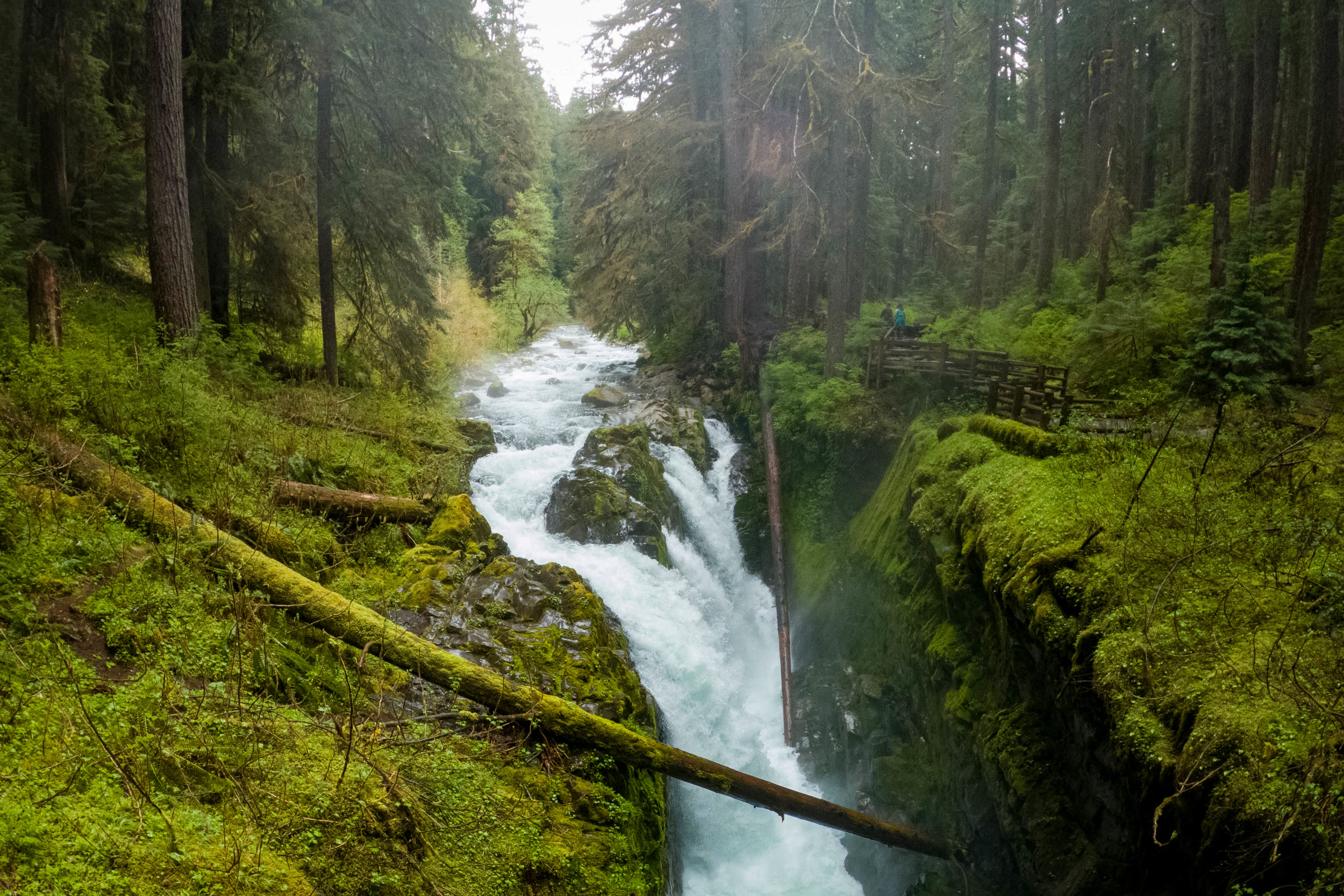
Sol Duc Falls is the payoff at the end of one of the gentlest walks in Olympic National Park. The trail starts at the end of Sol Duc Road, deep in a valley of old growth forest, and ends where the Sol Duc River drops into a narrow, mossy canyon. Here is how to plan the walk, what else the valley offers, and what to check before you drive in.
Quick answer
How do you get to Sol Duc Falls, and how long is the hike?
Sol Duc Falls is reached by a relatively level trail of about 0.8 mile one way, with roughly 200 feet of gain, from the parking area at the end of Sol Duc Road. The paved road runs 14 miles from Highway 101 and is often closed by winter snow and ice, so check NPS road conditions first.
- About 0.8 mile one way through old growth forest
- Sol Duc Road: paved, 14 miles from Highway 101
- No pets or bicycles on any Sol Duc trail
- Coho leap at Salmon Cascades in autumn
The Sol Duc Falls trail
The park’s page for the Sol Duc Falls trail calls this “perhaps the most picturesque waterfall in Olympic,” and the walk to it is an easy one. From the trailhead it is about 0.8 mile (1.3 km) one way on a relatively level path through big old trees. The park’s Sol Duc brochure puts the elevation gain at about 200 feet.
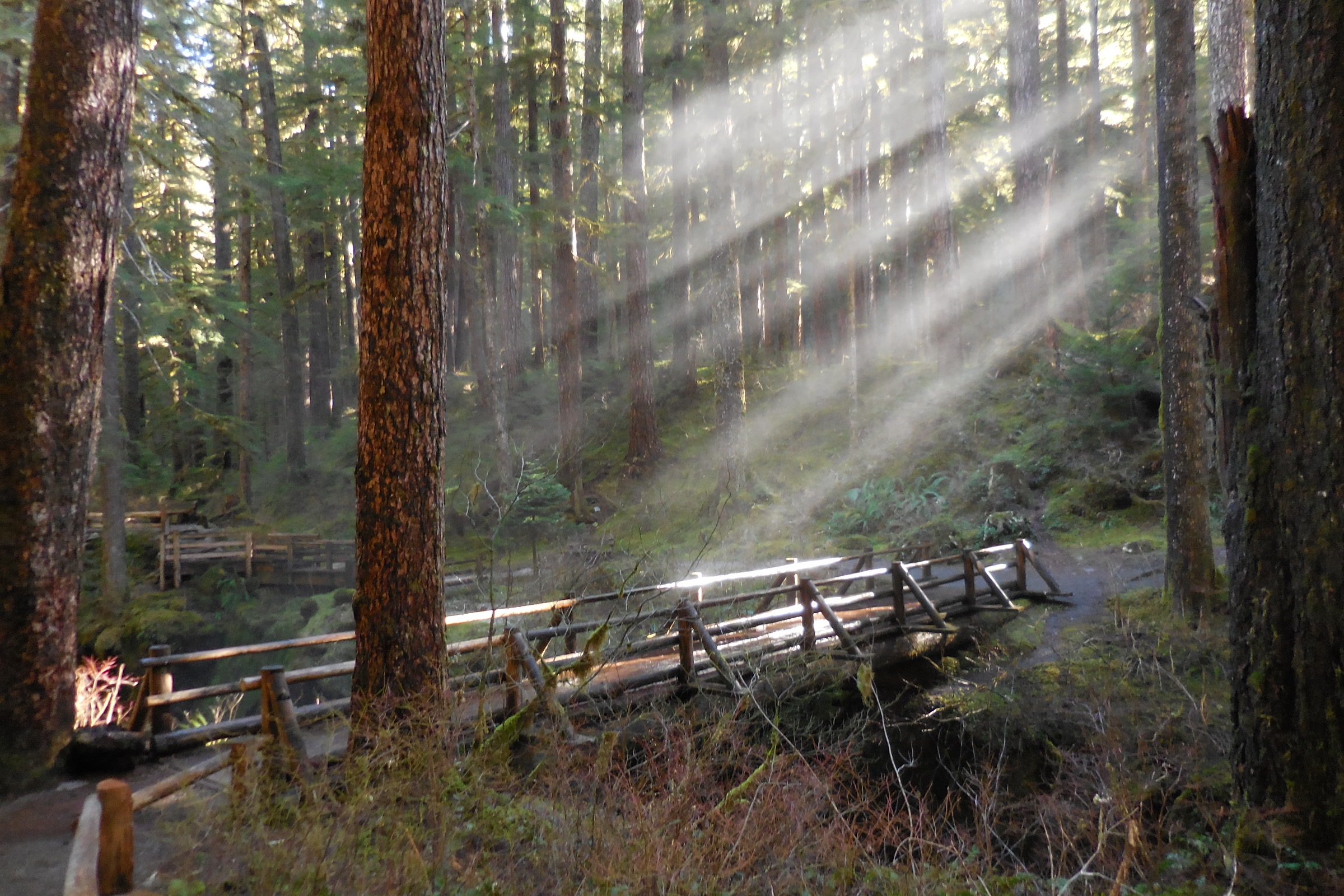
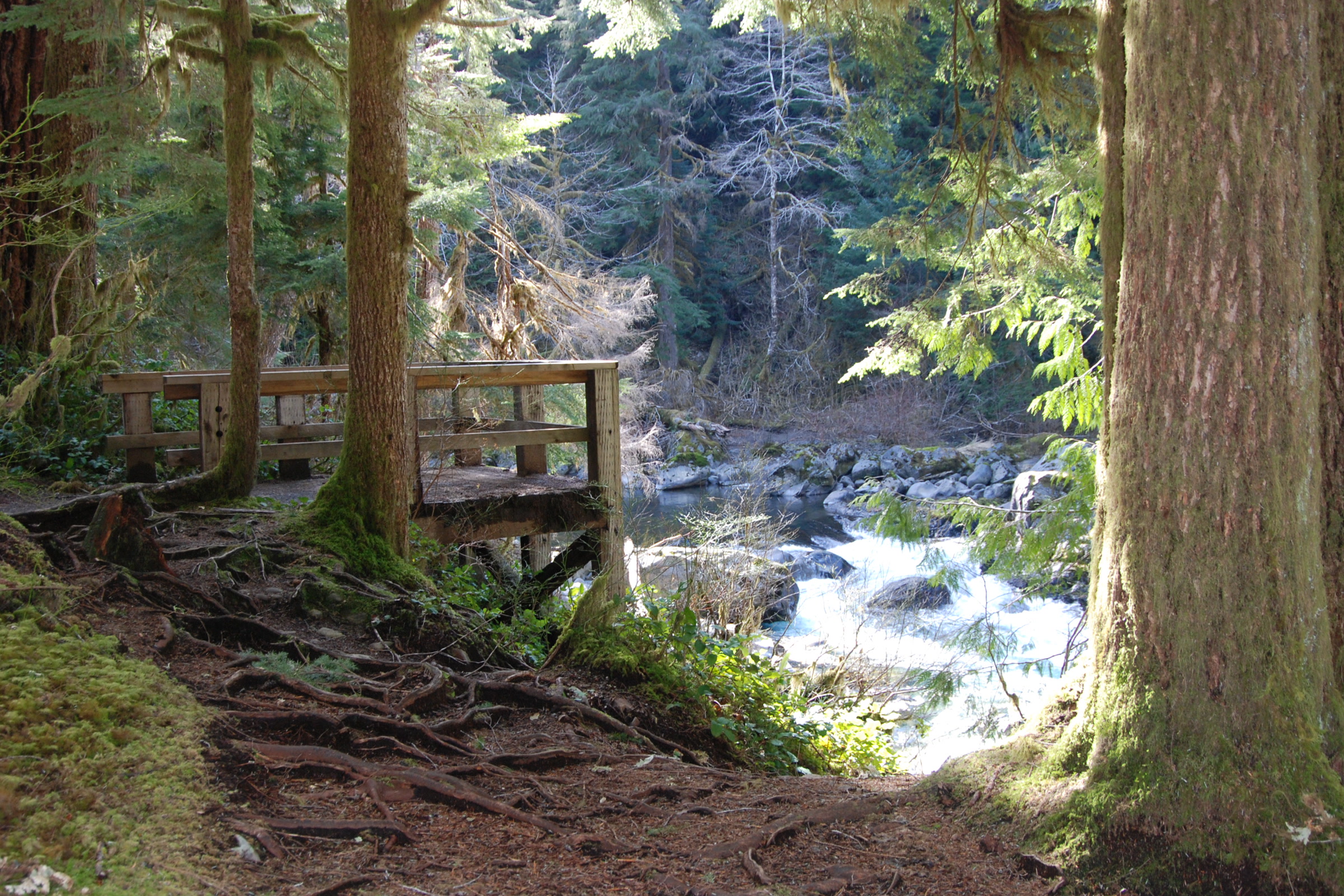
Near the falls you pass Canyon Creek Shelter, one of the historic trail shelters featured in our guide to historical structures in Olympic National Park. A footbridge crosses the river at the falls and is one of several viewpoints, upstream and downstream.
Sol Duc valley walks compared
The falls are only the start. These distances come from the park’s Sol Duc area brochure and are one way unless noted.
| Trail | Distance and gain | Highlights |
|---|---|---|
| Ancient Groves | 0.6 mile loop, flat | Self guided nature trail |
| Sol Duc Falls | 0.8 mile, 200 feet | Old growth forest to the falls |
| Lover’s Lane | 6.0 mile loop, 200 feet | Links the resort and the falls |
| Mink Lake | 2.6 miles, 1,500 feet | Climb through dense forest |
| Deer Lake | 3.8 miles, 1,700 feet | Climb through dense forest |
Seeing Sol Duc Falls safely
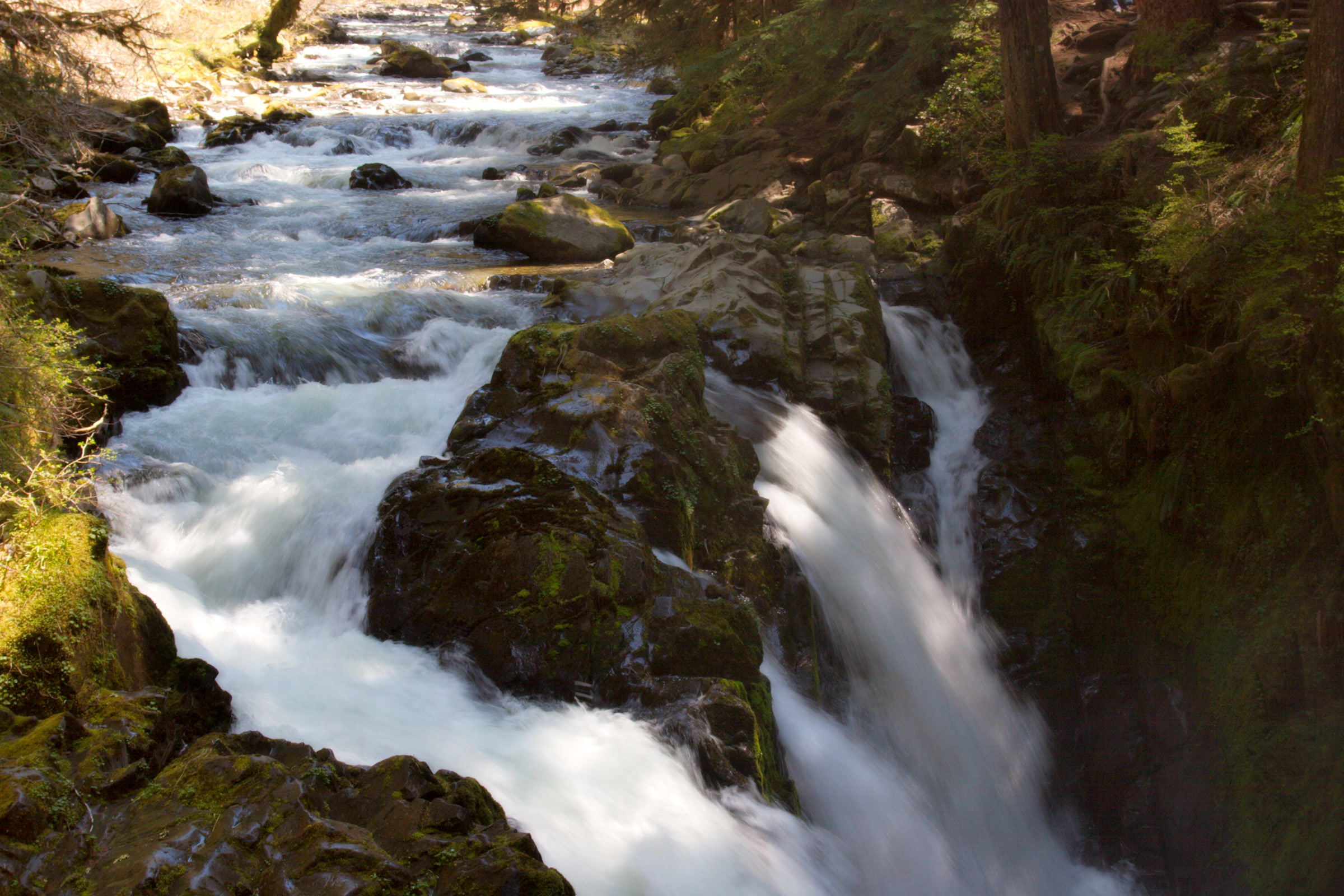
The Washington Trails Association describes the falls splitting into as many as four channels, depending on how much water is flowing, before dropping 48 feet into a narrow, rocky canyon. The park asks visitors to watch from the designated viewing areas and to keep children under close supervision, because the falls can be dangerous.
- Stay on the trail and in the viewing areas, even for a photo.
- Leave dogs at home: pets and bicycles are not permitted on any Sol Duc trail.
- Expect spray near the falls; WTA suggests bringing a towel.
The Sol Duc valley forest
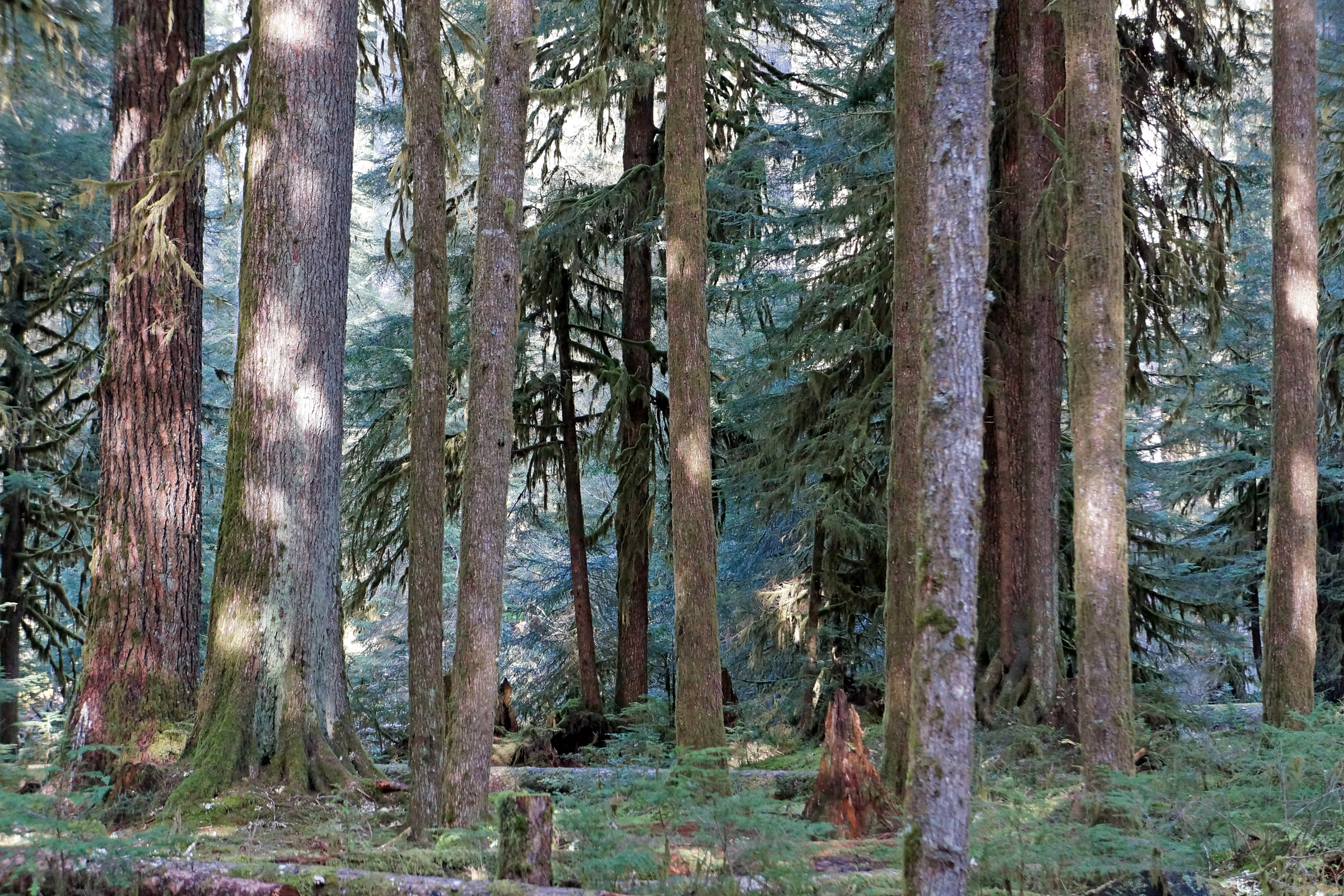
The Sol Duc valley is a world of tall conifers and moss. The 0.6 mile Ancient Groves loop is the easiest way to stand among them, and Sol Duc Campground sits right in the forest. The campground has 82 sites, including one group site and one accessible site, and is run by the resort, with summer sites reserved through recreation.gov.
Strong hikers use the valley as a gateway to Seven Lakes Basin and the High Divide, with views of Mount Olympus. Snow can linger there into late summer, and it is a quota area, so overnight trips need a permit; our guide to Olympic National Park wilderness permits explains how.
Salmon at Salmon Cascades
On the drive up Sol Duc Road, stop at Salmon Cascades, where coho leap the rapids in autumn. According to the park, Chinook and coho climb the river in late summer and spawn in late fall, while cutthroat trout and steelhead run in fall and winter. The Sol Duc is one of the few places where salmon run in every season.
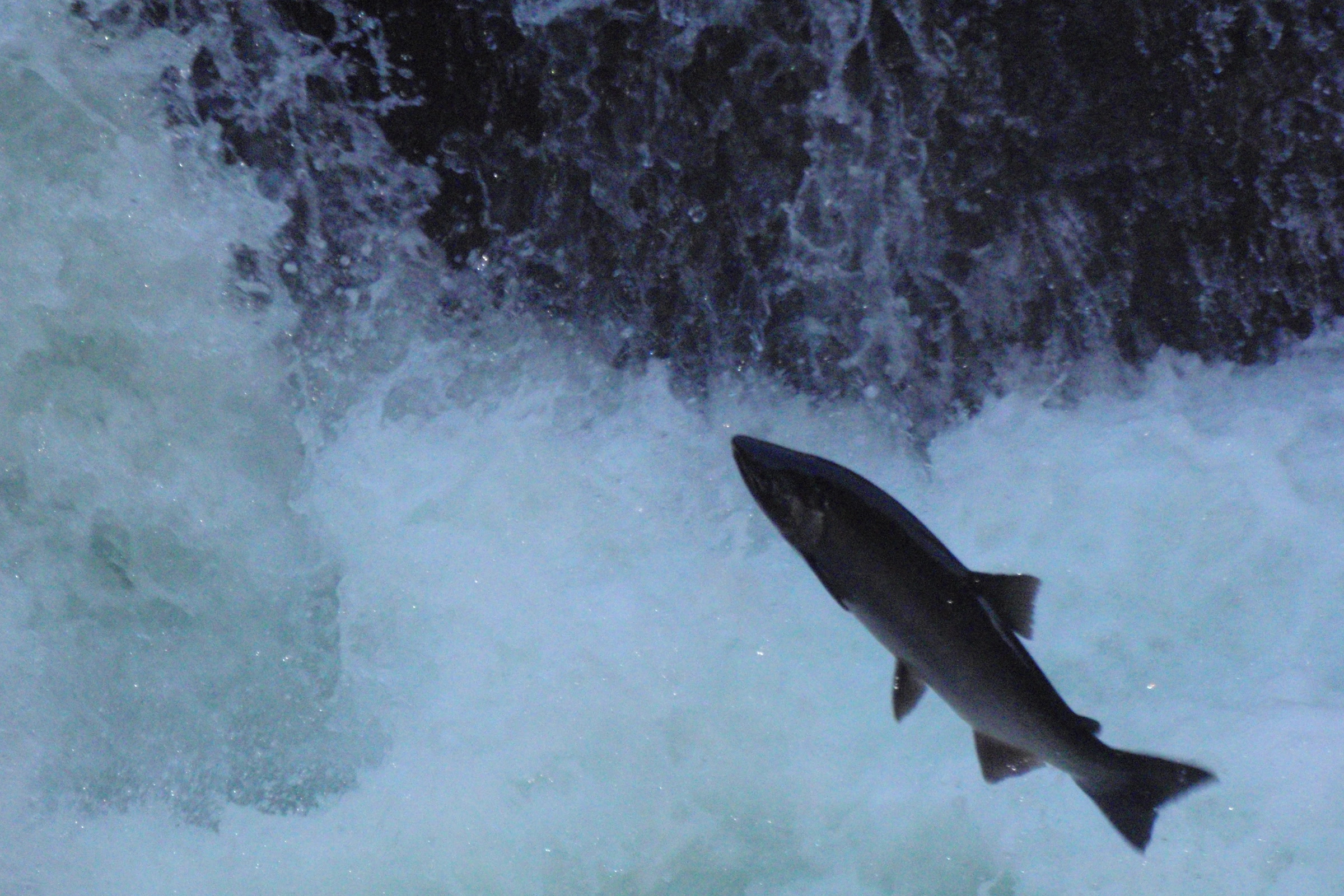
These fish hatch in the Sol Duc, spend most of their lives in the Pacific Ocean, then return to spawn. Watch quietly from the overlook and give the fish room.
Sol Duc Hot Springs, then and now
The Quileute and other peoples of the peninsula knew these springs long before settlers arrived. HistoryLink’s history of Sol Duc Hot Springs tells how timber baron Michael Earles bought them after homesteader Theodore Moritz died in 1909. Earles opened a grand resort on May 15, 1912, with a 165 room hotel and a 100 bed sanatorium.
On May 26, 1916, a fire from a defective chimney flue destroyed nearly all of it within three hours, and the main buildings were never rebuilt. The National Park Service bought the site in 1966, and the resort was rebuilt in the 1980s.
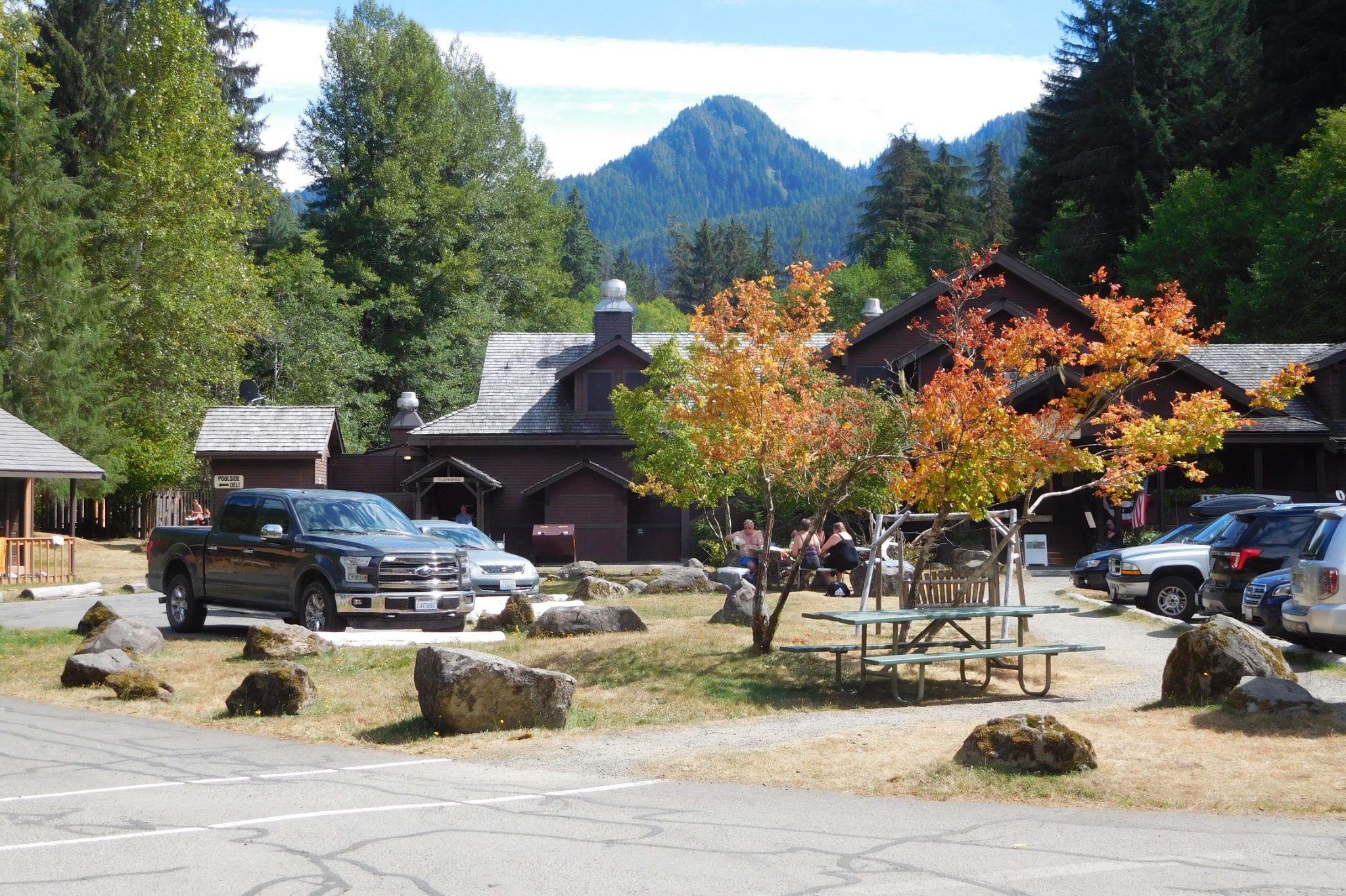
Today the resort offers cabins, an RV park, a restaurant and seasonal day use of three mineral pools and one freshwater pool, which the park says are tested daily. The pools are open only while the resort is open, and it closes in winter. Hours, rates and season dates change, so check the NPS hot springs page and the resort’s website before you go.
Planning your Sol Duc day
Sol Duc Road is open year round, weather permitting, but snow and ice often close it in winter. Call the road and weather line at 360-565-3131 or check the park’s current road conditions page on the morning you go. You will need a park pass; see our guide to Olympic National Park entrance fees.
Lake Crescent is less than half an hour away, so it pairs well with the falls. Our Lake Crescent history and visitor guide covers the hikes, paddling and places to stay there.
How Friends of Olympic National Park helps
We are Friends of Olympic National Park (FONP), a volunteer led friends group based in Port Angeles. Our adopt-a-trail crew cares for the Heart O’ the Forest Trail, and our volunteers help with cleanups and guided walks. If trails like the one to Sol Duc Falls matter to you, explore our volunteer opportunities.
Frequently asked questions
How long is the hike to Sol Duc Falls?
About 0.8 mile one way on a relatively level trail through old growth forest, with roughly 200 feet of elevation gain, so around 1.6 miles round trip.
Can I bring my dog to Sol Duc Falls?
No. Pets and bicycles are not permitted on any trails in the Sol Duc area, including the Sol Duc Falls trail.
Is Sol Duc Road open in winter?
It is open year round, weather permitting, but snow and ice often close it in winter. Check the NPS current road conditions page or call 360-565-3131 before you go.
Are Sol Duc Hot Springs open all year?
No. The pools are open only while the resort is open, and the resort closes in winter. Check the NPS hot springs page and the resort website for this year’s dates.
When can you see salmon jump at Salmon Cascades?
The park says coho leap at Salmon Cascades in autumn. Chinook and coho climb the Sol Duc in late summer and spawn in late fall.
Leave a Reply