

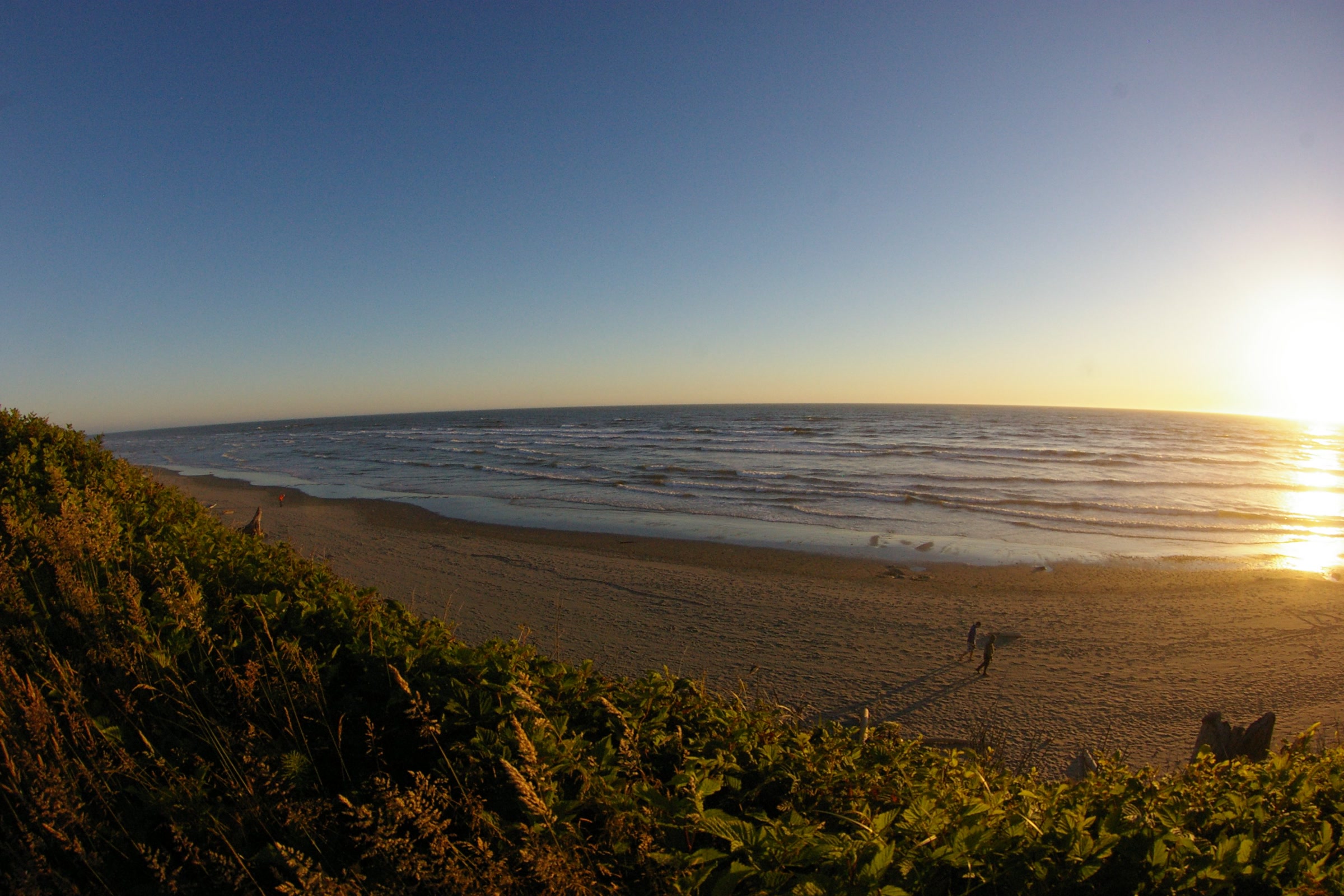
Razor clamming at Kalaloch is a coastal tradition: on a good low tide, diggers spread across the wide sand south of Beach Trail 3 with shovels, tubes and buckets. Kalaloch is the only beach in Olympic National Park open to recreational razor clam harvest, and only when a dig is announced. Here is how those digs are set, what rules apply, and why the beach has so often stayed closed.
Quick answer
Can you go razor clamming at Kalaloch?
Only on announced digs. Razor clamming at Kalaloch opens when the park, WDFW and partner tribes agree the clams can support a harvest and toxin tests are clear. As of October 2026, WDFW says Kalaloch will not open this season because harvestable clams remain scarce. Diggers 16 and older need a licence and may keep 15 clams.
- Beach runs from South Beach campground to Beach Trail 3
- Daily limit 15; keep the first 15 you dig
- Each digger needs a separate container
- Two clean toxin tests needed before any opening
Kalaloch razor clams: status as of October 2026
The park’s fishing regulations page lists the razor clam season as “to be announced”. In September 2026, WDFW said Kalaloch won’t open in the 2026 to 2027 season because of continuing low numbers of harvestable razor clams. The same was true in 2025 to 2026.
That can change only through a new announcement, so we give no dates here. Check WDFW and NPS announcements before you plan a trip, and never dig on a closed beach: WDFW warns it can bring a fine.
Who sets a Kalaloch razor clam dig
Kalaloch lies inside the park, so the park decides whether a recreational season happens there. It works with WDFW and with the Quinault Indian Nation, the Hoh Tribe and the Quileute Tribe, which co-manage the Kalaloch harvest. WDFW says the allowable catch is split evenly between state and tribal fisheries, and the harvest rate is fixed at 25.4 percent of recruit sized clams.
| Rule | What NPS and WDFW say |
|---|---|
| Where | South Beach campground north to Beach Trail 3 |
| Season | To be announced, dig by dig |
| Licence | Required for diggers 16 and older |
| Daily limit | 15 clams; keep the first 15, any size or condition |
| Containers | One per digger |
| Gear | Clam shovel or tube |
| Evening digs | Noon to midnight |
| Toxin test | Two clean samples, 7 to 10 days apart |
Driving is not allowed on park beaches, so park in a designated area and walk down to the sand.
Licences and limits
WDFW says all diggers age 16 or older need a valid licence for the current season, bought through its licensing site or a dealer. The park’s page names the Washington Shellfish/Seaweed licence for shellfish on its coast; buy a licence that covers razor clams for the dates you dig.
The limit is 15 clams per person per day, and you must keep the first 15 you dig, whatever their size or condition. WDFW explains this prevents waste: tossing small clams or reburying them kills them. Each digger’s clams go in a separate container, though diggers may share equipment.
How to dig razor clams
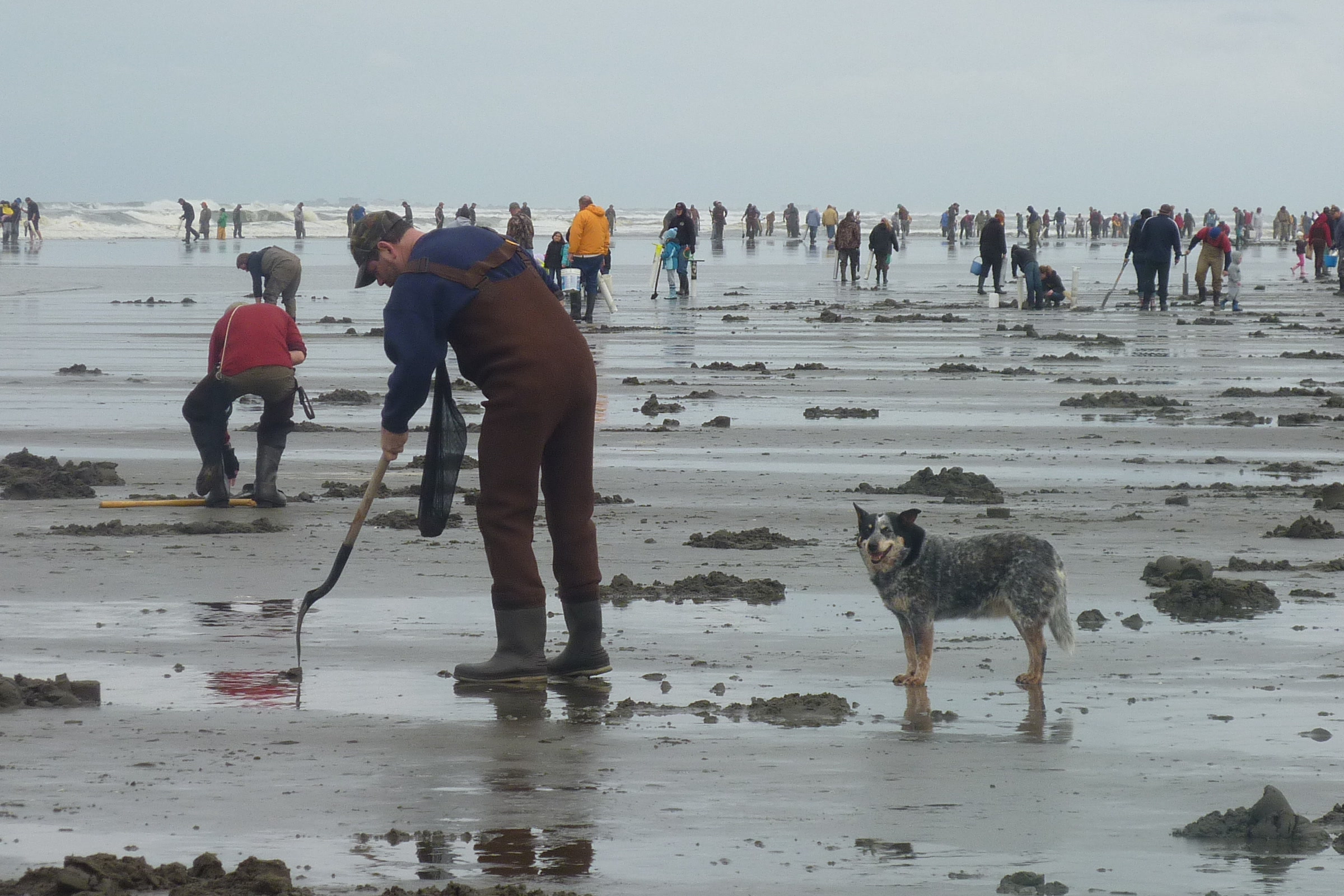
WDFW says the most successful digging comes one to two hours before the listed low tide. Walk the wet sand looking for “shows”, the marks a clam leaves when it pulls in its neck or starts to dig.
- Read the shows: WDFW describes dimples, doughnuts with raised sides, and keyholes. A larger hole is a good hint of a larger clam, but not always.
- Bring them up: at the surf line, pound the sand with a shovel handle or your foot; clams may squirt sand and water.
- Tube: centre it over the show, push it down and lift out a core of sand with the clam.
- Shovel: dig fast beside the show. WDFW notes razor clams dig quickly in soft sand.
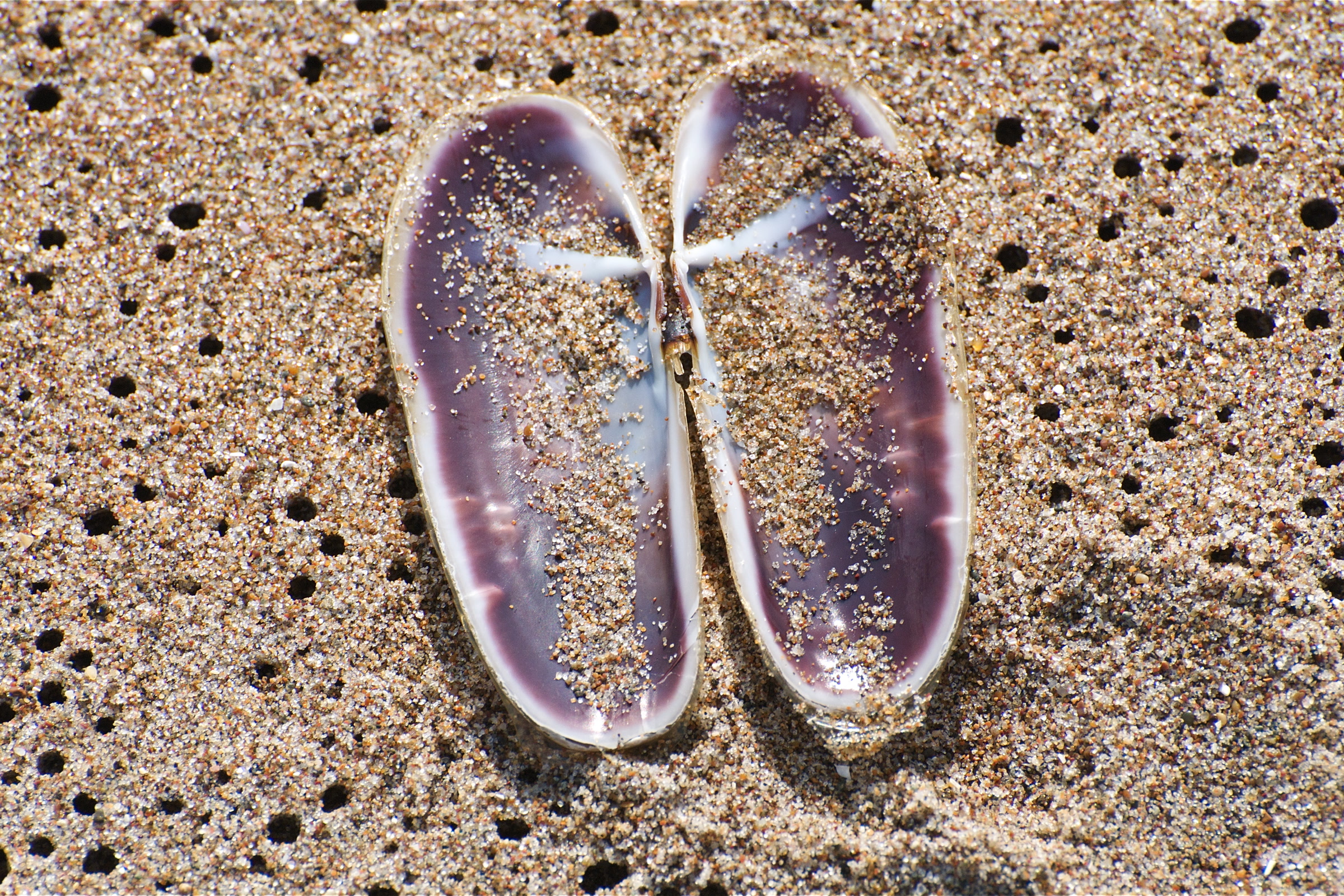
To keep clams fresh, WDFW suggests carrying them dry in a cool place and cleaning them soon. Fresh water and direct contact with ice kill them.
Marine toxin testing
Razor clams can build up domoic acid, a natural marine toxin. No beach opens until the Washington State Department of Health clears it: WDFW and the department sample clams routinely, and an opening needs two samples taken 7 to 10 days apart, both below the health guideline. Final approval usually comes about a week or less before a dig.
Toxin levels can rise quickly, and WDFW sometimes postpones digs across the coast at short notice. That is another reason to check the latest announcement on the day.
Why Kalaloch is so often closed
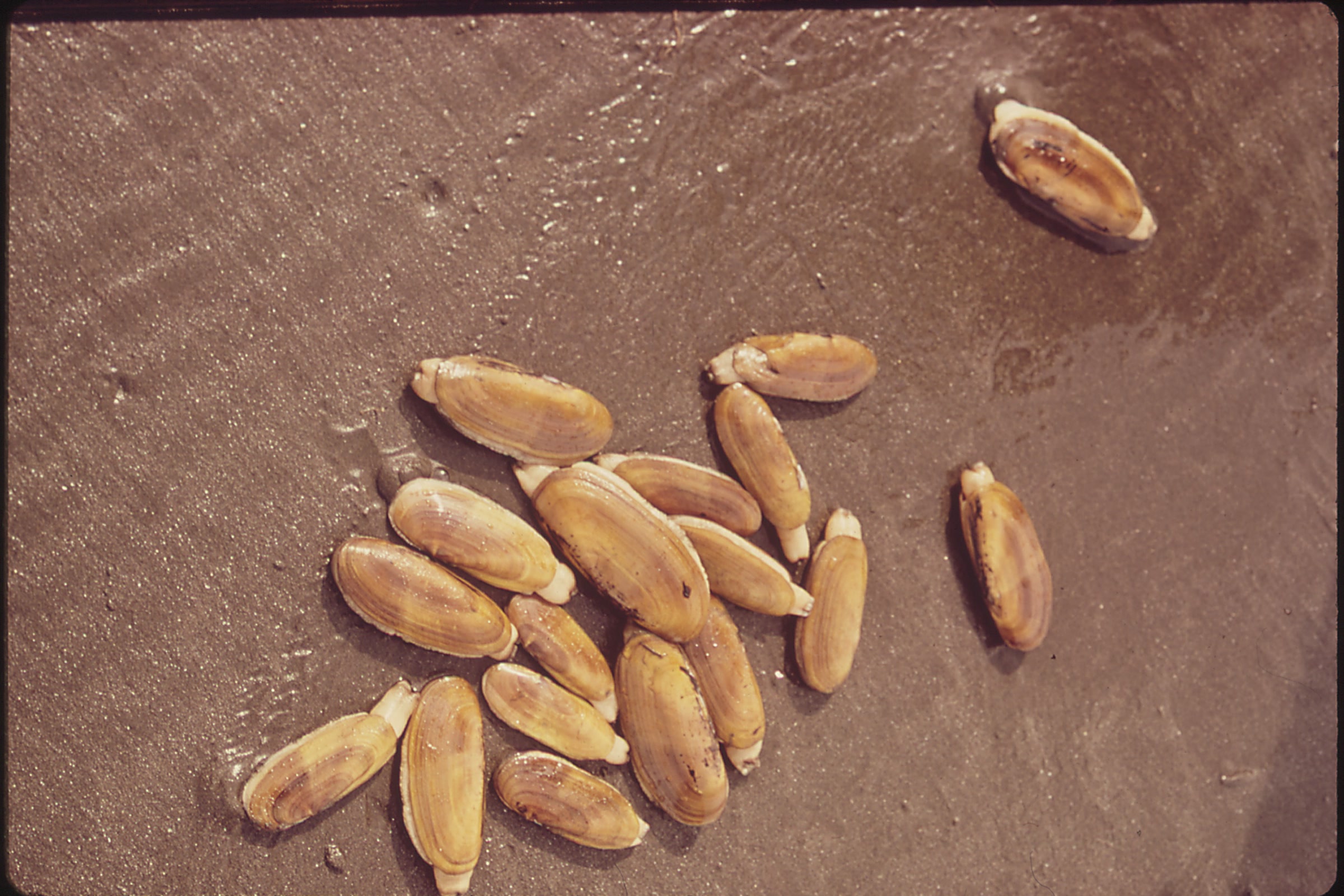
Park biologists, the Quinault Indian Nation, the Hoh Tribe and WDFW survey the Kalaloch clams each year. In 2022 the park reported that young clams were arriving, but few adults survived to reach harvest size: the average was 3.4 inches, with very few over 4 inches. It said harvest had been limited since 2006, and the last full season was in 2009.
Researchers from the park and the U.S. Geological Survey suspect NIX, a bacterial gill pathogen that nearly all Kalaloch clams carry. It can kill razor clams but is harmless to people who eat them.

Planning a razor clam dig at Kalaloch
WDFW says fall and winter digs fall on afternoon or evening low tides, and many diggers work after dark by lantern. The park has warned that Kalaloch is more remote than other clam beaches, with no streetlights, so bring a flashlight or lantern. Our guide to Olympic Coast tides and hiking safety explains tide tables and sneaker waves.

Kalaloch and South Beach campgrounds sit on the bluff above the clam beach; our Olympic National Park campgrounds guide covers seasons and booking. Between tides, walk north to the Kalaloch Tree of Life. Our fishing in Olympic National Park guide covers the park’s other shellfish rules, and beachcombing on the Olympic Coast explains what else you may take from the sand.
How Friends of Olympic National Park helps
We are Friends of Olympic National Park (FONP), a volunteer led friends group in Port Angeles. We don’t manage the clam fishery, but our volunteers care for this coast: in April 2026 they joined the Spring Coastal Cleanup in the Kalaloch area. To support that work, become a member.
Frequently asked questions
Is Kalaloch open for razor clamming?
Not as of October 2026. WDFW says Kalaloch will not open in the 2026 to 2027 season because harvestable razor clams remain scarce. Check WDFW and NPS announcements for any change.
Do you need a licence to dig razor clams at Kalaloch?
Yes. WDFW says every digger 16 or older needs a valid licence for the current season, and the park requires a Washington licence for shellfish harvest on its coast.
How many razor clams can you keep?
Fifteen per person per day. You must keep the first 15 you dig, whatever their size or condition, and keep them in your own container.
Who decides when a razor clam dig opens at Kalaloch?
The park decides on a recreational season, working with WDFW and the Quinault Indian Nation, Hoh Tribe and Quileute Tribe. Every opening also needs marine toxin clearance from the Washington State Department of Health.
Why are Kalaloch razor clams so small?
Park and USGS researchers suspect NIX, a bacterial gill pathogen nearly all Kalaloch clams carry. Young clams arrive, but few adults survive to harvest size. NIX is harmless to people.
Leave a Reply