

Ocean acidification on the Olympic Coast is one of the quieter ways the climate is changing the park. You can’t see it from the beach, but the water off these shores is changing in ways that matter for crabs, shellfish and tiny animals at the base of the food web. Here is the science in plain words.
Quick answer
Why is ocean acidification on the Olympic Coast a concern?
Ocean acidification on the Olympic Coast matters because seasonal upwelling brings naturally acidic deep water onto the shelf, on top of the carbon dioxide the ocean absorbs. NOAA lists Dungeness crab, mussels, oysters and pteropods as at risk. Low oxygen, or hypoxia, adds stress, and NOAA and Washington Ecology monitor both.
- The ocean absorbs about 30% of released carbon dioxide
- Coastal water 10 to 40% more corrosive since 1800
- Conditions tend to worsen from May to October
- The sanctuary became a sentinel site in 2019
What ocean acidification is
NOAA says the ocean absorbs about 30 percent of the carbon dioxide released into the atmosphere. That carbon dioxide reacts with seawater and lowers its pH. Since the Industrial Revolution, the pH of surface ocean water has fallen by 0.1 units. Because the pH scale is logarithmic, that small number means about a 30 percent increase in acidity.
The bigger problem is what the change takes away. More acidic water leaves fewer carbonate ions, the building blocks that oysters, mussels, crabs and tiny sea snails use to make shells. Washington’s Department of Ecology describes the water as becoming more “corrosive” to those shells.

Pteropods show why it matters. In a NOAA lab test using water set to conditions projected for 2100, their shells slowly dissolved after 45 days. NOAA notes that poor pteropod shell growth is already affecting some salmon species that eat them.
Why the Washington coast is so exposed: upwelling
Each spring and summer, coastal winds bring deep Pacific water up to the surface, a process called upwelling. That water is cold and full of nutrients, which helps the Olympic Coast teem with life.
It is also naturally acidic. NOAA says the waters of Olympic Coast National Marine Sanctuary are especially susceptible to acidification because upwelling makes them more acidic than most of the ocean. According to Washington Ecology’s ocean acidification indicator, outer coast and Puget Sound waters have become 10 to 40 percent more corrosive since 1800. Under business as usual emissions, they could be at least twice as corrosive by 2100 as in 1986 to 2005.

Hypoxia: the low oxygen problem
Upwelling brings a second stress. NOAA Fisheries explains that the nutrients fuel plankton blooms, and when the plankton die and sink, their decay uses up oxygen near the seafloor. When oxygen drops low enough, crabs and bottom fish that can’t swim away may die.
In 2006 a low oxygen zone wiped out crabs and other bottom life along the shelf, and in May 2021 dead crabs washed ashore near Ocean Shores. NOAA’s condition report for the sanctuary describes fish kills that leave dead animals, such as wolf eels, on Quinault Indian Nation beaches. Warmer water holds less oxygen, which makes the seasonal problem worse.

Ocean acidification and hypoxia compared
| Question | Ocean acidification | Hypoxia |
|---|---|---|
| What changes | Water grows more acidic and corrosive to shells | Dissolved oxygen drops |
| Main local driver | Upwelled deep water plus carbon dioxide from the air | Plankton blooms decaying near the seafloor |
| When it worsens | Upwelling season, May to October | Upwelling season, May to October |
| Animals most at risk | Shell builders: oysters, mussels, crabs, pteropods | Crabs and bottom fish |
These stresses often arrive together, with marine heatwaves and harmful algal blooms. NOAA’s condition report found the sanctuary’s open water habitat showing worsening trends.
What it means for shellfish and tide pools
NOAA names Dungeness crab, deep sea corals, mussels, oysters and pteropods as at risk, and says some species are already being affected. Ecology adds that deeper water is more corrosive than shallow water, which raises stress on seafloor animals such as crabs and oysters. Shellfish growers in Washington, NOAA notes, have had to develop monitoring and treatment methods to avoid spawning failures.
The stakes are local. Ecology says acidification threatens Washington’s $270 million shellfish industry, the largest on the West Coast, along with Tribal customs and sovereignty. Oysters, razor clams and mussels have long been food for Washingtonians; see our guide to razor clamming at Kalaloch for the park’s own shellfish harvest.
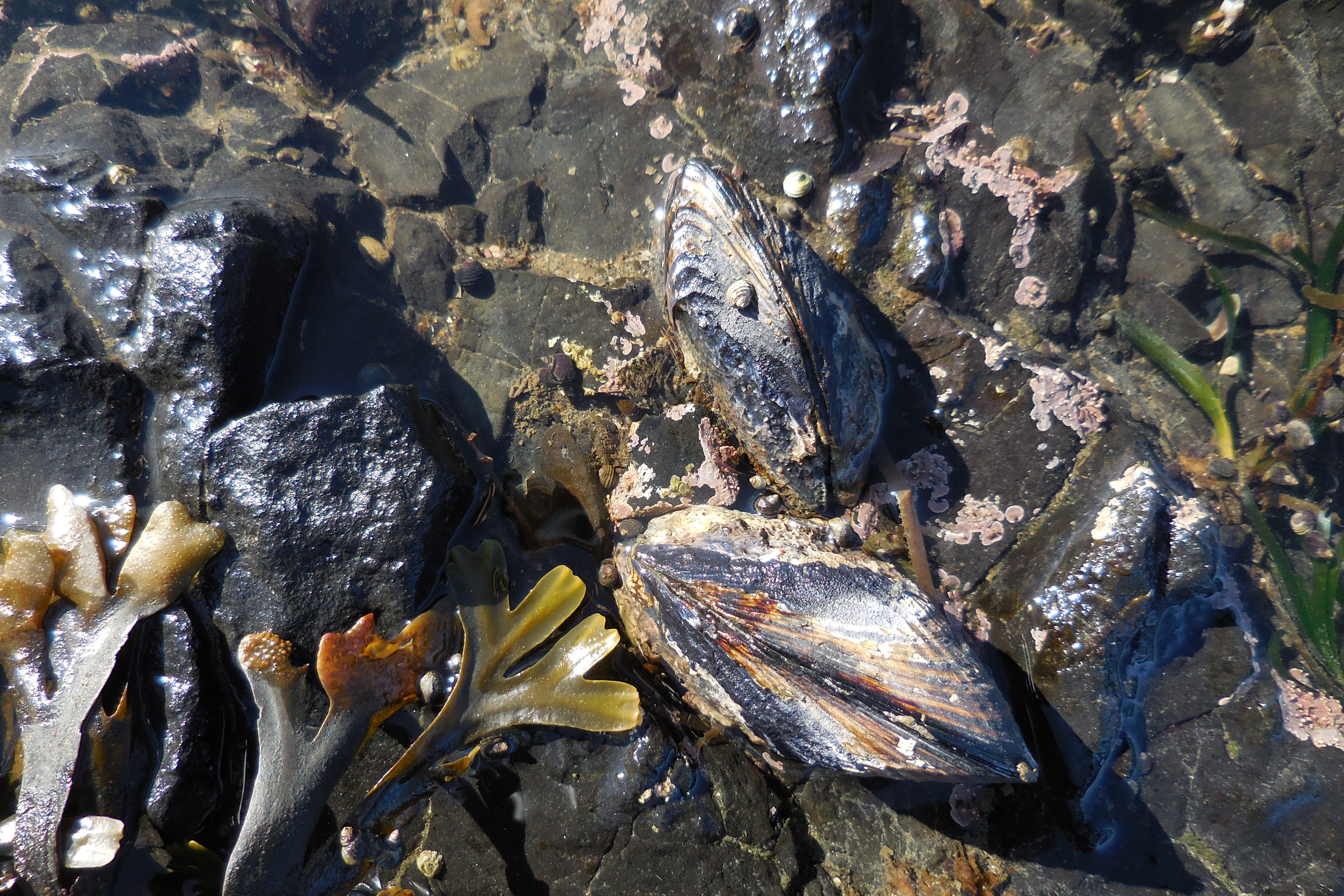
In the tide pools, mussels and other shell builders rely on the same chemistry. Our Olympic National Park tide pools guide shows where to find them at low tide.
Who is watching the water
In November 2019 NOAA named the sanctuary an ocean acidification sentinel site, working with Tribal and state partners to track carbonate chemistry and hypoxia. Several programs feed that picture.
Ocean monitoring on the Olympic Coast compared
| Program | Who runs it | What it measures |
|---|---|---|
| Sanctuary moorings, since 2000 | NOAA Olympic Coast sanctuary | Temperature at 10 sites; some add oxygen, salinity and currents |
| Cha’ba buoy off La Push, since 2010 | University of Washington and NANOOS, with NOAA PMEL | Carbon dioxide in air and seawater, surface pH |
| Marine water monitoring, acidification since 2019 | Washington Ecology | Monthly samples at 28 sites in Puget Sound and on the coast |
The sanctuary’s oceanographic moorings run from May to October across about 135 miles of coast, from Makah Bay to Cape Elizabeth, the season when conditions tend to worsen. Their data feed ocean forecasts. The Quileute Tribe named the La Push buoy Cha’ba, meaning “whale tail”.

What visitors can do
No single visit changes ocean chemistry, but care still counts: follow tide pool etiquette, leave animals in place and pack out trash. The state’s kelp plan says kelp can help ease acidification; read about the kelp forests of the Olympic Coast. On land, the same warming is shrinking ice, as our post on Olympic National Park glaciers explains.
How Friends of Olympic National Park helps
We are Friends of Olympic National Park (FONP), a volunteer led friends group in Port Angeles. We don’t run ocean science, but our projects include the Winter Perspectives lecture series, and our volunteers join beach cleanups in Olympic National Park. If a healthy coast matters to you, please support Olympic National Park.
Frequently asked questions
What is ocean acidification in simple terms?
It is the ocean becoming more acidic as it absorbs carbon dioxide from the air. NOAA says surface ocean pH has fallen by 0.1 units since the Industrial Revolution, about a 30 percent increase in acidity, leaving less carbonate for shells.
Why is the Olympic Coast so vulnerable to ocean acidification?
Because of upwelling. Each spring and summer, winds bring deep, naturally acidic Pacific water onto the shelf, so NOAA says the sanctuary’s waters start out more acidic than most of the ocean.
What is hypoxia on the Washington coast?
Hypoxia means low dissolved oxygen. Upwelled nutrients feed plankton blooms, and when the plankton die and decay near the seafloor they use up oxygen, which can kill crabs and bottom fish.
Which animals are most at risk?
NOAA lists Dungeness crab, deep sea corals, mussels, oysters and pteropods, the tiny swimming snails that some salmon eat. Some species are already being affected.
Who monitors ocean acidification on the Olympic Coast?
NOAA’s Olympic Coast sanctuary runs seasonal moorings, the Cha’ba buoy off La Push measures carbon dioxide and pH with NOAA PMEL, and Washington Ecology samples 28 sites in Puget Sound and on the coast each month.
Leave a Reply