
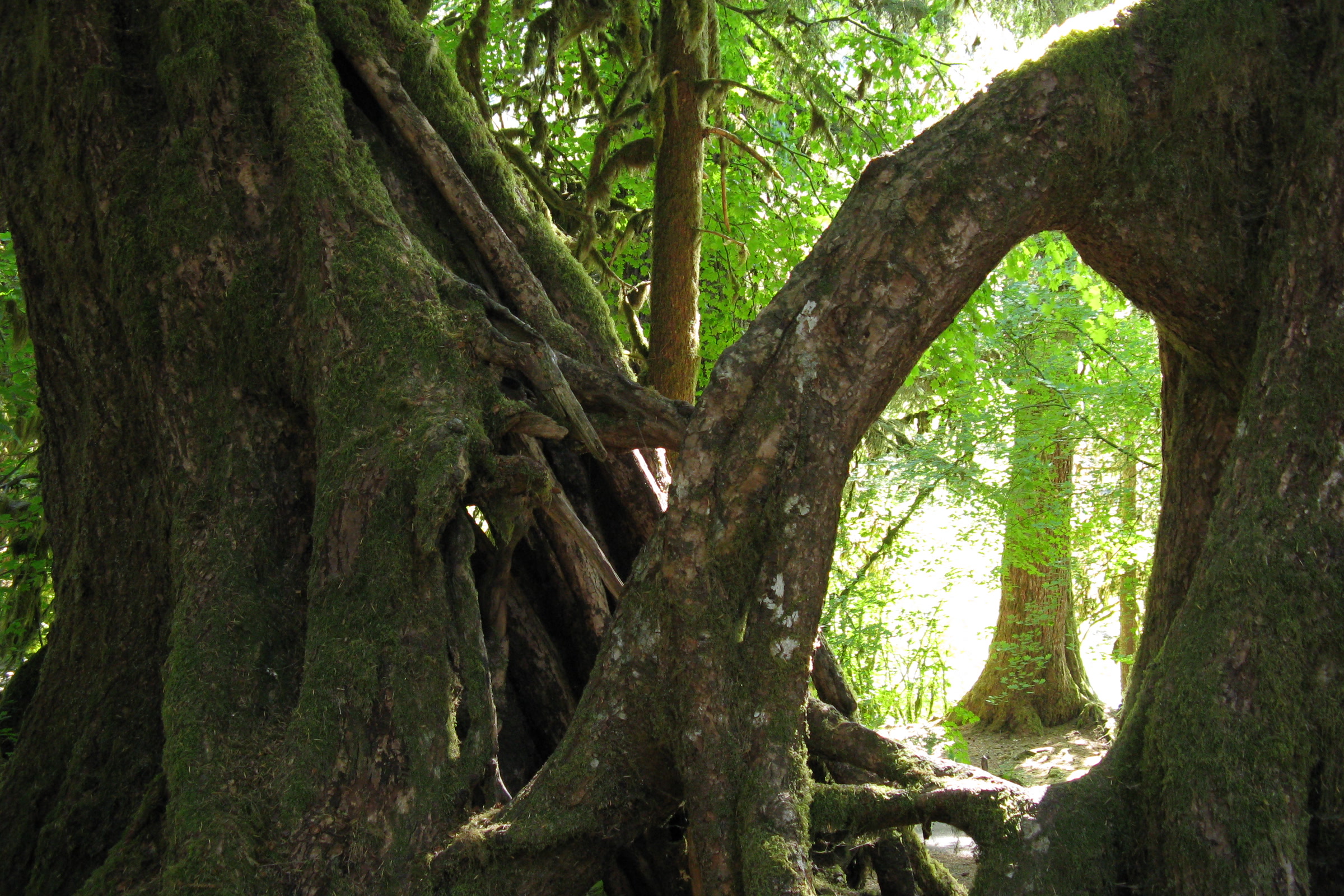
Walk any rain forest trail on the west side of the peninsula and you will see trees growing out of other trees. These fallen giants are nurse logs, and nurse logs in Olympic National Park are among the rain forest’s most striking sights. Here is what the science says about why seedlings choose a log, how the famous rows of trees on stilts form, and where to see them.
Quick answer
What is a nurse log in Olympic National Park?
A nurse log is a fallen tree that seedlings sprout on. In Olympic’s rain forests the ground is so thickly covered that many seedlings start on logs instead, the park says. Their roots grow down to the soil, and when the log rots away, a colonnade of trees on stilt roots remains.
- A Hoh study found about 4.6 times more seedlings on logs
- Western hemlock made up 87% of those seedlings
- Dead trees can take centuries to decay
- See them on the Hall of Mosses and Spruce Nature Trail
What a nurse log is
The park describes nurse logs simply as fallen trees that give new seedlings a place to grow. When a big tree comes down, moss is often the first thing to claim it. As mosses and lichens thicken, the park explains, they start to behave like soil, and seeds falling from above take root in that layer.
Seeds can even sprout on living trees high above the ground, but sooner or later every young tree must send roots down to the soil. Our guide to mosses and lichens of the Olympic rainforest covers the plants that start the process.
Why seedlings grow on logs in the rain forest
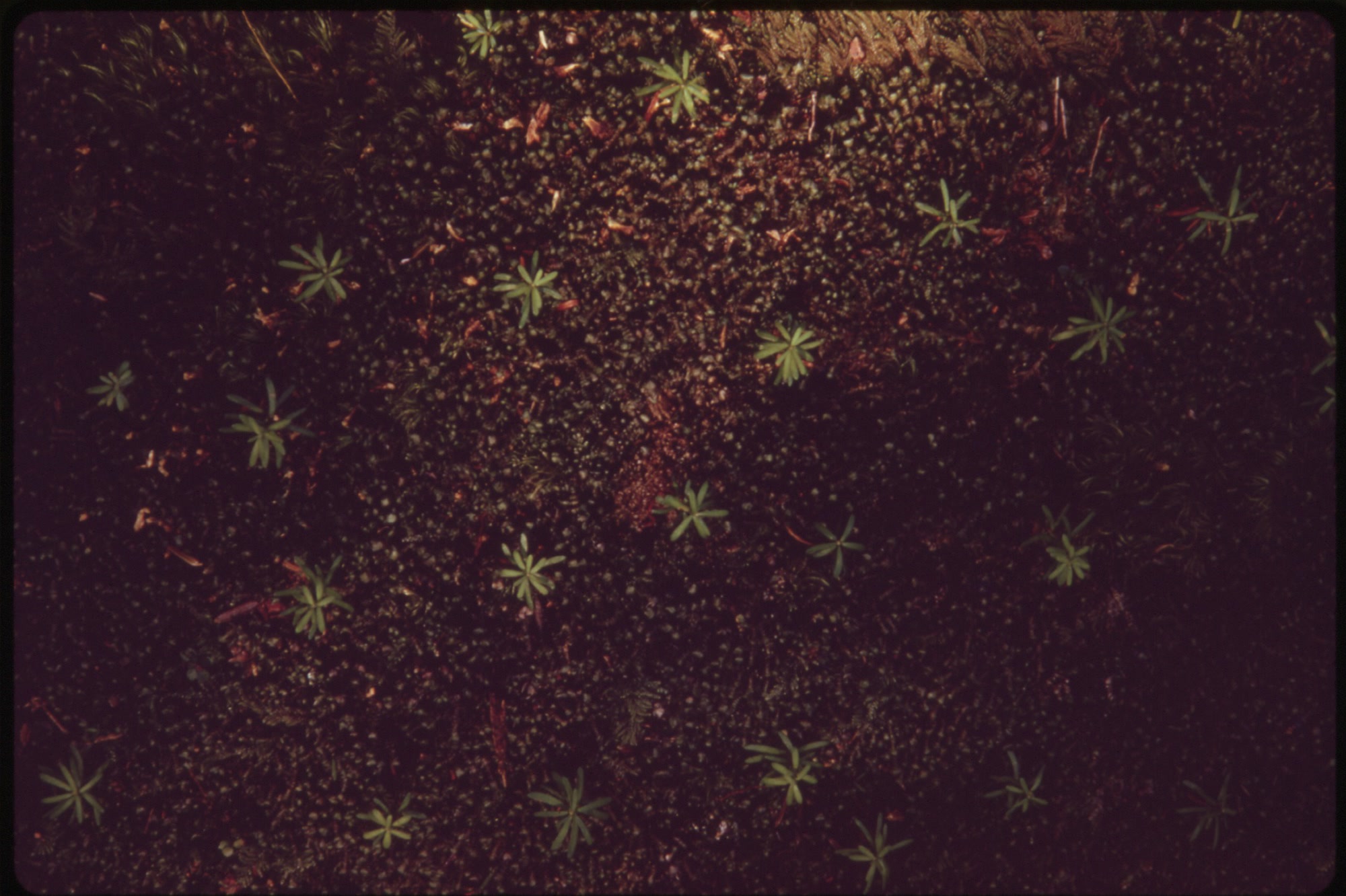
Olympic’s rain forests fill the west facing Quinault, Queets, Hoh and Bogachiel valleys, where the park records 140 to 167 inches of rain and snow a year. Ferns, mosses and shrubs carpet the floor so thickly, the park says, that many seedlings germinate on fallen trees instead.
A study in the Hoh, published in 2021 in Ecology and Evolution, measured the difference. Between 2016 and 2018, the researchers counted seedlings in 166 plots, each one square metre, on logs and on the forest floor.
Nurse logs and the forest floor compared
| Measure (Hoh study) | Nurse logs | Forest floor |
|---|---|---|
| Seedlings per square metre | 20.1 | 4.5 |
| Plots with any seedlings | 57% | 36% |
| Moss and liverwort species | 17 | 6 |
Western hemlock made up 87% of the seedlings they found. The best predictor of few seedlings was a thick feather moss, Hylocomium splendens, which was most common on the forest floor and the oldest logs. Under its mats, light often fell below the level seedlings need to survive.
So moss is both friend and rival. The authors explain that moss can help by holding seeds and moisture, while bare bark dries out fast. Earlier work they cite, by Mark Harmon and Jerry Franklin, found that once moss grows deeper than about 5 centimetres, it starts to compete with seedlings instead.
From seedling to colonnade
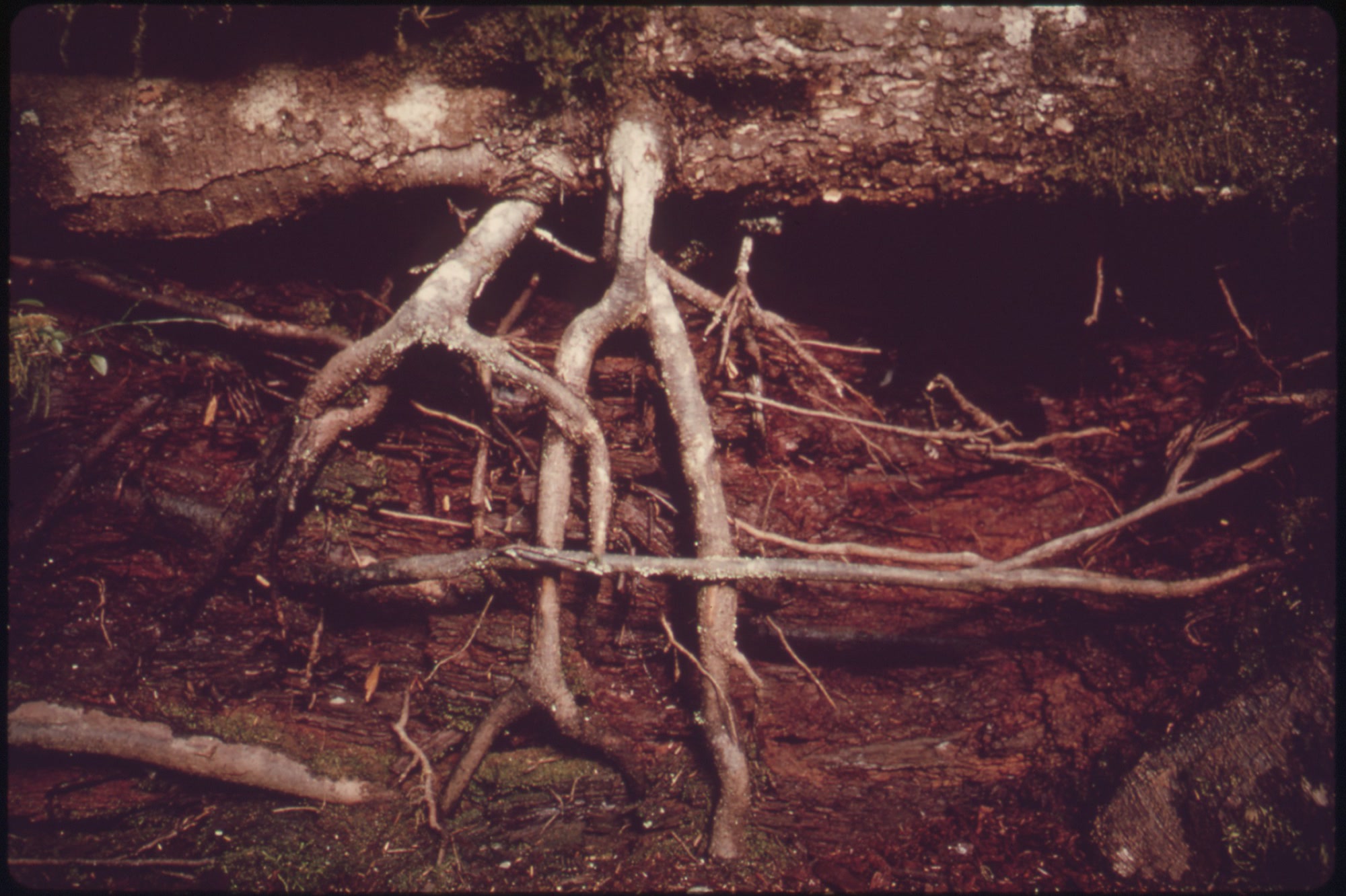
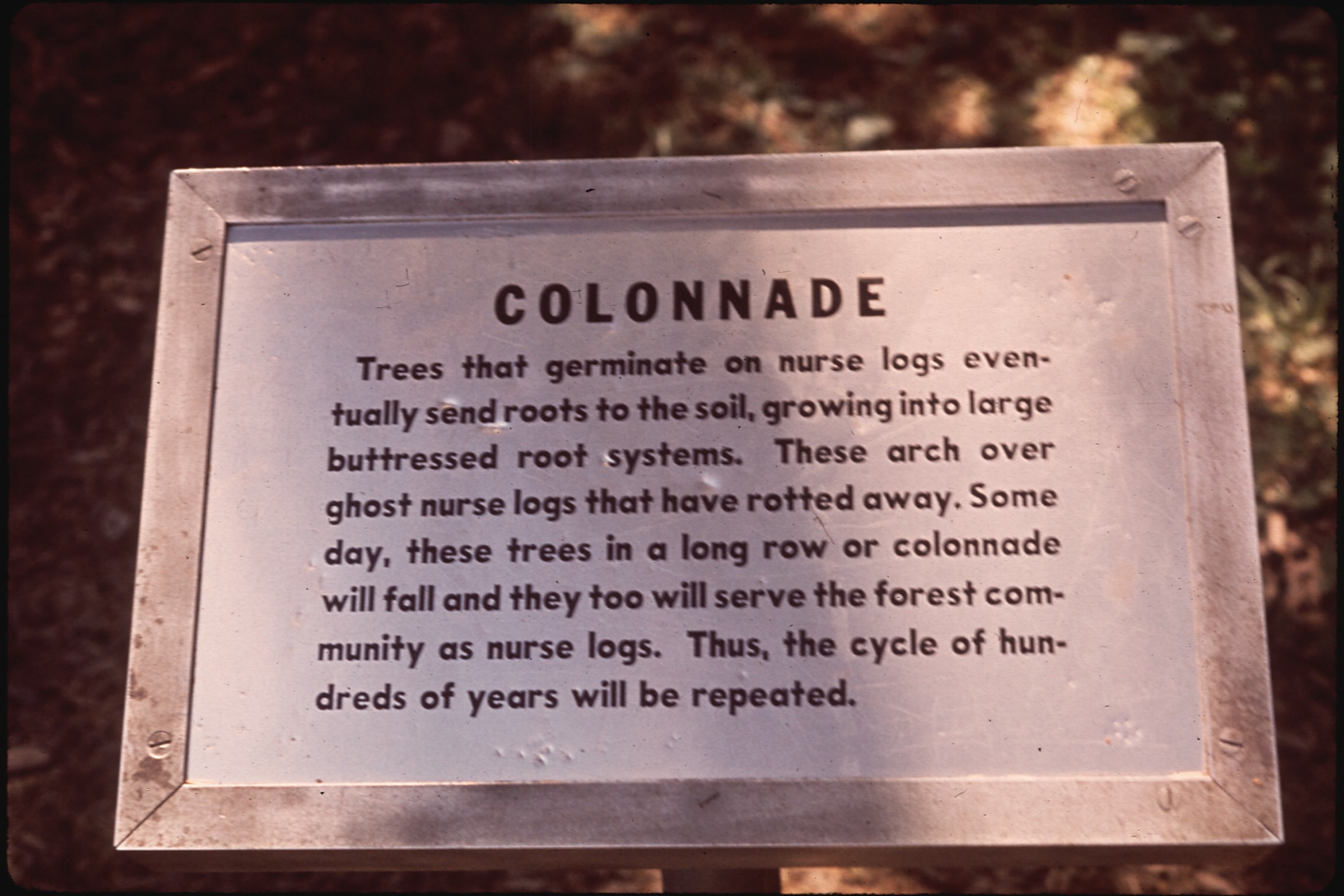
A seedling on a log is perched high above the ground. As it grows, its roots wrap around the log and push down into the soil. Over the following centuries the nurse log rots away beneath it, and the young tree is left standing on stilt roots that arch over the space where the log once lay.
Because many seedlings start along the same log, the survivors end up in a straight line. The park calls this row of trees on stilt-like roots a colonnade. Some of the trees in these rows are centuries old.
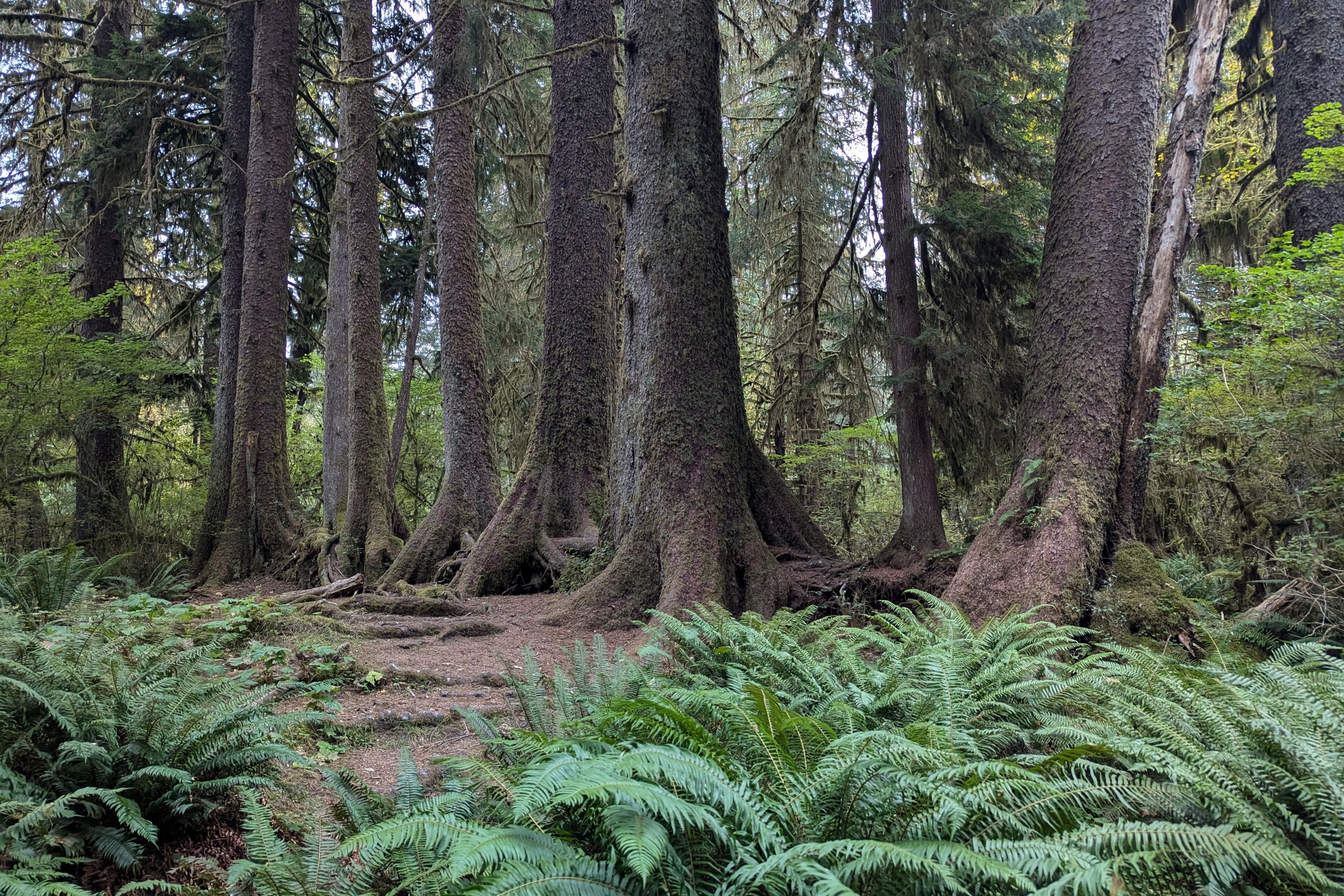
An older sign in the Hoh put the cycle neatly: the trees in a colonnade will one day fall and become nurse logs themselves. Our guide to trees of Olympic National Park introduces the hemlocks, spruces and cedars involved.
Decay and nutrient cycling
A dead tree is far from finished. The park says fallen trees can take centuries to decay back to soil, and all that time they are habitat for mosses, tree seedlings, fungi and animals. At Lake Crescent, the park’s Moments in Time Trail page points out nurse logs that provide nutrients to young trees.
An NPS exhibit at Mount Rainier National Park explains how. A fallen tree soaks up rain and holds it like a sponge. Fungi, often seen as mushrooms, break down the wood, while ants, beetles and other invertebrates tunnel through it and feed. The decaying wood enriches the soil by recycling nutrients.
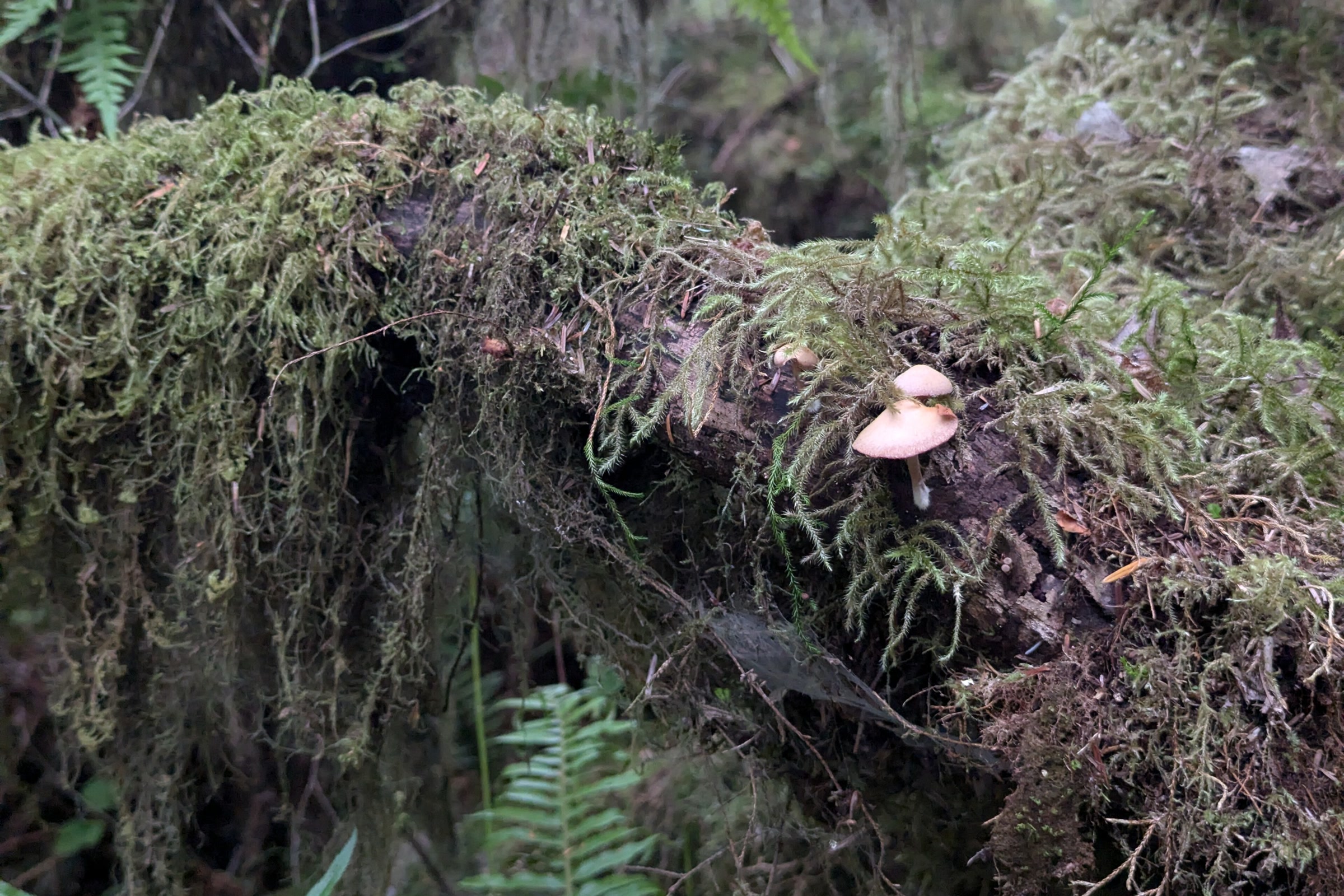
The Hoh study adds another layer. Moss on logs grew deeper as decay went on, and seedlings became scarcer as it did. Logs also held far more kinds of moss and liverwort than the forest floor, so the authors see nurse logs as important for that diversity too.
Where to see nurse logs in Olympic National Park
You can find nurse logs in any of the park’s old forests, but these short trails name them as a highlight. Lengths are as NPS gives them.
| Trail | Length | What NPS points out |
|---|---|---|
| Hall of Mosses, Hoh | 0.8 mile loop | Mature trees grown from nurse logs |
| Spruce Nature Trail, Hoh | 1.2 mile loop | Nurse logs at every stage, and colonnades |
| Moments in Time, Lake Crescent | 0.6 to 0.8 mile loop | Nurse logs feeding young trees |
The Spruce Nature Trail is the best classroom. The park says you can see nurse logs there at every stage, from freshly fallen trees with new saplings to logs that have rotted away. Our Hall of Mosses Trail guide covers both Hoh loops, and the Moments in Time Trail is the easy choice at Lake Crescent.
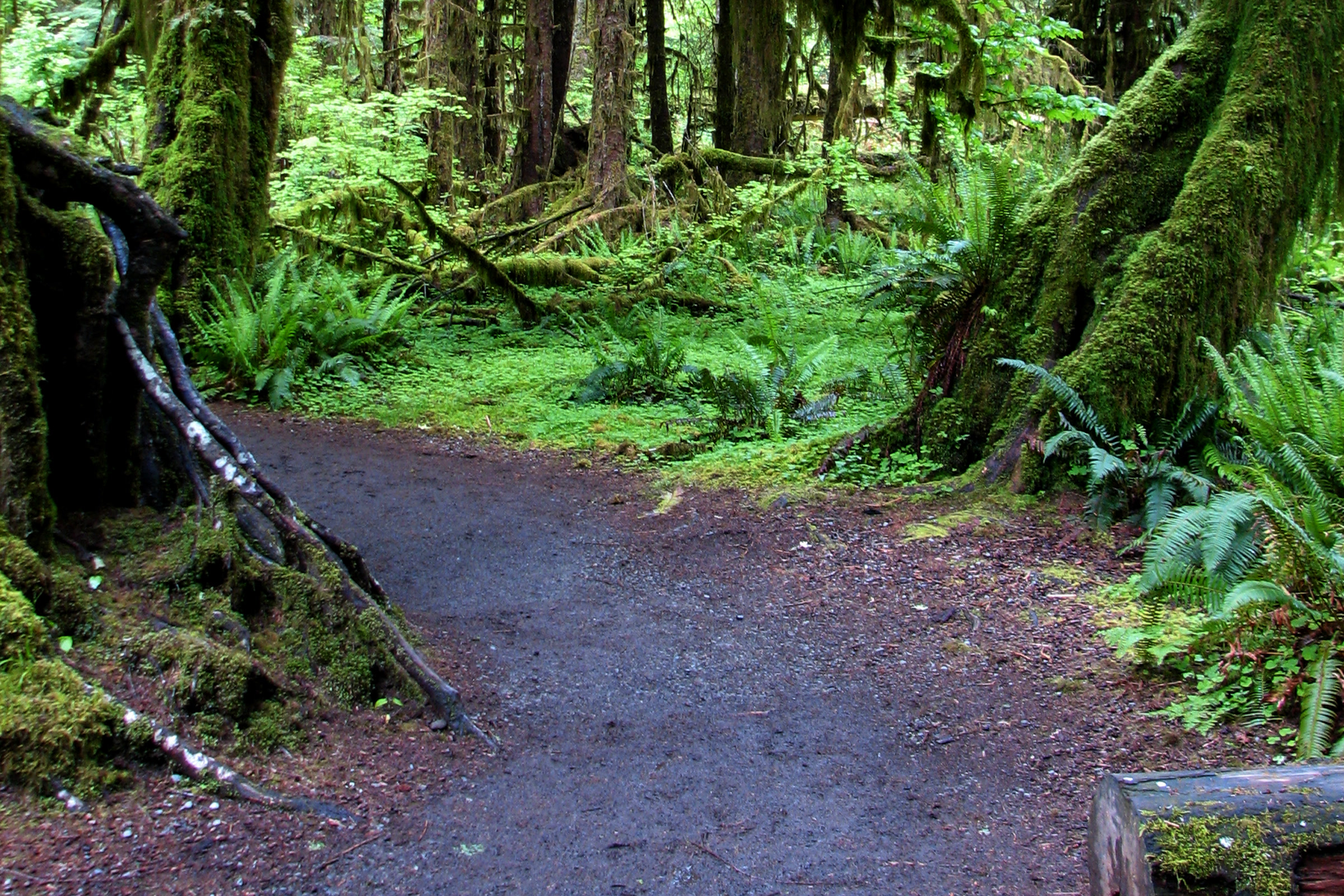
Please stay on the trail and leave nurse logs, moss and seedlings as you find them. The wider story of these forests is in our guide to temperate rainforests in Olympic National Park, and the NPS temperate rain forests page has more.
How Friends of Olympic National Park helps
We are Friends of Olympic National Park (FONP), a volunteer led friends group based in Port Angeles. Our projects include guided mushroom walks along with insect and wildflower walks. If a row of trees on stilts has ever stopped you in your tracks, please become a member.
Frequently asked questions
What is a nurse log?
A nurse log is a fallen tree that gives seedlings a place to grow. Moss covers the log first, seeds take root in the moss, and the young trees send roots down around the log into the soil.
Why do trees grow on nurse logs in the rain forest?
The rain forest floor is so thickly covered that many seedlings do better on logs. A Hoh study found about 4.6 times more seedlings on logs, where a thick feather moss that blocks light on the forest floor is less common.
What is a colonnade of trees?
A colonnade is a straight row of trees standing on stilt-like roots. The trees sprouted along one nurse log, and the row is left behind after the log rots away.
How long does a nurse log take to decay?
The park says fallen trees can take centuries to decay back to soil. Through all that time they provide habitat for mosses, seedlings, fungi and animals.
Where can I see nurse logs in Olympic National Park?
The Hall of Mosses and Spruce Nature Trail in the Hoh Rain Forest both show nurse logs and the rows of trees they leave behind. At Lake Crescent, the short Moments in Time Trail passes them too.
Leave a Reply