
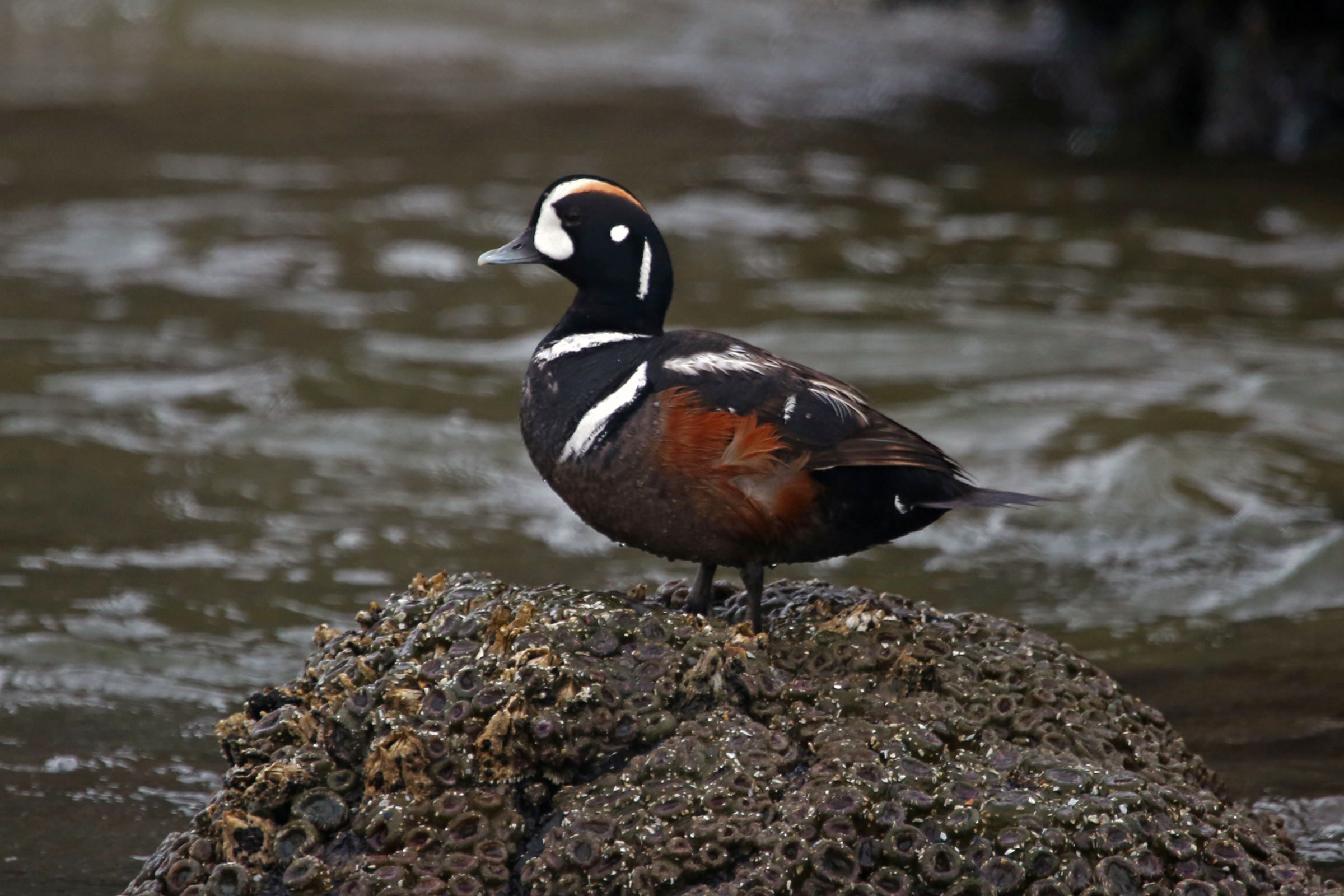
Harlequin ducks in Olympic National Park live where few ducks would dare: in white water. Each spring pairs fly up the park’s fast rivers to nest, and by late summer they are back on rough, rocky saltwater shores. Here is how to recognise them, where they spend each season, and how to watch without disturbing them.
Quick answer
Where can you see harlequin ducks in Olympic National Park?
Harlequin ducks breed on fast, rocky rivers in the park from mid March to mid August, and the NPS species list rates them common breeders. Males leave for saltwater in late June or early July, females and young in August. In winter, look along rough, rocky saltwater shores, including the Strait of Juan de Fuca.
- A small sea duck, about 17 inches long
- Nests beside fast mountain streams
- Eats insect larvae in rivers, shellfish on the coast
- A state Species of Greatest Conservation Need
How to recognise a harlequin duck
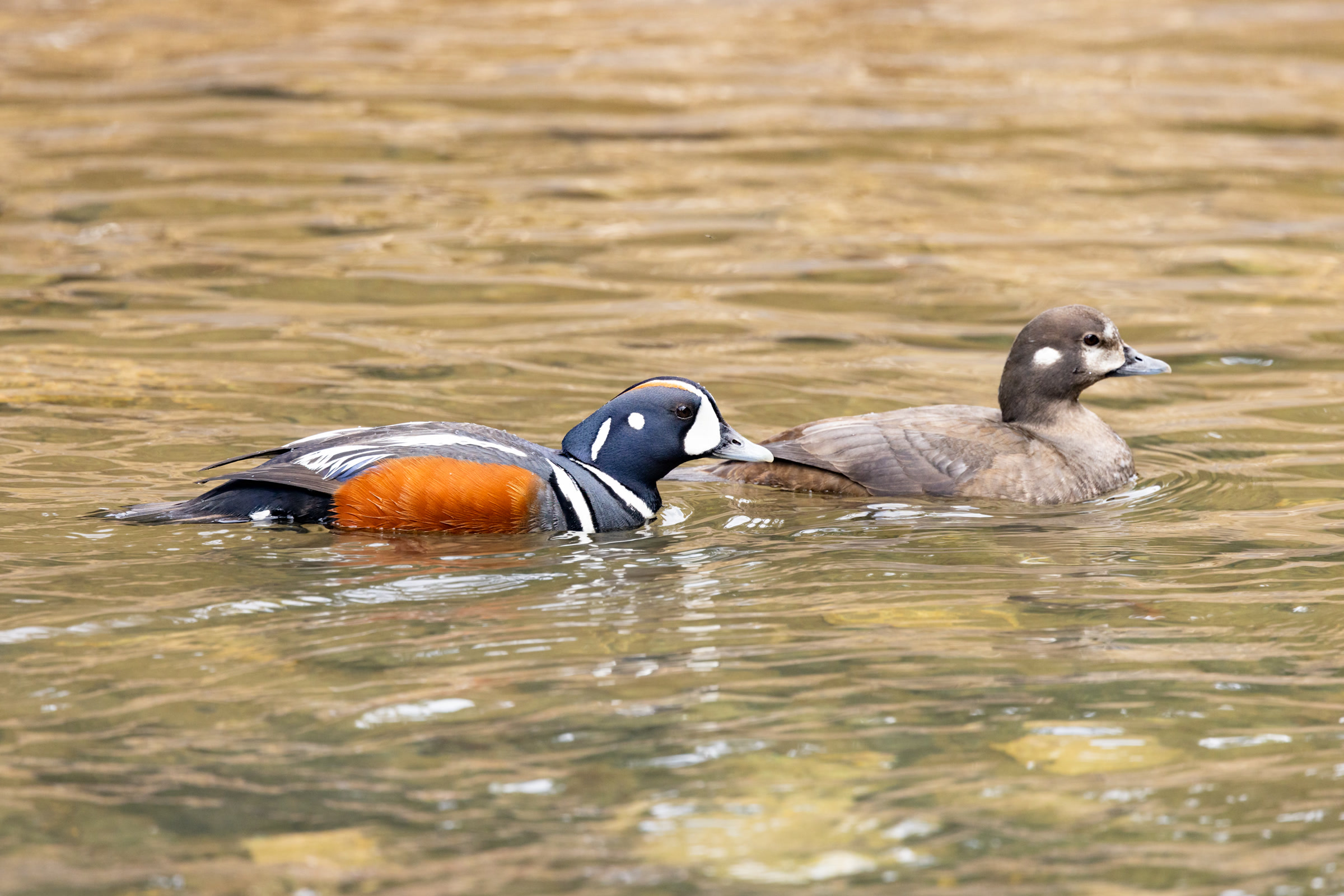
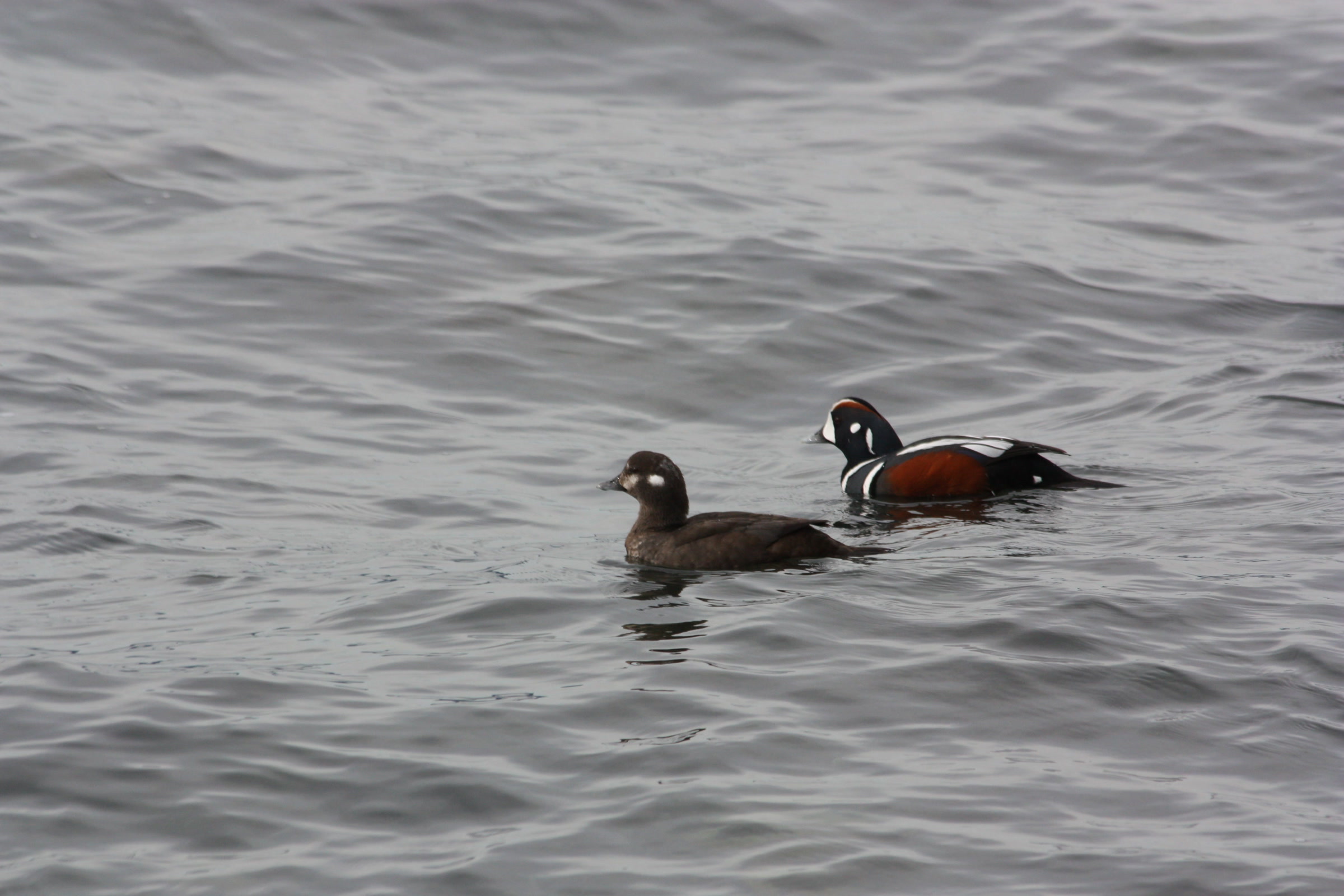
The Washington Department of Fish and Wildlife (WDFW) describes the harlequin duck as a small sea duck, about 17 inches long and about 1.5 pounds. At a distance both sexes look black. Close up, the male is unmistakable: slate blue with chestnut sides and crown, and bold white stripes and spots edged in black.
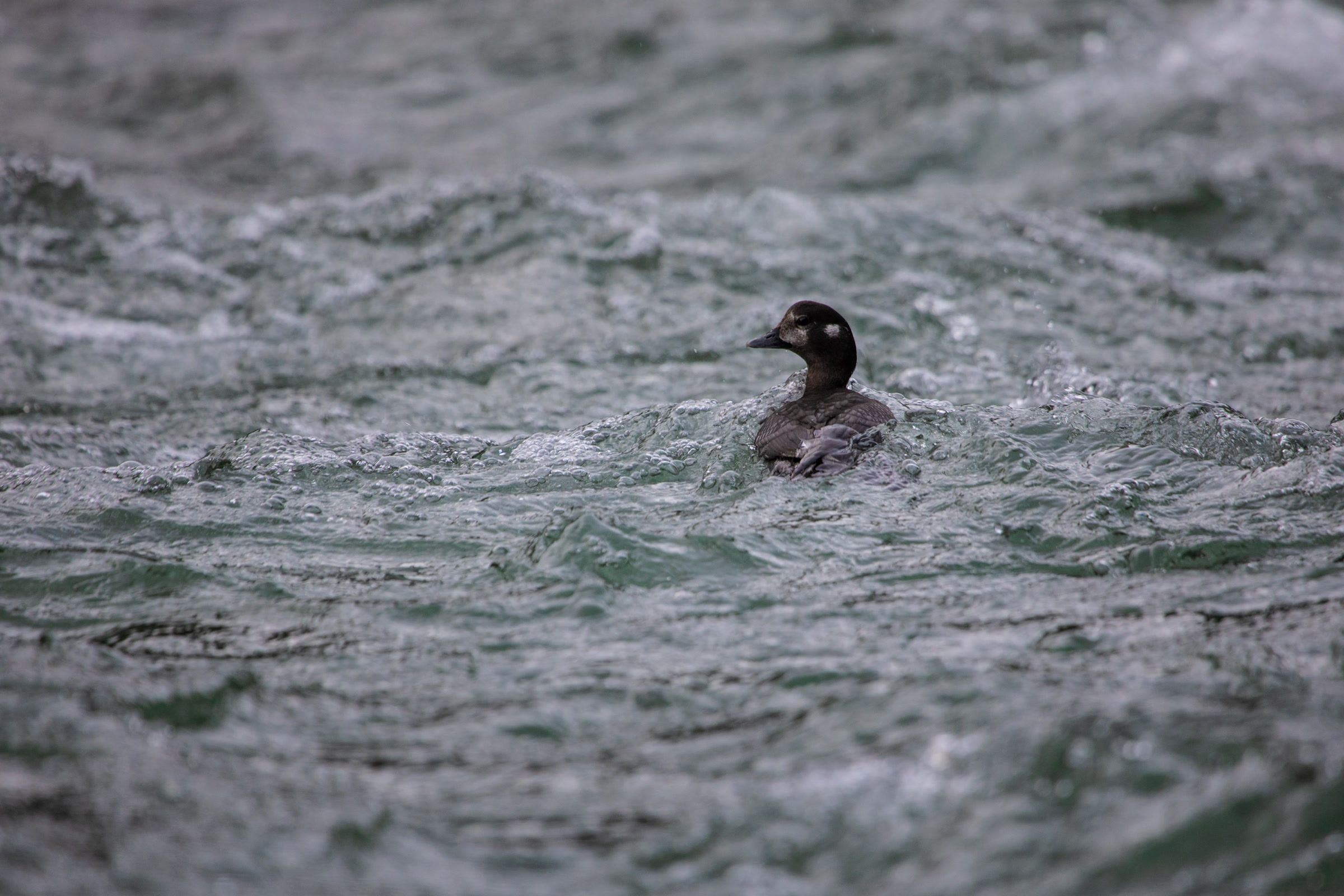
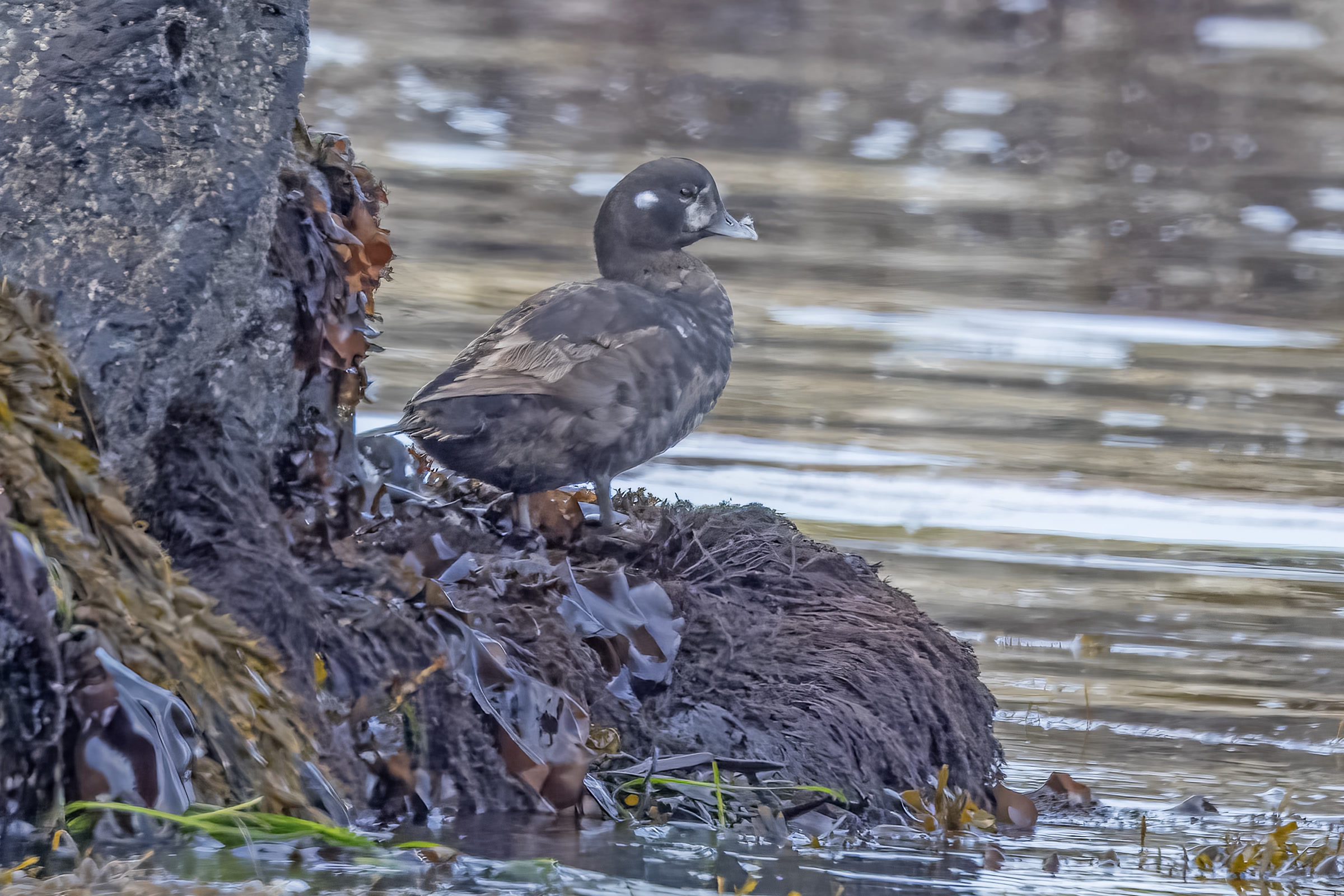
The female is a plain brown duck with white patches on the cheek and ear, the University of Washington’s COASST program says. Both sexes have a small bill and a long tail. WDFW notes that flocks are small and compact, and the birds fly fast with abrupt turns.
Summer on fast mountain rivers
The National Park Service species list for Olympic records the harlequin duck as native, common and a breeder, and tags it as commonly seen by visitors. Seattle Audubon’s BirdWeb says they breed below about 4,000 feet in the Olympic, Cascade and Selkirk mountains, from mid March to mid August.
BirdWeb describes their summer home as fast mountain streams under closed forest canopy, with midstream gravel bars and rocks for resting. Harlequins breast strong currents and climb slippery boulders with ease. In rivers they feed mainly on aquatic insect larvae clinging to the rocks, which they gather by diving and walking along the bottom.
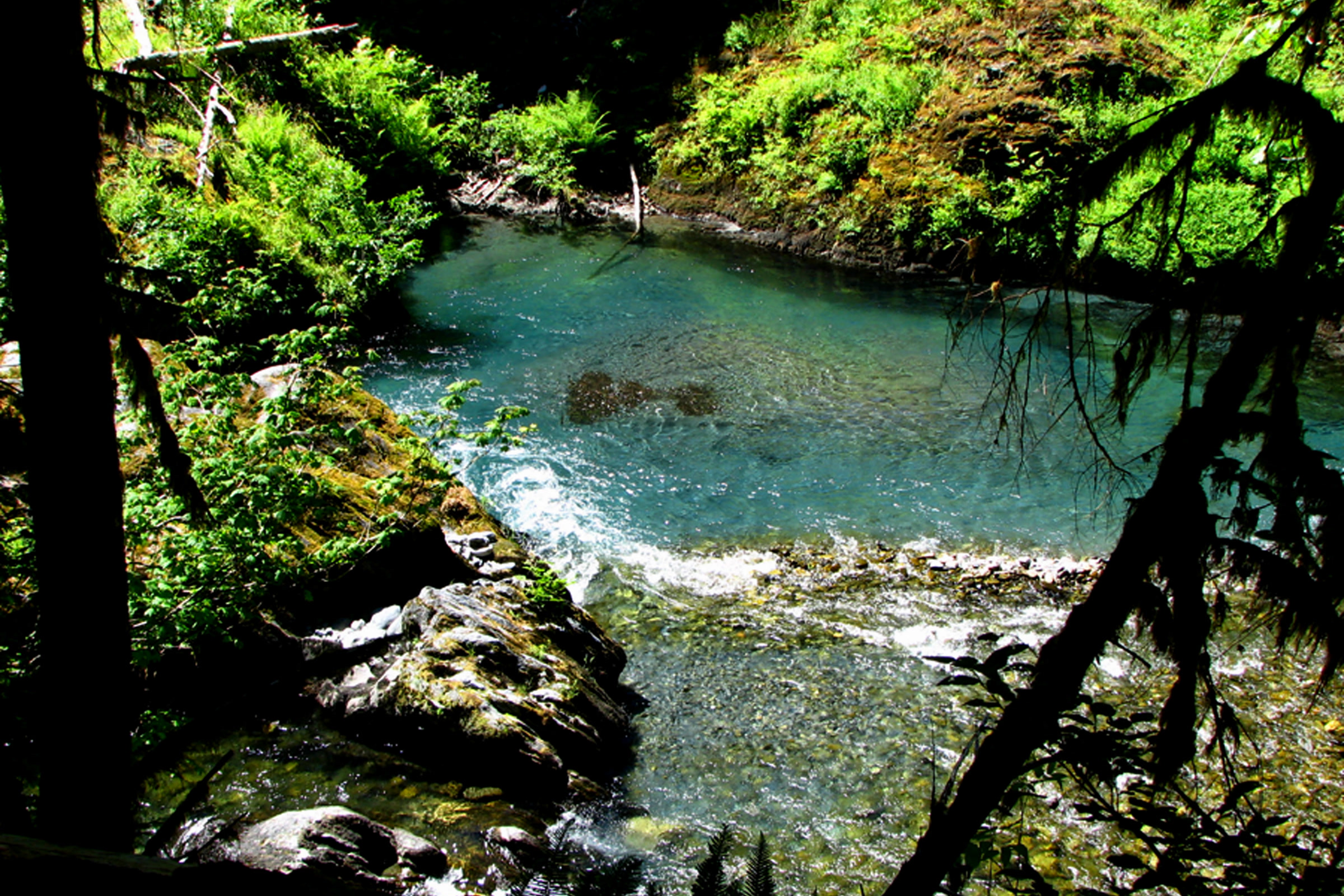
These are the same riffles where American dippers in Olympic National Park hunt, and the two birds share a taste for clean, cold water. Our guide to the rivers of Olympic National Park introduces the big valleys.
Nesting and ducklings
Pairs form in winter and spring, BirdWeb says, and the male leaves once the female starts incubating. She hides the nest near the stream, on the ground, a small cliff ledge, a tree cavity or a stump, and lays 5 to 7 eggs. Incubation takes 27 to 30 days.
The chicks leave the nest soon after hatching and later drift downstream with their mother, and they can fly at about 5 to 6 weeks. Females usually first breed at two years old and males at three, and success is often low until about age five. WDFW adds that floods can wash away prey and lower breeding effort.
The Elwha after the dams
COASST noted that removing the Elwha dams opened about 50 miles of river, and that biologists hope it may boost harlequins around Port Angeles. In 2018, Western Washington University researchers repeated a 2002 waterfowl survey on the river, harlequins included, as a first look after dam removal. Our Elwha River restoration story explains the project.
Sea ducks on the Olympic coast
Harlequins are true sea ducks for most of the year. BirdWeb says breeding males head for molting sites in the Strait of Juan de Fuca and Puget Sound in late June or early July, while females and young leave the rivers in August. WDFW notes that adults return faithfully to the same wintering areas.
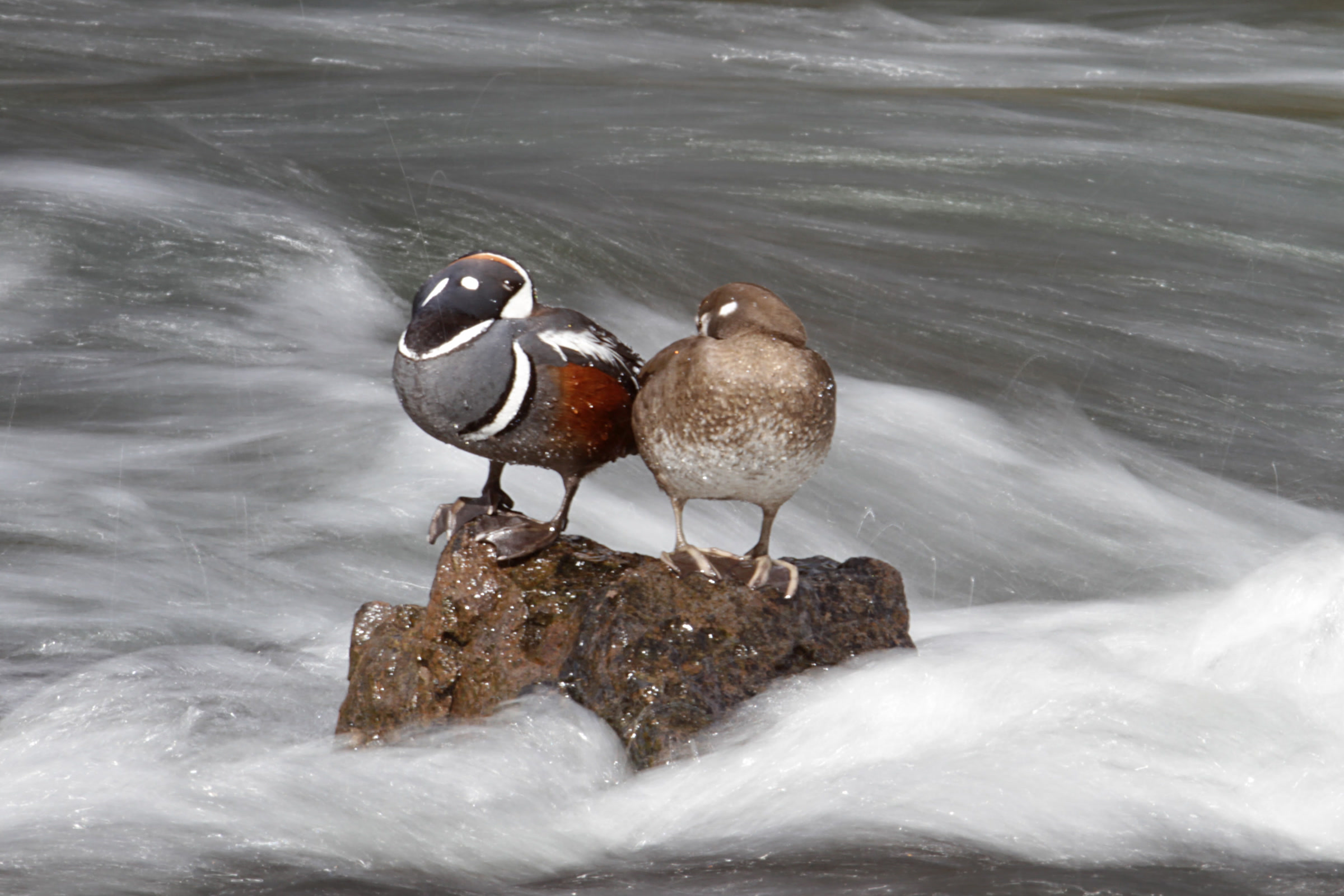
In winter they choose rocky coastlines and the intertidal zone, where rough surf is normal. NOAA’s seabird list for the Olympic Coast National Marine Sanctuary includes the harlequin duck, with its habitat given as rough coastal water. BirdWeb notes many birds have been found with healed broken bones, probably from being thrown against rocks.
River season and coast season compared
| Detail | Rivers | Coast |
|---|---|---|
| When | Mid March to mid August | Late June through winter |
| Habitat | Fast streams under forest | Rocky shores and rough surf |
| Main food | Aquatic insect larvae | Mollusks and crustaceans |
| Who is there | Pairs, then females with broods | Small, compact flocks |
BirdWeb also points out an unusual pattern: birds wintering on the Pacific coast and in Puget Sound may fly south or west to the Olympic Peninsula to breed, rather than north. Other seabirds of the outer coast are covered in our guide to the Olympic coast wildlife refuges.
Why harlequins need a quiet stream
WDFW lists the harlequin as a Species of Greatest Conservation Need and a priority species, with low numbers in Washington. Surveys in 1996 found about 400 breeding pairs on the state’s streams, mainly in the Cascades and Olympics. Wintering birds on Puget Sound averaged about 3,000 from 2012 to 2014, some 15 percent fewer than in the mid 1990s.
The agency names human disturbance, damaged coastal habitat, pollution and reduced marine food as concerns. BirdWeb adds that streamside logging, which adds silt and cuts prey, is probably the biggest threat in Washington. Because harlequins mature slowly, they recover slowly from losses, which is why protected rivers like the park’s matter.
Watching harlequins without disturbing them
- Stay at least 50 yards from all wildlife, as the park compendium requires; as of October 2026, check the NPS page before you go.
- Scan midstream rocks and gravel bars from the bank with binoculars rather than walking closer.
- If a female with ducklings appears, step back and let them move on.
- On the coast, watch the surf line around rocks from shore.
Our guide to birding in Olympic National Park covers other species to look for along the way.
How Friends of Olympic National Park helps
We are Friends of Olympic National Park (FONP), a volunteer led friends group in Port Angeles. Our projects include guided nature walks and beach cleanups, small ways to help the places harlequins depend on. Members keep that work going, so please become a member.
Frequently asked questions
Are there harlequin ducks in Olympic National Park?
Yes. The National Park Service species list for Olympic records the harlequin duck as native, common and breeding in the park, and commonly seen by visitors.
When do harlequin ducks nest in Washington?
From mid March to mid August, according to Seattle Audubon’s BirdWeb. Females lay 5 to 7 eggs beside fast streams and incubate them for 27 to 30 days.
What do harlequin ducks eat?
On rivers they eat mainly aquatic insect larvae, such as caddisfly larvae, picked from rocks on the bottom. On the coast they eat mostly mollusks and crustaceans, and WDFW notes herring spawn too.
Are harlequin ducks endangered in Washington?
They are not listed as endangered, but WDFW names them a Species of Greatest Conservation Need and a priority species, with low numbers in the state.
How many harlequin ducks breed in Washington?
WDFW reports that surveys in 1996 found about 400 breeding pairs on Washington streams, mainly in the Cascade and Olympic mountains. WDFW counted about 3,000 wintering on Puget Sound from 2012 to 2014.
Leave a Reply