
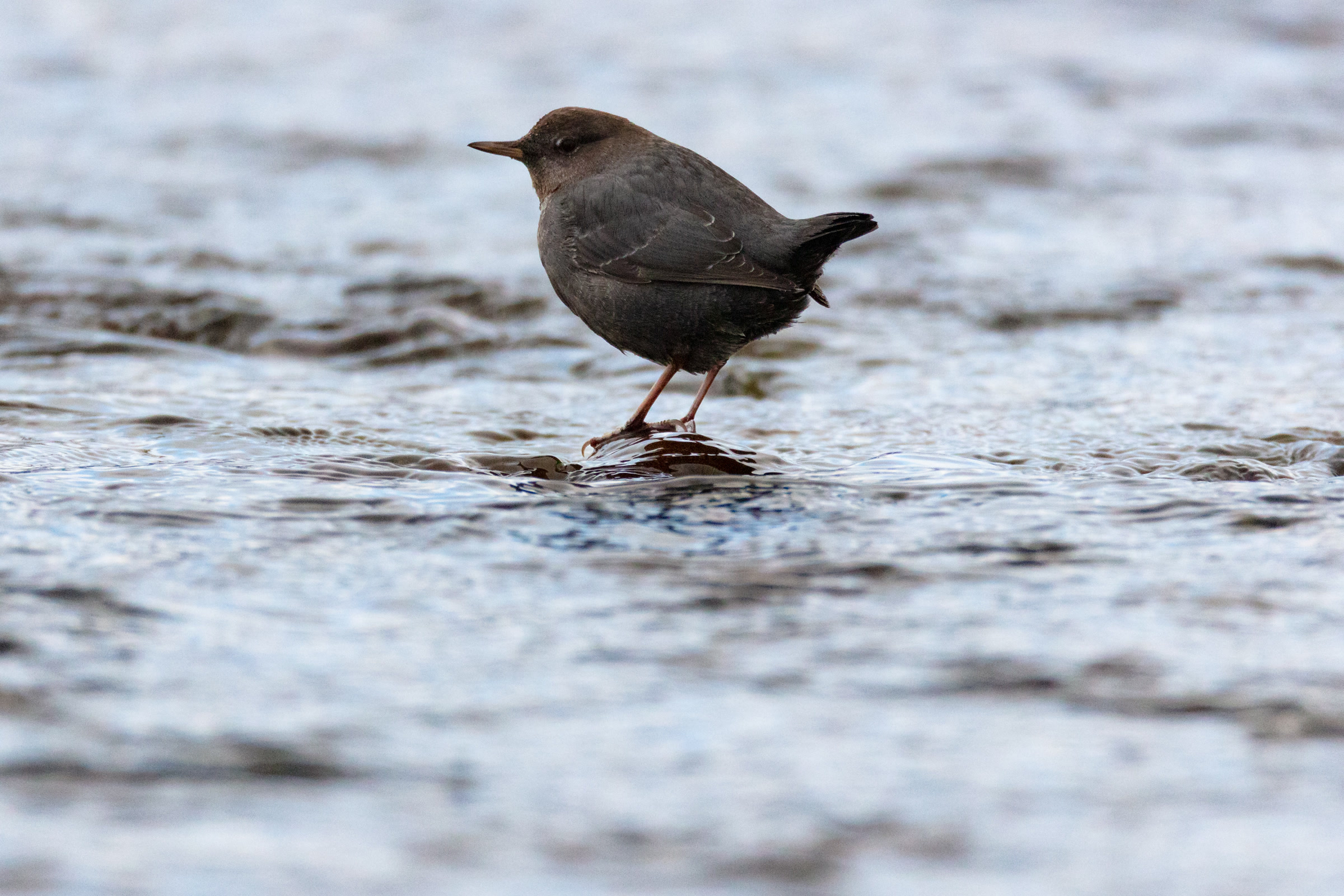
American dippers in Olympic National Park are easy to miss and impossible to forget once you have seen one. A small grey bird bobs on a rock in white water, then steps straight into the current and disappears. A few seconds later it pops up again, often with a meal. Here is how to find them, how they live, and why river scientists watch them closely.
Quick answer
What is an American dipper?
The American dipper is a chunky grey songbird, about 5.5 to 7.9 inches long, that feeds underwater in fast, clear streams. It walks and swims along the bottom hunting insect larvae. In Olympic National Park, look for one bobbing on rocks in riffles and cascades, all year round.
- North America’s only aquatic songbird
- Dives typically last 5 to 15 seconds
- Builds a domed nest of moss, sometimes behind waterfalls
- Once widely called the water ouzel
What an American dipper looks like
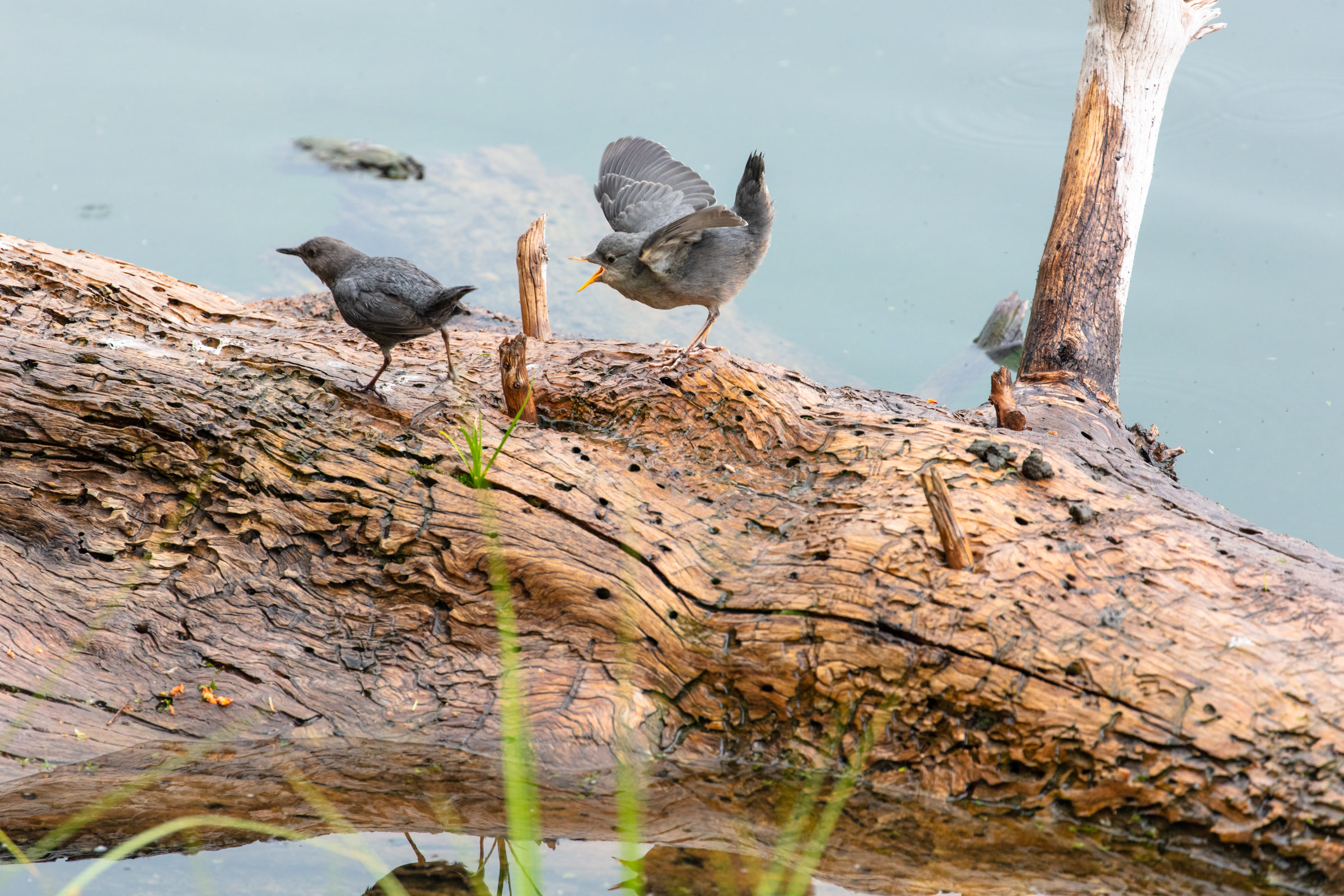
The NPS describes the American dipper as a chunky, grey, sparrow sized bird with a brownish head and a short tail, which it often holds cocked up. NPS pages call dippers the only aquatic songbird in North America.
Two habits give it away. The first is the bobbing: Seattle Audubon’s BirdWeb says the name comes from the way the whole body dips up and down, not just the tail as in sandpipers. The second is the blink, which flashes white upper eyelids against the grey face.
The American dipper at a glance
| Feature | Details |
|---|---|
| Length | 5.5 to 7.9 inches |
| Weight | 1.5 to 2.4 ounces |
| Colour | Slate grey, browner head, white eyelids |
| Food | Mostly aquatic insect larvae; also small fish and fish eggs |
| Nest | Domed ball of moss by fast water |
| Eggs | Usually 4 to 5, white |
| Habitat | Clear, fast streams with riffles and cascades |
Measurements are from the NPS; food is from BirdWeb. Males and females look alike.
How a dipper feeds underwater
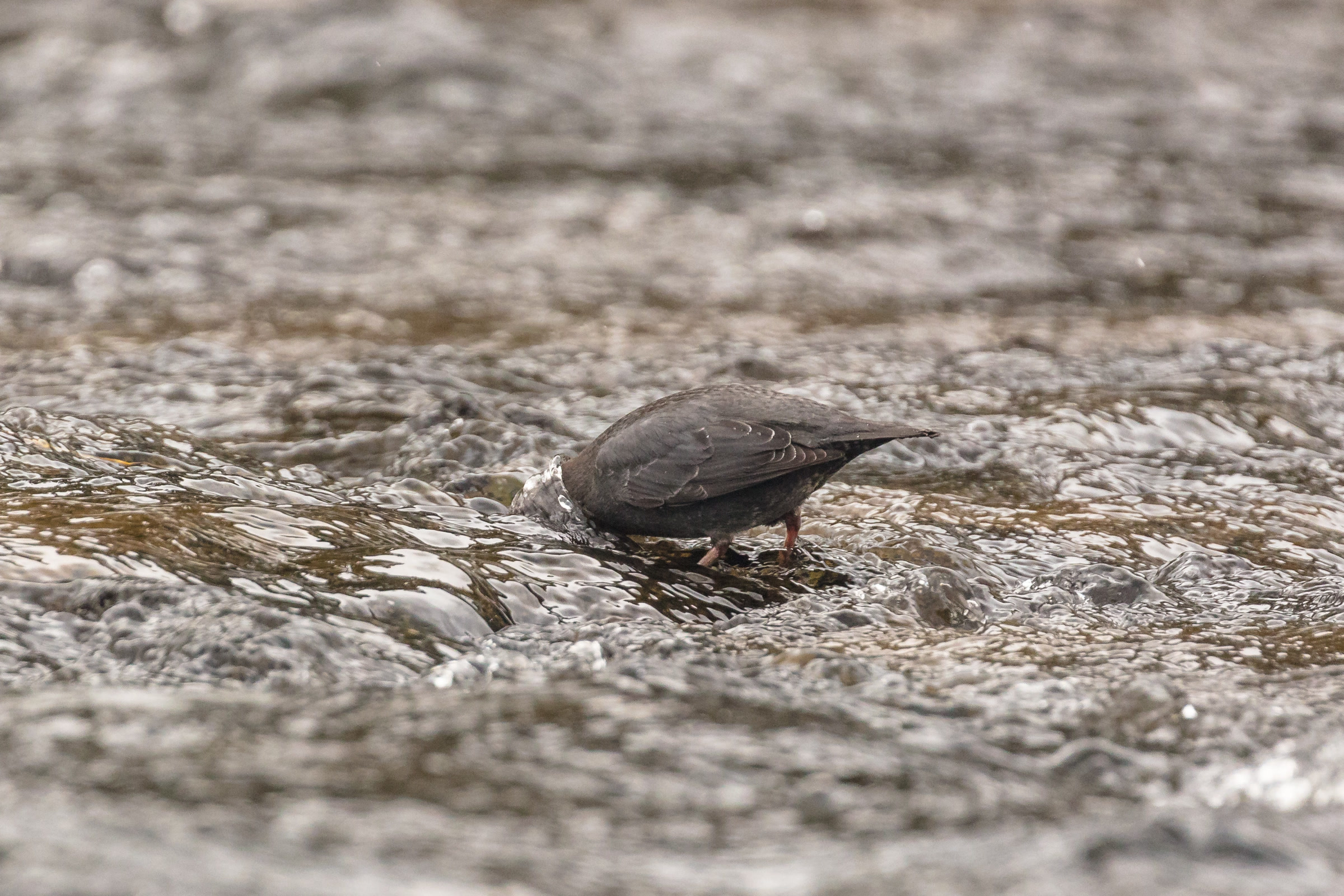
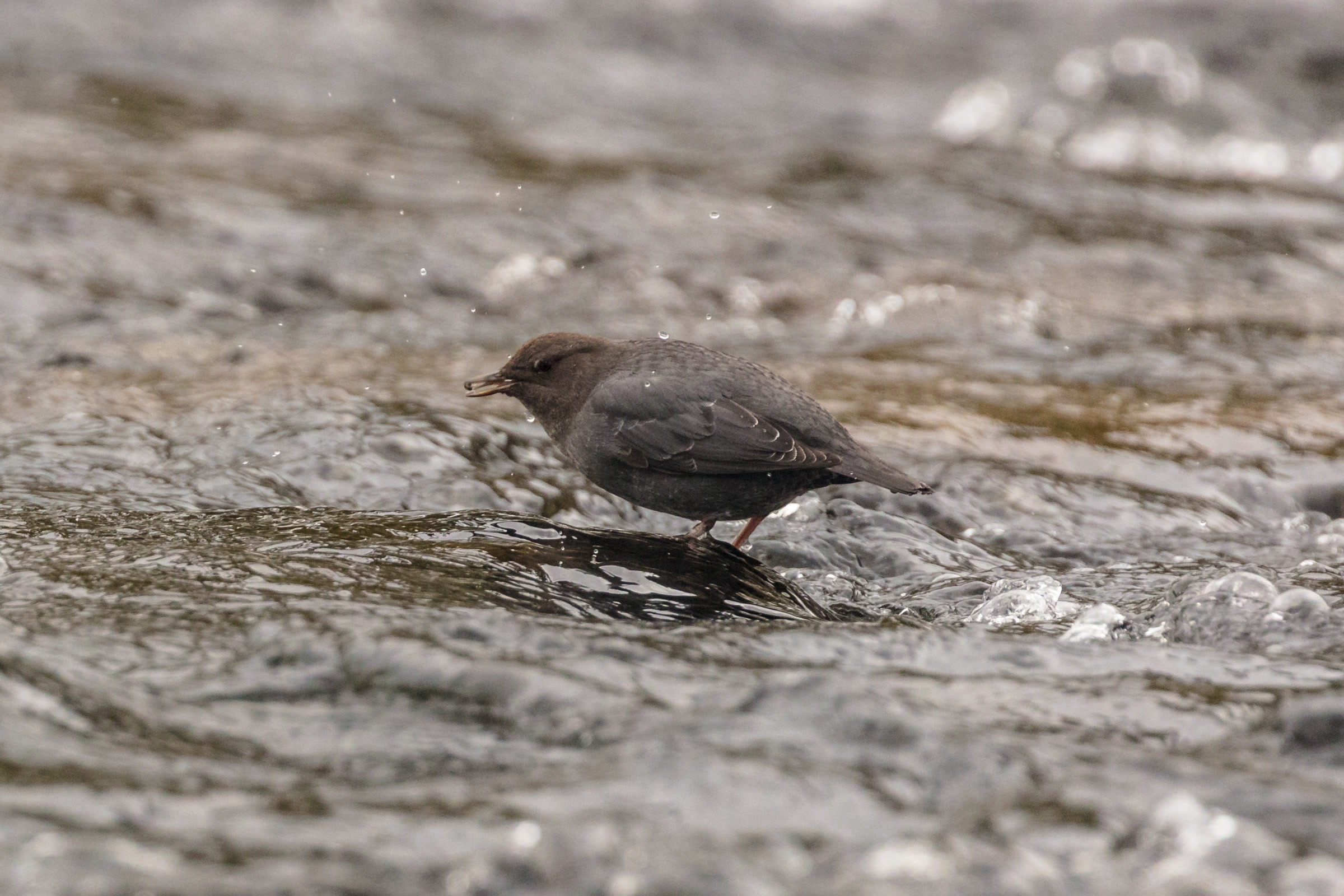
According to an NPS article on the American dipper, dippers dive and walk along the stream bottom, usually staying under for 5 to 15 seconds while they search for insects beneath pebbles and debris. BirdWeb adds that they flip rocks and use their wings to swim, in effect flying underwater.
Insect larvae clinging to the riverbed make up most of the diet. Dippers also take small fish and fish eggs, and BirdWeb notes they feed around salmon spawning areas.
Built for cold water
- Waterproofing: a large preen gland makes an oily wax that the bird works into its feathers.
- Insulation: thick, dense down keeps it warm in snowmelt streams.
- Breath holding: Rocky Mountain National Park notes extra oxygen carrying capacity in its blood.
- A loud voice: its calls and song carry over the roar of rushing water.
Nests behind waterfalls
Both parents build a domed ball of moss, grass and leaves on a ledge or bank, beneath a log, under a bridge, or behind a waterfall. BirdWeb says the domes can reach a foot across, and the spray keeps the moss alive.
Good sites are scarce, so BirdWeb calls nest sites the main limit on breeding, and bridges have given dippers many new ones. The female lays 4 to 5 white eggs and incubates them for 13 to 17 days while the male brings food. The young leave the nest at 24 to 26 days and can swim and dive right away.
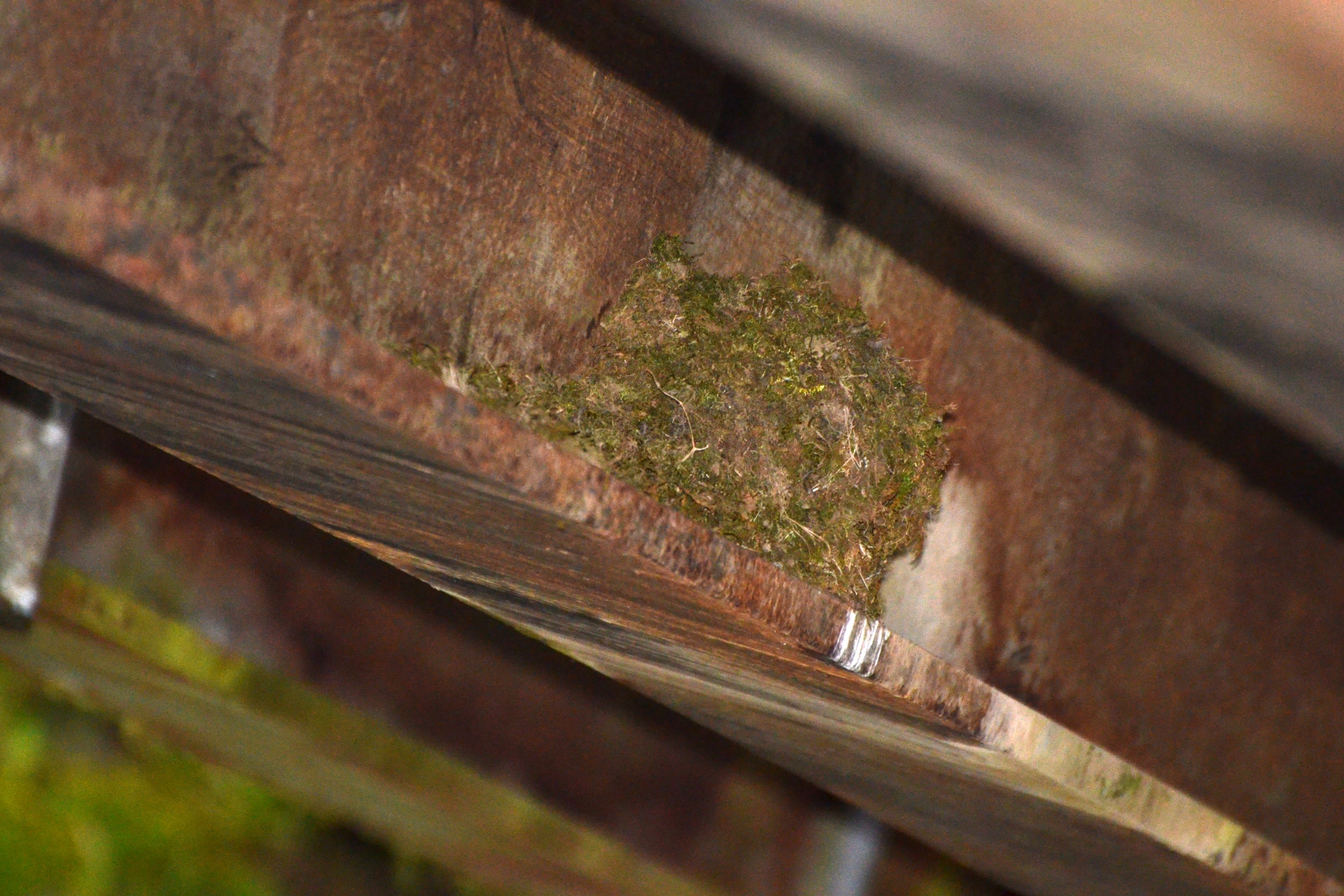
If you find a nest, enjoy it from well back and move on. The park’s rules require you to stay at least 50 yards from nesting birds, as of October 2026; check the NPS page before you go.
Where to watch for dippers in the park
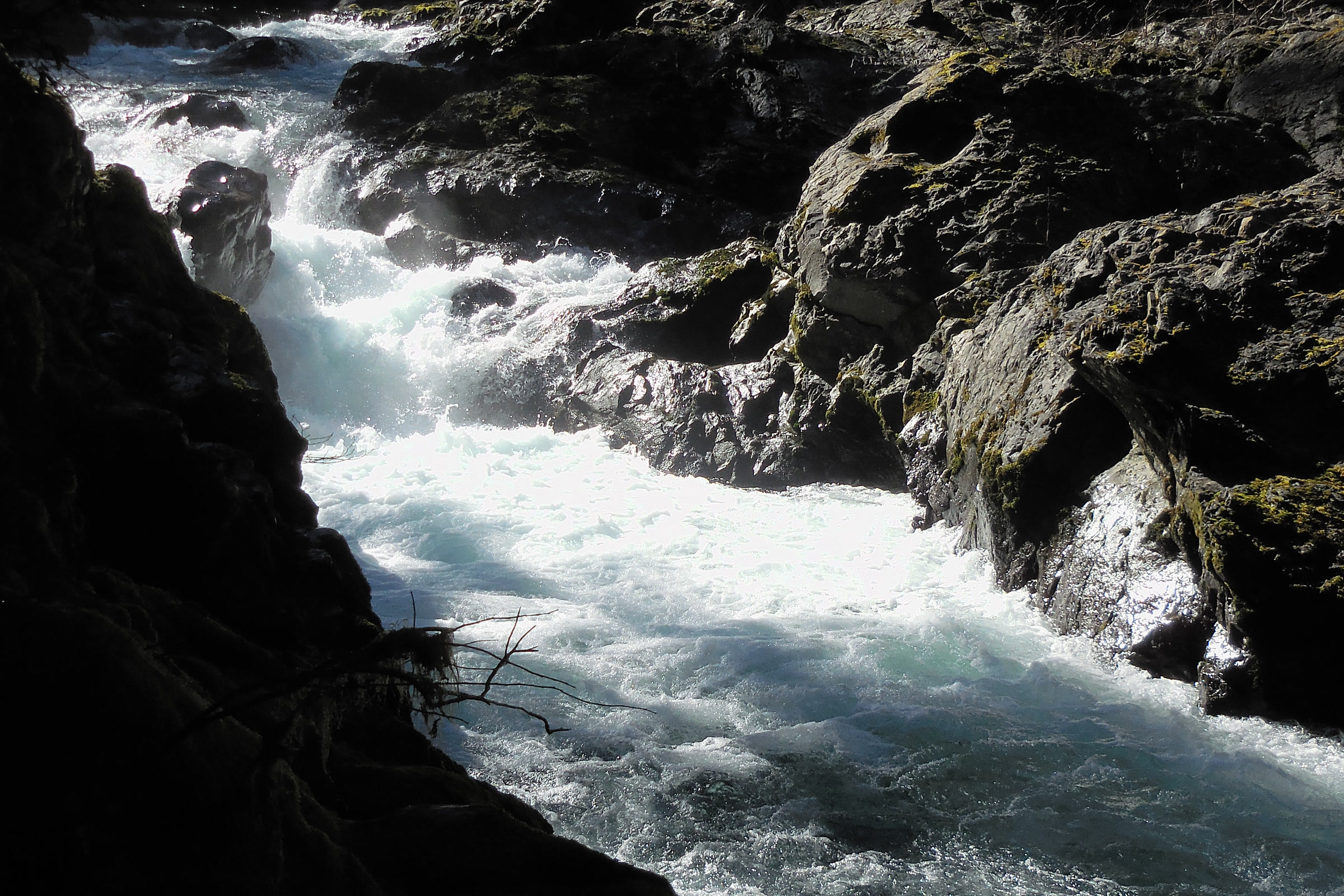
Dippers favour clear, fast water with riffles and cascades. BirdWeb says they live year round in Washington’s mountains and in many forested lowlands west of the Cascades, out to the coast, and on the Olympic Peninsula they are found up to about 5,000 feet. Audubon lists them in the Hoh, and our guide to birding in Olympic National Park covers other good stops.
- Scan rocks at the head of a riffle, where water breaks white.
- Check the pools below cascades and the spray zone around falls; our guide to Olympic National Park waterfalls has plenty to choose from.
- Listen for a loud call cutting through the noise of the water.
- Look under footbridges, a favourite modern nest site.
Dippers stay through winter too, and if their streams freeze they shift short distances downslope. For an overview of the park’s big rivers, see our guide to the rivers of Olympic National Park.
What dippers tell scientists about river health
BirdWeb calls dippers, like salmon, good indicators of stream health. Pollution, silt, warmer water and dams that change water levels all cut into their food or habitat, so a stream with dippers is usually a stream in good shape.
The Elwha River put that idea to the test. A team led by Christopher Tonra, working with the Lower Elwha Klallam Tribe, the Smithsonian and federal fisheries scientists, studied dippers on the Elwha. In the same year that salmon returned after the Elwha Dam came out, dippers showed higher nitrogen and carbon isotope ratios, a sign of salmon nutrients in their diet. The USGS record of the 2015 study concludes that marine nutrients can return quickly to the food web once a dam is removed.
A companion study by the same team compared streams where salmon could and could not reach. Ohio State University reported that dippers with salmon access were more likely to raise two broods in a season and to stay on their territory all year, and had higher survival. Our story of Elwha River restoration explains how the dams came down.
The water ouzel of John Muir
Older field guides call this bird the water ouzel. John Muir loved it, writing that wherever there is a fall or rapid you will find it “flitting about in the spray.” Stand by an Olympic stream long enough and you will understand why.
How Friends of Olympic National Park helps
We are Friends of Olympic National Park (FONP), a volunteer led friends group in Port Angeles. Our projects include guided insect, mushroom and wildflower walks that help people notice the small lives along the trail, and our volunteers care for trails and beaches. Clean, wild streams are what dippers need, so if you would like to help, please support Olympic National Park with a gift to FONP.
Frequently asked questions
Are there American dippers in Olympic National Park?
Yes. American dippers live year round on clear, fast streams across the Olympic Peninsula, up to about 5,000 feet. Look for a small grey bird bobbing on rocks in riffles and cascades.
How does a dipper bird walk underwater?
A dipper dives in and walks along the stream bottom, using its wings to swim against the current. It usually stays under for 5 to 15 seconds while it searches for insect larvae under pebbles.
Why is it called a water ouzel?
Water ouzel is an old name for the American dipper, used by John Muir among others. The name dipper comes from the bird’s habit of bobbing its whole body up and down.
Where do American dippers nest?
Dippers build a domed nest of moss, grass and leaves on ledges and banks, under logs and bridges, or behind waterfalls. Spray from the stream keeps the moss alive.
Why do scientists study dippers on the Elwha River?
Dippers eat what the river provides, so they show how a stream is doing. After the Elwha Dam was removed, dippers showed salmon nutrients in their diet in the same year salmon returned.
Leave a Reply