
Visit · Rain Forest · Park Nature
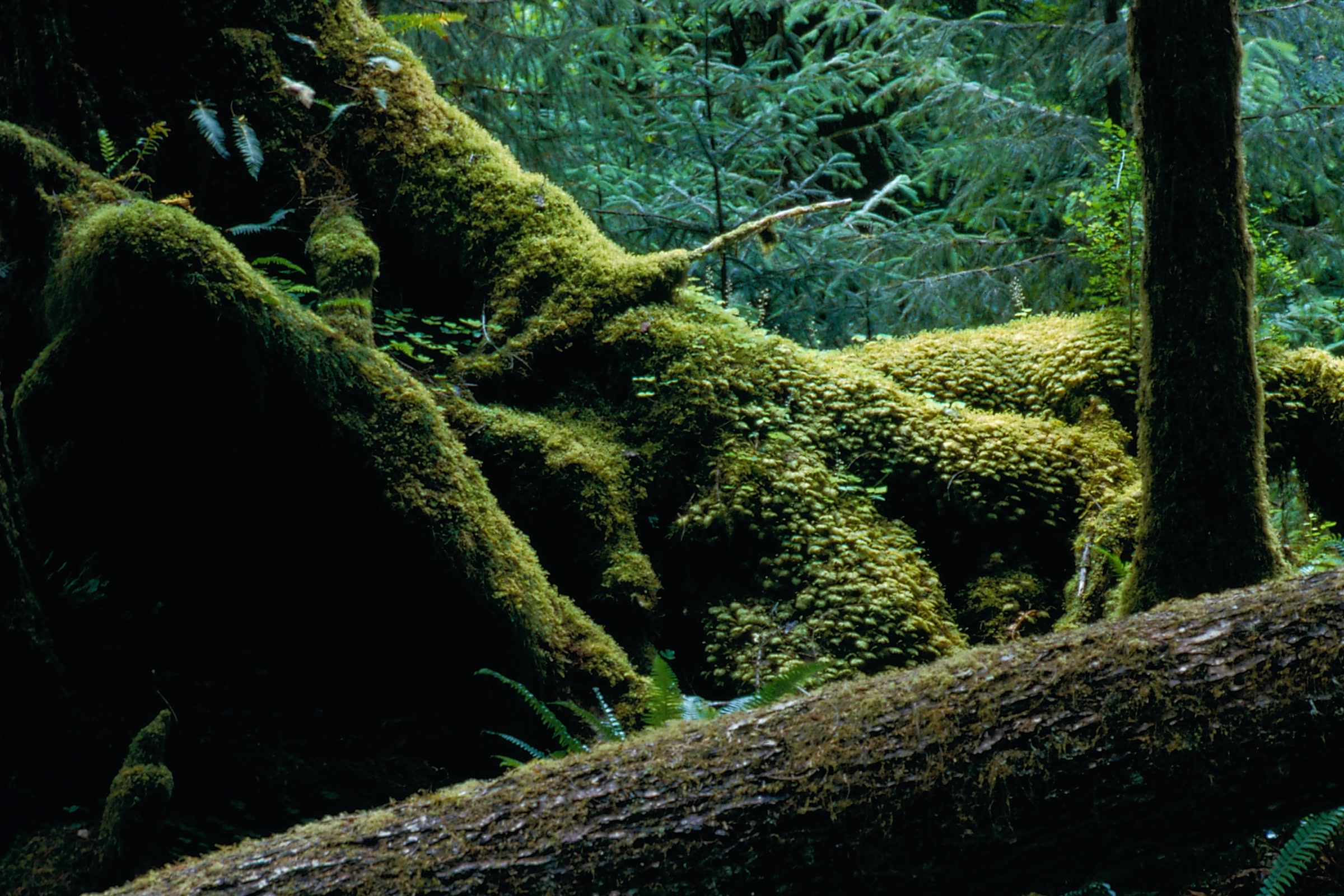
The Olympic National Park rainforest is one of the finest temperate rain forests in the lower 48 states, a place where moss hangs from every branch and fallen giants feed the next generation of trees. It fills four valleys on the park’s west side. Here is what makes it a temperate rain forest, how the valleys compare, and how to visit without spending your morning in a line of cars.
Quick answer
Where is the rainforest in Olympic National Park?
Olympic National Park’s temperate rain forest grows in four west-facing valleys: the Hoh, Quinault, Queets and Bogachiel. Pacific storms bring 140 to 167 inches of precipitation a year, so mosses, ferns and lichens cover the trees, and Sitka spruce and western hemlock up to 250 feet tall dominate. Start at the Hoh Rain Forest Visitor Center.
- Four rain forest valleys: Hoh, Quinault, Queets and Bogachiel
- 140 to 167 inches of precipitation a year
- Sitka spruce and western hemlock reach 250 feet
- Hoh parking can fill by 10 am in summer
What makes a temperate rain forest
A temperate rain forest needs two things: a great deal of rain and mild weather. Storms rolling in off the Pacific drop 140 to 167 inches of precipitation a year on these valleys, which is 12 to 14 feet. Down low, temperatures seldom fall below freezing, and summer highs rarely pass 80°F.
The National Park Service calls these valleys some of the best examples of primeval temperate rain forest in the lower 48. Similar forests grow in only a few other places, including Chile, New Zealand and southern Australia. The park’s rain forest is also one reason UNESCO lists Olympic as a World Heritage Site.
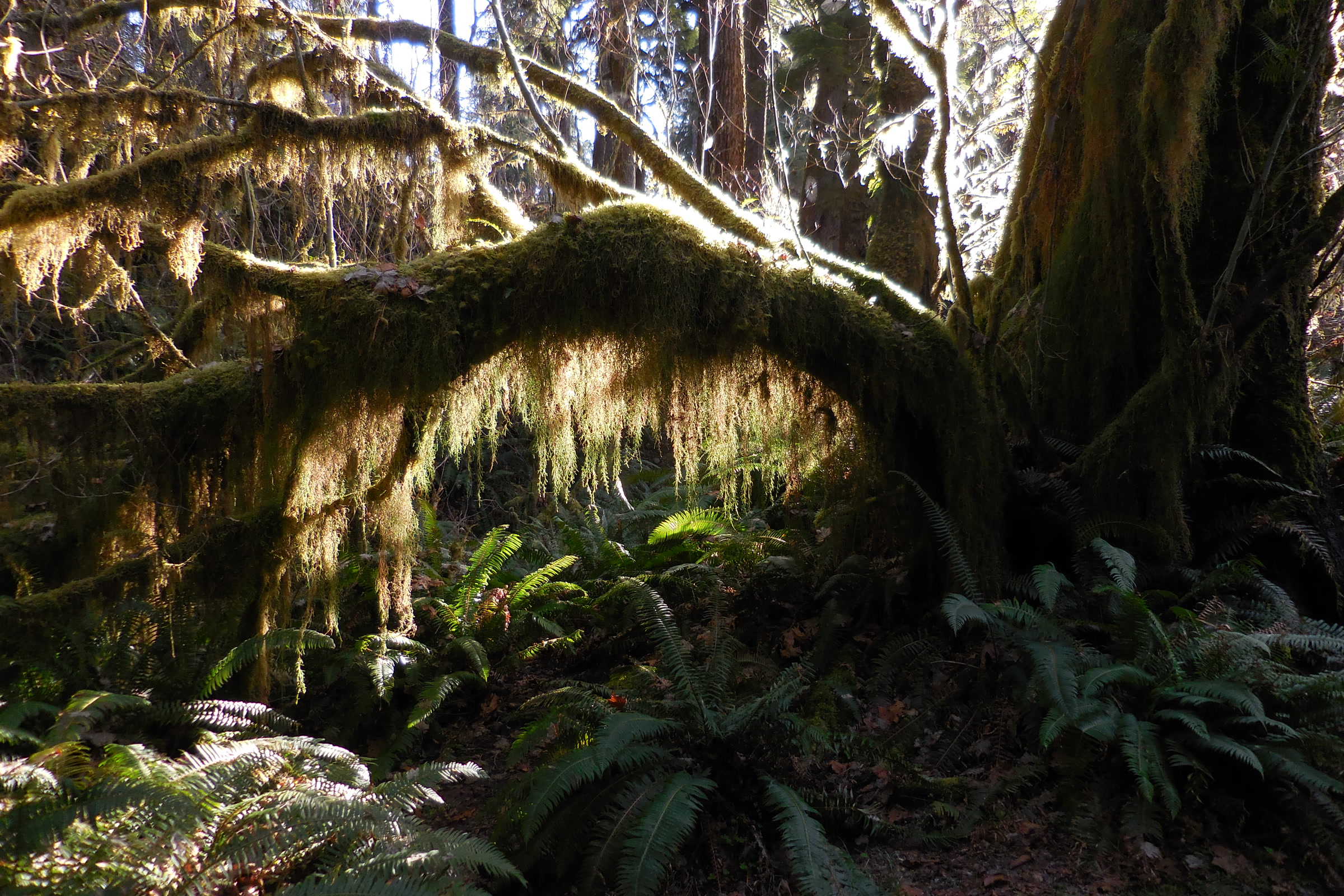
The four rain forest valleys compared
All four valleys open to the west, toward the ocean storms that feed them. Each has its own feel, from the busy Hoh to the quiet Bogachiel.
Hoh, Quinault, Queets and Bogachiel at a glance
| Valley | Getting there | Short walk to try |
|---|---|---|
| Hoh | About 2 hours from Port Angeles, under 1 hour from Forks | Hall of Mosses, 0.8 mile loop |
| Quinault | About 3 hours from Port Angeles, 1 hour from Forks | Kestner Homestead, 1.3 mile loop |
| Queets | A short drive from the Quinault area | Sam’s River Loop, 2.8 miles |
| Bogachiel | Trailhead on Olympic National Forest land | Bogachiel Rain Forest Trail, 1.6 miles to the park |
Hoh Rain Forest
The Hoh is the classic choice, with a visitor center, a campground and two short loops. The Hall of Mosses runs 0.8 mile and the Spruce Nature Trail 1.2 miles. For more, the Hoh River Trail heads 18.5 miles upriver toward the Blue Glacier moraine, and you can turn around wherever you like.
Quinault Rain Forest
The Quinault valley has a scenic loop drive and the Quinault Rain Forest Ranger Station, a good place to start. A 1.3 mile loop leads to the old Kestner homestead, and another short loop winds through groves of bigleaf maple. The Quinault Rain Forest Nature Trail off South Shore Road is run by Olympic National Forest, so it takes a Northwest Forest Pass or an interagency pass.
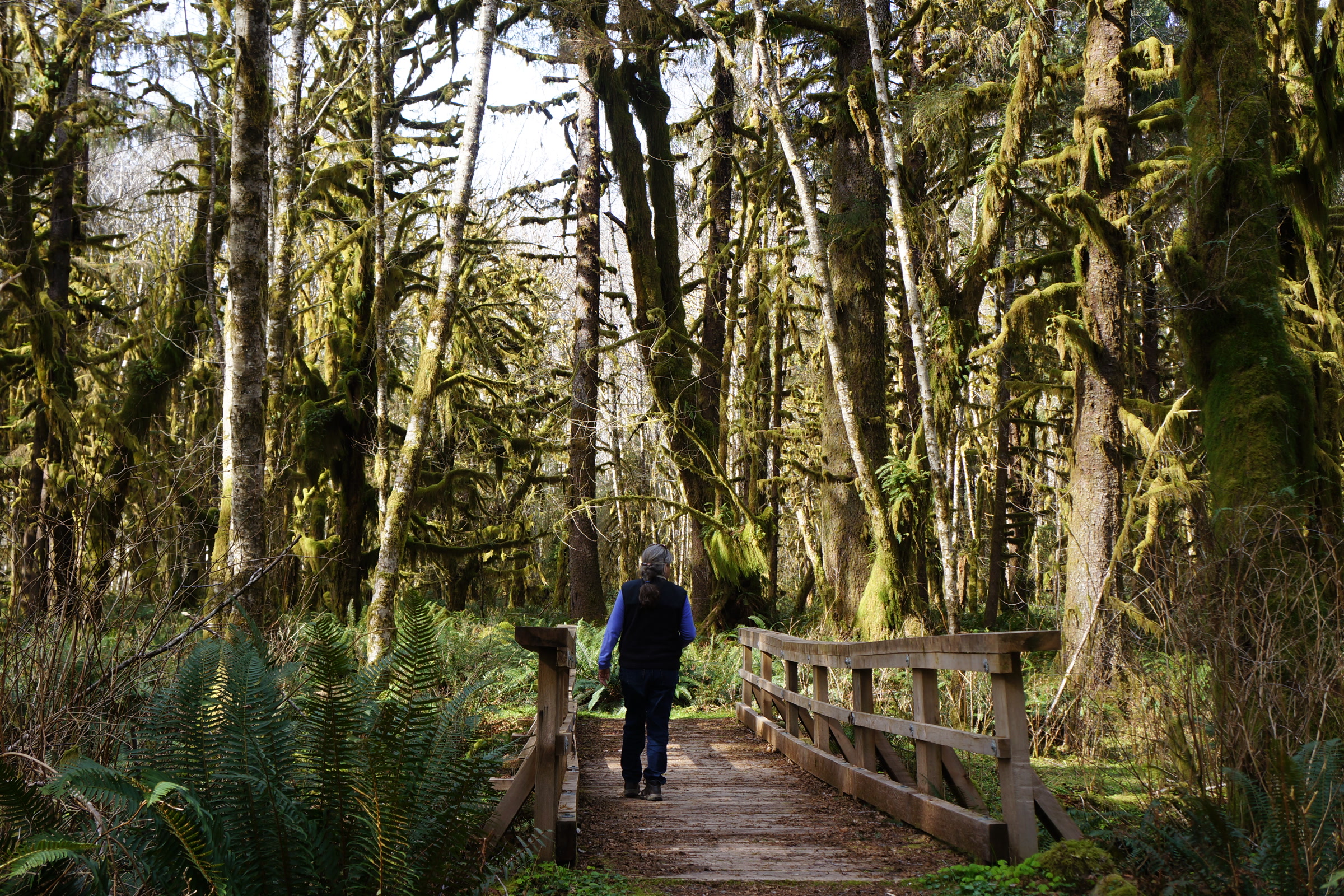
Queets and Bogachiel
These two are the quiet ones. In the Queets, the level Sam’s River Loop passes through several stages of rain forest, though winter storms often leave trees across it. The longer Queets River Trail starts with a river ford that is often waist deep in summer and can be impossible after heavy rain.
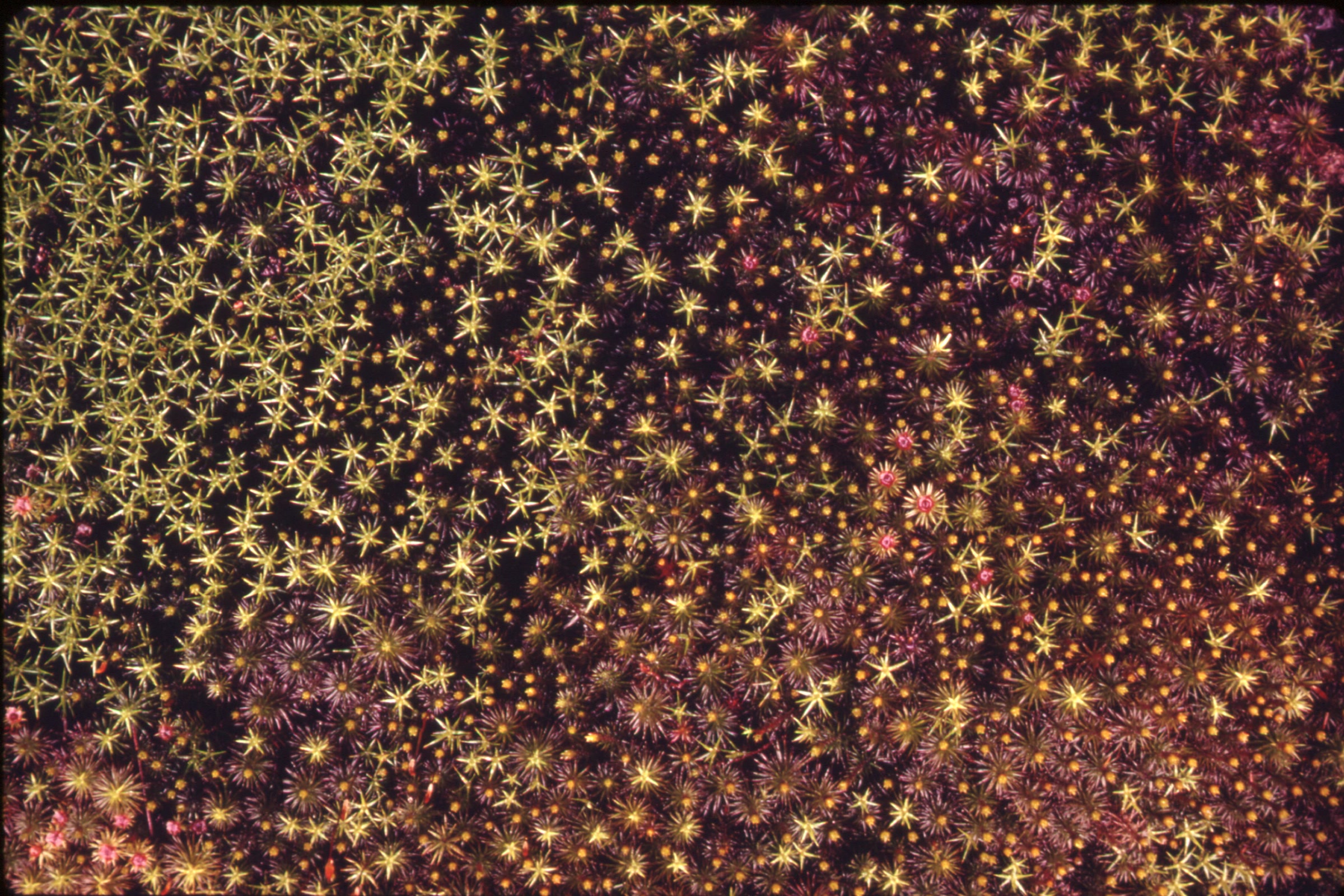
The Bogachiel Rain Forest Trail begins on national forest land and reaches the park boundary in 1.6 miles. Dogs are not allowed past the park boundary.
Nurse logs and colonnades
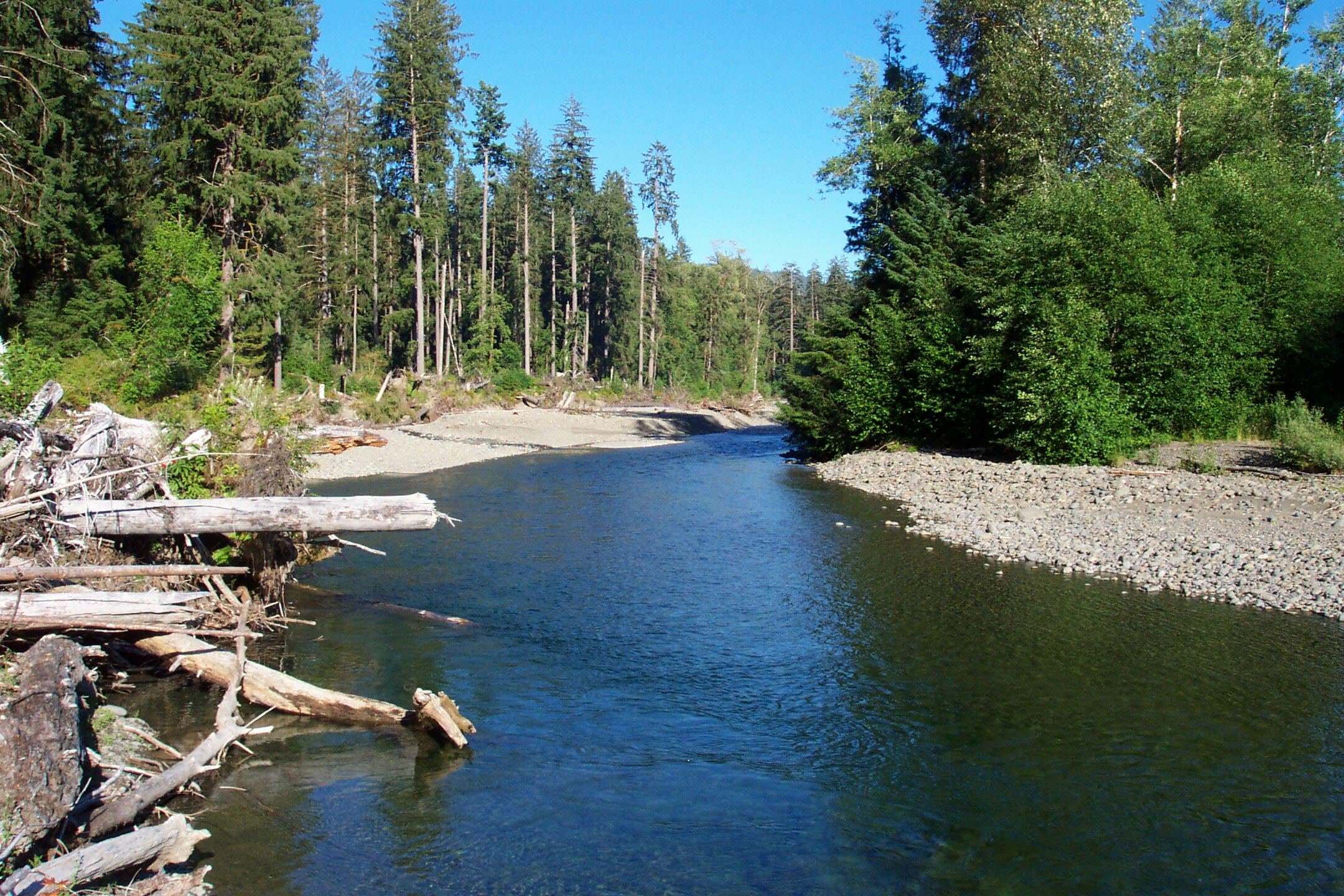
On a forest floor this crowded, a seedling’s best chance is often a fallen tree. Seedlings sprout on these nurse logs, and their roots grow down around the log into the soil. When the log rots away, the trees are left standing on stilt-like roots in a straight row, a pattern called a colonnade.
Dead wood can take centuries to break down. Along the way it shelters mosses, fungi, small mammals, amphibians and insects, which is why our mushroom season guide for the Olympic Peninsula spends so much time on fallen logs.
Mosses, ferns and other epiphytes
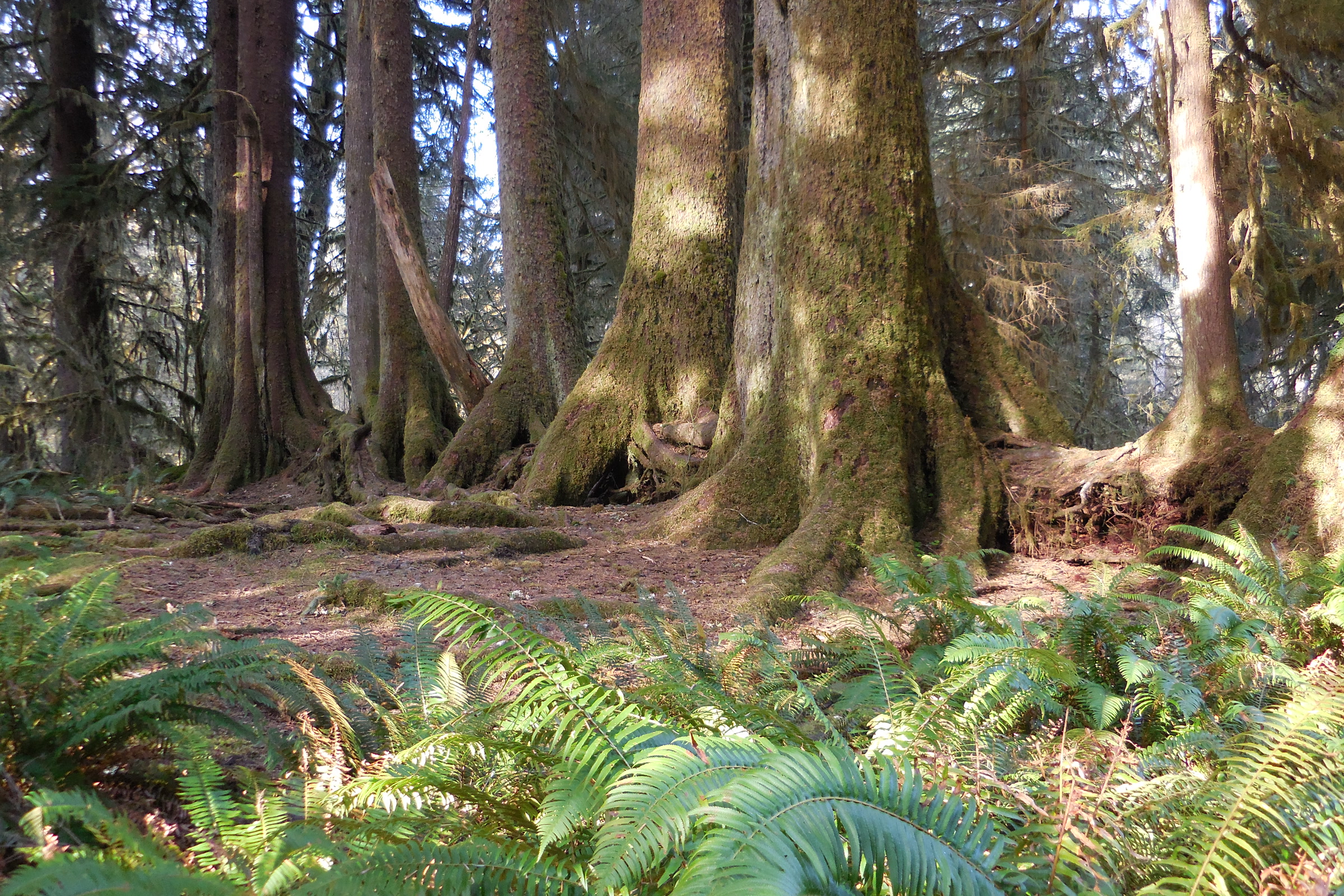
Much of the green you see is not growing in soil at all. Epiphytes, plants that live on other plants, cover trunks and branches: mosses, ferns, lichens and spikemoss. They take their water from the rain and mist, not from the tree, and they give the forest its jungle look.
Big trees: Sitka spruce, western hemlock and bigleaf maple
Sitka spruce and western hemlock rule the rain forest, and many are hundreds of years old and up to 250 feet tall. When the park was created in 1938, its founding law aimed to protect the finest primeval forests of Sitka spruce, western hemlock, Douglas fir and western red cedar in the country. Bigleaf maples add a softer layer, their limbs thick with spikemoss and licorice fern.
Roosevelt elk, the forest’s gardeners
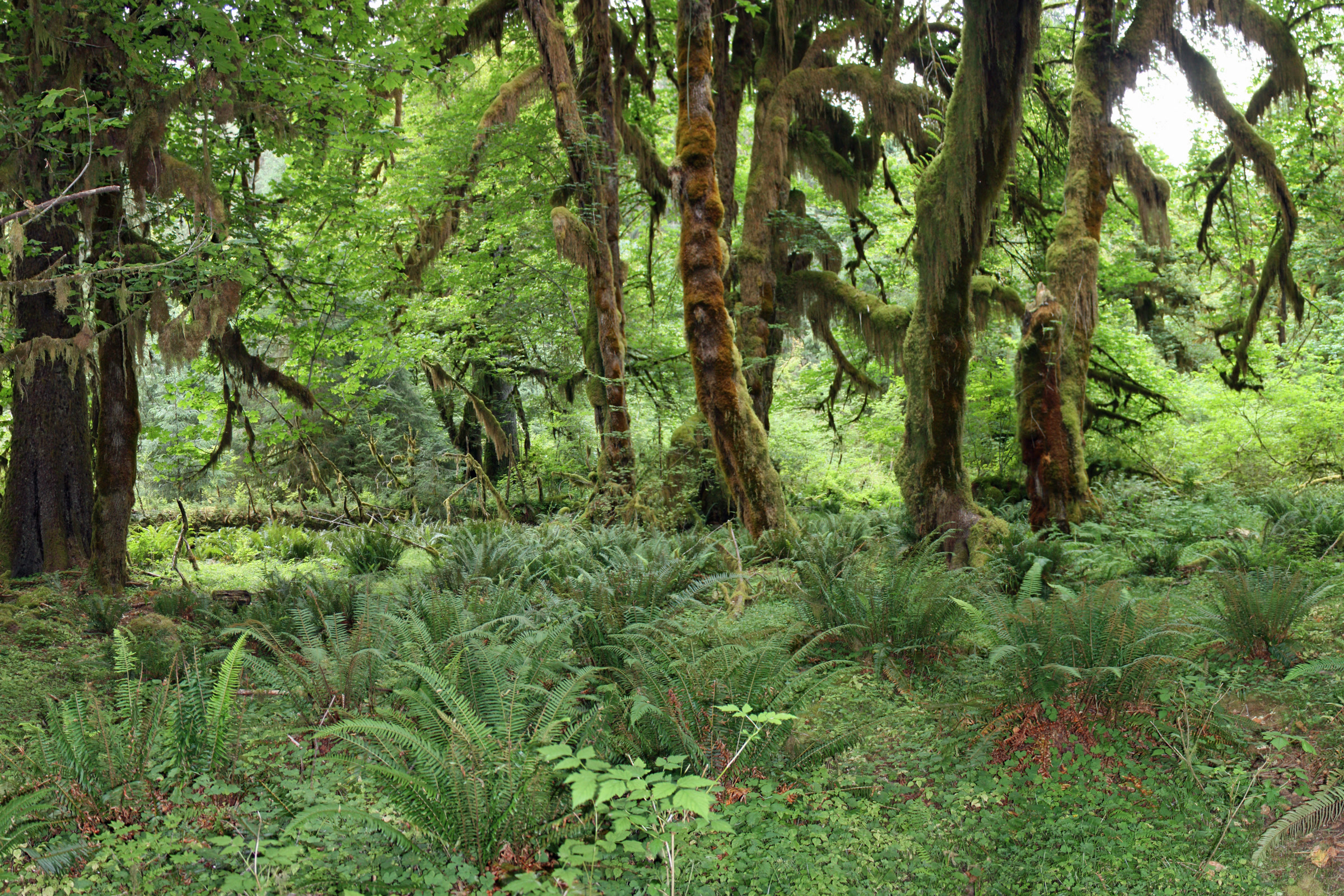
These valleys hold the largest wild herds of Roosevelt elk in the United States. Their browsing shapes the forest floor and often keeps the understory open. Read more about them in our guide to Roosevelt elk in Olympic National Park.
Tips for visiting the Hoh Rain Forest
From mid or late June, the Hoh Rain Forest Visitor Center parking area can be full by 10 am every day. Traffic is then metered at the single-lane entrance station, with cars let in as others leave. The park does not mention a timed entry or reservation system for the Hoh.
- Arriving between 10 and 11 am or 4 and 6 pm, the park estimates a 30 to 45 minute wait.
- Arriving between 11 am and 4 pm, plan on 1 to 2 hours.
- For a quieter walk and a better chance at wildlife, come before 10 am, after 5 pm, or in the off season.
- Pets are not allowed on Hoh trails, and the visitor center closes from January to early March.
Check the park’s summer visiting guide and its page on Olympic’s temperate rain forests before you go. Stay on the trail, leave the moss on the logs, and pack out what you bring, the same habits in our Leave No Trace guide for the Olympic coast.
How Friends of Olympic National Park helps
We are a volunteer-led friends group that works alongside the park. Our guided mushroom walks and trail days help neighbours and visitors see the forest up close. To lend a hand, see our volunteer opportunities at Olympic National Park.
Frequently asked questions
How much rain does the Olympic rain forest get?
The park says the rain forest valleys get 140 to 167 inches of precipitation a year, which is 12 to 14 feet.
Which is better, the Hoh or the Quinault rain forest?
Both are lovely. The Hoh has a visitor center and the Hall of Mosses but gets long summer lines. The Quinault has a loop drive, the Kestner homestead and maple groves.
Do you need a reservation for the Hoh Rain Forest?
The park does not mention a reservation or timed entry for the Hoh. In summer the parking area can fill by 10 am, and traffic is then metered at the entrance.
Can I bring my dog to the Hoh Rain Forest?
No. Pets are not allowed on Hoh Rain Forest trails.
What is a nurse log?
A fallen tree that seedlings sprout on. When the log rots away, the trees are left standing in a row on stilt-like roots, called a colonnade.
Leave a Reply