
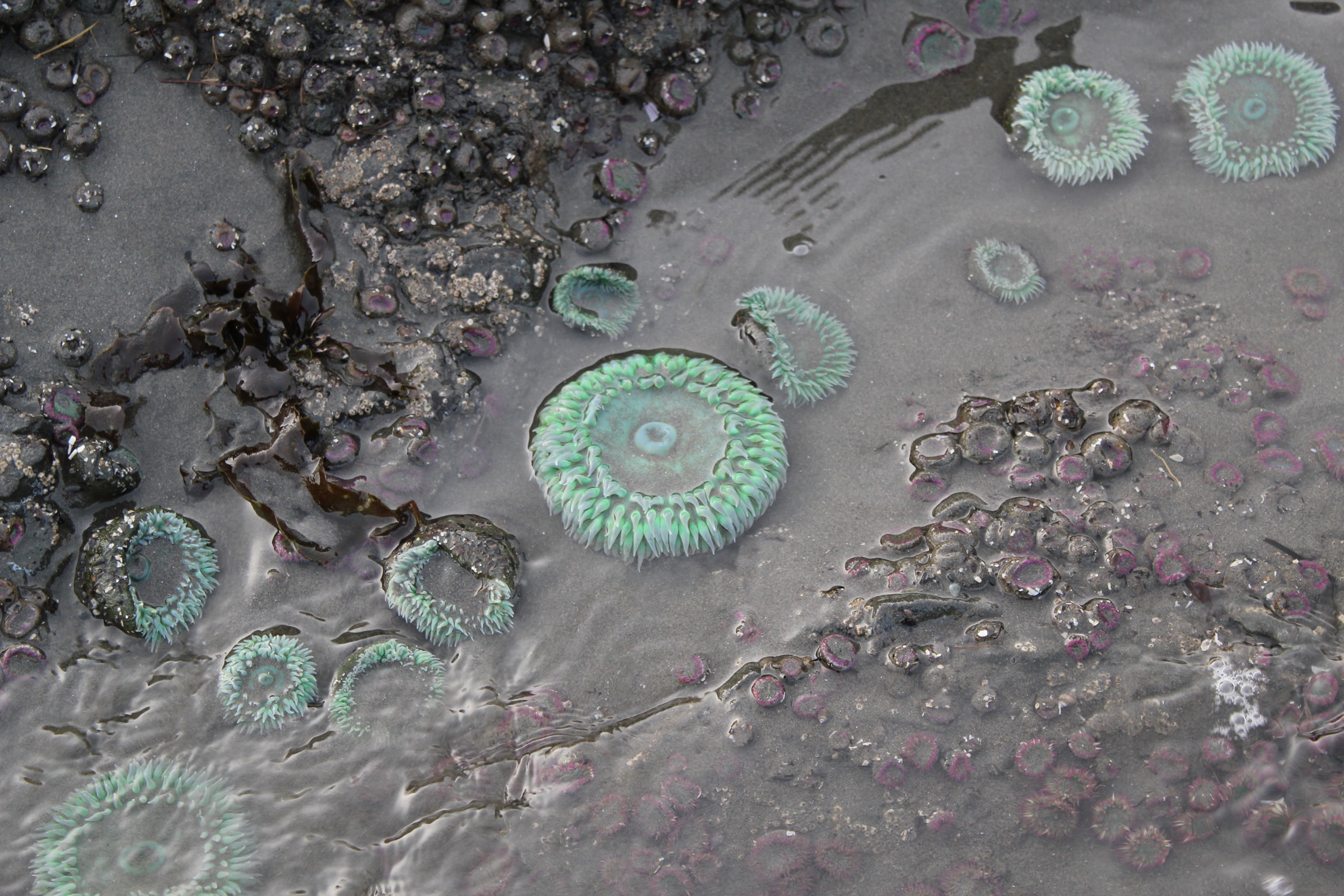
Sea anemones on the Olympic Coast are the green flowers of the tide pools, though they are animals, not plants. Two kinds dominate the rocky shore of Olympic National Park, the giant green anemone and the aggregating anemone, and more live in deeper water offshore. Here is how to tell them apart, how they live, and how to enjoy them without doing harm.
Quick answer
What sea anemones live on the Olympic Coast?
The park names two common tide pool anemones: the giant green anemone, which usually lives alone, and the smaller aggregating anemone, which forms colonies of clones. Both get their green colour partly from algae living inside them. Look in the mid tide zone on a minus tide, and touch nothing that clings back.
- Giant green anemone can reach about 30 cm across
- Aggregating anemones copy themselves by splitting in two
- Best viewing on tides lower than 1 foot
- Giant plumose anemones are common at Tatoosh Island
What a sea anemone is
An anemone is a soft bodied animal fixed to rock by its base, with a ring of tentacles around a central mouth. The National Park Service (NPS) explains that the tentacles catch and paralyze small animals, then pull them to the mouth to be digested. At low tide anemones pull in their tentacles to keep from drying out, which is why many look like green blobs when you find them.
The two common Olympic species also host tiny algae. Their blue green colour comes from algae living inside them, NPS says, and Walla Walla University’s invertebrate guide adds that anemones living in shade have few or none. Olympic’s own tidepool life page places both in the mid tide zone, where they “flash bright green and pink.”

The giant green anemone
The giant green anemone, Anthopleura xanthogrammica, is one of the largest anemones anywhere. The university’s Invertebrates of the Salish Sea guide gives its column as up to about 30 cm wide and 30 cm tall. It lives in tide pools and surge channels on exposed rocky shores, from the low and mid intertidal down to about 30 metres.
It often sits below mussel beds, and mussels knocked loose from above are its main food. The same guide lists sea urchins, small fish, crabs and other prey. Unlike its smaller cousin, it does not split to copy itself; it spawns eggs and sperm from late spring into summer.
The aggregating anemone and its clone wars
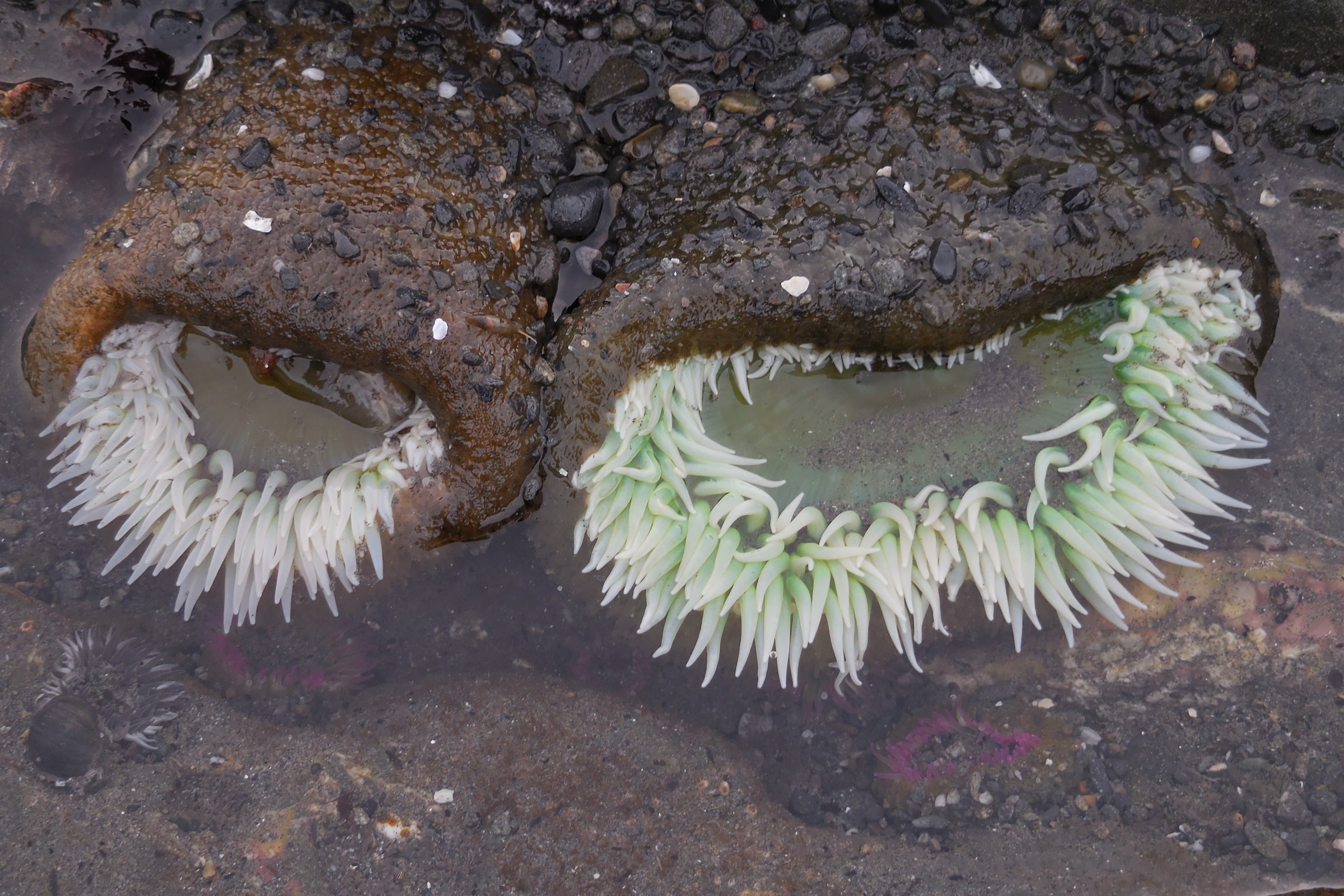
The aggregating anemone, Anthopleura elegantissima, is much smaller, about 6 cm tall and 8 cm across. Its tentacles are tipped with pink, lavender or blue. It copies itself by stretching its base until it tears in two, especially from January to March, so a single anemone can become a carpet of identical clones.

Clones live peacefully side by side, but neighbouring colonies fight. White stinging knobs just outside the tentacle ring, called acrorhagi, are used to sting anemones that are not clone mates. The result is a bare strip of rock between colonies, a clone border you can spot on a low tide.
Look closely and you will often see bits of shell and gravel stuck to an anemone’s column. The Walla Walla guide says these may help shield it from sunlight and drying out while the tide is low.

Giant green anemone vs aggregating anemone
| Feature | Giant green anemone | Aggregating anemone |
|---|---|---|
| Size | Up to about 30 cm across | About 8 cm across |
| Lifestyle | Usually solitary | Colonies of clones |
| Tentacle tips | Green, no pink tips | Pink, lavender or blue |
| Copies itself | No, spawns only | Yes, by splitting |
| Where on the shore | Low and mid intertidal, deeper | High to low intertidal |
Both have enemies. The Walla Walla guide names the leather star as a predator of each, and a nudibranch that feeds on aggregating anemones. Our guide to sea stars on the Olympic Coast covers the stars themselves.
Anemones in deeper water
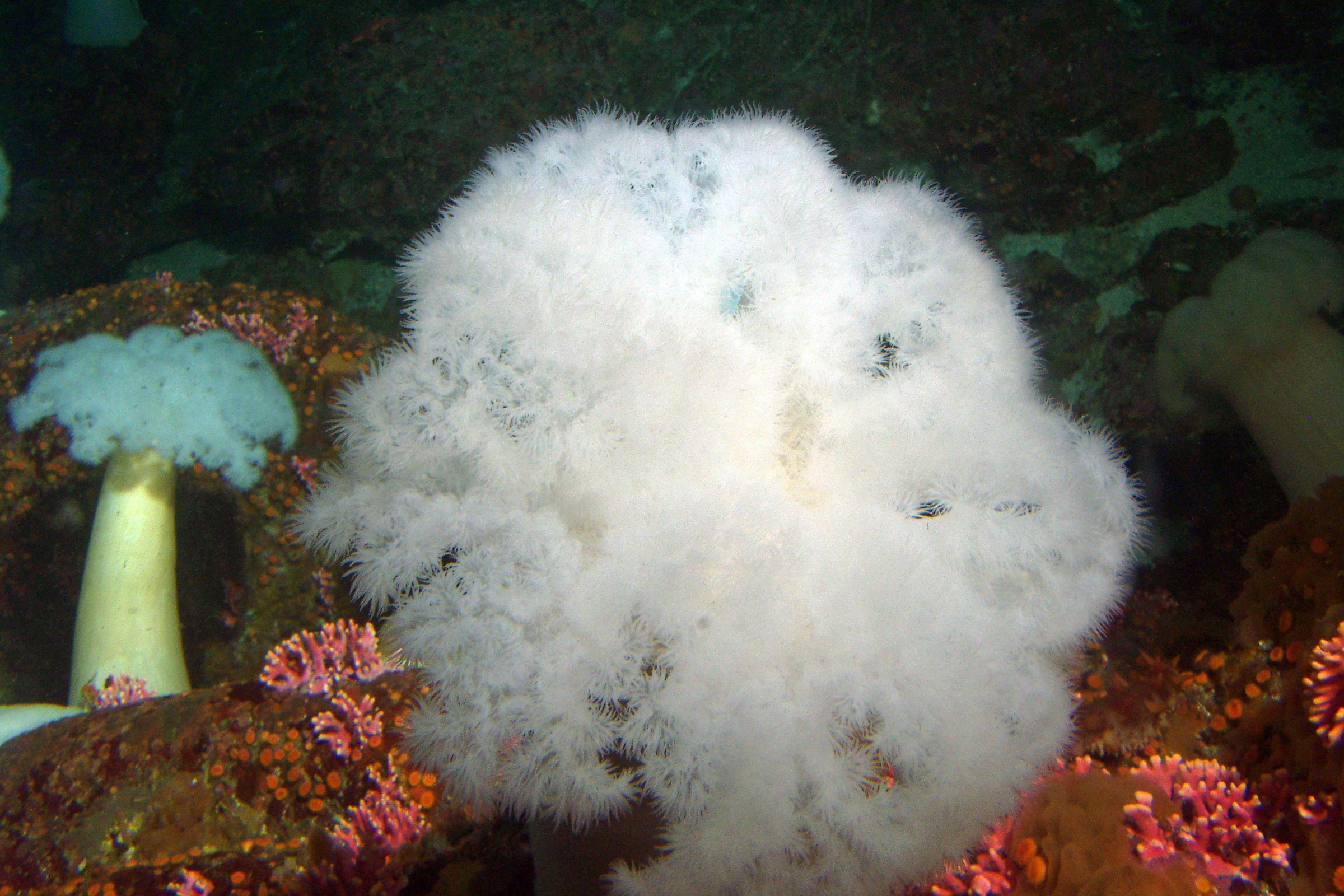
Offshore, Olympic Coast National Marine Sanctuary holds anemones most visitors never see. In NOAA’s virtual dive of the sanctuary, the giant plumose anemone, Metridium farcimen, is common on the vertical walls of Tatoosh Island, filtering food from the passing water. Our post on kelp forests of the Olympic Coast explores that underwater world.
Where to see sea anemones on the Olympic Coast
Timing is everything. The park recommends a minus tide, ideally lower than 1 foot, and says the most popular pools are Kalaloch’s Beach 4 and Hole in the Wall near Rialto Beach, with Second, Third and Ruby Beaches also good. Our Olympic National Park tide pools guide covers tide tables and access, and our tides and hiking safety guide explains how not to get cut off.

Tide pool etiquette for anemones
The intertidal zone lies within Olympic Coast National Marine Sanctuary, and NOAA’s responsible tidepooling tips apply to anemones as much as anything. Good tide pool etiquette comes down to a few habits:
- Step on bare rock, so you do not crush the anemones and other animals that cling to it.
- Use the touch test. An animal that clings tighter is telling you to stop; never force it off its spot.
- Put any rock you lift back the way you found it.
- Take nothing. Intertidal animals should not be collected for bait.
- Watch for the returning tide and sneaker waves, and keep one foot on the ground.
A closed anemone is resting out of the water and saving moisture, so leave it closed. If you find a dead, injured or distressed marine animal, tell a ranger rather than trying to help it yourself.
How Friends of Olympic National Park helps
We are Friends of Olympic National Park (FONP), a volunteer led friends group based in Port Angeles. Our volunteers join beach cleanups in Olympic National Park, keeping litter off the shore that anemones call home. Members keep that work going, so please become a member.
Frequently asked questions
Are sea anemones plants or animals?
Animals. A sea anemone is a soft bodied animal with tentacles that catch and paralyze small prey. The green colour of Olympic’s common anemones comes partly from algae living inside them, which is why they can look like plants.
How can I tell a giant green anemone from an aggregating anemone?
Size and company. The giant green anemone can reach about 30 cm across, usually lives alone and has no pink tentacle tips. The aggregating anemone is about 8 cm across, lives in colonies of clones and has tentacles tipped pink, lavender or blue.
Can I touch a sea anemone in the tide pools?
Gently if at all. NOAA’s tidepooling tips ask visitors to use the touch test: if an animal clings tighter, stop, and never force it off its spot. Leave closed anemones closed, since they are saving moisture at low tide.
Where are the best places to see sea anemones in Olympic National Park?
The park’s most popular tide pools are Kalaloch’s Beach 4 and Hole in the Wall near Rialto Beach, with Second, Third and Ruby Beaches also recommended. Go on a minus tide, ideally lower than 1 foot.
Why are aggregating anemones covered in shell bits?
Bumps on the column hold bits of shell and gravel. Walla Walla University’s invertebrate guide says this covering may help protect the anemone from sunlight and drying out while the tide is low.
Leave a Reply