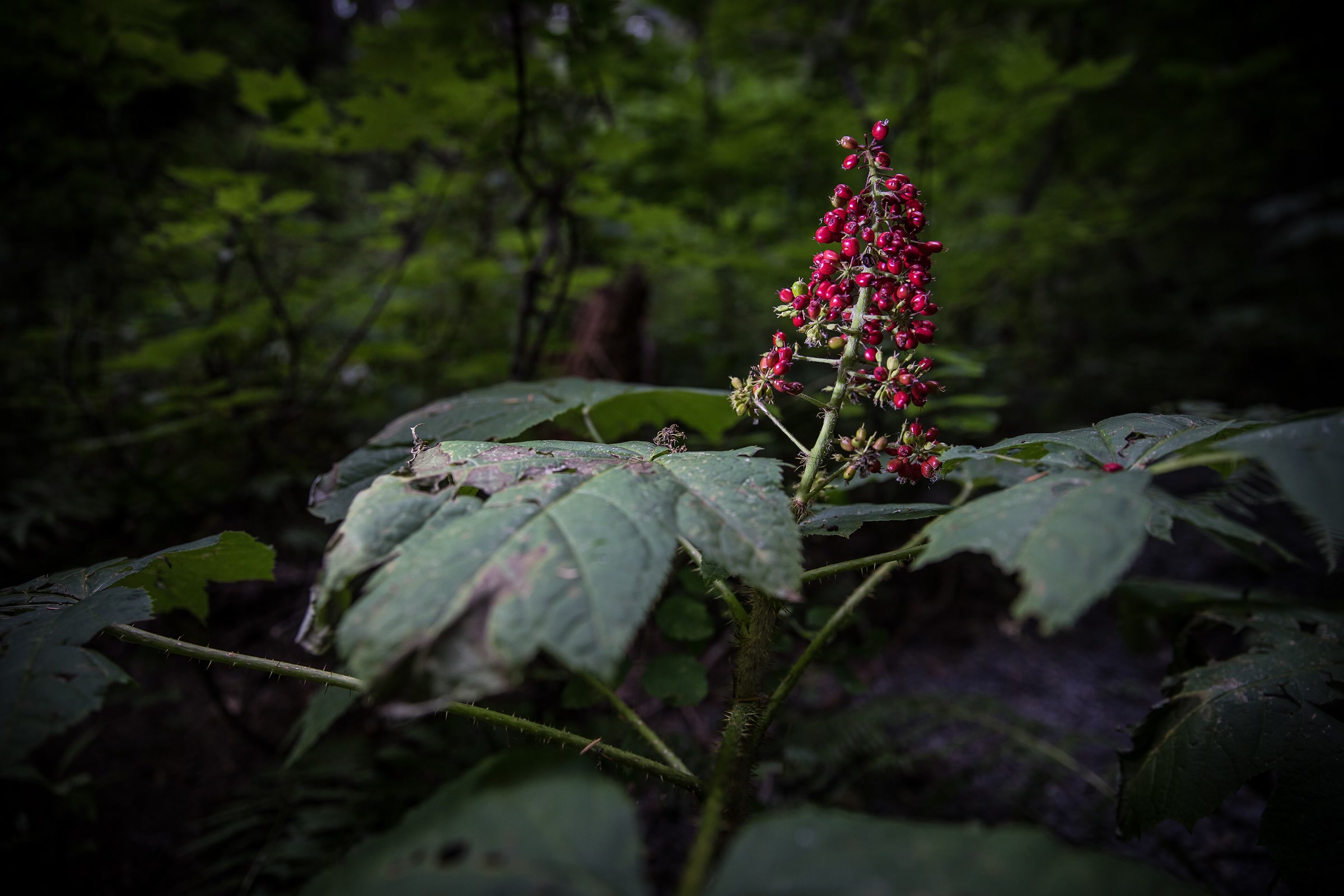
On a west side rain forest trail you will soon pass a shrub with leaves as wide as an umbrella and stems bristling with spines. That is devil’s club in Olympic National Park, Oplopanax horridus, a spiny rain forest plant best admired from the trail. Here is how to recognise it, where it grows, and why it matters.
Quick answer
What is devil’s club in Olympic National Park?
Devil’s club is a native shrub of wet, shaded forest with huge maple shaped leaves and sharp spines on its stems and even its leaves. In Olympic it grows in damp forest such as the Queets River valley and the coastal spruce forest. Enjoy it from the trail: the spines hurt, and park rules generally prohibit collecting plants.
- Woody stems grow 3 to 9 feet tall, NPS says
- Spines cover everything except the roots and berries
- Greenish white flowers in spring, red berries by midsummer
- Bears eat the berries and spread the seeds
How to identify devil’s club
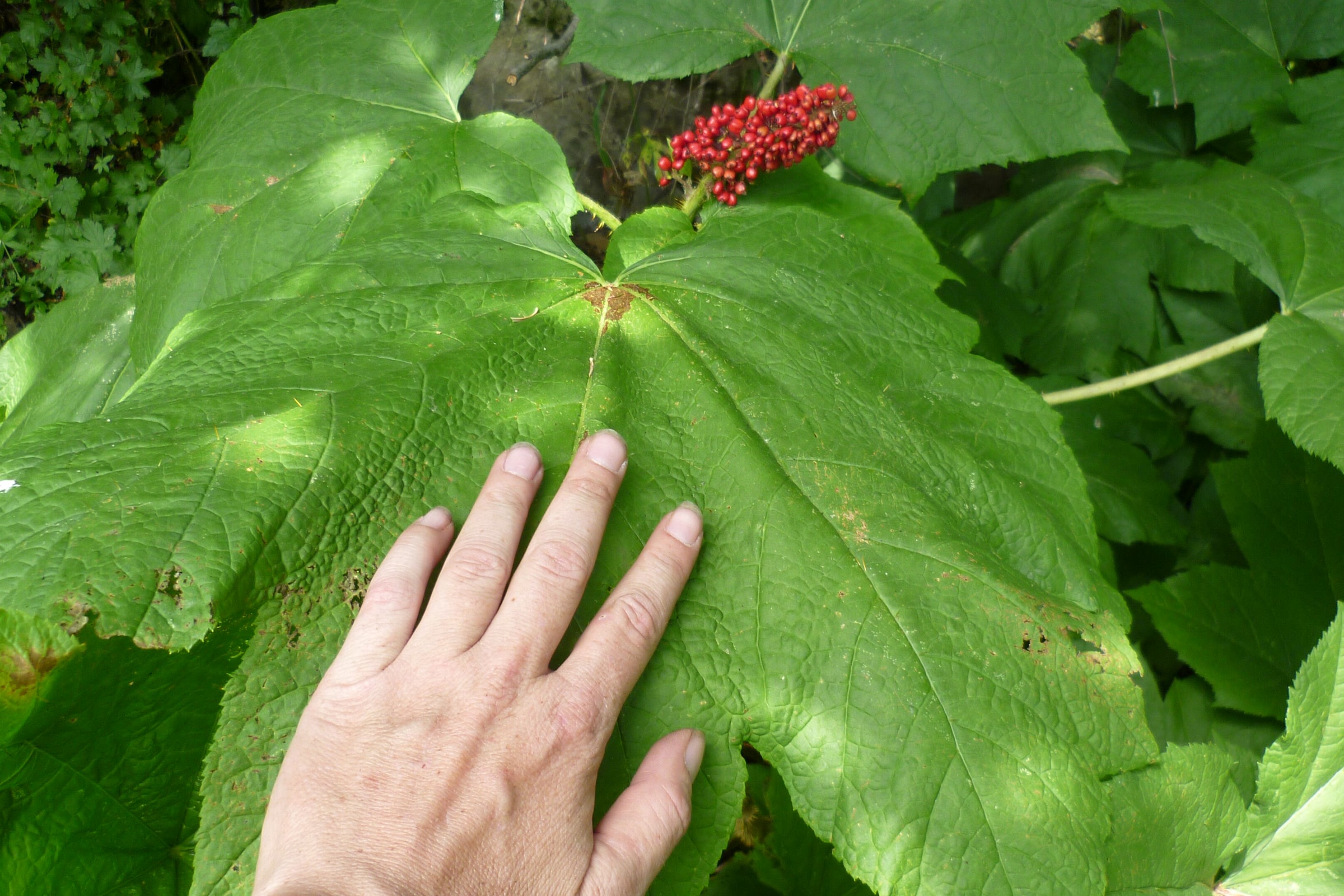
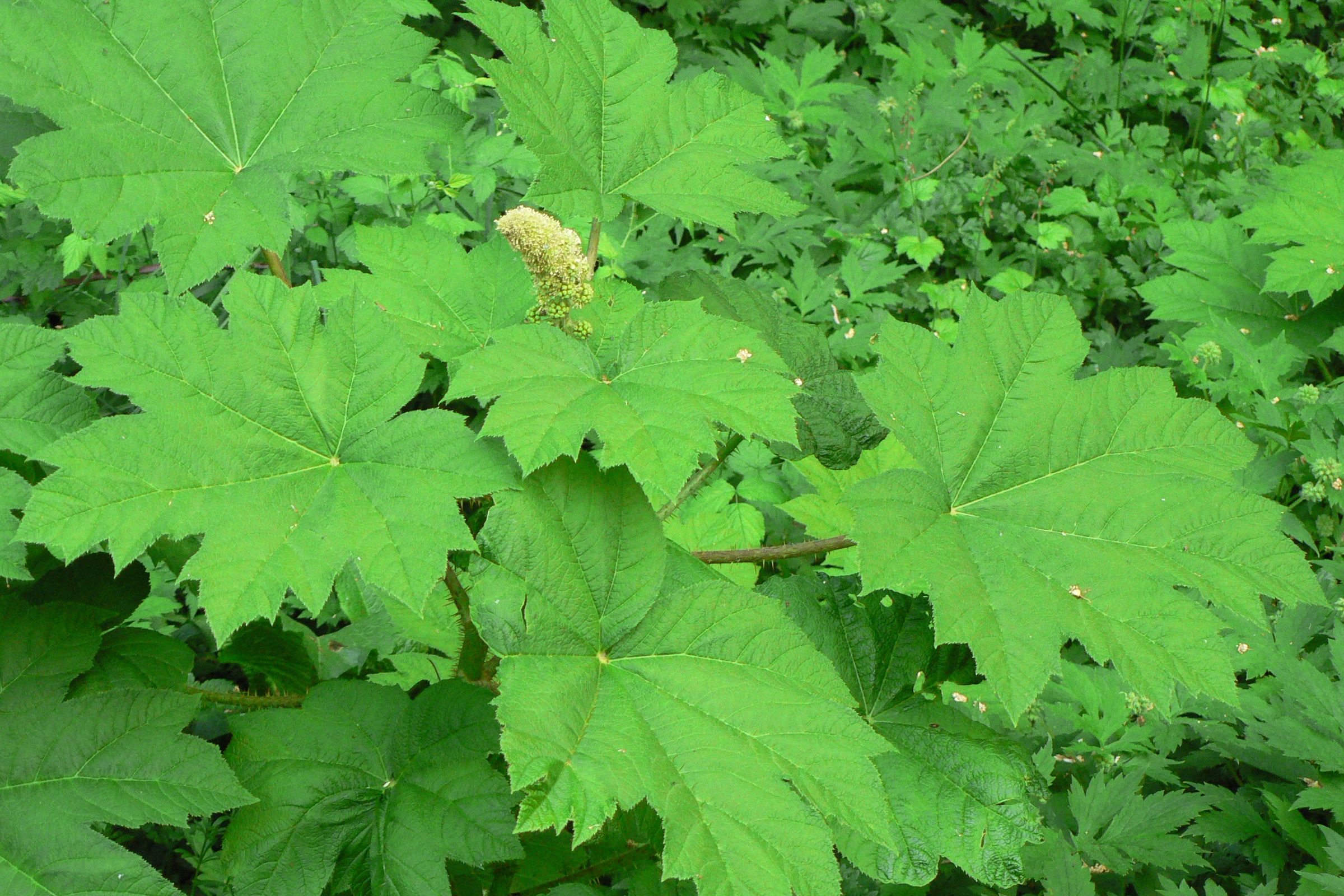
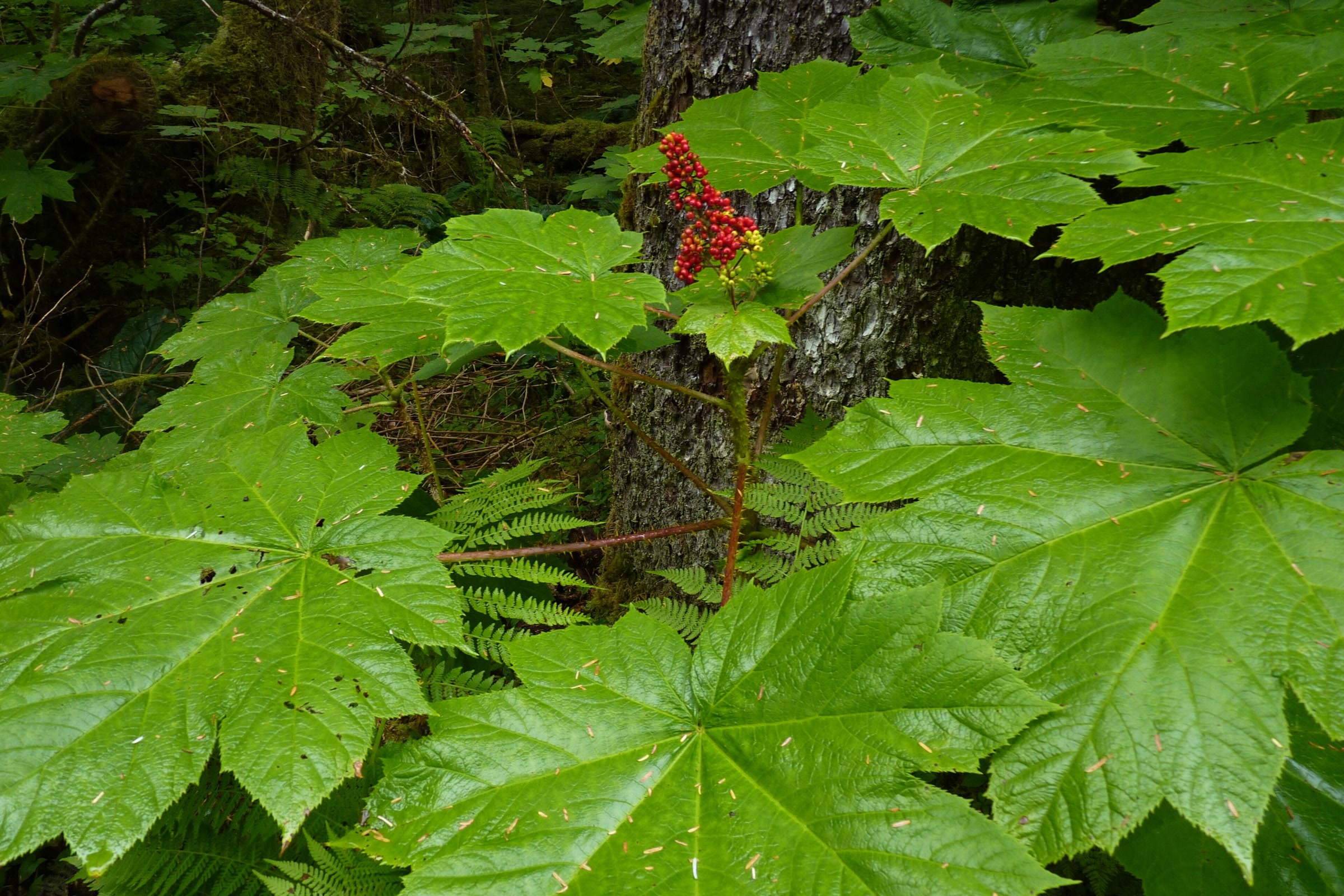
An NPS page from Mount Rainier National Park explains that the plant is named for the long spines covering its woody stems, which can be 3 to 9 feet tall. Each stem holds up large maple shaped leaves, also armed with thorns, and in spring a pyramid shaped stalk of many small greenish white flowers that later turns into red berries.
The U.S. Forest Service’s Plant of the Week profile of devil’s club puts it bluntly: the plant is “armed to the teeth.” Its spines coat every exposed surface except the roots and berries, even the leaves.
Devil’s club through the year
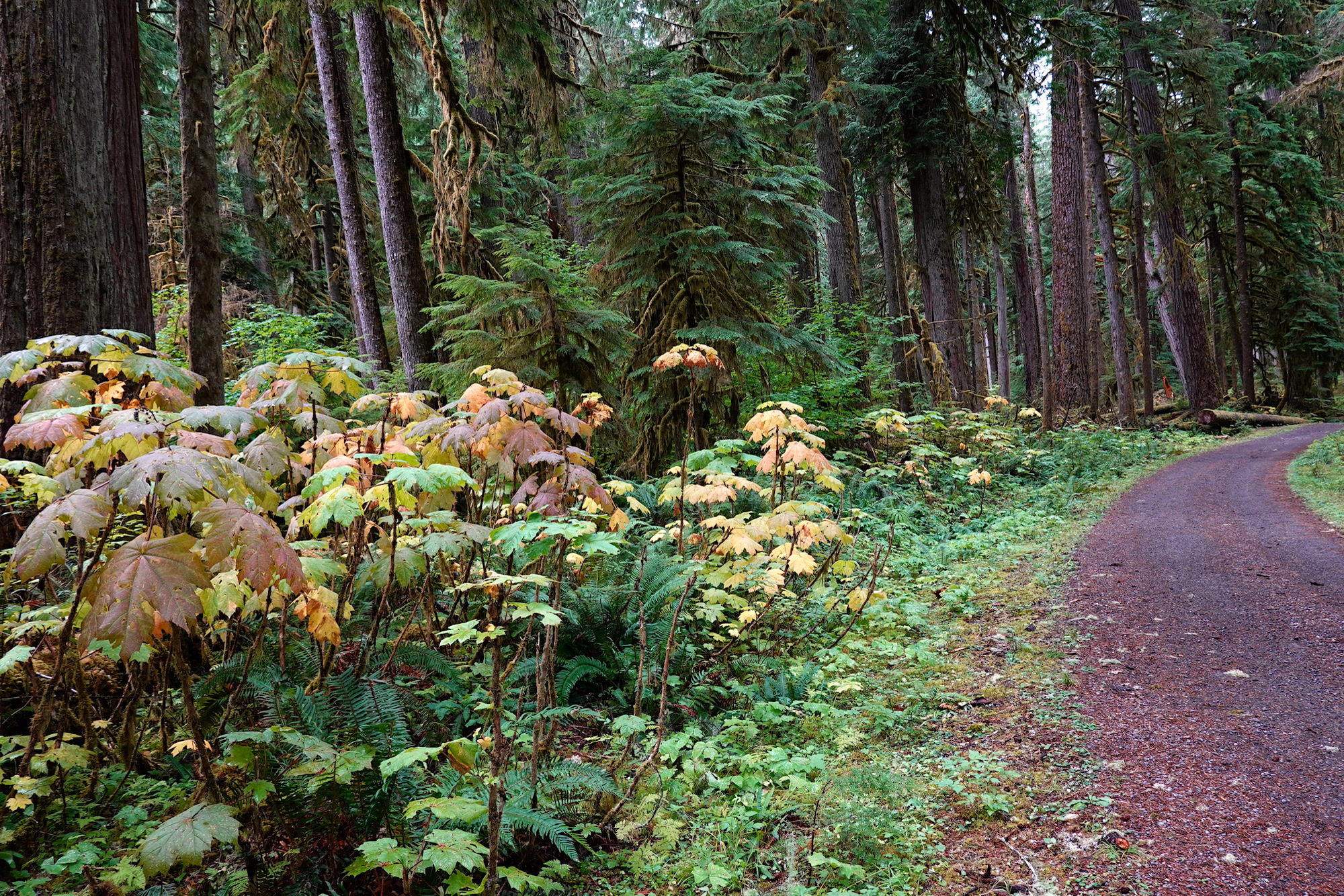
The Forest Service describes it as a deciduous shrub, so the big leaves drop each fall. Here is what to look for in each season.
| Season | What to look for |
|---|---|
| Spring | New leaves and a spike of small greenish white flowers |
| Midsummer | Clusters of bright red berries above the leaves |
| Fall | Big leaves turning yellow and orange |
| Winter | Leafless stems, still covered in spines |
Where devil’s club grows in Olympic National Park
Devil’s club follows water. The Forest Service’s Fire Effects Information System calls it a wet site indicator that grows on shaded ground, commonly near springs and streams and in seepage and wet bottom areas.
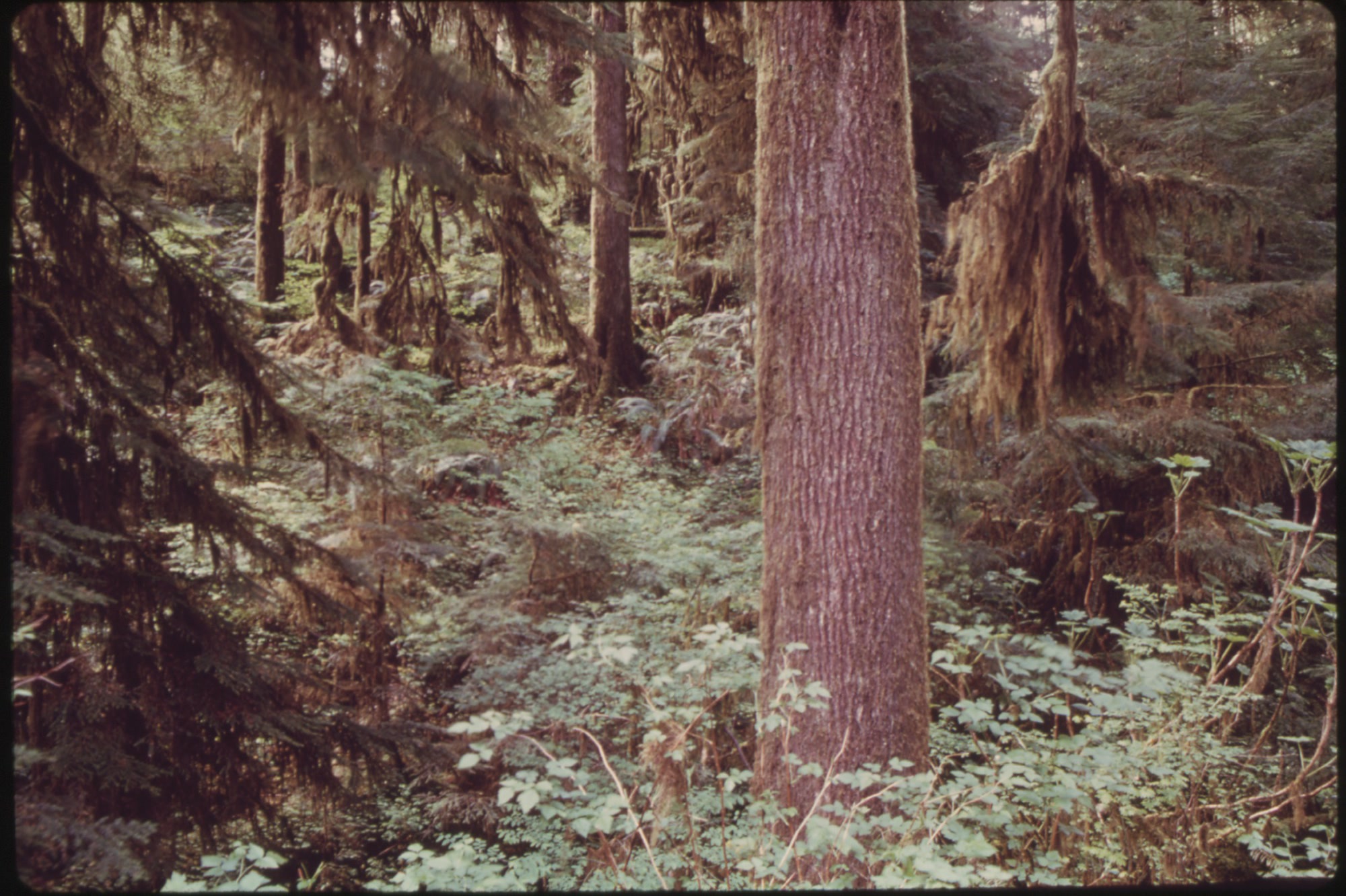
Those are the forests of Olympic’s west side. The park’s rain forests fill the Quinault, Queets, Hoh and Bogachiel valleys, where NPS records 140 to 167 inches of rain and snow a year. In 1973, EPA photographers recorded devil’s club in the Queets River valley and beneath Sitka spruce 400 to 700 years old in the park’s Pacific coast forest. Our guide to temperate rainforests in Olympic National Park explains why these valleys are so wet.
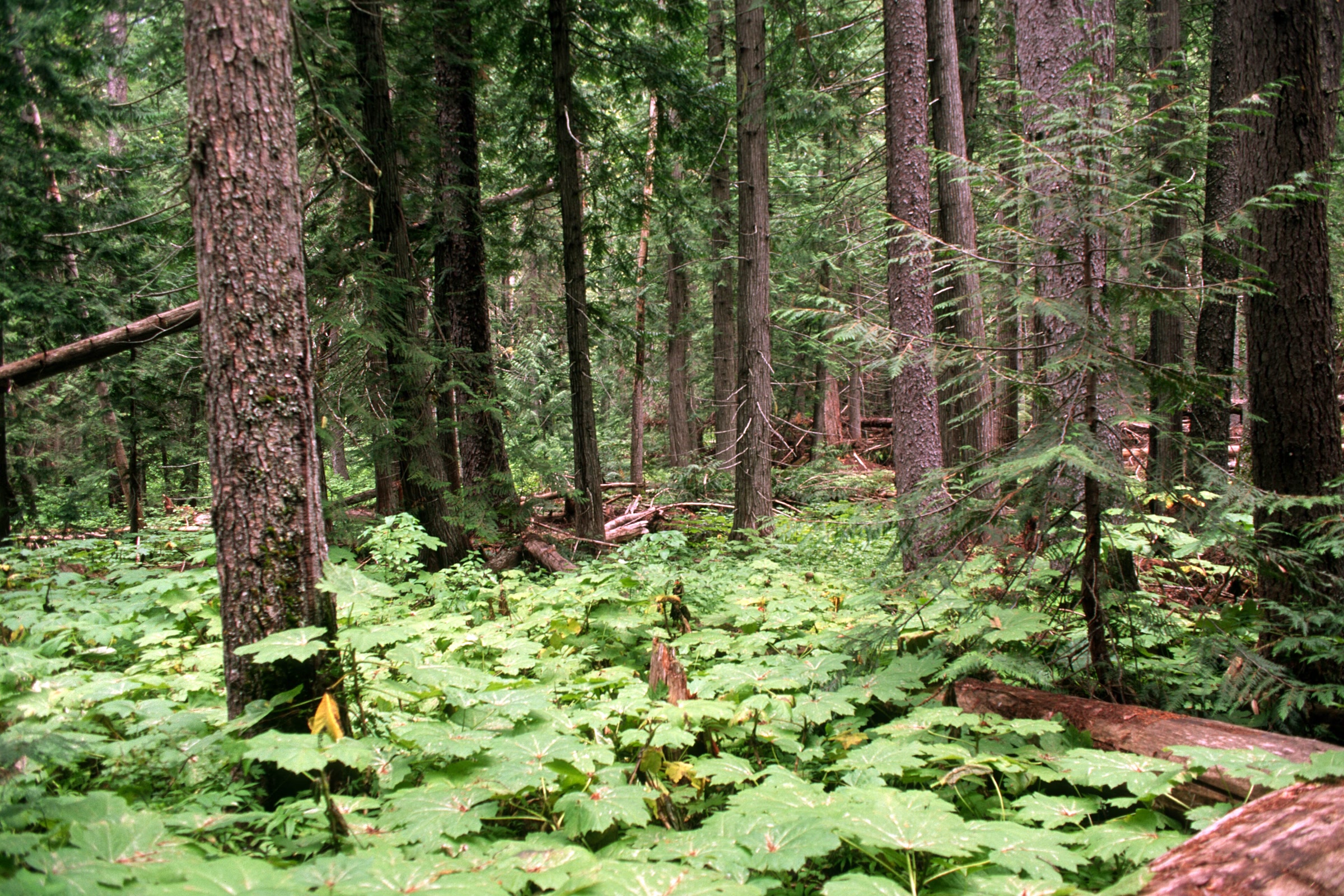
On a short loop such as the Hall of Mosses Trail, look where the ground stays wet: along creeks, in low hollows and at the edges of soggy flats. The same 1973 photo of the coastal forest shows western sword fern growing with it, one of the plants in our guide to ferns of Olympic National Park.
Why you should not touch devil’s club
The spines are the whole story. In the Forest Service profile, a botanist slipping on a wet Alaska hillside grabbed a devil’s club stem to stop his fall, and spent days afterwards removing spines from his hands. The Mount Rainier page warns that its thickets make off trail travel “challenging to say the least.”
An NPS photo record from Klondike Gold Rush National Historical Park quotes Robert Storm, who pushed through devil’s club in a rain forest in 1936. He compared it to “tunneling through a pile of needles,” and wrote of red spots that burned and itched for days.
Stay on the trail. Off trail, the Forest Service author suggests canvas trousers, rain gear and leather gloves. Never grab a plant to steady yourself, and read our guide to hiking safety in Olympic National Park before a longer trip.
Its place in the rain forest
For wildlife, devil’s club is food and shelter. The Forest Service says bears eat large quantities of its berries in midsummer and spread the seeds in their droppings, helping the forest recover after landslides and blowdowns. Its Fire Effects review adds that black bears also eat the seeds, leaves and stems.
Deer and elk browse it only lightly. In one study the review cites, devil’s club made up an average of 3.4 percent of the summer diet of Roosevelt elk at sites along the Pacific Northwest coast. The thickets also give hiding and thermal cover to birds, rodents and the vagrant shrew, and stands on stream banks shade salmon, trout and their eggs.
You can read more about the park’s bears in our black bears in Olympic National Park guide. Along wet streambanks, devil’s club often shares the ground with another giant leaved plant, covered in our guide to skunk cabbage in Olympic National Park.
Cultural importance to Peninsula Tribes
Devil’s club holds deep meaning for the Tribes of this region. A 2016 Jamestown S’Klallam Tribe publication on native plants calls it a remarkable looking plant and says its bark, branches and roots were used extensively by the S’Klallam people, including in medicines. Burned sticks ground with grease made a red face paint.
The same booklet quotes the ethnobotanist Erna Gunther: the Klallam peeled a stick and cut it into small pieces fastened to fishing lines, which sprang to the surface under water with the fish following. Today, the Tribe writes, the older outer branches of devil’s club thickets are stripped of thorns and bark and used as handles for rattles and drum strikers.
An NPS exhibit at Mount Rainier likewise calls devil’s club a significant plant to Native Americans of the Pacific Northwest, valued for centuries as a medicine. We share this as the Tribe and the park describe it, as living cultural knowledge, not as advice to use the plant.
Please leave it growing. As of October 2026, the park’s Superintendent’s Compendium says collecting natural materials in the park is generally prohibited, and its narrow exceptions do not cover roots, bark or stems. Check the NPS page before you go.
How Friends of Olympic National Park helps
We are Friends of Olympic National Park (FONP), a volunteer led friends group based in Port Angeles. Our projects include wildflower walks along with insect and mushroom walks, a gentle way to meet plants like this one. If the rain forest’s strange and spiny plants make you smile, please become a member.
Frequently asked questions
Why is it called devil’s club?
Devil’s club is named for the long spines that cover its woody stems, an NPS page explains. Spines cover even its leaves.
What happens if you touch devil’s club?
Its sharp spines can lodge in your skin. A Forest Service botanist who grabbed a stem spent days removing spines from his hands. Stay on the trail.
Where does devil’s club grow in Olympic National Park?
Devil’s club grows in wet, shaded forest, often near streams, springs and seeps. In Olympic it has been photographed in the Queets River valley and beneath old Sitka spruce in the park’s coastal forest.
Do animals eat devil’s club?
Yes. The Forest Service says bears eat large amounts of the red berries in midsummer and spread the seeds. Deer and elk browse it lightly.
Can you pick devil’s club in Olympic National Park?
No. As of October 2026 the park compendium says collecting natural materials is generally prohibited, and its exceptions do not cover roots, bark or stems. Check the NPS compendium page before you go.
Leave a Reply